
Our readers keep the lights on and the weekend projects moving. As an Amazon Associate, I earn from qualifying purchases.
For homeowners with large families or high-demand households, the frustration of a cold shower halfway through the morning routine is a clear signal that storage-tank tech has limits. Moving to a tankless system eliminates standby heat loss and the physical bulk of a 60-gallon tank, but the decision hinges on precise flow-rate math, fuel-type compatibility, and real-world installation constraints.
I’m Rikta — the co-founder and writer behind FitlyFast. I’ve spent the last several years analyzing tankless water heater specs, customer-verified performance data, and installation requirements across hundreds of models to separate reliable on-demand systems from underpowered units that fail in cold climates.
This guide evaluates the top contenders for a high-capacity whole-home tankless replacement, comparing BTU output, GPM ratings, warranty coverage, and smart-home integration so you can confidently choose the best 60 gallon water heater alternative for your home.
How To Choose The Best Tankless Replacement for Your 60-Gallon System
Replacing a 60-gallon storage tank with a tankless unit isn’t a simple swap. You’re trading standby capacity for flow rate and power delivery. The three non-negotiable factors are the maximum GPM at your desired temperature rise, the electrical or gas infrastructure your home can support, and the physical venting requirements for the fuel type you choose.
Flow Rate and Temperature Rise
Every tankless water heater is rated for a specific GPM at a given temperature rise. A 60-gallon tank typically serves 2 to 4 bathrooms. In a cold-climate home with 50°F incoming groundwater, you need a unit that delivers at least 6 to 7 GPM at a 70°F rise (to reach 120°F). A 160,000 BTU gas unit or a 36 kW electric unit can handle that load, but lower-power models will throttle flow as demand increases.
Gas vs. Electric Trade-offs
Gas tankless units offer higher flow rates (up to 11 GPM) and lower operating costs in most regions, but they require dedicated venting — either PVC for condensing units or stainless steel for non-condensing models. Electric tankless units are smaller and simpler to vent (no combustion exhaust), but a 36 kW unit needs a 300-amp service panel and four 40-amp breakers. Most older homes do not have that spare electrical capacity.
Condensing vs. Non-Condensing
Condensing units capture exhaust heat for higher efficiency (UEF 0.95+) and can vent with standard Schedule 40 PVC, which simplifies retrofit installation. Non-condensing units are cheaper upfront but require Category III stainless steel venting (more expensive to install) and run slightly less efficiently. For a whole-home replacement you plan to keep for 15+ years, the condensing premium pays back through lower gas bills.
Quick Comparison
On smaller screens, swipe sideways to see the full table.
| Model | Category | Best For | Key Spec | Amazon |
|---|---|---|---|---|
| Rinnai RXP199iN | Premium Condensing | Large multi-fixture homes (7+ points) | 199,000 BTU, 11.1 GPM, UEF 0.98 | Amazon |
| Rheem RTG-70DVLN-3 | Premium Gas | Reliable 7.0 GPM from a trusted brand | 160,000 BTU, 15-yr heat exchanger warranty | Amazon |
| Rheem RRTGH84DVLN3 | High-Output Gas | Homes needing 8.4 GPM without condensing | 157,000 BTU, 8.4 GPM, non-condensing | Amazon |
| Noritz NRC66DVNG | Condensing Gas | Efficient PVC-vented installations | 6.6 GPM, PVC Schedule 40 venting | Amazon |
| Rinnai RX130iN | Smart Sense Condensing | Indoor/outdoor flex with propane conversion | 130,000 BTU, 7.1 GPM, UEF 0.97 | Amazon |
| Westinghouse 5.1 GPM | Mid-Range Gas | 2-4 fixture homes with WiFi control | 120,000 BTU, ±1°F temp stability | Amazon |
| MIZUDO 36kW Electric | Mid-Range Electric | Small homes with spare 300A panel capacity | 36 kW, 8.7 GPM, 98% efficiency | Amazon |
| APUS 140K LP | Propane Gas | Off-grid or propane-dependent homes | 140,000 BTU, 6.8 GPM, recirculation pump | Amazon |
| MIZUDO 5.1 GPM Gas | Indoor/Outdoor Gas | Convertible indoor/outdoor installations | 120,000 BTU, 5.1 GPM, CSA certified | Amazon |
| WINTEMP 36kW | Budget Electric | Entry-level whole-home electric on a budget | 36 kW, 8.7 GPM, ETL certified | Amazon |
| WINTEMP 27kW | Budget Electric | Small homes with 200A service | 27 kW, 6.5 GPM, WiFi control | Amazon |
In-Depth Reviews
1. Rinnai RXP199iN

The RXP199iN is the highest-capacity residential tankless unit in this lineup, delivering 11.1 GPM at 199,000 BTU with a UEF of 0.98. In a home with 7 fixtures — including multiple showers, a dishwasher, and a washing machine — this unit handles simultaneous demand without a noticeable pressure drop, backed by a built-in Smart-Circ recirculation pump that learns usage patterns to minimize wait time.
The condensing design vents with standard Schedule 40 PVC, which simplifies retrofit installation, and the dual-fuel Smart Sense gas control auto-detects whether you’re connected to natural gas or propane. Real-world feedback from owners confirms reliable performance in climates as cold as 10°F, with two showers and the dishwasher running concurrently. Some noise from the internal pump is noted, but the trade-off for near-instant hot water and 0.98 efficiency is well accepted.
Installation requires 1/2-inch NPT connections and a dedicated electrical outlet for the control board, but it does not come with the Controlr WiFi module — that’s a separate purchase if you want remote adjustments. For homeowners with 4+ bathrooms who want the absolute highest flow rate and lowest operating cost, this is the benchmark.
Why it’s great
- Highest GPM in class (11.1) handles large families.
- UEF 0.98 condensing design lowers gas bills.
- Smart-Circ recirculation pump reduces water waste.
Good to know
- WiFi module sold separately.
- Recirculation pump is audibly noticeable.
- Professional installation strongly recommended.
2. Rheem RTG-70DVLN-3
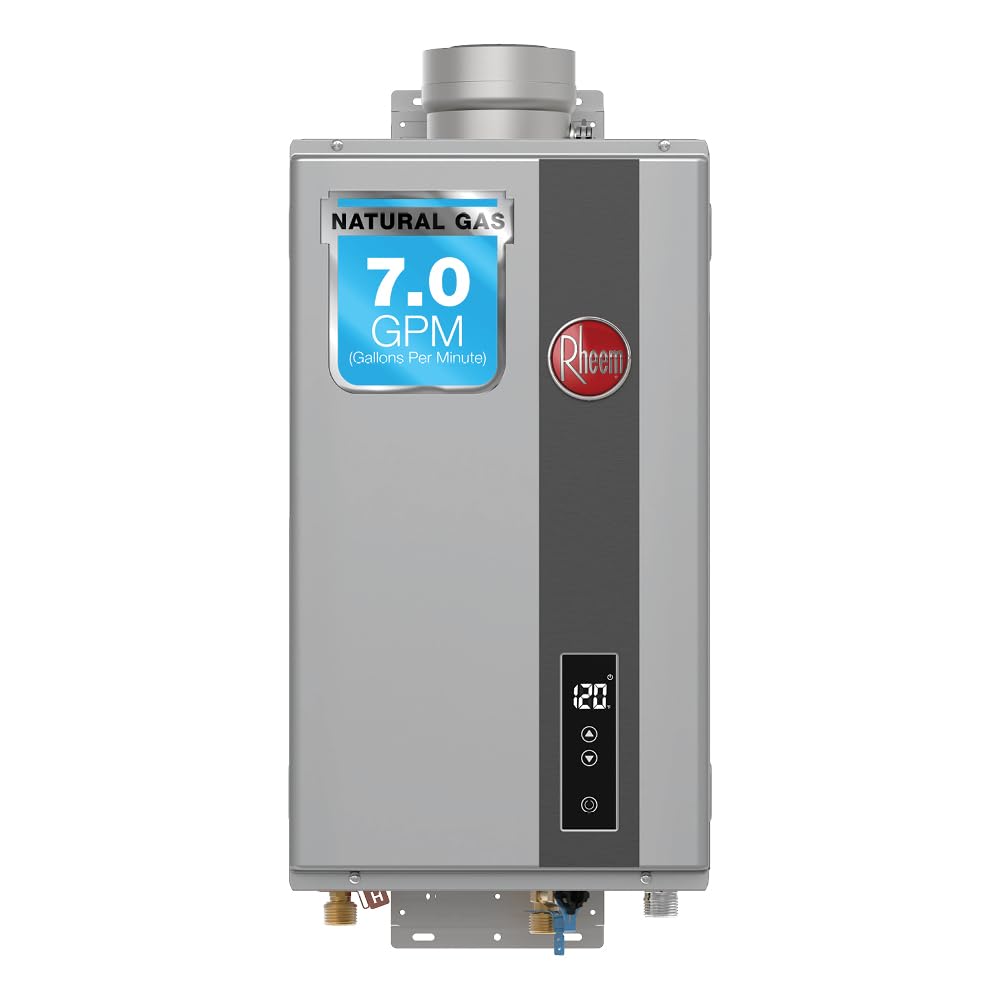
The RTG-70DVLN-3 from Rheem is a non-condensing natural gas unit rated for 7.0 GPM at 160,000 BTU, making it a strong fit for 2- to 3-bathroom homes. Its Hot-Start programming prevents the cold-water sandwich effect common in non-condensing designs, and the altitude adjustment feature ensures stable performance for homes at higher elevations — a detail many budget units overlook.
Rheem backs this model with a 15-year heat exchanger warranty, 5-year parts warranty, and 1-year labor, which signals confidence in the copper heat exchanger’s durability. Owners report that it handles back-to-back showers without temperature fluctuation, even with older undersized piping. The primary drawback is that it requires Category III stainless steel venting, which adds material cost compared to PVC-vented condensing units.
For homeowners who prefer a brand with decades of North American market presence and a robust warranty network, the RTG-70DVLN-3 delivers reliable flow at a reasonable premium. It is not the highest GPM option, but its construction quality and customer support infrastructure make it a low-risk choice.
Why it’s great
- 15-year heat exchanger warranty provides peace of mind.
- Hot-Start programming reduces cold bursts.
- Altitude adjustment for high-elevation homes.
Good to know
- Non-condensing requires stainless steel venting.
- Lower GPM than some similarly-priced units.
- Wait time for hot water at distant fixtures is longer.
3. Rheem RRTGH84DVLN3
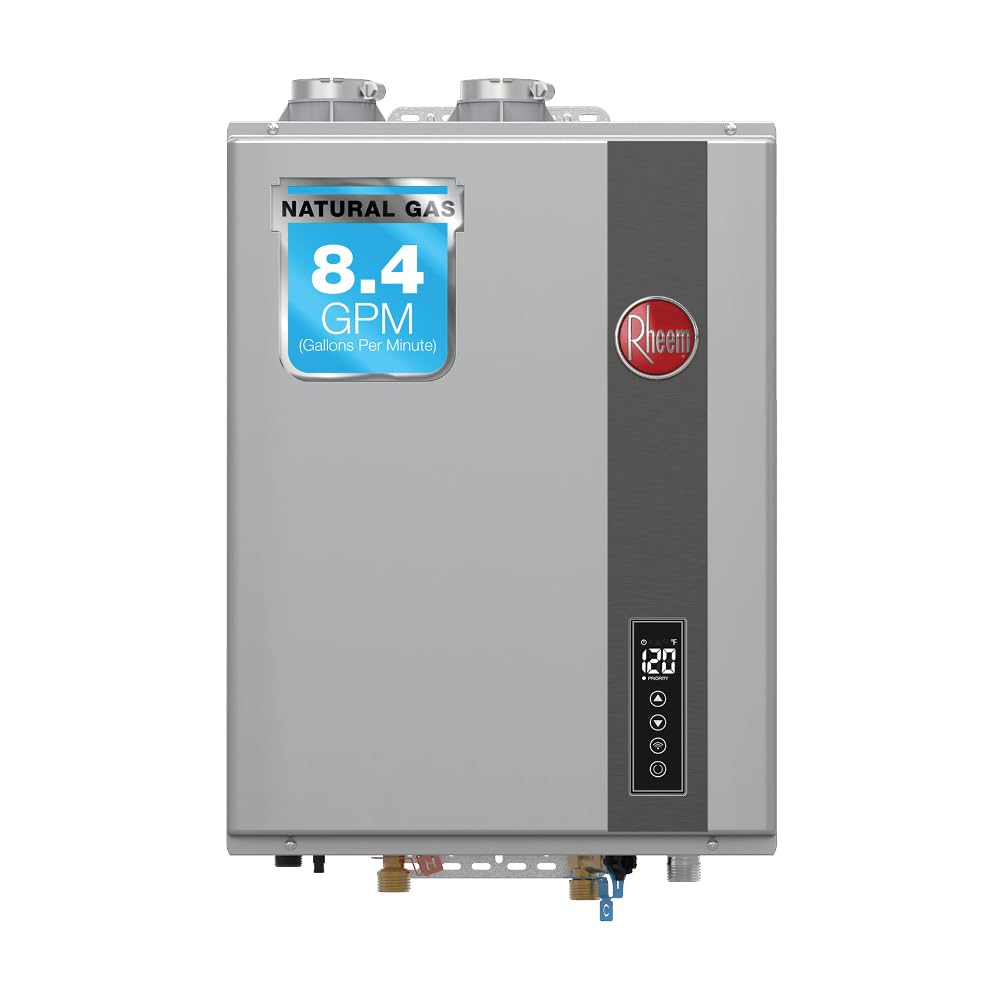
The RTGH series from Rheem pushes flow to 8.4 GPM at 157,000 BTU while remaining a non-condensing design. This is the highest-flow non-condensing gas unit in the lineup, making it a good option for homes that need high capacity but want to avoid the added complexity of a condensing system’s condensate drain line.
It runs on standard 120V AC and weighs nearly 60 pounds, which reflects the heavy-duty copper heat exchanger and stainless steel combustion chamber. Owners who have run the unit for 5-6 years report consistent performance with proper winterization, and the electric bill savings are noticeable when replacing an old electric tank heater. The trade-off is that non-condensing models like this require 3-inch or larger stainless steel venting, which can be tricky to route in tight retrofits.
If your home has a high simultaneous demand (multiple showers plus dishwasher and laundry) and you want a proven non-condensing design from a major manufacturer, this model provides the flow to match a 60-gallon tank’s capacity without the standby losses.
- 8.4 GPM matches peak demand of large homes.
- 15-year heat exchanger warranty.
- 120V AC plug-in for simple electrical connection.
Good to know
- Non-condensing design requires stainless steel venting.
- Heavy unit (59.88 lbs) requires sturdy mounting.
- Same 15-year warranty but only 5-year parts coverage.
4. Noritz NRC66DVNG

The NRC66DVNG is a condensing tankless water heater from Noritz, a Japanese brand with a strong reputation for reliability in the North American market. It delivers 6.6 GPM and vents with standard Schedule 40 PVC, which dramatically simplifies installation compared to stainless steel venting — you can tie into existing plumbing vent stacks in many retrofits.
It includes a remote thermostat and a 6-foot power cord, and the condensing design extracts enough heat from exhaust gases to reach high efficiency without requiring complex venting geometry. Owners report approximately 10-20% lower gas consumption after six months of use versus a older tank heater, and the quiet operation is a common point of praise. The common complaint is the cold-water sandwich when hot water is called again within a few minutes, which is inherent to non-recirculating tankless systems.
For a high-quality condensing unit that avoids the premium price of the Rinnai flagship models, the Noritz offers excellent build quality and PVC venting flexibility, making it a solid mid-range choice for a 3-4 bedroom home.
Why it’s great
- PVC venting simplifies retrofit installation.
- Condensing design with lower gas consumption.
- Reliable Noritz build quality and support.
Good to know
- 6.6 GPM may limit simultaneous multi-fixture use in very cold climates.
- Fan noise is more noticeable than some competitors.
- Requires periodic descaling and annual filter maintenance.
5. Rinnai RX130iN

The RX130iN is a condensing tankless unit that offers indoor or outdoor installation via Rinnai’s Versa Vent system, with a Smart Sense gas controller that auto-adapts to either natural gas or propane. At 7.1 GPM and 130,000 BTU, it’s sized for homes with up to 4 fixtures, and its UEF of 0.97 places it among the most efficient non-premium models.
Owners in alpine climates report reliable startup at 8,000 feet elevation and 10°F ambient temperatures, handling two showers plus a dishwasher without loss. The propane conversion is done entirely through the settings menu — no mechanical parts to swap. The main complaint is that the flush valves and pressure relief valve are no longer included, adding roughly in accessory costs.
This is a smart pick if you want the flexibility to mount the unit outdoors (with the RX-OVC vent cap) or if you’re on propane and need a condensing unit that auto-detects fuel type. The warranty coverage — 5-year labor, 5-year parts — is generous for the price point.
Why it’s great
- Indoor/outdoor installation flexibility.
- Auto-senses natural gas or propane.
- High UEF 0.97 with condensing design.
Good to know
- Flush/diverter valves not included.
- WiFi Controlr module sold separately.
- Some users report slower heat-up than older models.
6. Westinghouse 5.1 GPM Gas
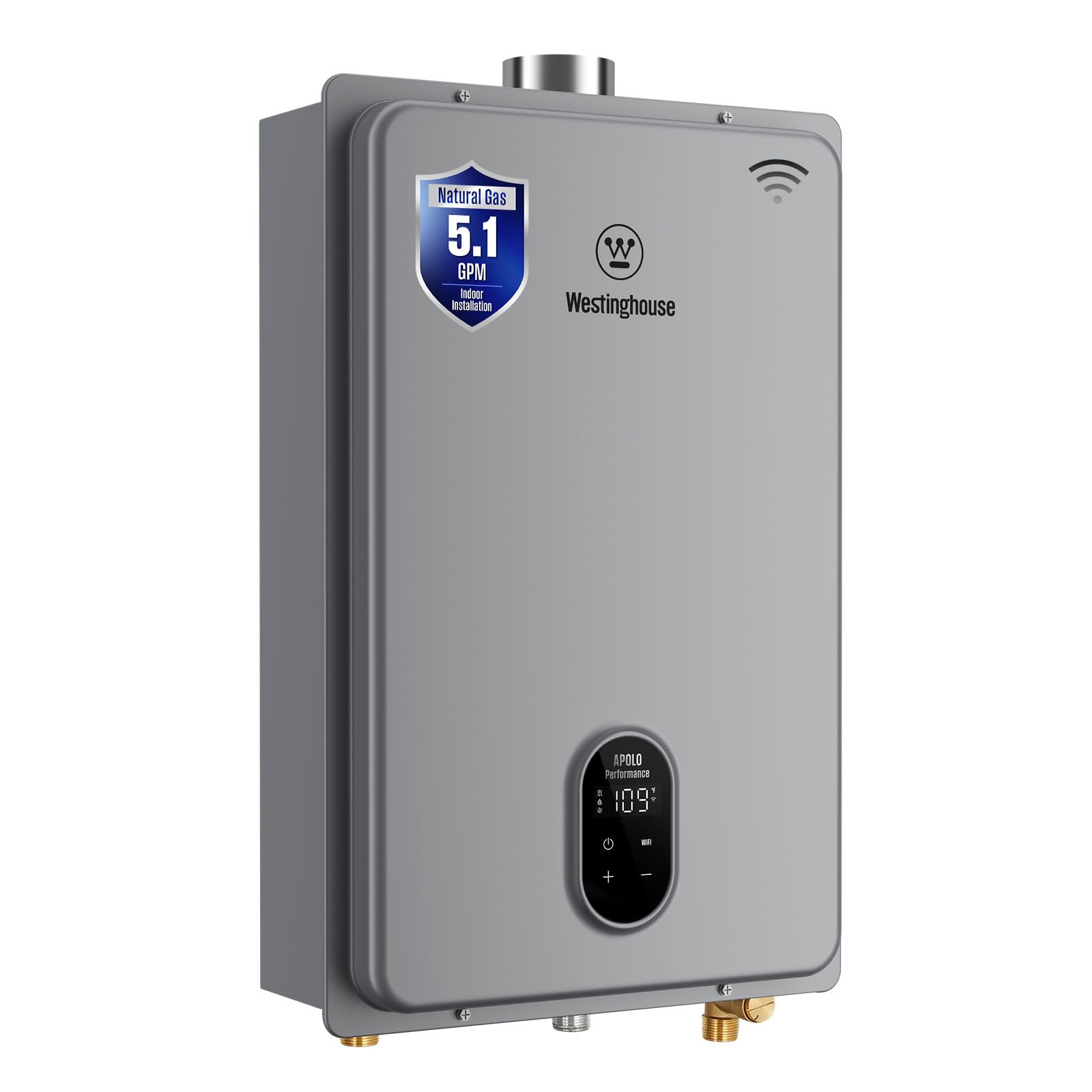
The Westinghouse 5.1 GPM natural gas unit is a non-condensing indoor model rated for 2 to 4 simultaneous fixtures. Its key differentiator is the ±1°F temperature stability, achieved through self-modulating gas and water flow control that reduces cold bursts. The WiFi app — included at no extra cost — provides real-time temperature visibility and daily water usage reports.
It uses a durable copper heat exchanger, CSA certification, and a freeze protection system that activates when ambient temps drop. Owners highlight the simple step-by-step installation manual and the fact that the unit fires up and holds 116°F without needing to mix cold water at the tap. The small footprint (12.5 x 23.9 inches) fits in tight utility rooms.
This is a good choice for homeowners with moderate demand (two bathrooms, kitchen, laundry) who want the convenience of app-based temperature adjustments without paying the premium for a condensing design. The 120,000 BTU output is sufficient for warm-to-moderate climates but may struggle in northern winters with very cold groundwater.
Why it’s great
- WiFi app control included for temp and usage tracking.
- ±1°F stability minimizes cold bursts.
- Straightforward installation with clear instructions.
Good to know
- 5.1 GPM limits capacity in large homes with high demand.
- Non-condensing requires stainless steel venting.
- Hot water delay to distant fixtures is noticeable.
7. MIZUDO 36kW Electric
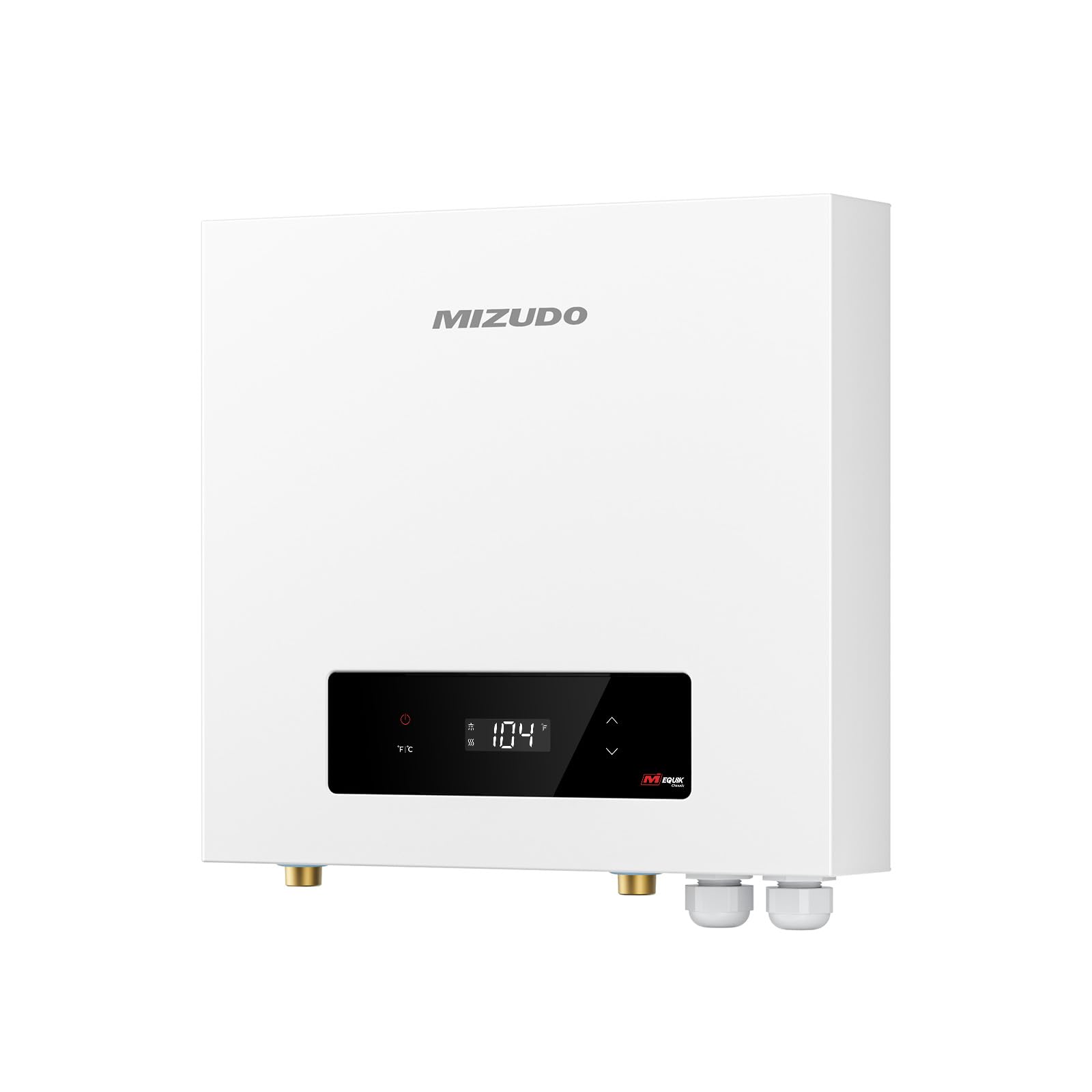
This MIZUDO 36kW electric tankless unit claims 98% thermal efficiency and delivers up to 8.7 GPM, using four copper cup heating elements that adjust power 20,000 times per second to maintain ±1°F temperature control. It’s rated for 5-6 points of use simultaneously and fires up in roughly 3 seconds.
The installation requirements are substantial: 4 x 40-amp double-pole breakers and 4 sets of 8 AWG wire, necessitating a 300-amp service panel. In mild-climate homes with sufficient electrical capacity, owners report consistent 120°F water for two showers plus a sink. However, several reviews note temperature fluctuations at higher flow rates and a risk of freezing in unheated spaces — this unit must be installed in conditioned indoor areas or fully drained when temps approach freezing.
If you’re replacing a tank in a home that already has 300-amp service and you want to avoid gas venting entirely, this electric unit cuts out the combustion complexity. But for most 60-gallon tank replacements, the electrical upgrade cost offsets the low purchase price.
Why it’s great
- 98% efficiency with no combustion emissions.
- Compact 17.1 x 18.5 inch footprint.
- ±1°F precision via rapid power modulation.
Good to know
- Requires 300-amp electrical panel — major upgrade cost.
- Risk of freezing in unheated installations.
- Reported reliability issues from some owners.
8. APUS 140K BTU LP
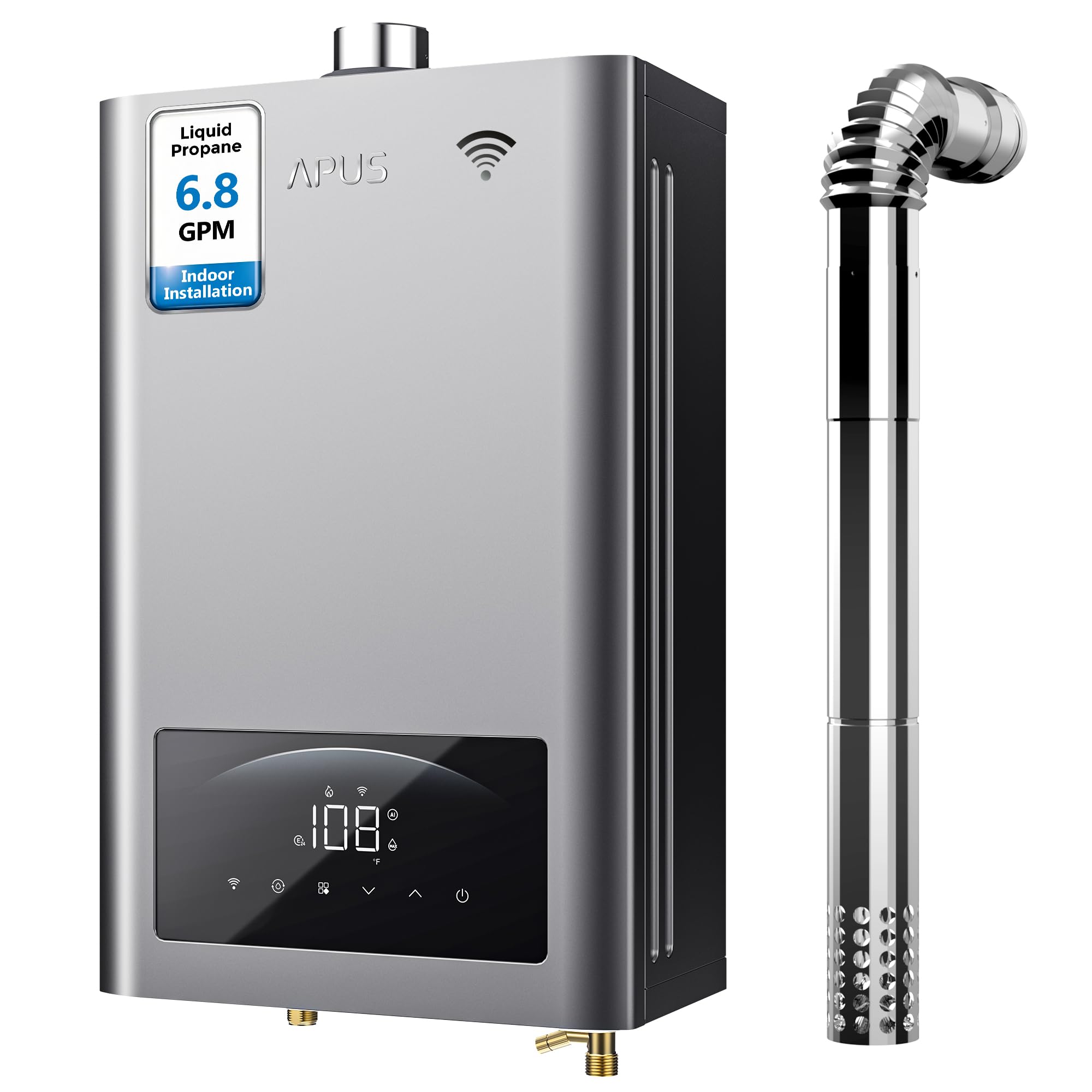
The APUS 140,000 BTU propane tankless heater is built for propane-dependent homes and off-grid applications. It features a built-in booster pump that increases flow by up to 130%, delivering 6.8 GPM, and a Zero Cold Water recirculation system that eliminates the wait for hot water at distant fixtures.
The smart season comfort mode automatically adjusts outlet temperature based on incoming water temperature, and the WiFi app allows remote control. The unit includes a 24/7 ECO cycle that claims 40% energy savings over conventional tank heaters. Owners report that it provides long, hot showers for multiple consecutive users and fills a bathtub reliably. However, a few reviews cite ignition failures and unresponsive customer service, so verifying the seller’s return policy is important.
For a propane tank replacement where you want instant hot water without waiting for the line to purge cold water, the built-in recirculation is a standout feature. Just ensure your propane line is sized to support 140,000 BTU — a 1/2-inch line may not be sufficient.
Why it’s great
- Zero Cold Water recirculation for instant hot water.
- Built-in booster pump boosts flow 130%.
- Energy-efficient ECO mode with smart season adjustment.
Good to know
- Some units reported with ignition defects.
- Customer service responsiveness has been inconsistent.
- Freeze protection requires draining if temps stay below 41°F.
9. MIZUDO 5.1 GPM Gas
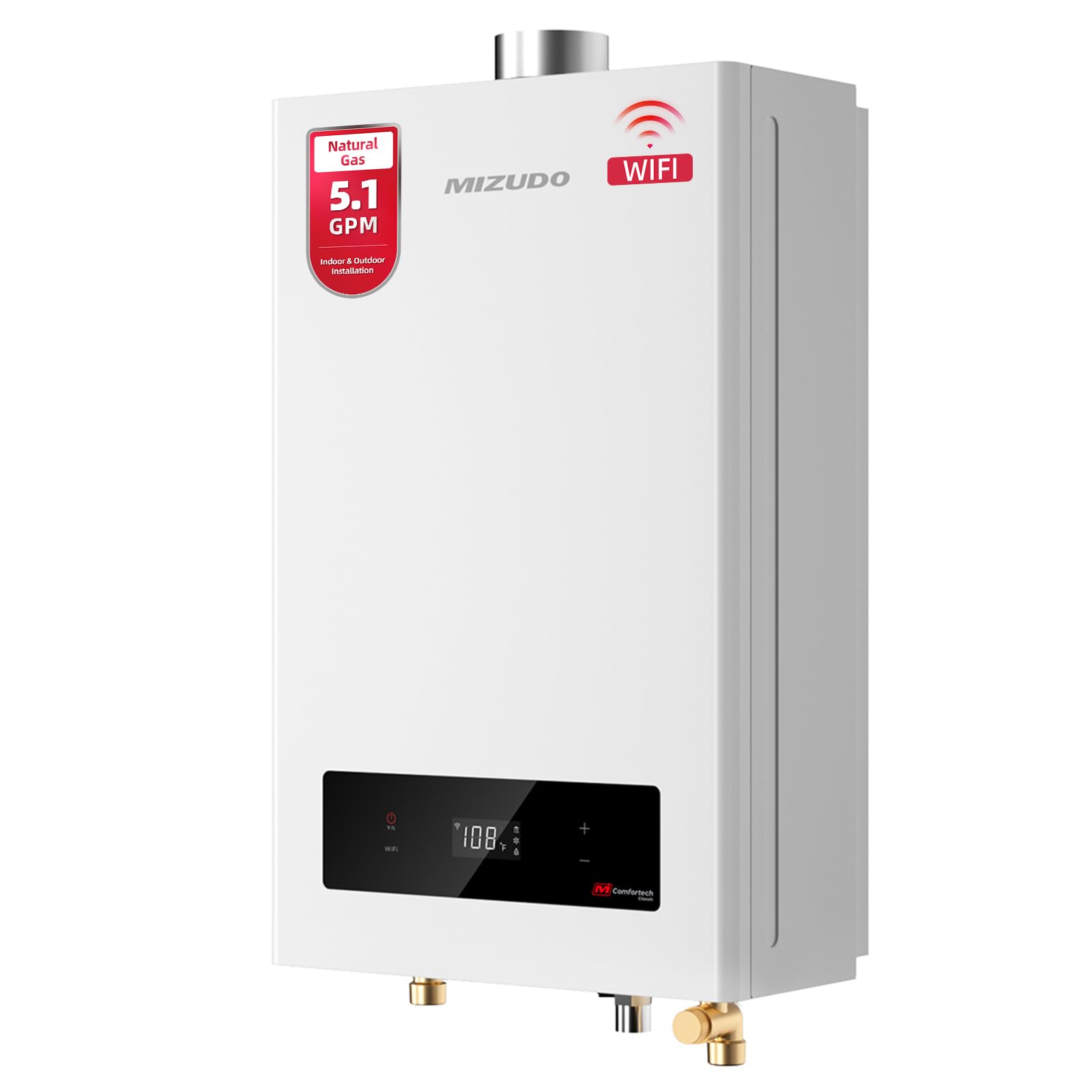
This MIZUDO natural gas unit is designed for convertible installation — indoor use with a 3-inch vent pipe system, or outdoor use with an accessory vent cap kit. The 120,000 BTU output delivers 5.1 GPM, making it suitable for homes with 2-3 bathrooms and moderate simultaneous demand.
It’s CSA certified and includes a phosphorous-deoxidized copper heat exchanger plus a stainless steel combustion chamber. The WiFi app support is included, allowing temperature adjustment between 95°F and 149°F. Owners report that installation is straightforward — typically around 3 hours for a tank-to-tankless swap — and the unit is noticeably quieter than their old tank heater. The low-flow performance is adequate for tub filling, but the 5.1 GPM ceiling means simultaneous heavy use (two showers + dishwasher) may cause a temperature drop.
For homeowners who want the option of mounting the unit outside to free up interior space, this convertible design is a unique offering at the mid-range price point. The warranty — 2-year full unit, 5-year heat exchanger — is reasonable but shorter than Rheem’s 15-year heat exchanger coverage.
Why it’s great
- Convertible indoor/outdoor installation.
- CSA certified with copper heat exchanger.
- WiFi app control included.
Good to know
- 5.1 GPM is low for large homes with high demand.
- Requires a 3-inch vent system for indoor install.
- Gas fitting requires a 1/2-inch MIP adapter (not included).
10. WINTEMP 36kW
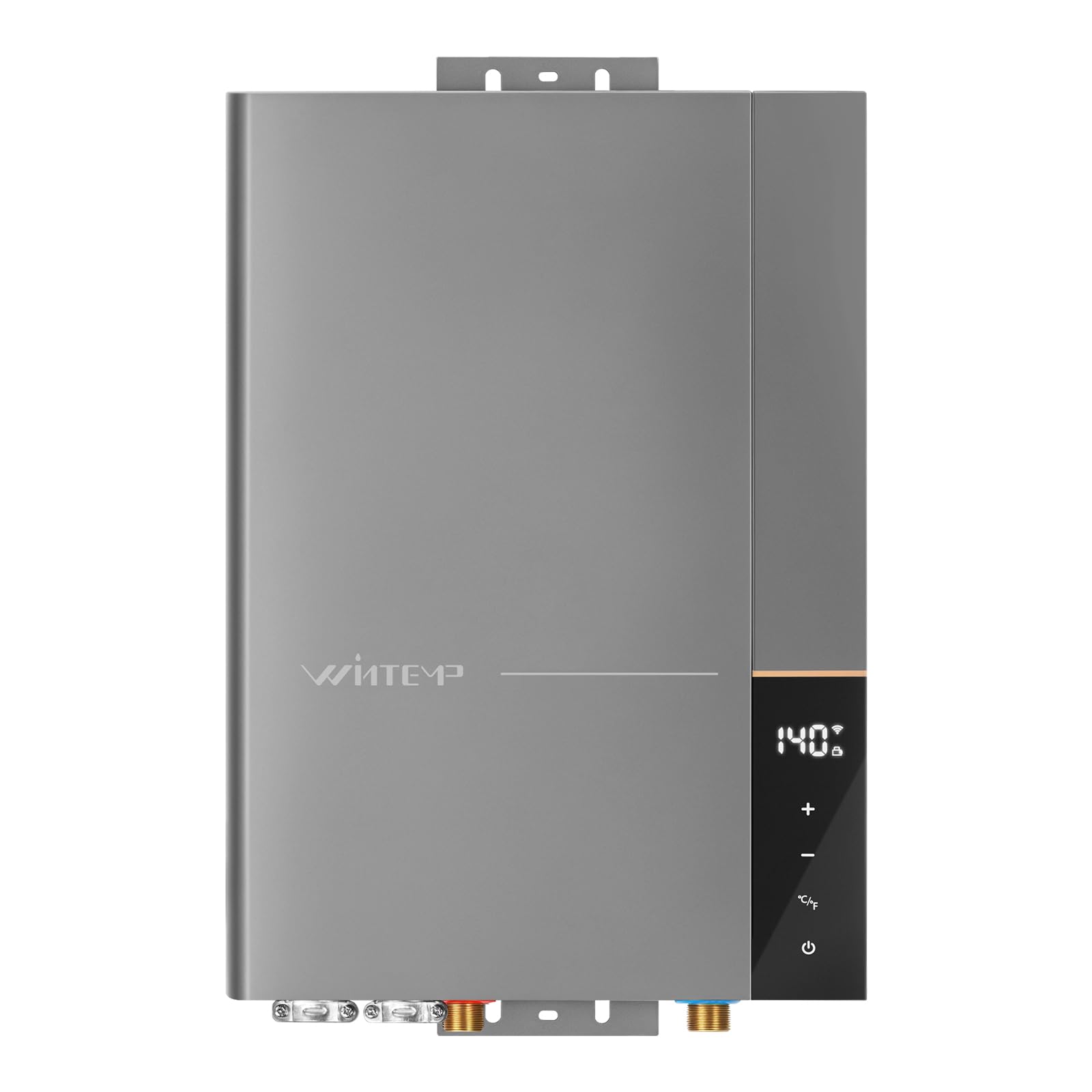
The WINTEMP 36kW electric tankless unit is the most powerful entry-level electric model in the lineup, offering 8.7 GPM flow. It’s ETL certified and includes multiple safety protections (leakage, overheat, dry-fire). The WiFi app provides remote temperature control between 86°F and 140°F.
Installation requires 4 x 40-amp DP breakers and 4 sets of 8/2 AWG cable, which translates to a recommended 300-amp household service. In small homes with low demand, owners report stable 122°F+ water for a shower and sink simultaneously. However, some reviews describe temperature swings exceeding 40°F when multiple fixtures are running, and the plastic housing has been criticized for durability. The 2-year warranty is shorter than industry standards.
This unit works best in a small to medium home with a modern, high-capacity electrical panel where the owner is willing to accept some temperature fluctuation in exchange for the lowest upfront cost.
Why it’s great
- Lowest upfront cost among whole-home electric units.
- WiFi control and digital display included.
- ETL certified with multiple safety systems.
Good to know
- Temperature stability issues reported at high flow.
- Requires 300-amp electrical service minimum.
- Plastic housing less durable than metal competitors.
11. WINTEMP 27kW
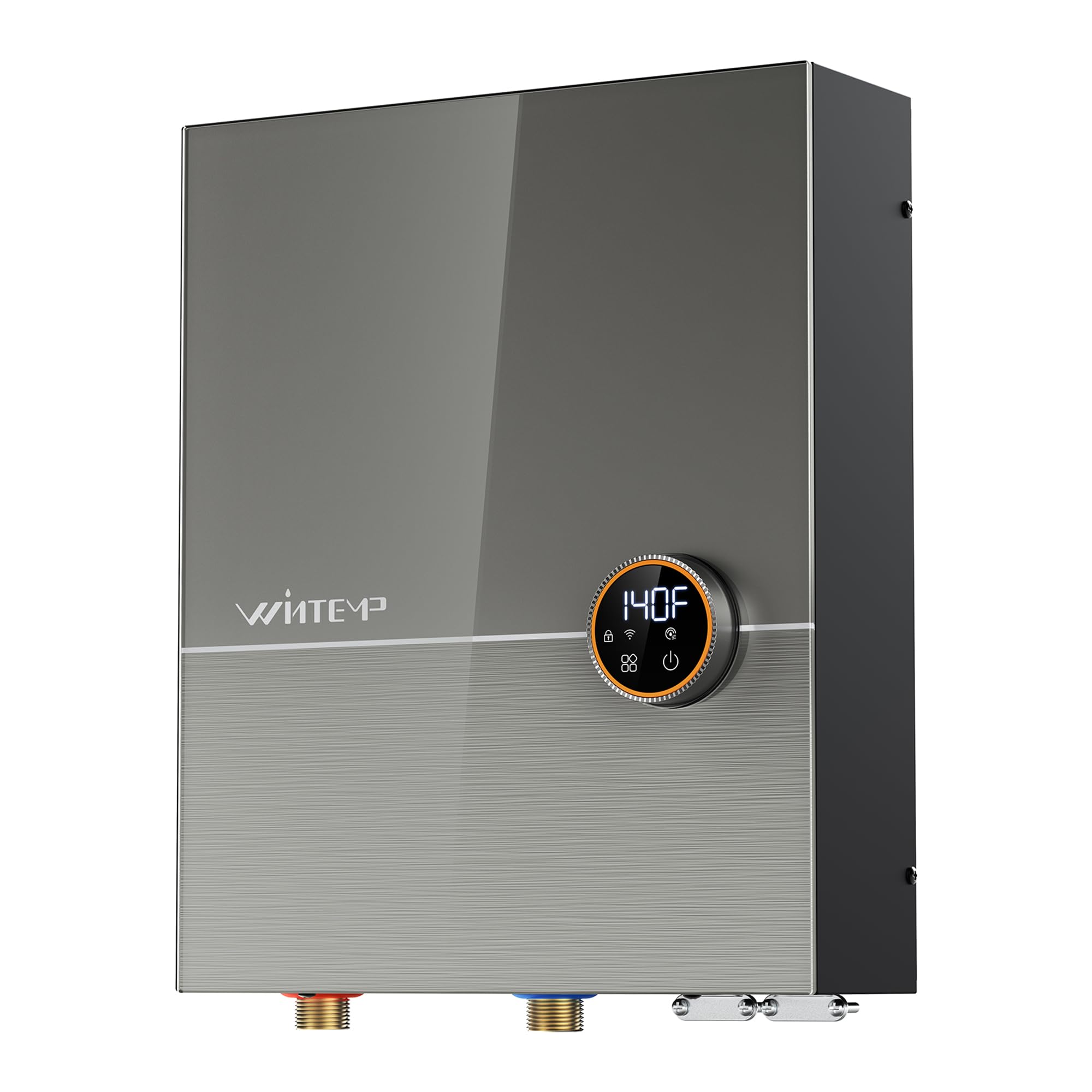
The WINTEMP WM27V is a 27kW electric tankless unit that delivers 6.5 GPM, rated for 2 to 4 points of use. It’s the most budget-friendly option in this guide and requires a 200-amp household service with 3 x 40-amp DP breakers and 3 sets of 8 AWG wiring.
Owners report that it heats 50-60°F groundwater to 120°F effectively for a washer, dishwasher, and shower running together. The all-metal build is a step up from cheaper plastic units, and the WiFi app allows remote monitoring and shut-off. However, the unit claims ETL/UL certification but does not display the logos on the product itself, which gives some buyers pause. Flow control technology reduces flow slightly when demand exceeds capacity, which maintains temperature but may annoy users expecting full pressure.
For the smallest homes or for those with a 200-amp panel that cannot be upgraded, this unit offers a genuine entry point into tankless. It’s not suitable for large families or cold climates, but for a 1-2 person household with moderate hot water use, it removes the standby losses of a 60-gallon tank at the lowest possible investment.
Why it’s great
- Works with 200-amp service — no panel upgrade needed.
- All-metal build for better durability.
- WiFi control and touchscreen interface.
Good to know
- 6.5 GPM limit may throttle flow under high demand.
- ETL/UL certification logos not printed on unit.
- Requires electrician for 8 AWG wiring connections.
FAQ
Can a tankless unit replace my 60-gallon tank without upgrading my electrical panel?
What is the cold-water sandwich effect and which units prevent it?
Do I need special venting for a gas tankless water heater?
How often does a tankless water heater need maintenance?
Final Thoughts: The Verdict
For most families replacing a 60-gallon tank, the top pick is the Rinnai RXP199iN because its 11.1 GPM flow and 0.98 UEF efficiency handle the highest simultaneous demand while keeping operating costs low. If you want a simpler install with a trusted brand and a strong warranty, the Rheem RTG-70DVLN-3 delivers reliable 7.0 GPM performance with a 15-year heat exchanger guarantee. And for propane homes or off-grid setups where instant hot water matters most, the built-in recirculation of the APUS 140K BTU LP eliminates the wait entirely.