
Our readers keep the lights on and the weekend projects moving. As an Amazon Associate, I earn from qualifying purchases.
Dull store-bought cookie cutters limit your baking creativity. A dedicated 3D printer allows you to design and print custom shapes — from monogrammed initials to complex holiday motifs — but the wrong machine wastes hours on failed first layers and stringy, inedible-grade plastic. The choice of printer, filament, and nozzle size directly determines whether your cutter churns out clean, food-safe imprints or brittle, rough-edged failures.
I’m Rikta — the co-founder and writer behind FitlyFast. I’ve analyzed the mechanical specs, heated-bed uniformity, and food-safe compatibility of over forty FDM printers to identify which models deliver the layer adhesion and detail resolution this niche demands.
Whether you are a home baker, a small-batch seller, or a hobbyist looking to merge pastry art with desktop fabrication, the right machine is critical. This guide breaks down the best 3d printer for cookie cutters based on build volume, extrusion precision, and user-friendly auto‑leveling suited for repeated small-object runs.
How To Choose The Best 3D Printer For Cookie Cutters
Selecting a 3D printer for cutters requires focusing on extrusion reliability, build surface adhesion, and the ability to maintain fine Z‑layer resolution over a small footprint. A machine that excels at large vases or cosplay helmets may struggle to produce a crisp 1.5mm‑thick cutter wall without warping or delamination.
Direct Drive vs. Bowden Extruder
Cookie cutters demand short, fast retractions as the nozzle moves between the inner and outer perimeters. A direct‑drive extruder — where the motor sits directly above the hotend — delivers instant filament control, reducing stringing and ooze on thin walls. Bowden systems, with their longer filament path, introduce lag that blurs sharp corners.
Auto Bed Leveling and First‑Layer Consistency
A cutter’s flat bottom edge must be perfectly flush with the bed to avoid gaps that let dough seep underneath. Printers with probe‑based auto leveling (CR Touch, inductive, or strain‑sensor) compensate for minor bed tilt, giving you a uniform first layer without the paper‑trick ritual. Look for machines that offer at least a 16‑point grid calibration.
Nozzle Diameter and Layer Height
A 0.4mm nozzle is the standard for general detail, but 0.6mm nozzles speed up cutter walls while still resolving fine lettering. For food‑safe applications, a hardened steel or brass nozzle dedicated to virgin PETG avoids cross‑contamination from previous abrasive filaments.
Quick Comparison
On smaller screens, swipe sideways to see the full table.
| Model | Category | Best For | Key Spec | Amazon |
|---|---|---|---|---|
| Anycubic Kobra X | CoreXY | Multi‑color, beginner friendly | 600mm/s, 4‑color ACE Pro | Amazon |
| FLASHFORGE AD5X | CoreXY | Multi‑color precision | 600mm/s, 0.25‑0.8mm nozzles | Amazon |
| ELEGOO Centauri Carbon | CoreXY | Enclosed, fast PLA/PETG | 500mm/s, 320°C nozzle | Amazon |
| Creality K1C | CoreXY | Carbon fiber, high temp | 600mm/s, 300°C nozzle | Amazon |
| Longer LK5 Pro 3 | Bedslinger | Large build volume | 300x300x400mm, 180mm/s | Amazon |
| Creality Ender 3 V3 SE | Bedslinger | Budget, beginner upgrade | 250mm/s, Sprite extruder | Amazon |
| Entina Tina2 Plus | Mini | Kids, full auto setup | 250mm/s, 40s ceramic hotend | Amazon |
| Dremel 3D45 | Enclosed | School, plug & play | 280°C nozzle, glass bed | Amazon |
In‑Depth Reviews
1. Anycubic Kobra X
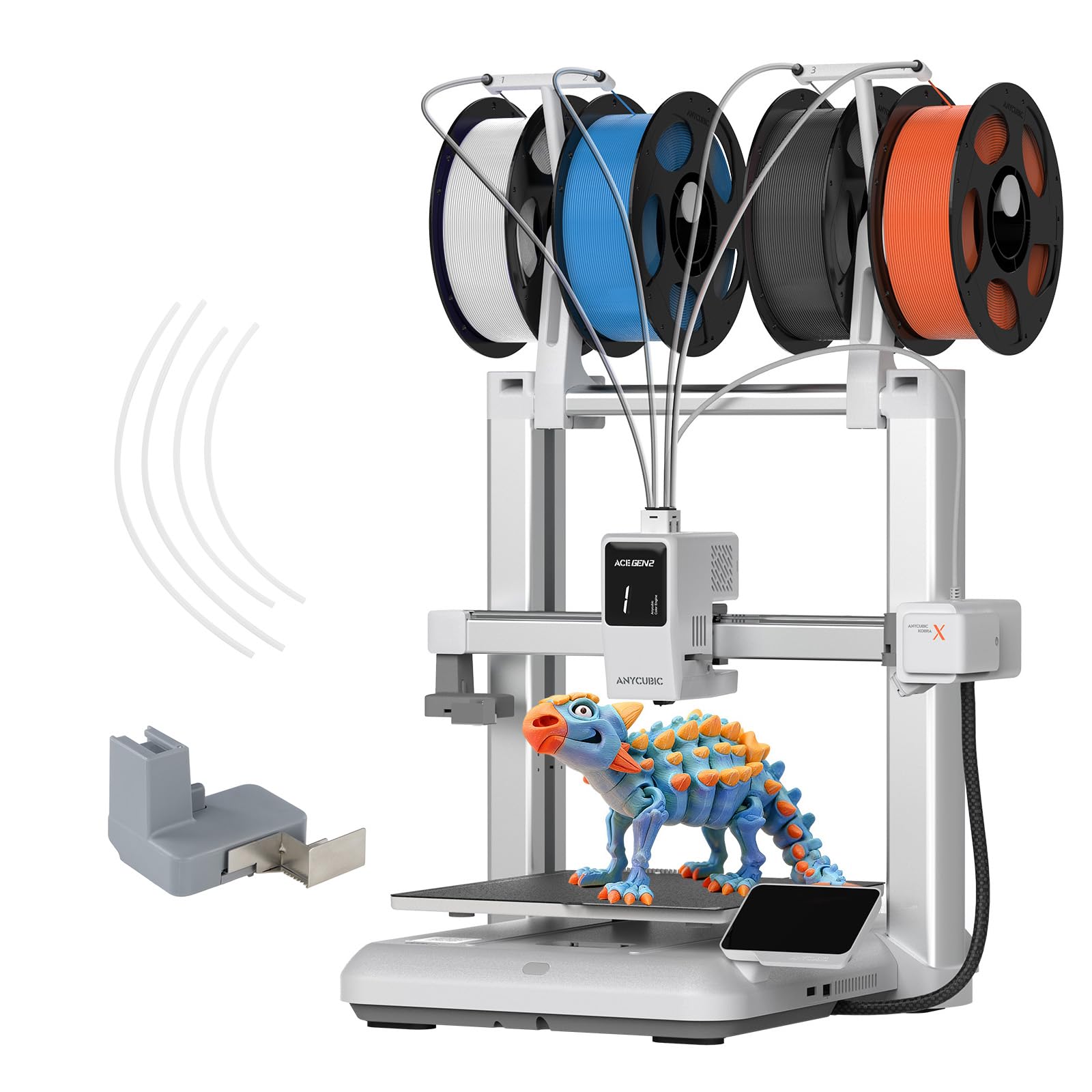
The Kobra X redefines the value proposition for cookie‑cutter creators by bundling native multicolor capability with a hardened steel nozzle and vibration compensation. Its LeviQ 3.0 auto‑leveling runs a 49‑point calibration, ensuring the first layer — critical for flat cutter bases — adheres uniformly across the entire bed. The included 4‑color ACE Pro system lets you print dual‑tone cutters or graduated color effects without manual filament swaps mid‑print.
At 600mm/s, this CoreXY machine completes a typical 70mm cutter in under twelve minutes while maintaining crisp 0.2mm layers. The spaghetti‑detection AI camera provides remote monitoring, so you can verify that the thin cutter walls are not peeling before you walk away. Support for flexible filaments like TPU also means you can line cutter edges with non‑slip grips directly on the build plate.
The trade‑off: the 4‑color purging block generates a higher percentage of waste per small cutter compared to a single‑color machine. Users report that 5GHz WiFi connectivity is stable once configured, but the phone app’s interface could be more intuitive for first‑time wireless uploads. Overall, the multicolor flexibility and high speed justify the mid‑range investment for serious baker makers.
Why it’s great
- Native 4‑color printing eliminates filament changes for multi‑tone cutters.
- 49‑point auto leveling guarantees a flat first layer on every run.
- 600mm/s print speed with vibration compensation keeps thin walls sharp.
Good to know
- Multicolor purging creates more waste per small object.
- Phone app connectivity can be finicky on initial setup.
- Enclosed upgrades are not available from the factory.
2. FLASHFORGE AD5X
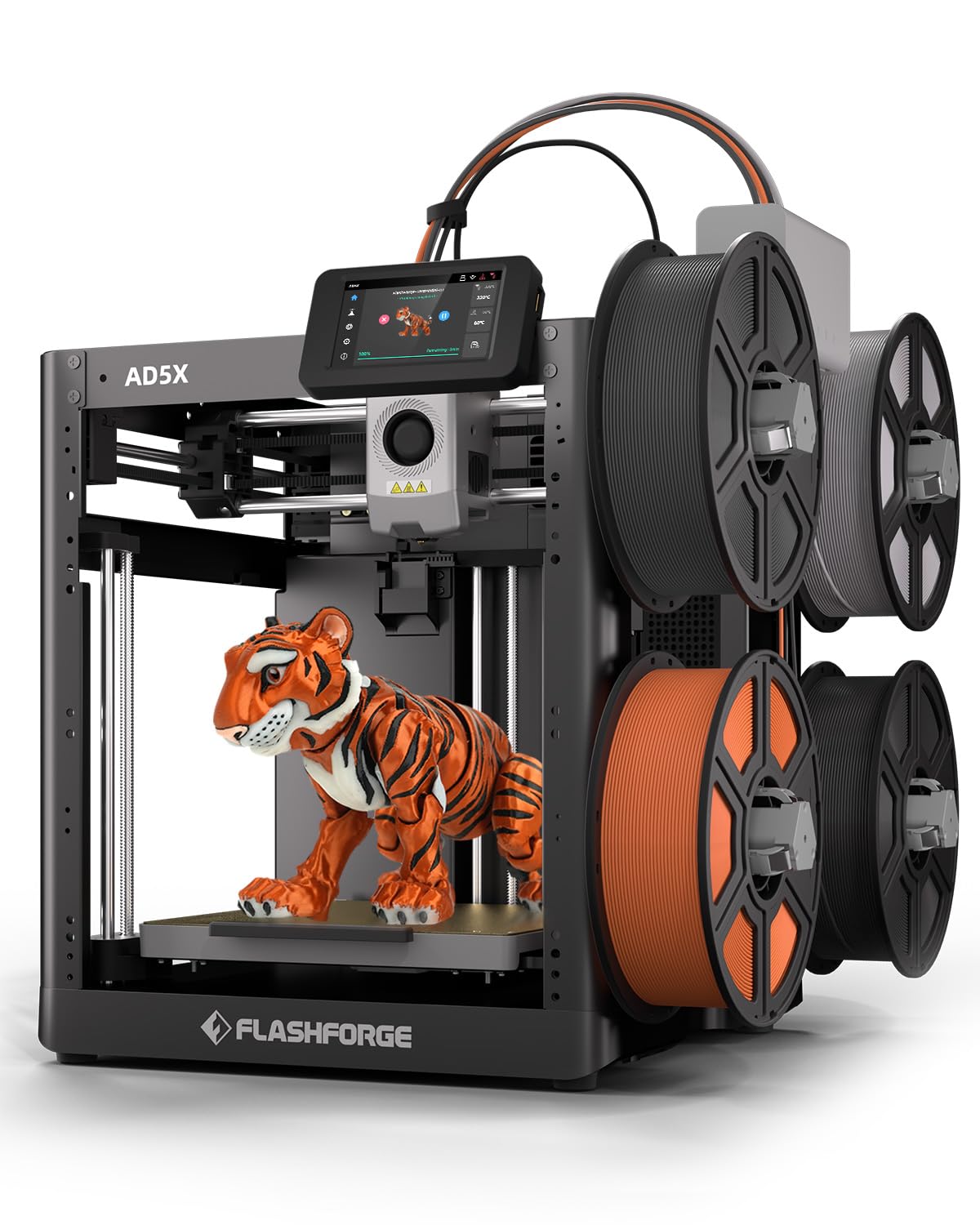
The AD5X brings a 1‑click auto‑leveling system and a 300°C direct‑drive extruder to the cookie cutter arena. Its ability to swap between 0.25mm (ultra‑fine lettering) and 0.8mm (thick walls) nozzles without recalibration makes it a versatile tool for bakers who oscillate between detailed monogram cutters and bulk batches of simple shapes. The dual‑channel cooling fan solidifies thin overhangs, preventing the curled edges that ruin a cutter’s dough seal.
Printers in this speed class often sacrifice layer adhesion, but the AD5X’s extrusion multiplier calibration routine balances flow rate to produce strong inter‑layer bonds. Users report that a 0.4mm nozzle at 0.12mm layer height yields cutter edges smooth enough to require no sanding before first use. The built‑in filament runout sensor pauses and resumes automatically, a lifesaver for overnight cutter production runs.
On the downside, the stock software stack — while functional — lacks the refined color‑handling profiles found in Bambu’s ecosystem. Early units exhibited inconsistent first‑layer quality on the bed margins, though firmware updates have largely addressed this. The multi‑color purge block is also sizable, so single‑color cutter batches may feel wasteful.
Why it’s great
- Interchangeable nozzle sizes cover both fine detail and fast bulk printing.
- 1‑click auto leveling with vibration compensation ensures razor‑sharp first layers.
- Direct‑drive extruder minimizes stringing on tall, thin cutter walls.
Good to know
- Purge waste is larger than average for multi‑color prints.
- Software profiles for custom filaments still need community tuning.
- Stock cooling fans are loud during small cutter cycles.
3. ELEGOO Centauri Carbon
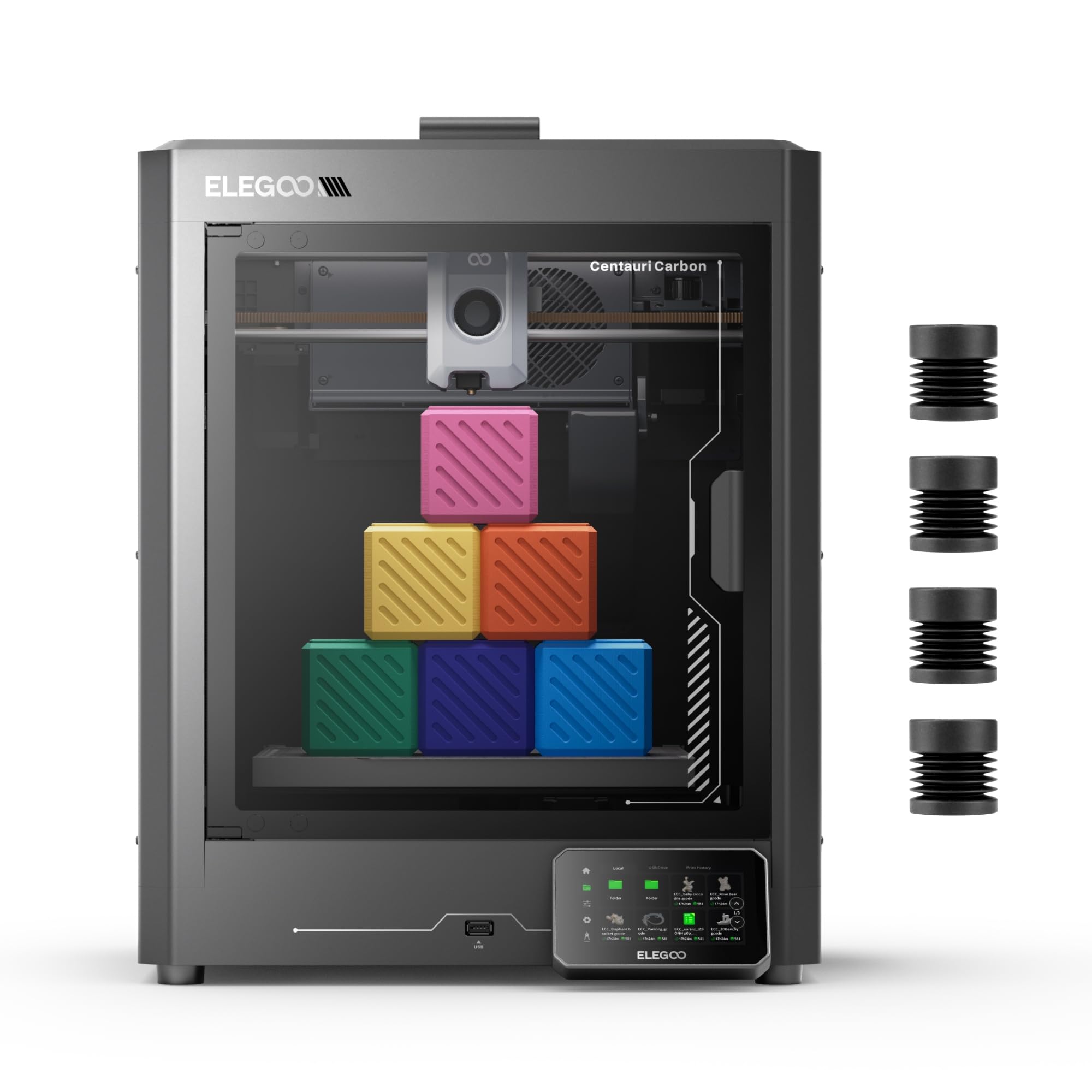
The Centauri Carbon arrives fully assembled and pre‑calibrated, which shaves hours off the setup time for bakers who want to start printing cutters immediately. Its enclosed chamber maintains stable ambient temperatures, reducing warping on PETG cutter bases — a common frustration with open‑frame printers. The 320°C hardened steel nozzle handles food‑safe filaments like PETG and even carbon‑fiber reinforced PLA for rigid, durable edges.
With a 500mm/s travel speed and 20,000mm/s² acceleration, this machine completes a 65mm star cutter in roughly eight minutes. The die‑cast aluminum frame absorbs vibrations, preserving fine detail on intricate cutter patterns like lace or filigree. The built‑in camera feeds time‑lapse capture, which doubles as a quality‑check tool for first‑layer adhesion across the 256x256mm plate.
The main consideration is weight: at 38.5 pounds, the Centauri Carbon is not easily portable between kitchen and workshop. Some units required a replacement hotend after a week of heavy use, though ELEGOO’s support team responded within 24 hours. The proprietary slicer is intuitive for PLA but lacks advanced temperature‑tower controls for less common filaments.
Why it’s great
- Enclosed chamber eliminates PETG warping on large cutter bases.
- 32‑bit silent board keeps noise low in a home kitchen environment.
- Pre‑calibrated out of the box — no tinkering before the first print.
Good to know
- Heavy frame (38 pounds) makes relocation difficult.
- Proprietary slicer has fewer advanced profiles than Cura or Orca.
- Initial replacement support can be slow in certain regions.
4. Creality K1C

The K1C is Creality’s response to the demand for an enclosed, high‑speed workhorse that can also handle carbon‑fiber filaments. Its 300°C clog‑free direct extruder grips filament tightly, preventing the skipped steps that plague Bowden systems during fast retractions on small cooke cutters. The AI camera detects spaghetti failures and foreign debris, sending an alert so you can salvage the print run without watching the entire cycle.
Printing a 75mm round cutter at 0.2mm layer height takes under ten minutes, and the three‑fan cooling system (hotend, part, auxiliary) solidifies walls instantly, reducing the brittle corners that crack during storage. Auto‑calibration covers Z‑offset, leveling, and input shaping — the latter compensates for resonance that otherwise blurs the letters on a monogram edge.
Early adopters reported inconsistent print quality on the left side of the bed due to uneven belt tension, though factory QA has tightened since launch. The enclosure improves chamber temperature stability, but the small 8.66‑inch cubic build volume limits you to smaller batches per plate. For bakers who batch‑produce dozens of identical cutters daily, this volume may necessitate staggered runs.
Why it’s great
- Triple‑fan cooling prevents edge curling on thin cutter walls.
- AI failure detection reduces wasted filament on failed overnight prints.
- 300°C extruder opens up high‑temp food‑safe filaments.
Good to know
- Small build volume limits batch production.
- Belt tension QA varies between individual units.
- Higher noise than open‑frame bedslingers during fast travel moves.
5. Longer LK5 Pro 3

If your cutter designs require a large single‑piece build — think oversized gingerbread house templates or massive holiday cutters — the LK5 Pro 3’s 300x300x400mm bed is a clear advantage. Its triangular frame and reinforced inclined rods dampen resonance, allowing you to fill the entire plate with two dozen small cutters in one run without sacrificing inter‑layer alignment.
The open‑source firmware and TMC2209 silent drivers let you fine‑tune acceleration and jerk values specifically for small geometry. Many cookie cutter models share the same base perimeter; by copying and rotating within the slicer, you can maximize plate utilization. The silicon carbide glass platform provides uniform heating, reducing the PETG warpage that occurs on cheaper glass beds with hot spots.
The flip side is speed: at a maximum of 180mm/s, this printer will not keep pace with CoreXY machines. Manual bed leveling (the three‑knob system) is adequate but requires periodic re‑adjustment, especially after swapping between PLA and PETG. Beginners may find the lack of auto‑leveling a step backward, though the large bed is forgiving for those who invest the initial setup time.
Why it’s great
- Massive build volume fits an entire batch of cutters in one print.
- Silence‑optimized TMC2209 drivers keep kitchen noise low.
- Open‑source firmware allows advanced calibration for small walls.
Good to know
- Manual bed leveling needs periodic tuning for consistent first layers.
- 180mm/s is slower than modern CoreXY competitors.
- Weight (28 pounds) and footprint require a dedicated desk space.
6. Creality Ender 3 V3 SE

The V3 SE iteration of the legendary Ender 3 lineage brings CR Touch auto‑leveling and a Sprite direct extruder to the budget segment. For cookie cutter enthusiasts, the Sprite extruder is the key upgrade: its dual‑gear mechanism feeds PLA and PETG without the grinding that the old Bowden setup suffered on long, thin filament paths. The auto‑leveling sensor maps the bed in seconds, giving beginners a fighting chance at a perfect first layer.
With a 250mm/s print speed and 2,500mm/s² acceleration, this machine can still keep a respectable pace — a 70mm star cutter prints in about 15 minutes. The flexible PC spring steel build plate allows easy removal of finished cutters by simply bending the plate, without scraping or risking damage to thin walls. Dual Z‑axis screws reduce wobble, which directly translates to straighter cutter walls.
Assembly takes roughly 20 minutes, but the V3 SE still requires some manual calibration tweaks (eccentric nut tension, belt tightness) for optimal small‑part performance. The 32‑bit silent board is a welcome upgrade over older Ender models, though the UI motion graphics can feel laggy when navigating through setup menus. Overall, it is the best entry point for bakers who want to learn the mechanics without breaking the bank.
Why it’s great
- Sprite direct extruder handles flexible filaments without jamming.
- Auto leveling eliminates the dreaded paper‑trick calibration.
- Flexible steel bed makes cutter removal effortless.
Good to know
- Some manual tuning (belt, eccentric nuts) is still required.
- Stock firmware UI feels sluggish compared to alternatives.
- Build volume is smaller than some older Ender models.
7. Entina Tina2 Plus

The Tina2 Plus is designed for the family or classroom where a parent or teacher wants to print custom cookie cutters with minimal adult intervention. It ships fully assembled — no screwdrivers, no cable management — and the 40‑second ceramic hotend heats up so fast that even impatient kids can see a cutter form within minutes of unboxing. The Poloprint Cloud app hosts over 1,500 pre‑sliced models, including basic cookie cutter shapes, so you can print immediately without learning slicer software.
Despite its small footprint, the Tina2 Plus packs a PEI spring steel plate and dual Z‑axis leadscrews for surprising stability. Print quality at 250mm/s is good enough for 0.2mm layer height cutters, producing edges that require only light sanding. The partially enclosed frame separates moving parts from curious fingers, earning it a practical safety edge for supervised use.
The trade‑off: the app’s WiFi connectivity can be temperamental, and the model library, while large, does not include custom upload slicing — you must create designs externally and transfer via TF card. The 8.6‑inch cubic build volume limits each print to two or three small cutters. For a quick holiday project or school bake sale, however, the Tina2 Plus is the lowest‑friction path to a custom cutter.
Why it’s great
- Fully assembled and ready to print in under five minutes.
- Ceramic hotend reaches temperature in 40 seconds, reducing wait time.
- Cloud app provides a library of printable cutter models for beginners.
Good to know
- App WiFi can drop connection mid‑print.
- Limited build volume restricts batch size.
- Custom designs require external creation and SD card transfer.
8. Dremel 3D45

The Dremel 3D45 is the premium plug‑and‑play option for institutions or bakeries that require reliability over raw speed. Its fully enclosed body houses a heated glass bed and a carbon‑filter system that minimizes fumes during PETG printing — a consideration for kitchens without dedicated ventilation. The RFID system automatically configures filament profiles when you insert a Dremel spool, eliminating the guesswork from temperature and retraction settings.
While the 3D45’s maximum print speed is modest compared to CoreXY machines, its consistent extrusion and ultra‑stable frame yield cutter walls with invisible layer lines at 0.1mm resolution. The 5‑inch color touchscreen walks even a novice through the setup in under 15 minutes. The printer pauses automatically on filament runout, a crucial feature for long cutter batches that run past a single spool.
Dremel’s proprietary ecosystem comes at a cost: the OEM filament spools are expensive and sized to fit the internal holder awkwardly. The build volume (6.7x10x6 inches) is smaller than most competitors, limiting each print to roughly four standard‑sized cutters at once. For users who prioritize absolute ease‑of‑use and technical support over speed and value, however, the 3D45 remains a durable, worry‑free choice.
Why it’s great
- RFID auto‑configures filament profiles, eliminating guesswork.
- Carbon and particulate filters make kitchen use safer.
- 15‑minute unbox‑to‑print time for beginners.
Good to know
- OEM filament is expensive and spool dimensions are non‑standard.
- Build volume is small — limited to four cutters per batch.
- Print speed is significantly slower than budget CoreXY machines.
9. Creality Ender 3 V3 SE (First Listing)

This earlier listing of the Ender 3 V3 SE shares the same core Sprite direct extruder, CR Touch auto‑leveling, and dual Z‑axis as the newer revision, but at a slightly lower entry point. For bakers who want to allocate more budget toward a dedicated food‑safe filament collection, this version offers identical extrusion reliability and first‑layer technology without the minor convenience upgrades of the 2025 refresh.
The 250mm/s top speed and 2,500mm/s² acceleration produce a 60mm round cutter in about 14 minutes on standard 0.2mm layers. Users consistently mention that the Sprite extruder handles PETG without stringing, and the PC spring steel plate releases cutters cleanly after cooling. The 32‑bit silent board keeps the operation quiet enough for a home kitchen during afternoon baking prep.
The primary differences from the newer version are cosmetic: the UI lacks motion graphics and the packaging may not include the latest firmware pre‑loaded. Some units shipped with older mainboard revisions that required a manual firmware flash to unlock full speed profiles. If you are comfortable with a one‑time firmware update, this listing provides identical mechanical performance at a slight discount.
Why it’s great
- Same Sprite extruder and CR Touch as the newer version.
- Lower price frees budget for food‑safe filament.
- Silent mainboard keeps kitchen noise minimal.
Good to know
- Older firmware may require manual update for optimal performance.
- UI is less polished than the 2025 revision.
- Packaging may lack the latest accessory kit.
FAQ
Can I use PLA filament for cookie cutters?
What is the best layer height for printing cookie cutters?
Do I need a heated bed for cookie cutters?
How do I make my cookie cutters food‑safe?
Can I print cookie cutters with a 0.8mm nozzle?
Final Thoughts: The Verdict
For most users, the best 3d printer for cookie cutters winner is the Anycubic Kobra X because it combines high‑speed CoreXY performance, native multicolor capability, and a foolproof 49‑point auto‑leveling system that handles the critical first layer of a cutter base. If you want a fully enclosed machine for consistent PETG results, grab the ELEGOO Centauri Carbon. And for a no‑fuss classroom or family setup, the Entina Tina2 Plus gets you from unboxing to printed cutter in under ten minutes.