
Our readers keep the lights on and the weekend projects moving. As an Amazon Associate, I earn from qualifying purchases.
That relentless, maddening scalp itch that wakes you up or haunts you through the workday is often driven by histamine reactions triggered by allergens, fungal overgrowth, or contact sensitivity. Scratching only inflames the nerve endings more, locking you into a vicious cycle that damages the skin barrier and worsens flaking. The right active ingredient—whether you need a topical antihistamine, an antifungal that blocks histamine-like itching, or a soothing compound that calms mast cells—can break that loop fast.
I’m Rikta — the co-founder and writer behind FitlyFast. I’ve spent years analyzing dermatological formulations, parsing ingredient registries like the NDC database, and cross-referencing clinical trial data against real-world user outcomes to find the most effective OTC solutions for scalp irritation.
This guide narrows the field to seven proven options, from medicated shampoos with ketoconazole to leave-on serums with pyrithione zinc and cooling botanicals, so you can choose the right antihistamine for itchy scalp based on your specific trigger and sensitivity level.
How To Choose The Best Antihistamine For Itchy Scalp
Not all scalp itches are created equal. An allergic reaction to a new hair product requires a different approach than chronic dandruff driven by Malassezia yeast or the inflammation of seborrheic dermatitis. The first step is matching the active ingredient to your root cause.
Identify the Itch Trigger First
If the itching appeared after switching shampoo, conditioner, or hair dye, a contact allergen is likely—look for a leave-on serum with soothing ingredients like menthol, aloe, and colloidal oatmeal to calm mast cell degranulation. If the itch is paired with visible flakes, yellow scaling, or greasy patches, Malassezia fungus is the culprit; medicated shampoos with ketoconazole or pyrithione zinc are the standard treatment. For itching from dry scalp without fungal signs, a hydrating serum with tea tree oil or honey can restore the moisture barrier and reduce nerve irritation.
Read the Active Ingredient Concentration
OTC products have regulated maximums for antifungal and antihistamine-like agents. Ketoconazole caps at 1%, pyrithione zinc at 1%, and salicylic acid at 3%. A leave-on cream with 0.25% pyrithione zinc is sufficient for maintenance, whereas a shampoo with 1% ketoconazole is better for breaking a stubborn flare. For immediate cooling relief, look for menthol or peppermint oil as secondary ingredients that provide a counter-irritant effect that distracts the brain from the itch signal.
Quick Comparison
On smaller screens, swipe sideways to see the full table.
| Model | Category | Best For | Key Spec | Amazon |
|---|---|---|---|---|
| Nizoral Anti-Dandruff Shampoo | Medicated Shampoo | Fungal dandruff & seborrheic dermatitis | 1% Ketoconazole | Amazon |
| Recuren Plus Antifungal Shampoo | Multi-Active Shampoo | Folliculitis & psoriasis | Piroctone Olamine + Salicylic Acid | Amazon |
| Eczema Honey Scalp & Hair Oil | Leave-On Serum | Eczema-prone & dry scalps | Colloidal Oatmeal + Honey | Amazon |
| DERMA-E Scalp Relief Treatment | Leave-On Serum | Instant cooling relief | Menthol + Tea Tree Oil | Amazon |
| Dermaharmony Seb Derm Cream | Leave-On Cream | Seborrheic dermatitis on scalp & face | 0.25% Pyrithione Zinc | Amazon |
| Head & Shoulders Bare Scalp Serum | Leave-On Serum | Lightweight daily itch control | 0.1% Pyrithione Zinc | Amazon |
| KESMEDIK Tea Tree Oil Shampoo | Clarifying Shampoo | Oily scalp & buildup relief | Tea Tree Oil + Sulfate-Free | Amazon |
In‑Depth Reviews
1. Nizoral Anti-Dandruff Shampoo with 1% Ketoconazole

Nizoral stands apart because it uses 1% ketoconazole—an azole antifungal that directly kills Malassezia yeast, the primary driver of dandruff itch and seborrheic dermatitis flaking. Unlike zinc-based shampoos that suppress symptoms, ketoconazole attacks the root organism, making it the most clinically potent OTC option for chronic, moderate-to-severe itching. Users report noticeable relief in as few as two to three uses, with itching subsiding as the yeast population drops.
The formula is sulfate-free and pH-balanced for color-treated and chemically processed hair, which matters when you are washing twice weekly. The trade-off is significant drying: the antifungal mechanism strips natural oils, so pairing it with a heavy conditioner is non-negotiable to avoid brittle strands. The fresh scent avoids the medicinal smell that turns some users off from medicated shampoos.
For anyone whose itchy scalp is accompanied by visible flakes, yellow scaling, or redness on the hairline, Nizoral is the diagnostic standard. If the itch persists after two weeks of twice-weekly use, the condition may involve a different pathway like contact dermatitis or psoriasis, and a dermatologist consult is warranted.
Why it’s great
- 1% ketoconazole targets yeast at the root cause of itching
- Clinically proven in lab tests to be more effective at killing fungus than zinc-based competitors
- Safe for color-treated and chemically processed hair
Good to know
- Drying to hair; requires a heavy conditioner after each wash
- Only used twice weekly, not a daily shampoo
2. Recuren Plus Antifungal Shampoo for Folliculitis and Seborrheic Dermatitis

Recuren Plus combines piroctone olamine—a broad-spectrum antifungal and anti-inflammatory—with salicylic acid, which exfoliates the buildup of dead skin and scales that trap itch-inducing irritants. This dual mechanism makes it unusually effective for conditions that involve both fungal overgrowth and thick scaling, such as scalp psoriasis, seborrheic dermatitis, and folliculitis. Users with bumps and redness along the hairline report control after consistent use.
The inclusion of coconut oil and rosemary extract provides moisturizing compensation for the clarifying action of salicylic acid, leaving the hair soft and shiny rather than stripped. The lather quality is excellent—a small amount goes a long way—and the scent is a neutral, clean jasmine-tea note that avoids the medicinal punch of tar-based shampoos. It is sulfate-free and gentle enough for daily use on sensitive scalps.
Where this shampoo excels is its versatility: it handles fungal itch, inflammatory scaling, and bacterial-adjacent folliculitis in one bottle. For users who have tried standard dandruff shampoos with incomplete relief, the piroctone olamine + salicylic acid pairing offers a higher-potency alternative without moving to a prescription.
Why it’s great
- Piroctone olamine targets fungus and inflammation simultaneously
- Salicylic acid lifts scales and buildup that perpetuate itching
- Moisturizing enough to avoid the dryness of typical medicated shampoos
Good to know
- Requires a 3-5 minute leave-in time for full efficacy
- Slightly stronger scent than basic drugstore shampoos
3. Eczema Honey Soothing Scalp & Hair Oil

Eczema Honey takes a fundamentally different approach: instead of killing organisms, it calms the skin barrier with colloidal oatmeal, honey, and aloe vera to reduce the nerve sensitivity that drives itch. This makes it ideal for eczema-prone scalps where the itching is caused by a compromised moisture barrier rather than fungal infection. The Leaping Bunny certification and complete absence of parabens, sulfates, phthalates, and synthetic fragrances mean zero irritants for hypersensitive skin.
The dropper bottle delivers a concentrated oil that users apply in small amounts—one to three drops—directly to the scalp. The texture is lightweight and absorbs without leaving a greasy film on fine hair. For severe flare-ups, users report immediate relief of the burning sensation, though some eczema cases require a prescription treatment for full resolution. The bottle is small at 1 oz, but since only a few drops are needed per application, it lasts through multiple flare cycles.
If your itching is accompanied by dry, cracked patches and a history of eczema, this is the most targeted option. It is also safe for all ages and daily use, making it a reliable spot-treatment companion to a medicated shampoo regimen.
Why it’s great
- Colloidal oatmeal and honey directly calm eczema itch and burning
- No fragrances, sulfates, parabens, or phthalates
- Leaping Bunny certified cruelty-free
Good to know
- Small 1 oz bottle requires careful dispensing
- Less effective for fungal-driven dandruff; best for eczema histamine pathway
4. DERMA-E Scalp Relief Treatment

DERMA-E delivers near-instant relief via menthol’s cooling TRPM8 receptor activation, which overrides the itch signal traveling from the scalp to the brain. Combined with tea tree oil’s mild antifungal and anti-inflammatory properties, this serum is designed for users who need symptom relief now while waiting for a medicated shampoo to address the underlying cause. The water-based formula absorbs quickly with zero greasy residue, making it suitable for application before styling.
The ingredient list is impressively clean: 100% vegan and cruelty-free, free of parabens, sulfates, mineral oil, petrolatum, lanolin, gluten, soy, and GMOs. Users who bleach or chemically process their hair find it particularly soothing for the irritation that follows salon treatments. The bottle is compact at 1 oz, and several reviews note that the formula can separate if stored incorrectly—a quick shake fixes this.
For the user whose scalp itches intensely between washes or after sweating, this serum is the closest thing to a cold compress in a bottle. It pairs well as a midday rescue product alongside a morning medicated shampoo routine.
Why it’s great
- Menthol provides immediate cooling that interrupts the itch-scratch cycle
- Tea tree oil offers mild antifungal and antibacterial support
- Non-greasy formula absorbs quickly into all hair types
Good to know
- Small 1 oz bottle; product may separate over time and need shaking
- Not a standalone treatment for fungal-driven dandruff
5. Dermaharmony Seborrheic Dermatitis Cream with 0.25% Pyrithione Zinc

Dermaharmony’s cream is a registered OTC drug with NDC code 71819-002-03, meaning its claims of seborrheic dermatitis relief are FDA-monitored—a level of regulatory oversight that many scalp products lack. The 0.25% pyrithione zinc concentration is the maximum allowed for a leave-on OTC cream, providing sustained antifungal and antibacterial activity on the scalp surface without the drying effect of a shampoo rinse-off formula. Users report clearing facial seb derm in as little as two days after trying steroids and other antifungals with incomplete results.
The beeswax, avocado oil, and sweet almond oil base delivers a thick, moisturizing feel that helps prevent the rebound dryness common with ethanol-based scalp treatments. This makes it particularly useful for the hairline, behind the ears, and even the eyebrows where seborrheic dermatitis often spreads. The travel-friendly 3 oz tube is TSA-compatible, though some users have reported packaging defects where cream seeps from the crimped end.
For users whose itchy scalp is part of a broader facial seb derm pattern, this cream is the most targeted leave-on option. Use it as a spot treatment on scale-prone areas after washing, and it will maintain clear skin with consistent application.
Why it’s great
- Highest OTC-allowed pyrithione zinc concentration for leave-on use
- Registered OTC drug with FDA NDC code for seborrheic dermatitis
- Beeswax base with avocado and almond oil prevents drying
Good to know
- Some units have packaging defects causing leakage
- Thick consistency may feel heavy on fine hair roots if over-applied
6. Head & Shoulders Bare Scalp Relief Serum with 0.1% Pyrithione Zinc
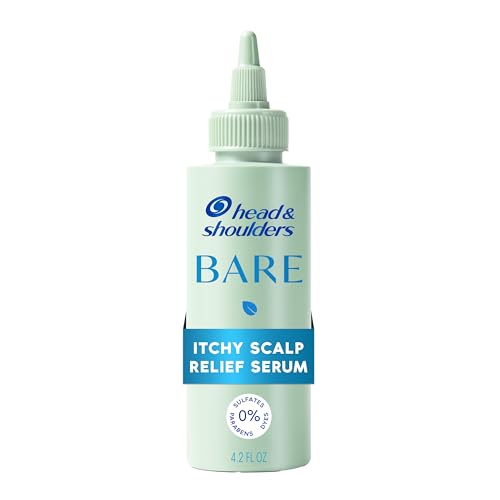
Head & Shoulders Bare is a minimal-ingredient serum designed for users who want daily maintenance without the weight of a cream or the complexity of a multi-step routine. The 0.1% pyrithione zinc concentration is lower than the Dermaharmony cream, making it suitable for ongoing itch prevention rather than acute flare treatment. The inclusion of peppermint oil provides a mild cooling sensation that signals relief on contact.
The formula contains 0% sulfates, parabens, and dyes, and its lightweight texture absorbs into the scalp without leaving residue on fine or thin hair—a common complaint with thicker leave-on products. Users report that the serum reduces itch between washes, though some note it can shorten the time they can go between shampoos. A small number of units arrived with a white residue on the bottle rim, possibly from temperature fluctuation during shipping.
This serum is ideal for the user with mild-to-moderate daily itch who wants a no-fuss product that lives on the bathroom counter and works with any shampoo. It is not powerful enough for severe seborrheic dermatitis but excels as a daily barrier against returning itch.
Why it’s great
- Lightweight, non-greasy formula ideal for fine or thin hair
- Peppermint oil provides immediate cooling relief
- Free of sulfates, parabens, and dyes
Good to know
- Lower zinc concentration limits efficacy for moderate-to-severe itch
- Some units arrived with cosmetic residue on packaging
7. KESMEDIK Tea Tree Oil Shampoo MaxTherapy
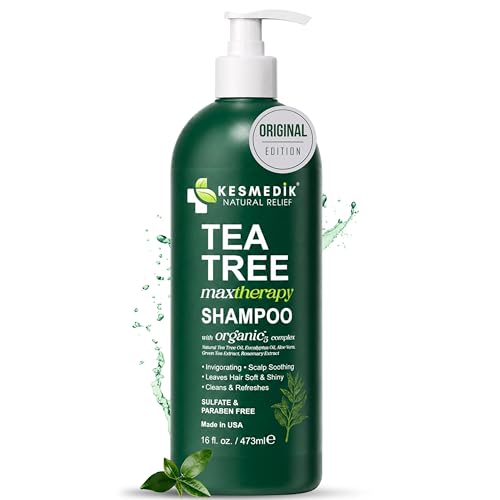
KESMEDIK relies on pure tea tree oil as its primary active, which provides both mild antifungal activity against Malassezia and a distinct cooling tingle that users find subjectively relieving. This shampoo is formulated as a clarifying deep-clean for buildup from styling products, excess sebum, and hard water minerals—all of which can trap irritants against the scalp and perpetuate itching. The 16 oz bottle is generous for the price point, and the sulfate-free formula is safe for daily use on oily hair types.
Users with oily scalps and dandruff report significant improvement in itchiness and flaking, with the tea tree scent being a polarizing factor—some love the crisp herbal note, while others find it medicinal. A subset of users note that the shampoo leaves a film if not rinsed thoroughly, so an extended rinse is necessary. The GMP-certified US manufacturing adds a layer of quality assurance that smaller brands sometimes lack.
For the user whose itchy scalp is caused by product buildup and excess oil rather than a severe fungal infection, this shampoo offers an affordable, natural-leaning daily solution. Pair it with a leave-on serum from this list for comprehensive coverage.
Why it’s great
- Tea tree oil provides natural antifungal and cooling tingle
- Clarifying formula removes buildup that traps itch triggers
- Sulfate-free and safe for daily use on oily scalps
Good to know
- May leave a film if not rinsed thoroughly
- Strong tea tree scent may not appeal to all users
FAQ
Can an oral antihistamine like Zyrtec help with an itchy scalp?
How long does a topical antifungal take to stop scalp itching?
Can I use Nizoral every day for an itchy scalp?
Final Thoughts: The Verdict
For most users, the antihistamine for itchy scalp winner is the Nizoral Anti-Dandruff Shampoo because its 1% ketoconazole kills the fungus that causes the vast majority of chronic scalp itching, and its clinical track record is unmatched in the OTC category. If you need a multi-action formula that tackles both fungal itch and inflammatory scaling, grab the Recuren Plus Antifungal Shampoo with piroctone olamine and salicylic acid. And for eczema-prone scalps where the itch is dry and barrier-driven, nothing beats the Eczema Honey Scalp & Hair Oil for targeted, fragrance-free relief.