
Our readers keep the lights on and the weekend projects moving. As an Amazon Associate, I earn from qualifying purchases.
The burning ache across your arch and the sharp jab under the ball of your foot can turn a night out into a countdown to pain. Standard high heels offer zero structural support, leaving your plantar fascia to absorb every shock and your metatarsals to take the full weight of your body. The right insole changes that equation by redistributing pressure and stabilizing your foot inside a tapered toe box.
I’m Rikta — the co-founder and writer behind FitlyFast. I have analyzed hundreds of orthotic footbeds and compression studies to understand exactly how a 3/4-length arch support or a gel metatarsal pad can shift your center of gravity and reduce forefoot pressure by up to 30 percent.
This guide breaks down the top contenders across every fit profile and heel height so you can finally find arch support for high heels that actually stays put and delivers all-day comfort without adding bulk.
How To Choose The Best Arch Support For High Heels
Buying an insole for heels is different from buying one for sneakers. The narrow toe, steep incline, and limited vertical space mean you must prioritize thinness without sacrificing structural rigidity. Below are the three factors that separate a helpful insert from one that causes heel slippage or toe crowding.
Arch Height and Support Profile
Low arches need a gentle, leveled support that prevents the foot from rolling inward, while high arches require a deeper, more pronounced cradle to lift the midfoot and reduce strain on the plantar fascia. A neutral arch sits in the middle and can tolerate a moderate profile. If you buy an arch support that is either too flat or too aggressive for your foot type, you will feel new pressure points rather than relief.
Thickness and Shoe Compatibility
Heeled shoes leave very little headroom. A full-length insole thicker than three millimeters will usually lift your heel out of the counter, causing slippage and blisters. Look for 3/4-length designs that stop before the toe box or ultra-thin gel pads that measure under two millimeters. The best option fits without forcing you to size up your shoe.
Material Density and Shock Absorption
Soft gel cushions the ball of the foot but does little to maintain arch alignment. TPU-based orthotic shells hold their shape for years and provide the rigid lever your arch needs to push off properly. For all-day wear, a hybrid construction — a firm TPU base topped with a thin gel or foam layer — delivers both stability and comfort without excessive volume.
Quick Comparison
On smaller screens, swipe sideways to see the full table.
| Model | Category | Best For | Key Spec | Amazon |
|---|---|---|---|---|
| Superfeet Casual Easyfit | Orthotic Shell | High arches in stilettos | Professional-grade TPU frame | Amazon |
| Powerstep SlenderFit | 3/4 Orthotic | Neutral arches & metatarsalgia | Ball of foot cushioning layer | Amazon |
| OUOKK High Arch Inserts | 3/4 Orthotic | Heavy duty high arch support | 30 mm arch height | Amazon |
| Weight Shifting Gel Insoles | Gel Pad Set | Ball of foot & forefoot pain | Weight shifting honeycomb gel | Amazon |
| Footminders Catwalk | Slim Orthotic | Low arches in pumps & flats | Low profile TPU support | Amazon |
| Habioer Arch Support Inserts | Adhesive Gel Pad | High arches in flats & loafers | 3-pair reusable gel set | Amazon |
| BestHalo Heavy Duty Insoles | Full Orthotic | High arches in boots | Premium EVA & gel cushioning | Amazon |
In‑Depth Reviews
1. Superfeet Casual Easyfit High Heel Insoles
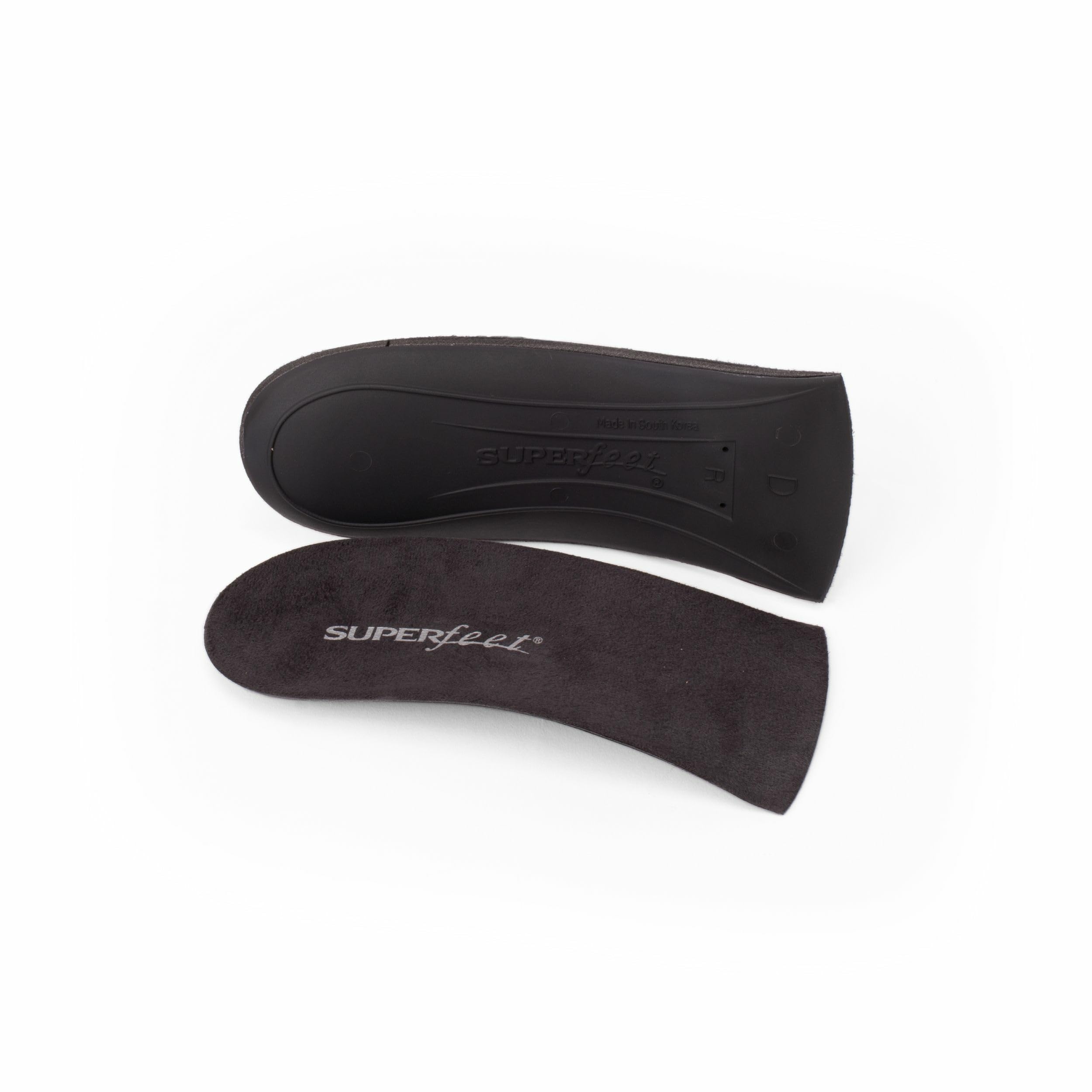
Superfeet built its reputation on firm, biomechanically shaped orthotics, and the Casual Easyfit brings that same rigid TPU shell into a silhouette thin enough for five-inch stilettos. The continuous piece supports the entire arch and shifts weight back toward the heel, which directly reduces the crushing load on the metatarsal heads. Users with flat feet report that a month of daily wear in these insoles eliminated long-standing left foot pain and even partially corrected a bunion.
The suede top cover grips the foot and prevents forward sliding inside strappy sandals and closed pumps. At this tier, the fit is precise — a size 7.5 user found the Medium fit perfectly in five-inch stilettos without lifting the heel out of the counter. The only hidden caveat is vertical space: these need a shoe with a removable or thin factory insole, otherwise the toe box may feel cramped.
Downsides are limited but real. There is no forefoot padding, so if your primary pain source is the ball of the foot rather than the arch, you will want to pair these with a thin gel metatarsal pad. Also, the left and right markings are not intuitive, and the insoles can shift slightly when you remove your boots, though they stay planted during wear.
Why it’s great
- Professional-grade rigid shell supports high arches effectively
- Thin enough for five-inch stilettos without heel lift
- Suede top prevents forward sliding inside the shoe
Good to know
- No metatarsal or ball-of-foot cushioning included
- Requires a shoe with removable factory insole for best fit
- Left/right labeling is not intuitive
2. Powerstep SlenderFit Insoles

The Powerstep SlenderFit nails the hybrid design that most mid-range arch supports miss: a thin, semi-rigid plastic shell that provides structured neutral arch support combined with a visible metatarsal pad under the ball of the foot. This dual-action addresses both the arch collapse that leads to plantar fasciitis and the forefoot pressure that causes calluses and metatarsalgia. Podiatrists often recommend this specific model for women who wear heels daily but need corrective support without a prescription orthotic.
The 3/4-length profile stops short of the toe box, so it fits into narrow pumps and ballet flats without crowding your toes. Users with pronated ankles report that the arch cradle aligns their posture enough to relieve hip and back pain after a full day in heels. The top fabric includes an odor-control treatment, which matters for closed boots worn through long shifts.
On the fit front, a size 7.5 user noted that the heel edge is slightly short by about a quarter inch, causing the insole to slide forward in certain shoes. The plastic is stiff out of the box, requiring a two-day break-in period — but once it conforms, it outperforms every other mid-range option in retention and durability.
Why it’s great
- Metatarsal pad and arch support in one thin 3/4-length unit
- Podiatrist-recommended for heel pain and pronation
- Odor-control top fabric works well in closed boots
Good to know
- Heel edge may be slightly short for size 7.5 feet
- Noticeable stiffness during first two days of wear
- Does not fit well in flats that lack a removable insole
3. OUOKK High Arch Support Inserts

OUOKK targets a specific and underserved audience: people with high arches who need aggressive support and weigh over 220 pounds. The 30-millimeter arch height is significantly taller than the industry standard, and the TPU frame is rigid enough to resist compression for two years of daily use. This is a 3/4-length orthotic, so it saves toe space while still delivering the deep cradle that flattens the plantar fascia angle and reduces strain.
The manufacturer offers three arch height options, so you can match the insert to your exact foot profile — low, medium, or high. Users with flat feet who switched to these found that the high-arch version eliminated radiating pain into the hips after long shifts. The foot massage nubs along the arch edge are a genuine addition, dispersing pressure and promoting circulation during extended standing.
Two drawbacks stand out. The rigid shell does not soften much over time, which means anyone with a sensitive midfoot may experience initial discomfort. Second, the 3/4-length design can shift forward in shoes with a slick interior lining unless you pair it with a thin adhesive strip. Not a dealbreaker, but worth noting if you plan to wear them in high-gloss pumps.
Why it’s great
- 30mm arch height provides heavy-duty support for high arches
- Three arch height options for a customized fit
- Durable TPU frame lasts two years with daily use
Good to know
- Rigid frame may cause initial discomfort for sensitive feet
- Can shift forward in shoes with slick lining
- Not ideal for low-arch users despite the multi-height option
4. Weight Shifting Gel Insoles
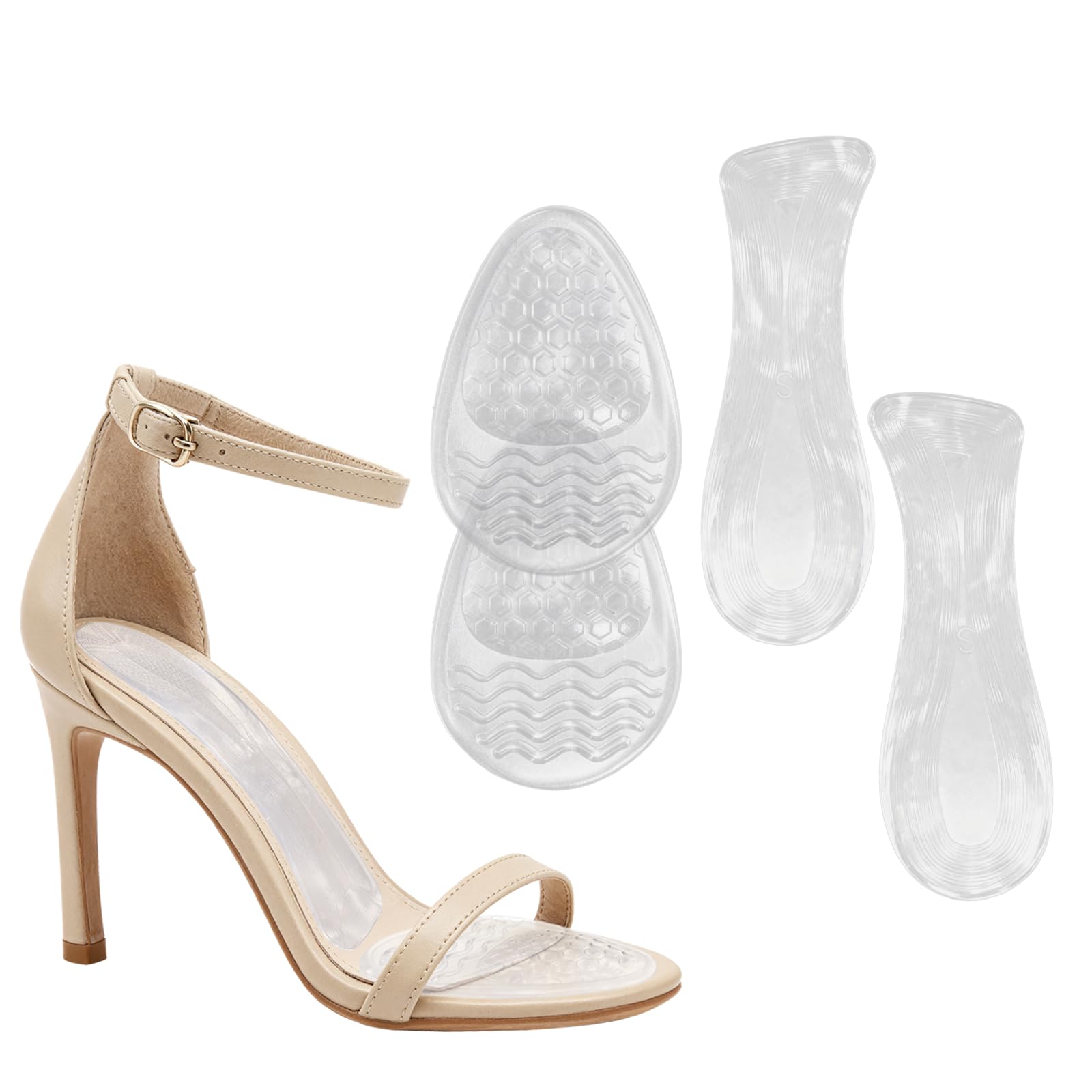
These transparent gel insoles use a honeycomb structure beneath the metatarsal heads to actively push weight back toward the midfoot and heel. The result is immediate offloading of the forefoot, which is exactly what you need when standing in four-inch pumps for hours. The set includes a 3/4-length base and a separate front pad, so you can double up for full coverage or use just the ball pad if your sandals have minimal space.
The medical-grade adhesive holds through a full night of dancing and removes cleanly without residue. Users with metatarsalgia specifically praise the metatarsal support ridge behind the cushion, which prevents the ball of the foot from sinking into the gel and bottoming out. The crystal-clear material stays invisible inside open-toe heels, making this the best option for dressy footwear where white or beige insoles would be visible.
The biggest trade-off is thickness. Some users found the front pad too thick for already-tight shoes, causing the foot to sit at an angle that felt unnatural. Also, the adhesive can tug on delicate shoe lining if you reposition the pad after initial placement.
Why it’s great
- Honeycomb gel design actively shifts weight off the forefoot
- Crystal-clear material stays invisible in open-toe heels
- Strong adhesive holds through long wear without residue
Good to know
- Front pad may be too thick for very tight shoes
- Adhesive can damage shoe lining if repositioned
- Not suitable as a standalone arch support for flat feet
5. Footminders Catwalk Slim Fit Insoles

Footminders designed the Catwalk specifically for low arches and flat feet that ache inside high heels. The TPU arch shell is thin enough to slide into narrow pumps but firm enough to prevent the arch from collapsing under weight. Users with extra high arches have reported that these insoles work well in boots with a stacked heel, providing a surprising level of lift and stability for a product marketed as slim.
The forefoot has a modest metatarsal pad that reduces stress on the ball of the foot, though it is not as pronounced as the cushioning on the Powerstep SlenderFit. For women who deal with plantar fasciitis triggered by flat-footed pronation, the Catwalk is one of the few inserts that corrects the alignment without adding bulk that causes heel slippage in strappy sandals.
On the downside, the arch support is relatively solid and does not have a soft top layer. Users with sensitive feet or a need for plush cushioning found the shell uncomfortable straight out of the box. The sizing also runs slightly narrow, so women with wide feet may experience the edge pressing into the arch rather than cradling it.
Why it’s great
- Ultra-thin profile fits narrow pumps and strappy sandals
- Corrects pronation and reduces plantar fasciitis pain
- Works unexpectedly well in boots with a stacked heel
Good to know
- Firm TPU shell offers minimal cushioning
- Narrow fit may not suit wide feet
- Metatarsal pad less pronounced than competing models
6. Habioer Arch Support Inserts
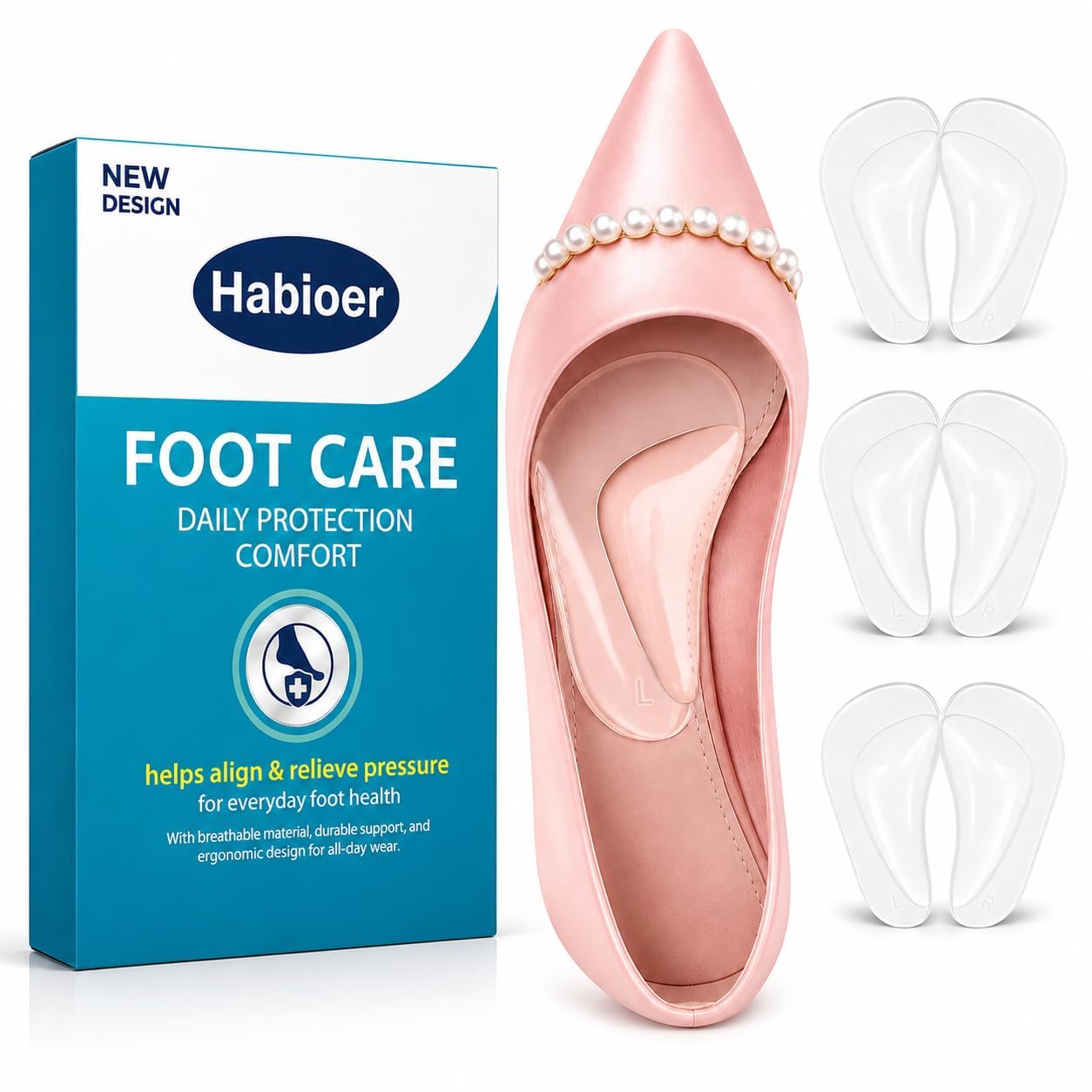
If you rotate between several pairs of flats and loafers throughout the week, the Habioer three-pair set lets you equip multiple shoes with the same arch profile. Each pad is a flexible PU gel that cushions high arches without adding noticeable height. The low-profile design means zero fit issues inside ballet flats and thin sandals where a structured orthotic would shift the foot forward.
The self-adhesive backing holds securely for an eight-hour commute or a full day of walking on hard floors. Users with high arches specifically note that the gel reduces the sharp ache that builds up after prolonged standing, and the ability to rinse and air-dry the pads restores the adhesive for reuse across multiple seasons. For the price, this is the best entry point for someone unsure whether arch support will work for their foot type.
The trade-off is durability. After several weeks of frequent swapping between shoes, the adhesive loses grip and the pads begin to slide. They also provide no metatarsal cushioning, so if your pain is concentrated at the ball of the foot rather than the arch, you will need a different solution.
Why it’s great
- Three-pair set allows arch support across multiple shoes
- Ultra-thin gel fits flats and loafers without bulk
- Reusable and washable for extended use
Good to know
- Adhesive weakens after weeks of frequent swapping
- No forefoot or metatarsal cushioning included
- Not supportive enough for severe plantar fasciitis
7. BestHalo Heavy Duty Plantar Fasciitis Insoles
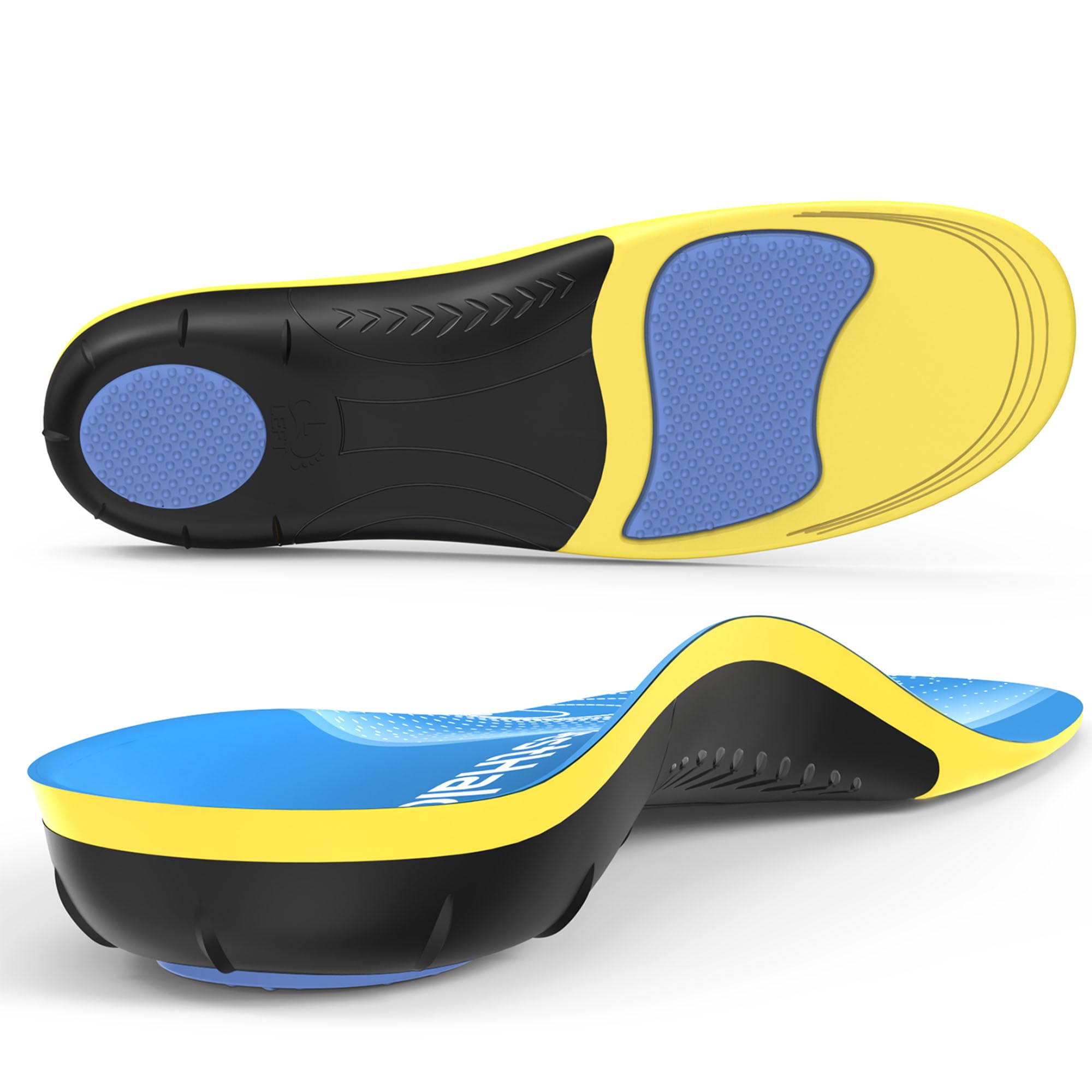
BestHalo engineered these insoles for the heavier user — over 220 pounds — who needs a deep heel cup and structured arch support inside work boots or sturdy ankle boots. The combination of premium EVA foam and gel cushioning delivers excellent shock absorption for every heel strike, while the elevated arch shell prevents the foot from rolling inward. Users recovering from foot surgery report that these insoles eliminated radiating pain that extended to the hips.
The trim-to-fit design makes it easy to customize the width for different boot shapes, and the deep heel cup stabilizes the calcaneus to control overpronation and supination. For women who wear heeled boots daily, this is the most supportive non-custom option available — the arch cradle is noticeably higher and firmer than anything in the sub-compact insole category.
However, the BestHalo is a full-length insole with significant volume. It will not fit inside a standard pump or strappy sandal. Even inside boots, some users found the arch too aggressive for their foot structure, reporting new lower back pain after two weeks of wear. The manufacturer recommends a three-to-seven-day break-in period with limited daily wear, which is longer than most competitors require.
Why it’s great
- Deep heel cup and high arch shell for heavy-duty support
- Excellent shock absorption for heeled boots worn all day
- Trim-to-fit design for a customized width
Good to know
- Too bulky for pumps, sandals, or low-profile heels
- Extended break-in period of up to seven days
- Aggressive arch may cause discomfort for some users
FAQ
Will arch supports make my high heels feel tighter?
Can I wear gel arch pads inside open-toe sandals?
How do I clean reusable adhesive arch supports?
Final Thoughts: The Verdict
For most users, the arch support for high heels winner is the Powerstep SlenderFit because it combines a thin 3/4-length profile with both arch support and metatarsal cushioning, making it the most versatile for pumps, booties, and flats. If you need professional-grade support for extreme high arches in stilettos, grab the Superfeet Casual Easyfit. And for disposable relief across multiple pairs of shoes, nothing beats the Habioer Arch Support Inserts three-pair set.