
Our readers keep the lights on and the weekend projects moving. As an Amazon Associate, I earn from qualifying purchases.
The difference between a translucent glaze and a chalky, cracked mess often comes down to a single bottle on your shelf. Acrylic mediums are the unsung workhorses of any studio, controlling everything from the body and transparency of your paint to its final sheen and film integrity. Ignore them, and you are leaving your work’s finish and longevity to chance.
I’m Rikta — the co-founder and writer behind FitlyFast. My focus is on distilling dense product specs and real-user feedback into clear, category-specific comparisons that save you time and paint.
Whether you are extending acrylics for a fluid pour, building texture on a canvas, or sealing a collage, the right additive makes all the difference. This guide breaks down the essential options so you can confidently choose the best acrylic medium for your exact technique.
How To Choose The Best Acrylic Medium
An acrylic medium is a binder without pigment. It alters the working properties of your paint without changing its color. The choice comes down to three variables: body, sheen, and function.
Body: Gel vs. Liquid
Gel mediums are thick. They hold peaks, build texture, and act as a strong collage adhesive. Liquid mediums (like the ones from Liquitex BASICS or Nicpro) reduce viscosity, making paint flow like heavy cream—ideal for pours and glazes. If your knife or brush needs to leave a ridge, reach for a gel. If you need to pour a thin wash, go liquid.
Sheen: Matte, Gloss, or Satin
Matte mediums (like the GOLDEN Matte Medium) dry to a non-reflective, paper-like surface. Gloss mediums amplify color depth and create a slick, glassy film. Satin splits the difference. The sheen of your medium should match the finish you want on the final surface—never mix a gloss medium under a matte varnish without testing first.
Specialty Function: Pouring vs. Adhesion
Pouring mediums (such as Floetrol or the Nicpro thinner) are designed to increase flow while preventing cracks. They dry clear and flexible. Adhesion mediums, like the PEBEO Matt Gel, are formulated to bond porous and non-porous surfaces. Using a pouring medium as a glue for heavy collage elements risks delamination. Match the medium to the mechanical job.
Quick Comparison
On smaller screens, swipe sideways to see the full table.
| Model | Category | Best For | Key Spec | Amazon |
|---|---|---|---|---|
| GOLDEN Matte Medium | Matte Liquid | Collage & glaze work | 8 oz jar, translucent wax finish | Amazon |
| Golden Soft Gel Gloss | Gloss Gel | Texture & decal transfer | 8 oz jar, soft body gloss | Amazon |
| Nicpro Pouring Medium 69oz | Pouring Liquid | Bulk fluid pours | 69 oz, built-in pump | Amazon |
| PEBEO Matt Gel | Matte Gel | Light collage & inlays | 8.45 oz, crack resistant | Amazon |
| Floetrol Pouring Medium | Pouring Liquid | Beginner fluid art | 1 qt, includes cups & sticks | Amazon |
| Nicpro Paint Thinner | Flow Liquid | Cost-effective thinning | 33.8 oz, visual bottle | Amazon |
| Liquitex BASICS Mars Black | Satin Liquid | Color mixing & student use | 13.5 oz, satin finish | Amazon |
In‑Depth Reviews
1. GOLDEN Matte Medium

The GOLDEN Matte Medium sets the benchmark for liquid mediums that dry to a true, non-reflective toothy finish. At 8 ounces in a jar, this is a mid-range buy with pro-grade performance—the dried film is tough, clear, and has a subtle wax-like surface that grabs subsequent layers of paint or pencil. Reviewers consistently note it smooths out for collage work and dries fast without clouding.
Unlike student-grade alternatives that yellow over time, this medium uses premium acrylic polymer that remains water-clear. Artists who layer paper, fabric, or tissue report that it bonds firmly without soaking the substrate so thin that it wrinkles. The body is fluid enough to brush flat but thick enough to fill small gaps in mixed-media pieces.
The main consideration is that this is a liquid, not a gel. If you need heavy, sculptural peaks, you will want the GOLDEN Soft Gel Gloss instead. But for a reliable, everyday matte medium that behaves predictably under varnish, this is the one you keep on your shelf.
Why it’s great
- Dries to a clear, toothy matte finish perfect for layering
- Film integrity is excellent—no cracking or yellowing
- Works as a nearly clear ground on canvas without gesso
Good to know
- Liquid body won’t hold peaks for heavy texture
- 8 oz jar goes fast if used for large collage projects
2. Golden Soft Gel Gloss
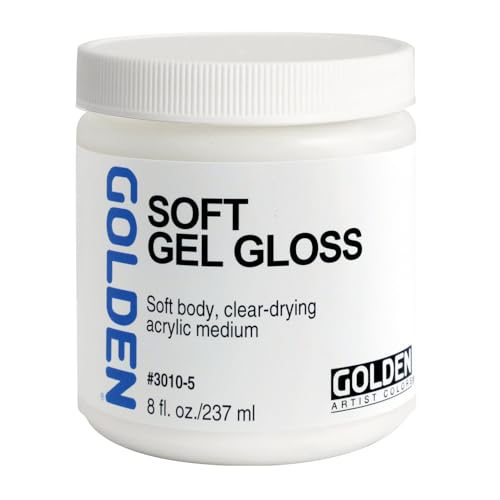
Where the GOLDEN Matte Medium is a liquid, the Soft Gel Gloss is a true gel—soft body, clear-drying, and able to hold subtle knife marks. This is the go-to for artists who want a slight gloss sheen without the thick peaks of a heavy gel. The 8 oz jar is mid-range priced, but the polymer quality is unmistakable: UV and water resistance after curing are top-tier.
Reviewers use it for decal transfers on paper crafts and for gluing down photo canvases. The gel wets out well on porous surfaces and dries flexible, which is critical when bonding mixed materials like paper and thin canvas. The gloss finish makes colors pop, but be aware that writing or stamping over a gloss surface can be tricky—matte is better for that.
The one downside reported is that the jar can break in transit if not packed carefully. Amazon replaces it quickly, but it is worth noting. If you need a medium that doubles as an adhesive and leaves a rich, glossy film, this gel delivers professional results.
Why it’s great
- Clear gloss finish that deepens color vibrancy
- Flexible, water- and UV-resistant when cured
- Excellent for collage, transfers, and image lifting
Good to know
- Gloss can make writing or stamping difficult on top
- Glass jar is fragile during shipping
3. Nicpro Pouring Medium 69oz
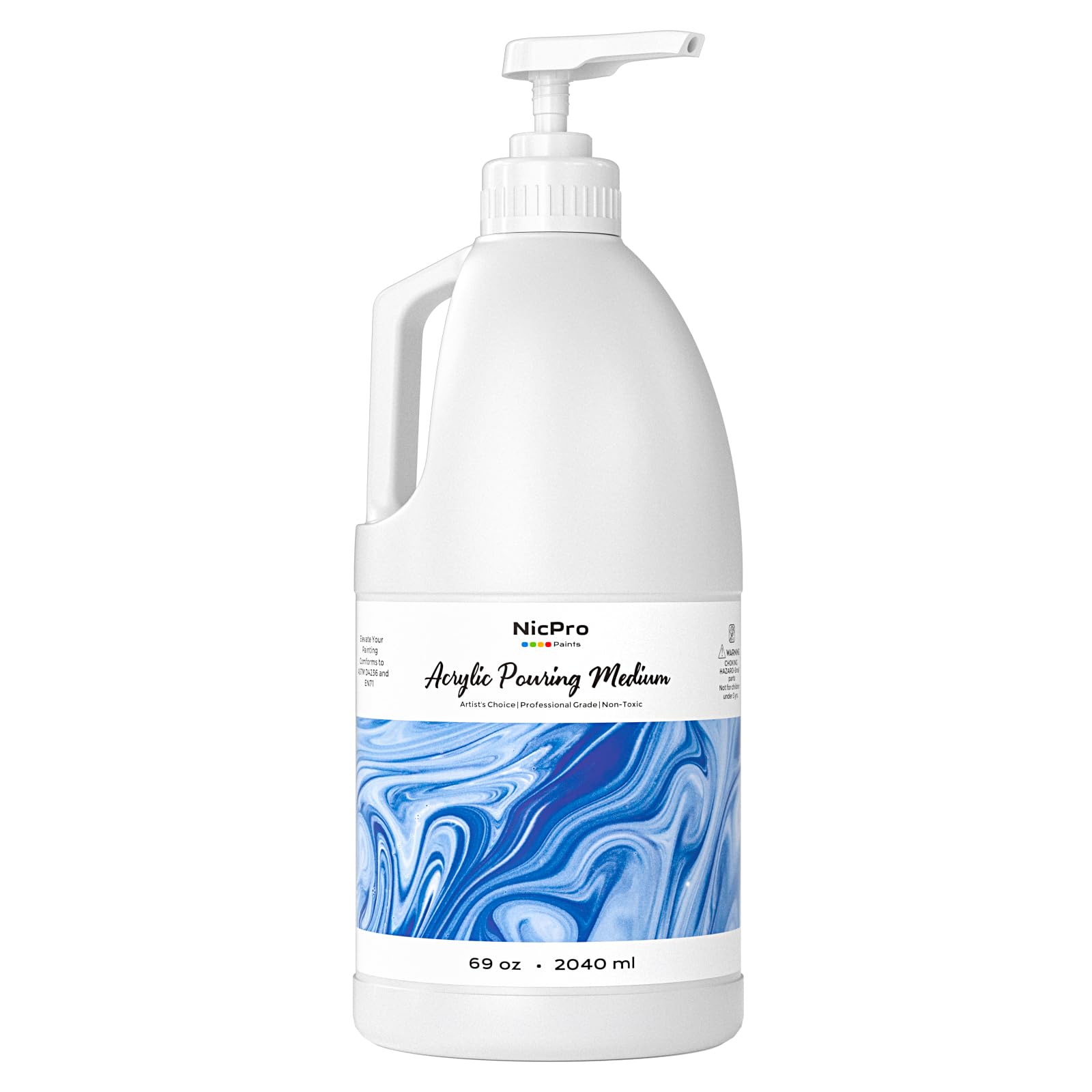
The Nicpro Pouring Medium in the jumbo 69-ounce bottle is a premium-tier pick for volume, and it earns its spot on the list through sheer efficiency. The built-in pump dispenses exactly what you need—no wasting product or creating a mess. This is a liquid medium designed specifically for acrylic pouring, reducing viscosity while preventing the color from muddying and cracking.
At this size, it is aimed at muralists, classroom instructors, and dedicated fluid artists who go through medium by the pint. The formula dries transparent and has anti-fade properties. Reviewers confirm it works well for spin and pour techniques, though they note it is too wet for fine glazing applications where you need controlled brushwork.
The only trade-off is consistency. This is a wet, thin medium—it will not build texture. For artists who want a single product for both pouring and light thinning, the value is unbeatable. For advanced glazing, stick with a slower-drying gel.
Why it’s great
- Massive 69 oz volume with a convenient pump dispenser
- Dries transparent and resists cracking in fluid pours
- Non-toxic and compliant with ASTM D4236
Good to know
- Too thin and wet for fine art glazing or texture work
- Best suited for pouring, not brush blending
4. PEBEO Matt Gel

The PEBEO Matt Gel is a mid-range gel with a specific superpower: it dries non-yellowing and crack resistant, making it ideal for collage, inlays, and painting on smooth glass to mimic a stained-glass look. At 8.45 ounces, it sits comfortably in the value zone, delivering a soft matte finish that reviewers praise for toning down shiny stickers and adding texture without glare.
Unlike liquid mediums, this gel retains some body, allowing you to apply it thickly enough to fill recessed areas. Artists who work on glass, paper, and mixed media report that it adheres well and stays flexible. The finish is truly matte—no slick spots—which means pencil and ink can be applied over it without slipping.
The only real limitation is the jar size. For large-scale collages or bulk projects, you may need multiple units. But for light, precise collage work or adding a subtle toothy texture, this gel is a reliable, affordable tool.
Why it’s great
- Crack-resistant formula works well on smooth surfaces like glass
- Dries to a true non-yellowing matte finish
- Adds texture and reduces shine on glossy materials
Good to know
- Small jar—not cost-effective for large pours or big canvases
- Gel body may be too thick for thin glazes
5. Floetrol Pouring Medium

Floetrol is a household name in the pouring community, and this bundle—a 1-quart bottle plus 20 mixing cups and 20 wooden sticks—is the best entry point for beginners. Mid-range in price, the kit removes the friction of sourcing tools separately. The medium itself is a white liquid that dries clear and keeps colors vibrant while dramatically increasing flow.
Reviewers love it for pillow pours and dirty pours because the consistency is predictable and forgiving. One note: this is not a cell creator. If you want intricate cell patterns, you will need an additional additive like silicone oil. The medium also works well for painting wood—it levels brush strokes and roller marks into a smooth, almost factory-like finish.
The downsides are minor but worth noting. The white color of the liquid can be off-putting at first, though it does not affect the final color. Some users report it knocks the gloss down to a semi-gloss sheen. For pure fluid art or a beginner kit, it is hard to beat.
Why it’s great
- Complete starter kit with cups and sticks included
- Levels brush strokes for smooth finishes on wood
- Affordable per-ounce price for pouring
Good to know
- Does not create cells on its own
- White liquid appearance may be confusing to new users
6. Nicpro Paint Thinner

The Nicpro Paint Thinner is a budget-friendly liquid medium focused purely on flow and thinning. At 33.8 ounces, it delivers a large volume for a low buy-in, making it a go-to for artists who need to stretch their paint without investing in premium gels. The visual bottle is a practical touch—you can see exactly how much remains before you hit the bottom.
This medium works best for acrylic pouring and for thinning paint that has thickened from air exposure. Reviewers painting murals reported it prevented the paint from setting up too fast, allowing more blending time. It is non-toxic and conforms to ASTM D4236, which matters for classroom settings.
The compromise is control. This medium is very wet and runny—it is not designed for thick glazes or fine art applications. It pours well, but advanced artists looking for a medium that retains brush marks will want a gel instead. For the price, it is a solid flow enhancer.
Why it’s great
- Large 33.8 oz bottle at an entry-level price point
- Thins paint effectively for murals and fluid pours
- Visual bottle helps track usage
Good to know
- Very runny—not suitable for textured or glazing work
- Gloss finish may not suit all projects
7. Liquitex BASICS Mars Black
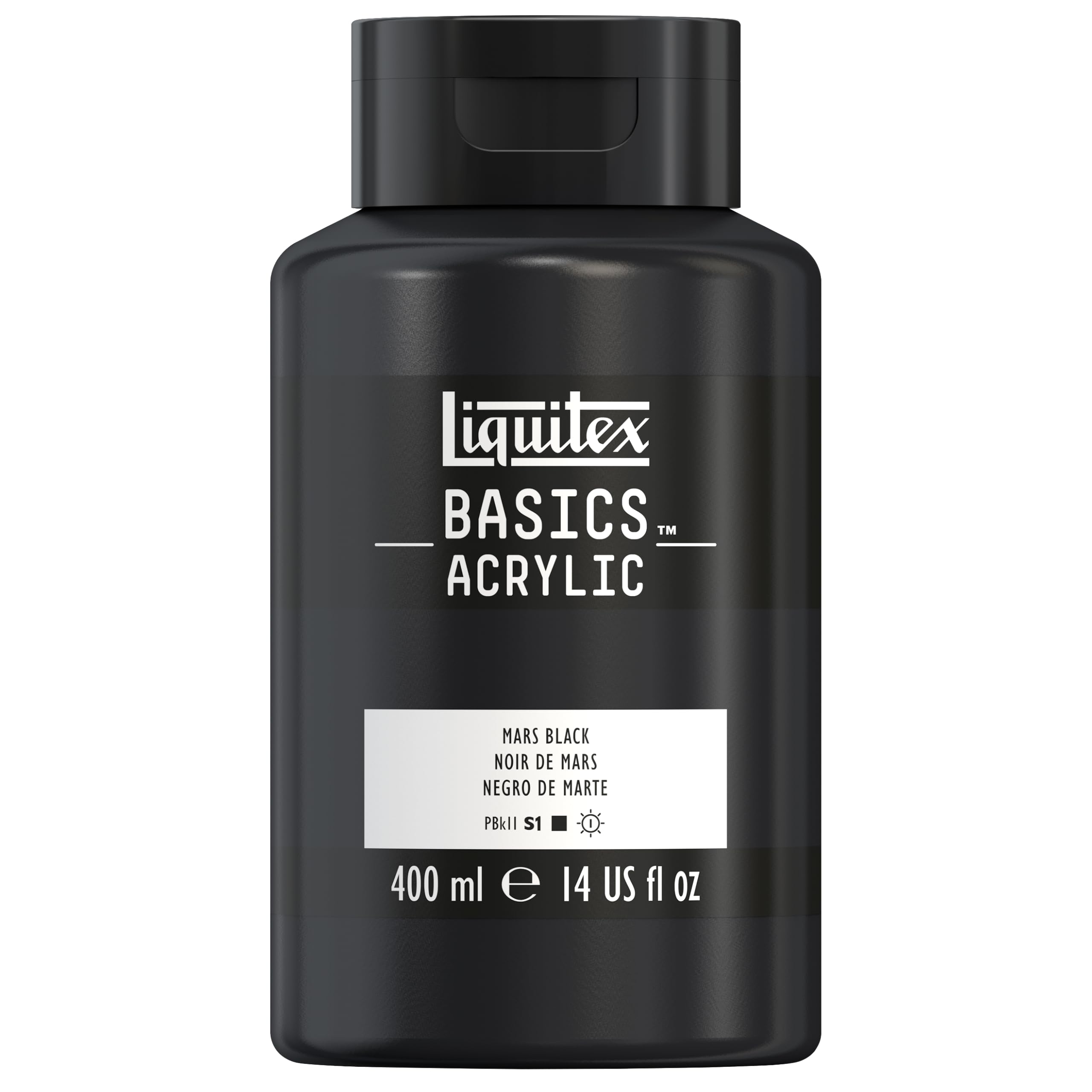
While technically a paint, the Liquitex BASICS line deserves mention because its creamy, satin-finish body behaves like a medium when mixed with other paints. At 13.5 ounces in a bottle, this is a budget-friendly pigment that doubles as a consistency modifier. The pigment load is solid, and the satin finish sits between matte and gloss—a versatile middle ground.
Reviewers note it has excellent opaque coverage with a medium-dense consistency that is thinner than professional lines. That makes it ideal for learning color theory and practicing mixing. It intermixes with Liquitex Professional mediums seamlessly, so you can add GOLDEN or PEBEO gels directly to this paint to custom-build body and sheen.
The main caveat is that it is a paint, not a pure medium. If you need to modify transparency or film properties without adding color, you need a clear medium. But for a student or budget-conscious artist, this bottle gives you both color and a workable base that plays well with all other mediums.
Why it’s great
- Satin finish offers a versatile sheen for mixing
- High-quality beginner paint that intermixes with pro mediums
- Thick, creamy consistency for good coverage
Good to know
- Painted, not a clear medium—adds color to your mix
- Slightly thinner than professional-grade acrylics
FAQ
Can I use a pouring medium as a glue for collage?
What is the difference between a matte medium and a matte varnish?
Will a pouring medium make my acrylics crack?
Final Thoughts: The Verdict
For most users, the acrylic medium winner is the GOLDEN Matte Medium because it delivers professional-grade film integrity and a true matte finish that works for glazing, collage, and layering without yellowing. If you want a glossy gel for texture and adhesion, grab the Golden Soft Gel Gloss. And for pouring artists who need bulk volume and a built-in pump, nothing beats the Nicpro Pouring Medium 69oz.