
Our readers keep the lights on and the weekend projects moving. As an Amazon Associate, I earn from qualifying purchases.
Basements trap damp, stale heat because standard window units and central air struggle against subterranean walls that never see direct sunlight. You need a cooling system built for steady dehumidification, consistent low‑noise operation, and the ability to push air horizontally across a wide, low‑ceiling floor plan — not one designed for an above‑grade bedroom.
I’m Rikta — the co-founder and writer behind FitlyFast. I’ve spent countless hours analyzing BTU ratings, inverter duty cycles, dual‑hose efficiency curves, and real‑world dehumidification data from dozens of below‑grade cooling setups to separate basement‑ready machines from units that will leave you with a musty, half‑cooled space.
Whether you choose a portable, window, or mini‑split configuration, the right ac for basement balances moisture removal, consistent temperature control, and whisper‑quiet operation in a room that rarely sees sunlight and often lacks dedicated ventilation.
How To Choose The Best AC For Basement
A basement isn’t just another room — it’s a semi‑underground envelope with persistent humidity, limited window openings, and heat sources like water heaters or laundry equipment. Picking an AC that addresses these specific conditions makes the difference between a comfortable finished basement and one that feels clammy and cold.
Dual‑Hose vs Single‑Hose Portables
Single‑hose units exhaust indoor air outside, which creates negative pressure that pulls warm, humid air in through cracks and gaps — exactly the opposite of what a basement needs. Dual‑hose models use a separate intake hose to draw outdoor air for cooling the condenser, eliminating negative pressure and cooling the basement faster with lower humidity seepage. For any below‑grade space, dual‑hose is the safer investment.
Inverter Compressors for Steady Cooling
Traditional compressors cycle on and off at full power, causing temperature swings and failing to maintain the low, steady humidity levels a basement requires. Inverter compressors adjust their speed continuously, running longer at lower power to extract moisture without freezing the coils. Models with inverter technology typically hold humidity between 40‑50% without overcooling the space.
Dehumidification Rate (Pints per Day)
Because basements sit below the water table, they accumulate ground‑borne moisture even when sealed. An AC’s dehumidification spec — measured in pints per day — tells you how much water the unit wrings from the air. A basement model should handle at least 50‑80 pints daily; units with dedicated dry mode run the compressor while slowing the fan to maximize moisture removal without dropping the temperature too fast.
Window Access and Mini‑Split Feasibility
Many basements have small, high, or horizontal‑sliding windows that won’t fit a standard window unit. For those spaces, a portable unit with a vertical window kit or a ductless mini‑split (which only needs a 3‑inch hole through the wall) becomes the practical option. Mini‑splits also place the noisy compressor outdoors, which eliminates the drone that portable and window units introduce into living areas.
Quick Comparison
On smaller screens, swipe sideways to see the full table.
| Model | Category | Best For | Key Spec | Amazon |
|---|---|---|---|---|
| LG LP1022FVSM | Portable | Quiet inverter cooling up to 450 sq ft | 44dB sleep mode / WiFi ThinQ | Amazon |
| Whynter ARC-1230WN | Portable | Smart dual‑hose for up to 600 sq ft | 87 pints/day dehumidification | Amazon |
| Gasbye 14,000 BTU Dual Hose | Portable | Inverter efficiency with 13.6 CEER | 45dB / full DC inverter | Amazon |
| DOMANKI 16,000 BTU Inverter | Portable | Large basement coverage up to 850 sq ft | 42dB sleep mode / dual hose | Amazon |
| YITAHOME 12,000 BTU Mini Split | Mini‑Split | Permanent below‑grade climate control | 20 SEER2 / 750 sq ft | Amazon |
| Albott 12,000 BTU Mini Split | Mini‑Split | Self‑cleaning, ultra‑quiet under 29dB | 29dB / self‑cleaning filter | Amazon |
| Rellytech 12,000 BTU Mini Split | Mini‑Split | High‑value 19 SEER2 for 750 sq ft | 42dB / 19 SEER2 | Amazon |
| ROVSUN 9,000 BTU Mini Split | Mini‑Split | Compact basement office or 400 sq ft room | 28dB mute mode / WiFi | Amazon |
| YLEOOB 16,000 BTU Portable | Portable | Medium basements up to 730 sq ft | 42dB / no‑drain design | Amazon |
| LG LW8024RD Window Unit | Window | Budget window installation up to 350 sq ft | 53dB low mode / 2.2 pints | Amazon |
| ftocase 10,000 BTU Portable | Portable | Entry‑level portable for up to 450 sq ft | 3‑in‑1 / sleep mode <50dB | Amazon |
In‑Depth Reviews
1. LG LP1022FVSM Portable AC
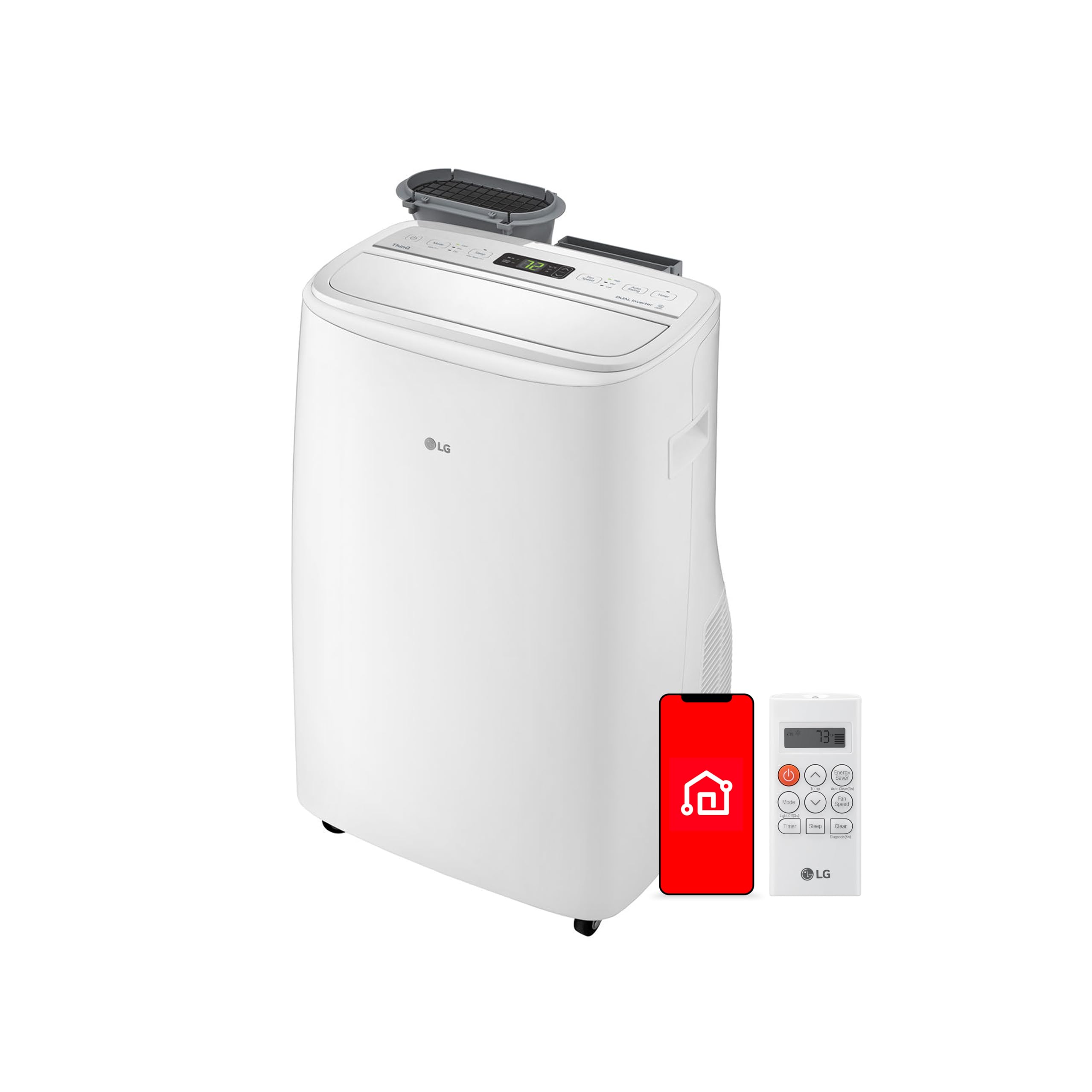
The LG LP1022FVSM delivers 10,000 BTU SACC (14,000 ASHRAE) cooling with a dual‑inverter compressor that runs at a whisper‑quiet 44dB in sleep mode — ideal for a basement space where you want steady temps without the loud cycling of a traditional portable. Its 3‑in‑1 cool, dehumidify, and dry modes tackle the dampness that settles below grade, and the built‑in Wi‑Fi via the LG ThinQ app lets you adjust settings without walking down a flight of stairs.
Users consistently note that the unit maintains a stable temperature without the temperature swings common in fixed‑speed models, and the inverter technology saves roughly 40% on power compared to older portables. The washable filter helps reduce basement dust buildup, and the dehumidifier function can handle moderate moisture without needing constant manual draining.
The trade‑off is that at roughly 80 pounds, moving this unit around a basement is a two‑person job, and the condensate collection system has been reported to occasionally leak if the unit isn’t perfectly level. The hose is permanently attached, which makes storage bulkier than modular portables.
Why it’s great
- Exceptionally quiet 44dB sleep mode for below‑grade living areas
- Inverter compressor reduces energy use by 40%
- Wi‑Fi app allows remote scheduling from upstairs
Good to know
- Heavy at roughly 80 pounds; requires two people for stairs
- Hose is permanently attached, limiting storage flexibility
- Condensate system needs level placement to prevent leaks
2. Whynter ARC-1230WN Portable AC

The Whynter ARC-1230WN uses a dual‑hose design that eliminates the negative‑pressure problem common in single‑hose portables — a critical advantage in a basement where you don’t want warm, humid air being pulled in through foundation gaps. With 14,000 BTU ASHRAE (12,000 SACC) cooling for up to 600 square feet and a patented auto‑drain function that removes up to 87 pints of condensate daily, this unit handles both temperature and humidity without requiring continuous bucket emptying.
Its Nex inverter technology scales the compressor output to match the cooling demand, which keeps the basement at a consistent temperature and reduces power draw. The NetHome Plus app integrates with Alexa and Google Home, letting you pre‑cool the basement before you head downstairs. The extendable dual‑hose system (up to 47 inches) also minimizes heat leakage because the intake and exhaust share a single insulated duct.
The biggest drawback is weight — this unit approaches 80 pounds, making basement stairs a genuine challenge without help. Some users also note that the window kit extension panels may require cutting for windows narrower than 36 inches, which is common in below‑grade egress windows.
Why it’s great
- Dual‑hose prevents basement humidity infiltration
- Auto‑drain handles 87 pints/day — ideal for damp spaces
- Inverter technology maintains consistent temp without cycling noise
Good to know
- Very heavy; difficult to move up and down stairs alone
- Window kit may need modifications for narrow basement windows
- Remote I‑Sense feature requires direct line‑of‑sight to work accurately
3. Gasbye 14,000 BTU Dual Hose Portable AC
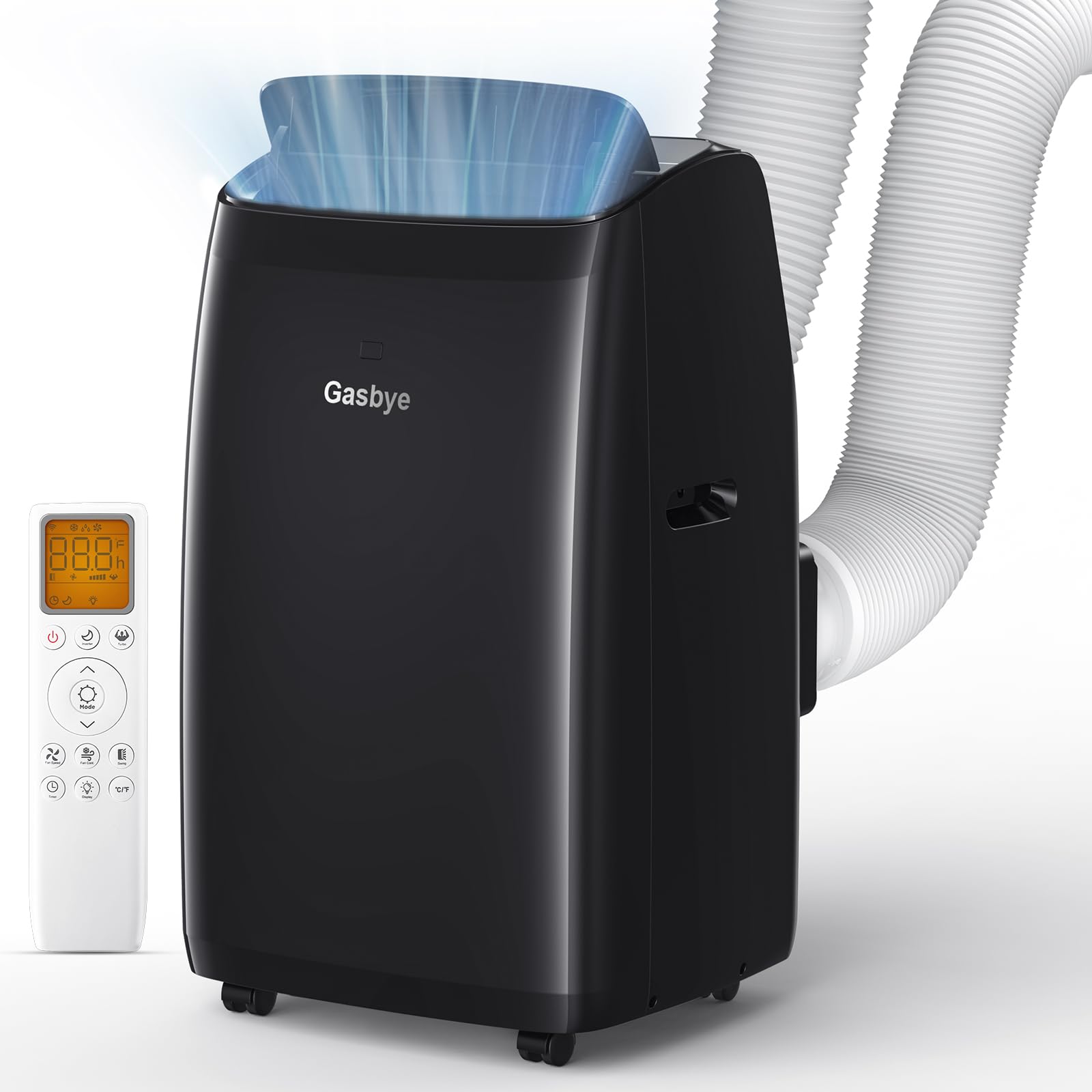
The Gasbye 14,000 BTU unit packs a full DC inverter compressor that delivers a DOE‑verified 13.6 CEER rating — one of the highest efficiency marks among portable ACs for basements. This means it uses significantly less electricity than traditional portables while maintaining steady temperatures across up to 500 square feet of below‑grade space. The dual‑hose setup actively balances indoor air pressure, preventing the humid outdoor infiltration that plagues single‑hose portables.
Noise levels drop to around 45dB in inverter mode because the compressor frequency reduces to about 50% load within two minutes — no jarring on‑off transitions. The backlit remote and display‑off feature make it usable in a dark basement without light pollution. Users report that the Turbo mode pulls the room temperature down fast, and the inverter mode keeps it there without overcooling.
The thermostat accuracy is the most common complaint — some users find it reads roughly 4 degrees off, causing the unit to overcool the space if set based on the display reading. The window kit is thin plastic that may need reinforcement, and in very high humidity conditions, the condensate evaporation system still requires manual draining several times per day.
Why it’s great
- Exceptional 13.6 CEER efficiency — lowest running cost in its class
- Full DC inverter actively adjusts compressor for noise comfort
- Dual‑hose design stops basement humidity infiltration
Good to know
- Thermostat reads roughly 4°F off; requires user adjustment
- Window seal kit is thin plastic — better to reinforce with foam
- Frequent condensate draining needed in above‑85% RH environments
4. DOMANKI 16,000 BTU Inverter Portable AC
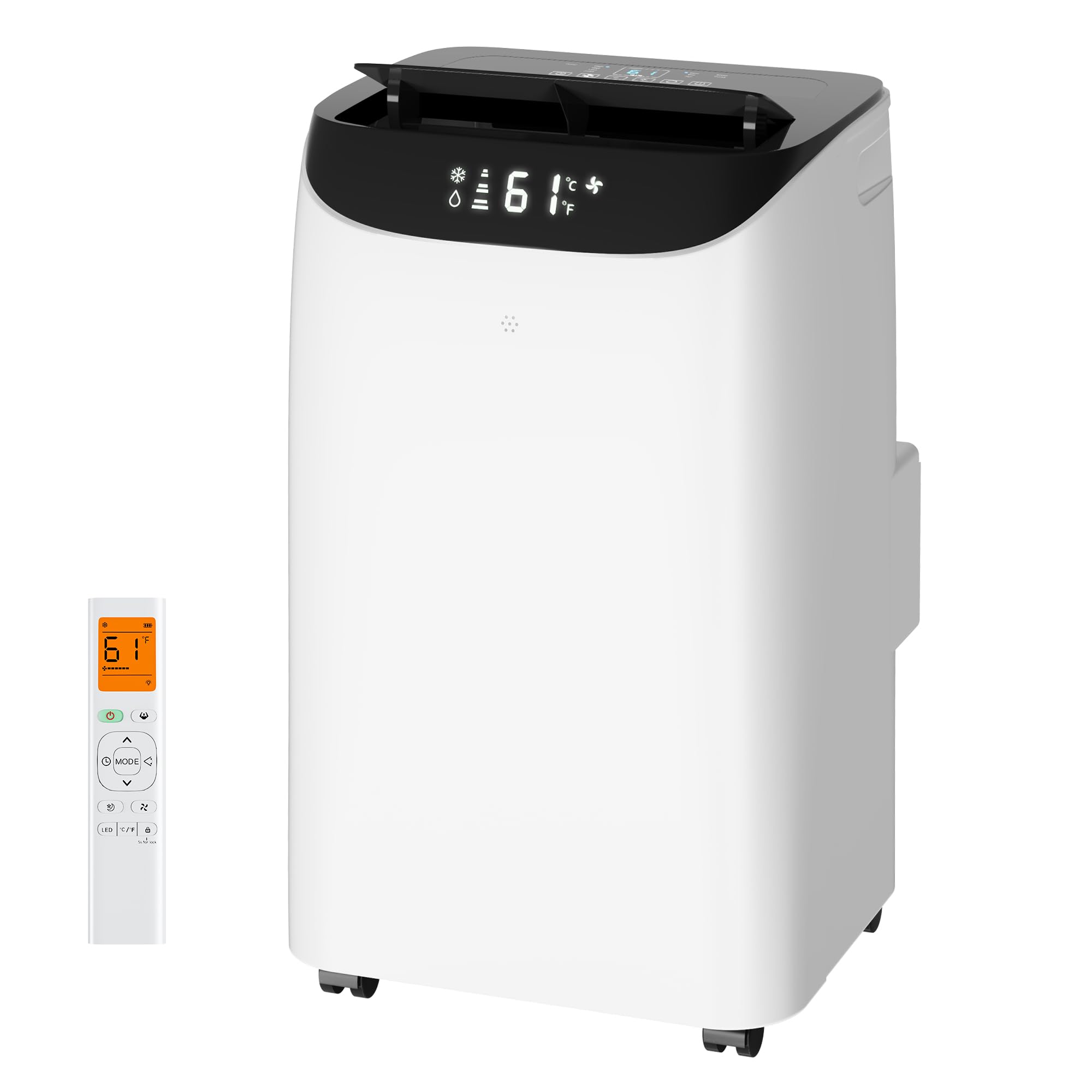
When your basement exceeds 600 square feet, the DOMANKI 16,000 BTU ASHRAE (12,000 SACC) portable AC offers the raw capacity to push cool, dry air across larger open layouts. Its dual‑hose design, combined with an inverter compressor that saves roughly 40% on electricity, makes it a viable option for full‑basement cooling without installing a mini‑split. The unit also features auto‑evaporation that handles condensate discharge in 85% of typical basement humidity conditions.
Users report that it effectively drops the temperature in a roughly 600‑square‑foot basement within 20 minutes, even on days above 90°F. The sleep mode at 42dB is genuinely quiet — low enough to run in a basement home theater without competing with dialogue. Four fan speeds, a 24‑hour timer, and a child lock make it accessible for family spaces.
The included window seal kit is flimsy, and many users add foam weatherstripping to improve the seal and reduce hot‑air recirculation. The condensate drain hose is positioned on the back at a height that makes gravity drainage possible, but the unit still requires monitoring in sustained high‑humidity conditions.
Why it’s great
- High BTU output suited for larger basement layouts
- Auto‑evaporation reduces manual draining in most conditions
- 42dB sleep mode works well for media rooms and bedrooms
Good to know
- Window seal kit needs reinforcement with foam insulation
- Condensate evaporation may still require draining in very damp basements
- No built‑in Wi‑Fi; relies on remote control only
5. YITAHOME 12,000 BTU Mini Split

A basement that lacks decent window openings is the perfect candidate for a ductless mini‑split, and the YITAHOME 12,000 BTU unit delivers with a 20 SEER2 rating that slashes electricity costs compared to any portable or window unit. It covers up to 750 square feet with an inverter compressor that maintains temperature within a half‑degree, and the heat pump function provides year‑round climate control — cooling in summer, heating in winter — for below‑grade spaces that often stay cooler than the rest of the house.
The indoor unit runs below 41 decibels, which is barely audible in a quiet basement. Wi‑Fi and Alexa compatibility let you set schedules or pre‑cool the basement from anywhere. Five operating modes — auto, cool, dry, heat, and fan — plus an iFEEL mode that adjusts temperature based on the remote sensor, give granular control over the basement environment.
Installation is the main barrier: you need a licensed HVAC technician to run the line set and evacuate the lines. The unit ships in two boxes that may arrive on different days, and the kit does not include a shut‑off valve housing or side protection grille. Some users also note that the blower doesn’t turn off when the set temperature is reached, which can cause overcooling in small spaces.
Why it’s great
- 20 SEER2 efficiency — lowest basement cooling cost long‑term
- Heat pump provides winter warmth without additional equipment
- Nearly silent indoor unit under 41dB
Good to know
- Professional HVAC installation required; not a DIY project
- Ships in two separate boxes that may arrive on different days
- Blower may not cycle off at set temp, potentially overcooling
6. Albott 12,000 BTU Mini Split
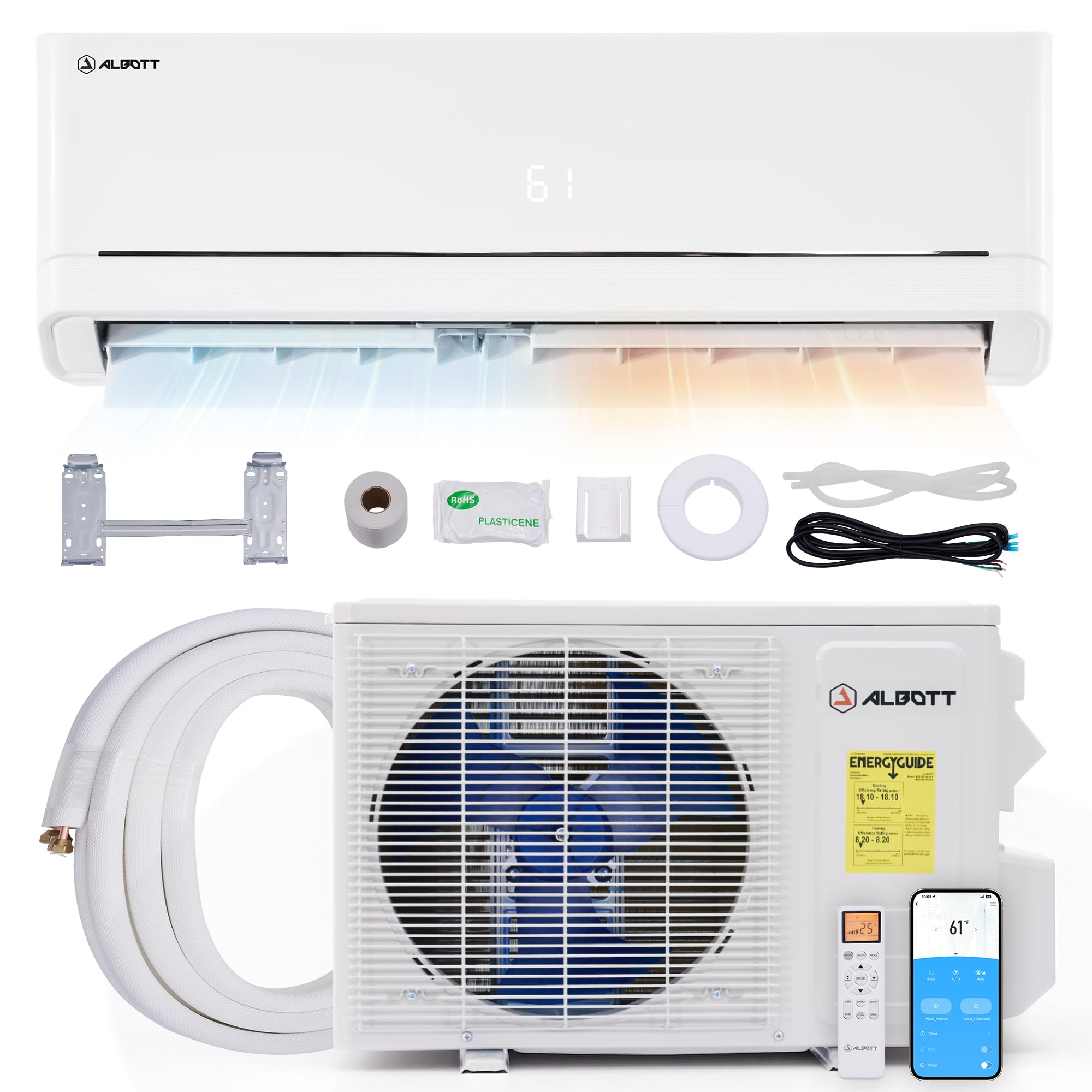
The Albott 12,000 BTU mini split operates at an almost inaudible 29dB in its lowest fan setting — quieter than a library — making it the best choice for a basement you use as a home theater, music studio, or quiet office. It covers up to 750 square feet with a SEER2 18 inverter compressor that adjusts its speed to hold a precise temperature without the sudden blasts of cold air that cheaper units produce.
Albott includes a self‑cleaning function that dries the evaporator coil after each cycle to prevent mold and musty smells — a genuine advantage for a basement where stagnant air can lead to microbial growth. The 5‑year compressor and 7‑year parts warranty also provide peace of mind for a permanent installation. The unit works in temperatures as low as 5°F and as high as 122°F, which covers the extreme seasonal swings that affect basement climates through foundation contact.
Installation again requires a licensed technician and a vacuum pump. The included 9.84‑foot line set is long enough for most basement window‑to‑wall runs but may be short if you need to route around obstacles. Some users reported that the bolts on the condenser fan can loosen during shipping — worth checking on initial power‑up.
Why it’s great
- Extremely quiet 29dB operation for noise‑sensitive spaces
- Self‑cleaning coil helps prevent basement mold and odors
- Strong warranty coverage for long‑term reliability
Good to know
- Requires professional HVAC installation and vacuum pump
- Condenser fan bolts may loosen during shipping; inspect before use
- Line set length may be tight for complex routing
7. Rellytech 12,000 BTU Mini Split
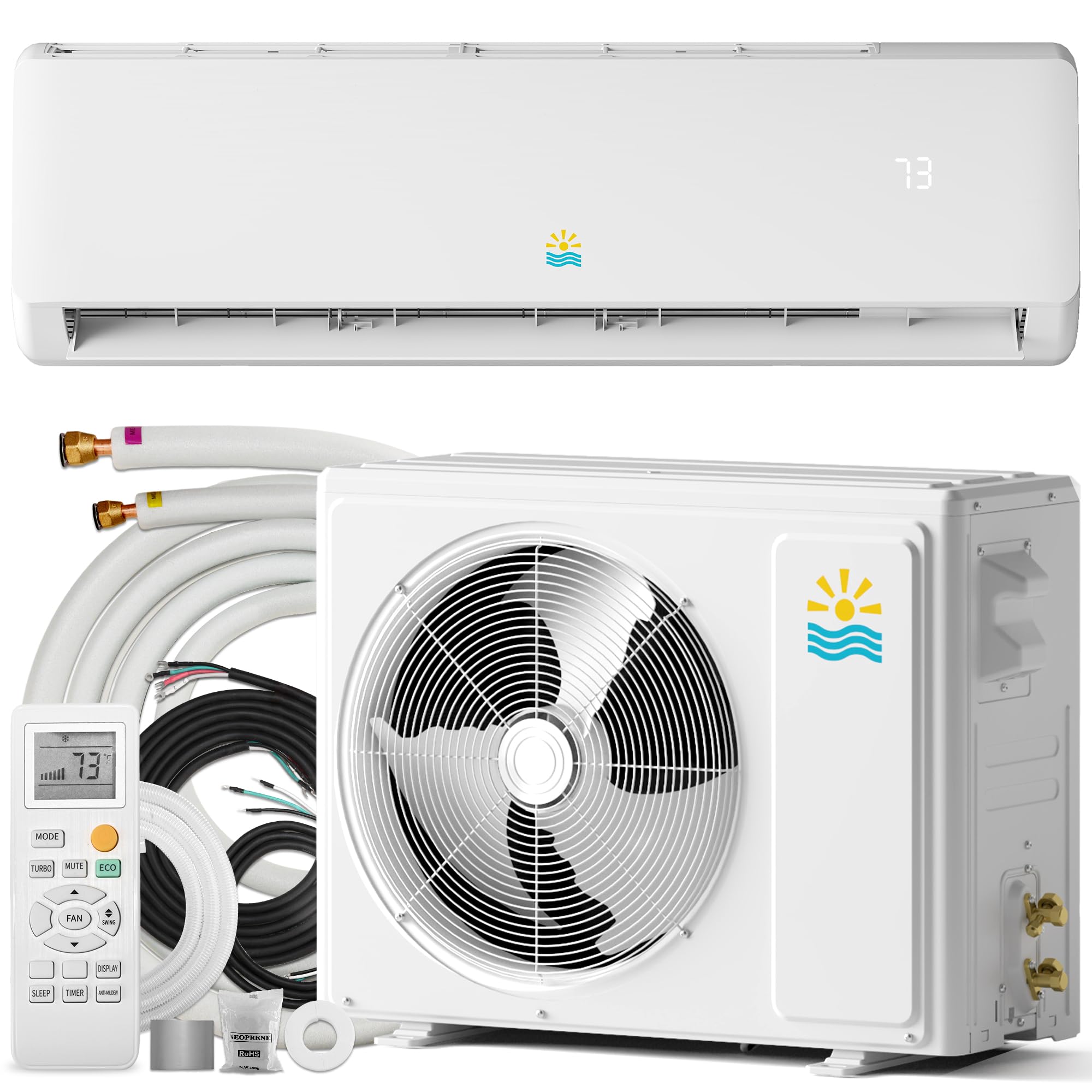
Rellytech’s 12,000 BTU mini split offers a 19 SEER2 rating — just a notch below the top‑tier units — at a price that undercuts most competitors in the permanent‑installation category. It cools and heats up to 750 square feet with a pre‑charged, ETL‑ and AHRI‑certified system. The compressor uses an inverter drive that ramps up or down gradually, avoiding the temperature overshoot that leaves basement spaces feeling stuffy one minute and freezing the next.
Four modes (cool, heat, fan, dry) plus an ECO mode that optimizes energy use for both heating and cooling make it a versatile year‑round basement solution. The indoor unit includes a 90‑degree vertical air swing and four fan speeds to distribute air evenly across a wide, low ceiling. At roughly 42dB in sleep mode, it’s quiet enough not to disturb a basement game room or guest suite.
The installation kit is comprehensive — including communication cable, copper lines, drain pipe, mounting plate, and even putty — but you’ll still need a professional installer with a vacuum pump and manifold gauge. The remote control is simple but lacks backlighting, which can be inconvenient in a dark basement.
Why it’s great
- 19 SEER2 efficiency at a mid‑range entry cost
- Comprehensive installation kit reduces extra hardware purchases
- ETL and AHRI certified for reliability and code compliance
Good to know
- Requires professional HVAC installation
- Remote control lacks backlighting for dark basements
- No built‑in Wi‑Fi — relies on standard remote
8. ROVSUN 9,000 BTU Mini Split

For a smaller basement — a finished 400‑square‑foot guest room, home gym, or workshop — the ROVSUN 9,000 BTU mini split provides a perfectly sized solution without the upfront cost or electricity draw of a larger unit. It uses an inverter compressor with a 19 SEER rating and delivers both cooling and heating through a heat pump, which is especially useful in a basement that tends to stay cool year‑round.
The indoor unit operates as low as 28dB in mute mode, which is genuinely silent — you can hold a conversation directly beneath it without raising your voice. The Wi‑Fi and voice control (Alexa/Google Assistant) work reliably for scheduling and remote temperature adjustments. The included 16.4‑foot copper line set and signal cord are generous enough for most basement window passes.
Some units have failed after roughly two years, and ROVSUN’s policy is to offer a replacement rather than selling replacement parts. Professional installation is mandatory, and buying the necessary vacuum pump and manifold gauge adds roughly to the initial cost if you’re coordinating with a contractor who charges separately for tools.
Why it’s great
- 28dB mute mode — nearly silent for small basement rooms
- Heat pump provides year‑round comfort in cool basements
- Wi‑Fi and voice control for hands‑free operation
Good to know
- Some units have failed after two years; parts not sold separately
- Professional licensed HVAC installation required
- Vacuum pump and manifold gauge not included
9. YLEOOB 16,000 BTU Portable AC
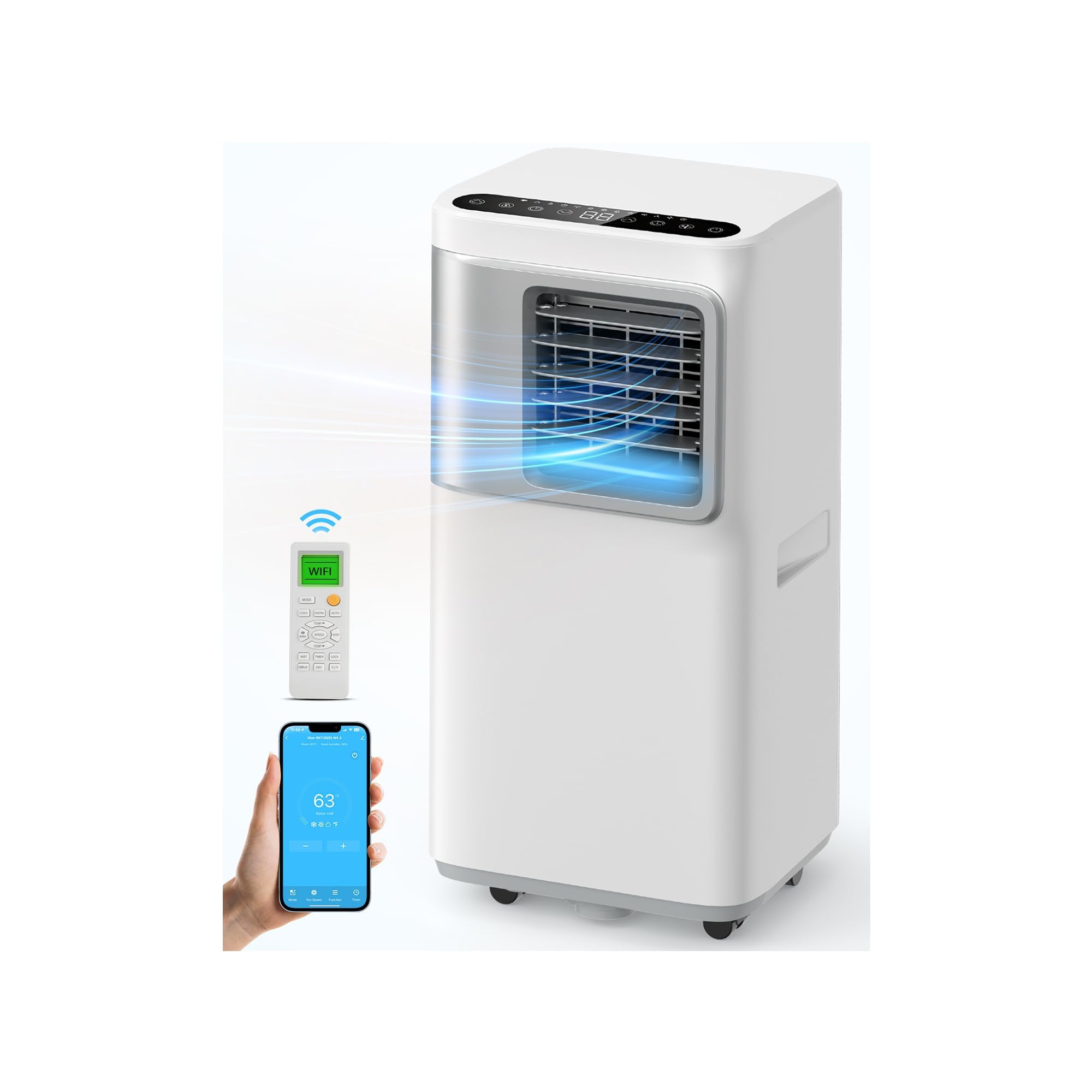
The YLEOOB 16,000 BTU portable is a 5‑in‑1 unit that combines cooling, dehumidifying, fan, intelligent sleep, and a 24‑hour timer with a drainage‑free water self‑evaporation system. This feature is a genuine timesaver for basement use because it eliminates the need to manually drain condensate during daily operation — the water evaporates automatically during the cooling cycle, even in basements with higher humidity levels.
The unit cools up to 730 square feet with long‑distance airflow that reaches across open basement floor plans. Sleep mode operates below 42dB, and the built‑in Wi‑Fi allows full scheduling and mode switching from a smartphone app. The washable filter and auto‑swing function distribute air evenly without creating cold spots.
Despite its high BTU rating, the floor area rating of 730 square feet may be optimistic for a basement with high ceilings or poor insulation — factor in a roughly 10‑15% reduction for below‑grade spaces. The window kit is compatible with both vertical and horizontal sliders, but the exhaust hose is shorter than ideal for deep basements with high windows.
Why it’s great
- Drainage‑free auto‑evaporation — no bucket emptying
- Wi‑Fi app control for basement pre‑cooling from upstairs
- 42dB sleep mode for quiet overnight operation
Good to know
- BTU rating may overstate covered area in basements
- Exhaust hose is shorter than ideal for high basement windows
- Window kit seal quality is average; may need supplementation
10. LG LW8024RD Window AC
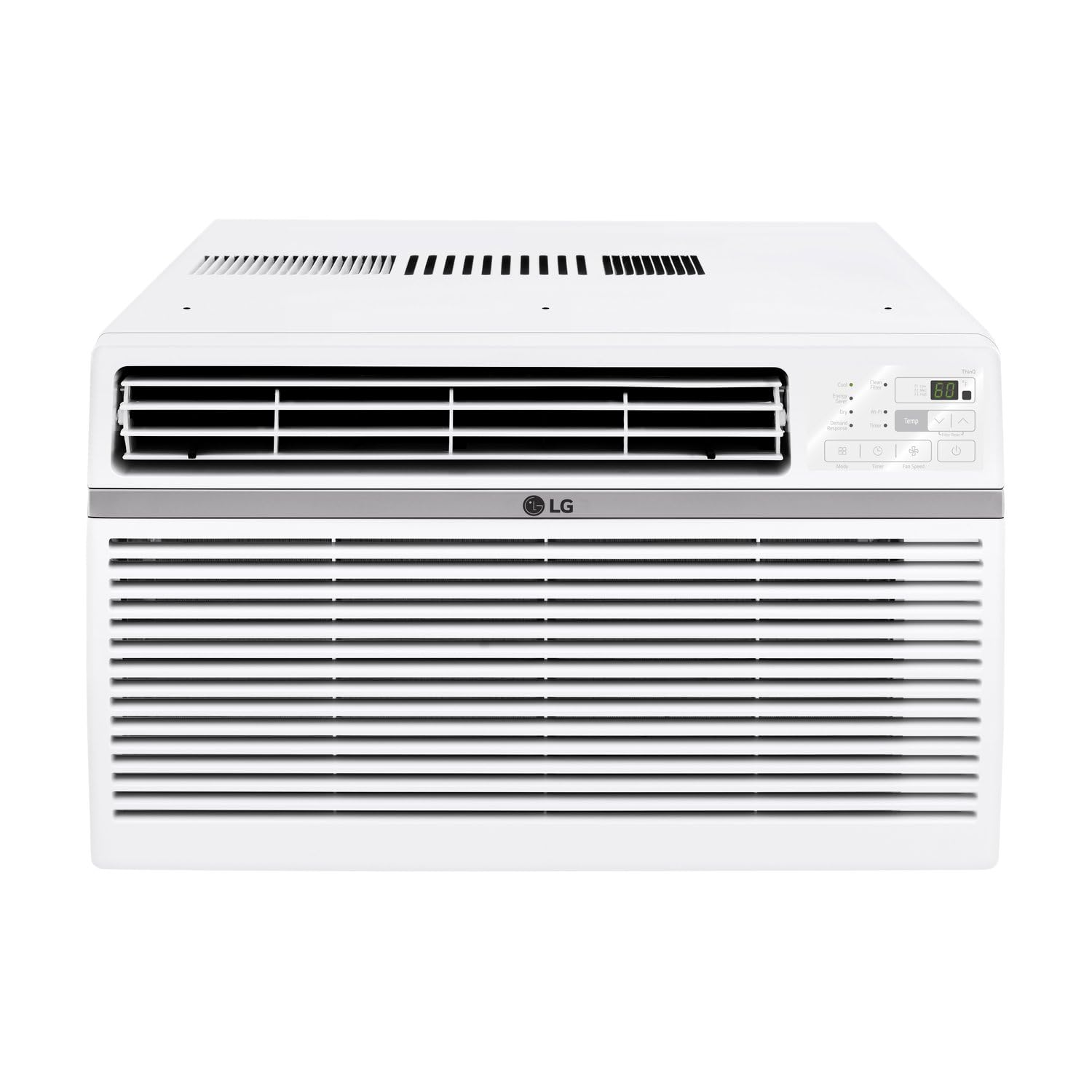
If your basement has a standard double‑hung window that can accommodate a window unit, the LG LW8024RD offers a simple, installation‑friendly solution at 8,000 BTU for rooms up to 350 square feet. Its low‑noise mode runs at 53dB, which is louder than an inverter portable but reasonable for a workshop, storage area, or laundry room where absolute silence isn’t essential.
The electronic controls and remote make it easy to adjust from across the room, and the auto‑restart feature ensures it powers back on after a power outage — a practical benefit for basements prone to breaker trips or storms. Three cooling and three fan speeds give some flexibility, and LG’s scroll compressor is generally reliable.
This unit only removes roughly 2.2 pints of moisture per hour, which is substantially less than dedicated basement dehumidifiers or dual‑hose portables. In a damp basement, you may still need a separate dehumidifier. Some users report a delayed start where the compressor takes a few seconds to kick in, and the design doesn’t include a filter light indicator despite the listing mentioning one.
Why it’s great
- Simple window installation for standard basement windows
- Auto restart after power loss — useful for basements
- Remote control for convenient adjustments
Good to know
- Low dehumidification — separate dehumidifier often needed
- Occasional delayed compressor startup reported
- No filter light indicator despite some marketing claims
11. ftocase 10,000 BTU Portable AC
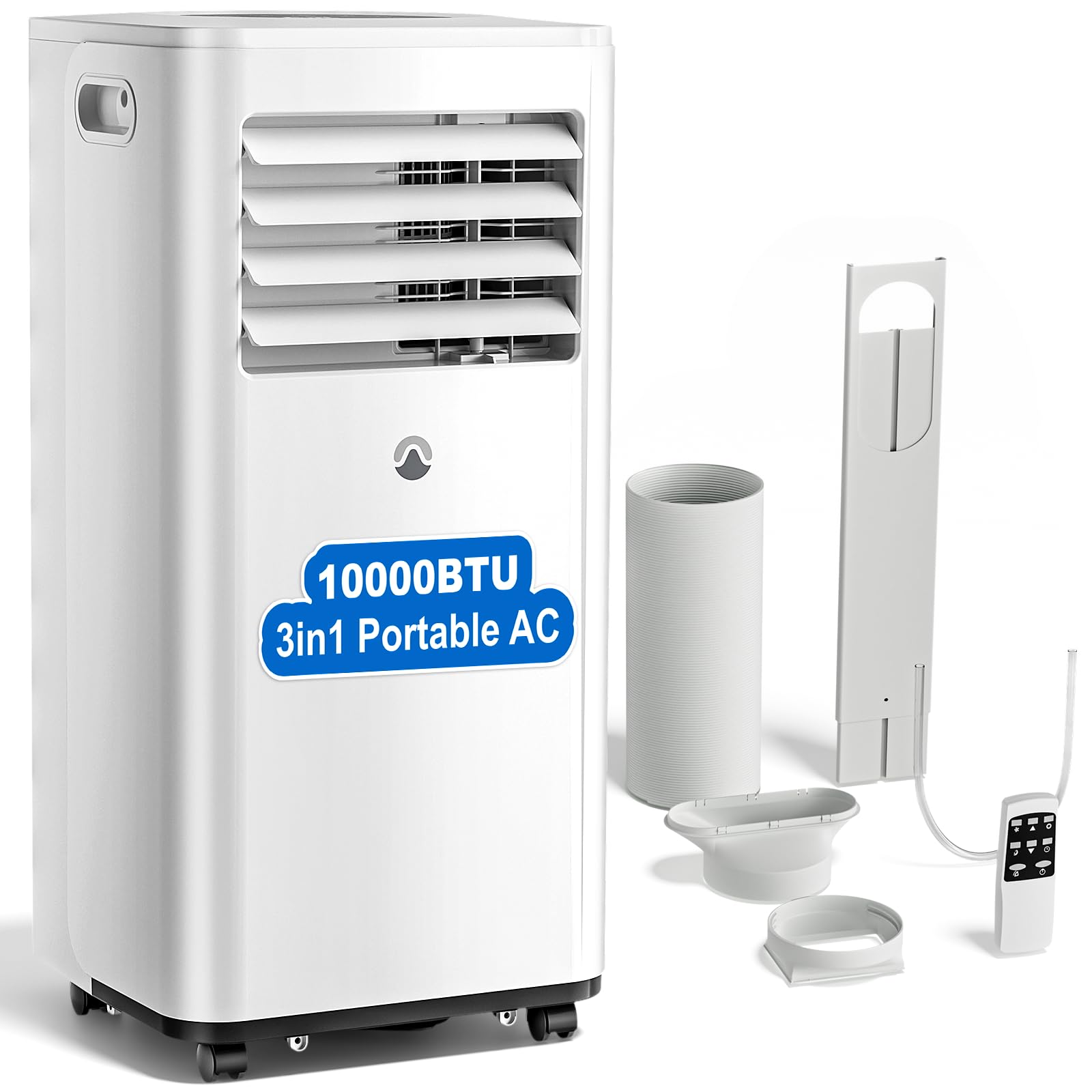
The ftocase 10,000 BTU portable AC is a budget‑friendly entry into basement cooling for spaces up to 450 square feet. It combines cooling, fan, and dehumidifier functions in a single standing unit with a sleep mode that operates below 50dB. The 360‑degree caster wheels and hidden side handles make it easy to move between a basement and an upstairs room if you only need occasional cooling.
Setup is straightforward — the included window kit fits most vertical and horizontal sliders, and the remote control allows full temperature and mode adjustments. Users report that the unit cools a room noticeably within about 15 minutes on hot days, and the dehumidifier function helps reduce the clammy feeling common in basements. The high CEER 7.0 efficiency rating is better than many older portables but not as good as inverter models.
The biggest limitation is that it’s a single‑hose design, which means it will pull warm outdoor air into the basement through any unsealed gaps — not ideal for below‑grade spaces. The water‑full alert system is useful, but in humid conditions, you’ll need to drain the internal reservoir frequently. The performance also drops noticeably when used in open‑plan basements larger than 350 square feet.
Why it’s great
- Budget‑friendly entry price for portable cooling
- Easy to move between rooms on casters
- Sleep mode below 50dB for overnight use
Good to know
- Single‑hose design pulls in outside air — not ideal for basements
- Requires frequent manual condensate draining in humid conditions
- Performance drops significantly above 350 square feet
FAQ
Is a dual‑hose portable AC significantly better than a single‑hose for basements?
How many BTUs do I need for a 500‑square‑foot basement?
Can a window AC unit work in a basement with egress windows?
Final Thoughts: The Verdict
For most users, the ac for basement winner is the LG LP1022FVSM because its dual‑inverter compressor delivers whisper‑quiet, energy‑efficient cooling with enough dehumidification to keep a typical finished basement dry and comfortable. If you want the lowest long‑term operating cost and year‑round heat‑pump capability, grab the YITAHOME 12,000 BTU Mini Split. And for a large open basement with poor window access, nothing beats the dual‑hose performance and auto‑drain of the Whynter ARC-1230WN.