
Our readers keep the lights on and the weekend projects moving. As an Amazon Associate, I earn from qualifying purchases.
That familiar burning ache in the ball of your foot after an hour in heels is a signal your body sends when the forefoot is absorbing three to five times your body weight on a narrow, angled platform. The right ball-of-foot cushion can redistribute that pressure, prevent forward sliding that jams toes into the toe box, and transform a painful evening into one you actually enjoy. This is not about giving up your stilettos—it’s about engineering them to work with your body instead of against it.
I’m Rikta — the co-founder and writer behind FitlyFast. I’ve spent countless hours dissecting the adhesive strength, material density, and ergonomic contours of dozens of metatarsal pads to separate the ones that stay put and actually cushion from the ones that shift, flatten, or fail within an hour.
Whether you’re dressing for a wedding, a long workday, or a night on the dance floor, this guide breaks down the top contenders to help you find the best ball of foot cushion for high heels that matches your foot shape and shoe style.
How To Choose The Best Ball Of Foot Cushion For High Heels
Not all foot cushions are created equal, and the wrong choice can actually worsen the problem by adding bulk that crowds your toes or by slipping out of position. Focus on three core factors: material, adhesive reliability, and thickness profile relative to your shoe’s toe box depth.
Material: Gel vs. Foam vs. Felt
Gel cushions offer the best shock absorption and are reusable, but they require a roomier toe box to avoid feeling squished. Foam pads are lighter and lower-profile but tend to compress permanently after a few wears. Felt provides firm, targeted support for conditions like Morton’s neuroma but flattens quickly under sustained pressure and often lacks strong adhesion in sweaty conditions.
Adhesive Strength and Reusability
Look for cushions with a medical-grade adhesive that bonds firmly to the shoe’s lining without leaving residue. Some pads are one-time-use only—peeling them off destroys the adhesive layer. Others can be washed, air-dried, and reapplied multiple times. If you switch heels frequently, reusable pads offer far better value per wear.
Thickness and Footbed Fit
A pad that measures 3 mm or less works best in narrow or pointed-toe pumps where every millimeter of space counts. Thicker pads (4–6 mm) deliver more cushioning but require a shoe with adequate vertical space in the forefoot area. Measure the depth of your shoe’s toe box before committing to a thick gel pad.
Quick Comparison
On smaller screens, swipe sideways to see the full table.
| Model | Category | Best For | Key Spec | Amazon |
|---|---|---|---|---|
| ZAIWOO Metatarsal Pads | Gel + Fabric | All-day wear & reusability | Washable, reusable adhesive | Amazon |
| Heelho Ball of Foot Cushions | Poron Foam | Pressure redistribution | Patented indention + metatarsal support | Amazon |
| Beautulip Clear Gel Cushions | Transparent Gel | Discreet look in open shoes | Fully transparent, strong adhesive | Amazon |
| Welnove Gel Forefoot Pads | Thick Gel | Maximum shock absorption | Anti-slip ridges, 4-pair pack | Amazon |
| Kimihome Foam Cushions | Foam | Low-profile fit in slim pumps | Non-slip backing, small footprint | Amazon |
| KTSAY Gel Metatarsal Pads | Over-Foot Gel | Medical metatarsal conditions | Worn over foot, size-specific | Amazon |
| Temiart Felt Metatarsal Pads | Wool Felt | Value pack for multiple shoes | 1/4 inch thick, 18-pack | Amazon |
In‑Depth Reviews
1. ZAIWOO Metatarsal Pads Women
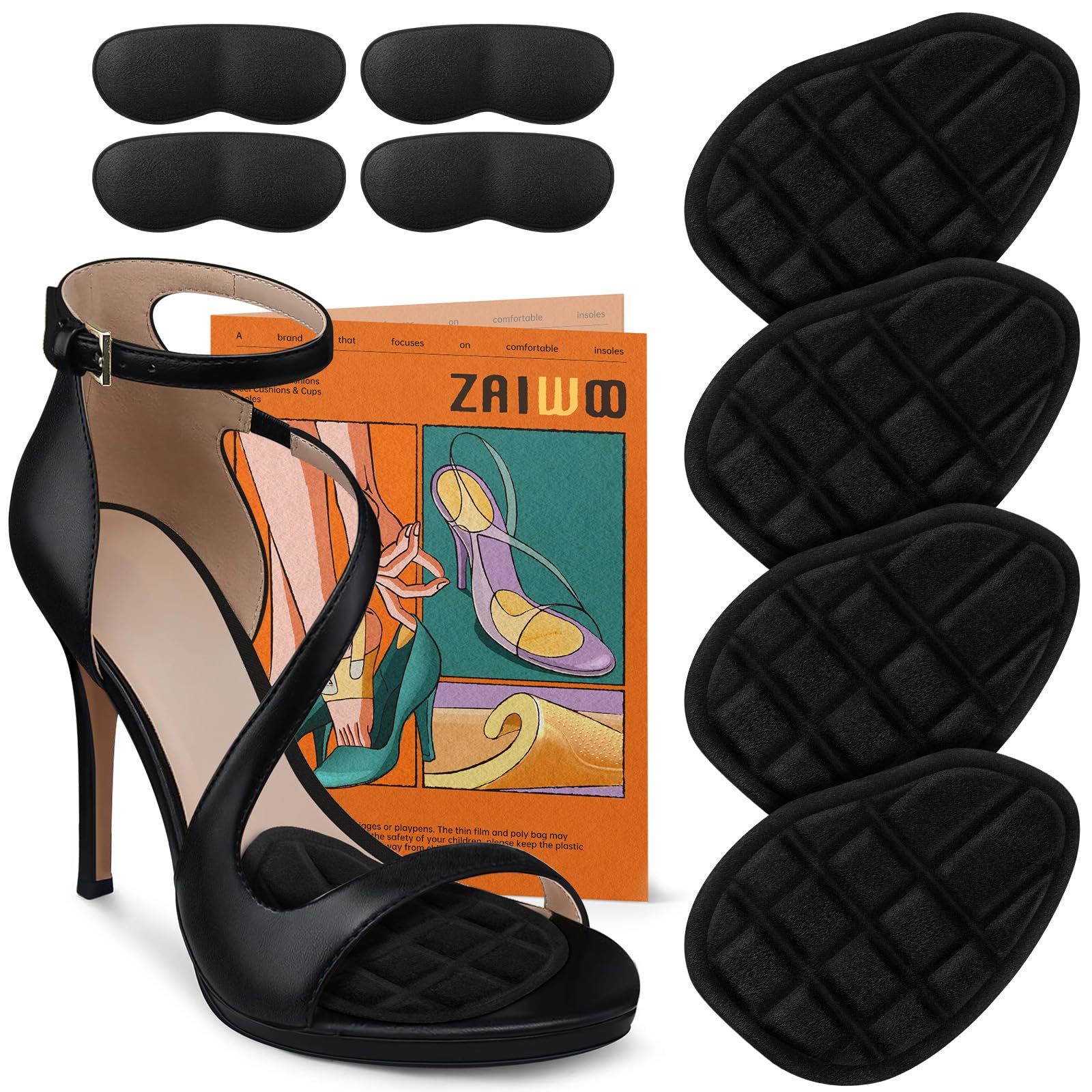
ZAIWOO’s design combines a gel core with a suede fabric top layer that feels soft against bare skin and resists the sweaty slippage that plagues naked gel pads. The 0.25-inch profile is thick enough to absorb impact during dancing or walking yet low enough to fit inside most pumps without crowding the toe box. Multiple reviews confirm that the adhesive remains strong through hours of wear, and the square grid pattern on the pad’s surface adds grip that prevents the foot from sliding forward.
The two-pair set includes matching heel grips, addressing both the forefoot pain and the heel lift that often accompanies loose-fitting heels. Users report relief from burning ball-of-foot pain during entire parties and even swing dancing sessions lasting four hours with zero numbness the next day. The pads can be peeled off, washed with water, air-dried, and reapplied without losing adhesive integrity—a feature that sets them apart from single-use competitors.
Some users with narrow feet note that the pads improve fit by pushing the heel back into the cup while padding the forefoot, creating a snugger overall fit. The mildest complaint centers on thickness: a few users wanted more substantial cushioning, but for standard high heels this profile strikes the right balance between padding and fit.
Why it’s great
- Breathable suede top prevents sweat buildup and odor
- Reusable adhesive survives washing without residue
- Grid pattern adds grip and prevents forefoot sliding
Good to know
- Thin profile may not satisfy those seeking thick, plush cushioning
- Requires drying flat after washing to maintain shape
2. Heelho Ball of Foot Cushions

Heelho takes a different engineering approach: instead of a flat cushion, this pad features a patented indentation that creates a hollow area where the ball of the foot sits, redistributing pressure across a larger surface area. A thick front ridge acts as a dam that prevents the foot from sliding forward in pointed-toe heels—a common source of toe jamming and nerve compression. The open-cell Poron material breathes better than gel and resists odor buildup even after all-day wear.
Users with problem feet who had tried multiple inserts report that Heelho is the first pad that actually stays in place and provides lasting relief in 4- to 5-inch heels. The placement trick is critical: position the pad further back than you expect, and the higher the heel, the further back it needs to sit to keep the metatarsal heads centered over the indentation. Some users tilt the pad slightly outward to accommodate outer toe anatomy.
The biggest limitation is that these are single-use pads—once the backing is removed and adhesive is compromised, reuse is not recommended. A small number of users found the cushioning too minimal for their pain level and wished for a thicker profile. The podiatrist-designed shape is purpose-built for high heels, not flats or sneakers, so do not expect the same benefit in casual shoes.
Why it’s great
- Indentation design offloads pressure from metatarsal heads
- Front ridge prevents foot from sliding into toe box
- Open-cell foam stays cool and resists odor
Good to know
- Not reusable after removal
- Requires precise placement for optimal effect
3. Beautulip Clear Gel Cushions
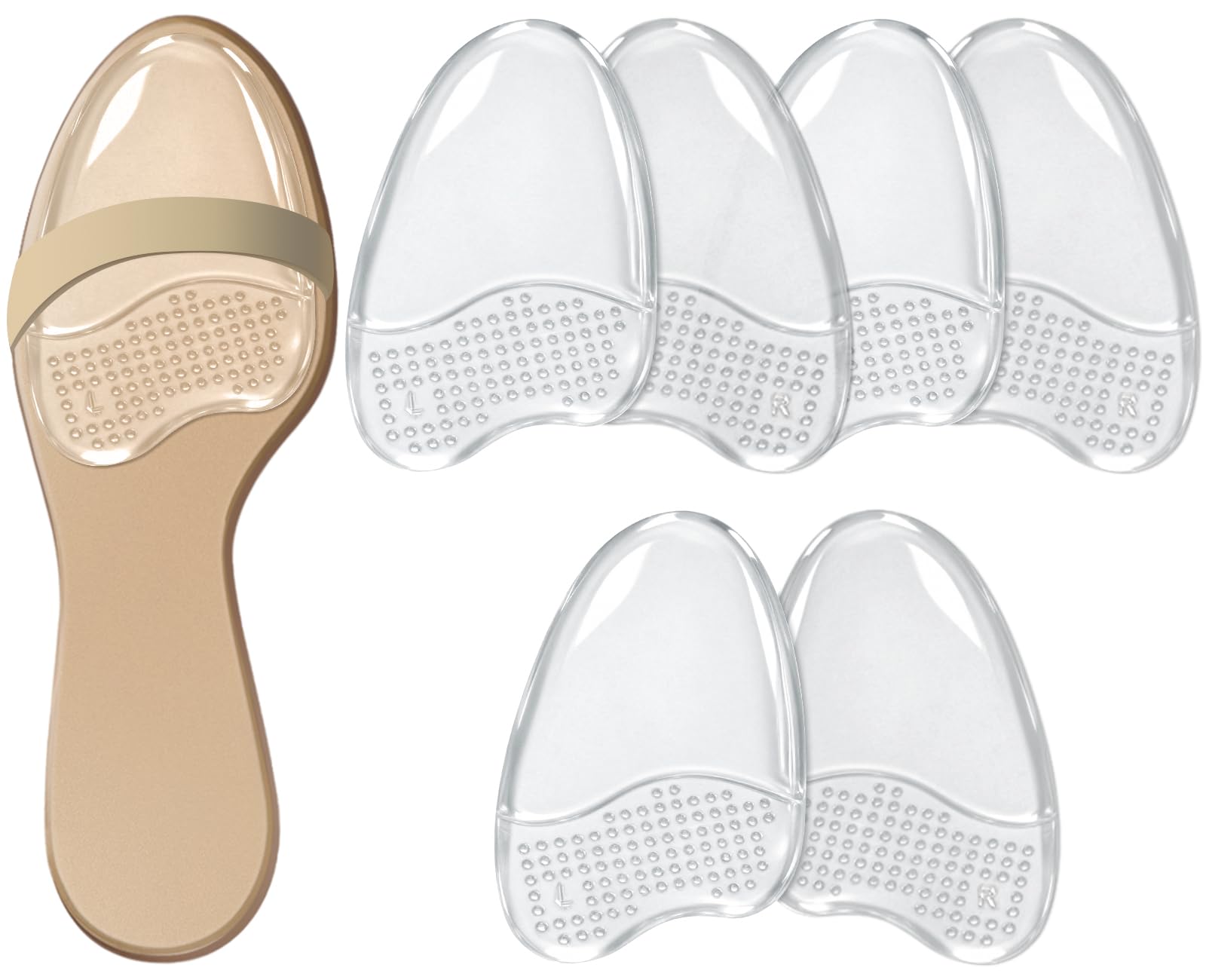
The fully transparent design of these cushions makes them the go-to choice for open-toe shoes, sandals, and any heel where a visible pad would ruin the aesthetic. The gel material provides moderate shock absorption and a tacky surface that grips the foot to reduce sliding. Users report that a single pair lasts a couple of months of continuous wear before the adhesive begins to peel, making them a solid mid-term value.
Beyond their cosmetic advantage, these pads are praised for creating a snugger fit at the front of the shoe, which prevents the foot from sliding forward into the toe opening. One reviewer placed them under insoles for 12-hour shifts on concrete floors and found that the metatarsal positioning absorbed shock better than traditional full-length insoles. The gel does not compress permanently, so the cushioning remains consistent over time.
The placement process is finicky—the gel is slippery during installation, and once stuck, repositioning is difficult without compromising adhesion. Users with neuropathy or arthritis in the toes report that these pads add minimal comfort directly under the toe joints, as the gel is designed more for metatarsal support than toe padding. For best results, position them just behind the metatarsal heads rather than under the toes themselves.
Why it’s great
- Fully transparent, invisible in open shoes
- Tacky gel surface reduces foot sliding
- Adhesive lasts months with daily wear
Good to know
- Hard to reposition during installation
- Minimal cushioning directly under toe joints
4. Welnove Gel Forefoot Pads
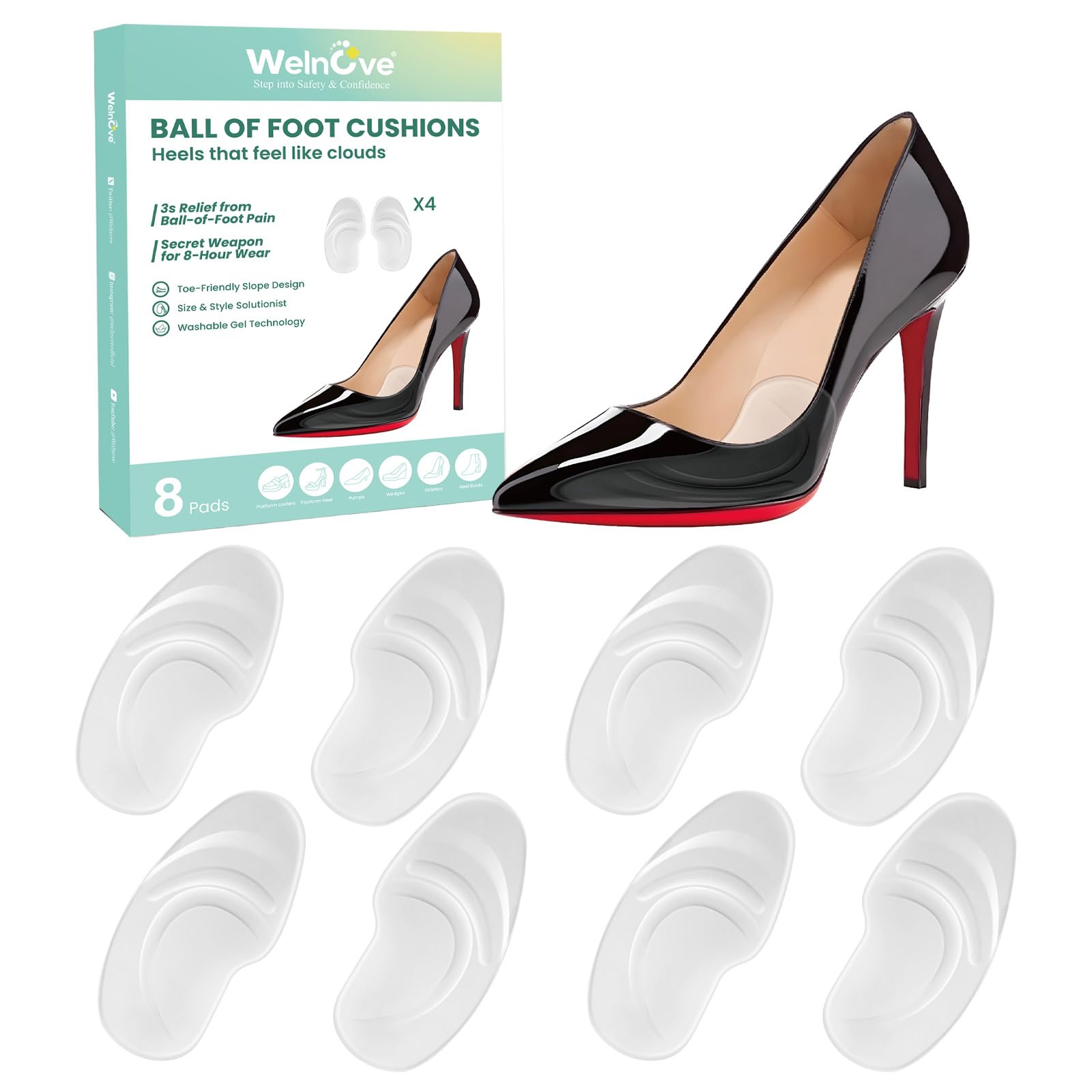
Welnove’s pads are thicker and wider than most competitors, making them ideal for shoes with generous toe box space—think block heels, platform pumps, or wide-width boots. The gel formulation is dense and firm rather than squishy, providing robust shock absorption that translates to genuine pain relief for metatarsalgia and Morton’s neuroma. Prominent anti-slip ridges on the surface prevent the foot from sliding forward even during vigorous movement.
Users report that the adhesive is strong enough to hold the pad in place without shifting, yet it peels off cleanly without leaving residue. The pads are reusable after washing with water and air-drying, and the clear gel design makes them reasonably discreet in most shoes. Several long-term users noted that the cushioning remained effective for months without noticeable compression.
The thicker profile is a double-edged sword: in slim or pointed-toe shoes, the pad takes up too much vertical space and creates uncomfortable pressure on the top of the foot. The ridges, while effective for grip, can feel like bunched socks under the foot for some users. This pad is best reserved for shoes with a roomy forefoot—not your tightest stilettos.
Why it’s great
- Dense gel provides top-tier shock absorption
- Anti-slip ridges keep foot securely in place
- Reusable after washing without losing adhesion
Good to know
- Too thick for narrow or pointed-toe shoes
- Ridges may feel noticeable underfoot for some
5. Kimihome Foam Cushions
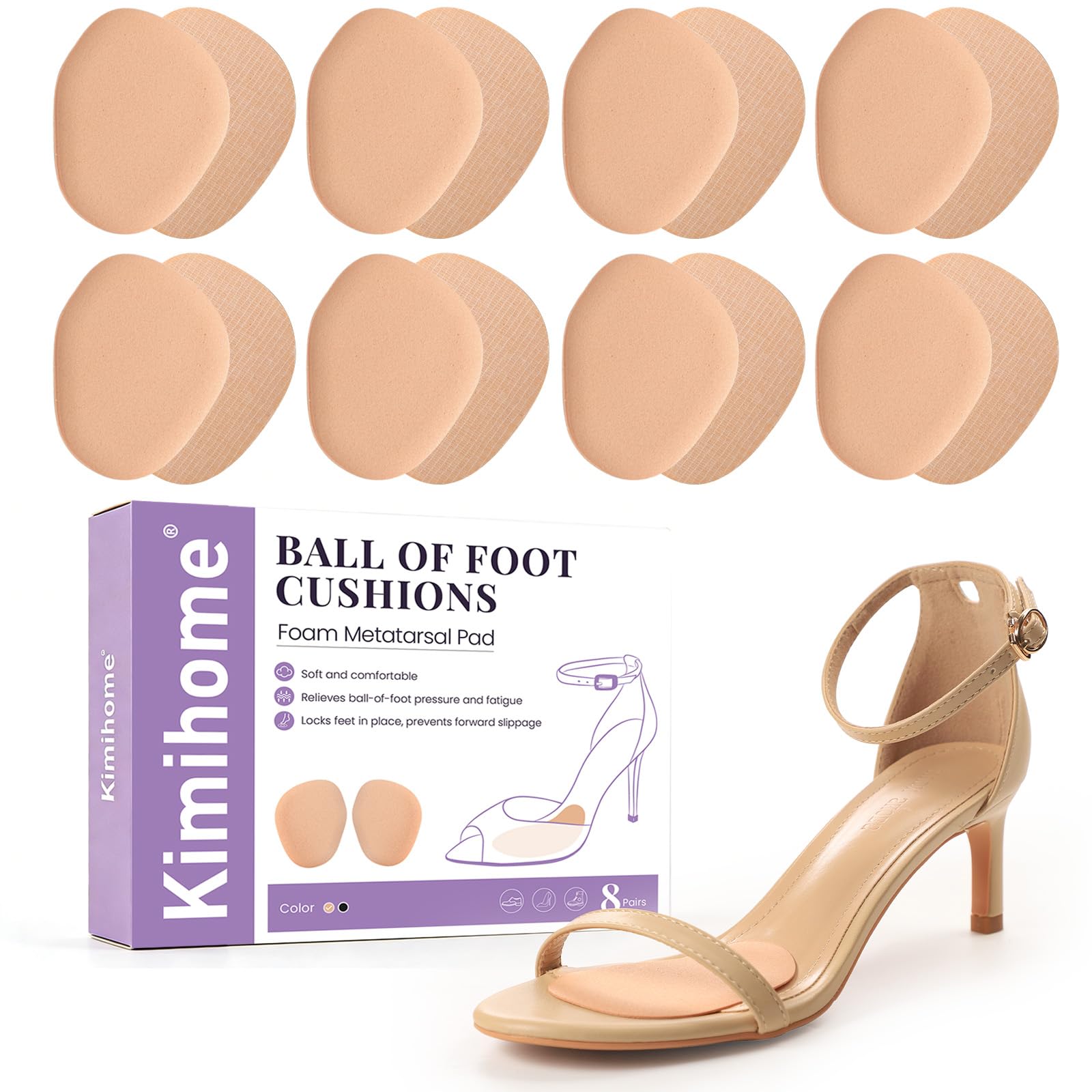
Kimihome’s foam cushions offer the lowest profile of any pad in this lineup, making them the best fit for slim stilettos and tight pumps where every millimeter counts. The foam is slightly rigid rather than plush, providing firm support that redistributes pressure without absorbing shock. The non-slip backing adheres strongly to the shoe lining, and the peachy-pink color is subtle enough to go unnoticed in most heeled footwear.
Users with size 10 wide feet found these pads too small to cover the full forefoot area, confirming that these are best suited for small to medium foot sizes. Several reviewers appreciated that the adhesive is strong but allows for repositioning during initial placement, reducing waste. The foam material does not absorb moisture, so users with sweaty feet may prefer a gel or fabric-topped alternative.
The primary trade-off is durability: foam compresses permanently over time, and several users noted visible divots and flattened edges after a few weeks of regular wear. For occasional use—weddings, date nights, or special events—these deliver adequate comfort without adding bulk, but daily heel wearers will likely need to replace them frequently.
Why it’s great
- Ultra-low profile fits the tightest pumps
- Repositionable adhesive reduces waste
- Strong stay-put bond during long wear
Good to know
- Foam compresses permanently with repeated use
- Too small for wide feet or large shoe sizes
6. KTSAY Gel Metatarsal Pads
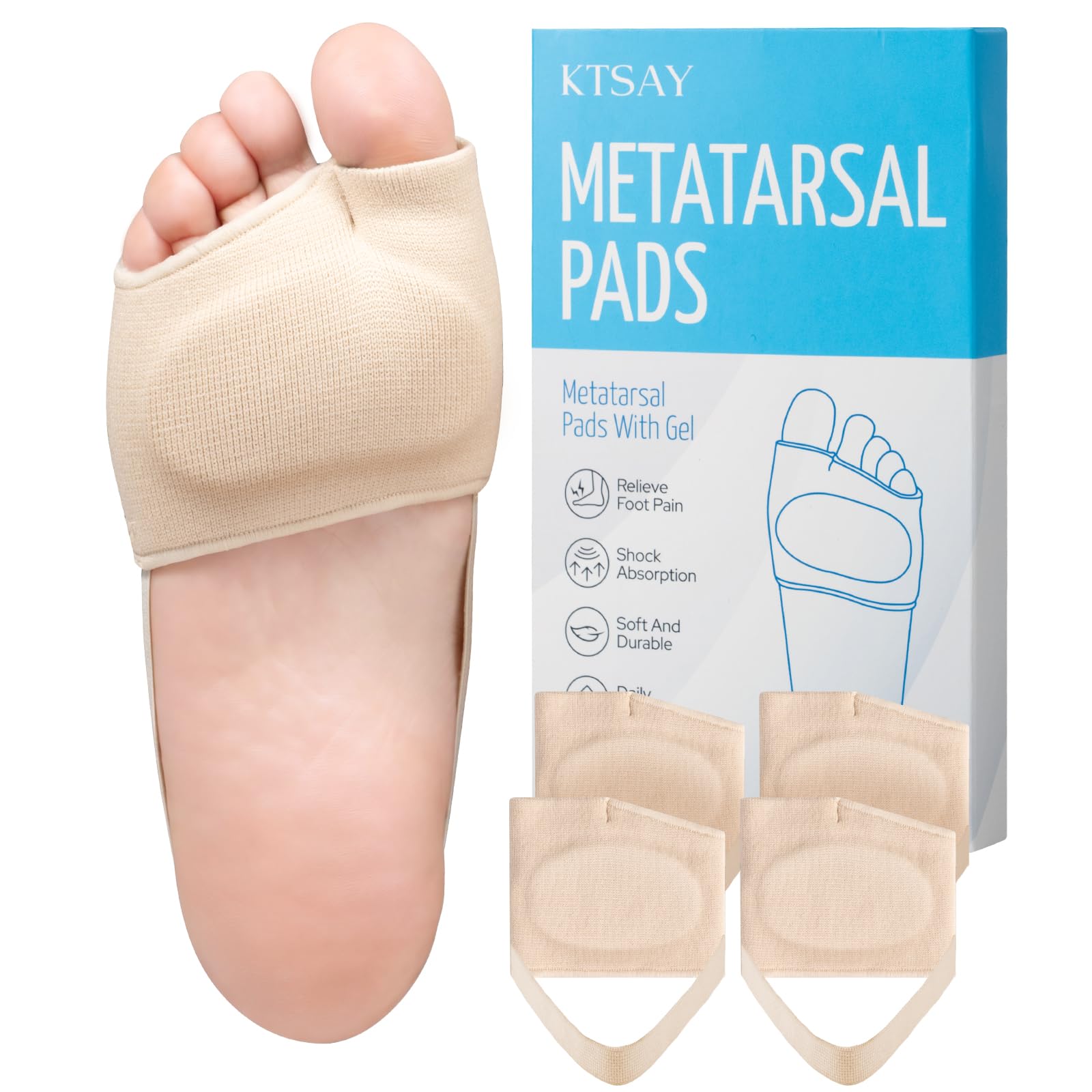
KTSAY breaks the mold by designing these pads to be worn over the foot rather than stuck inside the shoe, which allows them to stay precisely positioned against the metatarsal heads regardless of shoe movement. The gel cushion is thick but not bulky, providing targeted shock absorption for the ball of the foot while protecting the sesamoids and metatarsals from impact. The pads come in three sizes (S, M, L) based on shoe size, with the manufacturer recommending the smaller size if you are between sizes for the best fit.
Users suffering from a constant burning sensation on the metatarsal joint between the second and third toes report almost instant relief after switching to these pads. The shock-absorbing gel is soft enough for all-day comfort during walking or standing yet supportive enough to prevent the forefoot from collapsing under pressure. Multiple reviewers note that the pads stay in place without adhesive when worn inside socks, making them versatile for athletic shoes and work boots as well as heels.
The downside is that these pads can feel snug in narrow high heels, and they may shift or come off when worn without socks in open shoes. The gel material collects dust and lint over time, requiring regular cleaning with soap and warm water. For those who need metatarsal support as a medical necessity rather than occasional comfort, these are the most targeted solution available.
Why it’s great
- Worn over foot for precise anatomical positioning
- Provides near-instant relief for metatarsal burning
- Available in three sizes for accurate fit
Good to know
- May shift in open shoes worn without socks
- Collects lint and requires regular cleaning
7. Temiart Felt Metatarsal Pads

Temiart provides an 18-pack of 1/4-inch thick wool felt pads, making this the highest-value option for users who want to outfit multiple pairs of shoes without worrying about cost per pad. The felt offers firm, supportive cushioning that effectively offloads pressure from the metatarsal heads, providing relief for Morton’s neuroma and general forefoot pain. The strong adhesive is designed to bond directly to the shoe’s insole and stay in place through a full day of wear.
Reviews are split on adhesion reliability: some users report that the pads stay put for months without shifting, while others note that the adhesive fails within a workday, especially in humid conditions or when feet sweat. One workaround involves applying baby powder to the foot side of the pad to reduce sticky residue if the pad shifts. A creative reviewer found that cutting the pads in half prevented sandal straps from rubbing against the little toe, highlighting the felt’s versatility beyond metatarsal support.
The biggest limitation is that felt compresses permanently and cannot be washed without losing shape and adhesion. Once flattened, the pad loses its therapeutic benefit and must be replaced. Users who need long-lasting, washable cushioning should look to gel alternatives, but for budget-conscious buyers who rotate through many pairs of heels, the 18-pair count makes this an economical trial option.
Why it’s great
- 18 pairs at an entry-level price point
- Firm felt provides targeted metatarsal support
- Versatile enough to be trimmed for custom use
Good to know
- Adhesion fails for some users in humid conditions
- Felt compresses permanently and is not washable
FAQ
How do I position a ball-of-foot cushion correctly in high heels?
Can I reuse gel ball-of-foot cushions after washing them?
Why do my ball-of-foot cushions keep sliding out of position?
Final Thoughts: The Verdict
For most users, the best ball of foot cushion for high heels winner is the ZAIWOO Metatarsal Pads because the suede top layer eliminates sweat, the grid pattern prevents sliding, and the washable adhesive allows reuse across multiple shoe rotations. If you need podiatrist-inspired pressure redistribution for very high heels, grab the Heelho Ball of Foot Cushions. And for medical metatarsal conditions requiring precise anatomical positioning, nothing beats the KTSAY Gel Metatarsal Pads.