
Our readers keep the lights on and the weekend projects moving. As an Amazon Associate, I earn from qualifying purchases.
Finding a subwoofer that delivers chest-thumping low end without forcing you to skip meals is the real challenge. Most budget subs sound muddy, buzz at moderate volumes, or simply can’t reach the frequencies that make movie explosions feel real. You need hardware that combines a rigid cabinet, a properly matched amplifier, and a driver capable of moving serious air—all while staying within a reasonable spend.
I’m Rikta — the co-founder and writer behind FitlyFast. I’ve spent countless hours dissecting amplifier topologies, cabinet materials, and driver compliance specs to separate real value from marketing noise in the subwoofer market.
After analyzing dozens of models across multiple price tiers, this guide cuts through the spec-sheet clutter to highlight the true standouts for affordable subwoofer performance that actually delivers clean, room-filling bass.
How To Choose The Best Affordable Subwoofer
Selecting a budget-friendly subwoofer isn’t just about picking the biggest driver you can find. You need to match the amplifier’s real power (RMS) to your room size, ensure the enclosure is built from dense MDF (not particle board), and look for adjustable controls that let you tune the sub to your specific speakers and space. Ignoring these specs often leads to a boomy, one-note bass that ruins your listening experience.
Amplifier Power: RMS Is the Only Number That Counts
Peak power ratings are marketing fiction. A subwoofer’s RMS (Root Mean Square) wattage tells you how much continuous, clean power the amplifier can deliver. For small to medium rooms (up to 300 sq ft), look for at least 100 watts RMS from a Class-D amp—these run cool and efficient. A 300-watt RMS sub will produce noticeably tighter, more authoritative bass than a 50-watt RMS unit, especially when you push the volume.
Driver Size and Enclosure Design
An 8-inch driver with a long-throw design and a ported (bass-reflex) enclosure can often reach deeper frequencies than a cheap 10-inch driver in a sealed box. Pay attention to frequency response: a sub rated down to 30Hz or lower will deliver the tactile, felt-in-your-chest rumble that makes movies immersive. The cabinet must be made of at least 0.75-inch MDF with internal bracing to prevent panel resonance that colors the sound.
Connectivity and Controls
Line-level RCA and LFE inputs are essential for hooking up to a modern AV receiver. Speaker-level inputs are a bonus for integrating with older stereo receivers that lack a subwoofer pre-out. Variable crossover (usually 40-160Hz) lets you set the point where the sub hands off to your main speakers, and a phase switch (0/180 degrees) helps align the sub’s output with your mains for coherent sound.
Quick Comparison
On smaller screens, swipe sideways to see the full table.
| Model | Category | Best For | Key Spec | Amazon |
|---|---|---|---|---|
| Rockville Rock Shaker 10 | Powered | Value-Driven Home Theater | 300W RMS, 10″ Driver, 30Hz | Amazon |
| Klipsch R-101SW | Powered | Premium Home Theater Bass | All-Digital Amp, 10″ TCP Woofer | Amazon |
| Dayton Audio CS1200 | Powered | Deep Bass & 5-Year Warranty | 200W RMS, 12″ Driver, 26Hz | Amazon |
| Dayton Audio CS1000 | Powered | Compact Yet Punchy Bass | 180W RMS, 10″ Driver, 28Hz | Amazon |
| Polk Audio PSW10 | Powered | Musical Accuracy, Small Rooms | 50W RMS, 10″ Driver, 40Hz | Amazon |
| PreSonus Eris Sub 8BT | Studio/Bluetooth | Desktop & Music Production | 100W RMS, 8″ Driver, 30Hz, BT | Amazon |
| Monoprice SSW-10 | Slim/Powered | Tight Spaces, Under-Furniture | 150W RMS, 10″ Driver, 25Hz | Amazon |
| Edifier T5s | Powered | Near-Field & Bookshelf Upgrades | 70W RMS, 8″ Driver, 35Hz | Amazon |
| Klipsch R-8SW | Powered | Apartment-Friendly Bass | 150W Peak, 8″ Copper Woofer | Amazon |
In‑Depth Reviews
1. Rockville Rock Shaker 10 Black 600W Powered Subwoofer

The Rockville Rock Shaker 10 hits a remarkable sweet spot for budget buyers who refuse to compromise on output. Its 300-watt RMS Class-D amplifier drives a 10-inch woofer inside a braced MDF cabinet, delivering chest-thumping bass that easily fills a 30×30-foot space at just 50% gain. Owners consistently praise its ability to shake the room without audible distortion, a feat that usually costs significantly more.
The adjustable crossover, volume, and phase controls give you fine-tuning capability rarely seen at this price point. Paired with both RCA and high-level inputs, it integrates seamlessly with modern AV receivers and older stereo amps alike. The remote control adds convenience for adjusting bass on the fly without leaving your seat.
Some users note the bass can feel slightly loose compared to more expensive sealed designs, but the sheer output and impact for the price are undeniable. The auto-off feature is a nice touch for energy savings. If you want maximum tactile bass impact for movies and gaming without breaking your budget, this is the clear leader.
Why it’s great
- 300W RMS delivers powerful, distortion-free bass for medium to large rooms.
- Adjustable crossover, phase, and volume controls offer flexible system integration.
- High-level speaker inputs allow connection to older receivers without a sub out.
Good to know
- Bass can feel slightly loose at very high volumes compared to tighter sealed subs.
- Enclosure is moderately large, requiring dedicated floor space.
2. Klipsch Reference R-101SW 10” Front-Firing Subwoofer

The Klipsch R-101SW represents a significant step up in refinement and output. Its all-digital amplifier and 10-inch spun-copper TCP (thermoformed crystalline polymer) woofer work in concert to deliver deep, thunderous bass that rivals subs costing substantially more. Owners upgrading from older budget subs report being astonished by the clarity and force—one reviewer noted it outperformed a sub that cost three times as much.
The front-firing design offers flexible placement options, while the low-pass crossover and phase control ensure seamless blending with your main speakers. Build quality is exceptional, with a dense MDF cabinet and a sleek, detachable grille. It integrates easily with any AV receiver via line/LFE inputs and produces clean, rumbling bass without any port noise or cabinet resonance.
The R-101SW is larger than its 8-inch sibling, so verify your space before purchase. For those who prioritize home theater impact and want a sub that can handle both subtle audio cues and full-on action sequences with authority, this is the premium choice that justifies its position in the mid-upper tier.
Why it’s great
- All-digital amplifier provides clean, efficient power with deep low-frequency extension.
- TCP woofer minimizes cone breakup for distortion-free bass at high volumes.
- Front-firing design offers flexible placement, even near walls.
Good to know
- Physical size is larger than expected; measure your space first.
- No included subwoofer cable requires a separate purchase.
3. Dayton Audio Classic CS1200 – 12″ 200W Powered Subwoofer
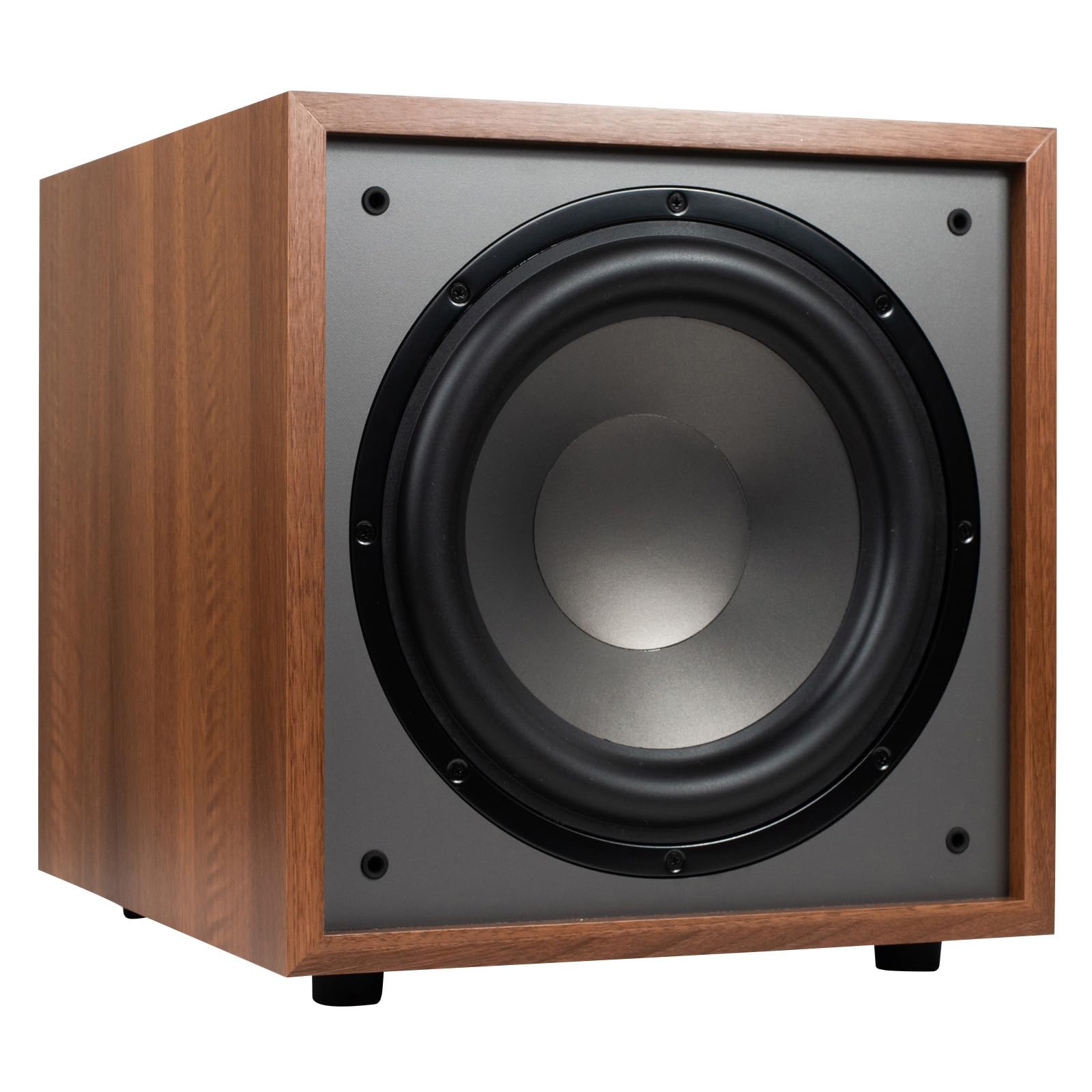
The Dayton Audio CS1200 is a serious contender for anyone seeking the deepest possible bass on a budget. Its 12-inch driver driven by a 200-watt Class-D amplifier reaches down to 26Hz, a frequency that delivers the subsonic rumble you feel in your bones. The cabinet is rigidly braced and built from thick MDF, ensuring the driver’s energy translates into clean output rather than panel vibration.
Setup is straightforward with stereo RCA, LFE, and speaker-level inputs. The auto-on function works reliably, and the included 5-year warranty speaks to Dayton’s confidence in its build. Users in small to medium rooms report tight, clear bass for both music and movies, with many noting it outperforms their previous larger-name subs.
The wood-grain finish is aesthetically pleasing, though the swappable grille (gray included) may not match every decor. Some users have reported screws loosening after extended use, an easy fix with thread-locker. For the money, the CS1200 offers the most low-frequency headroom in this guide, making it ideal for home theater enthusiasts who crave foundation-shaking LFE.
Why it’s great
- 200W RMS and 12-inch driver deliver deep, authoritative bass down to 26Hz.
- Braced MDF cabinet and 5-year warranty ensure long-term reliability.
- Multiple input options including speaker-level for easy integration.
Good to know
- Physical footprint is large; requires dedicated floor space.
- Grille cloth feels less premium than the cabinet itself.
4. Dayton Audio Classic CS1000 – 10″ 180W Powered Subwoofer
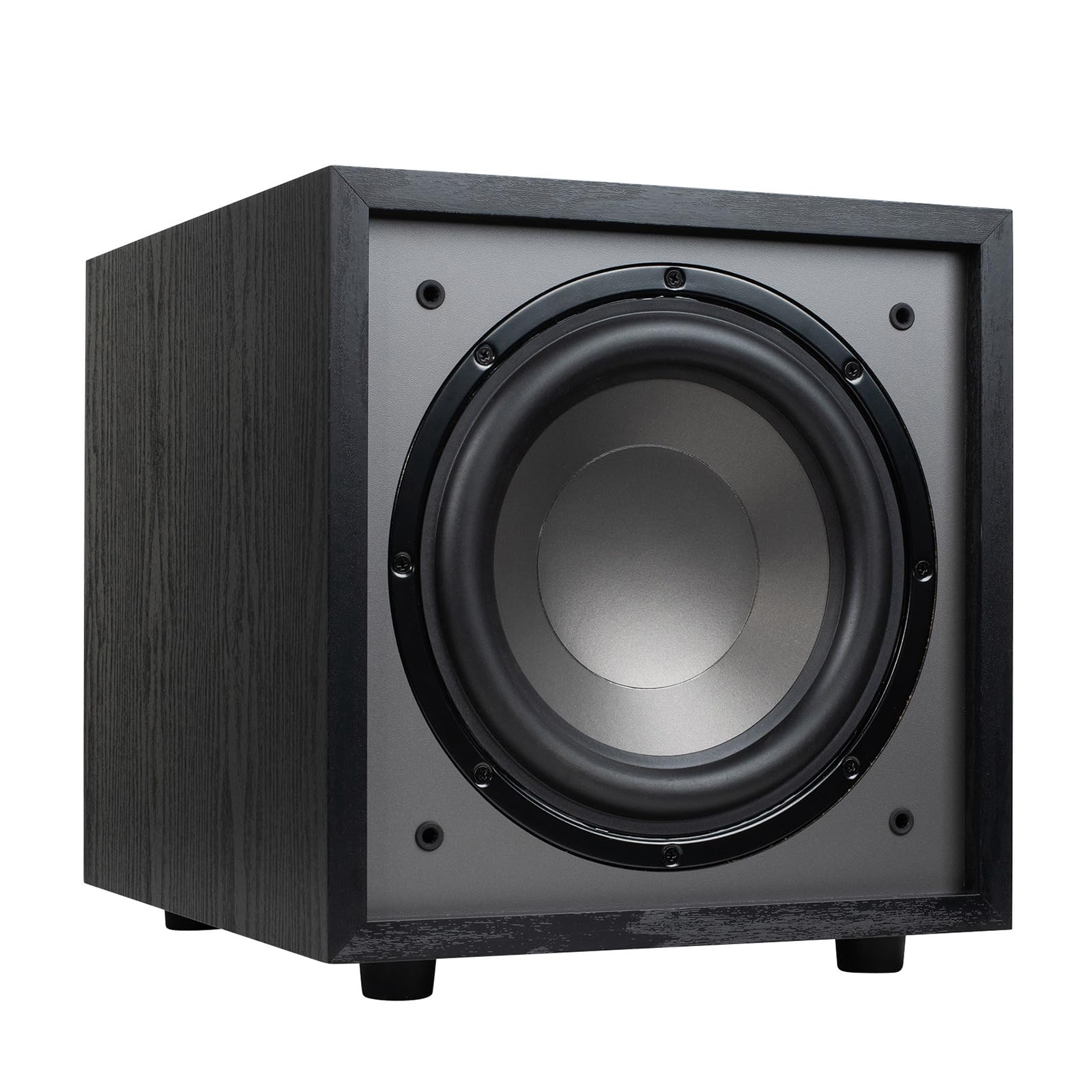
The Dayton Audio CS1000 is the 10-inch sibling of the CS1200 and offers nearly identical build quality in a more compact package. With 180 watts RMS and a frequency response extending to 28Hz, it delivers tight, accurate bass without the boominess that plagues many budget subs. The rigidly braced cabinet and Class-D amplifier ensure clean output, even during extended listening sessions.
User feedback highlights its ability to enhance both 2-channel music and surround sound systems dramatically. The auto-on feature is responsive, and the inclusion of stereo RCA, LFE, and speaker-level inputs makes it universally compatible. The swappable grille allows you to match your decor, and the 5-year warranty provides peace of mind.
Placement is critical to getting the best performance, as with any sub, but users report that once dialed in, the CS1000 produces flat, punchy bass down to around 35Hz in typical rooms. The grill cloth feels a bit flimsy compared to the heavy cabinet, but this is a minor cosmetic complaint. For a balanced combination of power, depth, and price, the CS1000 is hard to beat.
Why it’s great
- 180W RMS Class-D amp delivers clean, tight bass without distortion.
- Compact size with deep 28Hz frequency response for its class.
- 5-year warranty and robust MDF construction ensure durability.
Good to know
- Grille cloth feels less durable than the solid cabinet.
- May sound slightly boomy if not carefully positioned and calibrated.
5. Polk Audio PSW10 10″ Powered Subwoofer

The Polk Audio PSW10 is a legendary entry-level subwoofer that has earned its reputation through musicality and ease of use. Its 10-inch Dynamic Balance woofer and 50-watt RMS amplifier deliver smooth, tight bass that blends naturally with music across all genres. Unlike many budget subs that sound one-note and boomy, the PSW10 provides a controlled low end that enhances rather than overpowers.
The front-firing ported design, combined with a continuously variable 80-160 Hz crossover and phase toggle, allows precise integration with any speaker system. Users with older integrated amps particularly appreciate the high-level inputs, which make adding a sub to a vintage setup simple. The auto-on/off feature works reliably, and the sub produces no audible hum or noise in standby.
The PSW10’s 50-watt RMS rating means it’s best suited for small to medium rooms (under 200 sq ft). Pushing it beyond its limits in a large space will introduce distortion. Some users report the front grille can rattle at certain frequencies. For those prioritizing musical accuracy over sheer output, this remains a top-tier choice in the entry-level segment.
Why it’s great
- Musical, non-boomy bass that integrates seamlessly with stereo systems.
- High-level speaker inputs enable easy connection to vintage receivers.
- Compact footprint fits neatly into small room setups.
Good to know
- 50W RMS limits output in large rooms; best for small to medium spaces.
- Front grille can vibrate against the cabinet at moderate volumes.
6. PreSonus Eris Sub 8BT — 8″ Powered Subwoofer

The PreSonus Eris Sub 8BT is a purpose-built studio subwoofer that also excels in desktop and home theater applications. Its 8-inch woven-composite driver and 100-watt RMS amplifier deliver accurate, tight bass down to 30Hz, making it ideal for music production or critical listening. The front-firing design and front-panel headphone output with built-in amplifier add significant utility for desktop users.
Bluetooth 5.0 connectivity is a standout feature, allowing wireless integration with phones, tablets, and computers without degrading audio quality. The variable highpass and lowpass crossover filters ensure seamless transition with your main monitors, avoiding the muddy low-end overlap that plagues simpler designs. Users report clean, punchy bass that significantly improves small studio setups and desktop speaker systems.
Some users with non-PreSonus powered speakers have reported a slight bass delay via USB connections, which was resolved by switching to a dedicated subwoofer. The auto power-saving mode engages after 40 minutes of idle time. For those needing accurate, tunable bass in a compact form factor with wireless convenience, the Eris Sub 8BT delivers professional-grade performance.
Why it’s great
- Bluetooth 5.0 wireless input adds unmatched convenience for desktop users.
- Highpass/lowpass crossover ensures accurate integration with studio monitors.
- Front-panel headphone output with dedicated amplifier for private listening.
Good to know
- Bass delay may occur with non-PreSonus speakers via USB connection.
- Auto standby engages after 40 minutes, which may be short for some users.
7. Monoprice SSW-10 – Powered Slim 10-Inch Ported Subwoofer

The Monoprice SSW-10 solves the biggest pain point for subwoofer buyers living in tight spaces: finding something that fits without sacrificing low end. Its slim, ported cabinet houses a full 10-inch driver driven by a 150-watt amplifier, with a frequency response extending to 25Hz. That’s genuinely deep bass from a unit that can slide under a couch or behind a TV stand.
User feedback is mixed but revealing. Many are thrilled with how well it integrates into their setups, praising the rumbling output and the ability to hide the sub out of sight. The ported design maximizes bass output from the slim form factor, and the adjustable low-pass filter and volume allow decent integration with existing speakers.
However, some users report a persistent buzzing sound or insufficient power for larger rooms. The power cable is short (4 feet), and the lack of a phase adjustment switch can make integration tricky. For small rooms or near-field desktop use where every inch of floor space matters, the SSW-10’s unique form factor is a compelling trade-off for its minor sonic compromises.
Why it’s great
- Slim, low-profile design fits under furniture where standard subs cannot.
- 10-inch driver in a ported enclosure delivers deep bass down to 25Hz.
- 150W amplifier provides sufficient power for small to medium rooms.
Good to know
- Some units exhibit a buzzing sound or inadequate power for larger spaces.
- Short power cable and lack of phase control can complicate setup.
8. Edifier T5s Powered Active Subwoofer
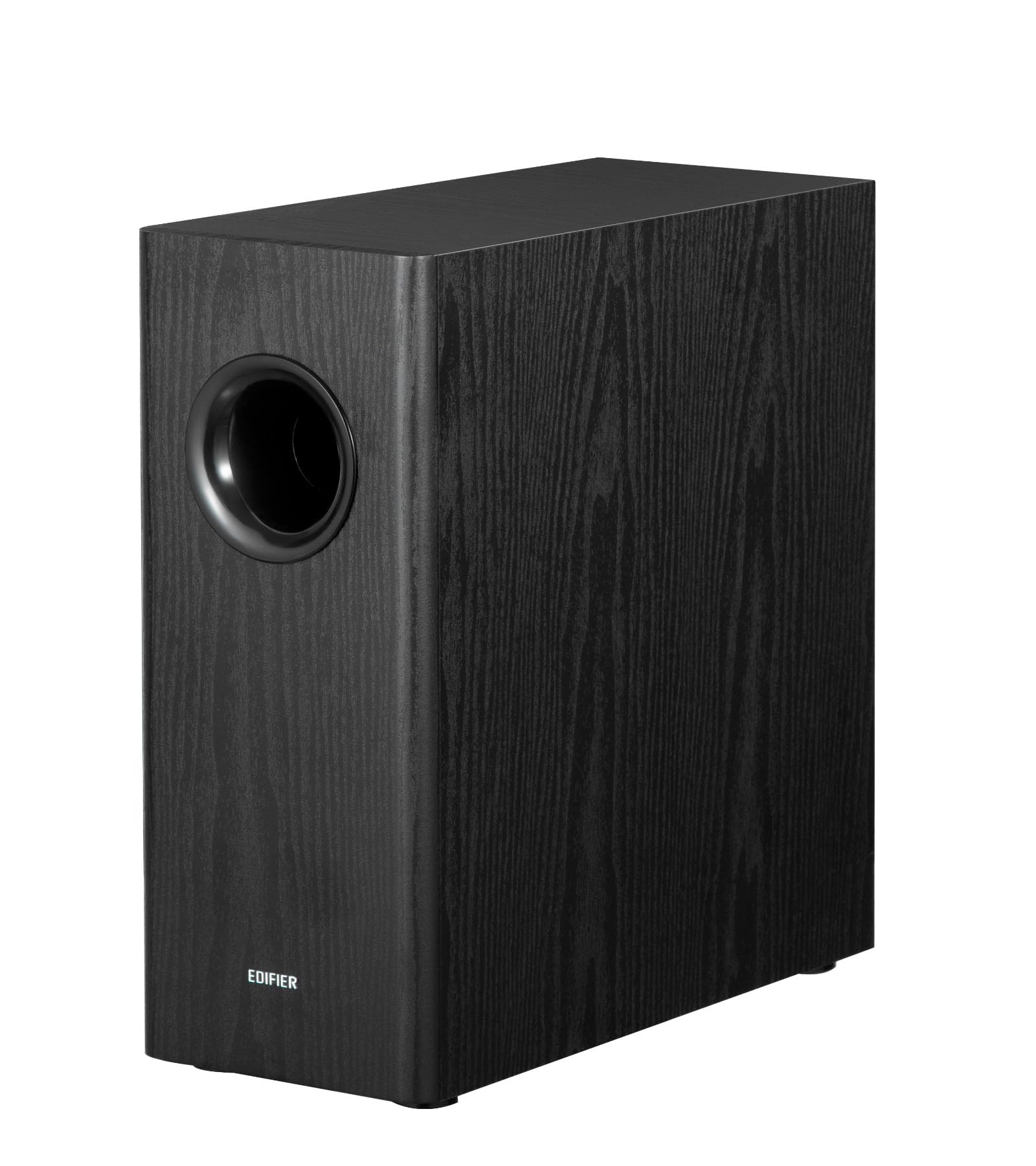
The Edifier T5s is designed specifically to augment small bookshelf speakers, making it an ideal upgrade for desktop audio systems. Its 8-inch long-throw woofer and 70-watt RMS Class-D amplifier deliver clean, tight bass down to 35Hz, significantly extending the low-end of compact speakers like the Edifier R1280Ts or R1700BTs without overwhelming them.
The enclosure uses 18mm MDF with internal bracing to minimize resonance, and the front-firing driver with a right-firing port allows flexible placement. The low-pass filter (30-160Hz) and phase selector (0/180°) give you precise control over integration. Users report that once dialed in, the T5s produces accurate, punchy bass that enhances the near-field listening experience without localization or imaging issues.
This sub is not designed to rattle walls in a large living room. Its purpose is near-field accuracy, and it excels there. The vertical orientation saves desk space, and the included cables make setup plug-and-play. If you have a desktop system with passive or active bookshelf speakers and want controlled, musical bass, the T5s is the perfect match.
Why it’s great
- Designed to seamlessly integrate with Edifier bookshelf speakers and similar systems.
- 18mm MDF cabinet and long-throw woofer deliver clean, distortion-free bass.
- Vertical, space-saving design with low-pass filter and phase control.
Good to know
- 70W RMS output is best for near-field or small room use, not large spaces.
- Struggles with sub-35Hz ultra-low frequencies; dedicated LFE subs go deeper.
9. Klipsch Reference R-8SW Surround Subwoofer

The Klipsch R-8SW is a compact, down-firing subwoofer designed for small to medium rooms where neighbor-friendly bass is a priority. Its 8-inch spun copper IMG woofer and all-digital amplifier produce clean, tight bass that enhances both movies and music without overwhelming the space. The down-firing design helps blend the bass with the room, reducing localization effects.
User reviews consistently praise its ability to deliver a “mean punch” while remaining unobtrusive. It integrates well with desktop systems and small surround setups, and the adjustable crossover and phase control allow fine-tuning. Many users note that at moderate gain levels, it provides satisfying low-end that won’t disturb neighbors, making it ideal for apartment living.
The R-8SW’s compact size means it won’t plumb the deepest sub-30Hz frequencies like larger units, and some users report a popping sound when the sub powers down abruptly. The all-digital amp runs cool and efficiently. For those who need to add bass to a small system without rattling the whole building, this is a refined, well-built choice.
Why it’s great
- Compact, down-firing design delivers tight bass without dominating the room.
- All-digital amplifier runs cool and provides clean power for its size.
- Easy integration with desktop or small surround sound systems.
Good to know
- Limited deep bass extension; not for sub-30Hz LFE content.
- May produce a pop sound during power-off cycling.
FAQ
Can I use a subwoofer with a receiver that has no subwoofer pre-out?
What crossover frequency should I set on my affordable subwoofer?
Does the phase switch (0/180 degrees) really matter on a budget sub?
Will a smaller 8-inch subwoofer be enough for a medium-sized living room?
Final Thoughts: The Verdict
For most users, the affordable subwoofer winner is the Rockville Rock Shaker 10 because it delivers 300W RMS of clean room-shaking bass at a price that leaves the competition scrambling. If you want deeper, more authoritative home theater impact, grab the Dayton Audio CS1200 with its 12-inch driver and 200W RMS. And for desktop accuracy or near-field listening, nothing beats the Edifier T5s for seamless integration with bookshelf speakers.