
Our readers keep the lights on and the weekend projects moving. As an Amazon Associate, I earn from qualifying purchases.
You’re not shopping for furniture or a Bluetooth gadget. You’re chasing that moment when a vocalist’s breath becomes audible, when the decay of a cymbal crash hangs in the air for seconds, when the soundstage places each instrument in a tangible, three-dimensional space. Buying passive loudspeakers means wading through impedance curves, sensitivity ratings, driver materials, and cabinet resonance specs — and one wrong decision tethers you to a system that sounds congested, bright, or lifeless for years.
I’m Rikta — the co-founder and writer behind FitlyFast. Hundreds of hours of research comparing crossover topologies, real-world impedance minimums, and controlled directivity data have gone into this guide to help you cut through the marketing claims and find the speaker pair that actually delivers the transparency you’re after.
Whether you are building a dedicated near-field listening station or a full-scale home theater, this guide breaks down the most compelling options available today in the best audiophile loudspeakers category.
How To Choose The Best Audiophile Loudspeakers
Selecting a passive loudspeaker is a matching exercise. Your amplifier’s current delivery, your room’s volume and damping characteristics, and your preferred tonal palette will dictate which driver topology and cabinet work best. Ignoring these three variables is the most common reason for buyer remorse.
Amplifier Compatibility: The Impedance Trap
Many audiophile speakers dip to 4 ohms or lower at certain frequencies, demanding high current from the amplifier. A receiver rated at 100 watts into 8 ohms may deliver only half that into a 4-ohm load. Always check the speaker’s minimum impedance — not just the nominal rating — and ensure your amplifier is stable into that load. A mismatch results in clipped waveforms, harsh treble, and potential tweeter damage.
Driver Material & Tonal Signature
Soft dome tweeters (silk, textile) deliver a smooth, forgiving top end favored for long listening sessions. Metal dome tweeters (aluminum, beryllium, diamond-coated) offer greater detail and extension but can sound fatiguing with poor recordings. For woofers, materials like cellulose pulp provide natural warmth, while ceramic-metal composites (Cerametallic) maximize rigidity for lower distortion at high output levels. The choice defines your system’s character.
Cabinet Design: Resonance Control
Speakers with thin, unbraced cabinets add coloration that clouds imaging. Look for high-density wood construction with internal cross-bracing. Rear-ported designs require more breathing room from the wall — typically 12 to 24 inches — or the bass will become boomy. Front-ported or sealed enclosures are more placement-flexible. Time-aligned baffles improve phase coherence, pulling the soundstage into sharper focus.
Quick Comparison
On smaller screens, swipe sideways to see the full table.
| Model | Category | Best For | Key Spec | Amazon |
|---|---|---|---|---|
| HiVi-Swans D3.1 MKII | Bookshelf | Value vs flagship performance | 28mm natural-fiber tweeter; wood veneer cabinet | Amazon |
| DALI KUPID | Compact Bookshelf | Tight spaces with wall-mount flexibility | 4.5″ woofer, 26mm soft dome; 4 ohms | Amazon |
| Triangle Borea BR04 | Bookshelf | Vocal warmth with cellulose driver | 16cm cellulose pulp woofer; 90 dB sensitivity | Amazon |
| Martin Logan Motion 40i | Floorstanding | Electrostatic-like transient speed | Folded Motion tweeter; 6.5″ woofer | Amazon |
| Polk Audio Reserve R200 | Large Bookshelf | Home theater integration with Dolby Atmos | 6.5″ Turbine Cone; X-Port for clean bass | Amazon |
| HiVi-Swans M300MKII | Powered Bookshelf | All-in-one with ribbon tweeter clarity | Isodynamic ribbon; 2″ midrange; 360W RMS | Amazon |
| Klipsch RP-8000F II | Floorstanding | High-efficiency, dynamic home theater | 8″ Cerametallic woofers; 90×90 Tractrix horn | Amazon |
| SVS Ultra Evolution | Bookshelf | Reference-class imaging for critical listening | Diamond-coated tweeter; dual opposing woofers | Amazon |
| KEF LS50 Meta | Bookshelf | Wide-dispersion near-field listening | 12th-gen Uni-Q; Metamaterial Absorption | Amazon |
| Wharfedale Linton (Speakers) | Bookshelf | Warm, non-fatiguing long sessions | 8″ woven Kevlar cone; 90 dB sensitivity | Amazon |
| SVS Prime Pinnacle | Floorstanding | Full-range without a subwoofer | Triple 6.5″ woofers; 5.25″ midrange | Amazon |
| Wharfedale Linton w/ Stands | Bookshelf w/ Stands | Complete package with dedicated stands | 8″ Kevlar cone; 25-200W recommended | Amazon |
| Klipsch Cornwall IV | Floorstanding | Live-music presence from horn-loaded design | 15″ woofer; 3-way fully horn-loaded | Amazon |
In‑Depth Reviews
1. HiVi-Swans D3.1 MKII Passive Bookshelf Speakers
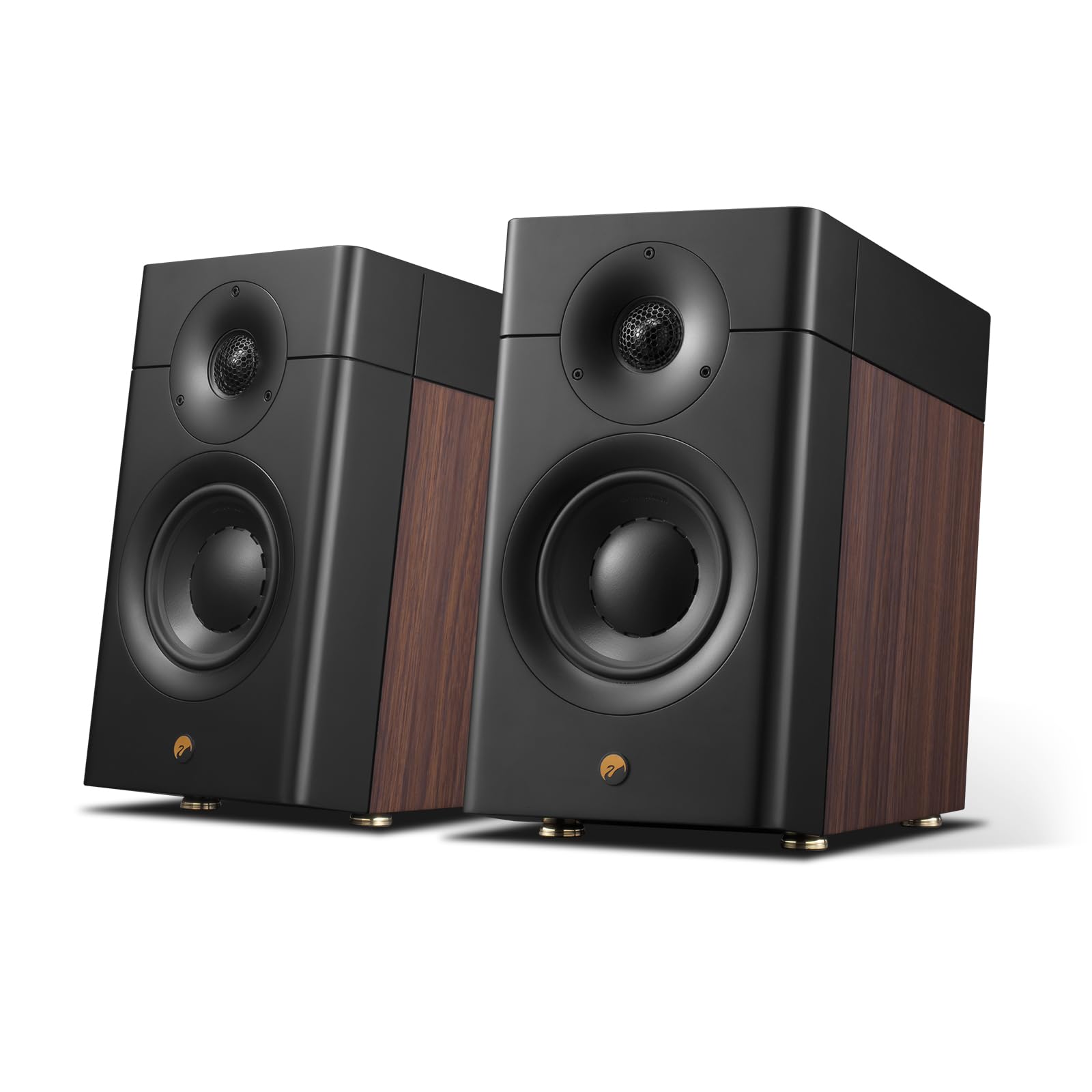
The HiVi-Swans D3.1 MKII is the rare speaker that delivers genuine flagship-grade transparency at a fraction of the expected cost. Its 28mm natural-fiber dome tweeter — adapted from German braided textile — produces treble that is both airy and smooth, avoiding the metallic edge that plagues lesser metal domes. The 6.5-inch woofer punches with surprising authority, extending low enough that many users report no subwoofer is needed for music.
The angled front baffle tilts the sound axis directly toward your ears, a detail usually reserved for far more expensive designs. This time-alignment trick enhances imaging precision, placing vocalists and instruments on a wide, holographic stage. The real-wood veneer cabinet with internal bracing keeps resonance low, preserving clarity even at higher volumes.
Be aware that these are passive speakers requiring an external amplifier — do not connect them directly to a phone or laptop. The binding posts are robust, and the overall build feels premium beyond the price point. For anyone seeking a serious first step into high-fidelity listening, this pair sets a benchmark that competitors struggle to match.
Why it’s great
- Angled baffle optimizes time alignment for precise imaging
- Warm, natural treble with ultra-low distortion from fiber dome
- Cabinets use real wood veneer with reinforced bracing
Good to know
- Requires external amplifier — not self-powered
- Rear port demands careful placement away from walls
2. DALI KUPID Premium Compact Bookshelf Speakers
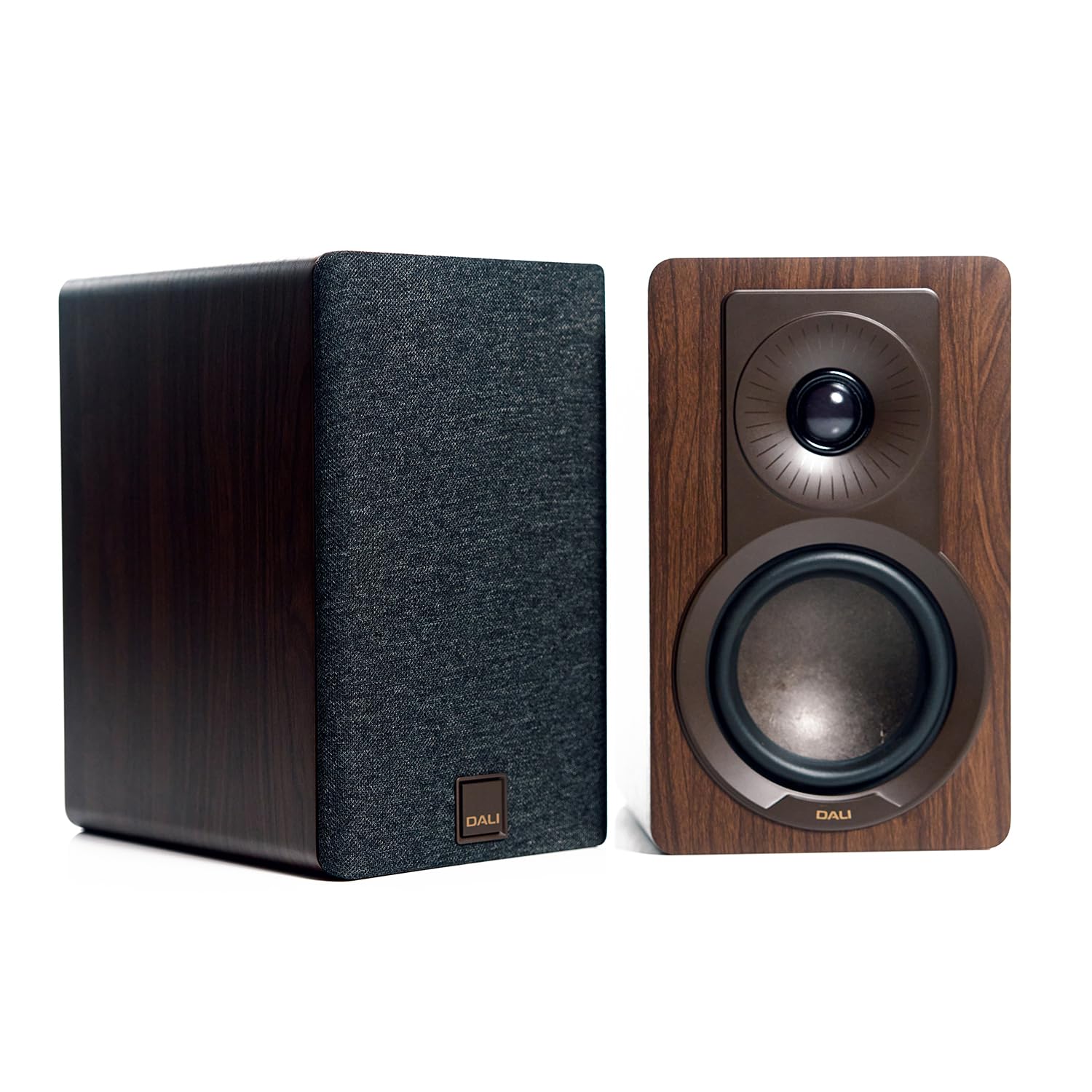
The DALI KUPID proves that small speakers need not sacrifice refinement. With a 4.5-inch low-loss bass driver and a 26mm soft dome tweeter, this two-way design produces a balanced sound signature that belies its size. The KUPID reaches below 80 Hz, making it an excellent partner for a subwoofer with a clean crossover region.
Included wall-mount brackets give you placement freedom without sonic compromise — the wide dispersion pattern ensures the sound remains coherent even when you are not seated dead center. The Danish engineering legacy shows in the smooth crossover integration; vocals are clear without being shouty, and the treble stays sweet at high levels.
These speakers pair best with a high-current amplifier like the WiiM Amp Ultra. Users report that lesser amplification can result in a muddy presentation, so budget accordingly. If you want uncompromising fidelity in a compact, wall-mountable package, the KUPID is the top contender.
Why it’s great
- Wall-mountable with included brackets without degrading sound
- Wide dispersion minimizes sweet-spot constraints
- Reaches below 80 Hz for easy subwoofer integration
Good to know
- Requires high-current amplification to sound its best
- Not suited for very large rooms without a subwoofer
3. Triangle Borea BR04 Bookshelf Speakers
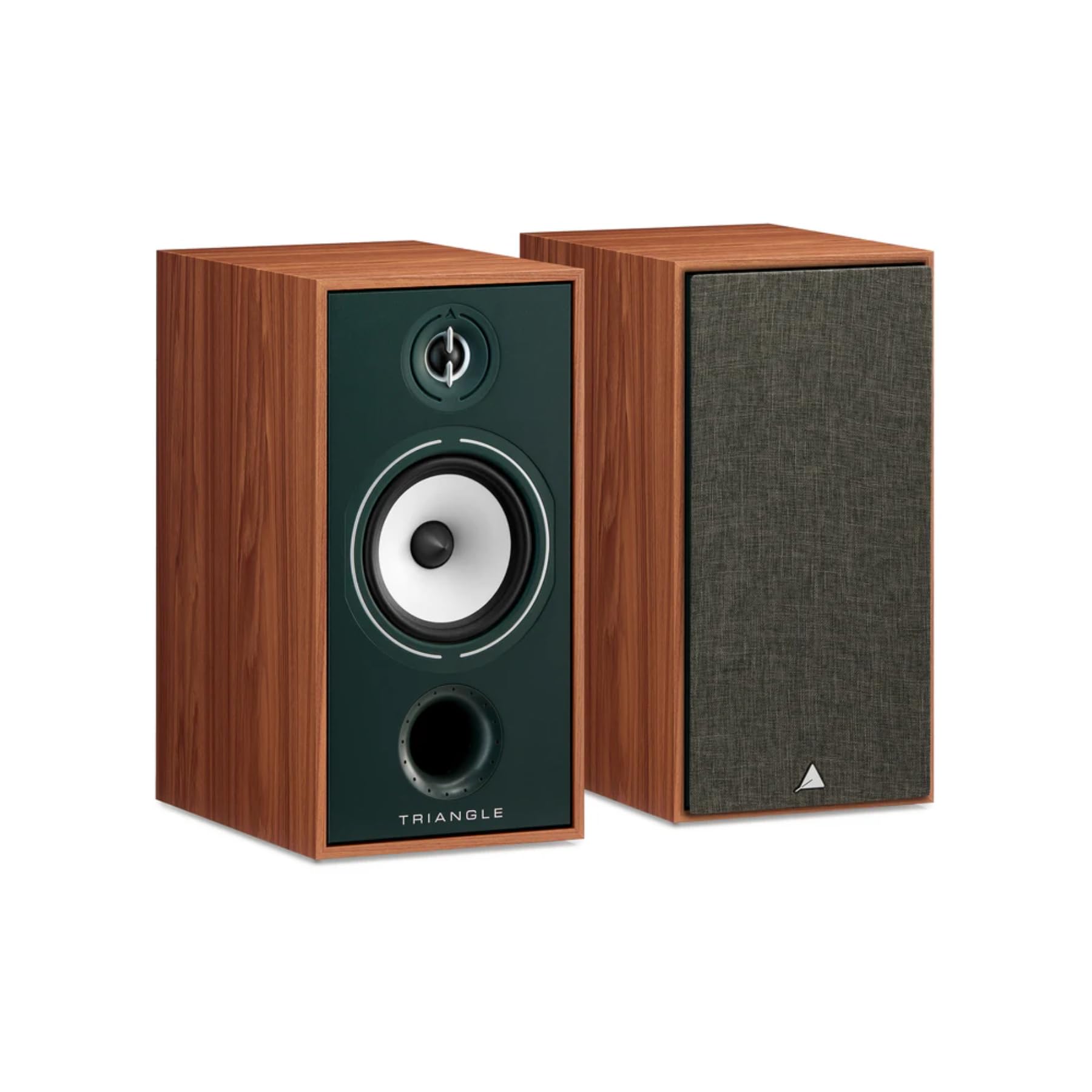
Triangle’s BR04 takes the acclaimed BR03 formula and improves bass extension and overall refinement. The 16cm cellulose pulp woofer lends a natural warmth to vocals that makes the human voice sound tangibly present. The EFS silk-dome tweeter with waveguide provides a smooth top end that never becomes harsh, even after hours of listening.
With a sensitivity of 90 dB, these speakers are relatively easy to drive, but they benefit from a subwoofer in larger rooms for hip-hop or organ music. The double binding posts allow bi-wiring or bi-amplification, giving tweakers room to experiment. The cabinet is finished in a distinctive Oak Green that stands out from the sea of black boxes.
Reviewers consistently praise the midrange imaging and the ability to compete with floorstanders in smaller spaces. A 100-hour break-in period is recommended for the drivers to loosen up. For listeners who prioritize vocal clarity and timbral accuracy, the BR04 is a stellar choice.
Why it’s great
- Warm, natural midrange ideal for vocal reproduction
- 90 dB sensitivity works well with modest amplification
- Bi-wiring capable for crossover tweaking
Good to know
- Needs a subwoofer for full-range bass in larger rooms
- Requires 100-hour break-in period
4. Martin Logan Motion 40i Floorstanding Speaker

The Martin Logan Motion 40i is a floorstanding speaker that brings electrostatic-like speed to a traditional dynamic-driver design thanks to its Folded Motion tweeter. This tweeter moves air four times faster than a conventional dome, resulting in transient response that makes percussion attacks sound startlingly lifelike. The 6.5-inch woofer handles mid-bass with control, while the aluminum enclosure keeps the cabinet inert.
The Motion 40i comes in a stunning gloss black finish that exudes refinement. It requires a break-in period per the manual — users report an initial muffled quality that clears up after several hours of playback. Once settled, the sound is crisp, clear, and dynamic, with powerful bass that may convince some users to skip a subwoofer for stereo listening.
These speakers are best when positioned 9 to 12 feet from the listening position and paired with a capable receiver. They thrive with high-quality amplification; even a budget amp like a Sony unit can drive them well. For those wanting the speed of electrostatics without the complex setup, the Motion 40i is a compelling option.
Why it’s great
- Folded Motion tweeter delivers exceptional transient speed
- Powerful bass from 6.5″ woofer in a floorstanding cabinet
- Gloss black finish with premium build quality
Good to know
- Requires break-in period for optimal sound
- Best performance at 9-12 ft listening distance
5. Polk Audio Reserve R200 Large Bookshelf Speaker

The Polk Reserve R200 is a large bookshelf speaker that excels in home theater setups thanks to its Dolby Atmos and IMAX Enhanced certification. The 1-inch Pinnacle Ring Radiator tweeter delivers ultra-clear highs without the fatigue that sometimes accompanies titanium domes, while the 6.5-inch Turbine Cone woofer provides tight, distortion-free bass thanks to Polk’s X-Port technology with Eigentone Filter.
The cabinet is cross-braced to minimize internal resonances, and the anti-diffraction magnetic grille ensures that sound waves are not disrupted. This speaker can be used as a front, side, or rear surround, making it a versatile building block for a multichannel system. The 5-way binding posts accept banana plugs, spades, or bare wire for a loss-less connection.
The R200 demands ample power to shine — a high-current amplifier of 200W into 4 ohms transforms its performance. The tweeter is somewhat directional, meaning the sweet spot is narrower than some competitors. For home theater enthusiasts who want detailed, dynamic sound across every channel, the R200 is a strong contender.
Why it’s great
- Dolby Atmos and IMAX Enhanced for home theater
- X-Port technology eliminates port noise
- Solid build with cross-braced, resonance-resistant cabinet
Good to know
- Requires high-current amplification for full performance
- Narrow tweeter sweet spot for critical listening
6. HiVi-Swans M300MKII Powered Bookshelf Speakers
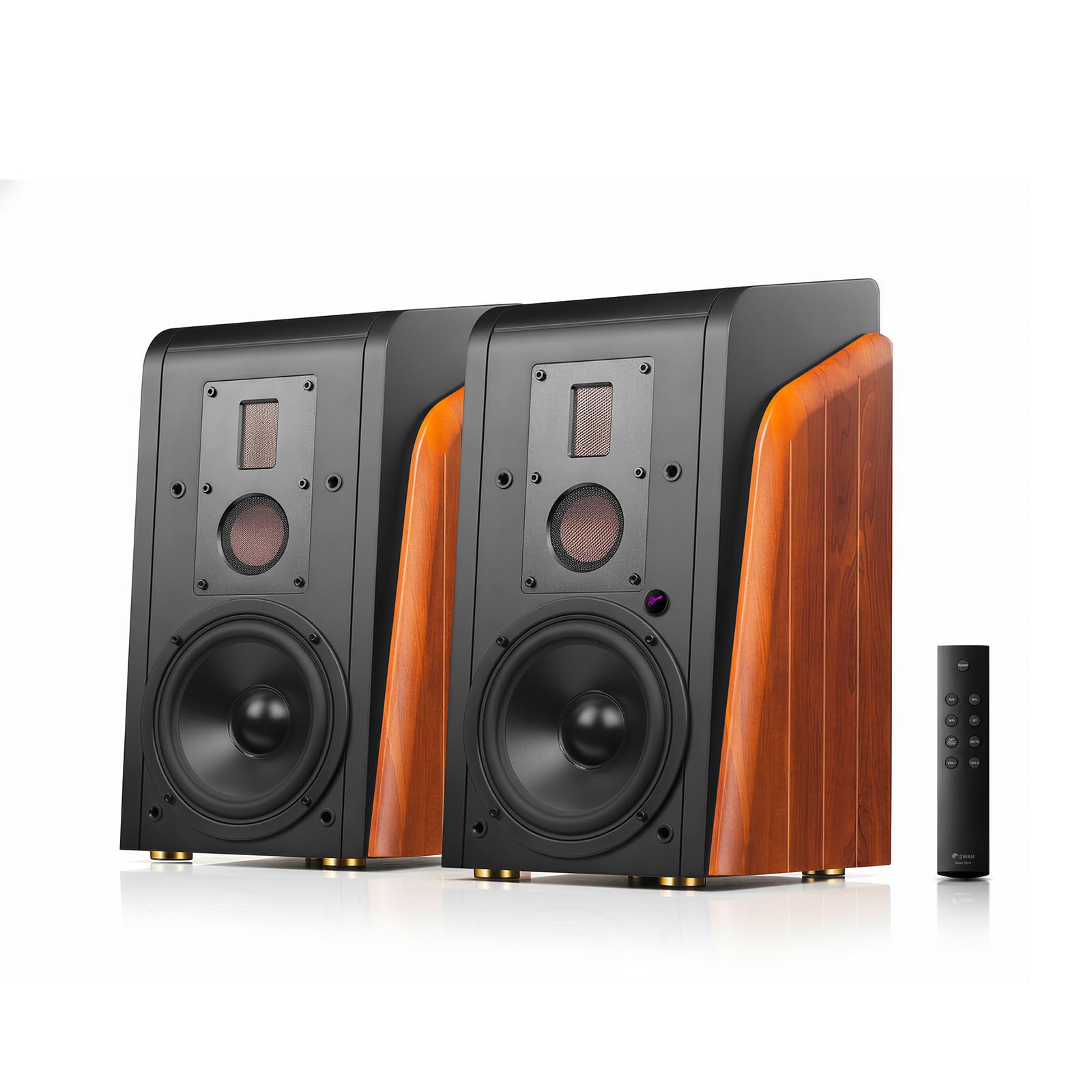
The HiVi-Swans M300MKII is a powered three-way system that eliminates the need for an external amplifier. The patented isodynamic ribbon tweeter extends to 40 kHz, retrieving air and detail that conventional domes miss. A dedicated 2-inch metal midrange driver handles vocals and strings with remarkable clarity, while the 6.5-inch woofer provides deep, punchy bass down to 38 Hz.
Connectivity is comprehensive: Wi-Fi, Bluetooth 5.0, optical, coaxial, line, and balanced XLR inputs cover nearly every source. The 4-degree angled front panel optimizes the listening axis, ensuring all frequencies arrive at your ears simultaneously. The 360W RMS internal amplification is more than enough to fill a medium-sized room with immersive sound.
One drawback is the short connecting cable between the master and slave speaker, which limits placement flexibility. The cabinet uses thick wooden side panels but the veneer is prone to scratching. For those who want a complete high-resolution audio system without the complexity of separate components, the M300MKII delivers.
Why it’s great
- Integrated amplification eliminates extra components
- Isodynamic ribbon tweeter extends to 40 kHz
- Three-way design with dedicated midrange driver
Good to know
- Short cable between speakers limits placement
- Veneer is easily scratched — handle with care
7. Klipsch Reference Premiere RP-8000F II Floorstanding Speakers

Klipsch’s RP-8000F II is a floorstanding monster that combines high sensitivity with room-filling dynamics. The larger 90×90 Hybrid Tractrix horn, paired with a 1-inch LTS titanium diaphragm tweeter, delivers crystal-clear highs that remain distortion-free even at extreme listening levels. The dual 8-inch Cerametallic woofers provide tight, impactful bass that can often replace a subwoofer for music.
The cabinet is finished in furniture-grade ebony veneer with magnetic grilles and sturdy metal feet. Dual input terminals allow bi-wiring or bi-amplification, reducing distortion in the midrange. The sensitivity of 95 dB means even a modest amplifier can drive these to concert-like volumes without strain.
The horn sound is forward and immediate — some listeners love the in-your-room presence, while others prefer a more laid-back presentation. Placement is also critical; the rear ports need some breathing room. For home theater enthusiasts who crave dynamics and clarity, the RP-8000F II is a powerhouse.
Why it’s great
- 95 dB sensitivity drives easily to high volumes
- 8-inch Cerametallic woofers provide deep, controlled bass
- Bi-wiring capability for cleaner midrange
Good to know
- Forward horn presentation may not suit all tastes
- Rear ports require careful placement
8. SVS Ultra Evolution Bookshelf Speakers

The SVS Ultra Evolution bookshelf speaker is a technology tour-de-force that challenges speakers costing three times as much. Its diamond-coated aluminum dome tweeter extends well beyond human hearing, producing effortless, airy highs with zero measurable distortion. The time-aligned cabinet architecture ensures phase coherence, resulting in pinpoint imaging and a soundstage that extends beyond the speakers’ physical boundaries.
The dual opposing active woofers in a force-balanced array produce deep, authoritative bass that spreads evenly throughout the room, addressing common room-mode issues. The three-way crossover uses premium components to blend driver output seamlessly, revealing subtle musical details that lesser speakers mask. The piano gloss black finish is stunning but shows fingerprints easily.
Placement can be finicky due to the rear-firing ports — a towel draped behind the speakers can help manage standing waves in smaller rooms. For two-channel audiophiles who demand the best, the Ultra Evolution delivers reference performance without the stratospheric price tag of esoteric competitors.
Why it’s great
- Diamond-coated tweeter delivers distortion-free highs
- Dual opposing woofers provide even bass distribution
- Time-aligned cabinet for exceptional phase coherence
Good to know
- Rear ports require careful placement
- Gloss finish shows fingerprints and dust easily
9. KEF LS50 Meta Bookshelf Speakers

The KEF LS50 Meta is a legendary bookshelf speaker that incorporates Metamaterial Absorption Technology (MAT) to absorb 99% of unwanted rear-wave energy from the Uni-Q driver. The result is a cleaner, more natural sound with exceptional clarity and detail. The 12th-generation Uni-Q driver places the tweeter at the acoustic center of the woofer, creating a single point source that widens the listening sweet spot dramatically.
These speakers excel at moderate volumes around 70 dB, where their clarity and imaging are unmatched. They need a high-quality, high-current amplifier to perform — cheap receivers with 3-ohm dips can make them sound thin and harsh. A subwoofer is recommended for full-range reproduction, especially in larger rooms.
The LS50 Meta is not for party-level playback — distortion rises at high output levels. But for near-field critical listening, they are among the best in class, with a tonal neutrality that reveals recording flaws and masterful engineering alike. If precision and detail are your priorities, the LS50 Meta is a modern classic.
Why it’s great
- MAT technology eliminates 99% of driver resonance
- Wide sweet spot from coaxial Uni-Q driver
- Exceptional clarity and detail at moderate volumes
Good to know
- Requires high-current amplification due to 3-ohm dips
- Lacks bass impact without a subwoofer
10. Wharfedale Linton 85th Anniversary Speakers

The Wharfedale Linton celebrates the 85th anniversary of the brand with a design that marries vintage aesthetics with modern acoustic engineering. The 8-inch woven Kevlar cone delivers a smooth, refined acoustic spectrum that avoids the excessive brightness common in many modern speakers. The result is a non-fatiguing listening experience that invites long sessions.
With 90 dB sensitivity and a recommended amplifier power range of 25-200W, these speakers pair beautifully with tube amps, adding a layer of warmth that complements acoustic and vocal recordings. The three-way design separates bass, midrange, and treble duties for clean integration. Reviewers note the ability to hear subtle details like the difference between a pick and fingers on guitar strings.
These speakers are sold without stands, so you need to budget for a sturdy pair (the dedicated Linton stands are available separately). The red mahogany finish is elegant, but the speakers are large and will dominate a small room. For listeners who value musicality over analytical dissection, the Linton is a deeply satisfying choice.
Why it’s great
- Warm, non-fatiguing sound ideal for long listening sessions
- Works beautifully with tube amplifiers
- Three-way design with excellent driver integration
Good to know
- Stands sold separately
- Large cabinets need significant space
11. SVS Prime Pinnacle Floorstanding Speakers

The SVS Prime Pinnacle is a floorstanding speaker designed to deliver full-range performance without the need for a subwoofer. Its unique driver array — a 1-inch aluminum dome tweeter, 5.25-inch midrange driver, and three 6.5-inch woofers — produces smooth, crisp sound with effortless bass extension down to 27 Hz. The three 6.5-inch woofers work together to move massive amounts of air while maintaining low distortion.
The cabinet is built with high-density MDF and cross-braced for resonance control. The speaker comes in a choice of black ash or piano high-gloss finishes, both of which look elegant. The sound is balanced and refined, with a laid-back treble that avoids fatigue, making it suitable for long listening sessions. It comes alive at higher volumes, revealing dynamic swings that smaller speakers cannot reproduce.
Placement is critical — the three rear ports require at least a foot of clearance from the wall. The Prime Pinnacle is not bi-wirable, which may disappoint tweakers. For those who want a single pair of speakers that can do it all without a subwoofer, this is a top-tier option.
Why it’s great
- Triple 6.5″ woofers deliver deep bass without a subwoofer
- Balanced, laid-back treble for fatigue-free listening
- High-quality cabinet construction
Good to know
- Rear ports need significant wall clearance
- Not bi-amp capable
12. Wharfedale Linton 85th Anniversary with Stands

This version of the Wharfedale Linton includes the dedicated 85th Anniversary stands, creating a complete, turn-key solution. The stands are built to the same quality standard as the speakers — heavy, stable, and acoustically inert. The total package weighs over 159 pounds, a testament to the robust construction.
The sound is identical to the speaker-only version: warm, detailed, and non-fatiguing. The stands place the tweeter at ear level for optimal imaging, removing the guesswork from setup. The walnut finish is elegant and adds a vintage touch to any room.
Pair these with a tube amp like the Willsenton R8 for a combination that is musically engaging and sonically rewarding. The bass is tight and non-boomy, even when placed close to walls. This is a lifetime purchase for many audiophiles, delivering a sound that prioritizes enjoyment over analytical dissection.
Why it’s great
- Includes dedicated stands for optimal listening height
- Warm, engaging sound with tube amplifiers
- Rock-solid build with excellent fit and finish
Good to know
- Very heavy total package at over 159 pounds
- Large footprint requires significant floor space
13. Klipsch Cornwall IV Floorstanding Speakers

The Klipsch Cornwall IV is a fully horn-loaded three-way loudspeaker that brings live-music presence into your listening room. With a 15-inch woofer, a new mid-range compression driver with mumps horn, and the Tractrix tweeter, this speaker is capable of delivering vocals with an immediacy and scale that few can match. The horn loading provides incredible efficiency — you can drive them to ear-splitting levels with a few watts.
Built in Hope, Arkansas as part of the Klipsch Heritage Series, the Cornwall IV features a furniture-grade natural cherry veneer that is as beautiful as it is durable. The sound is clear, dynamic, and uncompressed, with a midrange that makes vocals sound like the singer is in the room. The bass is tight and well-defined, though some users may still want a subwoofer for the lowest octaves.
These speakers are heavy — 100 pounds each — and arrive on a pallet. The investment is significant, but the performance is endgame for many listeners. The Cornwall IV is not a subtle choice; it demands attention and rewards with a stunningly lifelike sound that must be heard to be believed.
Why it’s great
- Live-music presence from fully horn-loaded design
- Incredible sensitivity works with low-power amplifiers
- Hand-built in USA with premium materials
Good to know
- Very large and heavy — requires dedicated space
- Significant investment; may still want a subwoofer
FAQ
Do I need a subwoofer with bookshelf speakers?
What amplifier power do I need for audiophile speakers?
Is a tube or solid-state amplifier better for these speakers?
How much should I spend on speaker placement and room treatment?
What is the break-in period for new speakers?
Final Thoughts: The Verdict
For most users, the best audiophile loudspeakers winner is the HiVi-Swans D3.1 MKII because it delivers reference-grade imaging, natural treble, and deep bass at a value that disrupts the market. If you want a compact, wall-mountable design with wide dispersion, grab the DALI KUPID. And for the full, uncompromising live-music experience that only a horn-loaded design can provide, nothing beats the Klipsch Cornwall IV.