
Our readers keep the lights on and the weekend projects moving. As an Amazon Associate, I earn from qualifying purchases.
A cracked clay pot or a broken ceramic planter is a frustrating reality for any gardener or potter. The porous, brittle nature of terracotta and fired clay makes finding a reliable bond that withstands moisture, temperature shifts, and physical stress a real challenge. Most general-purpose glues simply fail on these materials, leaving you with a sticky mess and a piece that falls apart again within days.
I’m Rikta — the co-founder and writer behind FitlyFast. My research on adhesives focuses on tensile strength, waterproof ratings, and the specific chemical compatibility needed to bond unglazed and glazed clay surfaces under real-world conditions.
This guide breaks down the shortlist of formulas that actually hold up, helping you confidently choose the right adhesive for clay pots.
How To Choose The Best Adhesive For Clay Pots
The wrong adhesive will fail under the moisture and weight of soil. Before you buy, consider the specific demands of your clay pot repair or craft project.
Match the formula to the material
Unglazed terracotta is highly absorbent and requires an adhesive that penetrates the pores rather than just sitting on the surface. Glazed ceramic pots need a formula that grips the slick, glass-like coating. Two-part epoxies and specialized putties are the best choices for both, while white craft glues or hot glue lack the structural integrity needed for load-bearing repairs.
Prioritize waterproof and weatherproof ratings
A clay pot exposed to rain, watering, and outdoor humidity needs an adhesive that won’t break down when wet. Look for labels that explicitly state “waterproof” or “weatherproof.” A formula that is only “water-resistant” will likely delaminate within a few weeks in a damp environment.
Consider the working time versus cure time
Fast-setting adhesives, like 5-minute epoxies, are ideal for quick fixes where you can hold pieces in place. Longer working times, offered by modeling putties, allow for sculpting, shaping, and detailed alignment of broken edges. Full cure time, typically 24 hours, is standard, but the handling strength after the initial set is what determines if a repair is stable enough to move.
Quick Comparison
On smaller screens, swipe sideways to see the full table.
| Model | Category | Best For | Key Spec | Amazon |
|---|---|---|---|---|
| Aves Apoxie Sculpt | Modeling Compound | Sculpting & high-detail repairs | 1-3 hour working time, zero shrinkage | Amazon |
| Starbond 5-Minute Epoxy | Epoxy | Fast structural repairs | 2,600 lb shear strength, flexible | Amazon |
| Plaid Clay Pot Sealer | Sealer Spray | Sealing terracotta against leaks | Clear spray, 12 oz, 24-hour dry | Amazon |
| KCUT Epoxy Sculpt Clay | Modeling Putty | Surface repairs and sealing leaks | 2 lbs, heat-resistant, waterproof | Amazon |
| Smalltongue AB Epoxy Clay | Epoxy Clay | Bulk modeling and gap filling | 1 lb, shrinkage less than 1% | Amazon |
| Endhokn Epoxy Putty | Epoxy Putty | Filling cracks and underwater repair | 300g, -50°C to 130°C resistance | Amazon |
| Beacon 527 Multi-Use Glue | Liquid Glue | General craft and small repairs | Clear drying, weatherproof, 1-hour dry | Amazon |
In‑Depth Reviews
1. Aves Apoxie Sculpt

This two-part modeling compound is the gold standard for artists and serious DIYers repairing high-value clay pieces. Its putty-like consistency allows you to mold, sculpt, and fill gaps with precision, and it self-hardens with zero shrinkage or cracking — a critical feature when reconstructing a shattered pot’s rim or rebuilding a broken handle. The 1 to 3-hour working time gives you plenty of room to get the alignment perfect before it sets rock hard.
The final cured finish is semi-gloss, waterproof, and paintable, making it ideal for outdoor planters and aquatic sculptures. Users consistently report that it adheres tenaciously to fired ceramics, even on curved or uneven break surfaces. A single pound goes a long way for detailed work.
Keep in mind that this product requires thorough hand-mixing of equal parts A and B, and wearing gloves is essential due to the epoxy content. It is also one of the higher-priced options on this list, reflecting its professional-grade formula and reliability.
Why it’s great
- Zero shrinkage or cracking after cure
- Long working time for detailed sculpting
- Waterproof and paintable finish
Good to know
- Higher cost per project
- Requires gloves and careful mixing
2. Starbond 5-Minute Epoxy Pro Kit

When you need a lightning-fast bond that still offers strength, this 5-minute epoxy is a top contender. The flexible toughened formula is specifically engineered to absorb the vibration and thermal expansion that clay pots experience outdoors, preventing the brittle cracking that plagues standard epoxies. With a shear strength of 2,600 lb, it can handle the weight of heavy soil and large plants without failing.
The 1:1 mix ratio is straightforward, and the kit includes screw-cap bottles and mixing trays for clean, controlled application. It dries clear, which is a major advantage for visible repairs on glazed pots where you want the bond line to be as unobtrusive as possible. Users report excellent results on ceramic, glass, and metal, making it a versatile household repair staple.
The trade-off is the short working window — you have about 5 minutes to position and clamp your pieces before the epoxy sets firm. This makes it less suitable for complex alignments or sculptural repairs where you need more time to finesse the shape.
Why it’s great
- Extremely fast cure with high shear strength
- Flexible formula resists cracking from movement
- Cures clear for invisible repairs
Good to know
- Very short working time
- Not ideal for sculpting or filling large gaps
3. Plaid Clay Pot Sealer
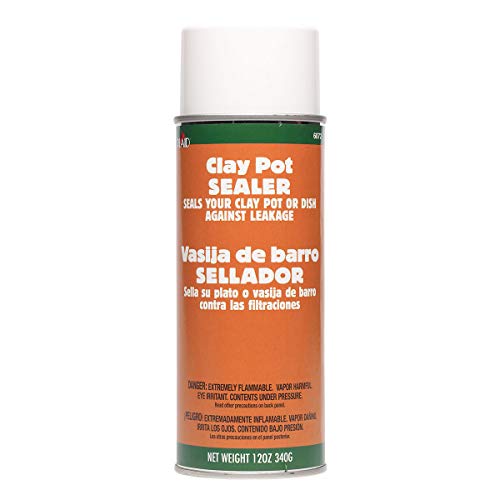
This sealer is less about bonding broken pieces and more about preventing unglazed terracotta from leaking water and minerals. It sprays on clear and forms a protective barrier that stops moisture from seeping through the porous clay, which is essential for preserving furniture surfaces and preventing ugly white efflorescence. Users with hand-painted or stenciled pots find it indispensable for locking in their designs against the elements.
The formula dries to a shiny, hard finish that holds up well outdoors through summer heat and indoor humidity. It’s easy to apply in thin, even coats — though some users note it can run if applied too thickly, so a light hand is recommended. A single 12-ounce can covers multiple standard-size pots.
Be aware that this is strictly a sealer, not a repair adhesive for cracks or breaks. It works best as a finishing coat on whole pots or as a preparatory layer before painting. For structural repairs, you will need one of the epoxies on this list in addition to this sealer.
Why it’s great
- Effectively seals porous terracotta against leaks
- Clear finish preserves the natural clay look
- Protects painted designs from weather
Good to know
- Not a repair adhesive for breaks
- Needs thin, careful application to avoid runs
4. KCUT Epoxy Sculpt Clay

This generous 2-pound pack of epoxy sculpt clay is a fantastic value for anyone working on multiple repairs or larger sculpting projects. Like the Aves product, it self-hardens without baking and forms a rock-solid, waterproof bond that adheres well to ceramics, stone, and glass. Users have successfully used it to fix broken garden statues, seal leaky pots, and even repair pool tiles, highlighting its versatility.
The working time is reasonable for shaping fine details, and once cured, the material can be sanded, drilled, and painted. The heat resistance (up to 130°C according to comparable putties) makes it suitable for pots that sit in direct sunlight. The included sculpting tools are a helpful bonus for beginners.
Some users note that the initial mix needs to be very thorough to achieve full strength, and the texture can feel slightly greasy — a small amount of water on your fingers helps smooth it out. The lower price point compared to premium brands is attractive, but some find the hardness slightly less durable than the top-tier compounds for load-bearing uses.
Why it’s great
- Large 2-pound quantity for the price
- Versatile for repairs and sculpting
- Can be sanded and painted after cure
Good to know
- Texture can be a bit greasy during shaping
- May be slightly less hard than premium brands
5. Smalltongue AB Epoxy Sculpt Clay

For budget-conscious crafters who need a reliable epoxy clay for modeling and gap-filling, the Smalltongue offering hits a solid middle ground. It mixes easily and boasts a shrinkage rate of less than 1%, which is crucial for maintaining the dimensions of a repair. The white color is easy to paint over, making it a good choice for visible fixes on light-colored pots.
Users have used it to rebuild broken antlers on garden ornaments and repair yard art, reporting that it shapes well with wet tools and cures to a hard finish that can be sanded. The 1-pound total weight (0.5 lb of each part) is enough for several small to medium projects.
Some users find the initial mixing tough and sticky — it requires thorough kneading to achieve a uniform consistency. Also, like all epoxy clays, it should be used in a ventilated area with gloves. The working time is moderate, but it does start to stiffen after about 30 minutes, so plan your sculpting accordingly.
Why it’s great
- Very low shrinkage after hardening
- Good value for the quantity
- White color is easy to paint over
Good to know
- Sticky texture during initial mixing
- Requires good ventilation and gloves
6. Endhokn Epoxy Putty

This epoxy putty is designed for heavy-duty gap-filling and structural repairs, especially in wet environments. Its ability to cure underwater makes it a unique choice for sealing leaks in clay pots used in fountains or water features. It bonds well to ceramics, concrete, and metal, and once cured, it can be drilled and painted without shrinking.
Users have effectively filled large holes for A/C pipes and repaired sentimental ceramic salt shakers, praising its easy mixing and moldable texture. The kit includes gloves and a scraper, which adds convenience. The temperature resistance from -50°C to 130°C ensures it won’t degrade in freezing winters or hot summers.
The putty has a tacky feel during application — using a small amount of petroleum jelly can help smooth the surface. Also, the final cured color is white, which may not match darker clay pots without painting. It’s not the best choice for fine sculpting details, as it is thicker and less pliable than dedicated modeling compounds.
Why it’s great
- Cures underwater, perfect for water features
- Wide temperature resistance range
- Can be drilled and painted after cure
Good to know
- Tacky texture can be messy
- White color stands out on dark clay
7. Beacon 527 Multi-Use Glue
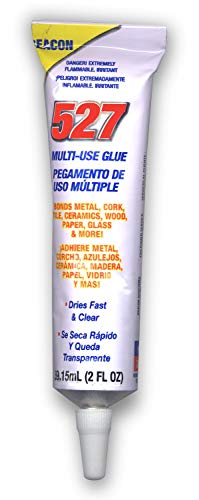
The Beacon 527 is a fast-drying liquid glue that is a favorite among crafters for bonding ceramics, china, and metal. It dries clear and is both waterproof and weatherproof, making it a solid option for small repairs on decorative clay pots that won’t bear heavy structural loads. The quick grab means you don’t need to hold pieces together for long, which is convenient for minor chip fixes.
Users consistently praise it as the “best glue ever” for general craft repairs, noting that it sets hard in a few minutes and stays put over years of use. The 2-pack gives you a backup bottle for the same price as other single bottles. It’s also UV-resistant, so it won’t yellow in sunlight.
This glue works best when applied in a thin layer — if you squeeze too much, it can get messy. It’s not suitable for filling large gaps or reconstructing broken areas; for that, you need a putty or clay. Additionally, cleaning up wet glue requires toluene, which is a strong solvent.
Why it’s great
- Fast-drying and sets clear
- Waterproof and UV-resistant
- Great value with 2-pack
Good to know
- Not for gap-filling or structural loads
- Cleanup requires strong solvent
FAQ
Can I use regular super glue on a clay pot?
How do I prepare the crack or break before applying adhesive?
What is the difference between epoxy putty and epoxy clay for pot repair?
Final Thoughts: The Verdict
For most users, the clear winner for an adhesive for clay pots is the Aves Apoxie Sculpt because it combines professional-grade sculpting capability with a waterproof, zero-shrinkage finish that handles both repairs and artistic work. If you want a lightning-fast fix for a broken planter, grab the Starbond 5-Minute Epoxy. And for sealing unglazed terracotta against leaks or protecting painted designs, nothing beats the Plaid Clay Pot Sealer.