
Our readers keep the lights on and the weekend projects moving. As an Amazon Associate, I earn from qualifying purchases.
The augmented reality headset market has splintered into two distinct camps: sleek everyday glasses that project a massive screen into your view, and bulky headsets built for immersive room-scale VR with passthrough cameras. Choosing the wrong camp means either buying a tethered display that frustrates with limited functionality, or a standalone unit that grows uncomfortably heavy before you even finish a movie. This guide cuts through the noise to match you with the hardware that genuinely fits your use case—whether that’s portable cinema, spatial multitasking, or hardcore gaming.
I’m Rikta — the co-founder and writer behind FitlyFast. To build this guide, I mapped the optical engine specs, field-of-view measurements, audio partnerships, and processing chips across every headset in this list, weighing real user experiences against the manufacturer claims to isolate which units actually deliver on their promises.
From burly PC-tethered systems to lightweight glasses that slip into a jacket pocket, the best augmented reality headset depends entirely on whether you prioritize visual fidelity, standalone freedom, or pocket-sized portability—and this guide breaks down exactly which model excels in each scenario.
How To Choose The Best Augmented Reality Headset
Buying an AR headset today means navigating a market where the technology is still finding its footing. You’ll see flashy resolutions and massive screen-size claims, but the real differentiators are often invisible on the spec sheet: optical design, tracking fidelity, and ecosystem integration. Focus on these four pillars and you’ll avoid the common traps that leave early adopters disappointed.
Optical Engine & Display Quality
The optical architecture dictates everything you see. Birdbath optics (common in glasses-style headsets) are compact and lightweight but compress the virtual image, reducing brightness and introducing edge blur. Prism-based systems (like those in older HoloLens designs) offer wider FOV but add bulk. Pancake lenses, found in premium VR headsets, fold light paths to slim the device while maintaining sharpness, though they reduce light transmission. For AR glasses used in bright environments, look for peak brightness above 1,000 nits—otherwise, your virtual screen will wash out against sunlight. For VR-centric headsets, pixel density and refresh rate (90Hz or higher) are the priority to avoid motion sickness.
Degrees of Freedom (DoF) & Tracking
3DoF tracks rotational head movement only—you can look up, down, and around, but the virtual screen moves with your body. This is fine for watching a floating movie screen while seated. 6DoF adds positional tracking: you can lean, walk, and circle around virtual objects that stay anchored to a real-world spot. Native 6DoF (built into the headset without external sensors) is rare in glasses-form AR; most require an additional puck or phone app for full spatial anchoring. For productivity with multiple virtual monitors, 6DoF is essential. For casual media consumption, 3DoF is perfectly adequate and much cheaper.
Ecosystem & Device Compatibility
An AR headset is only as good as the devices it connects to. Glasses-style headsets rely on USB-C DisplayPort Alt Mode—your phone or laptop must support video output over USB-C. Apple iPhones (excluding the 15 Pro and later) typically need an adapter. Gaming consoles like the Nintendo Switch 2 and Steam Deck are often natively supported, while PS5 and Xbox require an HDMI-to-USB-C dongle. Standalone headsets like the Meta Quest Pro and HTC Vive Focus Vision run their own operating systems, offering app stores and built-in processing power, but they lock you into their content ecosystem. Always verify compatibility with your primary device before purchasing.
Quick Comparison
On smaller screens, swipe sideways to see the full table.
| Model | Category | Best For | Key Spec | Amazon |
|---|---|---|---|---|
| XREAL One Pro | AR Glasses | Ultimate Clarity & FOV | 57° FOV, 700 nits, 120Hz | Amazon |
| VITURE Luma Ultra | AR Glasses | Highest Brightness Outdoors | 1,500 nits, 6DoF, 120Hz | Amazon |
| XREAL 1S | AR Glasses | Plug-and-Play Spatial Viewing | Native 3DoF, Bose Audio | Amazon |
| RayNeo Air 4 Pro Batman | Collector AR Glasses | HDR Movie Theater on the Go | HDR10, 1,200 nits, B&O Audio | Amazon |
| VITURE Luma Pro | AR Glasses | Sharpest Text for Productivity | 1,200p, 52° FOV, Harman Audio | Amazon |
| Rokid Max2 + Station2 | Spatial Computer Bundle | 3-Screen Multitasking | 3 separate app screens, 3DoF | Amazon |
| Meta Oakley Vanguard | Smart Sport Sunglasses | Outdoor Workout Recording | 12MP camera, Live Garmin Metrics | Amazon |
| Meta Quest Pro | VR/AR Hybrid | Social VR & Mixed Reality | Full-color passthrough, Face/Eye Tracking | Amazon |
| HTC Vive Cosmos Elite | PC VR Headset | Lighthouse Tracking Precision | 2880×1700 res, 160 sq.ft tracking | Amazon |
| HTC Vive Focus Vision | Standalone + PC VR | Wireless 5K with Eye Tracking | 5K total, 120° FOV, Hot-swap Battery | Amazon |
| Valve Index Full Kit | Premium PC VR | Highest Refresh Rate (144Hz) | 1440×1600 per eye, 130° FOV | Amazon |
In‑Depth Reviews
1. XREAL One Pro AR Glasses

The XREAL One Pro hits the sweet spot where optical innovation meets everyday practicality. Its X1 spatial computing chip delivers native 3DoF tracking with a 3ms motion-to-photon latency—meaning the virtual screen stays rock-solid even during rapid head turns, without requiring a separate puck or phone app. The new X-Prism optics achieve a best-in-class 57° field of view, projecting a 171-inch virtual screen from just four meters back, and the Sony Micro-OLED panels refresh at 120Hz for silky motion clarity. At 700 nits peak brightness, the display remains legible outdoors under direct sun, and the electrochromic dimming lets you toggle from see-through to fully blocked ambient light with one tap.
Audio is co-developed with Bose, and the open-ear drivers deliver a spacious soundstage without needing headphones—a critical comfort factor for long sessions. The dual IPD sizing (M for 57–66mm, L for 66–75mm) covers over 95% of users, and the three-stage adjustable arms combined with three sizes of zero-pressure nose pads mean you can dial in a fit that doesn’t pinch or slide. Pairing with the optional XREAL Eye unlocks full 6DoF spatial anchoring, letting you pin virtual monitors to real walls and walk around them.
Reviewers consistently praise the “razor-sharp” display and the fact that it fixes “all previous gen issues”—specifically the world-anchored screen, auto-transparency when looking down, and ultra-wide mode that leverages head movement for immersive ultrawide workspaces. The main caveats are the lack of onboard volume/media controls (you’ll use the connected device) and the need for prescription inserts if you wear glasses, but these are minor trade-offs for the sharpest, most comfortable AR glasses experience available today.
Why it’s great
- Industry-leading 57° FOV with minimal edge distortion
- Built-in X1 chip for ultra-low latency native 3DoF
- Bose co-developed audio with clear, open-ear sound
- Dual IPD sizing and three nose pad options for a custom fit
Good to know
- No built-in volume control on the glasses frame
- Requires prescription lens inserts for glasses wearers
- Needs XREAL Eye accessory for full 6DoF functionality
2. VITURE Luma Ultra XR Glasses
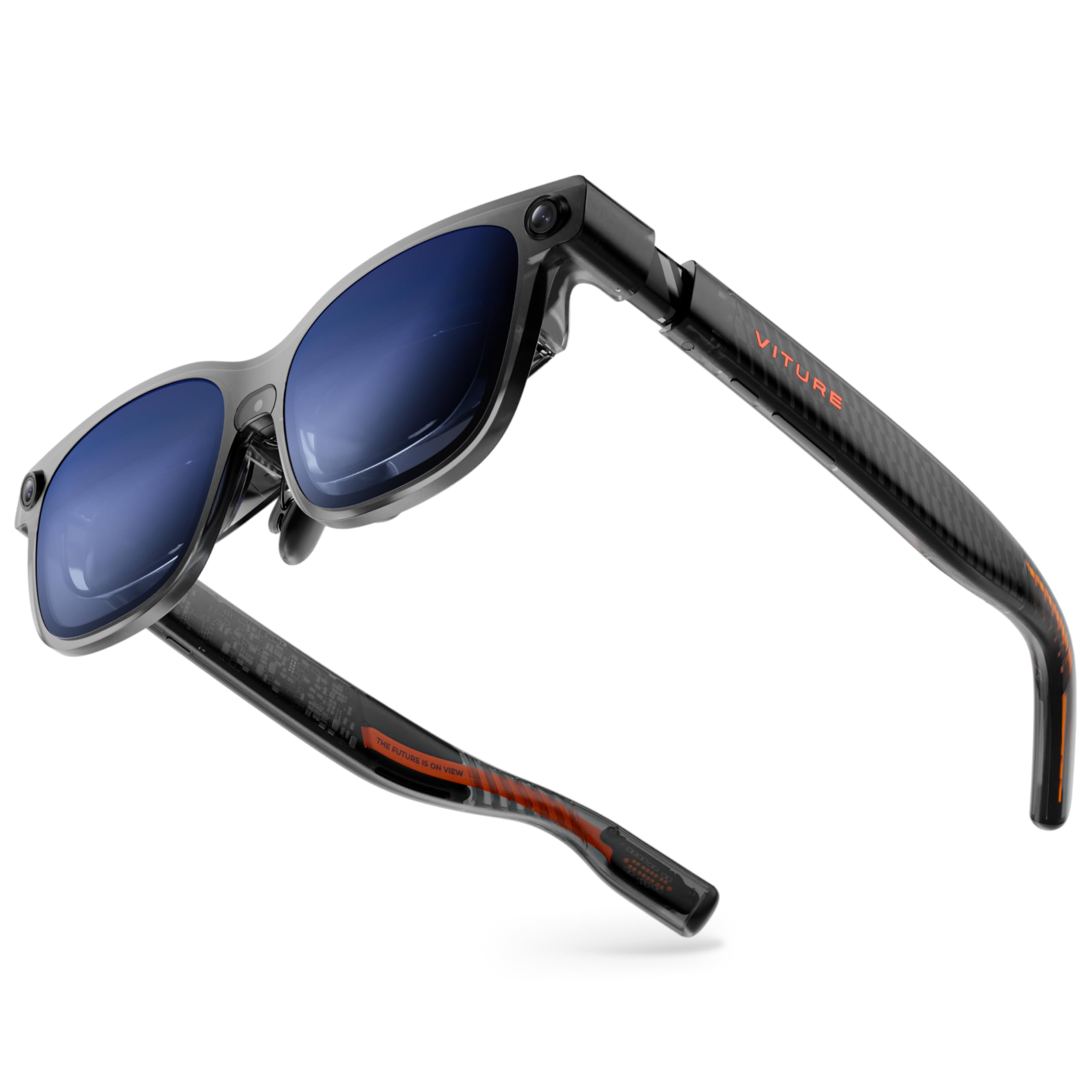
The VITURE Luma Ultra is built for one thing the competition struggles with: brute visibility in bright environments. Its 1,500 nits peak brightness—over double what most AR glasses offer—ensures the virtual 152-inch screen stays vibrant even when you’re sitting on a sunlit patio. This is achieved through proprietary Micro-OLED panels that cut power consumption by 35% versus standard displays, which also means less heat buildup and longer battery life from your connected phone or the VITURE Pro Neckband. The 52° field of view with Hollywood-grade color accuracy (DeltaE < 2) and 120Hz refresh rate delivers a cinematic experience that rival glasses simply can’t match under daylight conditions.
Where the Luma Ultra leaps ahead is its spatial computing hardware: a front RGB camera plus dual depth cameras enable zero-drift 6DoF tracking and hand gesture recognition when paired with the Pro Neckband. This means you can pin virtual objects to real-world surfaces and interact with them naturally—grabbing, rotating, and resizing without a controller. The Electrochromic film darkens instantly with one tap for total immersion, and the built-in myopia adjustment (-4.0D) eliminates the need for prescription inserts for most users. Harman co-developed the audio, and the open-ear drivers produce deeper bass and crisper highs than the previous Pro model.
Real-world feedback highlights the “edge-to-edge clarity” and the “One-Touch 3D” feature that seamlessly converts 2D content into spatial depth. The “Cinematic Powerhouse” description from one reviewer captures the sentiment: low latency on PS5 via adapter, no ghosting, and a lightweight frame that stays comfortable for hours. Weight distribution is noticeably better than earlier VITURE models, but some users noted the frames can feel slightly heavy if you have a narrow nose bridge—a minor ergonomic quibble for a device that delivers the brightest, most spatially aware AR experience at this tier.
Why it’s great
- Unmatched 1,500 nits brightness for outdoor use
- Full 6DoF tracking with hand gesture support
- Harman-tuned audio with noticeably richer bass
- Built-in myopia adjustment up to -4.0D
Good to know
- 6DoF requires the separately sold Pro Neckband
- Weight distribution may cause slight nose sliding for some
- RGB lighting is a cosmetic feature with limited utility
3. XREAL 1S AR/XR Glasses
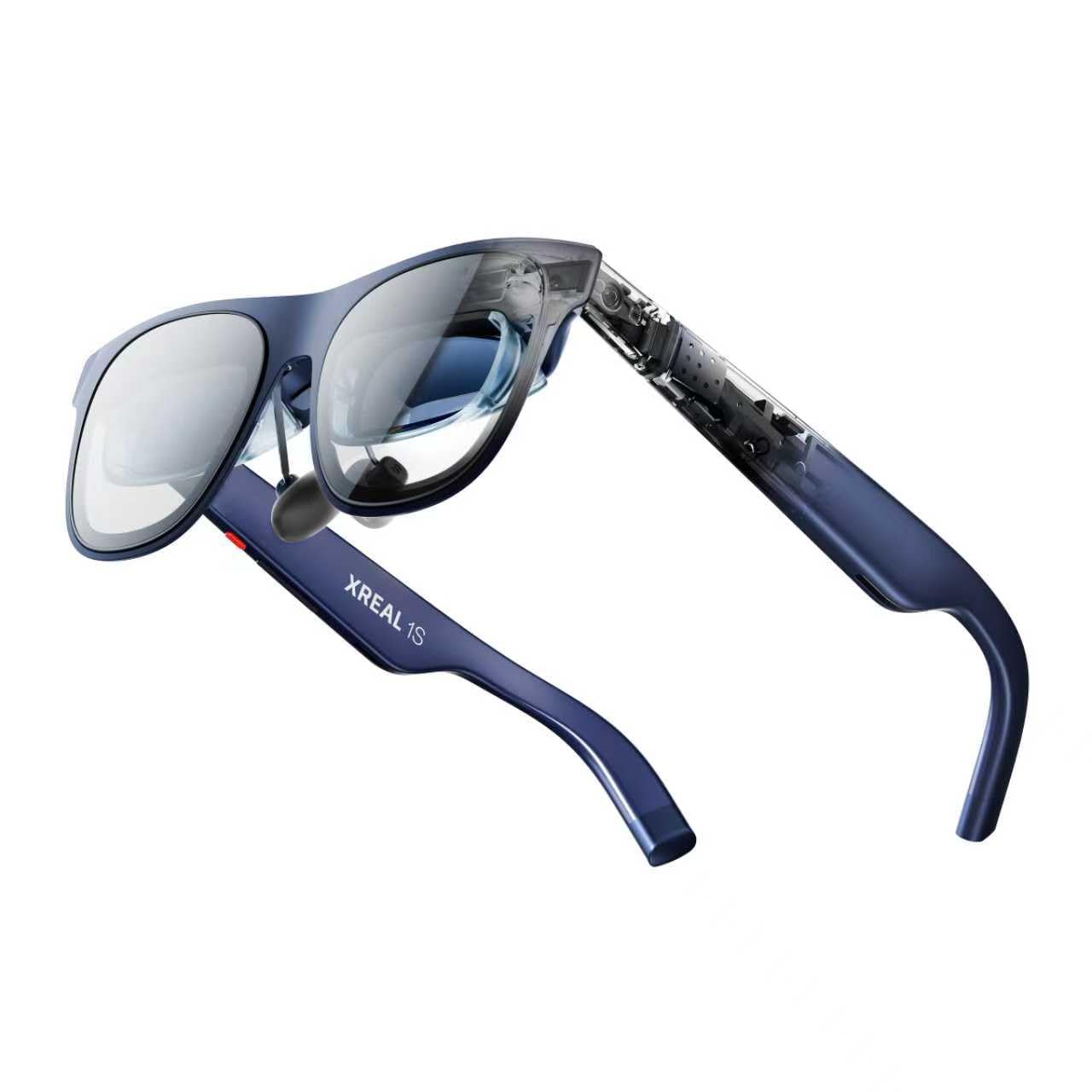
The XREAL 1S is the refined middle child in XREAL’s lineup, bridging the gap between the experimental One Pro and the more basic Air series. Powered by the same X1 spatial computing chip found in the One Pro, it delivers native 3DoF tracking without requiring a Beam or phone-side software—just plug into any USB-C DisplayPort device and instantly get a 500-inch virtual screen that stays anchored as you turn your head. The Sony Micro-OLED panels produce a 1920×1080 resolution at 120Hz in 3DoF mode and 90Hz globally, with each unit individually color-tuned at the factory for precise natural hues. The redesigned optical engine improves clarity by 9% edge-to-edge over the previous generation.
The spatial viewing modes are where the 1S shows its versatility. You can switch between 0DoF follow mode (screen sticks to your face), 3DoF anchor mode (screen floats in space), Ultrawide Mode (32:9 aspect ratio for panoramic productivity), Real 3D Mode (converts any content to spatial depth), and Side-View Mode (workspace off to the right). The X1 chip keeps motion-to-photon latency at 3ms at 120Hz, eliminating the nausea-inducing drift that plagues cheaper glasses. TÜV Rheinland certification covers low blue light, flicker-free viewing, and 100% UV protection, and the IPD range of 59.5–70.5mm accommodates about 95% of users.
Audio is co-developed with Bose, and the open-ear speakers produce a spacious, balanced soundstage with deeper lows and crystal-clear vocal clarity. Reviewers consistently rate the 1S as “the best AR glasses” they’ve owned, surpassing the Xreal Air 2 in audio, display quality, and comfort. The glasses are lighter than the Air 2, making them ideal for Steam Deck sessions or watching movies on flights. The main criticisms revolve around the out-of-box experience being unintuitive (no setup wizard) and the included wayfarer-style frames letting in side light, which requires the included heavy TPU cover to block. Despite these rough edges, the 1S offers the most polished plug-and-play AR experience at its price point.
Why it’s great
- X1 chip delivers native 3DoF without a separate puck
- Versatile spatial viewing modes including Ultrawide and Real 3D
- Bose-tuned audio with excellent vocal clarity
- Lightweight design that improves comfort over previous XREAL models
Good to know
- No setup wizard makes first-time use frustrating
- Side light leakage through the glasses frame requires TPU cover
- Screen may drift slightly depending on firmware version
4. RayNeo Air 4 Pro Batman Limited Edition
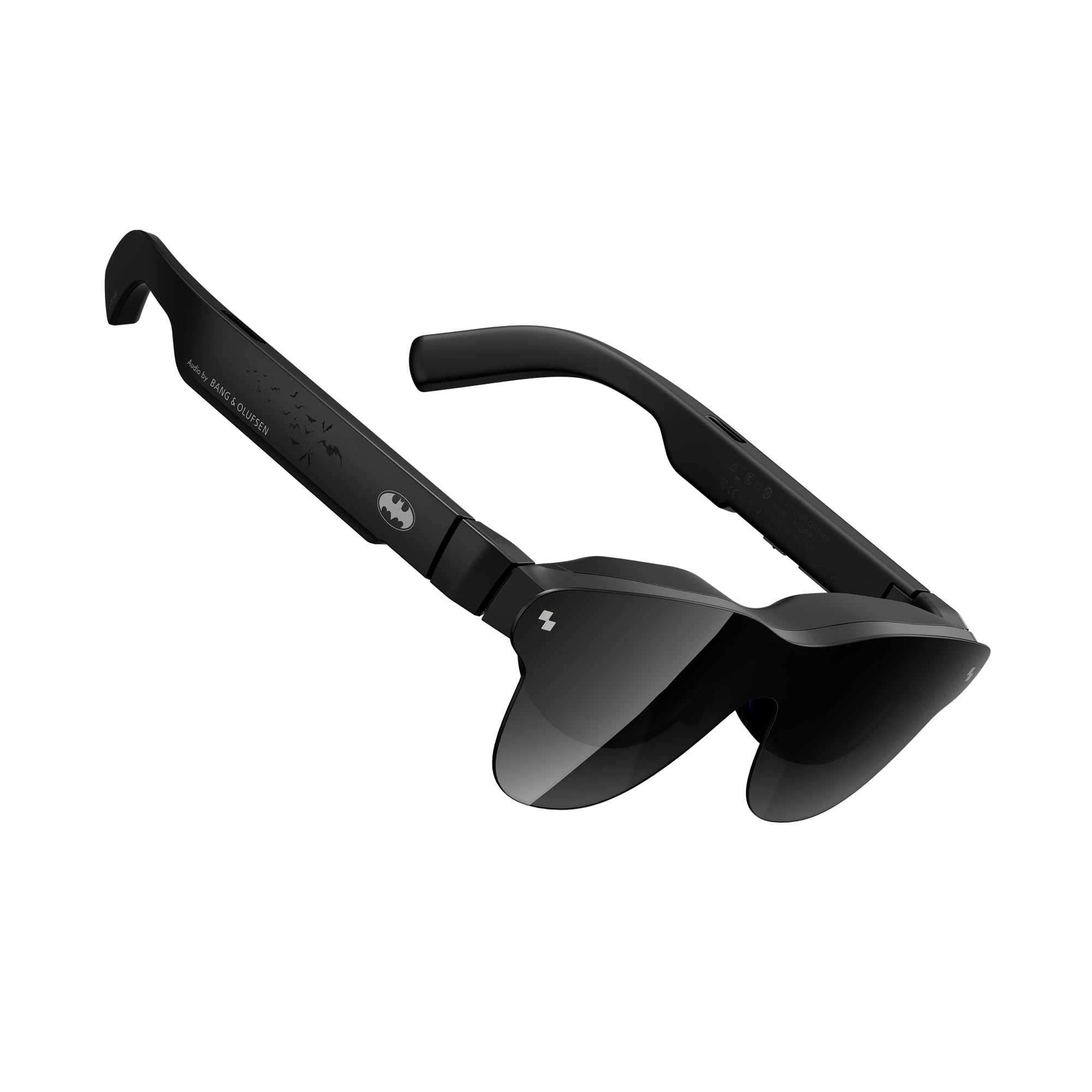
The RayNeo Air 4 Pro Batman Limited Edition is the first collector-grade superhero AR device—a themed variant that doesn’t sacrifice specs for aesthetics. Beyond the matte Bat Shade design and premium collector’s vault, this is the only display glasses in the category to feature genuine HDR10 support, delivering 1,200 nits of peak brightness with AI-powered SDR-to-HDR conversion that lifts standard content into a wide dynamic range. The Vision 4000 chip drives this conversion, extracting highlights and deepening shadows for a cinematic look that standard AR glasses simply cannot produce. The 201-inch virtual display (at 345×201 resolution) runs at a smooth 120Hz refresh rate, and the Micro-OLED panels are paired with a quad-speaker system co-tuned by Bang & Olufsen engineers.
The B&O audio system is a genuine standout: the quad-speaker setup creates a 360-degree soundstage that captures directional audio cues—from a Batmobile chase in the left channel to the Joker’s laughter creeping behind you. The included sound tubes (wired in-ear attachments) provide private listening in noisy environments without sacrificing audio quality. The glasses also feature AI-powered immersive 3D narrative depth, converting standard 2D films and games into layered 3D content with advanced processing. This is not the gimmicky pop-out 3D of early cinema; it’s subtle depth layering that adds immersion without fatigue.
User feedback is overwhelmingly positive, with multiple 5-star reviews calling it a “must buy for personal HDR theater” and noting the “excellent value for travel privacy” when paired with Samsung DeX. The HDR10 performance genuinely exceeded expectations for users upgrading from the Air 3s Pro. However, a significant caution emerged: the glasses are effectively unusable for users with poor eyesight due to blurry edges and text—there’s no built-in myopia adjustment, and the prescription lens inserts are sold separately. The build quality feels “cheap plastic” to some, and the soft carrying case is difficult to close. This is a spectacular niche product for collectors with good vision, not a universally recommended daily driver.
Why it’s great
- Only AR glasses with native HDR10 support for rich contrast
- Bang & Olufsen quad-speaker system with 360-degree soundstage
- AI-powered SDR-to-HDR conversion elevates all content
- Collector-grade packaging and themed design for Batman fans
Good to know
- No built-in myopia adjustment; prescription inserts needed
- Plastic build feels less premium than competing models
- Blurry edges and text for users with less-than-perfect vision
5. VITURE Luma Pro XR Glasses
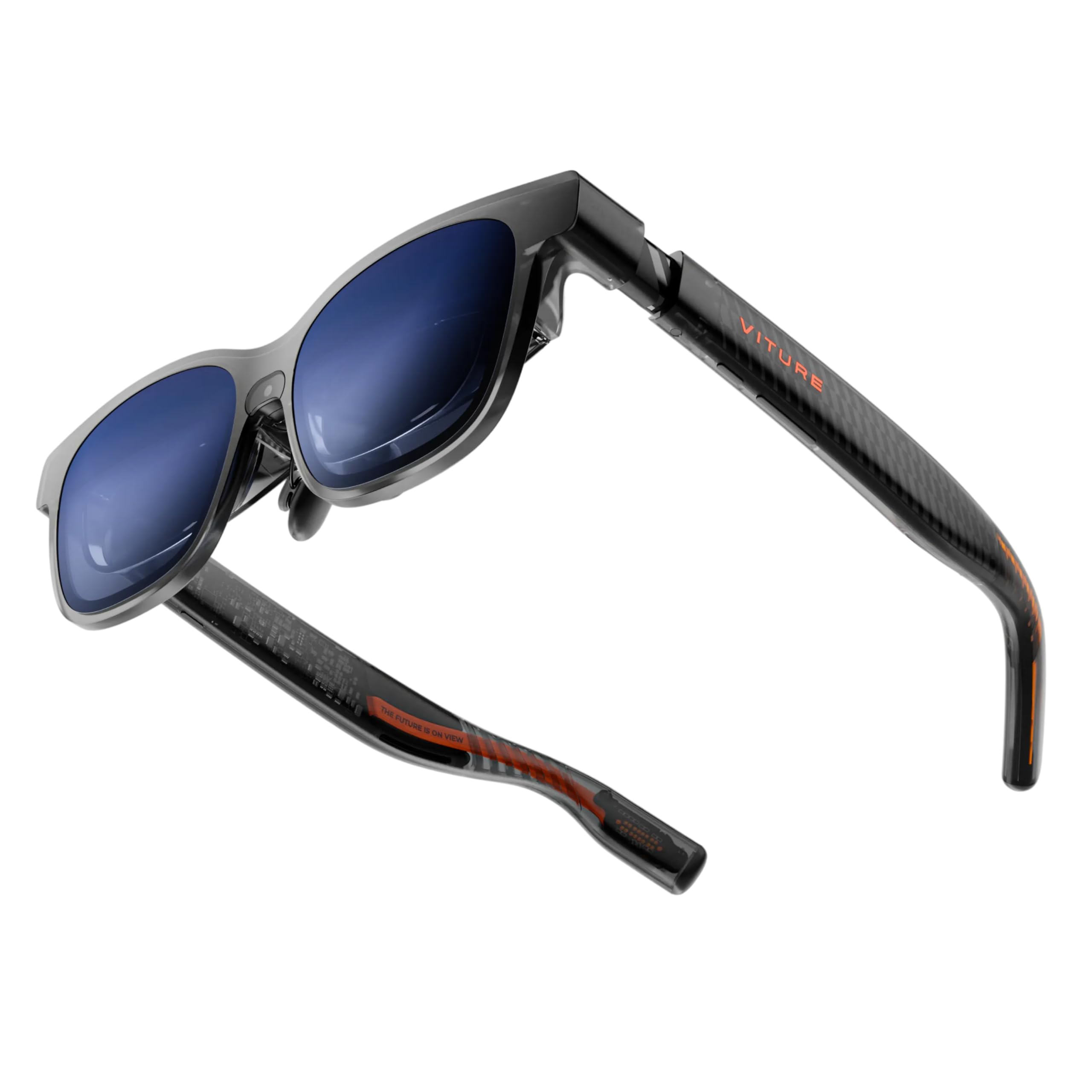
The VITURE Luma Pro stakes its claim on pixel-level sharpness. Its 1,200p resolution—delivered through proprietary optics that VITURE calls their “secret sauce”—produces text so crisp that it rivals a 4K desktop monitor, making this the best AR display for productivity users who need to read code, spreadsheets, or long documents. The 152-inch virtual screen at a 52° field of view runs at 120Hz with 1,000 nits brightness, and the Hollywood-grade color accuracy (DeltaE < 2) ensures that design work doesn’t suffer from color shifts. This is the sharpest XR display VITURE has ever produced, surpassing even their award-winning Pro model in text legibility.
The Luma Pro introduces the first programmable RGB lighting system on AR glasses—sync your gaming persona or productivity mode with customizable colors and animations. The Electrochromic film darkens instantly with one tap, and the built-in myopia adjustment (-4.0D) covers most nearsighted users without inserts. For those with astigmatism or stronger prescriptions, a magnetic prescription lens frame is available. Harman co-developed the audio, and the open-ear drivers produce fuller, richer sound than the previous generation, with improved bass response and clearer mids. The SpaceWalker app unlocks multi-screen work modes on macOS and Windows, allowing up to three virtual screens for an expansive panoramic workspace.
Real-world reviews emphasize the “bright, sharp picture like a mini movie theater” and the seamless compatibility with iPhone (via adapter), Android, Mac, and the Nintendo Switch 2. The 2D-to-3D conversion feature drew praise for transforming streaming content into immersive spatial depth. Two notable drawbacks surfaced: the top of the screen may be cut off for some users depending on face shape (not a problem for standard face profiles but worth noting), and the glasses lack spatial tracking entirely—they function purely as a virtual display with no 3DoF or 6DoF anchoring. This is a brilliant media consumption and productivity tool, but not an interactive AR device.
Why it’s great
- Sharpest text in any AR glasses—ideal for code and spreadsheets
- First programmable RGB lighting for personalized style
- 1,200p resolution delivers near-4K clarity at 152 inches
- Harman-tuned audio with richer bass than previous models
Good to know
- No spatial tracking (3DoF or 6DoF) — purely a virtual display
- Top of screen may be cut off for certain face shapes
- Requires adapter for most iPhones and all non-DP devices
6. Rokid AR Spatial (Max2 + Station2)
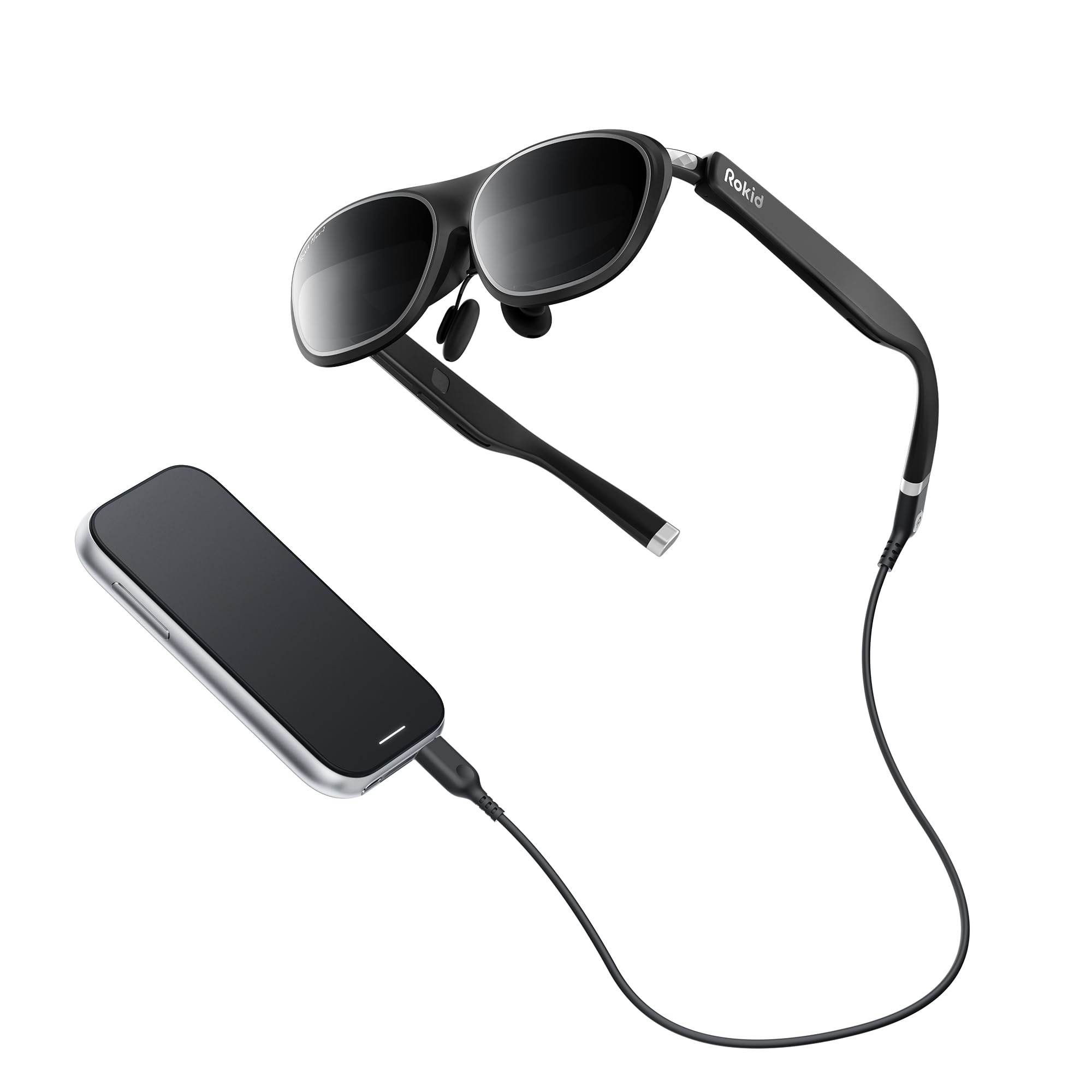
The Rokid AR Spatial system is the only bundle in this list that ships with a full spatial computer—the Station2—giving it a genuine standalone capability that most glasses-style AR headsets lack. The Max2 glasses feature a 50% larger Micro-OLED display than the previous Max model, delivering 1920×1200 resolution, 120Hz refresh rate, 600 nits brightness, and 108% sRGB coverage. The defining feature is the 3-screen multitasking mode: you can run three apps simultaneously across your field of view, resizing and positioning each window independently. This works via DLNA protocol on Android phones (single-screen only with Miracast or ChromeCast), and the Station2 itself can run Android apps natively, giving you access to Netflix, YouTube, and Prime Video without a phone tether.
The Station2 packs a 5000mAh battery delivering 3.5 hours of runtime, 8GB RAM, 128GB storage, Wi-Fi 6, and Bluetooth 5.2. Dual Type-C ports allow passthrough charging while using the glasses. The Max2 glasses weigh only 75 grams with soft, flexible temples and an airy cushioning nose pad that resists slippage. Built-in myopia adjustment supports up to -6.0D (600 degrees), and the Station2 adds auto IPD adjustment for a 55–72mm range. Four smart modes (Reading, Giant Screen, Sports, Multi-Screen) let you optimize for different activities, and Giant Screen mode can expand the aspect ratio up to 32:9 for ultrawide movie viewing.
Reviewers describe the visual experience as “large, non-obtrusive screen with vibrant colors and no screen door effect.” The 3DoF spatial screen was praised for its stability, and the gesture-based spatial rays and voice commands provide intuitive control. However, significant software and comfort issues emerged: after a firmware update, the Station2’s wireless screencast function broke entirely, and the bundled OS (YodaOS-Master) lacks access to native streaming apps like Netflix without sideloading workarounds. The fit was also controversial, with one user reporting the glasses “shift down and right” on their face with settings that revert between reboots. This is a promising but unpolished ecosystem—ideal for multitaskers willing to tolerate some quirks.
Why it’s great
- Unique 3-screen multitasking with separate app windows
- Station2 spatial computer provides standalone streaming capability
- Auto IPD adjustment (55-72mm) and -6.0D myopia support
- Gesture, voice, and touch controls offer versatile input options
Good to know
- Software is unpolished: buggy firmware, broken screencast feature
- Limited streaming app support without sideloading
- Fit issues reported with glasses shifting during use
7. Meta Oakley Vanguard AI
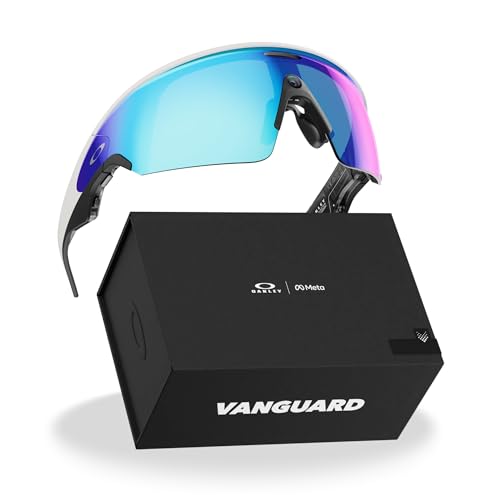
The Meta Oakley Vanguard is a fundamentally different product from everything else in this list: it’s a pair of premium sport sunglasses first and a wearable computer second. The Prizm Sapphire lens tint enhances contrast for outdoor athletic performance while protecting your eyes with polycarbonate construction. The centered 12MP ultra-wide camera captures 3K video at 122° field of view, with slow motion and hyperlapse modes built in. The real differentiator is the Meta AI integration: paired with a compatible Garmin device, it provides real-time workout metrics—heart rate, pace, distance—projected audibly through the open-ear speakers, letting you stay present in your run or ride without glancing at a wristwatch.
Battery life is rated at 9 hours of typical use, with the charging case providing an additional 36 hours of on-the-go power. The IP67 rating means these glasses are fully protected against sweat, dust, and rain—you can wear them through a storm or a muddy trail run without concern. Audio is delivered through open-ear Bluetooth speakers that remain clear even in windy conditions, and you can use them for hands-free phone calls, podcast listening, or your workout playlist. Privacy controls are built in: voice commands can be disabled, and a physical indicator shows when the camera is recording.
Reviewers describe them as “freakin cool” and “great for running,” praising the convenience of capturing action-packed moments hands-free and controlling music and timers with voice commands. The Garmin integration was called out as a game-changer for data-driven athletes. The primary criticism is battery life during heavy use—“battery dies quick” when recording video continuously—and the fit runs large, which may not suit smaller face shapes. These are not general-purpose AR glasses; they’re a niche product for active athletes who want hands-free capture and real-time biometric data without carrying a phone.
Why it’s great
- IP67-rated for sweat, dust, and rain resistance
- Real-time Garmin biometric integration for athletes
- 12MP camera with 3K video and slow-motion capture
- 9-hour battery life with 36-hour charging case
Good to know
- Battery drains quickly during continuous video recording
- Large frame size may not fit smaller or narrower faces
- Not a general-purpose AR display—limited to camera and audio use
8. Meta Quest Pro

The Meta Quest Pro is Meta’s premium entry into mixed reality, combining high-resolution VR with full-color passthrough cameras that let you see and interact with your physical environment while wearing the headset. The pancake lenses enable a slimmer form factor than the Quest 2, with increased pixel density, local dimming, and quantum dot technology that delivers striking visual clarity—colors are more vibrant and blacks are deeper than any previous Quest device. The Touch Pro controllers feature self-tracking cameras and multi-point haptics, translating instinctive hand gestures and detailed finger actions directly into VR without relying on the headset’s tracking ring.
Facial and eye tracking are built into the headset, allowing Meta Avatars to mirror your real expressions—smiling, raising eyebrows, winking—creating genuinely expressive social interactions in VR. The 12GB of RAM and 256GB of storage power the Snapdragon XR2+ Gen 1 chip, and the 10 advanced VR/MR sensors enable spatial understanding without external base stations. Battery life is rated at 8 hours, but this drops to about 2 hours with face tracking enabled. The headset supports wireless PC VR streaming via Air Link or wired via USB-C, and the included 1-month subscription to Optima Academy Online VR field trips provides immediate access to educational spatial content.
Users upgrading from the Quest 2 praise the “amazing tracking” and the natural avatar expressions, though some note the face tracking “broke since 2025 on VRC” and has intermittent glitchiness. The battery life is the most consistent criticism—“poor battery life, requires battery pack or tether.” The forehead-heavy weight distribution also makes long sessions uncomfortable without an aftermarket head strap. The Quest Pro is a specialized tool for social VR, productivity, and mixed reality development, but its premium price and battery limitations make it a cautious buy unless you specifically need the eye and face tracking capabilities.
Why it’s great
- Full-color passthrough for genuine mixed reality experiences
- Eye and face tracking enable expressive VR social interactions
- Self-tracking controllers with multi-point haptics
- Pancake lenses with quantum dot enhanced color and contrast
Good to know
- Battery lasts only about 2 hours with face tracking enabled
- Forehead-heavy design causes discomfort during extended use
- Face tracking software compatibility can be buggy after updates
9. HTC Vive Cosmos Elite

The HTC Vive Cosmos Elite is built for a specific buyer: the PC VR gamer who refuses to compromise on tracking precision and wants the proven reliability of SteamVR Lighthouse tracking. The base station 1.0 system provides up to 160 square feet of play space with sub-millimeter positional accuracy, and the dual 3.4-inch LCD panels deliver a combined 2880×1700 pixel resolution—reducing the screen-door effect significantly compared to the original Vive. The 90Hz refresh rate and 97-degree field of view are competitive, though not class-leading, and the flip-up design is a genuinely useful feature that lets you alternate between virtual and real space without fully removing the headset.
The included Viveport Infinity subscription gives you access to hundreds of VR games and apps, and the mod-friendly swappable face plates allow for future hardware upgrades (like the wireless adapter or the face plate for external tracking). The system is compatible with Windows 10 and 11, requiring at least 4GB of RAM and a DisplayPort connection. The LCD panels use RGB sub-pixels for sharper text rendering than the OLED panels in older headsets, making text-heavy experiences like virtual desktop browsing more legible. The wireless upgrade path is a significant advantage over tethered rivals at this price point.
Reviewers describe the visuals as having “excellent color and clarity” with “great tracking,” but universally criticize the weight distribution. The headset is “very front-heavy causing neck strain,” and the controllers are “heavy” compared to the Index or Quest Pro offerings. The IPD adjustment knob has been reported as fragile, with plastic gears failing over time and causing an intrusive calibration popup that appears constantly. The cable management also frustrated users, with loose earphone connections and the absence of a 3.5mm audio jack requiring USB DAC adapters. The Cosmos Elite offers uncompromising tracking for a price, but the comfort trade-offs are substantial.
Why it’s great
- Lighthouse 1.0 tracking provides sub-millimeter positional accuracy
- Flip-up design allows quick transitions between VR and reality
- Modular face plates enable hardware upgrades without replacing the headset
- Crystal-clear LCD panels minimize screen-door effect
Good to know
- Very front-heavy design causes neck strain during long sessions
- IPD adjustment mechanism uses fragile plastic gears prone to breaking
- No 3.5mm audio jack; loose earphone connectors reported
10. HTC Vive Focus Vision
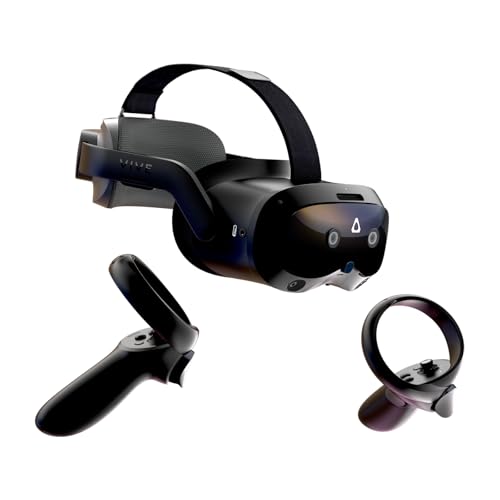
The HTC Vive Focus Vision is HTC’s attempt to merge standalone VR convenience with PC VR fidelity into a single device. It can run games and apps natively through the Snapdragon XR2 platform without a PC, or connect via DisplayPort for lossless, high-fidelity visuals from a high-end gaming computer. The dual 2448×2448 pixel displays produce a combined 5K resolution per eye, with a 120-degree field of view and a 90Hz refresh rate. The auto-IPD adjustment aligns the lenses to your pupils automatically, and the depth sensor enables scene understanding for mixed reality—allowing virtual objects to physically interact with your furniture and walls.
Built-in eye tracking and low-light hand tracking enable lifelike interactions in VRChat, with support for external face and body trackers. The hot-swappable battery system uses a rear battery that can be replaced mid-session thanks to a small reserve front battery that keeps the headset alive during the swap. The open-back, dual-driver speakers deliver 3D spatial audio with minimal sound leakage, and the noise-cancelling microphone ensures clear voice communication. HTC is bundling 10 hit games with purchase, including Arizona Sunshine 1 & 2, Les Mills Bodycombat, and The Tale of Onogoro, adding immediate value for new buyers.
Reviews highlight the “high-res displays, wide FOV, and precise tracking” as standouts, with one user calling it “a practical, all-in-one VR solution.” The comfort was praised, particularly for glasses wearers, and the balanced weight distribution was noted as superior to the Cosmos Elite. However, significant issues emerged with the PC VR connection: the required DisplayPort cable frequently fails to be detected (reported as a 30% detection rate), and the setup process is “complex and confusing” with language bugs and Android crash screens. The Fresnel lenses also produce static menus that appear blurry, and the auto-IPD/eye tracking was called “unreliable” on some units. The Focus Vision is a promising hardware platform hamstrung by software and connectivity issues at launch.
Why it’s great
- 5K total resolution (2448×2448 per eye) with 120° FOV
- Hot-swappable battery system allows uninterrupted gaming
- Eye tracking and low-light hand tracking for natural social VR
- Standalone and DisplayPort PC VR in a single headset
Good to know
- PC VR DisplayPort connection has a high failure detection rate
- Setup process is confusing with language bugs and crashes
- Fresnel lenses produce blurry static menus and unreliable auto-IPD
11. Valve Index Full Kit
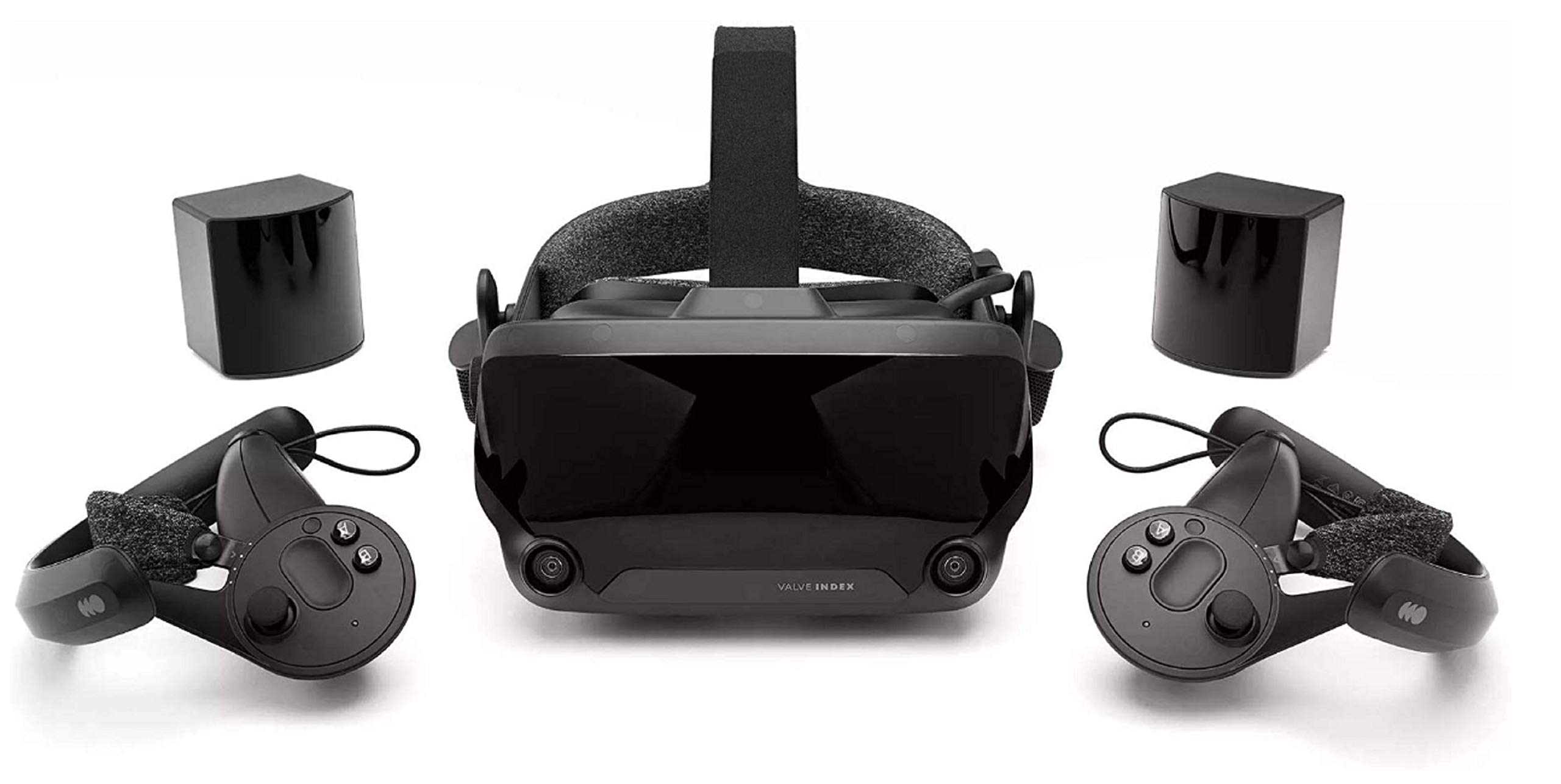
The Valve Index Full Kit remains the gold standard for PC VR gaming, even years after its initial release, because its core specs still outclass newer competing headsets. The dual 1440×1600 LCDs use full RGB sub-pixels for sharp text and clear imagery, and the ultra-low persistence global backlight illumination (0.330ms at 144Hz) delivers motion clarity that no other consumer headset at any price can match—leagues above the 90Hz standard in most rivals. The double-element canted lens design achieves a 130-degree field of view, which is dramatically wider than the 97-110 degrees found in most VR headsets, creating a sense of immersion where you effectively stop noticing the edges of the display. The physical IPD adjustment covers a 58-70mm range with head size, eye relief, and speaker position all adjustable through the ergonomic fit system.
The Knuckles controllers are the best in the industry: they strap to your palms, freeing your fingers to open and close naturally, and individual finger tracking lets you point, grip, and make gestures with remarkable precision. The base stations 2.0 provide room-scale tracking up to 33×33 feet with sub-millimeter accuracy, and the off-ear speakers deliver 3D spatial audio without touching your ears—creating a sense of sound existing in the room around you rather than inside your head. The Index requires a powerful PC with DisplayPort and USB 3.0, and the cable system includes a tether management hook on the back of the head strap to keep the cord out of your way during active gameplay.
User reviews consistently rate the Index as “the best VR headset” with “graphics out of this world” and call it “very comfortable and fun.” The off-ear audio is repeatedly praised for its open, natural soundstage. However, the Index is tethered—there is no wireless option—and the cable is relatively short for large play spaces, which reviewers noted. The build quality issues from third-party sellers are a recurring problem, with one user receiving a defective unit and being charged a restocking fee—so direct-from-Valve purchase is strongly recommended. Additionally, the Index was released years ago, and while its refresh rate and FOV remain best-in-class, the LCD panels have lower contrast and black levels than OLED-equipped headsets like the Vive Pro 2 or Bigscreen Beyond. For uncompromising PC VR gaming performance and immersion, the Index remains the benchmark.
Why it’s great
- Unrivaled 144Hz refresh rate for ultra-smooth motion clarity
- Best-in-class 130° field of view for maximum immersion
- Knuckles controllers with individual finger tracking
- Off-ear speakers deliver 3D spatial audio without headphone fatigue
Good to know
- No wireless option—fully tethered to PC via DisplayPort/USB
- LCD panels have lower contrast than OLED alternatives
- Short cable and heavy tether management for large play spaces
FAQ
Do AR glasses work with any smartphone?
Can I wear prescription glasses under AR glasses?
What is the difference between AR and VR headsets?
How does the 3D conversion feature work in these AR glasses?
Can I use AR glasses for coding and productivity?
Final Thoughts: The Verdict
For most users, the best augmented reality headset winner is the XREAL One Pro because it combines the widest usable field of view (57°), native zero-latency 3DoF via its X1 chip, and Bose co-developed audio in a lightweight, adjustable frame that works with virtually any USB-C device. If you need the absolute brightest display for outdoor use and want full 6DoF spatial computing, grab the VITURE Luma Ultra — its 1,500 nit panels remain legible in direct sunlight, and the triple-camera system delivers genuine hand-tracked AR. And for uncompromising PC VR gaming where refresh rate and field of view are everything, nothing beats the Valve Index Full Kit — its 144Hz refresh rate and 130° FOV remain the consumer gold standard despite the headset’s age, making it the definitive choice for simulation and competitive VR.