
Our readers keep the lights on and the weekend projects moving. As an Amazon Associate, I earn from qualifying purchases.
Whether you’re coaxing tomatoes from a raised bed or keeping a fiddle-leaf fig alive indoors, a balanced fertilizer offers the most forgiving and effective path to plant health. The three numbers on the bag (NPK) tell you exactly what your garden is getting, and getting them wrong can mean lush leaves with no fruit or blooms that fizzle fast.
I’m Rikta — the co-founder and writer behind FitlyFast. I’ve spent hundreds of hours analyzing nutrient ratios, customer feedback, and real-world application results to separate the truly effective blends from the overhyped or underperforming options.
After comparing seven top-selling formulas across every price tier, I’ve identified the best options for gardens, houseplants, and organic growers. This guide breaks down the important specs so you can confidently choose the best balanced fertilizer for your specific setup.
How To Choose The Best Balanced Fertilizer
The term “balanced” usually refers to an NPK ratio where the three numbers are equal or close to equal, such as 10-10-10 or 5-5-5. This means the formula provides roughly equal parts Nitrogen (for leaf growth), Phosphorus (for root and flower development), and Potassium (for overall health). It’s the safest bet for general feeding when you’re unsure of your soil’s specific deficiencies.
Decoding the NPK Ratio
Don’t let the three numbers intimidate you. A 10-10-10 formula is twice as concentrated as a 5-5-5, meaning you use less of it. For indoor container plants, a milder ratio like 4-4-4 or 5-3-3 is often kinder to prevent salt buildup. For heavy feeders in the vegetable garden, a 10-10-10 or 16-16-16 can provide the punch needed for a big harvest.
Fast vs. Slow: The Release Mechanism
Water-soluble powders (like the 20-20-20 options) act fast and are great for a quick boost or for use in a watering can every two weeks. Slow-release granules (like the 10-10-10 options) break down over weeks or months, providing a steady feed with less effort. Organic granular fertilizers release even more slowly, as soil microbes must break them down first.
Organic vs. Synthetic
Organic fertilizers (OMRI listed) feed the soil life as well as the plant, improving long-term soil structure. They tend to have lower NPK numbers and a milder smell (often earthy or like compost). Synthetic fertilizers offer precise, fast-acting nutrition but do little for soil health and can burn plants if over-applied. Your choice depends on whether you prioritize immediate results or long-term soil building.
Quick Comparison
On smaller screens, swipe sideways to see the full table.
| Model | Category | Best For | Key Spec | Amazon |
|---|---|---|---|---|
| FoxFarm Happy Frog | Organic Granules | Indoor & Outdoor Ornamentals | 6-4-5 NPK + Microbes | Amazon |
| Maxsea All Purpose | Water-Soluble | Blooms & Hydroponics | 16-16-16 NPK | Amazon |
| Espoma Plant-Tone | Organic Granules | Flowers, Veggies, Shrubs | 5-3-3 NPK + Bio-tone | Amazon |
| GS Plant Foods 20-20-20 | Water-Soluble | Quick Boost & Turf | 20-20-20 NPK + Kelp | Amazon |
| GreenView Multi-Purpose | Slow-Release Granules | Lawns & Large Gardens | 10-10-10 NPK | Amazon |
| Espoma Garden Food | General Granules | Established Gardens | 10-10-10 NPK | Amazon |
| Jobe’s Organics | Organic Granules | Eco-Conscious Growing | 4-4-4 NPK + Biozome | Amazon |
In‑Depth Reviews
1. FoxFarm Happy Frog All Purpose Fertilizer

FoxFarm’s offering stands out because it’s not just a nutrient blend—it’s a soil amendment. With a 6-4-5 ratio and the addition of beneficial soil microbes and mycorrhizal fungi, this granular formula actively improves the root zone’s ability to absorb water and nutrients. It’s OMRI listed, making it a solid choice for organic gardeners who want more than just NPK.
Users report visible results in as little as a week, with yellowing tomato and zucchini plants bouncing back quickly. The 4-pound bag is convenient for small to medium gardens, and the slow-release nature means you won’t need to apply it every week. It’s versatile enough for vegetables, ornamentals, and even finicky houseplants like Monsteras.
The main drawback is the smell—it’s a potent, earthy manure-like odor that can be strong when used indoors or on a patio. A few users also noted that applying too thickly can lead to white mold on the soil surface. Still, for the balance of performance and organic integrity, this is hard to beat.
Why it’s great
- Contains active soil microbes and mycorrhizae for better nutrient uptake
- OMRI listed for organic gardening
- Gentle enough for a wide range of plants from veggies to houseplants
Good to know
- Has a strong manure-like odor that may be unpleasant indoors
- Can develop white mold if applied too thick or kept too wet
- Smell may attract pests if not worked into the soil
2. Maxsea All Purpose Plant Food 16-16-16

Maxsea is a water-soluble powerhouse with a perfect 16-16-16 NPK ratio that includes over 60 trace elements from seaweed. This makes it a go-to for gardeners who want an immediate, noticeable boost in blooming and fruiting. It’s specifically celebrated for its performance on hanging baskets, begonias, and acid-loving plants like blueberries.
The granules dissolve quickly in water, making it easy to apply with a watering can or hose-end sprayer. Many users reported enormous yields—pepper plants growing to 6 feet and tomatoes exceeding 8 feet—when used regularly. It’s also a favorite in the hydroponic community for its complete micronutrient profile.
The biggest caution is that it’s a high-concentration synthetic blend. It can burn sensitive plants like carnivorous varieties or seedlings if not diluted properly. It’s not organic, so if you’re building soil biology, this won’t help. But for sheer growth power and flower production, it’s exceptional.
Why it’s great
- High-concentration 16-16-16 ratio delivers fast results
- Contains seaweed with over 60 trace elements for complete nutrition
- Excellent for heavy feeders and blooming plants
Good to know
- Can burn delicate plants like carnivorous species if over-used
- Not OMRI listed or suitable for organic gardening
- Requires careful mixing to avoid over-fertilization
3. Espoma Organic Plant-Tone 5-3-3

Espoma Plant-Tone is a legend among organic gardeners. With a gentle 5-3-3 ratio enhanced by their proprietary Bio-tone microbes, this fertilizer is designed to feed the soil while it feeds the plant. It’s ideal for a wide range of uses including annuals, perennials, vegetables, and shrubs, and it’s recognized by organic gardening organizations.
The 4-pound bag you get in this pack of two is plenty for multiple seasons of top-dressing around established plants. Users note that it works surprisingly fast for an organic product, with visible greening and growth within weeks. It’s also non-burning, so it’s safe for delicate seedlings and root systems.
The trade-off is its smell—it contains chicken manure, so it’s not something you want to store in a garage you use daily. The 5-3-3 ratio is lower in phosphorus, which might not be enough for heavy bloomers without supplementation. For a general, safe, organic feed that supports long-term soil health, this is a top pick.
Why it’s great
- Organic with Bio-tone microbes for enhanced soil biology
- Non-burning formula safe for all plant types
- Recognized by organic gardening organizations
Good to know
- Strong chicken manure odor that can be off-putting
- Lower NPK means more frequent application for heavy feeders
- Not a standalone bloom booster for flowering plants
4. GS Plant Foods All Purpose 20-20-20
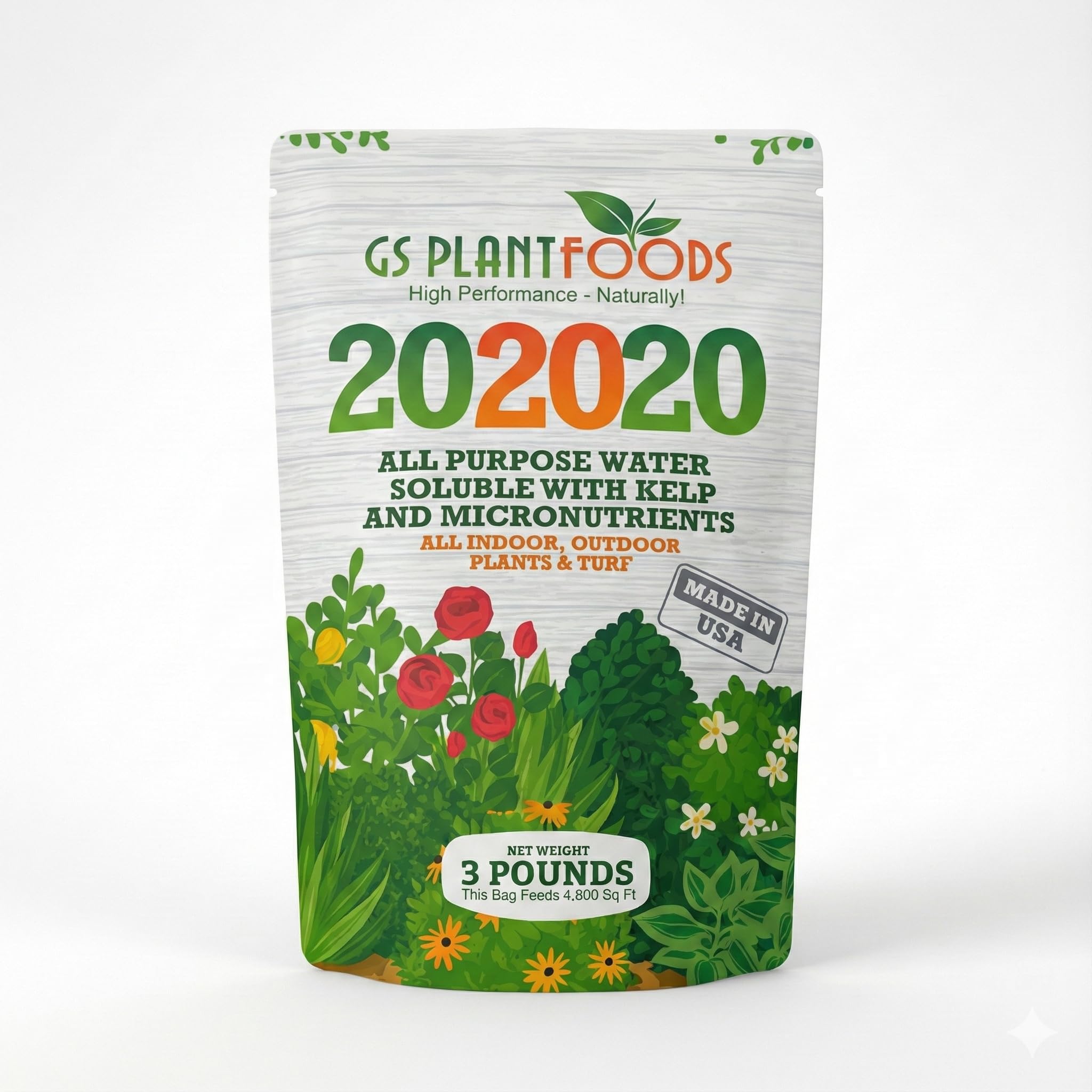
GS Plant Foods delivers a highly concentrated, water-soluble 20-20-20 formula that includes kelp extract (Ascophyllum nodosum) for added growth stimulants. This is the kind of fertilizer you use for a fast green-up on lawns, a mid-season boost for vegetables, or as a consistent feed for container plants. The 3-pound bag covers up to 4,800 square feet of turf.
The powder dissolves completely without clogging sprayers, and users find it easy to adjust the strength based on the plant’s needs. It’s especially useful for gardeners who rotate between different crop types because the balanced ratio works universally. Many houseplant enthusiasts use it weekly for strong, healthy foliage.
One user noted that while it produces big leaves, it can result in smaller blooms due to the high nitrogen content relative to phosphorus. It’s also a synthetic fertilizer, so it won’t improve soil structure. If you need a cheap, effective, and versatile liquid feed for a quick response, this fits the bill.
Why it’s great
- Dissolves completely for easy liquid feeding
- High NPK concentration provides rapid plant response
- Cost-effective for large areas like lawns
Good to know
- High nitrogen can reduce flower production in some plants
- Not organic—does not feed soil microbiology
- Requires regular mixing and storing in a dry place
5. GreenView Multi-Purpose Fertilizer 10-10-10

GreenView’s 33-pound bag is the workhorse of balanced fertilizers. Its classic 10-10-10 formula is the standard all-purpose recommendation for everything from vegetable gardens to flower beds, trees, and shrubs. The massive coverage (up to 10,000 sq. ft.) makes it ideal for homeowners tackling large landscapes or multiple garden plots.
The slow-release granules are well-formed and don’t clump, making them easy to broadcast with a spreader. Users in Hawaii found it a cheaper alternative to the harder-to-find 16-16-16, with comparable results in greening up lawns and gardens quickly. It’s a straightforward, no-fuss product that just works.
The downside is the sheer size—a 33-pound bag is heavy and requires storage space. It’s also a synthetic formula, so organic purists will want to look elsewhere. Some users reported that it’s less effective in poor soil that lacks organic matter, as it feeds the plant but not the soil itself.
Why it’s great
- Best value per pound for large-scale application
- Classic 10-10-10 ratio works reliably on almost everything
- Granules are uniform and easy to spread
Good to know
- Not organic—does not improve soil structure
- Heavy bag requires dedicated storage
- May not perform as well in nutrient-poor soil without compost
6. Espoma 10-10-10 Garden Food
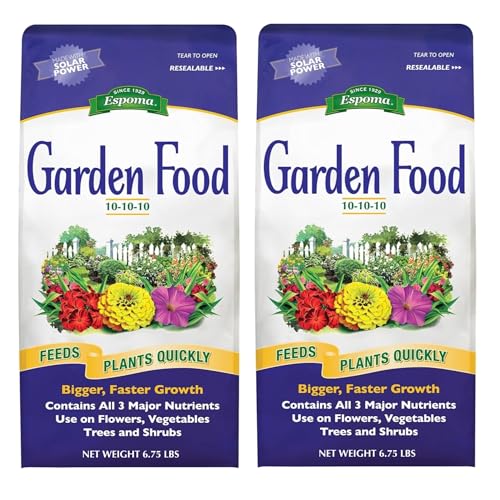
Espoma’s 10-10-10 Garden Food is a reliable, agricultural-grade granular fertilizer that provides a quick nutrient release. It’s designed for spring and fall feeding on trees, shrubs, and perennial flower beds, and it works monthly during the growing season for vegetables and roses. The pack of two 6.75-pound bags offers flexibility for splitting between different garden areas.
Users report dramatic results, including a 57-year-old magnolia tree bouncing back after lightning damage and a fig tree producing an estimated 5,000 fruits. The granules are easy to apply by hand or spreader, and the formula is fast-acting, with visible greening in a week or two. It’s a no-nonsense synthetic option from a trusted brand.
The main limitation is that it’s a pure synthetic feed—it won’t build soil organic matter. Some users in states with strict fertilizer regulations (like Washington) appreciate that this brand meets local certification standards. If you want fast, predictable results without worrying about soil microbes, this is a solid choice.
Why it’s great
- Fast-acting synthetic formula for quick greening
- Pack of two bags is convenient for splitting applications
- Trusted brand with good availability online
Good to know
- Not suitable for organic gardening
- Over-application can lead to salt buildup and root burn
- Does not improve long-term soil fertility
7. Jobe’s Organics Granular All Purpose Fertilizer 4-4-4

Jobe’s Organics offers a gentle 4-4-4 NPK that is perfect for those committed to organic gardening at scale. The 16-pound bag provides significant coverage while being OMRI listed and free of synthetic chemicals. Its Biozome formula includes beneficial microorganisms and mycorrhizae that help plants resist disease, insects, and drought.
Users love using it with a hand spreader for lawns, and many mix it into a liquid feed by steeping a cup of granules in water for 24 hours. This liquid concoction is reported to boost flowering within 48 hours and produce massive harvests of squash and peppers. The granules are friable and easy to work into the soil without creating dust clouds.
The main complaint is the price—it’s more expensive per pound than synthetic alternatives. The odor, while milder than raw manure, is still pungent. Because it’s a lower NPK, you’ll need to apply it every 2-3 weeks during the growing season. For those who want to avoid all chemicals and build a living soil, it’s a fantastic investment.
Why it’s great
- OMRI listed and 100% organic ingredients
- Biozome formula helps with disease and pest resistance
- Can be used as a dry granular or steeped for liquid feeding
Good to know
- Higher cost per pound than synthetic fertilizers
- Low NPK requires more frequent applications
- Strong smell though milder than manure
FAQ
What does a 10-10-10 fertilizer mean in plain terms?
Can I use a balanced fertilizer on all my plants?
Is it better to use a water-soluble or granular balanced fertilizer?
Final Thoughts: The Verdict
For most users, the best balanced fertilizer winner is the FoxFarm Happy Frog All Purpose because it combines a gentle 6-4-5 ratio with beneficial soil microbes that improve root health over the long term. If you want a fast-acting synthetic boost for heavy feeders and blooms, grab the Maxsea 16-16-16. And for large-scale organic feeding that builds soil biology, nothing beats the Jobe’s Organics 4-4-4.