
Our readers keep the lights on and the weekend projects moving. As an Amazon Associate, I earn from qualifying purchases.
The 55-inch TV slot is the most competitive in the market, balancing immersive screen real estate with living-room practicality. Under a grand, you now face a battle not between 4K and 1080p, but between premium Mini-LED backlighting, gaming-centric 144Hz panels, and smart platforms that shape your daily streaming experience. The wrong pick means muddy blacks during a dark movie scene or a laggy interface that grates every time you press a button.
I’m Rikta — the co-founder and writer behind FitlyFast. I’ve spent dozens of hours analyzing panel types, local dimming zone counts, refresh rate real-world performance, and HDR implementation across the 55-inch landcape to cut through the noise and separate true performers from marketing gloss.
Whether you’re after cinematic contrast for movie night or blistering motion clarity for competitive gaming, this guide ranks the most significant contenders you should consider for your next 55 inch tv under $1000.
How To Choose The Best 55 Inch TV Under $1000
A grand is a serious budget that unlocks panel technology once reserved for flagship models. The key is knowing which specs translate to a visibly better picture and which are just numbers on a box. Three factors will dominate your decision: backlight architecture, refresh rate, and the operating system.
Backlight Technology: Mini-LED vs. QLED vs. Standard LED
The backlight determines contrast. Standard LED uses edge lighting, creating greyish blacks in dark scenes. QLED uses a quantum dot filter on a standard LED backlight for wider color volume. Mini-LED shrinks the LEDs, allowing hundreds or thousands of local dimming zones that can turn off behind dark parts of the image. A Mini-LED set under a thousand dollars delivers black levels that approach OLED without the burn-in risk, making it the clear preference for home theater use. If you watch mostly sports in a bright room, a bright QLED without deep zones can still look excellent, but discerning eyes will notice the difference in a dark room.
Native Refresh Rate: 60Hz vs. 120Hz vs. 144Hz
For the best 55 inch TV under $1000, a native 120Hz or 144Hz panel is the differentiator. A 60Hz panel is fine for news and drama, but sports motion will blur, and console gaming at 60 frames per second is the ceiling. A native 120Hz panel unlocks smooth motion on 24p content, fluid sports panning, and 40fps performance modes on PS5 and Xbox Series X. A 144Hz panel adds the extra headroom for PC gaming and future-proofing. Check the specifications carefully: many budget TVs claim “120Hz” but are actually 60Hz panels that accept a 120Hz signal via motion interpolation, not a native high refresh rate.
Smart TV Platform: Your Daily Driver
You will interact with the operating system every single day. Roku is the gold standard for simplicity, speed, and universal app support. Google TV offers deeper personalization and voice search but can feel bloated on budget hardware. Fire TV integrates seamlessly with Amazon’s ecosystem but pushes advertising heavily. webOS (LG) is polished and fast, while Tizen (Samsung) is capable but can be cluttered. If you plan to use an external streaming device like an Apple TV 4K, the TV’s smart platform matters far less—look purely at the panel quality. If you hate the remote, you will eventually hate the TV, regardless of how good the picture is.
Quick Comparison
On smaller screens, swipe sideways to see the full table.
| Model | Category | Best For | Key Spec | Amazon |
|---|---|---|---|---|
| Samsung Neo QLED QN80F | Premium Mini-LED | Bright rooms & high-end contrast | Neo Quantum HDR, 20 neural net AI | Amazon |
| Hisense U7 Mini-LED | Premium Gaming | Competitive gaming & high brightness | Native 165Hz, 3000 nits peak | Amazon |
| LG QNED85A | Mid-Range All-Rounder | Cinematic movies & console gaming | Alpha 8 AI Processor, VRR 144Hz | Amazon |
| Samsung QLED Q8F | Mid-Range | Reliable QLED with free content | 100% Color Volume, AirSlim design | Amazon |
| TCL QM7K Mini-LED | Value Mini-LED | Budget-friendly Mini-LED contrast | LD2500 dimming zones, anti-reflective panel | Amazon |
| Sony BRAVIA 7 Mini-LED | Premium Processing | Upscaling & PS5 integration | XR Processor, XR Triluminos Pro | Amazon |
| Sony BRAVIA 2 | Mid-Range | PS5 gaming & reliable Sony quality | 4K Processor X1, Motionflow XR | Amazon |
| iFFALCON U85 Mini-LED | Value Gaming | Budget 144Hz gaming & hotel use | 4x HDMI 2.1, VRR up to 288Hz | Amazon |
| Amazon Ember Mini-LED | Smart Integration | Alexa ecosystem & hands-free use | 512 dimming zones, 1400 nits, 144Hz | Amazon |
| Hisense E6 QLED | Entry-Level QLED | Budget-friendly QLED for movies | Motion Rate 120, Dolby Vision, HDR10+ | Amazon |
| Roku Plus Series Mini-LED | Best Value Mini-LED | Best OS & impressive contrast for price | Mini-LED QLED, Dolby Vision, VRR | Amazon |
In‑Depth Reviews
1. Samsung Neo QLED 4K QN80F (55QN80F)

Samsung’s QN80F sits at the upper limit of this budget bracket and justifies every penny with its Neo Quantum HDR and a Mini-LED array that delivers the deepest black levels in this class outside of OLED. The NQ4 AI Gen2 Processor uses 20 neural networks to upscale lower-resolution content to near-4K, making standard cable and 1080p Blu-rays look remarkably crisp. The Object Tracking Sound Lite creates a spatial audio bubble that follows on-screen action, an effect usually reserved for much more expensive sets.
Gamers get a native 144Hz VRR panel with FreeSync Premium Pro support, eliminating screen tearing during fast-paced titles. The AirSlim design mounts nearly flush against a wall, a detail that matters for minimalist setups. The Tizen smart platform is packed with features but can feel slightly cluttered compared to Google TV, though the inclusion of Samsung TV Plus provides a generous library of free content out of the box.
Some users report that the included solar-powered remote lacks a mute button, a minor annoyance that is easily solved with a universal remote. For buyers who want the best possible contrast, motion handling, and AI upscaling this side of a grand, the QN80F is the benchmark.
Why it’s great
- Outstanding Mini-LED contrast with deep, inky blacks for dark room viewing.
- AI upscaling via 20 neural networks breathes life into 1080p content.
- Native 144Hz VRR with FreeSync Premium Pro for tear-free gaming.
Good to know
- Tizen OS can feel bloated compared to Google TV or Roku.
- Built-in sound lacks depth; a soundbar is a strong recommendation.
- Remote design is minimalist to a fault, missing a dedicated mute button.
2. Hisense 55″ U7 Mini-LED (55U7SG)
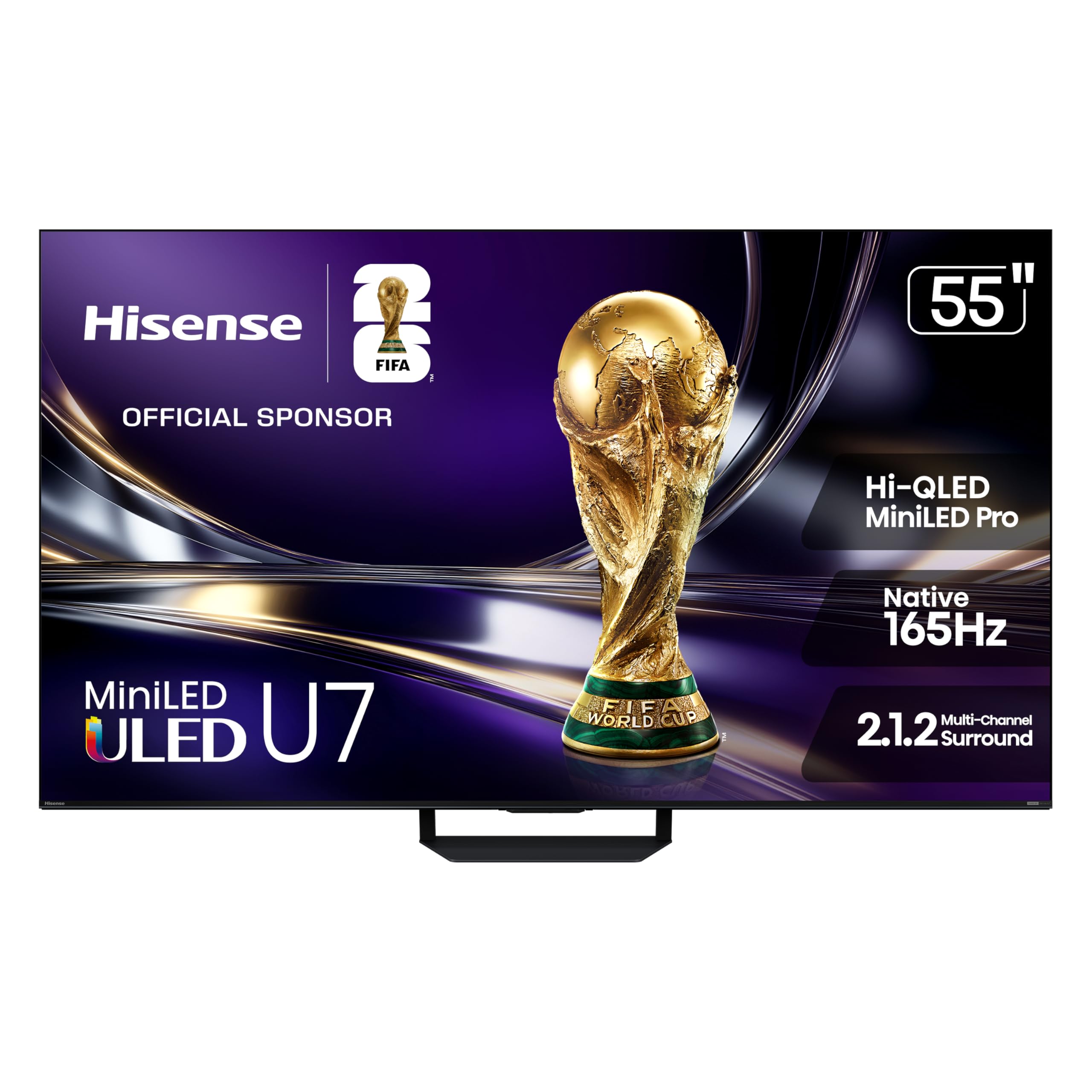
The Hisense U7 is a category-disruptor, packing a native 165Hz panel, up to 3000 local dimming zones, and a peak brightness of around 3000 nits – figures that dominate rivals in its price tier. This aggressive brightness, combined with a sophisticated anti-glare layer, makes it the top choice for a living room with large windows or a bright, sun-drenched space. Hi-QLED MiniLED Pro technology delivers vibrant, saturated colors that hold up even in direct light.
The Hi-View AI Engine Pro constantly analyzes every scene, adjusting contrast and color in real-time to avoid crushing dark details or blowing out highlights. Gamers benefit from the highest-tier VRR support (up to 330Hz), making motion on fast-paced shooters incredibly fluid. The 2.1.2 channel audio system provides a wider soundstage than most built-in TV speakers, though a dedicated soundbar is still recommended for the full Dolby Atmos experience.
The Google TV interface is responsive, though some users note occasional sluggishness immediately after boot. For anyone prioritizing raw brightness, motion clarity, and sheer performance per dollar, especially in a challenging lighting environment, the Hisense U7 is a phenomenal choice.
Why it’s great
- Industry-leading peak brightness (approx. 3000 nits) for HDR impact in bright rooms.
- Excellent anti-glare coating that maintains picture integrity.
- Native 165Hz panel with massive VRR range for competitive gaming.
Good to know
- Hisense QC can be inconsistent; checks for dead pixels are advisable.
- Google TV interface can feel slightly laggy at startup.
- Requires a soundbar to truly unlock its Dolby Atmos potential.
3. LG 55″ QNED evo AI (55QNED85AUA)

LG’s QNED85A marries Mini-LED precision with the brand’s renowned AI picture processing. The Alpha 8 AI Processor Gen2 intelligently analyzes content in real-time, enhancing texture and detail while reducing noise, resulting in a natural, film-like image. Dynamic QNED Color covers 100% of the color volume, ensuring every shade looks accurate without the over-saturation common to lesser QLEDs. The Filmmaker Mode preserves the director’s intent by disabling motion smoothing and maintaining the correct frame rate.
With a native 120Hz panel and VRR support up to 144Hz, the set handles console gaming with ease. The Game Optimizer dashboard puts all gaming-specific settings in one place for quick tweaks. webOS remains one of the fastest and most intuitive smart platforms, though some users dislike the Magic Remote’s pointer functionality. The adjustable stand is a thoughtful touch for varying furniture widths.
Owners frequently praise the picture as being nearly indistinguishable from an OLED in a moderately lit room, with the added benefit of no burn-in risk. For the cinephile who wants an excellent out-of-the-box picture and a premium smart TV experience, the LG QNED85A is a standout.
Why it’s great
- Excellent AI-powered picture processing for natural, noise-free images.
- Filmmaker Mode provides a calibrated, artifact-free cinematic experience.
- Fast and polished webOS interface with great app support.
Good to know
- Some users find the Magic Remote pointer unintuitive and fiddly.
- Built-in sound is decent but lacks strong bass presence.
- Peak brightness is lower than top-tier Mini-LED competitors like the Hisense U7.
4. Samsung QLED Q8F (55Q8F)

The Samsung Q8F represents a more traditional, proven QLED approach, relying on powerful quantum dot color to deliver over a billion shades that remain vibrant even in bright scenes. It lacks the local dimming granularity of a Mini-LED set, but the Samsung Vision AI and Q4 AI processor do an excellent job of boosting color and contrast to produce a punchy, watchable image for all content types. The AirSlim design makes this one of the thinnest 55-inch TVs in its class.
With a native 144Hz VRR panel, it handles sports and gaming smoothly. The Tizen OS provides access to thousands of free channels via Samsung TV Plus, a genuine value-add for cord-cutters. Setup is straightforward, and the rotating solar cell remote is a nice eco-friendly touch. The overall build quality and brand reliability are strong selling points for buyers who prefer a known quantity over a spec-heavy newcomer.
The main trade-off is contrast: without fine local dimming, dark scenes can appear washed out compared to Mini-LED alternatives. The built-in sound is adequate for casual viewing but lacks the richness for a truly cinematic experience. For someone who wants a great-looking TV for mixed lighting conditions and values a brand with proven service, the Q8F is a safe, high-quality choice.
Why it’s great
- Excellent color volume that retains saturation in bright rooms.
- Sleek, slim AirSlim design that looks premium on a stand or wall.
- Generous free content library via Samsung TV Plus.
Good to know
- Contrast is noticeably lower than Mini-LED TVs in this price range.
- Built-in sound lacks depth; a soundbar is highly recommended.
- Tizen smart platform can be cluttered with ads and promotions.
5. TCL QM7K Mini-LED (55QM7K)
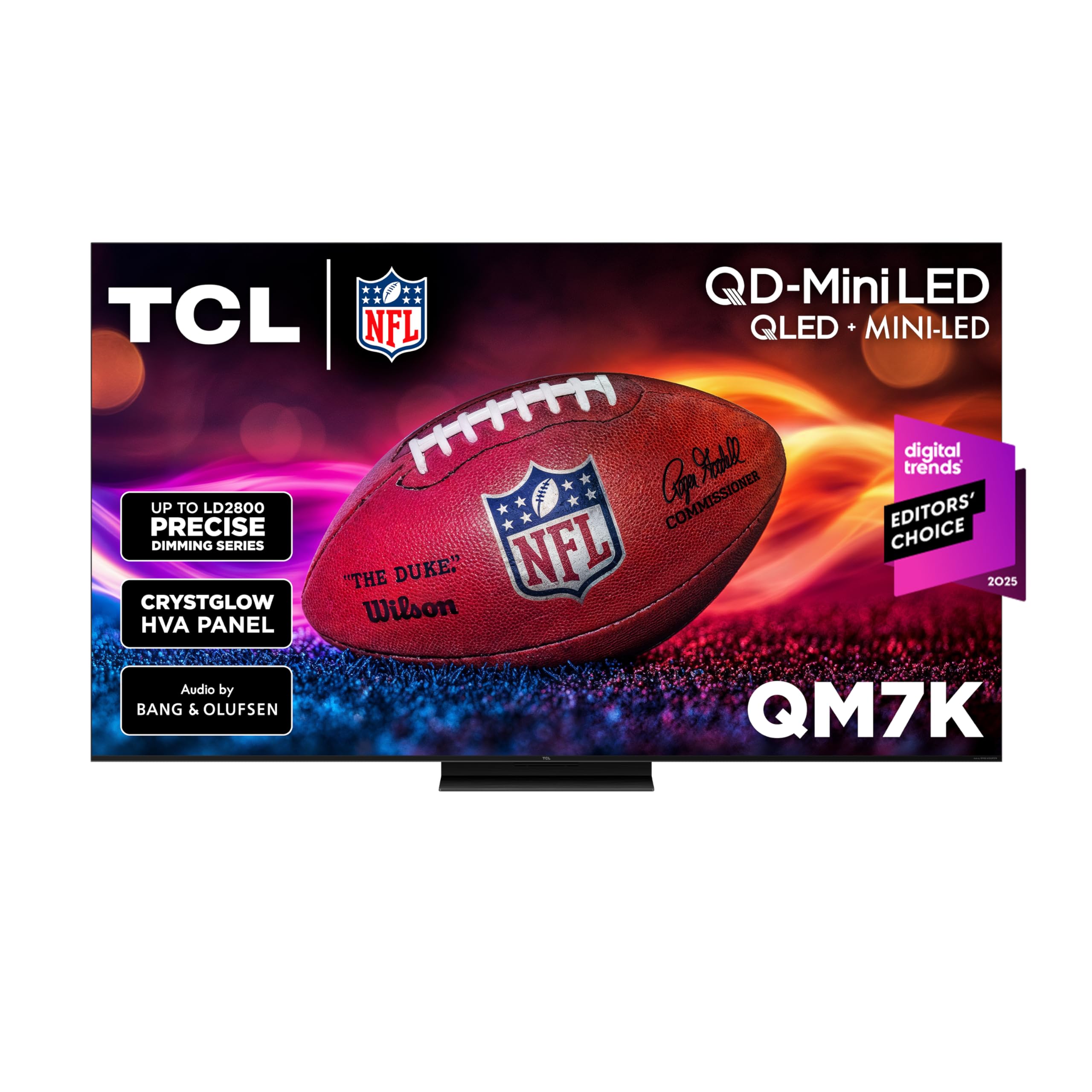
TCL’s QM7K is a value-focused Mini-LED contender that punches above its price point. The QD-Mini LED hybrid combines the high brightness and color volume of QLED with the precision lighting of Mini-LED, managed by the Halo Control System. With up to LD2500 precise dimming zones, black levels are deep and halo effects are minimal, producing a picture that rivals more expensive sets in dark rooms. The CrystGlow HVA panel features excellent anti-reflection, making it a strong performer in well-lit spaces.
The Google TV platform is responsive and provides a clean, customizable interface, though some users note the inclusion of bloatware. The 144Hz VRR panel supports variable refresh rate for smooth gaming, and the Onkyo-tuned audio system is capable, though not exceptional. Setup is quick, with a straightforward stand assembly.
The most cited downsides are the cheap-feeling remote and the B&O-tuned sound, which some find thin for a TV of this caliber. Despite these points, the sheer picture quality for the price is remarkable. For a buyer who prioritizes panel performance above all else and can accept a basic remote, the TCL QM7K delivers Mini-LED magic at a mid-range price.
Why it’s great
- Great Mini-LED contrast with deep blacks and strong HDR impact.
- Excellent anti-reflective screen that reduces glare in bright rooms.
- 144Hz VRR panel provides smooth, responsive gaming performance.
Good to know
- Included remote feels cheap and plasticky.
- Built-in sound quality is mediocre; a soundbar is a worthwhile upgrade.
- Google TV interface includes some pre-installed bloatware.
6. Sony BRAVIA 7 Mini-LED (K-55XR70)

The Sony BRAVIA 7 is the most expensive set in this guide, pushing the budget limit, but it earns its place through superior processing. The XR Processor, combined with XR Backlight Master Drive, controls thousands of Mini-LEDs to produce authentic contrast with minimal blooming. The real star is XR Clear Image upscaling: it takes low-bitrate streaming and standard HD content and makes them look remarkably sharp and clean, a feat lesser TVs cannot replicate. Sony’s Triluminos Pro delivers billions of accurate, real-world colors.
For PS5 owners, this is the ultimate companion. Exclusive features like Auto HDR Tone Mapping and Auto Genre Picture Mode optimize the picture for games and streaming content without any manual adjustment. The Acoustic Multi-Audio system places sound actuators behind the screen, creating a more immersive experience by aligning audio with on-screen action. The Google TV platform is robust and supports all major streaming apps, plus Sony Pictures CORE for high-bitrate movie rentals.
The drawbacks are the price, which sits above the comfortable threshold for this list, and a reported narrow viewing angle. The blooming, while controlled, is still visible on high-contrast test patterns. For buyers who watch a lot of varied content and own a PS5, the BRAVIA 7’s processing prowess makes it the most refined and enjoyable option available, provided the budget can stretch.
Why it’s great
- Best-in-class AI upscaling that makes low-res content look fantastic.
- Flawless PS5 integration with exclusive auto-optimization features.
- Excellent Mini-LED contrast with controlled blooming and accurate colors.
Good to know
- Premium price that may exceed the stated budget for some shoppers.
- Narrow viewing angle; best for dead-center seating positions.
- Some users report panel defects; buying from a reputable seller with a good return policy is advised.
7. Sony BRAVIA 2 (K-55S20M2)

The Sony BRAVIA 2 is the entry-level OLED alternative for the PS5 crowd. It’s a standard LED-backlit panel, but the 4K Processor X1 does an impressive job of upscaling content and enhancing color and contrast to produce a sharp, pleasing image. The real draw is the exclusive PS5 features: Auto HDR Tone Mapping and Auto Genre Picture Mode work flawlessly to deliver the best picture for gaming without any tweaking. The Game Menu puts all settings in one place.
With Motionflow XR, fast-moving sports and action movies remain blur-free. The Google TV platform gives access to all major apps, and the Apple AirPlay 2 support makes casting easy. The Sony Pictures CORE app provides a few free movie credits, a nice bonus for new owners. The overall build quality and reliability are strong points that Sony is known for.
The lack of Mini-LED or high zone count means contrast is its weak point; in a dark room, black bars will look grey. The 60Hz panel is also a limiting factor for high-frame-rate gaming. For the console gamer who values seamless integration and reliable processing over high-contrast specs, the BRAVIA 2 is a solid, purpose-built choice.
Why it’s great
- Excellent PS5 integration with automatic HDR and picture mode optimization.
- Reliable, well-built panel with good upscaling from a trusted brand.
- Clean Google TV interface with good app support and AirPlay 2.
Good to know
- Standard LED backlight results in poor black levels and contrast in dark rooms.
- 60Hz panel limits its appeal for high-frame-rate gaming.
- Some users report a menu navigation process that feels dated.
8. iFFALCON 55″ MiniLED 55U85
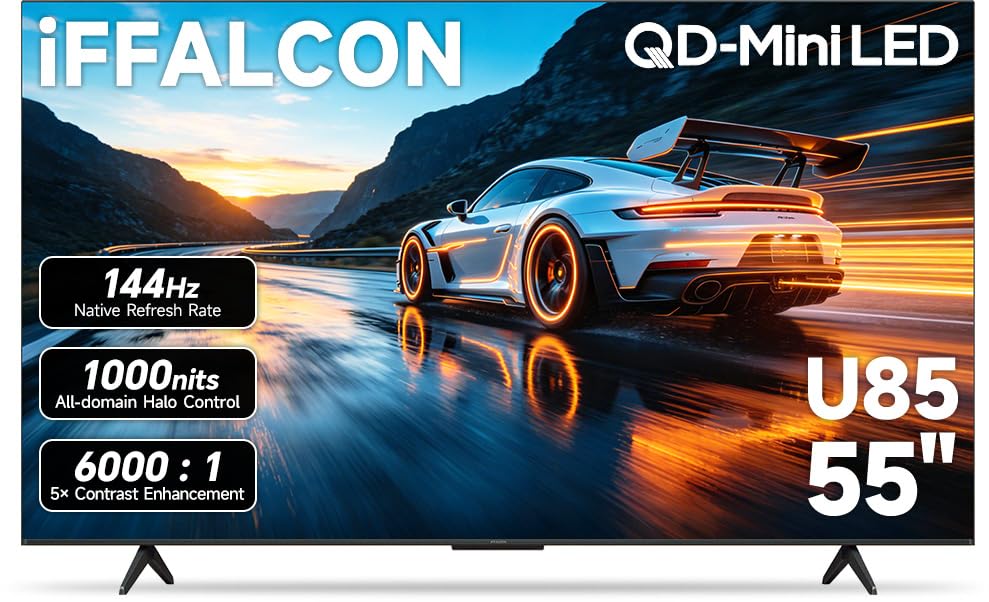
The iFFALCON 55U85 is a gaming-focused Mini-LED that offers an incredible spec sheet for its price: a true native 144Hz panel, VRR support up to 288Hz, and four HDMI 2.1 ports. This allows you to connect a PS5, Xbox Series X, PC, and soundbar simultaneously without swapping cables. The FreeSync Premium Pro certification ensures tear-free, low-latency gaming, and the 6000:1 contrast ratio from the Mini-LED backlight provides deep blacks for immersive gameplay.
Dolby Vision Gaming and IMAX Enhanced support mean the TV is ready for the best HDR from streaming services. The 50W 2.1-channel audio system with a built-in woofer delivers surprisingly punchy sound for built-in speakers. A unique feature is the built-in hotel mode and IP/IR control, making it a versatile option for commercial spaces like Airbnbs or conference rooms. The Google TV interface is responsive and clean.
The trade-off is brand recognition and long-term reliability data, as iFFALCON is a newer market player. The TV is slightly thicker than ultra-slim competitors. For the value-focused gamer who wants all the HDMI 2.1 bandwidth without the premium price tag, the iFFALCON U85 is a compelling, feature-rich option.
Why it’s great
- Unmatched connectivity with 4x HDMI 2.1 ports for multi-device setups.
- True native 144Hz with FreeSync Premium Pro for smooth gaming.
- Good built-in sound with a dedicated woofer for room-filling audio.
Good to know
- Brand is less established, with a shorter track record for reliability.
- Chassis is thicker than many modern ultra-slim TVs.
- Google TV can feel slightly less polished than Roku or webOS.
9. Amazon Ember Mini-LED (55-inch)
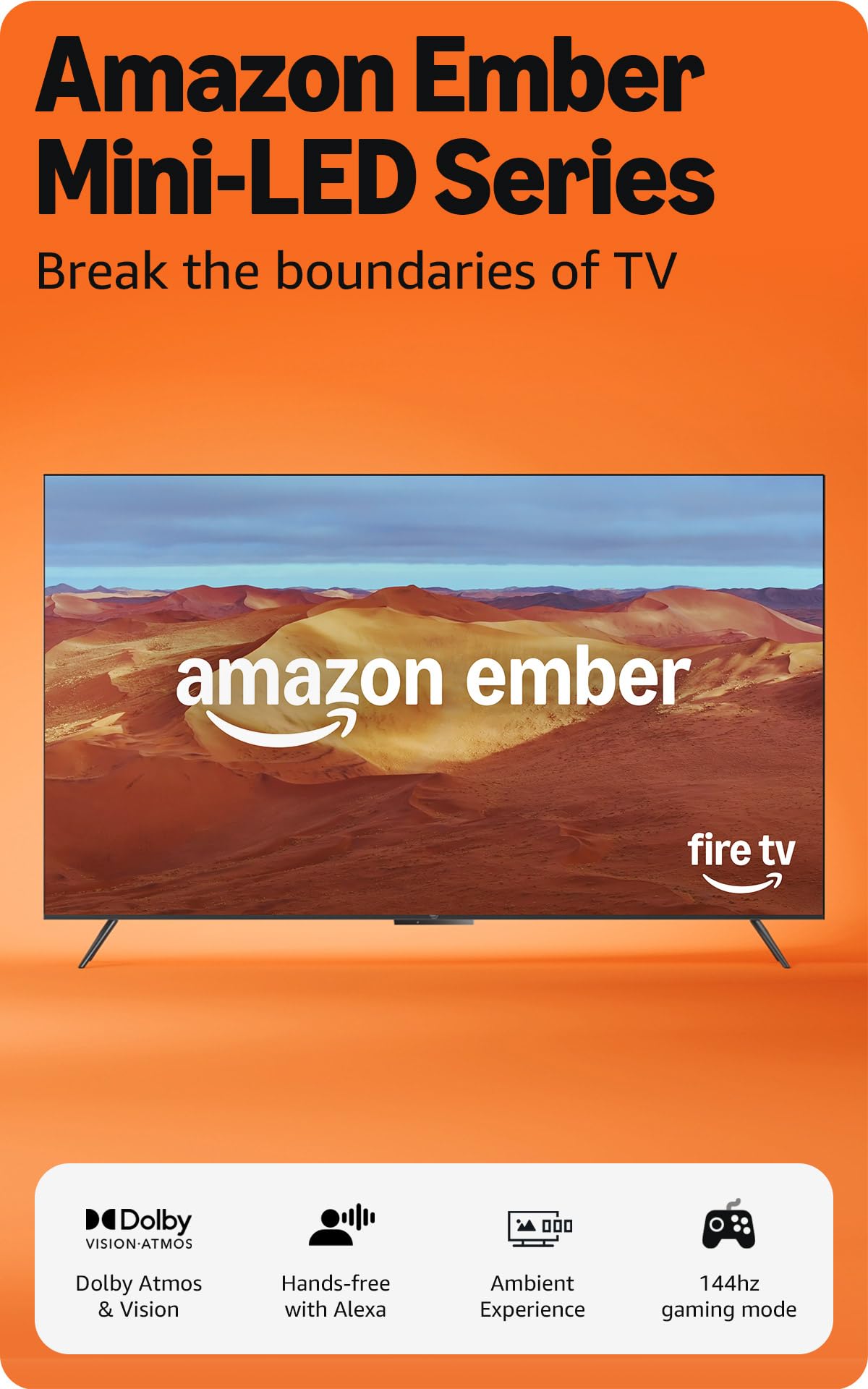
The Amazon Ember Mini-LED is the company’s own attempt at a premium smart TV, and it succeeds in picture quality. With 512 dimming zones and a peak brightness of up to 1400 nits, it delivers excellent HDR contrast and punchy highlights that compete well with the bigger brands. The native 144Hz panel supports AMD FreeSync Premium Pro, making it a capable gaming TV. The “Ambient Experience” feature uses a sensor to wake the display and show art when you enter the room.
The biggest draw is the tight integration with the Alexa ecosystem. Handsfree voice control works well, even when the TV is off, and you can view your Blink camera feeds directly on the screen. The new Fire TV experience (2026 model) is a significant upgrade, with a cleaner interface and Alexa+ search. The 2.1 Dolby Atmos sound system provides clear dialog and surprising bass for a built-in solution.
However, the interface is the TV’s weakness long-term. Some users report that after months of use, the Fire OS can become laggy and prone to app crashes. The home screen is also heavily loaded with advertisements. For the deep-dive Prime household that lives in the Amazon ecosystem, the Ember is a smart choice, but those prioritizing a smooth, ad-free experience may prefer a different smart platform.
Why it’s great
- Strong HDR performance with 512 dimming zones for deep blacks.
- Deep integration with Alexa, Blink, and the Amazon ecosystem.
- Native 144Hz panel with FreeSync Premium Pro for smooth gaming.
Good to know
- Fire TV interface can become sluggish and crash-prone over time.
- Home screen is cluttered with advertisements and sponsored content.
- Some users report random reboots and Wi-Fi connectivity issues.
10. Hisense E6 QLED (55E6QF)
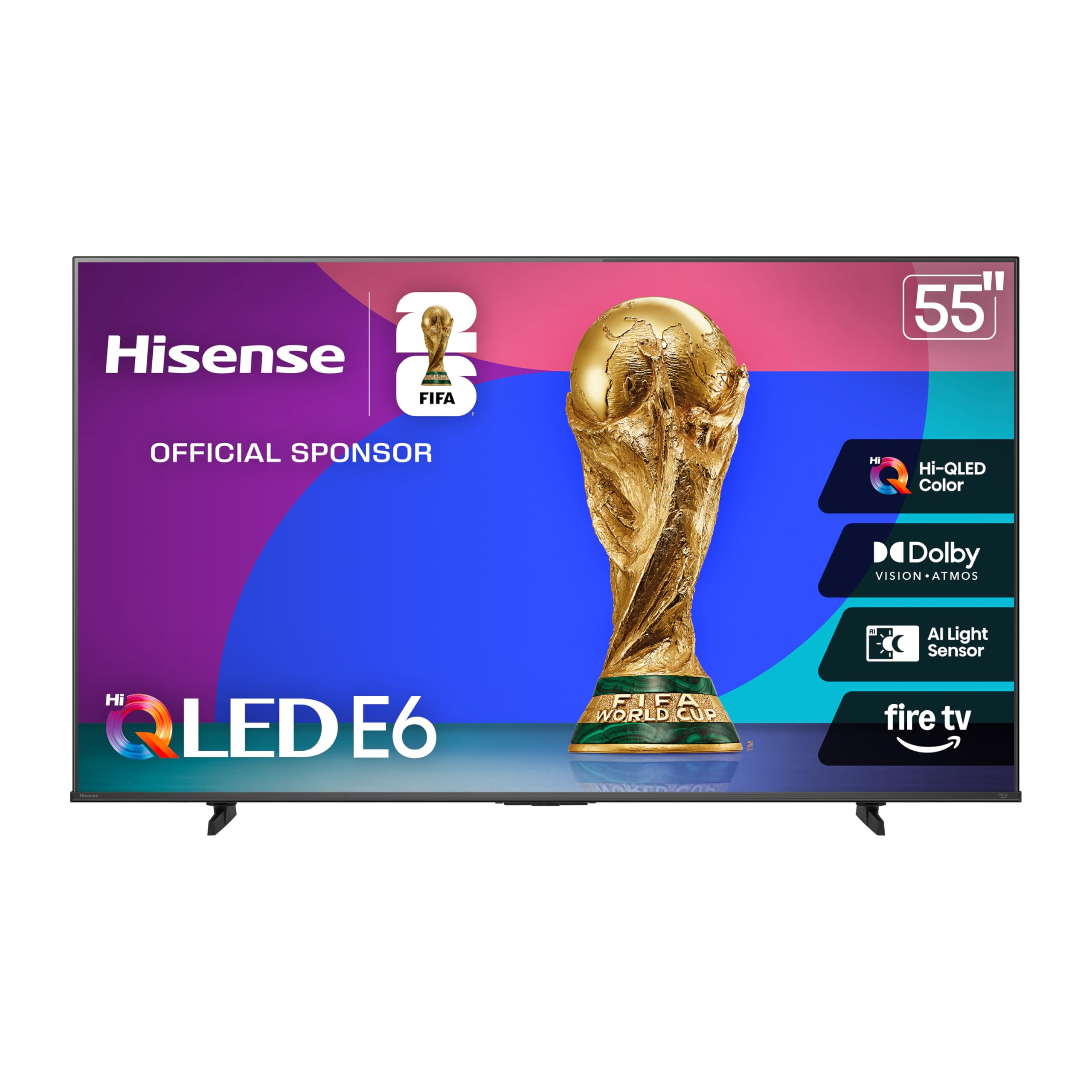
The Hisense E6 is an entry-level QLED that prioritizes color and HDR format support over raw contrast. The Hi-QLED panel delivers vibrant, true-to-life colors that stand out, and its support for Dolby Vision, HDR10+, and HDR10 Adaptive ensures it plays nicely with all content sources. The “Total HDR Solution” does a good job of keeping bright scenes bright and dark scenes visible, though the lack of local dimming means black levels are a compromise.
Built on the Fire TV platform, it offers seamless Alexa integration and easy access to all major streaming apps. The Motion Rate 120 helps keep sports and fast action relatively smooth, though it is a 60Hz panel at its core. The build quality is solid for its price point, and the included voice remote works well. Setup is straightforward, though some users note the menu layout is not as intuitive as Roku.
For a buyer whose primary use is bright-room viewing of news, sitcoms, and movies, and who wants a reliable smart TV experience without spending much, the E6 is a great choice. Gamers and movie buffs who watch in a dark room will quickly be frustrated by the greyish blacks. It is a classic case of getting what you pay for, but for the price, it delivers on its primary promise: vibrant, watchable color.
Why it’s great
- Vibrant QLED color that is punchy and pleasing for bright-room viewing.
- Excellent HDR format support including Dolby Vision and HDR10+.
- Reliable Fire TV platform with good app support and Alexa integration.
Good to know
- Standard LED backlight leads to poor black levels and low contrast.
- Only a 60Hz panel, limiting smooth motion and high-frame-rate gaming.
- Fire TV interface can be slow to navigate compared to rivals.
11. Roku Plus Series Mini-LED (55-inch)
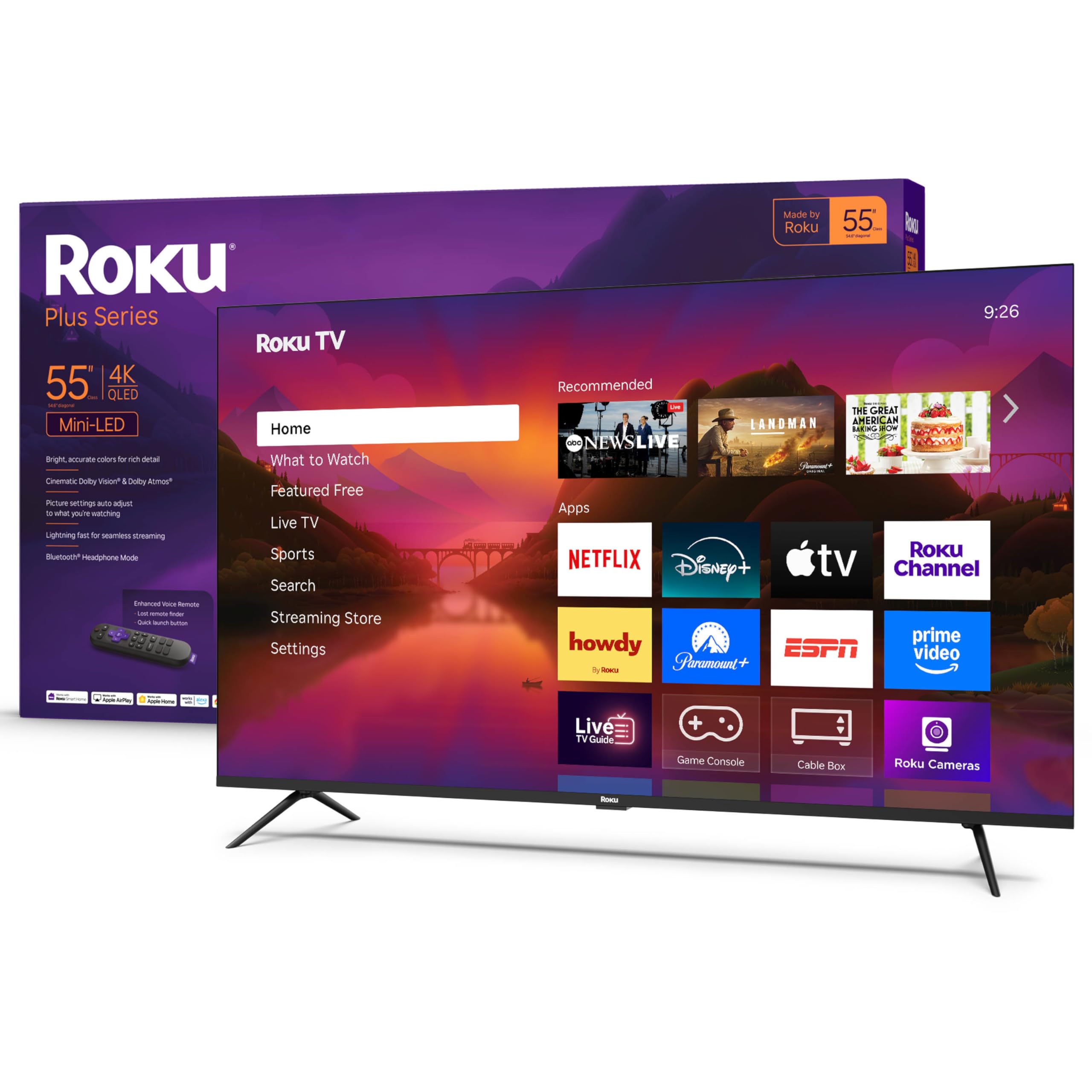
The Roku Plus Series Mini-LED is a masterclass in value engineering, delivering Mini-LED backlighting at a price that undercuts almost every competitor. The blacks are deep, the highlights are punchy, and the QLED filter ensures colors are vibrant. The Roku OS is the undisputed king of simplicity—it is fast, intuitive, and automatically updates with new apps. The “Roku Smart Picture Max” uses AI to clean up and optimize the picture for any content in real-time.
The Enhanced Voice Remote includes a lost remote finder and headphone mode for private listening, practical features that enhance daily use. The built-in subwoofer provides a surprising amount of bass for TV speakers, making dialog clear and action scenes impactful. Dolby Vision and Dolby Atmos support are included, offering a solid foundation for modern streaming. The “Bluetooth Headphone Mode” is a game-changer for late-night viewing without disturbing others.
The main criticisms are the slightly dated-looking user interface and the lack of a USB port on some models. The sound, while good for the category, still won’t replace a dedicated soundbar for audiophiles. For the vast majority of buyers who want the best picture quality and the easiest smart TV experience for the lowest price, the Roku Plus Series is the default recommendation and an incredible achievement for its cost.
Why it’s great
- Unbeatable price for genuine Mini-LED contrast and deep black levels.
- Best-in-class Roku OS is fast, simple, and constantly updated.
- Handy remote features include lost remote finder and Bluetooth headphone mode.
Good to know
- Interface aesthetics look a bit dated compared to Google TV or webOS.
- Some models lack a standard USB port, limiting peripheral connections.
- Sound, while good, lacks the high-end clarity of a dedicated audio system.
FAQ
Is a 60Hz TV good enough for a 55-inch TV under $1000?
Why is Mini-LED preferred over standard QLED in this price range?
How many HDMI 2.1 ports do I need for a gaming setup?
Does the smart TV platform matter if I use a separate streaming device like a Fire Stick?
What is the practical difference between Dolby Vision and HDR10+?
Final Thoughts: The Verdict
For most users, the best 55 inch tv under $1000 winner is the Samsung Neo QLED QN80F because it combines the best all-around picture quality from its Mini-LED array with excellent AI upscaling and great gaming features. If you want the absolute highest brightness for a sunny room, grab the Hisense U7. And for unbeatable value with a fantastic OS, nothing beats the Roku Plus Series.