
Our readers keep the lights on and the weekend projects moving. As an Amazon Associate, I earn from qualifying purchases.
The 55-inch size hits a sweet spot that larger panels can’t touch — it fills your field of view without dominating the room or forcing you to sit too far back. For a 55 inch OLED TV, that balanced footprint pairs with pixel-perfect black levels and infinite contrast that LED backlights simply cannot produce.
I’m Rikta — the co-founder and writer behind FitlyFast. My buying guides focus on isolating the specs that actually separate an average panel from a truly reference-grade experience, and no category hides more misleading marketing than OLED televisions.
Whether you grade on gaming input lag, Dolby Vision accuracy, or brightness in a sunny living room, best 55 inch oled tv picks come down to panel generation, processor power, and real-world glare handling rather than brand loyalty.
How To Choose The Perfect 55 Inch OLED TV
OLED technology eliminates the backlight entirely. Each pixel emits its own light, so blacks are truly black and contrast is effectively infinite. But not all 55-inch OLED panels deliver the same real-world experience. The processor driving the panel, the peak brightness level, and the anti-glare coating often determine whether a TV looks brilliant or washed out in your specific room.
Panel Generation and Brightness
Standard OLED panels typically hit 600-800 nits peak brightness. OLED evo panels (LG G4, G5) push past 1,000 nits, and Samsung’s QD-OLED panels (S95D, S95F) can reach 1,500 nits or higher. If your viewing room has large windows or overhead lighting, aim for a panel with Brightness Booster or OLED HDR Pro designation. For a dark home theater, a standard OLED still delivers the deepest blacks.
Refresh Rate and Gaming Features
A 120Hz panel handles most console gaming perfectly, but PC gamers and future-proof buyers should look for 144Hz or 165Hz support. All modern OLEDs include HDMI 2.1 ports, VRR, and low-latency modes. Confirm that the TV supports NVIDIA G-Sync and AMD FreeSync Premium if you game on multiple platforms. The LG C4 and G5 offer 144Hz and 165Hz respectively, while the Samsung S95F pushes 165Hz.
Dolby Vision vs HDR10+
LG and Sony TVs support Dolby Vision, the dominant HDR format for streaming services and 4K Blu-rays. Samsung TVs support HDR10+ instead. Neither format is strictly better, but Dolby Vision is more widely adopted. If you watch a lot of Netflix, Disney+, or Apple TV, Dolby Vision support is the safer choice. Samsung’s HDR10+ still delivers excellent dynamic metadata on compatible content.
Anti-Glare and Room Lighting
Standard glossy OLED screens reflect light like a mirror. Samsung’s S95D and S95F use a matte anti-glare coating that diffuses reflections, making the TV usable in bright rooms without closing curtains. LG’s G4 and G5 also handle reflections well with improved brightness and polarizing layers. If your TV sits opposite a window, anti-glare technology is a higher priority than a minor spec bump.
Quick Comparison
On smaller screens, swipe sideways to see the full table.
| Model | Category | Best For | Key Spec | Amazon |
|---|---|---|---|---|
| LG G5 OLED55G5WUA | Premium | Cinematic HDR & Gaming | 165Hz / OLED evo / Brightness Booster Ultimate | Amazon |
| Samsung S95F QN55S95F | Premium | Bright Room Viewing | 165Hz / QD-OLED / Matte Glare Free | Amazon |
| Sony BRAVIA 8 II K-55XR80M2 | Premium | Movies & PS5 Gaming | 120Hz / QD-OLED / XR Processor with AI | Amazon |
| LG G4 OLED55G4SUB | Mid-Range | Wall-Mount Aesthetics | 120Hz / OLED evo / One Wall Design | Amazon |
| Samsung S95D QN55S95D | Mid-Range | Glare-Free 144Hz Gaming | 144Hz / QD-OLED / OLED Glare Free | Amazon |
| Sony BRAVIA 8 K-55XR80 | Mid-Range | Reference Color Accuracy | 120Hz / OLED / XR Triluminos Pro | Amazon |
| Samsung QN55S85FAFXZA | Mid-Range | Everyday Streaming & Value | 120Hz / OLED / NQ4 AI Gen2 Processor | Amazon |
| LG C4 OLED55C4PUA | Mid-Range | High-Refresh Console Gaming | 144Hz / OLED evo / A9 AI Gen7 | Amazon |
| LG C3 OLED55C3PUA | Mid-Range | Balanced Movie & Game Performance | 120Hz / OLED evo / A9 AI Gen6 | Amazon |
| Sony BRAVIA 8 II K-65XR80M2 | Premium | Movies & PS5 Gaming | 120Hz / QD-OLED / XR Processor with AI | Amazon |
| Panasonic Z8 77Z8BAP | Premium | Cinema Enthusiasts | 144Hz / Master OLED PRO / HCX Pro AI MKII | Amazon |
| LG B5 OLED83B5PUA | Premium | Large-Screen Cinema Value | 120Hz / OLED / Alpha 8 AI Gen2 | Amazon |
In‑Depth Reviews
1. LG G5 OLED55G5WUA

The LG G5 represents the highest tier of OLED evo technology currently available in a 55-inch package. Its Brightness Booster Ultimate pushes peak luminance past 2,000 nits, which is a massive leap over standard OLED models and critical for preserving highlight detail in Dolby Vision and HDR10 content. The Alpha 11 AI Processor Gen2 handles upscaling and motion interpolation with noticeably fewer artifacts than the previous generation.
Gamers benefit from the full 165Hz refresh rate, four HDMI 2.1 ports, and support for both NVIDIA G-Sync and AMD FreeSync Premium. The 0.1ms response time eliminates ghosting entirely during fast-paced titles. The One Wall Design leaves virtually no gap when wall-mounted, making the G5 as much a design piece as a display. The webOS Re:New program guarantees five years of software updates.
The main trade-off is that the G5 does not include a stand in the box — it ships with a wall bracket. If you plan to place it on a media console, you will need to purchase a separate stand. The Magic Remote also lacks backlit buttons, which is a minor annoyance in dark rooms. For buyers who want the brightest, most future-proof OLED money can buy at 55 inches, the G5 is the definitive choice.
Why it’s great
- Exceptional 2,000+ nit peak brightness for HDR impact
- 165Hz VRR with G-Sync and FreeSync Premium support
- Ultra-slim One Wall Design with minimal gap
- Five years of webOS software updates
Good to know
- No stand included — wall mount bracket only
- Remote control lacks backlit buttons
- 165Hz mode requires manual activation in settings
2. Samsung S95F QN55S95F

The Samsung S95F uses a QD-OLED panel that combines quantum dot color volume with OLED blacks, and its matte anti-glare coating is the most effective in this class. Reflections are diffused into a soft haze rather than mirrored, making the TV perfectly watchable with sunlight streaming in from the side. Peak brightness reaches roughly 1,500 nits, which gives HDR highlights real punch without overwhelming the room.
The NQ4 AI Gen3 Processor employs 128 neural networks to upscale lower-resolution content, and Motion Xcelerator 165Hz ensures blur-free gaming on both PC and next-gen consoles. Samsung’s Tizen OS provides fast app loading and built-in Alexa and Google Assistant support. The Object Tracking Sound+ system simulates positional audio without external speakers, a feature that works especially well for action movies.
Owners report occasional software quirks — the auto-screen saver during casting and a multi-second delay when initiating AirPlay are real annoyances. The panel also feels slightly flexible during unboxing, so two-person installation is strongly advised. For a bright living room where glare is a daily battle, the S95F’s matte finish is a game changer.
Why it’s great
- Industry-leading matte anti-glare coating
- Bright QD-OLED panel with vivid quantum dot color
- 165Hz refresh rate with VRR support
- Powerful 128-network AI upscaling engine
Good to know
- No Dolby Vision support (HDR10+ only)
- Wireless casting can lag or time out
- Panel is thin and flexes during setup
3. Sony BRAVIA 8 II K-55XR80M2

Sony’s BRAVIA 8 II takes the QD-OLED panel and pairs it with the XR Processor, widely considered the best image processing chip in the industry. The result is exceptionally accurate real-world color, refined motion handling, and upscaling that makes 1080p and even 720p content look cleaner than any competitor. The inclusion of Sony Pictures CORE with five movie credits adds tangible value for film collectors.
The TV includes studio-calibrated picture modes for Netflix, Prime Video, and Sony Pictures CORE, and the exclusive Auto HDR Tone Mapping and Auto Genre Picture Mode for PlayStation 5 eliminate manual calibration hassle. Acoustic Surface Audio+ uses actuators behind the screen to produce sound that appears to come from the image itself, creating a surprising sense of immersion from built-in speakers. Dolby Vision and Dolby Atmos support are both present.
Multiple owners reported an audio distortion issue — sound becoming muffled or underwater-like — that required service dispatch. While Sony’s picture processing is undeniably class-leading, reliability concerns with this model are worth noting. If you prioritize absolute image purity and own a PS5, the BRAVIA 8 II delivers an unmatched out-of-box experience.
Why it’s great
- Best-in-class image processing and upscaling
- Studio calibrated modes for Netflix and Prime Video
- Seamless PS5 integration with Auto HDR Tone Mapping
- Acoustic Surface Audio+ for front-firing sound
Good to know
- Some units experience audio distortion issues
- Google TV interface requires privacy agreement acceptance
- Heavier than previous Sony OLED models
4. LG G4 OLED55G4SUB

The LG G4 sits one tier below the G5 but remains a formidable OLED evo panel with Brightness Booster Max, reaching over 1,000 nits. Its defining feature is the One Wall Design — the TV mounts flush against the wall with a gap measured in millimeters, making it the best-looking installation option of any OLED on this list. The A11 AI Processor handles upscaling and AI Picture Pro tuning with confidence.
The 120Hz refresh rate, four HDMI 2.1 ports, and support for G-Sync and FreeSync Premium Pro cover all current-gen gaming needs. The Filmmaker Mode and Dolby Vision IQ with intelligent ambient light sensing ensure accurate picture regardless of room brightness. WebOS Re:New provides five years of software updates, matching the G5’s commitment.
The G4 does not include a stand, so it is best suited for buyers who plan to wall-mount from day one. Some users note that the webOS interface is less intuitive than Google TV, and the built-in sound is adequate but benefits from a soundbar. For a clean, gallery-style installation with strong HDR brightness, the G4 remains a top-tier choice.
Why it’s great
- Flush-mount One Wall Design with minimal gap
- Strong OLED evo brightness exceeding 1,000 nits
- Four HDMI 2.1 ports with full gaming feature set
- Five years of webOS Re:New software support
Good to know
- No stand included — designed for wall mounting
- webOS UI is less polished than Google TV
- Built-in audio benefits from external soundbar
5. Samsung S95D QN55S95D

Before the S95F arrived, the S95D was Samsung’s anti-glare flagship, and it still holds its own as a highly capable QD-OLED option. The OLED Glare Free technology diffuses reflections without the oily rainbow effect that some early matte coatings produced. Combined with a peak brightness of around 1,300 nits, the S95D delivers punchy HDR and saturated color in rooms where a glossy panel would wash out.
The NQ4 AI Gen2 Processor handles 4K upscaling with 20 neural networks, and Motion Xcelerator 144Hz ensures smooth gameplay at frame rates that exceed console limits. The Real Depth Enhancer adds foreground contrast that mimics human depth perception, creating a subtle but noticeable sense of dimensionality. Dolby Atmos and Object Tracking Sound+ provide convincing positional audio from the built-in speakers.
The single-cable One Connect Box is a neat solution for ultra-thin wall mounting, but owners report that the box itself can fail prematurely, requiring a service call. The Tizen OS is snappy but lacks the app ecosystem breadth of webOS or Google TV. For glare-sensitive rooms on a slightly tighter budget than the S95F, the S95D is a very strong intermediate pick.
Why it’s great
- Excellent OLED Glare Free matte coating
- Bright QD-OLED panel with vivid quantum dot color
- One Connect Box for single-cable setup
- Real Depth Enhancer adds scene dimensionality
Good to know
- One Connect Box reliability concerns reported
- No Dolby Vision support
- Tizen app library is smaller than competitors
6. Sony BRAVIA 8 K-55XR80

The non-II BRAVIA 8 is the previous generation of Sony’s OLED lineup, but its XR Triluminos Pro color engine still produces some of the most natural and accurate flesh tones in the category. The XR Contrast Booster 15 pushes the panel’s brightness to reveal shadow detail that cheaper OLEDs crush, and the XR OLED Motion technology delivers blur-free action in sports and movies without the soap-opera effect.
Google TV with Google Assistant provides a clean, recommendation-driven interface, and the PS5 integration includes Auto HDR Tone Mapping and Auto Genre Picture Mode identical to the newer model. Dolby Vision, Dolby Atmos, IMAX Enhanced, and DTS:X are all supported. The Acoustic Surface Audio+ system vibrates the screen to create sound that appears to emanate from the on-screen action.
Some owners report that the Google TV operating system can be sluggish after extended use, with occasional sound dropouts and privacy agreement prompts. The TV performs best in a dark or dimly lit room, as its peak brightness is lower than the QD-OLED competitors. For buyers who value reference-grade color accuracy and own a PS5, the BRAVIA 8 is a smart pick at a lower price point than the II version.
Why it’s great
- Superb XR Triluminos Pro color accuracy
- XR Contrast Booster 15 reveals fine shadow detail
- Seamless PS5 integration with Auto Tone Mapping
- Acoustic Surface Audio+ delivers screen-based sound
Good to know
- Google TV can feel sluggish over time
- Best picture quality requires controlled lighting
- Fewer HDMI 2.1 ports than LG competitors
7. Samsung QN55S85FAFXZA
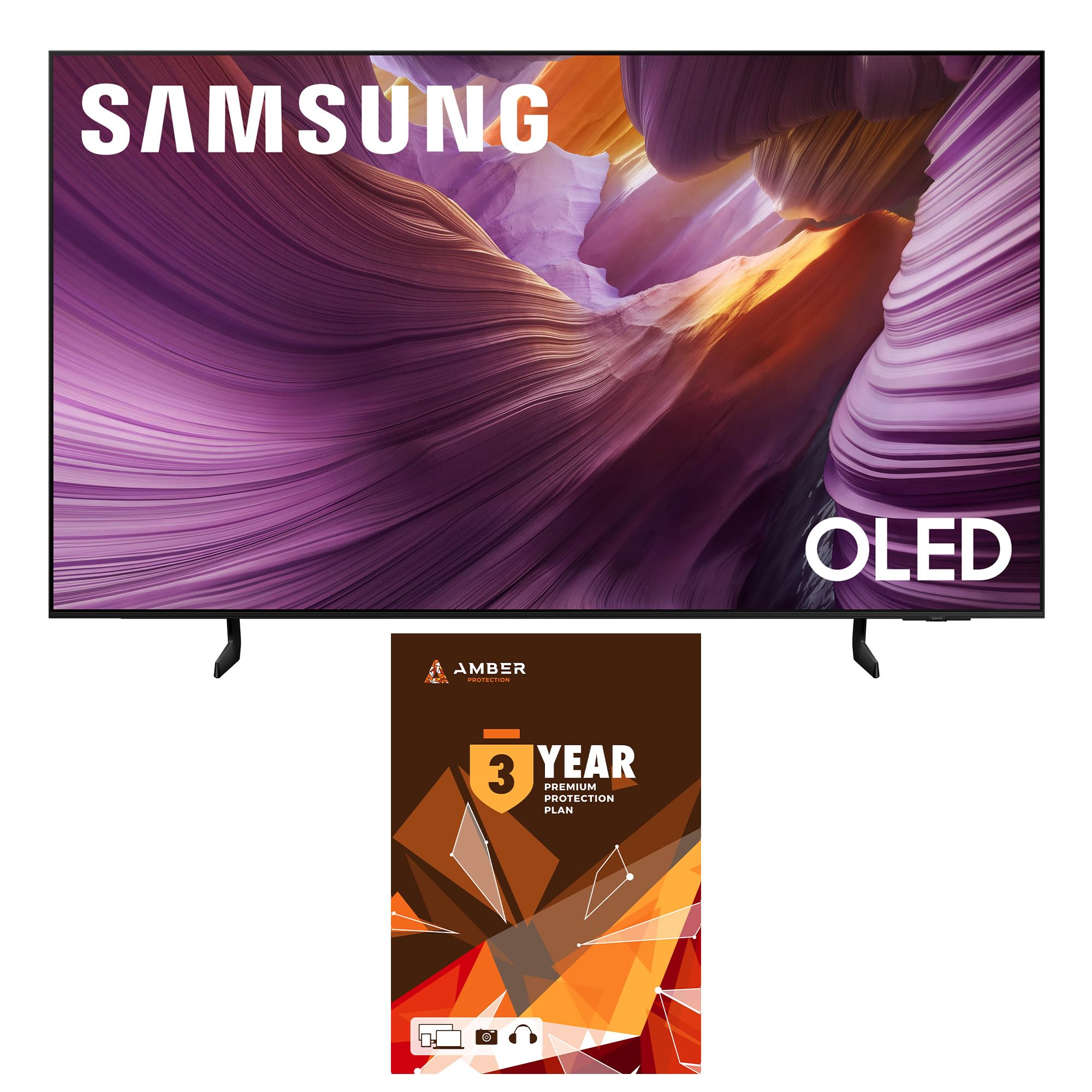
The Samsung S85D (model QN55S85FAFXZA) is the most accessible entry point into OLED ownership in this lineup. Despite the lower tier positioning, it still packs the NQ4 AI Gen2 Processor, Pantone-validated color, and a 120Hz refresh rate that covers console gaming at 4K. The OLED HDR and Ultra Viewing Angle ensure that the picture remains consistent even when viewed from the side of the room.
The Tizen Smart TV platform provides access to all major streaming apps, and the bundle includes a 2-year Amber Protection plan and a screen cleaning kit. Q-Symphony Pro syncs the TV speakers with a compatible Samsung soundbar for a wider soundstage. Active Voice Amplifier Pro boosts dialogue clarity during quiet scenes — a genuinely useful feature for movie nights.
The main compromises versus higher-tier models are lower peak brightness (roughly 600-700 nits) and a glossy screen that reflects ambient light. The 120Hz panel lacks the 144Hz or 165Hz headroom that PC gamers prefer. For a family room where the primary use is streaming, sports, and casual gaming, the S85D delivers the OLED experience at the most attainable price point in this guide.
Why it’s great
- Most affordable OLED entry point in the guide
- NQ4 AI Gen2 Processor with 4K AI Upscaling
- Q-Symphony Pro for improved soundstage
- Included 2-year protection plan and cleaning kit
Good to know
- Glossy screen reflects ambient light
- Lower peak brightness than higher-tier OLEDs
- 120Hz refresh rate, not 144Hz or 165Hz
8. LG C4 OLED55C4PUA

The LG C4 occupies a sweet spot for gamers who want high refresh rates without stepping up to the G-series. Its 144Hz native panel, 0.1ms response time, and four HDMI 2.1 ports make it a perfect companion for both PS5 and high-end PC gaming. The A9 AI Gen7 Processor delivers excellent AI Super Upscaling that keeps lower-resolution content looking sharp, and the Brightness Booster enhances HDR highlight pop.
Dolby Vision and Dolby Atmos are both supported, and Filmmaker Mode preserves the original creative intent for movies. The webOS Re:New Program guarantees five years of software updates. The Magic Remote with pointer functionality makes navigation fast, though some users find the pointer cursor imprecise for text entry.
Built-in sound is adequate for casual viewing but lacks the bass and clarity for an immersive home theater experience — a soundbar is a worthwhile addition. The glossy panel reflects overhead lights and windows, so the C4 performs best in a controlled lighting environment. For the combination of 144Hz gaming, Dolby Vision, and strong AI processing at a mid-range price, the C4 is difficult to beat.
Why it’s great
- 144Hz refresh rate with G-Sync and FreeSync Premium
- Four HDMI 2.1 ports for multi-device setups
- Excellent AI Super Upscaling by A9 Gen7 processor
- Five years of webOS Re:New software updates
Good to know
- Glossy screen requires controlled room lighting
- Built-in sound benefits from an external soundbar
- Magic Remote pointer accuracy could be better
9. LG C3 OLED55C3PUA

The LG C3 is the previous generation of LG’s popular C-series, but its performance remains highly competitive for any buyer who prioritizes a balanced movie and gaming experience. The OLED evo panel paired with the A9 AI Gen6 Processor delivers the same infinite contrast and vibrant color that made the C-series famous, and the Brightness Booster provides enough luminance for most dim-to-moderate lighting conditions.
Gaming features include a 120Hz native refresh rate, 0.1ms response time, and four HDMI 2.1 ports with NVIDIA G-Sync and AMD FreeSync Premium support. The ultra-slim design with an almost invisible bezel makes the C3 an attractive addition to any room. Dolby Vision, Dolby Atmos, and Filmmaker Mode are all present, and WebOS 23 provides a clean, fast interface with Quick Cards for grouping apps by category.
The C3 is not as bright as the C4, G4, or G5, so HDR highlights will not pop as dramatically in a bright room. The 120Hz panel also lacks the headroom for 144Hz PC gaming. For a buyer who wants proven OLED performance with reliable gaming features and a lower entry price, the C3 is a savvy pick that still looks outstanding.
Why it’s great
- Proven OLED evo panel with excellent contrast
- Four HDMI 2.1 ports with full gaming features
- Ultra-slim bezel for clean aesthetics
- Dolby Vision and Filmmaker Mode supported
Good to know
- Lower peak brightness than current-gen models
- 120Hz refresh rate, not 144Hz or higher
- Remote control hard to use in the dark
10. Sony BRAVIA 8 II K-65XR80M2
This is the 65-inch variant of the Sony BRAVIA 8 II covered earlier, and it shares the same QD-OLED panel, XR Processor, and studio-calibrated picture modes. The larger screen size makes it more immersive for cinematic content and PS5 gaming, and the Acoustic Surface Audio+ technology produces surprisingly directional sound from behind the screen. The XR Triluminos Max delivers billions of colors with exceptional accuracy.
The exclusive PlayStation 5 features — Auto HDR Tone Mapping and Auto Genre Picture Mode — work seamlessly, detecting when a game or movie is playing and adjusting settings without manual input. Google TV provides a clean streaming interface, and Sony Pictures CORE includes five 4K movie credits. Dolby Vision and Atmos are both supported, and the IMAX Enhanced mode adds another layer of content compatibility.
As with the 55-inch version, some units have experienced audio distortion issues that required repair. The Google TV interface also requires accepting multiple privacy agreements during initial setup, which some users find frustrating. For a PS5 owner who wants the largest possible Sony OLED experience with the best image processing in the industry, this 65-inch model is the clear choice.
Why it’s great
- 65-inch QD-OLED with best-in-class XR processing
- Seamless PS5 Auto HDR and Genre Mode
- Studio-calibrated modes for major streaming apps
- Acoustic Surface Audio+ delivers immersive sound
Good to know
- Audio distortion issues reported on some units
- Google TV requires privacy agreement acceptance
- Heavy panel requires two-person installation
11. Panasonic Z8 77Z8BAP
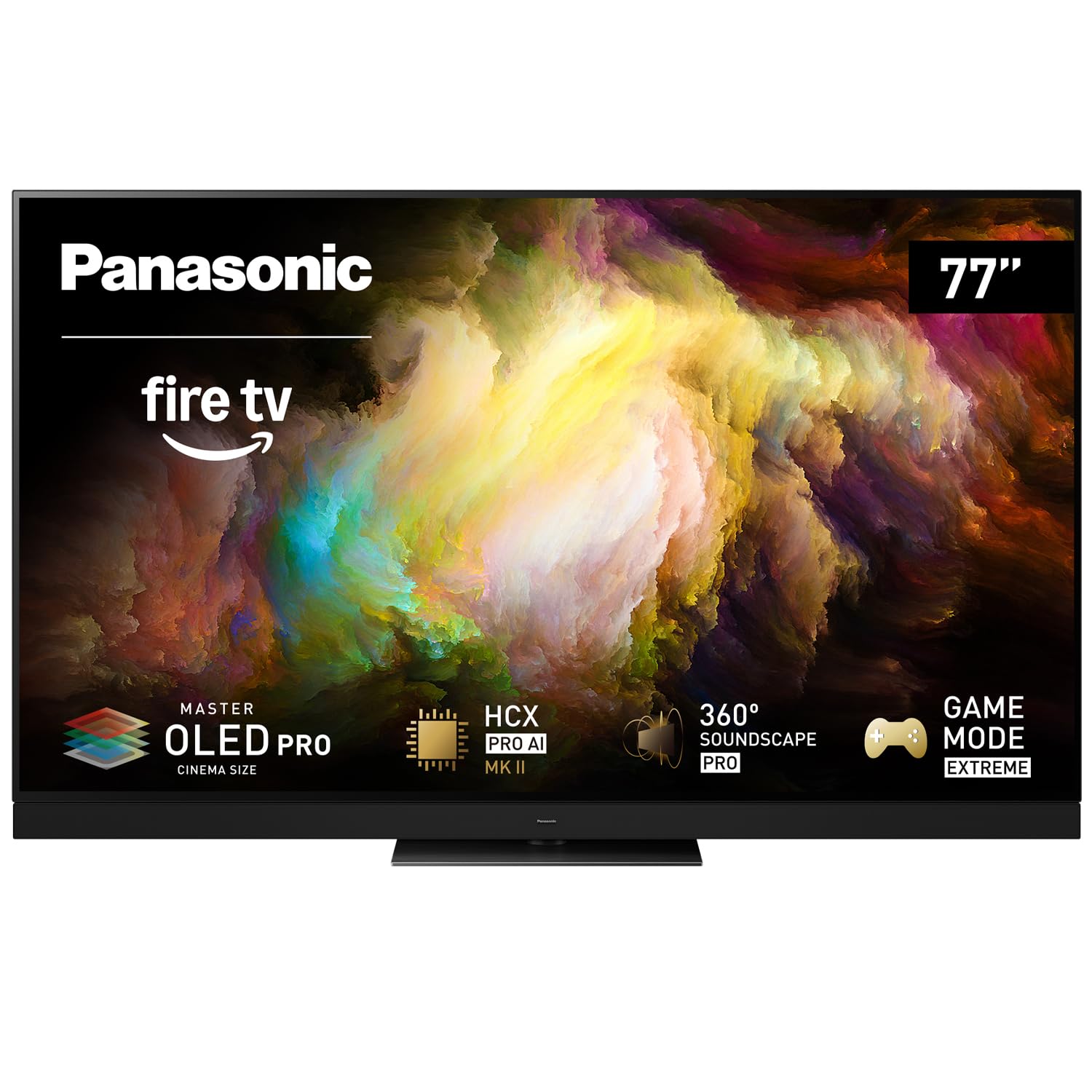
Panasonic’s Z8 series brings the brand’s renowned HCX Pro AI Processor MKII and Master OLED PRO panel to a 77-inch canvas, though the 55-inch and 65-inch variants follow the same formula. The micro-lens-array technology on this panel enhances brightness and contrast beyond standard OLED limits, and the 360 Soundscape Pro system tuned by Technics delivers a 170-watt audio experience that competes with budget soundbars.
Game Mode Extreme supports HDMI 2.1 features including 144Hz, VRR, AMD FreeSync Premium, and NVIDIA G-Sync. The Game Control Board lets you monitor input lag, frame rate, and HDR status in real time. Fire TV built-in provides Alexa voice control and a vast app library, though the interface can feel busy compared to webOS or Google TV.
The panel is heavy and requires a sturdy mount or stand. The built-in media player lacks support for some codecs, so an external streaming device may be needed for niche file formats. For the combination of Panasonic’s legendary color science, multi-HDR support (including Dolby Vision IQ and HDR10+ Adaptive), and a high-power audio system, the Z8 is a unique offering in the OLED landscape.
Why it’s great
- Master OLED PRO panel with micro-lens-array
- 170W 360 Soundscape Pro audio system
- 144Hz gaming with VRR, G-Sync, and FreeSync
- Supports Dolby Vision IQ and HDR10+ Adaptive
Good to know
- Very heavy — requires sturdy mounting
- Built-in media player has limited codec support
- Fire TV interface can feel cluttered
12. LG B5 OLED83B5PUA
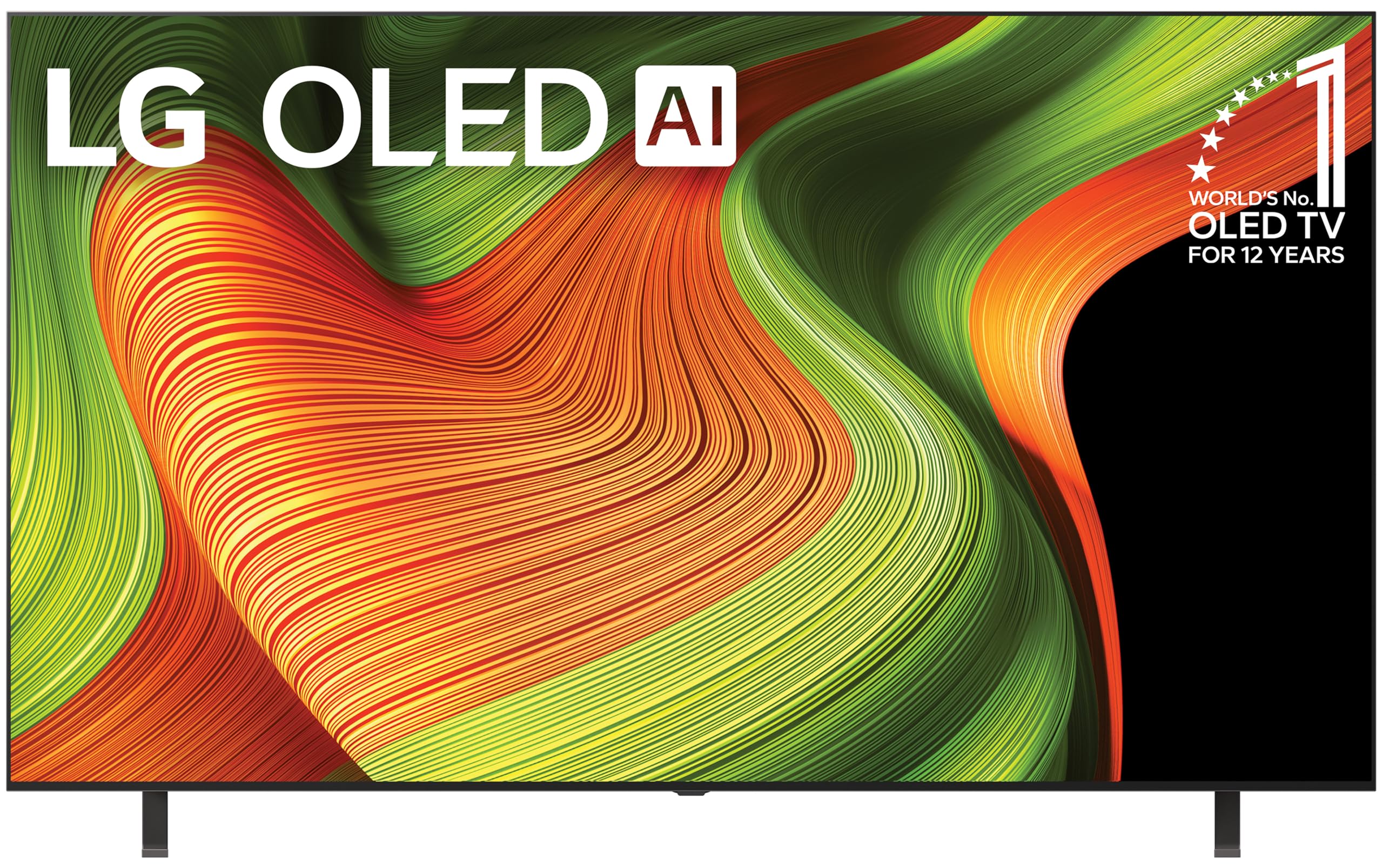
The LG B5 is LG’s entry-level OLED series, but at 83 inches, it delivers an enormous screen with true OLED black levels at a much lower price than the C or G series of the same size. The Alpha 8 AI Gen2 Processor handles upscaling and AI sound tuning, and the Perfect Black and Perfect Color technologies ensure the signature OLED contrast and color volume are intact. The 120Hz panel with G-Sync, FreeSync Premium, and VRR provides solid gaming performance.
The B5 supports Dolby Vision, Dolby Atmos, and Filmmaker Mode, so movie enthusiasts will not miss the HDR features found on pricier models. The webOS platform with AI Concierge personalizes content recommendations based on viewing habits, and the LG Channels service offers over 350 free channels. The Personalized Picture & Sound Wizard uses AI to analyze your preferences and automatically tune the display and audio.
The B5 is noticeably less bright than the C4, G4, or G5, so HDR performance in bright rooms is limited. The 120Hz refresh rate also lacks the headroom for 144Hz PC gaming. For a buyer who wants the immersive impact of a massive OLED screen without paying the premium for higher-tier brightness and refresh rate, the 83-inch B5 delivers exceptional scale for the price.
Why it’s great
- 83-inch OLED at an accessible price point
- Perfect Black and Perfect Color with true OLED contrast
- Dolby Vision, Atmos, and Filmmaker Mode support
- AI-powered Personalized Picture & Sound Wizard
Good to know
- Lower peak brightness than C and G series
- 120Hz refresh rate, not 144Hz or 165Hz
- Requires two or more people for installation
FAQ
Is a 120Hz OLED TV enough for PS5 and Xbox Series X?
Does burn-in still affect modern OLED TVs?
Should I buy a glossy or matte anti-glare OLED TV?
Is Dolby Vision worth paying extra over HDR10+?
Final Thoughts: The Verdict
For most users, the best 55 inch oled tv winner is the LG G5 OLED55G5WUA because its Brightness Booster Ultimate, 165Hz gaming support, and five-year software update guarantee set the standard for what a 55-inch OLED should deliver. If you want a matte screen that kills reflections in a bright living room, grab the Samsung S95F. And for reference-grade color accuracy and seamless PS5 integration, nothing beats the Sony BRAVIA 8 II.