
Our readers keep the lights on and the weekend projects moving. As an Amazon Associate, I earn from qualifying purchases.
Plugging your guitar directly into a computer’s built-in input is a shortcut to thin, noisy, and frustrating recordings. An audio interface solves that by providing high-impedance instrument inputs, premium preamps, and low-latency monitoring that preserve the natural character of your pickups and your playing dynamics. This guide is built around the specific needs of guitarists—whether you are tracking single-coil clean lines, high-gain metal riffs, or acoustic fingerstyle pieces, the right interface captures the transient detail and warmth your guitar deserves.
I’m Rikta — the co-founder and writer behind FitlyFast. I’ve spent many hours dissecting the technical specifications and market positioning of over fifty different audio interfaces to understand exactly which preamp topologies, converter chips, and connectivity options matter most when you’re plugging in a guitar.
Below you will find rigorous hands-on research and detailed comparisons to help you select the best audio interface for guitar, covering everything from entry-level bus-powered units to professional rack-mountable systems that handle a full pedalboard and beyond.
How To Choose The Best Audio Interface For Guitar
Guitar recording presents unique electrical demands that a standard microphone preamp cannot address. Your pickups output a high-impedance, unbalanced signal that must be properly conditioned before conversion. Choosing the right interface means understanding a few guitar-centric specs rather than general audio interface features.
Hi-Z Instrument Input Is Non-Negotiable
Every dedicated guitar interface includes a 1/4-inch instrument input with a high-impedance (Hi-Z) circuit that matches your passive pickups. Without it, your tone will sound dull and lifeless—the high-frequency content rolls off and you lose the distinctive voice of your guitar. If you use active pickups, a Hi-Z input provides a clean signal path, but passive pickups absolutely require it.
Preamps and Headroom
Guitar preamps in an audio interface handle the raw signal before conversion. A preamp with more headroom allows you to record hot DI signals without digital clipping. For clean tones, higher headroom preserves transient peaks. For high-gain players, plenty of headroom captures the full dynamic range of chugs and palm mutes without distortion. Mid-range and premium interfaces typically offer superior preamp circuits—Midas, Focusrite Air, and Universal Audio Unison are examples of preamp designs that significantly shape your recorded DI tone.
Latency and Monitoring
Latency is the delay between playing a note and hearing it through your headphones. For real-time guitar tracking, anything under 10 milliseconds is acceptable, but lower is always better. Direct monitoring—where the interface sends the input signal straight to headphones without passing through your computer—eliminates latency entirely. Some premium units offer DSP-powered zero-latency monitoring with effects (like UAD’s Unison preamps) that model amp and pedal chains directly on the interface hardware.
Inputs, Outputs, and Expansion
Consider how many sources you need to record simultaneously. A single guitarist with one mic on their amp and one DI guitar track needs at least two inputs. If you plan to record a band, you need eight or more inputs with expandability via ADAT. The Focusrite 4i4 and MOTU M4 provide four inputs, while the Behringer UMC1820 offers eight plus ADAT expansion for future growth. Guitarists also benefit from at least one headphone output with independent volume control for zero-latency monitoring. A dedicated loopback output (common on MOTU M4 and Focusrite 4th Gen) is invaluable for streaming and live content creation.
Quick Comparison
On smaller screens, swipe sideways to see the full table.
| Model | Category | Best For | Key Spec | Amazon |
|---|---|---|---|---|
| RME Babyface Pro FS | Premium | Zero-latency tracking & pro stability | 24-in / 24-out, SteadyClock FS, 192kHz | Amazon |
| UA Apollo Solo Heritage | Premium | UAD Unison preamps & real-time FX | Unison preamp, UAD SOLO Core, 192kHz | Amazon |
| Focusrite Scarlett 4i4 4th Gen | Mid-Range | Multi-source singer-songwriter & content creator | 120dB dynamic range, Auto Gain, Clip Safe | Amazon |
| MOTU M4 | Mid-Range | Transparent preamps with LCD metering | 4-in/4-out, 192kHz, loopback, LCD screen | Amazon |
| Behringer UMC1820 | Mid-Range | Multi-channel home studio (8 preamps) | 18×20 USB 2.0, Midas preamps, ADAT I/O | Amazon |
| Universal Audio Volt 1 | Mid-Range | Vintage 610 preamp color at a value price | Vintage mode, 24-bit/192kHz, MIDI I/O | Amazon |
| Valeton GP-100 | Budget | All-in-one guitar multi-FX & recording | 140 effects, 45 amp models, IR support | Amazon |
| Focusrite Scarlett Solo 3rd Gen | Entry-Level | First-time guitarist recording DI or amp | Air mode, 24-bit/192kHz, 2 inputs | Amazon |
| Arturia MiniFuse 1 | Entry-Level | Ultra-portable travel setup with USB hub | 192kHz, 5-year warranty, USB hub | Amazon |
In‑Depth Reviews
1. RME Babyface Pro FS
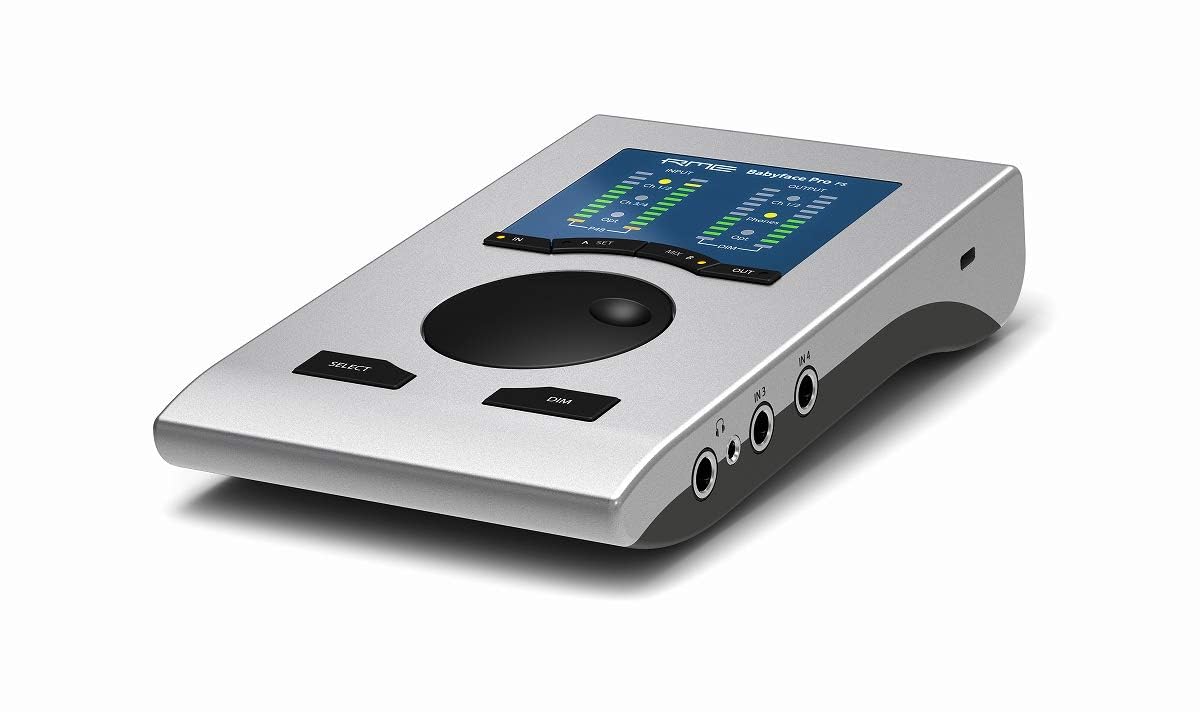
The RME Babyface Pro FS is widely regarded as the gold standard for mobile recording due to its rock-solid driver stability and SteadyClock FS jitter-suppression circuit—a feature derived from RME’s flagship ADI-2 Pro. For guitarists, the two instrument inputs deliver exceptionally clean and quiet DI signals with vanishingly low noise floor, preserving every nuance of your pick attack and string resonance. The rugged aluminum chassis fits in a backpack, making it ideal for session players moving between home studios and rehearsal spaces.
What sets the Babyface Pro FS apart is its near-zero latency performance—RME advertises just 5 samples on the AD conversion side and 7 on DA, which translates to practically imperceptible delay when monitoring through your DAW. The TotalMix FX software provides flexible routing, including a loopback function for streaming. Drivers are legendary in the Windows ecosystem, and the interface works seamlessly across Mac and PC without the installation headaches seen in some competitors.
The high price point positions this as a long-term investment for serious recording musicians. The preamps are clean rather than colored—perfect if you prefer to add character through external outboard gear or plugins. However, it lacks built-in DSP effects and its headphone output, while adequate for critical monitoring, may not drive high-impedance cans to ear-splitting levels without an external amp. For guitarists who demand bulletproof reliability and pristine conversion, the Babyface Pro FS justifies its premium.
Why it’s great
- Industry-leading driver stability across Windows and macOS
- SteadyClock FS ensures ultra-low jitter for clean, transparent sound
- Extremely low latency (5 samples AD) for real-time monitoring
- Compact, rugged build that survives frequent transport
Good to know
- Premium price may be overkill for hobbyists with simple needs
- Headphone output is sufficient but not exceptional for very high-impedance headphones
- No built-in DSP effects—requires external processing
2. Universal Audio Apollo Solo Heritage Edition

The Apollo Solo Heritage Edition delivers the same Unison preamp technology found in UA’s flagship rack units, allowing your guitar signal to interact with modeled circuits for preamp and amp emulations at the input stage—before it reaches the DAW. For guitarists, this means plugging into a real-time simulation of a Neve, API, or Avalon preamp, or even a Fender or Marshall amplifier, with zero-latency monitoring directly through the hardware. It effectively replaces the need for outboard preamps for many recording scenarios.
The Heritage Edition bundles five premium UAD plugins from Teletronix, Pultec, and UA valued at over , including the LA-2A compressor and 1176 limiter. The UAD SOLO Core chip handles these plugins at near-zero latency, making it possible to track with compression and EQ printed to tape without any delay. The best-in-class headphone amplifier delivers loud, detailed monitoring even with 250-ohm headphones, which is crucial for critical tracking sessions.
Setting up the Apollo Solo on Windows can be temperamental—several users report USB recognition issues that require specific cables and multiple driver installations. macOS compatibility is generally solid, but UAD has historically lagged behind new Apple OS releases by several months. For guitarists deeply invested in UAD’s plugin ecosystem who want to track with real-time amp sims and compressors, the Apollo Solo is unmatched. Those who prefer a simpler plug-and-play workflow may find the setup friction outweighs the benefits.
Why it’s great
- Unison preamps model iconic Neve, API, and Avalon circuits at the input stage
- Zero-latency DSP monitoring with UAD plugins while tracking
- Includes worth of premium heritage plugins
- Excellent headphone amplifier for high-impedance monitoring
Good to know
- Windows driver setup can be frustrating with USB recognition issues
- UAD plugin ecosystem is expensive if you expand beyond the bundle
- Updates lag behind major macOS releases by months
3. Focusrite Scarlett 4i4 4th Gen
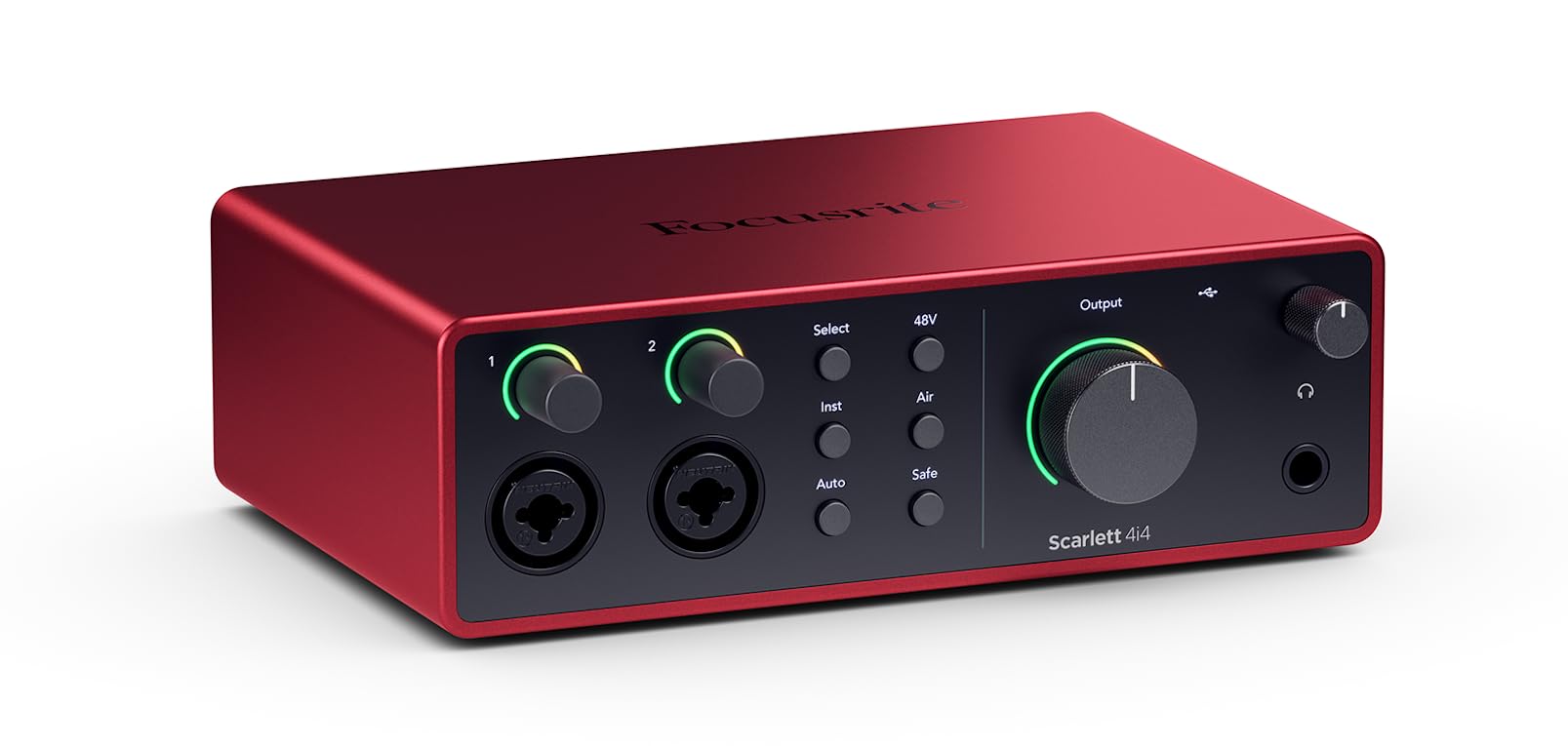
The 4th generation of Focusrite’s revered Scarlett series brings professional-grade converters with a 120dB dynamic range, matching the performance of Focusrite’s flagship RedNet line found in major commercial studios. For guitarists, this translates to exceptionally clean DI signals with wide headroom, preserving the full transient response of aggressive palm-muting or delicate fingerpicking. The two Hi-Z instrument inputs accept both passive and active pickups without impedance mismatch, and the Air mode adds a subtle presence boost that helps electric guitars cut through a dense mix.
New features like Auto Gain and Clip Safe are genuinely useful for guitarists who want to focus on playing rather than gain-staging. Auto Gain automatically sets the optimal input level for your guitar, while Clip Safe prevents clipping during loud passages—no more ruined takes from accidentally hitting the red zone. The 4th Gen also includes MIDI I/O, four line outputs for monitor setups, and a dedicated power supply that ensures consistent performance even on bus-powered fragile laptops.
The Scarlett 4i4 is priced as a mid-range workhorse, but the 4th Gen improvements make it competitive with units costing significantly more. One limitation is that only two of the four analog inputs support XLR microphones—the other two are 1/4-inch line ins. For guitarists who also record vocals, this is perfectly fine. The bundled software suite (Pro Tools Intro+, Ableton Live Lite, Cubase LE, and Hitmaker Expansion) provides all the tools needed to start recording immediately.
Why it’s great
- 120dB dynamic range rivals professional studio interfaces
- Auto Gain and Clip Safe prevent ruined takes from level spikes
- Air mode adds presence and clarity to guitar DI signals
- MIDI I/O and loopback functionality for content creators
Good to know
- Only two of four inputs are XLR; others are 1/4-inch line
- Requires external power supply (not bus-powered)
- Driver issues with some PC games reported by users
4. MOTU M4

The MOTU M4 is a 4-in/4-out USB-C interface that prioritizes audio transparency above all else. Its preamps are exceptionally clean with a noise floor and distortion spec that rivals interfaces costing twice as much. For guitarists who want to capture a pure DI signal and add tone later through plugins or re-amping, the M4 delivers an uncolored, high-headroom baseline. The included LCD screen shows real-time input and output levels, making gain-staging precise and eliminating guesswork.
Independent volume controls for both the monitor outputs and headphone outputs are a standout quality-of-life feature. You can set your studio monitor volume independently from your headphone mix—no more climbing out of the chair to adjust both. The front-panel 48V phantom power switches and Hi-Z input toggle are easy to reach during a session. The loopback output is built in without needing additional software, making the M4 a strong contender for live streaming and podcasting alongside guitar recording.
MOTU’s ASIO drivers on Windows are among the most stable in the industry, second only to RME in reliability. The M4 is bus-powered over USB-C, which means it draws power from your computer without an external brick—great for mobile recording with a laptop. Some users note that the volume knobs have a dead zone in the first 25% of rotation where no output is heard, which can be slightly annoying in low-volume sessions. For pure signal fidelity at a mid-range price, the M4 is hard to beat.
Why it’s great
- Transparent, ultra-low noise preamps ideal for clean DI and re-amping
- Real-time LCD level meters for precise gain staging
- Independent monitor and headphone volume controls
- Built-in loopback for streaming and content creation
Good to know
- Volume knobs have a dead zone in the first 25% of rotation
- Headphone output is adequate but not exceptionally powerful
- No DSP effects or built-in guitar amp simulations
5. Behringer UMC1820

The UMC1820 is a half-rack 18×20 USB 2.0 interface that provides eight Midas-designed mic preamps with a clean, neutral character that rivals preamps from much more expensive brands. For guitarists recording full bands or multiple DI sources simultaneously, the eight combo inputs allow you to set up multiple microphones on a guitar cabinet, a DI track, and a vocal mic without repatching. The ADAT I/O lets you expand to 16 inputs by connecting an external preamp like the Behringer ADA8200.
The Midas preamps deliver a transparent foundation that works well for both clean and high-gain guitar tones. They offer plenty of headroom—you can push a hot active pickup without hitting digital distortion. The UMC1820 also features a built-in MIDI I/O and operates at up to 24-bit/96kHz resolution, which is more than sufficient for most home studio applications. The plug-and-play compatibility with Mac and Windows is straightforward, requiring no additional driver installations for basic functionality.
The unit is rack-mountable, which is a plus for permanent studio installations but makes it bulkier than desktop-focused interfaces. Some users note that the USB 2.0 connection, while stable, limits the maximum sample rate to 96kHz compared to the 192kHz offered by many competitors in the same price bracket. For most guitar recording, 96kHz is more than adequate, but if you need the absolute highest sample rates for pitch manipulation or time-stretching, consider alternatives. The UMC1820 offers exceptional value for multi-channel recording.
Why it’s great
- Eight Midas preamps provide clean, neutral sound at a budget-friendly price
- ADAT expansion allows up to 16 inputs for full band recording
- Rack-mountable format suits permanent studio installations
- Reliable plug-and-play on Mac and Windows
Good to know
- Maximum sample rate limited to 96kHz (not 192kHz)
- Bulky half-rack form factor is not portable
- USB 2.0 may introduce slightly higher latency than USB 3.0 alternatives
6. Universal Audio Volt 1

The UA Volt 1 brings a taste of Universal Audio’s legendary 610 vacuum tube preamp circuitry into a compact, affordable format through its Vintage mode circuit. Engaging the Vintage mode adds subtle harmonic saturation and a gentle mid-frequency emphasis that mimics the character of UA’s classic tube console preamps—perfect for warming up sterile DI guitar signals or adding analog presence to amp sims. At this price point, there is no other interface offering a similar analog color option built directly into the hardware.
The Volt 1 records at up to 24-bit/192kHz with crystal-clear converters, and includes MIDI I/O—a rarity in this price class that allows you to connect MIDI controllers, drum machines, or synchronize with external gear. The zero-latency monitoring switch lets you hear your guitar input directly, while the bundled LUNA DAW, Ableton Live Lite, and Melodyne provide a complete production environment. The analog controls feel premium, with large, smooth-turning knobs that inspire confidence during sessions.
The single combo input means you can connect either a microphone or an instrument, but not both simultaneously—a limitation for vocalists who want to record guitar and voice at the same time. The Vintage mode is subtle rather than transformative, so players expecting a drastic tube preamp effect may be underwhelmed. It requires an external power supply for mobile use with iOS devices, adding one extra cable to your setup. For guitarists who want a touch of analog magic in their DI chain without breaking the bank, the Volt 1 is a smart choice.
Why it’s great
- Vintage mode adds analog tube-like saturation to guitar DI signals
- MIDI I/O included at a very accessible price point
- Premium-feeling analog controls and compact desktop footprint
- Bundled with LUNA DAW, Ableton Live Lite, and Melodyne
Good to know
- Only one combo input limits simultaneous mic and instrument recording
- Vintage effect is subtle, not a full tube preamp replacement
- Requires external power for iOS mobile use
7. Valeton GP-100

The Valeton GP-100 is not a traditional audio interface—it is a full-featured multi-effects processor with a built-in USB audio interface, designed specifically for guitarists and bassists. It packs 140 effects including distortions, modulations, delays, reverbs, and pitch-shifting, plus 45 legendary amp models and 40 IR cabinet simulations. This makes it an all-in-one solution for guitarists who want to practice, record, and perform with a single unit that replaces both a pedalboard and an interface.
The USB audio interface streams stereo audio at 24-bit/44.1kHz with OTG support, meaning you can connect directly to iOS and Android devices for mobile recording without a computer. The 100 built-in drum rhythms and 90-second looper are excellent practice tools. The expression pedal controls wah, volume, or any assignable parameter in real time. The all-metal chassis is rugged enough for live performance, and the bright color display is readable even on dark stages.
The audio interface functionality is secondary to the effects engine—sample rate is capped at 44.1kHz, and the converters are not as neutral as dedicated interfaces. The USB connectivity may introduce slightly higher latency than a standalone interface, and the patch-building system limits you to one effect per type per chain. For guitarists who need a portable all-in-one for practice and recording on the go, the GP-100 is incredibly versatile. For critical DI tracking where pure preamp quality matters most, a dedicated interface plus separate pedals or plugins remains the better route.
Why it’s great
- Complete multi-effects, amp modeling, and IR cab sim in one unit
- Built-in looper and drum rhythms ideal for practice and writing
- OTG support for direct connection to phones and tablets
- Rugged all-metal body suitable for stage use
Good to know
- Sample rate limited to 44.1kHz—not suitable for archival-grade recording
- Audio interface latency is higher than dedicated units
- Patch editing is limited; only one effect type per block
8. Focusrite Scarlett Solo 3rd Gen

The Focusrite Scarlett Solo 3rd Gen has become the default recommendation for beginner guitarists and for good reason. It provides one dedicated Hi-Z instrument input and one XLR mic input with a switchable Air mode that emulates the high-frequency lift of Focusrite’s classic ISA preamps. Plugging a Stratocaster or Les Paul into the instrument input delivers a clean, defined signal that retains the natural character of the pickups—no impedance mismatch dulling your tone. The Gain Halo ring around the input knob lights green for optimal signal and red for clipping, making gain staging immediately visual.
The 3rd Gen records at up to 24-bit/192kHz, which is overkill for most guitar applications but provides plenty of headroom for capturing transients without distortion. The USB-C connectivity ensures broad compatibility with modern laptops, and the interface is bus-powered—no external power supply needed. The bundled software includes Pro Tools Intro+, Ableton Live Lite, Cubase LE, and the Hitmaker Expansion pack, which offers a collection of studio-grade effects and virtual instruments that make it easy to start producing full tracks out of the box.
The single instrument input limits you to one guitar at a time, and the lack of MIDI I/O means you cannot connect a MIDI controller directly without a separate USB interface. The 3rd Gen design is now two generations old; the 4th Gen Scarletts offer improvements like Auto Gain and higher dynamic range. For its low entry price, the Scarlett Solo 3rd Gen remains an excellent starting point for any guitarist stepping into home recording. It is reliable, well-supported, and produces results that far exceed what the price suggests.
Why it’s great
- Industry-standard entry-level interface with proven reliability
- Air mode adds clarity and presence to acoustic and electric DI signals
- Gain Halo provides intuitive visual feedback for input levels
- Record at 24-bit/192kHz with bus-powered USB-C connectivity
Good to know
- Single instrument input limits simultaneous guitar recording
- No MIDI I/O—requires USB MIDI controller connection
- 3rd Gen is being superseded by 4th Gen features (Auto Gain, 120dB range)
9. Arturia MiniFuse 1
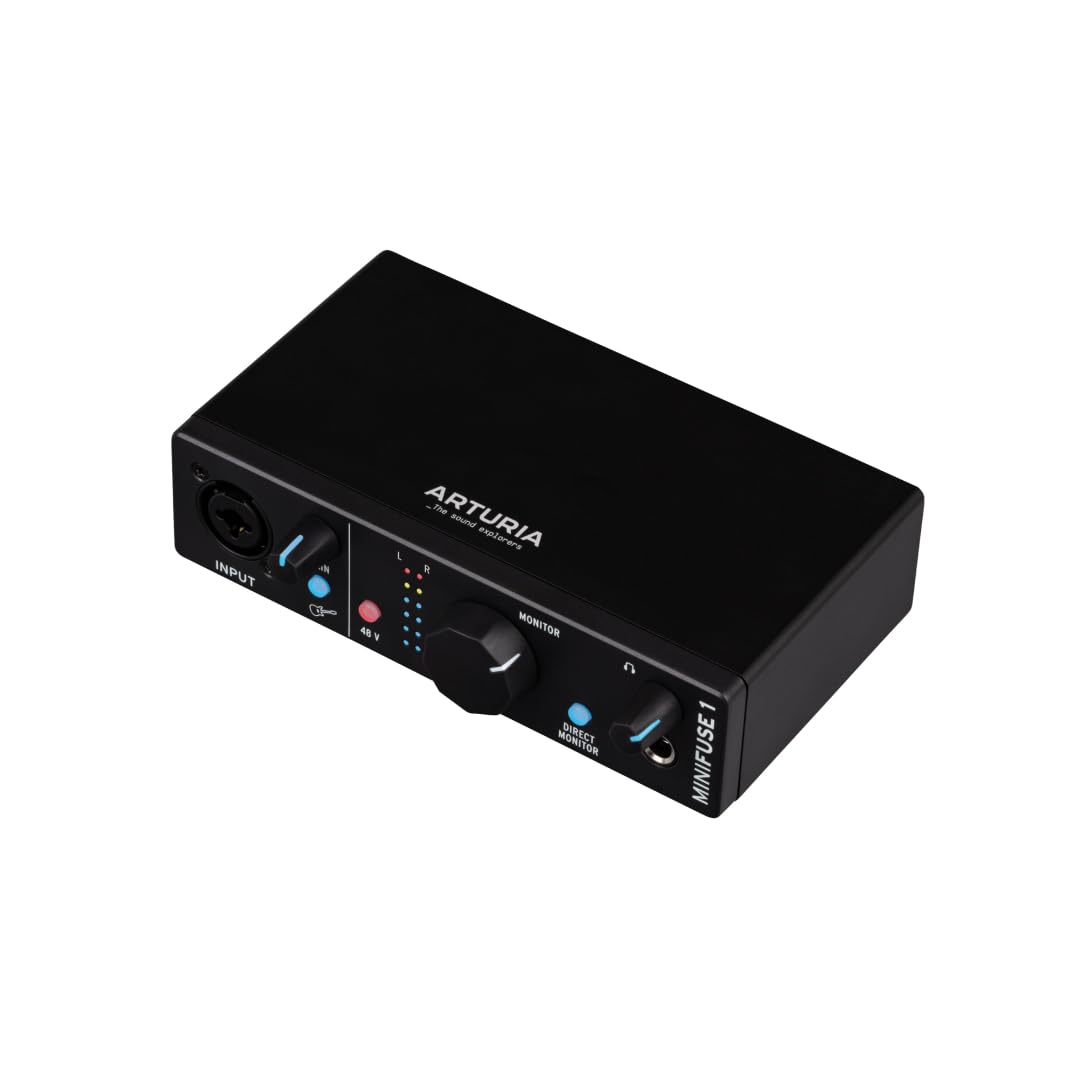
The Arturia MiniFuse 1 is a compact, affordable interface that punches above its weight class with a 5-year warranty and a built-in USB-A hub—a very practical addition for guitarists who need to plug in a USB MIDI controller, an expression pedal, or a wireless receiver without occupying a second laptop port. It records at up to 24-bit/192kHz and includes one combo input (XLR + 1/4-inch Hi-Z) plus a dedicated 1/4-inch line input for a second instrument, effectively offering two inputs in a single-channel chassis. The direct monitoring switch eliminates latency during tracking.
The bundled software is generous: Ableton Live Lite, Analog Lab Intro, Native Instruments GUITAR RIG 6 LE, Arturia FX, and Auto-Tune Unlimited. GUITAR RIG 6 LE alone provides a comprehensive suite of amp and pedal simulations that cover clean, crunch, and high-gain tones. The interface is USB-C bus-powered and incredibly portable—dimensions of 5.9 x 3.9 x 1.6 inches and weight under 12 ounces make it easy to slip into a gig bag or laptop case. The build quality feels sturdy, with a metal chassis that passed over 200 reliability tests.
The MiniFuse 1 does not include MIDI I/O, which may disappoint keyboardists, and the headphone output is best suited for standard studio headphones rather than high-impedance models. Some users report that the interface occasionally requires a reboot after initial driver installation to be recognized by the operating system. For the price-conscious guitarist who values portability, a long warranty, and a thoughtful extra (the USB hub), the MiniFuse 1 is an excellent value proposition.
Why it’s great
- 5-year warranty provides long-term peace of mind
- Built-in USB-A hub expands laptop connectivity
- Bundled with GUITAR RIG 6 LE for full amp and pedal sims
- Ultra-compact and lightweight for mobile recording
Good to know
- No MIDI I/O for direct keyboard connection
- Headphone output may struggle with very high-impedance headphones
- Occasional driver detection issues that require a reboot
FAQ
Can I plug my guitar directly into a USB audio interface?
What is the difference between active and passive DI inputs for guitar?
Do I need a DI box if I already have an audio interface?
How many inputs do I need for recording guitar at home?
Does a higher sample rate actually improve guitar recordings?
Final Thoughts: The Verdict
For most users, the best audio interface for guitar winner is the RME Babyface Pro FS because its unmatched driver stability, SteadyClock FS jitter reduction, and virtually zero-latency performance make it the most reliable and sonically transparent option for serious guitar recording. If you want real-time UAD amp emulations and vintage preamp color recorded directly onto your tracks, grab the Universal Audio Apollo Solo Heritage Edition. And for an affordable everyday interface that delivers excellent build quality, a long warranty, and a handy USB hub for expanding your workstation, nothing beats the Arturia MiniFuse 1.