
Our readers keep the lights on and the weekend projects moving. As an Amazon Associate, I earn from qualifying purchases.
Struggling with bloating, fatigue, brain fog, or mysterious skin flare-ups can feel like a never-ending puzzle where every doctor’s visit ends with “everything looks normal.” The difference between feeling okay and feeling vibrant is often hiding in the subtle signals of your immune and digestive systems, and the only way to catch them is by analyzing specific hormonal and sensitivity markers from the comfort of your own home.
I’m Rikta — the co-founder and writer behind FitlyFast. For this guide, I compiled data from over 1,700 user reviews across seven different autoimmune-screening kits, comparing lab accreditation (CLIA versus CAP), panel depth (number of markers and foods tested), and the type of biological sample required (blood versus hair) to separate meaningful data from wellness fluff.
After cross-referencing independent test results with customer-reported outcomes, one kit consistently helped users identify root-cause triggers while others left them with generic advice — and that is the foundation of my pick for the best at-home autoimmune test.
How To Choose The Best At-Home Autoimmune Test
The at-home autoimmune testing market is a minefield of bioenergetic scans disguised as medical diagnostics and legitimate hormone panels that need careful interpretation. The key is understanding exactly what each test measures, whether it uses a single finger-prick of blood or a hair sample, and whether the lab analyzing your sample is federally certified to produce clinically reproducible results.
Lab Accreditation is Non-Negotiable
CLIA (Clinical Laboratory Improvement Amendments) certification means the lab meets federal standards for accuracy and reliability. CAP (College of American Pathologists) accreditation is even more rigorous — it adds peer-review inspection and proficiency testing. If a test kit does not explicitly state CLIA or CAP certification on its Amazon listing or packaging, you are paying for data that no doctor will consider actionable. For hormonal and autoimmune biomarkers like cortisol, DHEA-S, and TSH, blood analysis in a CLIA-certified lab is the only method with proven reproducibility.
Sample Type Determines What You Can Measure
Hair-based tests (snipping 10-15 strands at the root) are non-invasive and can flag potential food and environmental sensitivities through bioenergetic scanning. These tests are useful as a starting point for dietary awareness, but they are not validated for diagnosing autoimmune conditions or measuring specific hormone levels. Finger-prick blood tests, in contrast, allow for quantitative measurement of stress hormones (cortisol, DHEA-S), female reproductive hormones (estradiol, progesterone, FSH, LH), and thyroid function (TSH). For autoimmune-specific markers like inflammatory cytokines or ANA (antinuclear antibody), a venous blood draw at a physician’s office is still the gold standard, but at-home blood-spot kits can provide strong directional data for adrenal and hormone health.
Panel Breadth vs. Depth: 1000+ Items Isn’t Always Better
It is tempting to buy the test that screens 1,500 items, but the methodology behind that screening matters more than the count. Many 1,000+ item hair tests use a bioenergetic frequency scan (the Voll method) that has been widely criticized for lacking clinical validation. A focused blood test measuring four specific biomarkers (cortisol, DHEA-S, DHEA:Cortisol ratio, and visceral fat) often provides more actionable data because each marker is measured quantitatively with a clear optimal range, rather than being assigned a color-coded level based on a non-standardized bioenergetic algorithm.
Quick Comparison
On smaller screens, swipe sideways to see the full table.
| Model | Category | Best For | Key Spec | Amazon |
|---|---|---|---|---|
| Choose Health 4-in-1 Adrenal Stress | Blood Spot | Adrenal Health & Cortisol | CLIA + CAP accredited | Amazon |
| Choose Health 6-in-1 Female Hormone | Blood Spot | Female Hormone Panel | TSH, E, P, LH, FSH | Amazon |
| Everlywell Metabolism & Stress | Blood Spot | Cortisol & Metabolism | CLIA-certified lab | Amazon |
| UCARI Personal Sensitivity | Hair Sample | Dietary Elimination Guide | 1,500+ items screened | Amazon |
| AFIL 1000+ Food Intolerance | Hair Sample | Broad Food Awareness | ISO/IEC 27001 data protection | Amazon |
| AFIL 350+ Food Focus | Hair Sample | Gluten & Dairy Awareness | 350+ common triggers | Amazon |
| 5Strands Intolerance & Nutrition | Hair Sample | Nutritional Imbalance Check | 1052 items, double-pass analysis | Amazon |
In‑Depth Reviews
1. Choose Health 4-in-1 Cortisol & Adrenal Stress Test

The Choose Health 4-in-1 Adrenal Stress Test stands apart because of its dual lab accreditation — CAP (College of American Pathologists) and CLIA — which is the highest standard available in an at-home kit. This test measures cortisol, DHEA-S, the DHEA:Cortisol ratio (a critical marker for adrenal burnout), and visceral fat using a simple finger-prick blood spot, not a hair sample. For anyone suspecting their autoimmune symptoms are tied to chronic stress or adrenal dysfunction, this provides quantitative biomarker data that can be shared directly with a physician.
Users consistently report that the kit is easy to administer, with clear instructions and a pre-paid return envelope to a third-party accredited lab. Results arrive within 72 hours of sample receipt and are displayed on a personalized Choose Health Dashboard that tracks changes over time — a feature that matters if you plan to retest after implementing diet or lifestyle changes. The visceral fat measurement is an added layer that connects metabolic health to immune function.
The main trade-off is that this test only covers four markers. It does not screen food sensitivities or environmental triggers, so it’s best used as a targeted diagnostic tool for adrenal and stress-related immune dysregulation. A small number of users noted the finger prick required a firm squeeze to get enough blood, but the company has been responsive in sending replacement kits for failed samples.
Why it’s great
- CAP + CLIA dual accreditation ensures physician-ready data
- Measures four key adrenal biomarkers with quantitative ranges
- Personalized dashboard tracks progress over time
Good to know
- Only 4 markers tested; no food sensitivity panel
- Not available in NY and RI
- Blood spot may require extra firm squeeze
2. Choose Health 6-in-1 Female Hormone Test

For women experiencing autoimmune-like symptoms that may be rooted in hormonal imbalance — unexpected hair thinning, joint pain around menstrual cycles, or persistent fatigue — this 6-in-1 panel covers progesterone, estradiol, TSH, FSH, LH, and visceral fat. The same dual CAP + CLIA accreditation applies here, making the results as close to a doctor-ordered lab panel as you can get from a finger prick at home. Thyroid function (TSH) is particularly relevant for autoimmune suspicion since Hashimoto’s is one of the most common undiagnosed autoimmune conditions.
Testers praised the simplicity of registration and the speed of results, with turnaround typically within 5-7 days from mailing. The Choose Health app presents results alongside recommendations that are personalized to the user’s reported diet and exercise habits. This is a rare feature among at-home hormone tests, which usually just hand you numbers without context. The visceral fat measurement is included via waist circumference input, though some users incorrectly assumed a measuring tape would ship with the kit.
A caveat: the kit only includes two lancets, which was insufficient for users with thicker skin who needed multiple attempts to produce enough blood for the sample. The company’s customer service proactively sent replacement tests and extra lancets, but the process took several weeks for those who struggled. If you have a history of poor finger-prick blood flow, plan ahead or request extra lancets.
Why it’s great
- Full female hormone panel with TSH for thyroid screening
- CAP + CLIA certified lab ensures clinical-grade accuracy
- App-based recommendations personalized by diet and lifestyle
Good to know
- Only includes 2 lancets; thicker skin may need extras
- Not available in NY and RI
- Visceral fat measurement requires self-entry of waist size
3. Everlywell Metabolism and Stress Hormone Test
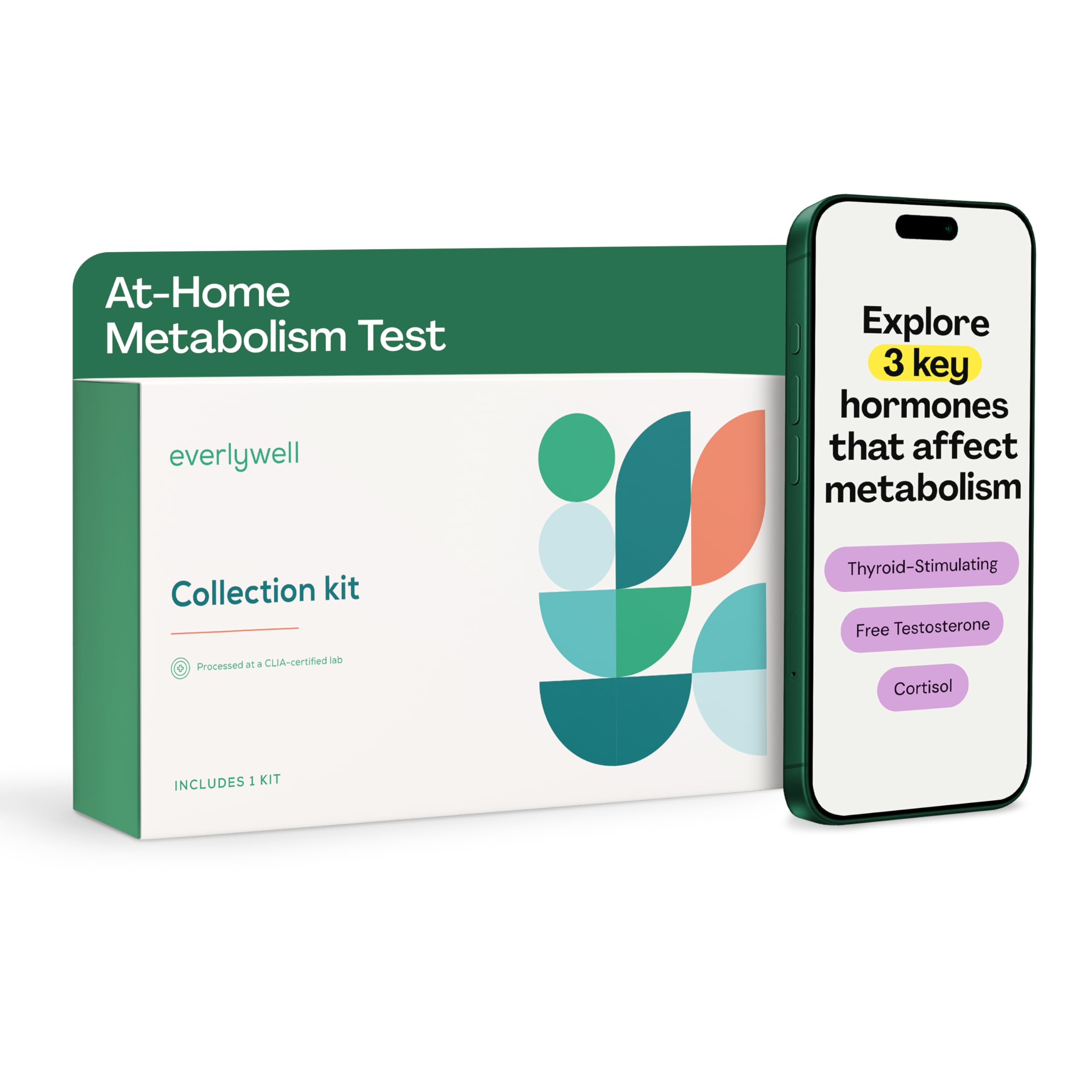
Everlywell is the most recognized name in at-home lab testing, and their Metabolism and Stress Hormone kit focuses on three hormones — cortisol (linked to stress), TSH (thyroid), and free testosterone — that are directly connected to energy, weight management, and immune modulation. The collection kit uses a finger-prick blood spot that is analyzed in a CLIA-certified lab, with results reviewed by a board-certified physician before release. This physician review step adds a layer of accountability that many bioenergetic hair tests lack.
Users consistently describe the instructions as intuitive and the collection process as manageable, even for first-time at-home testers. Results are delivered through an easy-to-read digital dashboard within 5-7 business days of sample receipt. The report is designed to be shared with a primary care doctor, and several reviewers noted that their physicians accepted the Everlywell results as valid data points for further investigation. The test is HSA/FSA eligible, which reduces the out-of-pocket barrier compared to ordering a lab panel through a concierge service.
The primary limitation is the panel scope: three markers is relatively narrow for an autoimmune or stress-related workup. Users looking for a broader adrenal profile (such as DHEA-S or the DHEA:Cortisol ratio) will need to supplement this with a second test. Additionally, several reviewers reported the test is unavailable in New York, and one user in Puerto Rico had their sample rejected after shipping.
Why it’s great
- Physician-reviewed results increase clinical credibility
- CLIA-certified lab analysis with clear digital dashboard
- HSA/FSA eligible and easy to share with your doctor
Good to know
- Only 3 hormone markers — no DHEA-S ratio
- Not available in New York state
- Blood sample rejection reported for non-continental US addresses
4. UCARI Personal Sensitivity Profiling Test

UCARI’s sensitivity profiling test screens 1,500+ items including foods, additives, skincare ingredients, and environmental factors — making it the most comprehensive hair-based screen on this list. The test uses a non-invasive hair sample (about 10 strands near the root) and has a remarkable turnaround time of approximately 2 business days after the sample reaches their US-based lab. The results are color-coded into organized categories that help users structure an elimination diet without needing to guess which foods to start with.
Real-world user reports are divided. Several reviewers saw dramatic and specific results: one user whose severe eye irritation was unhelped by six doctors discovered a severe intolerance to potato that matched their symptom flare-ups. Another user bought the kit after suspecting their dog had a chicken sensitivity, only to find beef was the actual trigger — demonstrating the test’s appeal for both human and pet owners. The downloadable wellness guidance included with the results helps users navigate the elimination process step by step.
The test explicitly states it is not an allergy test and does not diagnose medical conditions — it is a wellness screening tool. Some users found the results contradictory (e.g., coconut water showing sensitivity but coconut milk showing none) and questioned the bioenergetic methodology. If you need a starting point for dietary detective work and are willing to validate findings through elimination trials, UCARI is useful. If you need a definitive diagnosis, choose the blood-based option instead.
Why it’s great
- Largest screening panel at 1,500+ items for foods and environment
- Fast 2-day turnaround from sample receipt
- Structured color-coded results ideal for elimination diet planning
Good to know
- Bioenergetic methodology lacks clinical validation
- Results can have contradictions within food categories
- Not a medical diagnostic test
5. AFIL 1000+ Food Sensitivity Test Kit
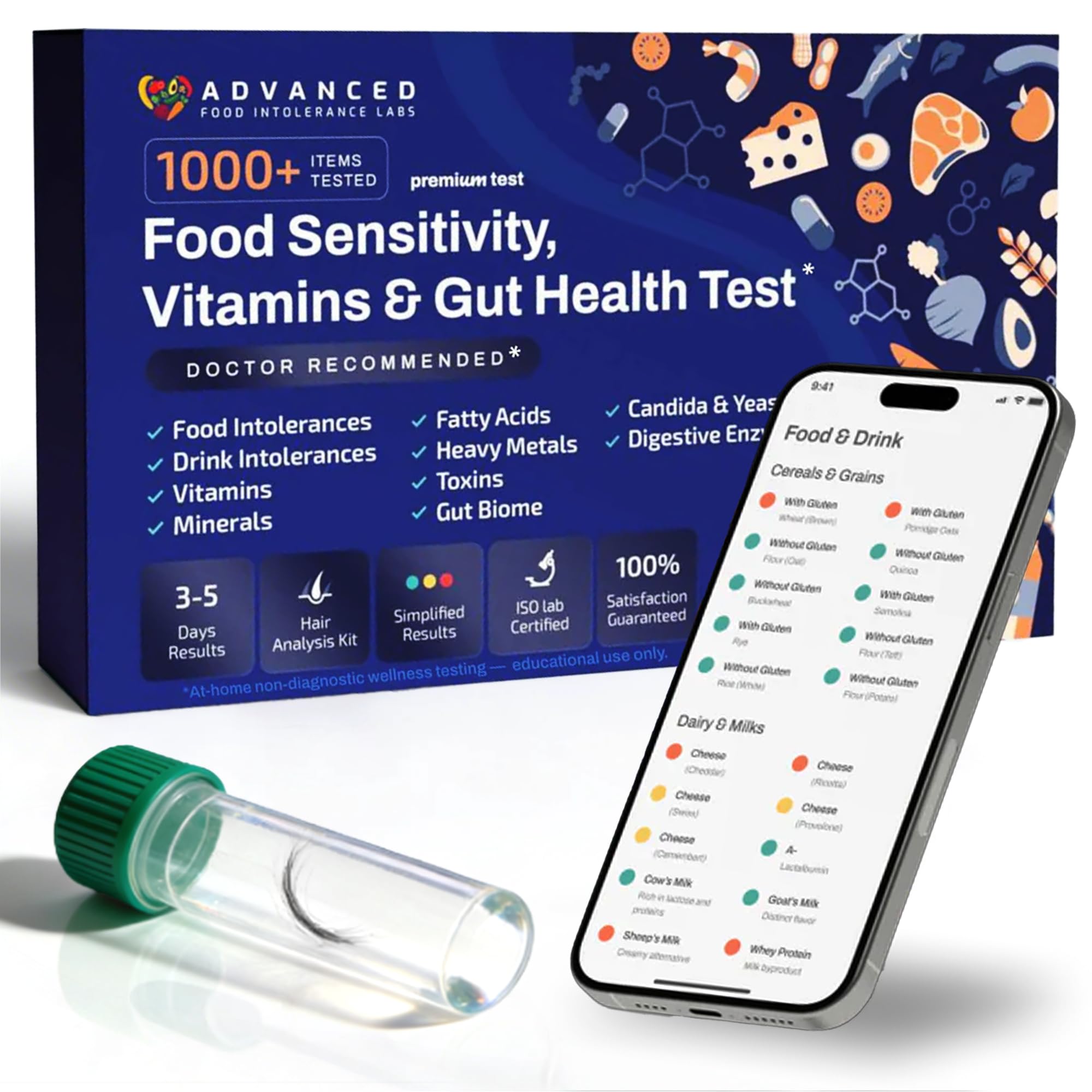
Advanced Food Intolerance Labs (AFIL) offers a 1,000+ item panel that includes foods, drinks, vitamins, and gut-health markers analyzed from a small hair sample. The standout feature here is ISO/IEC 27001 certification for data protection — meaning your health data is governed by a strict international standard for information security, which is rare in the at-home wellness space. The company is family-owned and explicitly markets itself as a complementary tool for holistic and functional medicine professionals rather than a replacement for medical testing.
The process is straightforward: snip 10 strands of hair, place in the provided envelope, mail with the prepaid label, and receive an interactive color-coded report within 72 hours of the lab receiving your sample. Users consistently highlight the ease of use and the speed of results. The report is clickable, meaning you can tap on each flagged item to learn more about why it might be causing a reaction — a small UX detail that reduces the overwhelm of a 1,000-item report. Many reviewers reported that eliminating flagged foods improved their bloating, energy levels, and overall gut comfort.
The accuracy concerns are real. One reviewer reported the test flagged foods they eat daily without symptoms as “high sensitivity,” which undermines trust in the bioenergetic scanning method. Another called it a “bioenergetic hair scan, not clinically validated.” This test works best when used directionally — as a hypothesis generator rather than a verdict. If you’re the type who wants a definitive yes/no on food allergies, this is not that product. If you want a broad map to start exploring, it serves well.
Why it’s great
- ISO/IEC 27001 certified data protection for health privacy
- Interactive clickable report helps you understand each trigger
- Covers 1,000+ items including vitamins and gut health markers
Good to know
- Bioenergetic method not clinically validated for allergies
- Can produce false positives for foods eaten without symptoms
- General wellness use only; not a medical diagnostic tool
6. 5Strands Food Intolerance & Nutritional Imbalance Test
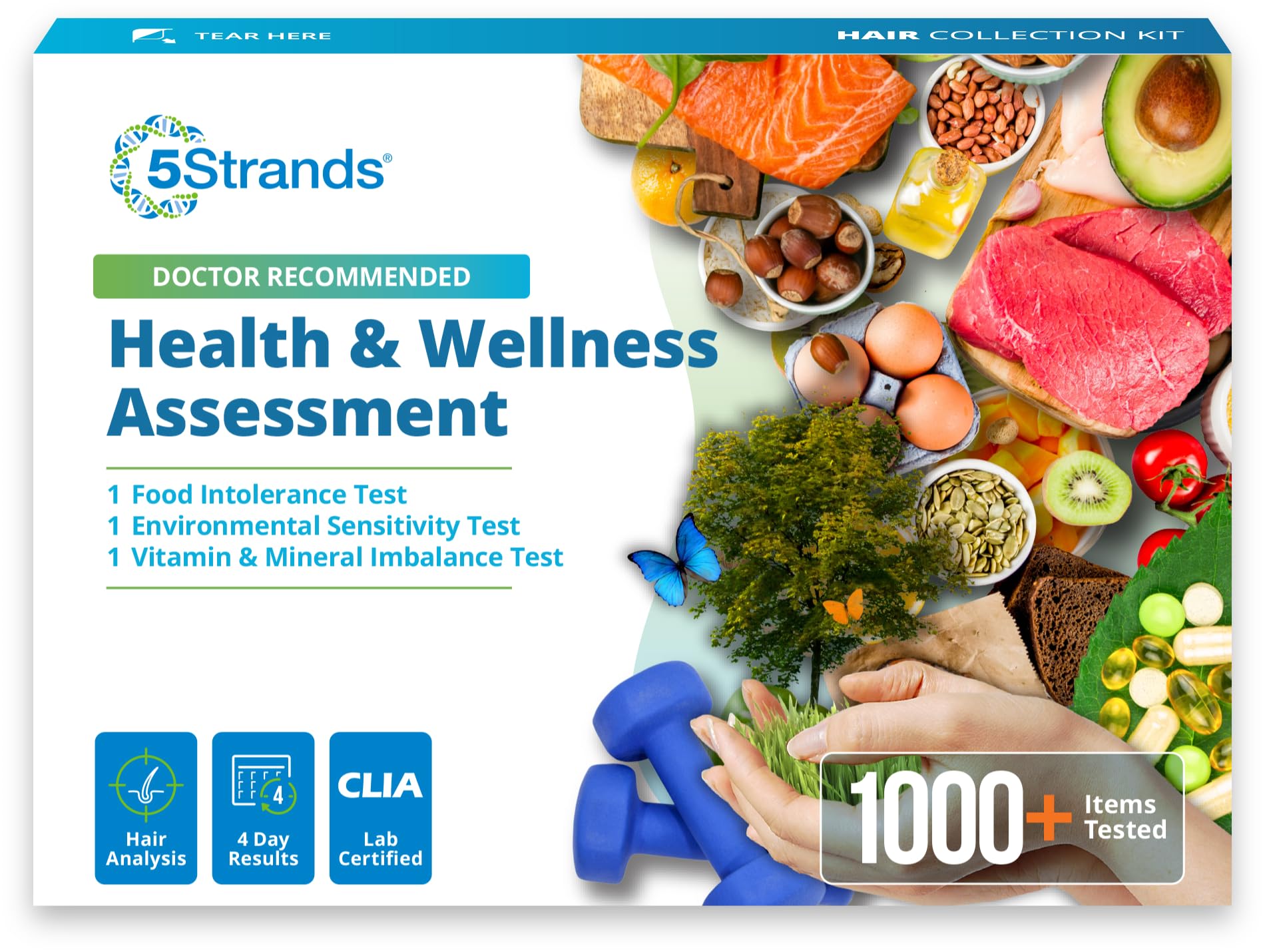
5Strands distinguishes itself by being the only hair-based test on this list backed by independent third-party study data. The test covers 1,052 items — 658 foods, 282 household/environmental materials, and 112 vitamins and minerals — and each sample undergoes a double-pass analysis process in a certified US laboratory. The inclusion of a nutritional imbalance report that highlights how your body may be absorbing or failing to utilize essential nutrients is a genuinely differentiator, as it moves beyond simple food triggers into the territory of deficiency awareness.
Users report a positive experience with customer service, with one reviewer noting that the company proactively offered a refund or substituted a different test when the original didn’t meet their needs. The results are organized into four response levels (remove, moderate, rotate, maintain), which is helpful for structuring an elimination diet without feeling overwhelmed. The companion app is an appreciated bonus, allowing users to track their dietary adjustments in one place.
The reliability concerns are significant. One detailed review published a direct contradiction: the 5Strands test reported a “severe Vitamin D deficiency,” but a follow-up blood serum test from their doctor measured 95.1 ng/mL — well within the normal range of 30-100 ng/mL. The same reviewer noted other inconsistencies and a typo in the report (“Standatd”). If you use this test, treat the nutrient imbalance data as a starting point for conversation with your doctor, not as a substitute for a validated blood panel.
Why it’s great
- Only hair test with independent third-party study data
- Double-pass lab analysis for consistency in results
- Includes nutritional imbalance check for vitamin/mineral absorption
Good to know
- Nutrient imbalance results contradicted by blood serum tests in some cases
- Report may contain minor errors (typo reported)
- Hair root sample collection might require assistance
7. AFIL 350+ Foods Focused Test
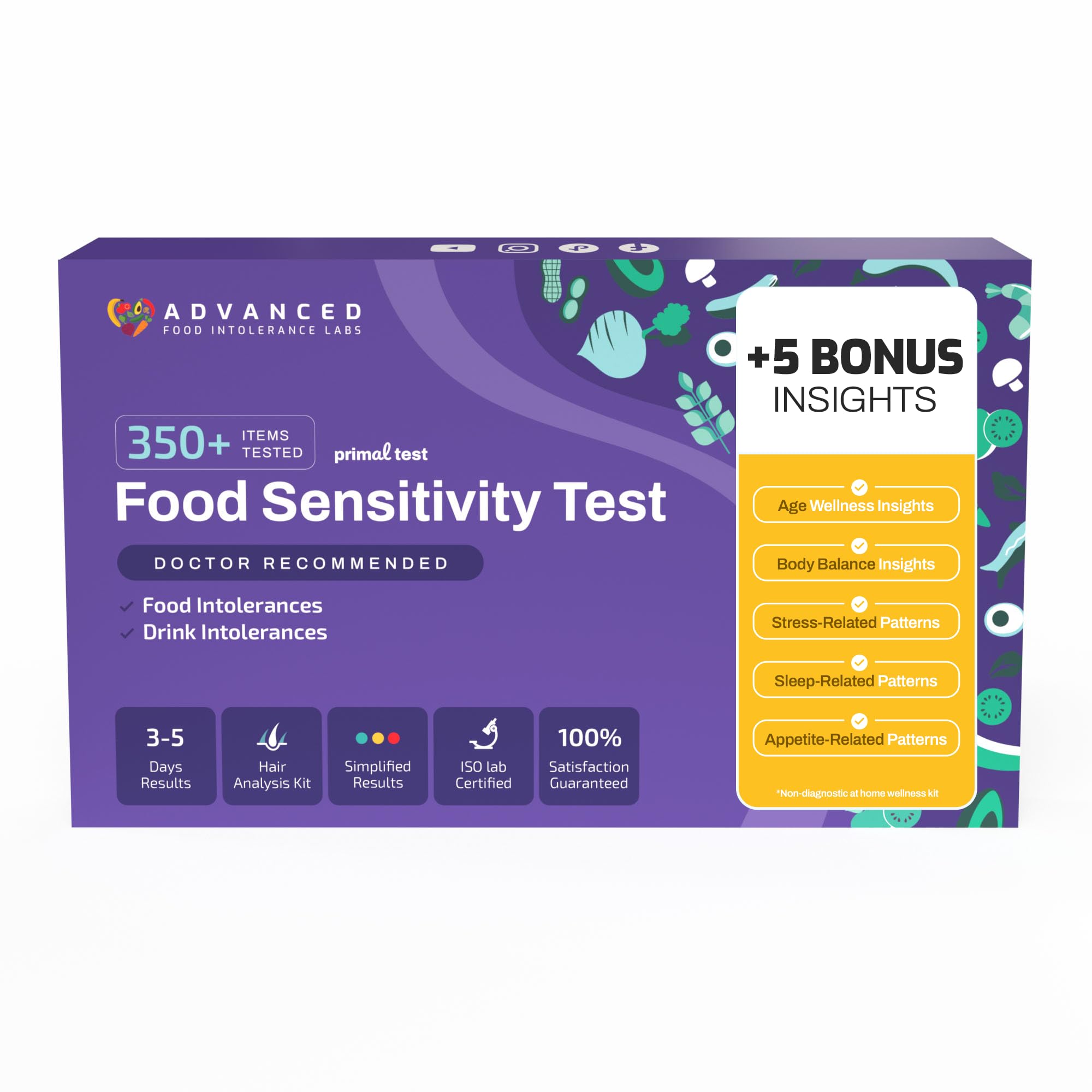
This is the entry-level option from AFIL, screening 350+ foods with an emphasis on common trigger categories like gluten-containing grains, dairy, soy, nuts, seeds, and proteins. It uses the same ISO/IEC 27001 data protection as their larger 1,000+ item panel, and the same 72-hour turnaround from sample receipt. The laser focus on high-prevalence food triggers makes it a more manageable first step for someone who is overwhelmed by a 1,000-item report and just wants to know if the usual suspects (gluten, dairy, eggs) are causing issues.
Users who bought this kit appreciated the value-to-scope ratio, noting that the instructions are clear and the return envelope is pre-paid. Several reviewers reported that the test helped them identify surprising triggers — one user discovered that coconut milk, peanut butter, and dark chocolate were driving their hormonal acne and digestive discomfort. The color-coded results (green for likely fine, yellow for moderation, red for remove) are intuitive even for first-time testers. One reviewer said results arrived in one business day after the lab received the sample.
The negative experiences are harder to ignore. One reviewer described a suspected scam where the sample was received but results were delayed until they filed a complaint, calling the customer service unhelpful. Another noted that the low price should signal a less robust methodology. If you are willing to accept the directional nature of hair-based bioenergetic testing and want the most affordable starting point for autoimmune-related food detective work, this kit serves that purpose. For certainty, look to the blood-based alternatives above.
Why it’s great
- Budget-friendly entry point for food sensitivity awareness
- Focused panel on common autoimmune trigger foods (gluten, dairy, soy)
- ISO/IEC 27001 data protection ensures privacy
Good to know
- Customer service and delivery concerns reported by some users
- Limited to 350 items vs 1,000+ in other AFIL kit
- Bioenergetic method is not medically diagnostic
FAQ
Can an at-home autoimmune test replace a doctor’s blood panel?
Is a hair test or a blood test more accurate for autoimmune screening?
What does a “DHEA:Cortisol ratio” tell me about my immune system?
How long does it take to get results from an at-home autoimmune test?
Can I use these tests if I am already diagnosed with an autoimmune condition?
Final Thoughts: The Verdict
For most users, the best at-home autoimmune test winner is the Choose Health 4-in-1 Adrenal Stress Test because it combines dual CAP + CLIA lab accreditation with four clinically meaningful adrenal biomarkers (cortisol, DHEA-S, their ratio, and visceral fat) that are directly relevant to autoimmune flare management. If you want a broader hormonal picture specifically for female autoimmune markers, grab the Choose Health 6-in-1 Female Hormone Test. And for a broad dietary elimination starting point using a non-invasive hair sample, nothing beats the screening depth of the UCARI 1,500+ item test — just remember to validate any findings through actual elimination trials and follow-up blood work.