
Our readers keep the lights on and the weekend projects moving. As an Amazon Associate, I earn from qualifying purchases.
A bag of soil can make the difference between a tomato plant that limps along and one that rewards you with heavy clusters of deep-red, split-free fruit. The wrong mix traps roots in soggy peat or starves them of calcium, setting the stage for blossom-end rot and stunted growth. Sorting through the compost-based blends, granular fertilizers, and living-soil options that all claim to be the answer is the real challenge.
I’m Rikta — the co-founder and writer behind FitlyFast. I’ve spent many hours cross-referencing NPK ratios, organic certifications, and real-world reviews to isolate the mixes that actually hold moisture without drowning roots and feed the plant through the full ripening cycle.
This guide compares seven of the most popular options to help you pick the right one for your space, schedule, and tomato goals. You’ll find the best bagged soil for tomatoes broken down by use case, from a ready-to-plant living mix to a budget-friendly granular feed.
How To Choose The Best Bagged Soil For Tomatoes
Tomatoes are heavy feeders that demand a steady supply of nitrogen, phosphorus, potassium, and calcium at different stages. A bagged product that works for flowers can leave your tomato vines lush with leaves but bare of fruit. Focus on three characteristics: the form of the product (granular feed vs. complete potting mix), the presence of calcium, and the organic certification if that matters to you.
NPK Ratio and Calcium Content
The three numbers on the bag — nitrogen, phosphorus, potassium — tell the story. A ratio like 5-7-3 supports strong roots and fruiting without pushing excessive leaf growth. Calcium is equally critical; a lack of it leads to blossom-end rot, the brown sunken patch on the bottom of otherwise perfect fruit. Look for a mix or fertilizer that lists a calcium source, especially if you are growing in containers where nutrients deplete quickly.
Complete Mix vs. Fertilizer Enhancer
A complete potting mix like FoxFarm Ocean Forest or BuildASoil 3.0 is ready for planting the moment you open the bag. A granular fertilizer like Espoma Tomato-tone is meant to be worked into existing soil or potting mix and reapplied every two weeks. If you are starting from scratch in a raised bed or large container, a complete mix saves time. If you already have good garden soil, a bagged fertilizer is the efficient route.
Drainage and Texture
Tomato roots rot quickly in dense, waterlogged media. A quality bagged mix feels light and crumbly, often containing perlite, vermiculite, or horticultural grit to keep air moving around the roots. Compost-based blends (Vermont Compost Fort Vee, BuildASoil) tend to hold moisture well without becoming soggy, while peat-heavy mixes can become compacted after a few waterings. Squeeze a handful of the damp soil: it should hold its shape briefly and then crumble, not form a solid clay-like ball.
Quick Comparison
On smaller screens, swipe sideways to see the full table.
| Model | Category | Best For | Key Spec | Amazon |
|---|---|---|---|---|
| BuildASoil Potting Soil 3.0 | Living Soil | Water-only full-season growth | 28.3 lbs, living microbes | Amazon |
| FoxFarm Ocean Forest | Potting Mix | Container gardening, rapid results | 1.5 cu ft, aged forest products | Amazon |
| FoxFarm Happy Frog Fertilizer | Granular Feed | Supplementing existing soil | 5-7-3 NPK, mycorrhizal fungi | Amazon |
| Vermont Compost Fort Vee | Organic Potting Mix | Seed starting and transplants | 20 qt, compost-based | Amazon |
| Coast of Maine Planting Soil | Potting Mix | Lightweight container soil | 20 qt, composted manure | Amazon |
| Espoma Organic Tomato-tone | Granular Feed | Bi-weekly feeding on a budget | 8 lb, 8% calcium | Amazon |
| Miracle-Gro Potting Mix | Conventional Mix | Quick container planting | 3-pack 8 qt, feeds 6 months | Amazon |
In‑Depth Reviews
1. BuildASoil Potting Soil Recipe 3.0
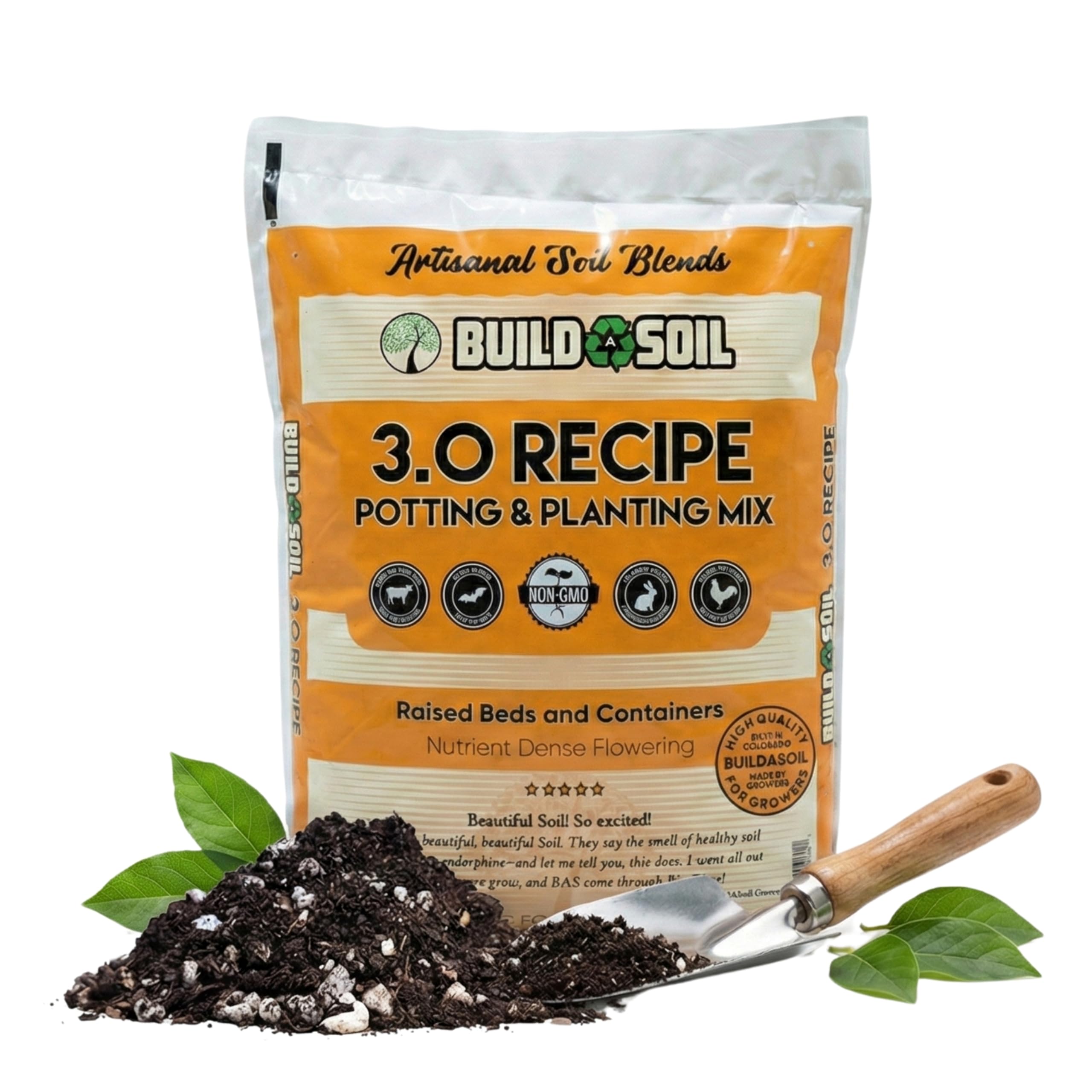
This is the bagged soil that changes the game for growers who want to stop measuring bottled nutrients. BuildASoil 3.0 is a fully amended living mix: organic compost, worm castings, peat moss, and mineral amendments are already blended into a chunky, aerated texture that holds moisture without turning into mud. The living microbes inside convert organic matter into plant-available nutrition, so you literally add water and watch the plant run through the entire fruit cycle.
Weighing 28.3 pounds in a one-cubic-foot bag, this mix feels dense with nutrition but stays light and fluffy in the pot. Gardeners report that leaves turn darker green within a week of transplanting, a clear sign the soil biology is active. It is designed for both indoor and outdoor containers, though it works equally well in raised beds as a top-dress layer.
The single trade-off is the price tag; it is the most expensive product on this list by weight. But a mid-range buyer who wants a hands-off season will find that one bag replaces a shelf of synthetic bottles. For anyone tired of chasing deficiency symptoms, this is the simplest path to a healthy harvest.
Why it’s great
- Truly water-only for the first 3 months
- Living microbes support root health throughout flowering
- Aerated structure drains well without drying out too fast
Good to know
- Premium cost per cubic foot
- Heavy bag to move; plan your setup ahead
2. FoxFarm Ocean Forest Potting Soil
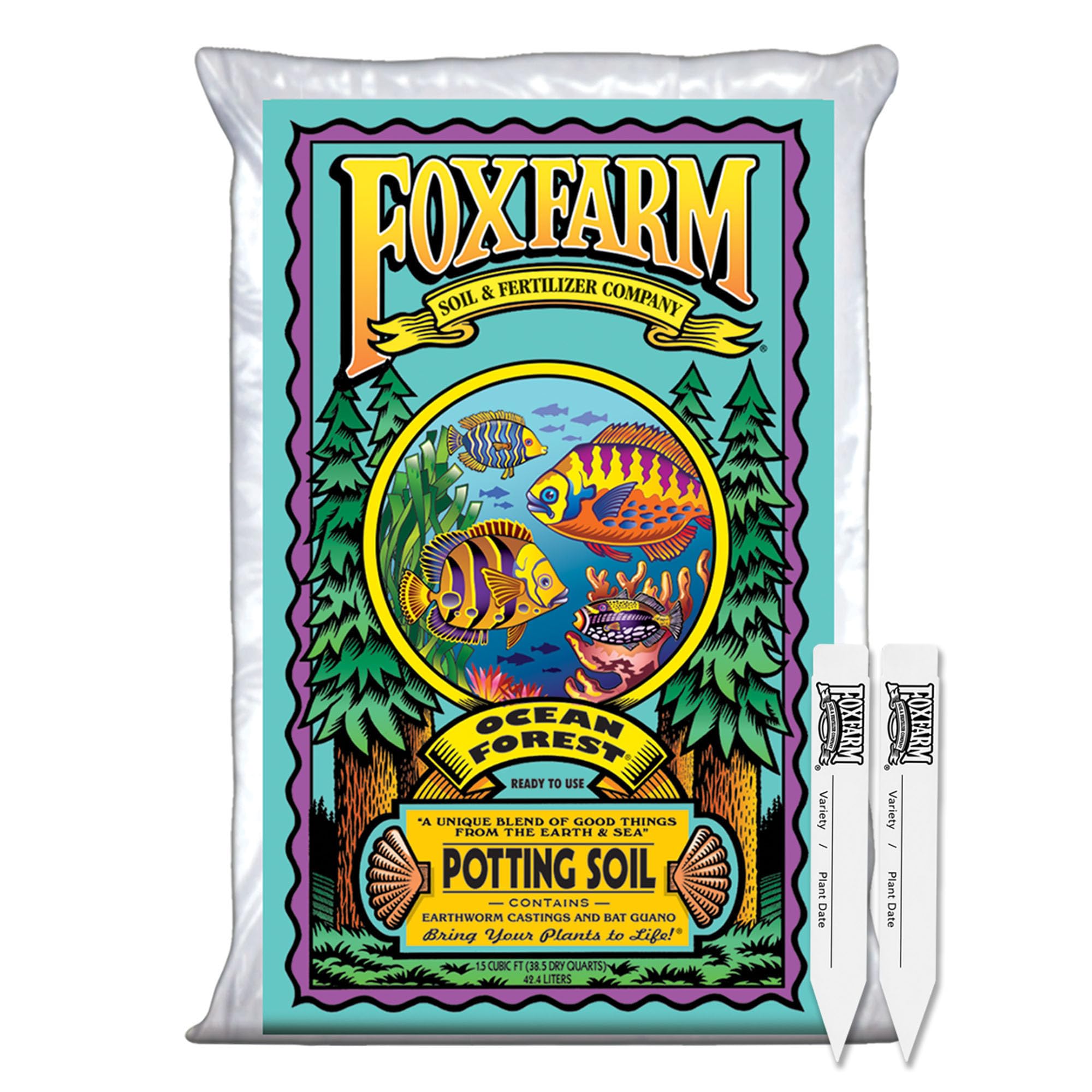
FoxFarm Ocean Forest has earned a near-cult following among container tomato growers for good reason. The 1.5-cubic-foot bag contains aged forest products, sphagnum peat moss, perlite, sandy loam, and a fertilizer charge derived from fish emulsion, crab meal, shrimp meal, earthworm castings, kelp meal, and oyster shell. It is ready to plant immediately with no additional mixing required.
Side-by-side trials against conventional potting soils often show Ocean Forest plants growing significantly larger in the same time frame. The texture is light and crumbly, absorbing water immediately rather than allowing it to pool on the surface. The oyster shell provides a slow-release calcium source that helps keep blossom-end rot at bay through the ripening phase.
Some users note that the nutrient charge can be strong for the first week, so transplanting young seedlings into it is best done when they have at least two sets of true leaves. Occasional mushrooms may sprout in warm humid conditions, which is harmless and actually signals healthy organic activity in the bag.
Why it’s great
- Premium all-in-one mix with multiple organic inputs
- Excellent moisture retention without becoming soggy
- Calcium from oyster shell reduces blossom-end rot risk
Good to know
- Can be too rich for very young seedlings
- Price per bag is mid-range but rising
3. FoxFarm Happy Frog Tomato & Vegetable Fertilizer

Happy Frog is a 4-pound bag of dry granular fertilizer that targets the specific nutritional demands of heavy feeders like tomatoes, peppers, and berries. The 5-7-3 ratio is tilted toward phosphorus and potassium, which support flower formation and fruit development rather than pushing excessive leaf growth. Calcium is included to prevent blossom-end rot, and mycorrhizal fungi are added to improve root efficiency.
Gardeners using this product alongside a neutral base soil report that tomatoes start setting fruit within days of the first feeding. The granules are water-soluble and won’t burn roots when applied according to the label, a common concern with synthetic dry feeds. Many users specifically mention that it has no offensive smell, unlike some fish-based organic fertilizers.
The 4-pound bag covers a moderate number of plants in containers or rows. For larger gardens, you will need multiple bags to maintain the recommended every-two-week schedule through the growing season. It is also worth noting that this is a supplement, not a complete soil; you still need a proper potting mix or garden bed to plant into.
Why it’s great
- NPK ratio tailored for fruit production
- Mycorrhizal fungi enhance nutrient and water uptake
- No strong odor and safe for container use
Good to know
- Requires reapplication every 1-2 weeks
- Higher price per pound than basic granular feeds
4. Vermont Compost Company Fort Vee Organic Potting Mix

Fort Vee is a compost-based organic potting mix that stands out for seed starting and transplanting. The blend includes composted manure and plant materials, blond sphagnum peat moss, crushed granite and basalt, blood meal, kelp meal, steamed bone meal, mined gypsum, vermiculite, and washed coconut coir. It holds its shape perfectly in soil blocks, which is a major advantage for gardeners who block-start their tomatoes.
The texture is light, fluffy, and contains visible gold flakes of vermiculite that improve aeration and drainage. Gardeners in hot climates report that Fort Vee holds water remarkably well even in 90°F conditions, reducing the need for constant watering. The compost base also provides a gentle nutrient boost that supports steady growth without burning sensitive seedling roots.
One potential downside is the presence of occasional bark or twig pieces in the mix, which some users consider a cosmetic issue rather than a functional problem. The 20-quart bag is well-suited for a small to medium container garden, but large-scale growers may find the per-bag cost higher than bulk alternatives.
Why it’s great
- Excellent water retention in hot conditions
- Ideal for soil blocks and seed starting
- Mineral amendments provide slow-release nutrition
Good to know
- May contain small woody debris
- Premium price compared to mass-market mixes
5. Coast of Maine Organic & Natural Planting Soil for Vegetables & Tomatoes

Coast of Maine packs 20 quarts of lightweight organic planting soil that works for both in-ground gardens and containers. The primary ingredients are composted manure and sphagnum peat moss, giving the mix a rich dark color and a fluffy texture that balances moisture retention with drainage. It is OMRI listed for organic use, which matters for growers who want to avoid synthetic inputs.
Gardeners report that heirloom tomatoes, which often need extra drainage, perform exceptionally well in this soil. The natural cedar and aromatic compounds in the compost blend appear to deter some insects. Users also note that the soil feels noticeably lighter than many bagged mixes, making it a practical option for filling elevated beds or large pots without straining your back.
The lighter texture, however, means it can dry out faster in hot weather if used in shallow containers. A few reviews mention fungus gnats appearing after purchase, so letting the bag air out or treating with neem oil before planting is a sensible precaution. For the price, it offers strong organic credentials for small to medium plantings.
Why it’s great
- Lightweight and easy to handle for container filling
- Organic compost base with good aeration
- Aromatic components may help repel pests
Good to know
- Can dry out quickly in shallow containers
- Some batches may contain fungus gnat larvae
6. Espoma Organic Tomato-Tone 3-4-6
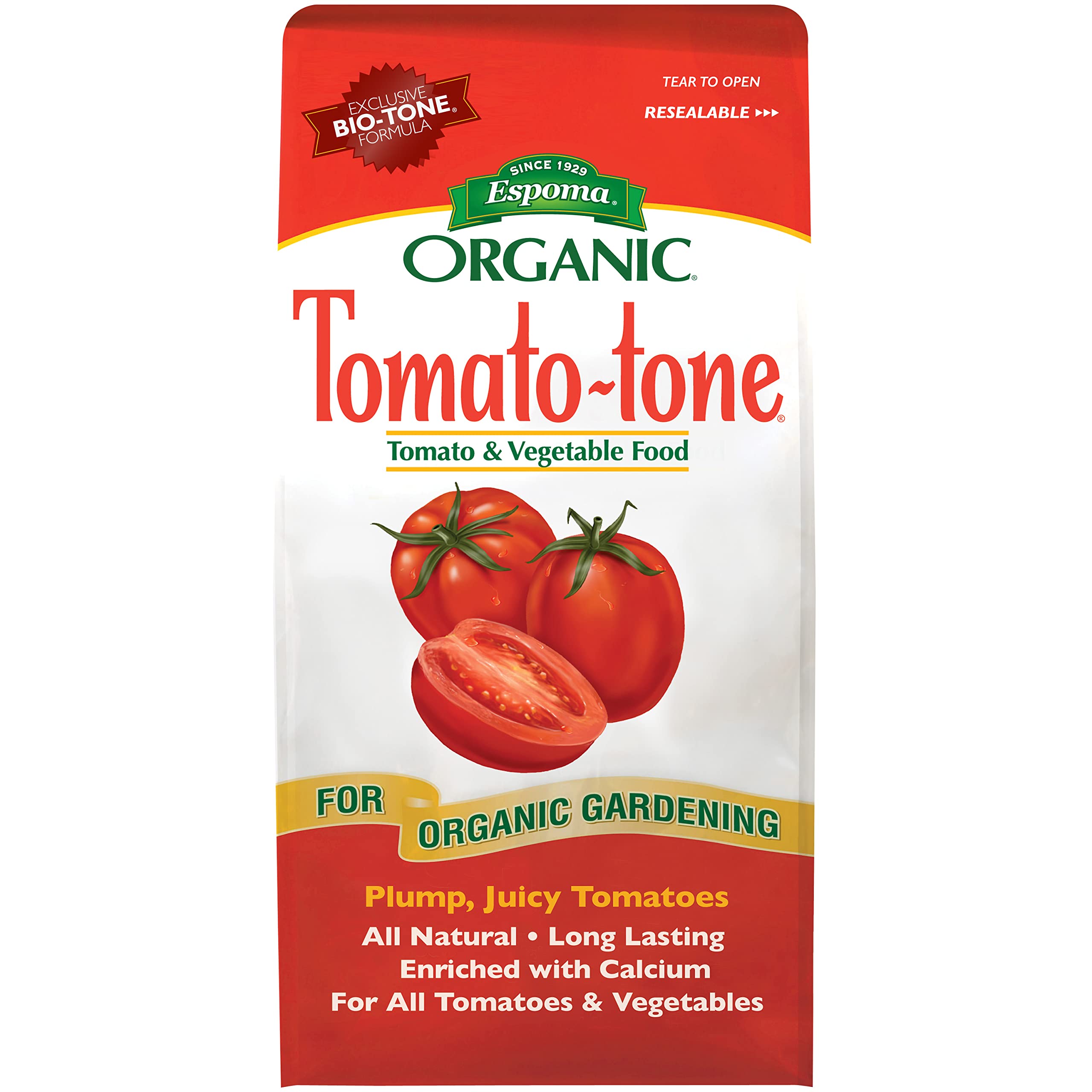
Espoma Tomato-tone is the entry-level organic granular fertilizer that has been a garden staple for decades. Each 8-pound bag contains a 3-4-6 NPK analysis with 8 percent calcium, specifically formulated to encourage flower and fruit production rather than leafy growth. The Bio-tone formula includes beneficial microbes that help break down organic matter in the root zone.
Users consistently report that their tomato plants go from sparse fruiting to heavy clusters within two weeks of the first application. The granules are easy to sprinkle around the drip line and water in, requiring no mixing or measuring beyond the instructions on the bag. Many gardeners use it as a baseline feed and layer it with compost or other amendments for a more complete soil program.
The most common criticism is the smell — reviewers describe it as a strong fishy or organic odor that lingers for a few hours after application. It also requires reapplication every two weeks to maintain steady nutrition, which means the cost of multiple bags adds up over a long growing season. For a single plant or a small patio garden, however, this is the most budget-friendly way to get targeted tomato nutrition.
Why it’s great
- Low price point for an organic granular feed
- 8% calcium directly targets blossom-end rot prevention
- Approved for organic production by OMRI
Good to know
- Must be reapplied every two weeks for best results
- Strong fishy odor upon application
7. Miracle-Gro Potting Mix (3-Pack)

Miracle-Gro Potting Mix is the familiar blue-bag soil that millions of container gardeners reach for first. This three-pack bundles three 8-quart bags, each formulated with a built-in fertilizer that feeds plants for up to six months. The texture is fine and uniform, designed to retain moisture around roots while maintaining enough aeration for annual vegetables.
For beginners planting their first tomato in a patio pot, this mix is nearly foolproof. The slow-release fertilizer means you do not need to remember a feeding schedule for the first two to three months. Gardeners consistently praise it for being reliable and well-draining, with no packing down into a hard mass over the season.
The catch is that the fertilizer is synthetic, not organic, which matters to growers who want a fully natural input stream for their tomatoes. The nutrient charge is moderate, so heavy-producing plants may still benefit from supplemental feeding late in the season when fruit load peaks. The smaller 8-quart bags in this three-pack are convenient for those who do not want to wrestle with a 40-pound sack.
Why it’s great
- Convenient built-in fertilizer lasts months
- Light, easy-to-handle bags in a multi-pack
- Consistent texture with reliable drainage
Good to know
- Synthetic fertilizer not suitable for organic gardening
- Heavy feeders may need additional feeding during fruiting
FAQ
Can I use a standard potting mix for tomatoes or do I need a specialty blend?
How often should I apply a granular fertilizer like Espoma Tomato-tone?
Final Thoughts: The Verdict
For most users, the best bagged soil for tomatoes winner is the BuildASoil Potting Soil 3.0 because it delivers a true water-only experience with living biology that carries the plant through the entire growth cycle. If you want a ready-to-plant potting mix with a proven track record in containers, grab the FoxFarm Ocean Forest. And for budget-friendly targeted feeding that works with existing soil, nothing beats the Espoma Tomato-tone.