
Our readers keep the lights on and the weekend projects moving. As an Amazon Associate, I earn from qualifying purchases.
Moving from smartphone snaps to a dedicated camera is a leap in image quality, but the sheer number of models, sensor types, and lens mounts can stall any beginner before they even start. The right first camera should remove friction from learning, not add to it.
I’m Rikta — the co-founder and writer behind FitlyFast. I have analyzed hundreds of hours of user feedback and technical specifications to match real beginners with the digital camera that truly fits their path into photography.
This guide cuts through the noise to provide a clear, decision-focused review of the best options available today. My goal is to help you find the perfect beginner digital camera that matches your goals and budget without the usual marketing fluff.
How To Choose The Best Beginner Digital Camera
A beginner camera needs to balance ease of use with room to grow. The most important decisions involve sensor size, lens system, and whether the viewfinder is optical or electronic.
Sensor Size and Megapixels
A larger physical sensor captures more light, which directly improves image quality in low light and gives better control over background blur. Ignore megapixel count above 20 MP—most beginners will never need more. APS-C sensors (found in most entry-level DSLRs and mirrorless cameras) hit the sweet spot between size, cost, and performance.
DSLR vs Mirrorless
DSLRs use a mirror and optical viewfinder—they feel more traditional, have excellent battery life, and often cost less for the same sensor. Mirrorless cameras are smaller, lighter, and show you the exact exposure through the electronic viewfinder before you shoot. For pure learning, a DSLR forces you to understand exposure; for portability and modern features, mirrorless wins.
Lens Ecosystem
The body is a one-time purchase, but lenses are a long-term investment. Choose a system with a wide range of affordable lenses. Canon EF-S and Nikon F (for DSLRs) or Canon RF-S and Sony E (for mirrorless) offer the most options for new photographers without breaking the bank.
Quick Comparison
On smaller screens, swipe sideways to see the full table.
| Model | Category | Best For | Key Spec | Amazon |
|---|---|---|---|---|
| DJI Osmo Pocket 3 | Pocket Vlog | Vloggers & Travel | 1-inch CMOS, 3-Axis Gimbal | Amazon |
| Canon EOS R100 | Mirrorless | First Mirrorless Camera | 24.1MP APS-C, 4K Video | Amazon |
| Panasonic LUMIX G85 | Mirrorless | Hybrid Photo & Video | 16MP MFT, 5-Axis IBIS | Amazon |
| Sony Alpha ZV-E10 | Mirrorless Vlog | Content Creation | 24.2MP APS-C, 425 AF Points | Amazon |
| Canon EOS R50 (5811C012) | Mirrorless | All-Purpose Starter | 24.2MP, Dual Pixel AF II | Amazon |
| Canon EOS R50 (5812C012) | Mirrorless | All-Purpose Starter | 24.2MP, Vari-Angle Screen | Amazon |
| FUJIFILM X-T30 III | Mirrorless | Color & Film Simulations | 26.1MP, 425 AF Points | Amazon |
| Canon EOS Rebel T7 | DSLR | Learning Photography Basics | 24.1MP APS-C, Wi-Fi | Amazon |
| Nikon D3200 (Renewed) | DSLR | Budget Entry-Level DSLR | 24.2MP, 1080p Video | Amazon |
| Canon EOS R100 Bundle | Mirrorless | Complete Kit Experience | 24.1MP, 4K (Crop) Video | Amazon |
| Sony a3000 | Mirrorless | Budget APS-C Entry | 20.1MP APS-C, 25 AF Points | Amazon |
In‑Depth Reviews
1. DJI Osmo Pocket 3
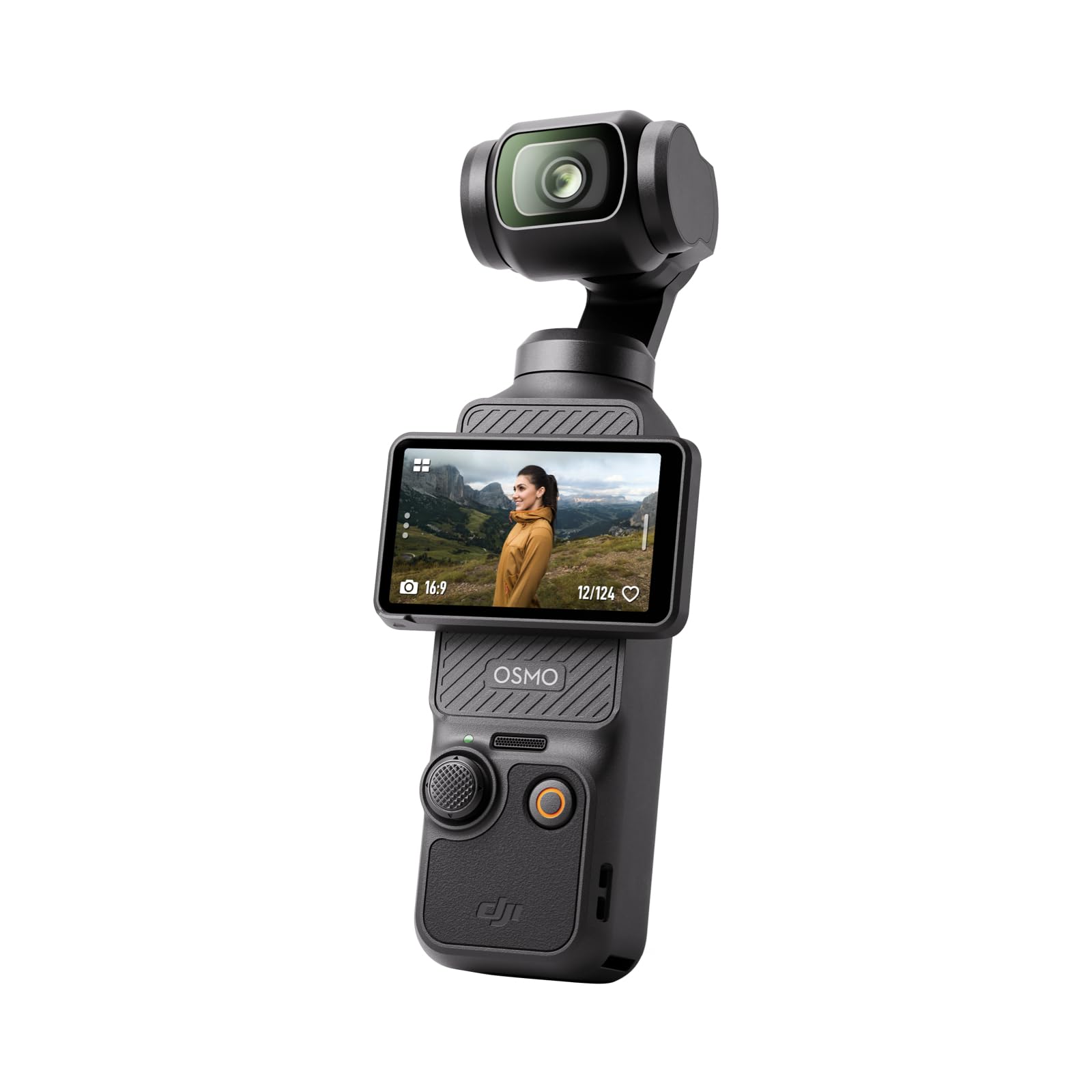
The DJI Osmo Pocket 3 is a complete departure from traditional interchangeable-lens cameras, yet it is the most effective tool for absolute beginners focused on video. Its 1-inch CMOS sensor captures 4K footage at up to 120fps with a dynamic range that outclasses any smartphone, and the built-in 3-axis mechanical gimbal eliminates the need for a stabilizer rig entirely.
ActiveTrack 6.0 keeps you center frame automatically whether you place it on a table or a tripod. The 2-inch rotating touchscreen switches between horizontal and vertical orientation instantly, making it the only camera you need for TikTok, Instagram Reels, and YouTube Shorts. Fast focusing and D-Log M color profile give room for advanced grading later.
Battery life averages 166 minutes of continuous recording, which covers a full day of casual vlogging. The main trade-off is the fixed lens—you cannot swap glass, so zoom or wide-angle shots require clip-on accessories. It also requires an internet-connected app for initial activation, a friction point some users dislike.
Why it’s great
- Incredible mechanical stabilization makes handheld footage look professional
- 1-inch sensor delivers excellent dynamic range and low-light performance
Good to know
- Fixed lens cannot be changed—no wide or telephoto options without accessories
- Requires app activation and internet connection before first use
2. Canon EOS R100 Mirrorless Camera

The Canon EOS R100 is the lightest and smallest body in the EOS R series, making it an ideal entry point for photographers who want a mirrorless system without the bulk. The 24.1 MP APS-C sensor paired with the DIGIC 8 processor produces crisp stills with natural color reproduction that Canon is known for straight out of camera.
Dual Pixel CMOS AF covers 143 zones with human face and eye detection, giving beginners reliable autofocus even when subjects move unexpectedly. The 6.5 fps continuous shooting captures moments like kids playing or pets running without frustrating misses. It shoots 4K video at 24 fps, which is sufficient for casual video work, and Full HD at 60 fps for smoother motion.
The biggest limitation is the 4K crop factor—the camera uses the central area of the sensor only, which narrows the field of view significantly. Battery life is average, and Canon does not include a dedicated charger in the box, only a USB cable. For pure photography beginners, however, the R100 delivers exceptional value in a tiny package.
Why it’s great
- Extremely compact and lightweight body for easy travel and everyday carry
- Dual Pixel CMOS AF with face and eye detection simplifies focusing for beginners
Good to know
- 4K video is cropped, reducing field of view significantly
- No dedicated battery charger included; charges via USB cable only
3. Panasonic LUMIX G85

The Panasonic LUMIX G85 delivers class-leading image stabilization that punches far above its price bracket. Its 5-axis in-body image stabilization (IBIS) works in both photo and video modes, allowing handheld shots at shutter speeds that would be impossible on most entry-level cameras. The 16 MP Micro Four Thirds sensor omits the low-pass filter, boosting fine detail sharpness nearly 10% over previous generations.
The magnesium alloy body is splash-proof and dust-sealed—a rare feature at this level. The 12-60mm Power O.I.S. kit lens covers a useful wide-to-telephoto range in one package, and the electronic viewfinder is sharp at 2360K dots. 4K 30fps recording with DFD autofocus keeps video work smooth, and the 4K Photo mode extracts high-res stills from video.
The lower 16 MP resolution means it cannot crop as aggressively as 24 MP APS-C rivals. Battery life is mediocre, and the Wi-Fi app can be finicky for transferring photos. For hybrid shooters who want excellent stabilization out of the box, the G85 is hard to beat.
Why it’s great
- 5-axis IBIS provides smooth handheld video and sharp low-light stills without a tripod
- Weather-sealed magnesium alloy body adds durability for outdoor shooting
Good to know
- 16 MP sensor limits cropping flexibility compared to 24 MP competitors
- Wi-Fi photo transfer app has inconsistent connectivity reported by users
4. Sony Alpha ZV-E10
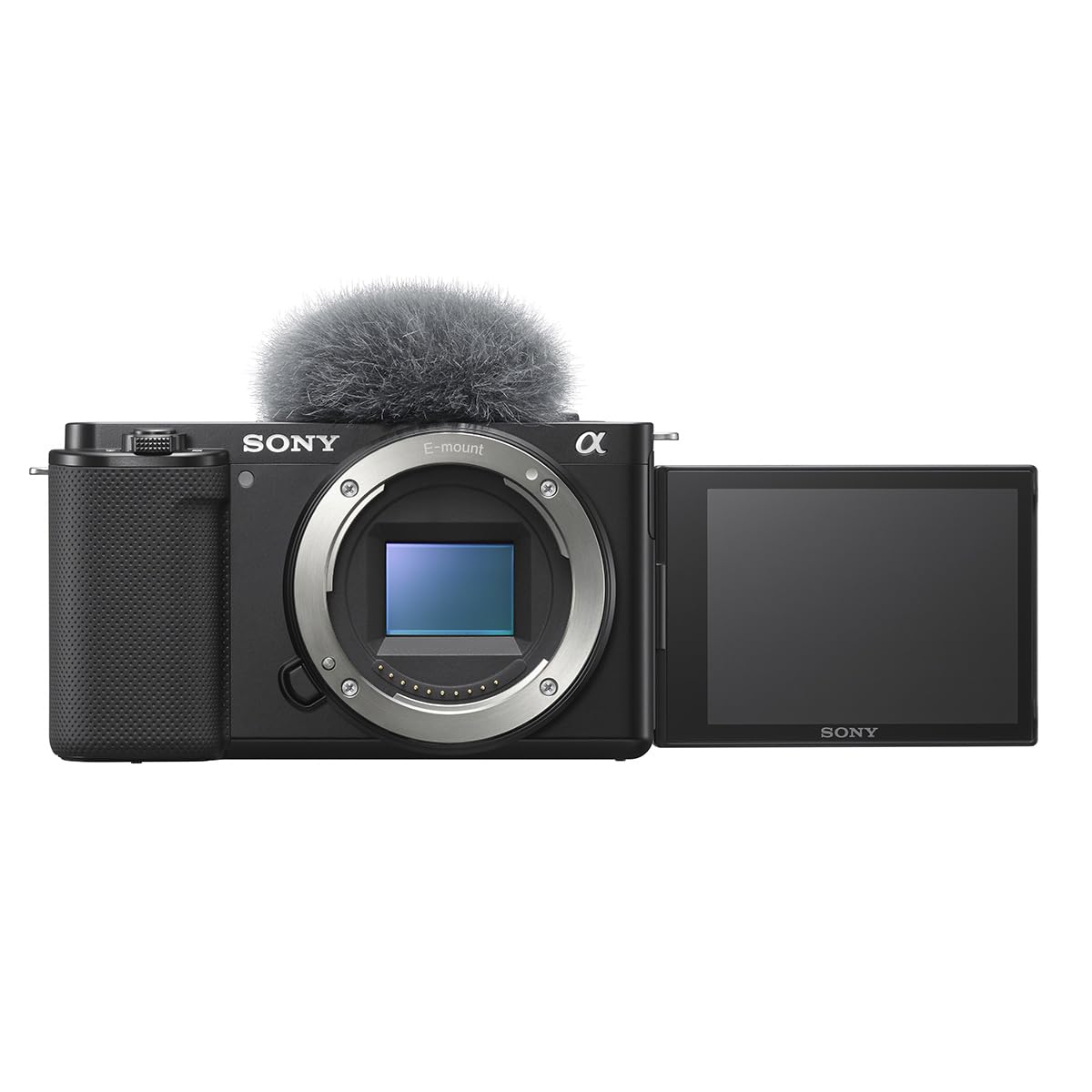
The Sony ZV-E10 is built specifically for content creators who prioritize video. Its 24.2 MP APS-C Exmor sensor oversamples 4K from a 6K readout, delivering sharp footage with natural colors and no pixel binning. The 425-point phase-detection autofocus system is fast and sticky, with Real-Time Eye Tracking that locks onto human and animal eyes reliably.
Unique features like the Product Showcase Setting—which instantly transitions focus from your face to an object you hold up—make it ideal for review videos and unboxings. The Background Defocus button gives a one-tap shallow depth-of-field effect. The flip-out screen rotates 180 degrees forward for self-recording, and the directional 3-capsule mic captures much better audio than typical built-in mics.
The ZV-E10 lacks in-body image stabilization, so handheld footage requires a gimbal for smooth walking shots. Battery life is average at about 25 minutes of continuous 4K recording, and severe rolling shutter makes fast pans look distorted. For controlled content studio work, it is excellent; for run-and-gun shooting, plan around its limits.
Why it’s great
- Superb 425-point phase-detection AF with reliable Real-Time Eye Tracking
- Product Showcase and Background Defocus buttons are brilliant for vlog workflows
Good to know
- No in-body stabilization—smooth walking shots require an external gimbal
- Severe rolling shutter makes fast pans look warped
5. Canon EOS R50 (5811C012 Bundle)
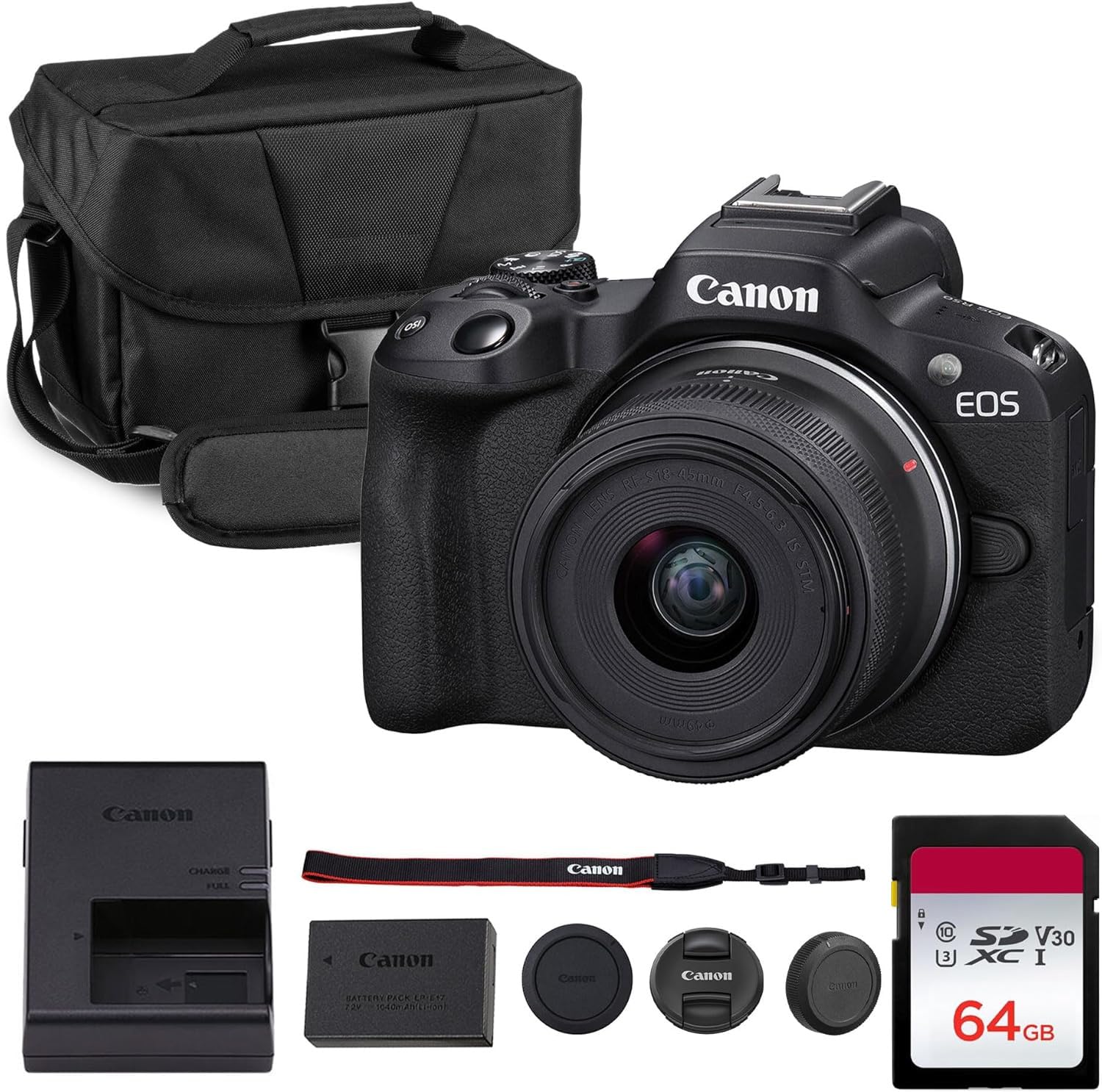
The Canon EOS R50 is a purpose-built camera for beginners who want modern mirrorless performance without the complexity. Its 24.2 MP APS-C sensor oversamples 4K video for sharp footage, and the Dual Pixel CMOS AF II provides subject tracking for people, animals, and vehicles—features normally reserved for higher-end Canon bodies. The vari-angle touchscreen makes self-recording and overhead shots effortless.
This bundle includes a shoulder bag, 64GB memory card, and smaller accessories, meaning you have everything needed to start shooting immediately. Creative Assist mode uses on-screen slider controls to adjust brightness, color, and blur without understanding f-stops or shutter speeds. R50 also supports vertical video recording and in-camera guides, making social media content creation straightforward.
The included 18-45mm kit lens is compact but has a slow aperture range of f/4.5-6.3, which limits low-light performance without raising ISO. The camera lacks a built-in flash, so indoor shooting in dim spaces can be challenging. For daytime family photos, travel, and content creation, it is an excellent all-around package.
Why it’s great
- Dual Pixel CMOS AF II with advanced subject detection makes focusing effortless
- Complete kit with bag and memory card means immediate out-of-box usability
Good to know
- Kit lens aperture is slow (f/4.5-6.3), limiting indoor low-light performance
- No built-in flash—relies on high ISO in dim environments
6. Canon EOS R50 (5812C012 Bundle)
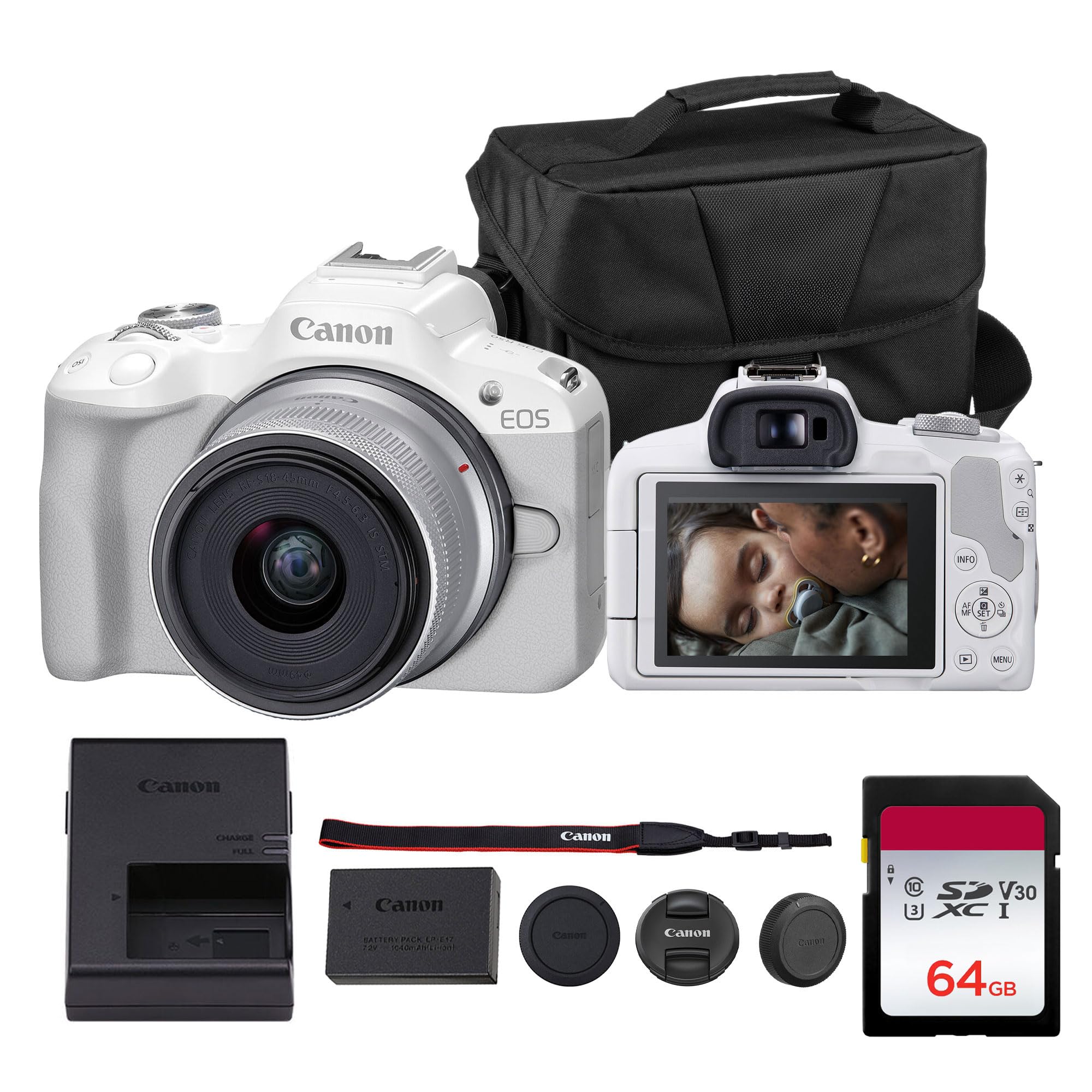
This version of the Canon EOS R50 kit is nearly identical to the 5811C012 bundle but is packaged with a different accessory set. The core camera features remain the same: a 24.2 MP APS-C sensor, oversampled 4K video, Dual Pixel CMOS AF II with face and eye detection, and a vari-angle touchscreen that articulates for vlogging or overhead compositions.
The included 18-45mm f/4.5-6.3 IS STM lens provides image stabilization for steadier handheld shots. The built-in Creative Assist mode uses simple slider adjustments, making it easy for beginners to learn the effect of different settings. The bundle also adds a shoulder bag and 64GB SD card, reducing friction for first-time buyers. The camera body weighs only 375 grams, making it one of the lightest interchangeable-lens cameras on the market.
Like its sibling bundle, the slow kit lens aperture limits performance in low light without high ISO noise. There is no built-in flash, and the 4K 24 fps video is not suited for fast-action capture. For beginners focused on learning composition and exposure in good light, it is a capable and enjoyable tool.
Why it’s great
- Extremely lightweight body (375g) makes it one of the most portable mirrorless options
- Creative Assist mode with visual sliders teaches exposure concepts intuitively
Good to know
- Slow kit lens aperture struggles in dim interiors without raising ISO
- No built-in flash; relies entirely on available light or external flash
7. FUJIFILM X-T30 III
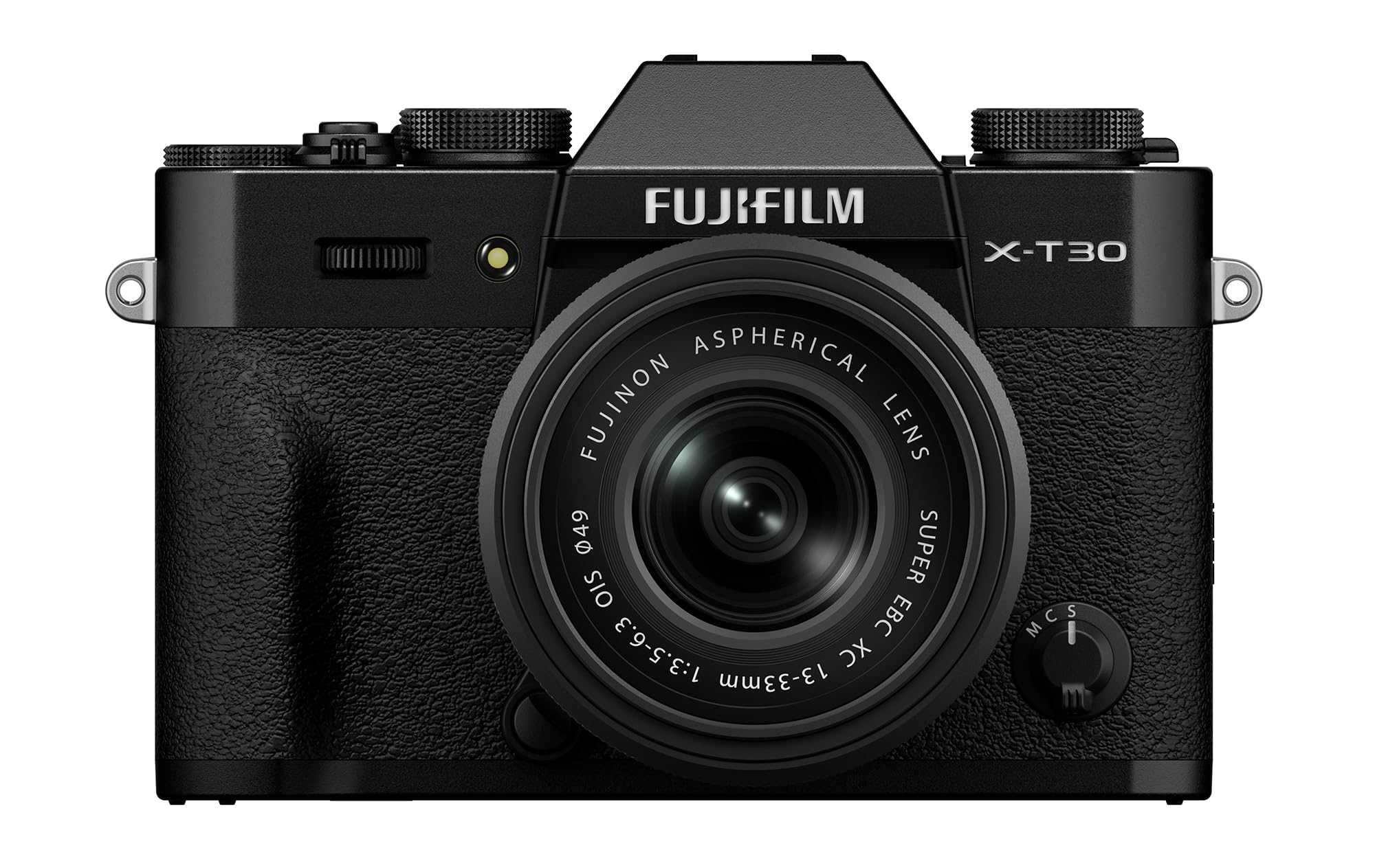
The FUJIFILM X-T30 III is the camera for beginners who care about the look of their images as much as the technical process. Its 20 built-in Film Simulations—including the beloved Astia and Classic Chrome—produce gorgeous JPEG colors straight out of camera, eliminating the need for editing software to get a distinct aesthetic. The 26.1 MP X-Trans CMOS 4 sensor delivers exceptional resolution and color depth.
AI-powered subject detection autofocus covers 425 phase-detection points, tracking faces, eyes, animals, and vehicles with high reliability. The retro-styled body is compact and lightweight, with physical dials for ISO, shutter speed, and exposure compensation that make learning exposure intuitive. The included XC 13-33mm f/3.5-6.3 OIS kit lens provides a versatile wide-to-standard zoom range with optical stabilization.
The biggest downside is the lack of in-body image stabilization—you rely on lens-based stabilization for steady shots. Battery life is below average, and Fujifilm does not include a dedicated charger in the box (USB cable only). For a beginner who values artistic expression and compact design, the X-T30 III is a wonderfully inspiring tool.
Why it’s great
- Film Simulations create stunning JPEG colors that eliminate the editing learning curve
- Physical dials for shutter speed and ISO teach exposure fundamentals intuitively
Good to know
- No in-body stabilization—all stabilization depends on the lens
- Below-average battery life and no included charger; USB charging only
8. Canon EOS Rebel T7

The Canon EOS Rebel T7 is a classic entry-level DSLR that forces you to learn the fundamentals of photography. Its optical viewfinder shows the scene in real time without any lag or battery drain, and the 24.1 MP APS-C sensor produces excellent images in good light. The 18-55mm f/3.5-5.6 IS II kit lens includes image stabilization, helping reduce camera shake for handheld shots.
The 9-point autofocus system is dated but functional in most daylight situations. Built-in Wi-Fi and NFC allow wireless photo transfer to a smartphone for quick sharing. The optical viewfinder combined with DSLR battery life means you can shoot for hundreds of frames on a single charge—far exceeding mirrorless cameras at this price. The Canon EF/EF-S lens ecosystem offers a huge selection of affordable lenses.
The 9-point AF system struggles with fast-moving subjects, and the 75-300mm telephoto zoom lens (if bundled) is not particularly sharp. Low-light performance is limited beyond ISO 1600. For a beginner who wants an affordable tool to learn aperture, shutter speed, and composition, the T7 remains a solid workhorse.
Why it’s great
- Optical viewfinder provides real-time, zero-lag framing for learning photography
- Excellent battery life allows hundreds of shots per charge—great for long outings
Good to know
- 9-point autofocus system is outdated and struggles to track fast-moving subjects
- Low-light image quality degrades noticeably above ISO 1600
9. Nikon D3200 (Renewed)
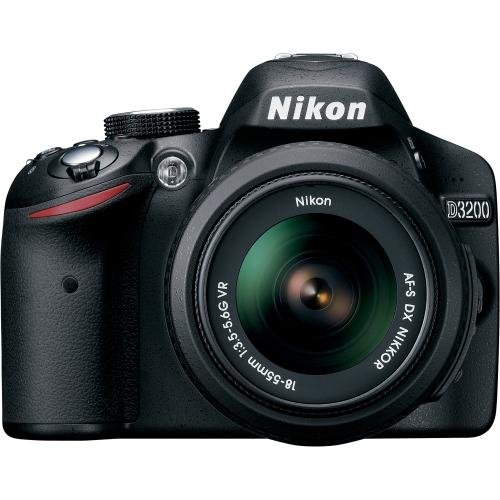
The Nikon D3200 is a certified refurbished DSLR that offers incredible value for price-conscious beginners. Its 24.2 MP DX-format CMOS sensor and EXPEED 3 image processor produce detailed images with excellent color reproduction, even in challenging lighting conditions. The 18-55mm f/3.5-5.6 AF-S DX NIKKOR zoom lens included in the kit delivers sharp results across its range.
The optical viewfinder provides a clear, real-time view, and the 3-inch 921K-dot LCD is adequate for reviewing images. One-touch Full HD 1080p movie recording at 30 fps gives video capability without complicated menus. The Guide Mode built into the camera walks beginners through different shooting scenarios, explaining settings as you adjust them—a fantastic learning tool.
As a refurbished unit, cosmetic wear is possible (scuffed icons, minor dirt), and it may ship with a third-party battery. The D3200 lacks built-in Wi-Fi, so sharing photos requires an optional adapter or memory card reader. It also uses the older SD card slot, which is compatible with modern cards. For a shoestring budget, it is a capable entry point.
Why it’s great
- Guide Mode teaches camera settings through real shooting scenarios step-by-step
- Certified refurbished pricing makes it the most affordable entry into a real DSLR system
Good to know
- No built-in Wi-Fi—sharing photos requires a separate adapter or card reader
- Refurbished units may show cosmetic wear and come with non-OEM accessories
10. Canon EOS R100 Bundle
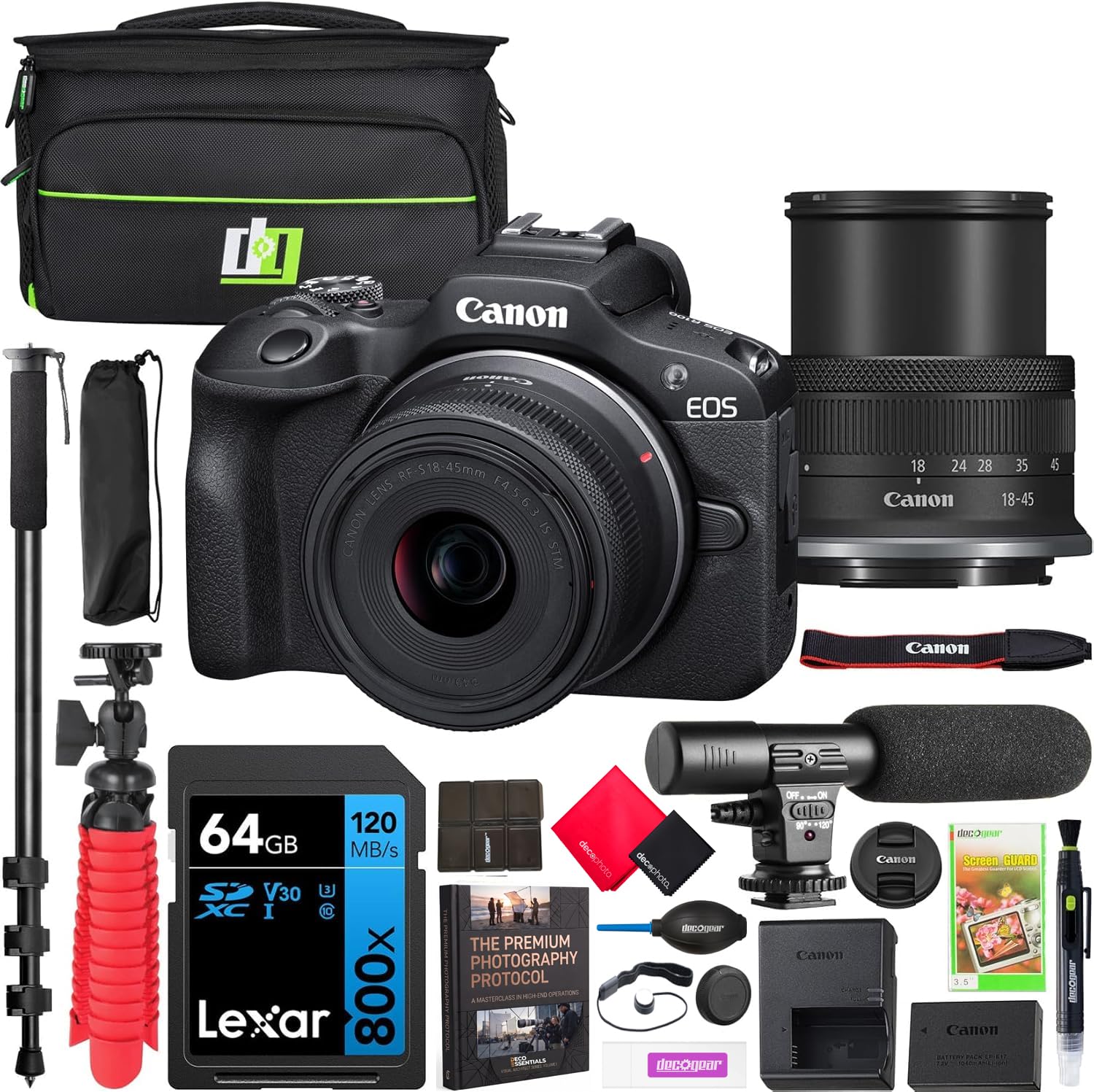
This bundle packages the Canon EOS R100 mirrorless camera with a comprehensive set of accessories designed to get a beginner shooting immediately. The camera itself features a 24.1 MP APS-C sensor and DIGIC 8 processor with Dual Pixel CMOS AF that provides face and eye detection. The RF-S 18-45mm f/4.5-6.3 IS STM lens is versatile for daily content, portraits, and street scenes.
Beyond the camera, the bundle includes a Deco Gear travel bag, a miniature shotgun microphone for improved video audio, a 72-inch monopod for stable telephoto shots, a tabletop tripod grip, a 64GB Lexar SD card, and software for basic photo editing. This all-in-one package removes the need to research separate purchases—everything arrives ready for use. It records 4K (cropped) video at 24 fps and Full HD up to 60 fps.
The included accessories are entry-level quality—the monopod and tripod are functional but not professional-grade. The 4K crop factor narrows the field of view significantly. For a beginner who wants a single box solution to start learning photography and video, this bundle minimizes the overwhelm of buying separate gear.
Why it’s great
- Comprehensive bundle includes bag, mic, tripod, monopod, and memory card—no extra purchases
- Dual Pixel CMOS AF with face/eye detection simplifies focusing for portrait and vlog work
Good to know
- 4K video uses a heavy crop, significantly reducing the field of view
- Included accessories are basic quality—adequate for learning, not for pro use
11. Sony Alpha a3000

The Sony Alpha a3000 is an entry-level mirrorless camera that uses a DSLR-shaped body with a large grip, making it comfortable to hold even with larger lenses. Its 20.1 MP Exmor APS-C sensor is the same size found in much more expensive Sony cameras, producing better image quality than smaller-sensor competitors. The included 18-55mm OSS lens provides optical stabilization for steady shots.
The electronic viewfinder (EVF) is low resolution but functional for framing shots in bright outdoor light where the LCD washes out. The a3000 has a dedicated mode dial, manual controls, and compatibility with the full Sony E-mount lens ecosystem—including affordable Sigma and Tamron lenses. It shoots Full HD 1080p video and supports RAW file format for deeper editing control.
The EVF and LCD both have low resolutions that can look pixelated. Battery life is poor by modern standards—expect 20-30% drain per hour. The autofocus system is contrast-detection only, which is slow in low light. For a bare-bones entry into a full APS-C system with interchangeable lenses, the a3000 is functional but shows its age.
Why it’s great
- APS-C sensor produces better image quality than smaller-sensor competitors at this price
- Comfortable DSLR-style grip makes handling large lenses easier than compact mirrorless bodies
Good to know
- Low-resolution EVF and LCD screens feel dated compared to modern mirrorless cameras
- Poor battery life drains quickly—carry spare batteries for extended shoots
FAQ
Is a DSLR or mirrorless camera better for a complete beginner?
How many megapixels do I really need in my first camera?
Should I buy a refurbished camera to save money?
What is the most important feature for learning photography?
Final Thoughts: The Verdict
For most users, the beginner digital camera winner is the Canon EOS R100 because it combines a modern mirrorless design with excellent image quality, simple controls, and room to grow into interchangeable lenses. If you want a compact video-first tool with incredible stabilization, grab the DJI Osmo Pocket 3. And for a budget-conscious learner who wants to master exposure fundamentals through a real optical viewfinder, nothing beats the Canon EOS Rebel T7.