
Our readers keep the lights on and the weekend projects moving. As an Amazon Associate, I earn from qualifying purchases.
A proper bean trellis changes that by lifting the canopy off the ground, letting you pack more plants into the same bed without the tangle. The right choice comes down to height, footprint, and the material’s ability to survive a full season of wind and heavy fruit.
I’m Rikta — the co-founder and writer behind FitlyFast. I’ve spent countless hours analyzing raised-bed geometry, soil-anchor systems, and load-testing data for climbing-plant supports so you don’t have to guess which frame will hold up under a mature bean canopy.
This guide cuts through the confusion around panels, towers, and A-frames to help you find the best bean trellis for your garden’s specific layout, giving you the confidence to buy a structure that stays upright through harvest.
How To Choose The Best Bean Trellis
Bean vines don’t self-cling — they twine. That means your trellis needs vertical elements thin enough for tendrils to wrap around, plus a stable base that won’t tip once the canopy grows dense and catches the wind. Choosing the right structure starts with understanding your bed size, the weight you expect at peak season, and how much assembly hassle you are willing to accept.
Height Versus Footprint
Pole beans push past six feet easily. A trellis shorter than that forces vines to double back, which creates shade and reduces airflow in the lower canopy. Look for a minimum height. On the ground, the trellis must fit inside your bed without hanging over the edge — an A-frame that rises to 70 inches but spreads 30 inches wide may crowd a narrow raised bed. Match the base footprint to your actual planting area before you buy.
Rust Protection and Metal Gauge
Bean trellises live outdoors through rain, dew, and soil moisture. Powder-coated steel resists corrosion far longer than bare metal or thin painted tubes. The coating also prevents sharp edges from cutting vine stems. Check customer reports about paint peeling after one season — a coating that fails mid-summer will expose the frame to rust and eventual collapse under a heavy harvest.
Opening Size for Harvest Access
Wide lattice openings let your hand reach through the trellis to pick beans without fighting the structure. Openings smaller than four inches make harvesting frustrating, especially for larger pods like Romano or yard-long beans. Square openings around six to eight inches strike the best balance between vine support and picking convenience. Tight mesh or netting may look tidy but traps leaves and slows airflow.
Quick Comparison
On smaller screens, swipe sideways to see the full table.
| Model | Category | Best For | Key Spec | Amazon |
|---|---|---|---|---|
| LifeisLuck Cucumber Trellis | A-Frame | Adjustable raised-bed support | 53″ H x 45″ W, metal + net | Amazon |
| yotoworth A-Frame Trellis | A-Frame | Dual-side planting in small beds | 71″ H x 31.5″ W, PE-coated metal | Amazon |
| MYMULIKE Obelisk Trellis (2-pack) | Obelisk | Container pots and compact spaces | 74.4″ H x 12″ W, coated metal | Amazon |
| Macteyia Wire Lattice Panel (2-pack) | Wall Panel | Fence-line or wall-side vertical growing | 86.7″ H x 19.7″ W, powder-coated iron | Amazon |
| AIMUCT Garden Arch Trellis | Arch | Walk-through arch for heavy producers | 86″ H x 52″ W, baked-paint coated | Amazon |
| Gardener’s Supply Large Bean Tower | Tower | Single-plant heavy support in raised beds | 75″ H x 14.5″ W, powder-coated steel | Amazon |
| VEVOR Garden Trellis (4-pack) | Panel | Large-scale multi-plant support | 87″ H x 20″ W, Q195 powder-coated metal | Amazon |
In‑Depth Reviews
1. AIMUCT Garden Arch Trellis
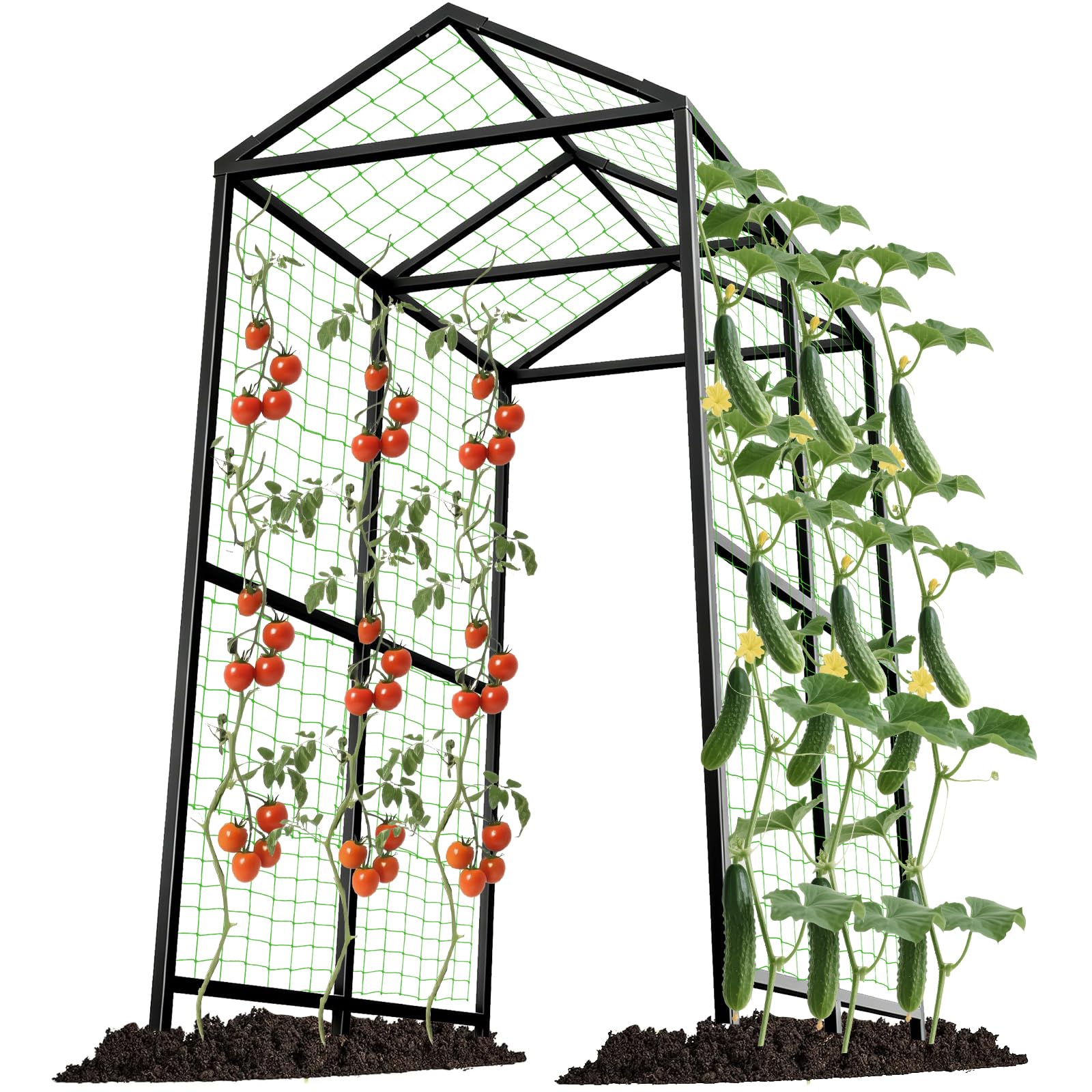
The AIMUCT arch clears 86 inches at its peak with a 52-inch span, creating a tunnel you can walk under while beans climb both sides. This house-style design doubles your planting edge per linear foot compared to a single-panel trellis, and the baked-paint coating on the iron-and-steel frame resists the rust that typically eats cheaper arch trellises after one wet season.
Assembling the arch takes roughly 45 minutes with two people — the ground stakes lock the legs deep enough to handle heavy squash and watermelon vines, as evidenced by buyer reports of the arch surviving multiple storms without tipping. The included netting adds a climbing matrix for beans, though some customers swapped the green netting for black to suit their garden’s look.
The arch footprint spans 52 inches wide and 71 inches deep, so it fits best across full-width raised beds or open soil rows rather than narrow containers. Given its structural capacity, this trellis supports heavy-bearing pole beans like Fortex or Scarlet Runner without bending, making it a good long-term investment for gardeners who want a single structure that serves both beans and winter squash.
Why it’s great
- Walk-through arch maximizes planting space on both sides
- Baked-paint coating and metal frame resist weather and heavy loads
- Stake anchors keep it firm through storms
Good to know
- Assembly takes around 45 minutes and is easier with two people
- Green netting may need swapping for aesthetic preference
2. Gardener’s Supply Company Large Bean Tower

The Gardener’s Supply Company Large Bean Tower stands 75 inches tall with a 14.5-inch-square footprint, rising straight up rather than spreading sideways — a critical advantage for raised beds where horizontal space is tight. The powder-coated steel panels use 7.5-inch square openings, which give your hand enough room to reach through and pick beans cleanly without snapping branches.
Buyers consistently call this tower “sturdy beyond expectations,” and the hinged panels fold flat for off-season storage, keeping the structure safe from weather when it is not in use. Multiple customers have bought a second tower after seeing the first hold mature clematis and beans without bending, and the green coating stays attached through rain and soil contact.
Some users noted that the corner snaps can pop loose during handling, but once the tower is placed into the soil, the weight of the vines and the anchoring provided by garden staples keep everything secure. For gardeners who rotate crops and need a tower that moves between beds without losing integrity, this is the most dependable option on this list.
Why it’s great
- Tall and narrow — fits tight raised beds without crowding
- 7.5-inch openings make bean harvesting easy
- Folds flat for compact off-season storage
Good to know
- Corner snaps may pop loose during transport
- Higher upfront cost than basic A-frames
3. VEVOR Garden Trellis (4-Pack)
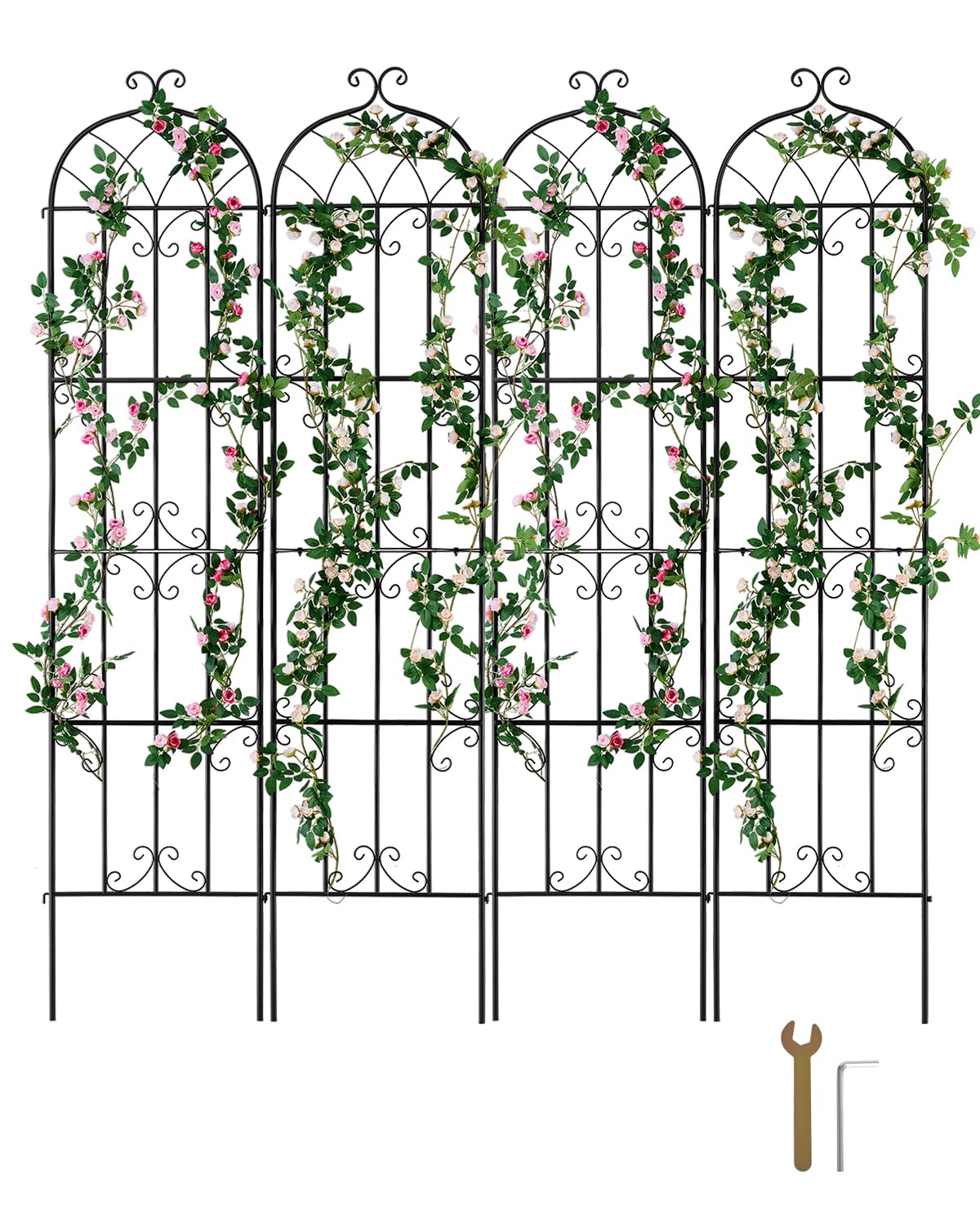
The VEVOR 4-Pack gives you four panels that each stand 87 inches tall and 20 inches wide, constructed from Q195 metal with a powder-coated black finish. At 26.5 pounds total for the set, these panels feel substantial — they resist bending even when loaded with mature pole beans on both sides, and the coating holds up to full sun without fading or flaking.
Assembly is simple: two nuts and bolts per panel, no special tools required. Customers have used these panels behind blackberries, against fence lines, and as standalone bean trellises in rows, reporting that the panels remain straight after windy nights. The 20-inch width means you can space them along a bed to create a continuous trellis wall, which is ideal for gardeners planting beans in dedicated rows rather than clusters.
When inserted into the ground, the panels sit a bit shorter because the legs sink into the soil, so account for that if you need a full 87-inch climbing height. The rectangular shape and narrow profile make these panels less suitable as standalone supports for vining crops in deep containers — they work best when anchored into the earth along a border or raised-bed edge.
Why it’s great
- Four panels for large-scale bean rows
- Heavy-gauge Q195 metal resists bending
- Simple bolt assembly, no tools needed
Good to know
- Actual climbing height drops after insertion into soil
- Narrow profile limits use in deep pots
4. Macteyia Wire Lattice Panel (2-Pack)
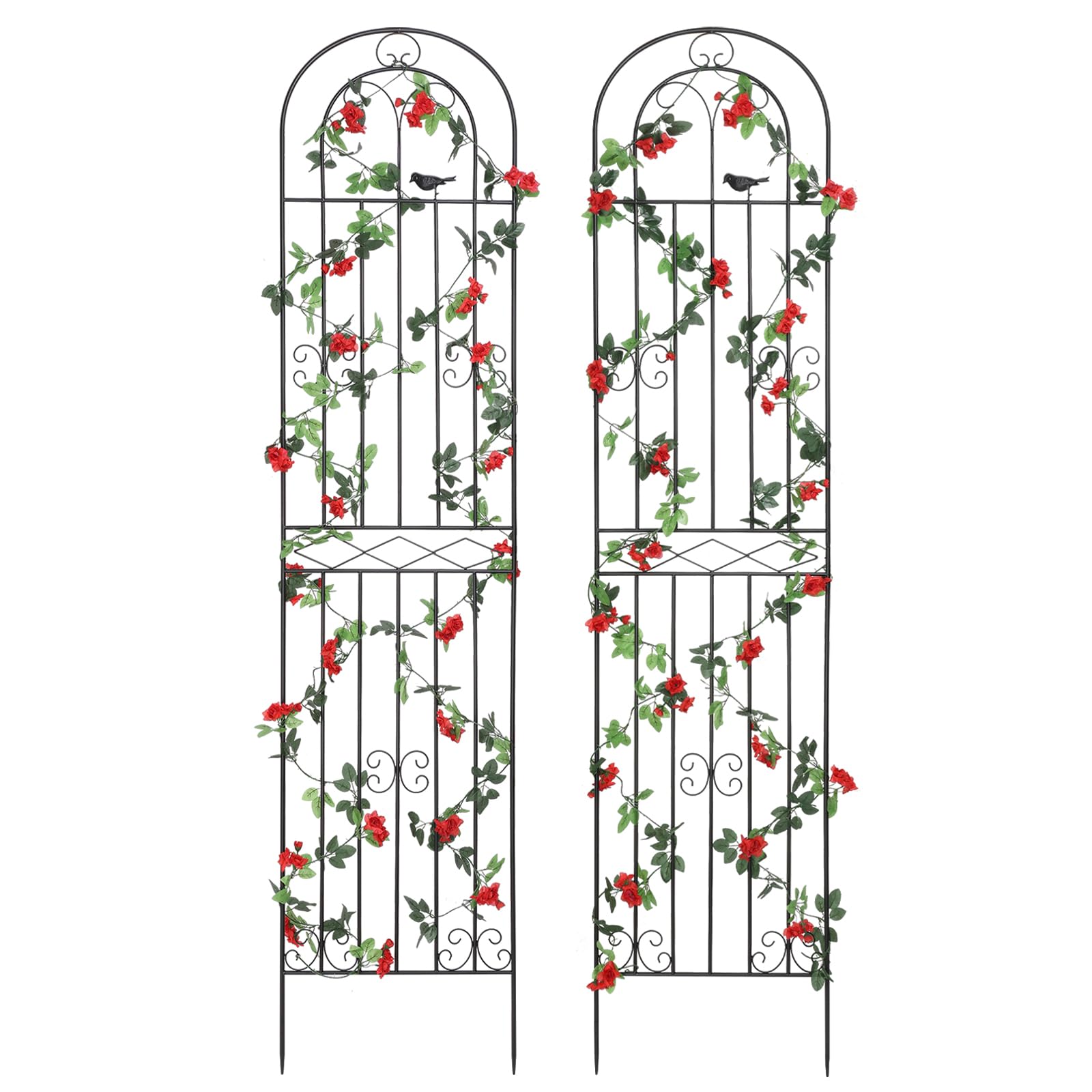
The Macteyia pair reaches 86.7 inches tall and 19.7 inches wide with a semi-circular top and decorative bird motif, so these panels serve as both a functional bean trellis and an ornamental garden feature. The powder-coated iron frame weighs 12 pounds per pair, and the 8.46-inch ground spikes help anchor the structure firmly in soil or against a wall.
Buyers praise the trellis’s appearance even before vines cover it — the black powder coating matches most fence and deck colors, and the bird pattern adds visual interest to an otherwise utilitarian structure. For beans, the wire lattice offers plenty of thin vertical surfaces for tendrils to grab, and the height comfortably supports tall pole varieties.
The wing nuts that hold the top legs into the bottom legs protrude outward, which some users consider a minor visual distraction. Additionally, the slim footprint means you need to either secure the panel to a fence or use the included stakes deeply, because a dense bean canopy can catch wind and push the panel over if it is surface-mounted.
Why it’s great
- Decorative bird motif looks good even without foliage
- Tall enough (86.7 inches) for any pole bean variety
- Rust-resistant powder coating on iron
Good to know
- Wing nuts on the front are visible
- Needs deep anchoring to stay upright under full vine weight
5. yotoworth A-Frame Trellis
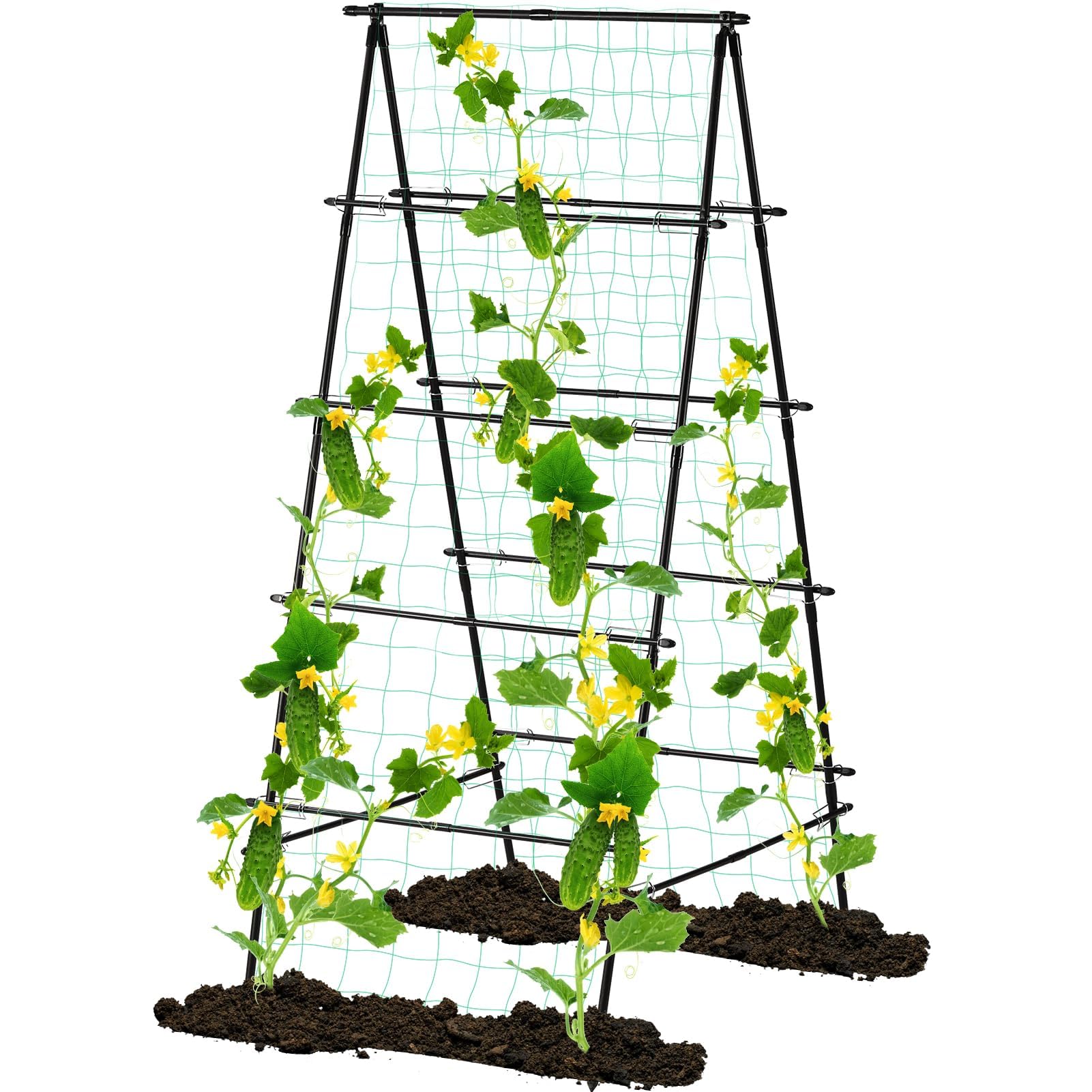
The yotoworth A-Frame measures 70.8 inches tall by 31.5 inches wide, using PE-coated metal pipes that resist rust and avoid the heat absorption that makes bare metal dangerous for plant stems. The A-shaped design lets you plant climbing vegetables on both sloping sides, effectively doubling your growing surface within a single modular frame that fits into standard raised beds.
Assembly takes about 20 minutes with clear instructions, though the clips that lock each joint must be used correctly — skipping them caused flimsiness in some early buyer builds. Once properly secured, the trellis handles cucumbers, watermelons, and pole beans with no sagging, as confirmed by a customer who grew 30 watermelons on this frame alone.
The main caution involves the netting that comes with the trellis: several buyers reported that the netting hanging to the ground can trap small animals, so cutting it above the lowest horizontal pole is recommended. Beyond that, the A-frame offers a straightforward, affordable way to get beans off the ground without needing wall support.
Why it’s great
- Dual-slope design doubles the planting surface
- PE coating prevents rust and heat damage
- Sturdy enough for heavy cucurbits like watermelon
Good to know
- Connector clips are essential for stability
- Netting near the ground can become an animal hazard
6. LifeisLuck Cucumber Trellis for Raised Beds
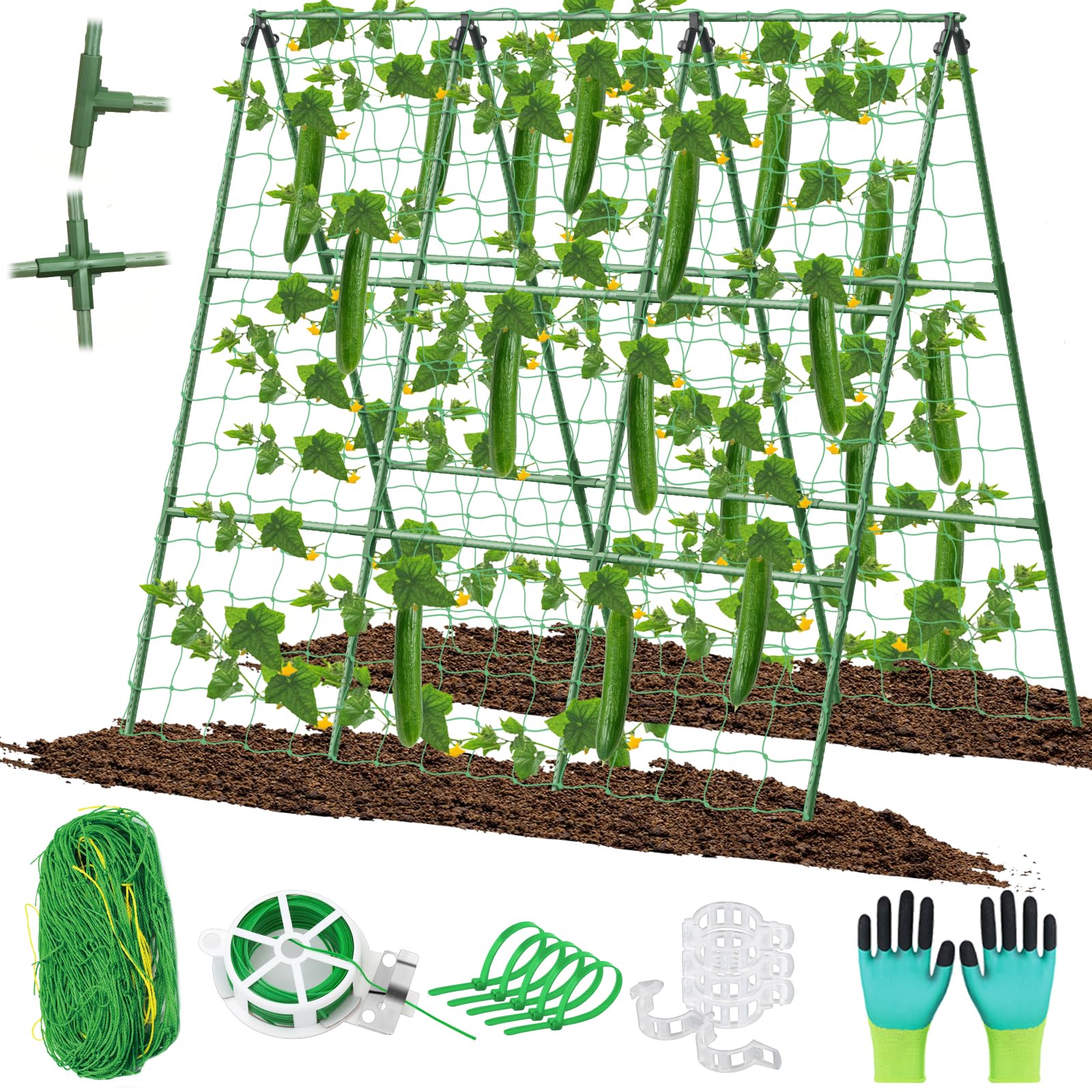
The LifeisLuck trellis uses a modular A-frame system with 37 straight stakes, four A-fork connectors, and ten equal-Tee plus ten equal-Cross connection points, giving you a highly configurable frame that can be adjusted to fit beds of different shapes. The frame stands 53 inches tall and 45 inches wide, with climbing netting that can be cut to any size and secured using the included cable zip ties.
Customer feedback praises the trellis for its ease of assembly — no tools required — and its value proposition for raised beds, especially for tomatoes, cucumbers, and beans. The powder-coated metal construction resists light weathering, and the triangular shape provides inherent stability that keeps the structure upright even when vines become dense.
The down side is that the netting included is basic and can sag under heavy fruit, so some users replace it with sturdier garden twine after the first season. The overall height of 53 inches is adequate for bush beans and shorter climbing varieties but may be too short for full-season pole beans that push past six feet. Consider this trellis for compact beds where you want adjustability and quick setup without a large footprint.
Why it’s great
- Highly adjustable with multiple connector types
- Tool-free assembly works for any raised bed size
- Triangular shape is naturally stable
Good to know
- Netting may need replacement for heavy harvests
- 53-inch height is short for full-height pole beans
7. MYMULIKE Obelisk Trellis (2-Pack)
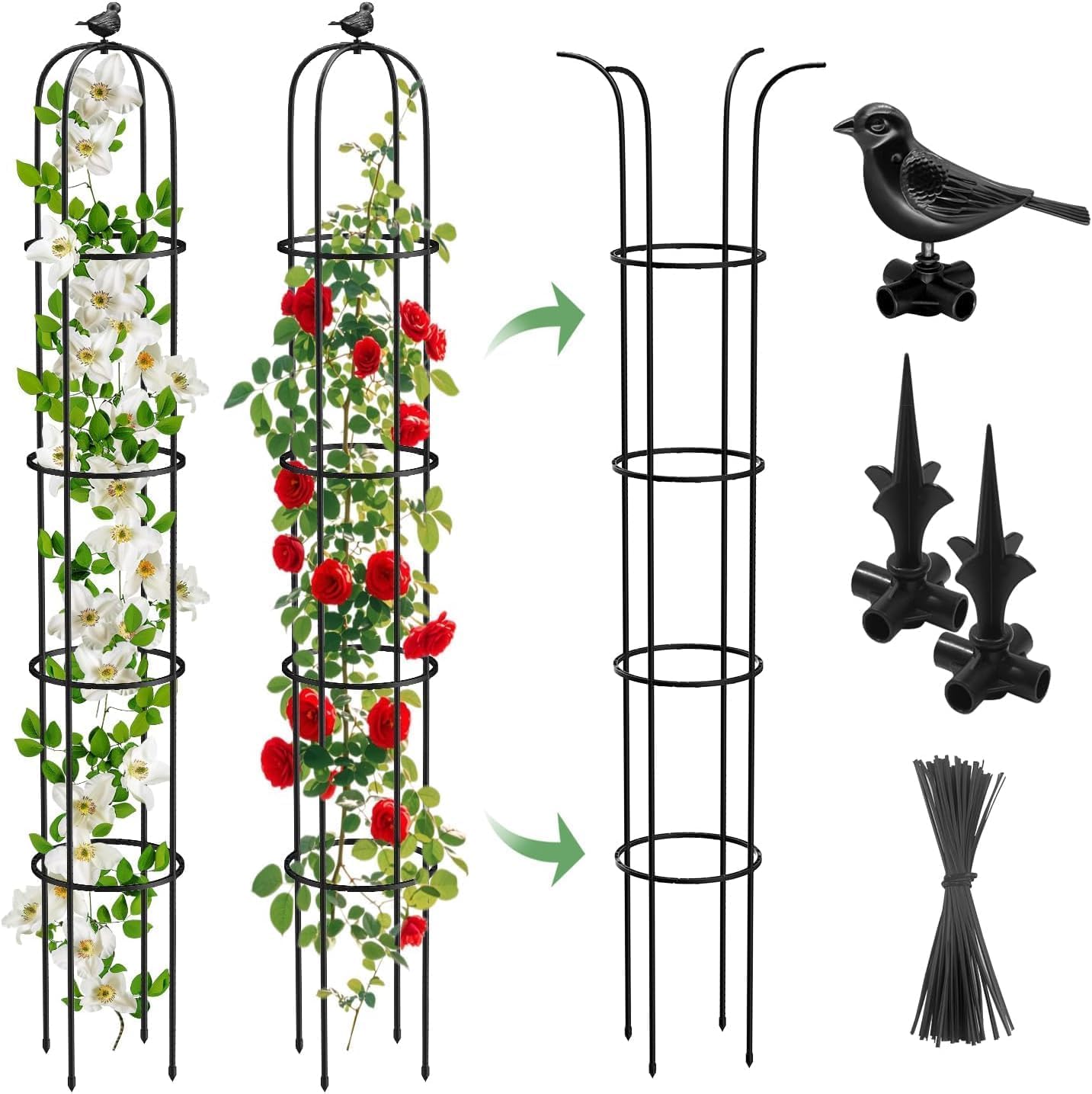
The MYMULIKE obelisk stands 74.4 inches tall with a round 12-inch footprint, making it the slimmest trellis on this list — ideal for container-grown beans or tight corners in a raised bed where you want a single focal-point plant support. The coated metal tubes snap together without screws or tools, and the design includes a bird-shaped finial and two fleur-de-lis alternative caps for decorative flexibility.
Buyers appreciate the adjustable height — the detachable sections let you set the trellis at four different levels depending on the mature size of your plant. The plastic-over-metal construction keeps the frame lightweight, and the vinyl coating prevents rust from forming during wet seasons. The obelisk’s shape also works well for flowering vines like clematis and roses, giving you a dual-purpose support that transitions between vegetable and ornamental seasons.
Some users found that the horizontal support rings are plastic rather than metal, which can make the structure feel wobbly before plants provide lateral bracing. The lightweight build also means the obelisk can tip in high wind unless it is firmly pressed into the soil or weighted at the base, so it works best in sheltered spots or deep containers.
Why it’s great
- Slim 12-inch footprint fits containers and tight spaces
- Adjustable height with multiple capped sections
- Rust-proof vinyl coating on metal tubes
Good to know
- Plastic horizontal rings reduce structural rigidity
- Lightweight frame may tip in exposed, windy spots
FAQ
How tall should a bean trellis be to support pole beans?
What is the difference between an A-frame trellis and a tower for beans?
Final Thoughts: The Verdict
For most users, the best bean trellis winner is the Gardener’s Supply Company Large Bean Tower because the 75-inch height, powder-coated steel construction, and fold-flat storage cover the core needs of raised-bed bean growers without wasted horizontal space. If you want a walk-through arch that serves both beans and heavy squash in a wide bed, grab the AIMUCT Garden Arch Trellis. And for covering a long bean row across multiple beds, nothing beats the VEVOR Garden Trellis 4-Pack for its combination of price per panel and structural integrity.