
Our readers keep the lights on and the weekend projects moving. As an Amazon Associate, I earn from qualifying purchases.
Selecting the wrong lubricant for your air compressor is a fast track to overheating, carbon varnish buildup, and premature pump failure. The best oils resist thermal breakdown, prevent foaming, and maintain a durable film between metal surfaces even under continuous heavy loads — a non-negotiable for shop and industrial compressors alike.
I’m Rikta — the co-founder and writer behind FitlyFast. My process for this guide involved cross-referencing OEM viscosity recommendations, flash point data, and additive chemistry across dozens of lubricant formulations to identify the oils that genuinely protect compressor pumps.
Whether you maintain a single garage unit or a fleet of reciprocating machines, finding the right viscosity and synthetic blend matters. After many hours of research, I have compiled the definitive review of the best air compressor oil for every budget and pump type.
How To Choose The Best Air Compressor Oil
Picking the right compressor oil is not about brand loyalty — it is about matching viscosity, additive chemistry, and thermal tolerance to your specific pump design. A mistake here can cause costly repairs within a few hundred operating hours.
Viscosity Grade: ISO 100 vs ISO 46
Most reciprocating piston compressors require ISO 100 (equivalent to SAE 30) oil, which provides a thick enough film to seal rings and bearings at high pump temperatures. Rotary screw and vane compressors typically need ISO 46 (SAE 20) for proper circulation in tight tolerance chambers. Always check your owner’s manual — using an incorrect ISO grade can starve the pump of lubrication or cause excessive drag.
Synthetic vs Conventional: Thermal Stability
Full synthetic oils resist oxidation and varnish formation at much higher temperatures than conventional petroleum-based oils. Synthetics also maintain a more consistent viscosity across cold starts and hot running conditions, which reduces wear during startup and extends drain intervals. For compressors that run daily or in unheated workshops, synthetic formulations justify their higher upfront cost through longer pump life.
Non-Detergent Formulation
Air compressor pumps require non-detergent oil to prevent foaming and the suspension of contaminants. Detergent motor oils designed for car engines can trap moisture and debris in suspension, which accelerates varnish buildup inside the compressor’s cooling fins and valves. Look for “non-detergent” explicitly stated on the label — it is not a marketing term, it is a mechanical requirement.
Quick Comparison
On smaller screens, swipe sideways to see the full table.
| Model | Category | Best For | Key Spec | Amazon |
|---|---|---|---|---|
| Ingersoll Rand 38436721 | Premium Synthetic | IR pumps & temperature extremes | 4x longer than petroleum | Amazon |
| DEWALT D55001 | Full Synthetic | Noise & vibration reduction | 32 fl oz synthetic blend | Amazon |
| TriboDyn TRI-Guard 1100 | Long-Life Synthetic | Extended 8,000-hour intervals | Flash point 262°C | Amazon |
| Triax Kompressor MV | Multi-Vis Synthetic | Arctic to desert climates | ISO 46, range -49°F to 140°F+ | Amazon |
| Royal Purple 01030 | Entry-Level Synthetic | Budget-friendly pump protection | SAE 30, flash point 232°C | Amazon |
| Mobil Rarus 427 | Established Brand | Trusted replacement oil | 32 fl oz, synthetic formula | Amazon |
| Milton 1002 | Conventional Bulk | High-volume fleet maintenance | 1 gallon, ISO 100 petroleum | Amazon |
In‑Depth Reviews
1. Ingersoll Rand 38436721 All Season Select

The Ingersoll Rand All Season Select is the OEM-spec synthetic for reciprocating compressors from the most recognized name in the industry. Its all-temperature blend maintains a stable viscosity from freezing startups to continuous heavy cycling, and long-term users report that the oil stays nearly clear with no particulate formation even during pump break-in periods — a strong indicator of superior thermal and oxidative stability.
Real-world testing on an aging pump showed a 20°F drop in head temperature after only five pressure cycles from zero to 130 PSI compared to a conventional ISO 100 oil. This cooler operation directly reduces carbon varnish formation on valves and extends the interval between rebuilds. The one-liter bottle provides precisely enough for two standard oil changes on a 60-gallon single-stage unit.
The price is higher than generic alternatives, but trivial when amortized over a year of reliable pump protection. For owners of Ingersoll Rand compressors who want a factory-specified lubricant, this is the cleanest choice available. It also performs well in other brand reciprocating pumps that call for non-detergent synthetic oil.
Why it’s great
- OEM spec for Ingersoll Rand pumps
- Runs 20°F cooler than conventional oil
- Excellent thermal stability — stays clear
Good to know
- Premium price per quart
- One-liter size may be small for large dual-stage pumps
2. DEWALT D55001 Compressor Oil

DEWALT’s D55001 is a full-synthetic, non-detergent oil that customers consistently report reduces vibration and noise compared to the mineral oils that ship with many new compressors. Several users switching from conventional 20W or 30W oils noted an immediate improvement in start-up ease on 110-volt circuits and quieter operation across the duty cycle.
The synthetic base handles cold Minnesota winters without thickening, and the blue tint makes level checks in the sight glass straightforward — a small but practical advantage over crystal-clear oils that can be hard to see. The quart bottle contains exactly 32 fluid ounces, which fills most small to midsize pump crankcases with minimal waste.
Be aware that switching from a mineral oil to a synthetic may require an early re-change after the initial fill to flush any residual deposits. Once the system stabilizes, the D55001 maintains its clarity far longer than petroleum-based alternatives. It is a solid middle-ground option for DEWALT owners and universal-fit compressors alike.
Why it’s great
- Noticeably quieter and less vibration
- Blue tint for easy sight-glass checks
- Full synthetic for cold-start performance
Good to know
- Recommend early re-change when switching from mineral oil
- Price is above entry-level synthetics
3. TriboDyn TRI-Guard 1100
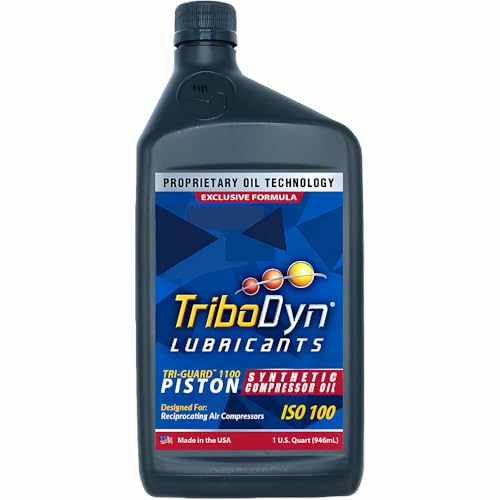
TriboDyn builds the TRI-Guard 1100 around a full-synthetic base and their proprietary TriGuard additive package, designed specifically for piston-type compressors that demand extended service intervals. The oil boasts an 8,000-hour rated service life — roughly four times longer than conventional synthetics — thanks to low volatility and exceptional resistance to oxidation at high operating temperatures.
The 262°C flash point is one of the highest in this roundup, meaning the oil will not vaporize or burn off inside a hot pump head during extended run cycles. Users of Yong Heng high-pressure PCP compressors report that the TRI-Guard stays visibly clear far longer than generic alternatives, which is a strong signal that varnish and sludge formation are being suppressed effectively.
For shop compressors that run multiple hours daily, the extended drain interval offsets the higher per-quart cost. The multi-viscosity formulation also provides reliable flow across temperature swings, so cold starts in unheated garages are less stressful on the pump’s bearings and valves.
Why it’s great
- 8,000-hour rated service life
- Very high 262°C flash point
- Excellent clarity retention under use
Good to know
- Primarily for piston-type compressors only
- Premium cost per quart
4. Triax Kompressor MV ISO 46

The Triax Kompressor MV is a full-synthetic, multi-viscosity lubricant engineered for rotary vane, screw, and reciprocating compressors. Its wide temperature rating — from -49°F Arctic conditions to above 140°F — means you can run the same oil year-round without seasonal viscosity swaps. True multi-viscosity fluids like this one thin out less at high temperatures and stay pumpable in the cold, which is critical for outdoor or unheated installations.
The industrial-grade formula claims up to 1000% higher load-bearing capacity than conventional oils, and the non-detergent chemistry prevents foaming inside the pump chamber. Users report compatibility with Craftsman, MI-T-M, and other common workshop compressors that specify a non-detergent 30W or ISO 46 lubricant. The oil is transparent, however, which makes checking the level in a sight glass slightly more difficult than tinted alternatives.
One buyer noted that their new MI-T-M wheelbarrow compressor accepted the Triax perfectly per the manual’s non-detergent 30W spec. For anyone operating a compressor in a climate with temperature swings greater than 50°F, the Kompressor MV eliminates the need for seasonal oil changes entirely.
Why it’s great
- True multi-viscosity from -49°F to over 140°F
- Non-detergent, no foaming
- Compatible with multiple compressor types
Good to know
- Clear oil is hard to see in sight glass
- ISO 46 — verify your pump spec before buying
5. Royal Purple 01030 SAE 30
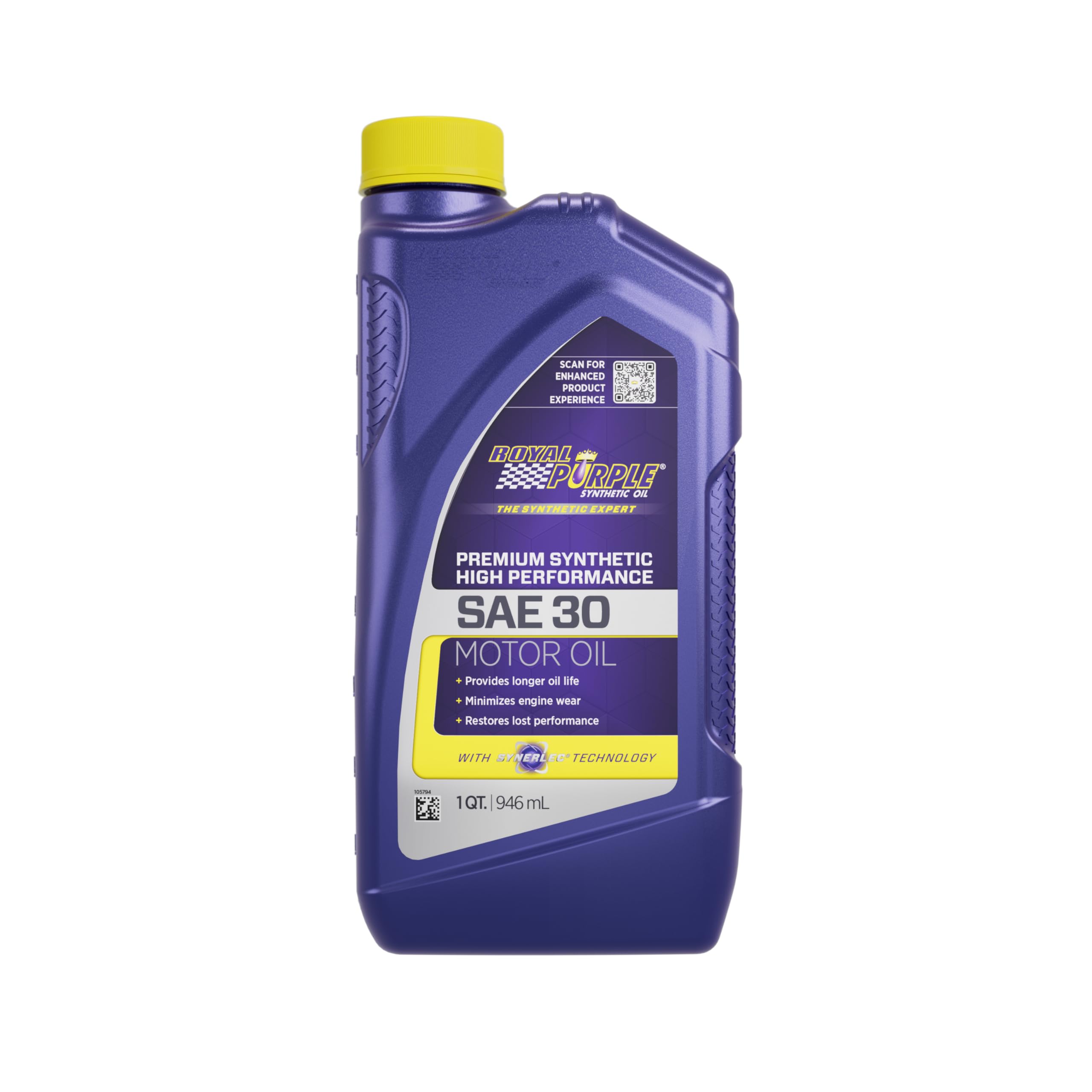
Royal Purple’s SAE 30 synthetic motor oil has a passionate following among small-engine owners who use it in lawn mowers, chippers, and tillers, but it also works as a compressor oil when you are on a strict budget. Its 232°C flash point is adequate for light-duty piston pumps, and the synthetic base provides better wear protection than conventional mineral oils at a very accessible price point.
Long-term users report 16+ years of service in small engines without a single failure, even after water intrusion into the crankcase — a durability testament that speaks to the oil’s corrosion resistance. For compressors that see intermittent home-use duty rather than daily commercial operation, the Royal Purple offers a genuine synthetic option without the premium markup.
The main caveat is that Royal Purple 01030 is marketed as a motor oil, not a compressor-specific lubricant. While it is non-detergent and has the correct SAE 30 viscosity for many piston pumps, it lacks the anti-foaming and anti-varnish additives purpose-built for compressor environments. For light-use garage compressors, it works fine; for heavy-duty or continuous operation, a dedicated compressor oil is still preferable.
Why it’s great
- Genuine synthetic at a low price point
- Excellent corrosion and wear protection
- Proven reliability over many years in small engines
Good to know
- Not specifically formulated for compressors
- Lacks compressor-specific anti-foam additives
6. Mobil Rarus 427 Compressor Oil

Mobil Rarus 427 is a synthetic compressor oil from one of the most trusted names in industrial lubricants. With a flash point of 480°F (approximately 249°C), it offers excellent thermal stability for reciprocating compressors that push head temperatures into the danger zone for conventional oils. The clear appearance and clean-running formula help keep valves and cooling fins free of carbon deposits over time.
Multiple verified buyers confirm that the oil performs exactly as expected — “works as intended” is the typical verdict, which is exactly what you want from a replacement lubricant. The price sits in the mid-range, making it a reasonable choice for owners who prefer a dedicated compressor oil from a major refining company rather than a multi-purpose synthetic.
One buyer noted they would repurchase the Rarus 427 for their annual oil change without hesitation. For anyone who values brand consistency and wants a product backed by Mobil’s industrial engineering resources, this quart delivers dependable performance with no surprises.
Why it’s great
- Trusted Mobil industrial lubricant heritage
- High 480°F flash point
- Clean-running, low carbon formation
Good to know
- Mid-range price without extended service claims
- Single quart size only
7. Milton 1002 ISO-100 Conventional Oil

The Milton 1002 is a conventional petroleum-based oil in ISO 100 viscosity, packaged in a full-gallon container. For fleet maintenance or workshops with multiple compressors, this bulk format delivers the lowest cost per ounce of any option in this guide. The petroleum base meets the needs of most reciprocating pumps that do not demand synthetic performance, especially in moderate climates.
Several buyers report that switching to Milton 1002 actually made their compressors run cooler than the unknown-brand oil they had been using previously, suggesting that even conventional oils vary significantly in quality. Milton is a long-established brand in pneumatic accessories, so the oil comes with a reputation for reliability in maintenance settings.
The obvious trade-off is that conventional oil lacks the thermal stability and extended drain intervals of synthetics. In hot environments or with continuous-duty compressors, the oil will degrade faster and require more frequent changes. For light-use garage compressors or high-volume fleet applications where frequent oil changes are standard, the gallon jug is a smart, economical choice.
Why it’s great
- Lowest cost per ounce in the roundup
- Full-gallon container reduces refill frequency
- Trusted Milton brand for pneumatic equipment
Good to know
- Conventional petroleum — shorter service life than synthetics
- Not suitable for rotary screw compressors
FAQ
Can I use regular motor oil in my air compressor?
How often should I change air compressor oil?
What does ISO 100 mean on a compressor oil bottle?
Final Thoughts: The Verdict
For most users, the best air compressor oil winner is the Ingersoll Rand 38436721 because it combines OEM precision blending with proven temperature reduction and exceptional cleanliness. If you want a quieter-running pump that starts easier in cold weather, grab the DEWALT D55001. And for maximum service intervals on a heavily used piston compressor, nothing beats the long-life formulation of the TriboDyn TRI-Guard 1100.