
Our readers keep the lights on and the weekend projects moving. As an Amazon Associate, I earn from qualifying purchases.
The tween years are a sweet spot for board games — old enough to grasp layered strategy, young enough to still want family game night. But the wrong pick lands with a thud: too childish and they roll their eyes, too complex and the rulebook collects dust. The key is finding games that challenge their evolving minds while keeping the fun immediate and the competition light.
I’m Rikta — the co-founder and writer behind FitlyFast. I’ve spent countless hours analyzing gameplay mechanics, component quality, and age-appropriateness to find the board games that genuinely engage this tricky age group.
Whether you need a fast 20-minute filler or a 90-minute strategy epic, this guide breaks down the very best board games for tweens across every style of play.
How To Choose The Best Board Games For Tweens
The right game for a 10-year-old differs from what works at 13. Tweens want to feel grown-up but still need accessible rules and quick payoff. Focus on these four factors.
Playtime and Attention Span
Look for games that run 20–60 minutes. Longer than 90 minutes and even dedicated tweens will check out. Shorter than 15 minutes can feel unsatisfying for this age. Games like Tetris: The Board Game and Battle Sheep wrap in about 20 minutes — perfect for a weeknight round.
Player Count Flexibility
A tween’s social life is unpredictable. Some nights it’s two-player with a sibling, other nights four or five friends come over. Prioritize games that scale well: Ticket to Ride works from 2 to 5 players, Codenames shines with 4 to 8, and Harmonies even offers a robust solo mode.
Strategic Depth vs. Luck
Pure luck games bore the tween mind. Pure strategy can frustrate. The best games blend both: CATAN relies on dice but rewards smart trading, and Codenames demands clever word association without punishing new players too harshly. Avoid games where a single bad roll ends the fun.
Quick Comparison
On smaller screens, swipe sideways to see the full table.
| Model | Category | Best For | Key Spec | Amazon |
|---|---|---|---|---|
| CATAN (6th Edition) | Strategy | Resource management & negotiation | 60–90 min playtime | Amazon |
| Ticket to Ride (2025 Refresh) | Route Building | Accessible set collection & planning ahead | 2–5 players | Amazon |
| Harmonies | Tile Laying | Relaxed solo or small-group puzzling | 120 wooden tokens | Amazon |
| Codenames (2nd Edition) | Word Game | Large groups & creative thinking | 400 codenames | Amazon |
| Battle Sheep | Abstract Strategy | Quick tactical brain burners | ~20 minute playtime | Amazon |
| QUOKKA USA Map Game | Educational | Learning geography through play | 120 question cards | Amazon |
| Spin Master Tetris | Real-Life Puzzle | Physical Tetris adaptation for puzzle lovers | 128 Tetriminos | Amazon |
In‑Depth Reviews
1. CATAN Board Game (6th Edition)

No modern board game library for tweens is complete without CATAN. The 6th edition delivers the same classic mix of resource gathering, trading, and settlement building that has captivated players for decades, but with improved components — chunkier wooden pieces and card trays that actually hold the decks. The randomized hexagonal board ensures no two games unfold the same way, a critical factor for keeping tweens engaged across repeat plays.
For tweens ages 10 and up, CATAN teaches natural negotiation and risk assessment without feeling like schoolwork. Players must decide when to trade their sheep for brick and when to hoard resources, all while watching the robber threaten their production. The 60-to-90-minute playtime fits weekend afternoons well, and the new rulebook streamlines the learning curve significantly compared to earlier editions.
One consideration: the player count maxes at four without an expansion, and competitive trades can trigger the occasional argument among siblings. But that social friction is part of the game’s charm — it’s a controlled environment for learning deal-making and graceful defeat.
Why it’s great
- Endless replayability from modular board
- Teaches resource management and negotiation organically
- 6th edition has improved components and clearer rules
Good to know
- Dice can introduce frustrating hot streaks
- Best with exactly 4 players
- Plays closer to 90 minutes when learning
2. Ticket to Ride Board Game (2025 Refresh)
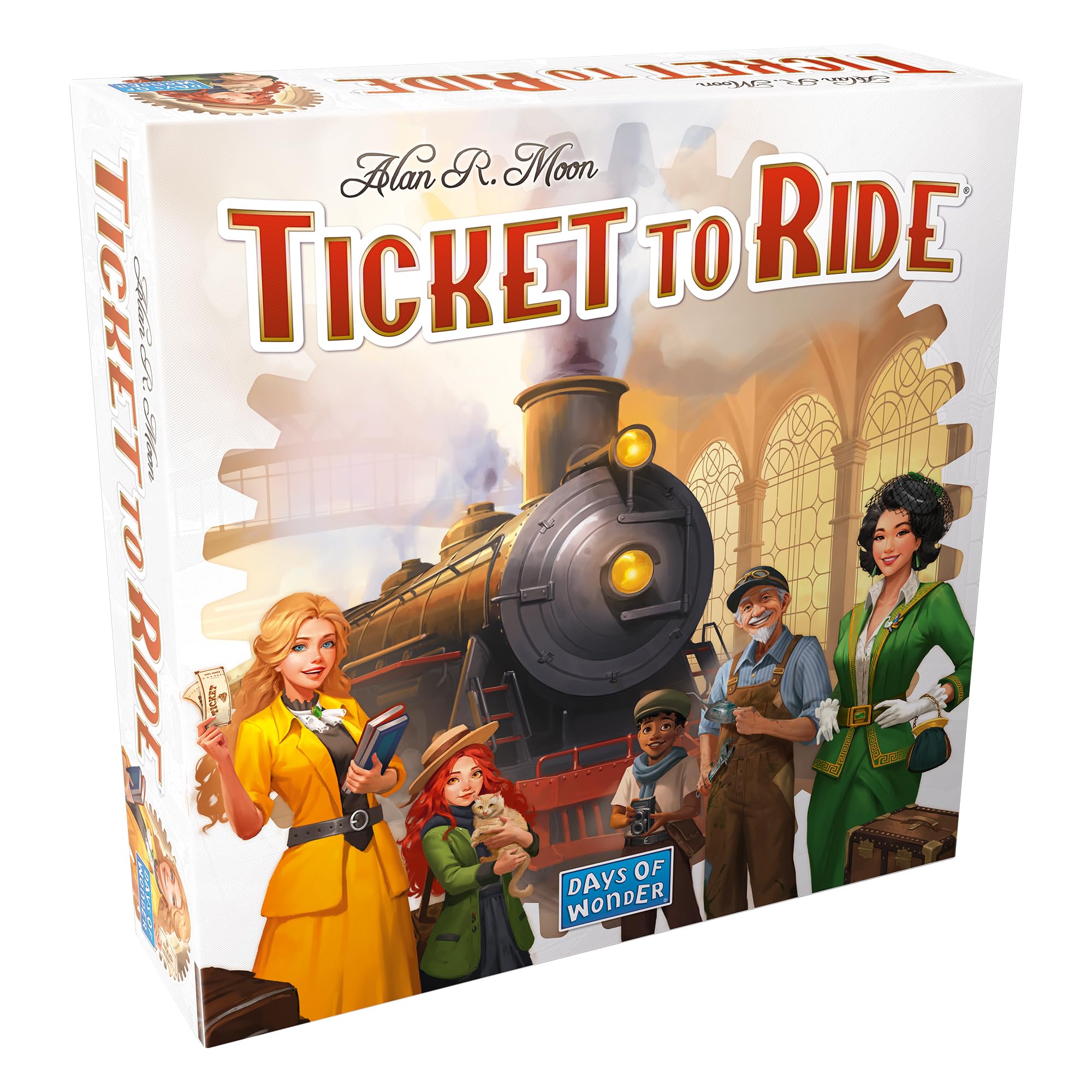
Ticket to Ride has earned its reputation as the quintessential gateway board game for good reason: the rules fit on one page but the strategic space is surprisingly deep. The 2025 refresh keeps the beloved cross-country train route building while updating the map and components. Each player collects colored train cards to claim railway routes between North American cities, competing to complete their destination tickets while eyeing the longest continuous pathway.
For tweens ages 8 and up, the tactile pleasure of placing plastic trains on the map is immediate and satisfying. The game’s core tension — whether to hoard cards for a long route or grab short segments before an opponent blocks you — teaches forward planning without analysis paralysis. Sessions run 30 to 60 minutes depending on player count, making it accessible for weeknight play.
The geography angle gives it a subtle educational hook: tweens start recognizing city names and regions on the map. The game supports up to five players, so it flexes well from family dinners to sleepovers. The only downside is that early ticket draws can heavily influence outcomes, which may frustrate competitive types.
Why it’s great
- One-minute teach with hours of strategic play
- Beautiful tactile components and map
- Scales well from 2 to 5 players
Good to know
- Ticket draw luck can decide the winner
- Low player interaction compared to CATAN
- Refresh may not mix with older editions
3. Asmodee Harmonies Board Game

Harmonies brings a quieter, more contemplative experience to the tween table — a tile-laying game where players build 3D landscapes and populate them with animal tokens according to specific pattern cards. The production quality is exceptional: 120 wooden tokens, thick card stock, and an art style that feels like a picture book come to life. Each game creates a unique topographical puzzle that rewards spatial reasoning and forward planning.
Rated for ages 10 and up, Harmonies is ideal for the tween who prefers mental challenge over loud competition. The solo mode is a standout feature — rare for games in this category — allowing a child to play independently while still feeling the weight of real strategic decisions. A full game takes about 30 minutes, and the three difficulty levels on the animal cards keep it fresh across dozens of plays.
The trade-off is minimal direct player interaction. Harmonies is essentially a multiplayer solitaire experience where players share the same card market but build their own worlds. This makes it perfect for non-confrontational play but less exciting for tweens who love blocking and stealing from opponents. It works best as a calming wind-down game or for solo afternoons.
Why it’s great
- Stunning wooden components and artwork
- Excellent solo mode for independent play
- Multiple difficulty levels boost replayability
Good to know
- Very little player interaction
- Can end abruptly with right card draws
- Not ideal for loud, competitive groups
4. CGE Codenames Board Game (2nd Edition)
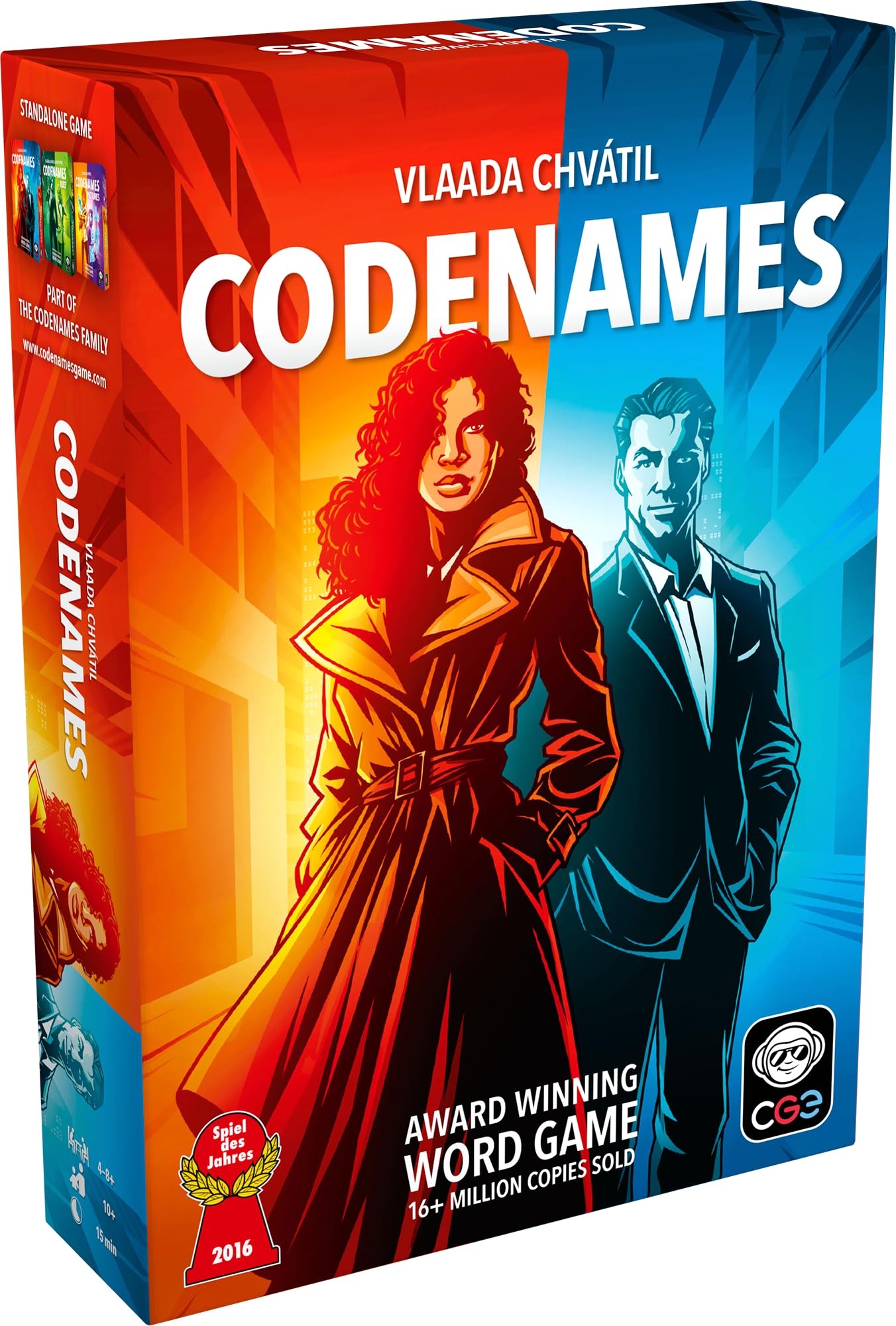
Codenames is the ultimate large-group game for tweens — it scales effortlessly from four players to eight or more and requires nothing more than language skills and creative thinking. Two teams compete as spymasters give one-word clues to guide their teammates toward matching codenames on a 5×5 grid while avoiding the assassin that instantly ends the game. The 2nd edition includes 400 fresh codenames, revised art, and a better card organizer.
For tweens ages 10 and up, Codenames is a stealth vocabulary builder. Players must find connections between seemingly unrelated words — “palm 3” could reference tree, hand, and beach — which flexes lateral thinking muscles. Games are fast, about 15 minutes per round, and the team format diffuses pressure on individual players. It works brilliantly for parties, sleepovers, or any scenario where you have more than four kids.
The biggest challenge is the spymaster role: younger tweens or less verbal players may struggle to deliver tight clues, and the spymaster has downtime between turns. But the game remains incredibly accessible for the price, and the 400-word library means you can play dozens of sessions before encountering repeat clues.
Why it’s great
- Handles large groups effortlessly
- Sharpens vocabulary and lateral thinking
- Fast rounds keep energy high
Good to know
- Spymaster role can be stressful for new players
- Limited player count without team expansion
- Word difficulty varies widely
5. Battle Sheep Abstract Strategy Board Game
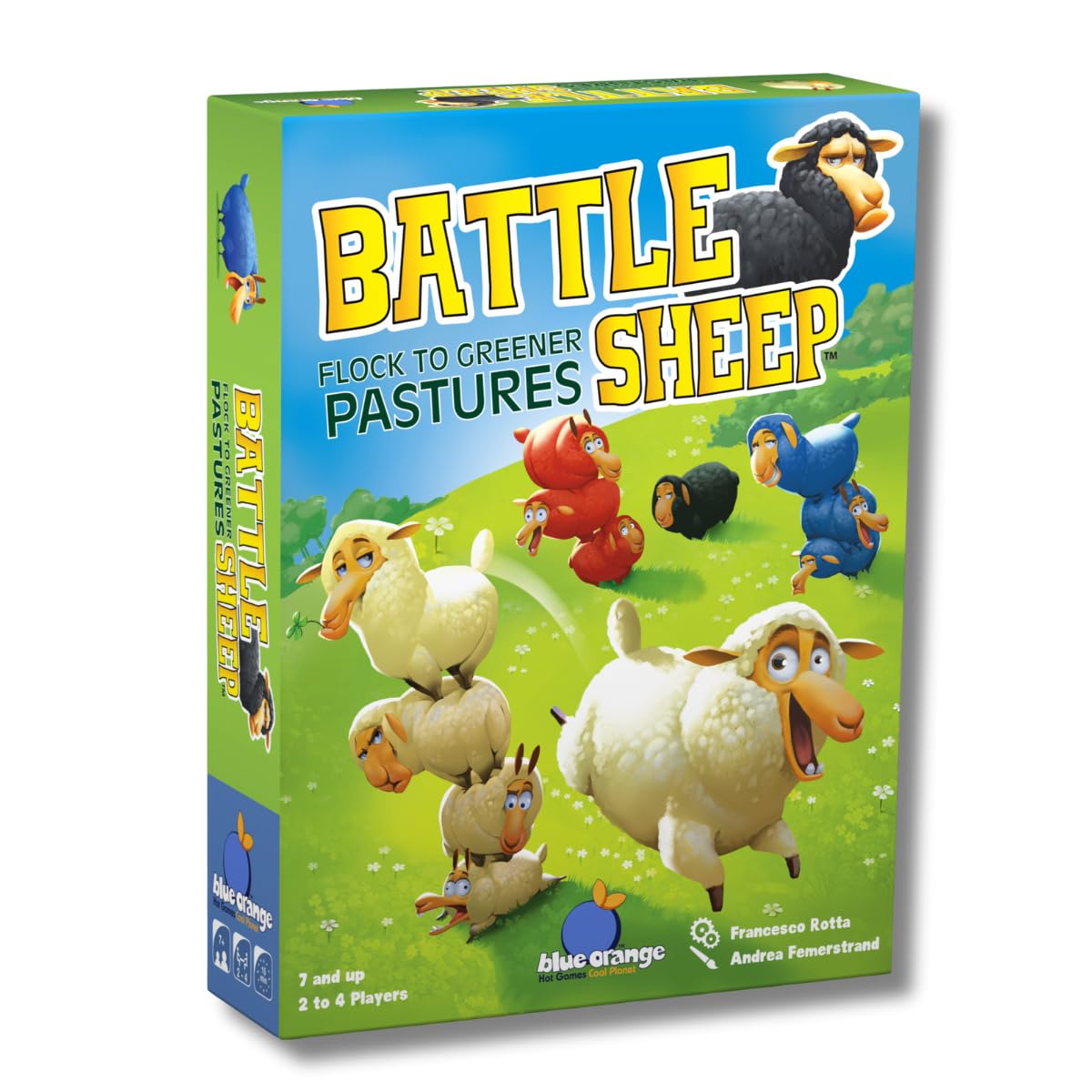
Don’t let the cute sheep theme fool you — Battle Sheep is a cutthroat abstract strategy game that rivals chess in its spatial demands while taking a fraction of the time. Players build a modular board from hexagonal pasture tiles, then take turns pushing stacks of sheep tokens in straight lines, leaving at least one token behind each move. The board fills up fast, and soon every move becomes a tense calculation.
Rated for ages 7 and up, Battle Sheep is the perfect introduction to abstract thinking for tweens. Games last about 20 minutes, so you can easily play best-of-three rounds. The modular board changes each game, ensuring the puzzle never repeats. The components are notably high-quality: the sheep chips have a satisfying weight, and the board tiles fit together tightly without sliding.
The main drawback is table stability — the tall stacks of sheep tokens topple easily when bumped, which can frustrate younger players. Also, the game shines brightest with two players; four-player games can feel chaotic as the board fills too quickly. But for the price point, you get a durable, endlessly replayable brain workout that outpaces most games in its weight class.
Why it’s great
- True abstract strategy in 20 minutes
- Modular board guarantees fresh puzzles
- Quality components that last years
Good to know
- Sheep stacks tip over easily
- Best as a 2-player experience
- Theme may seem too young for older tweens
6. QUOKKA Board Game for Kids 8-12 – USA Geography
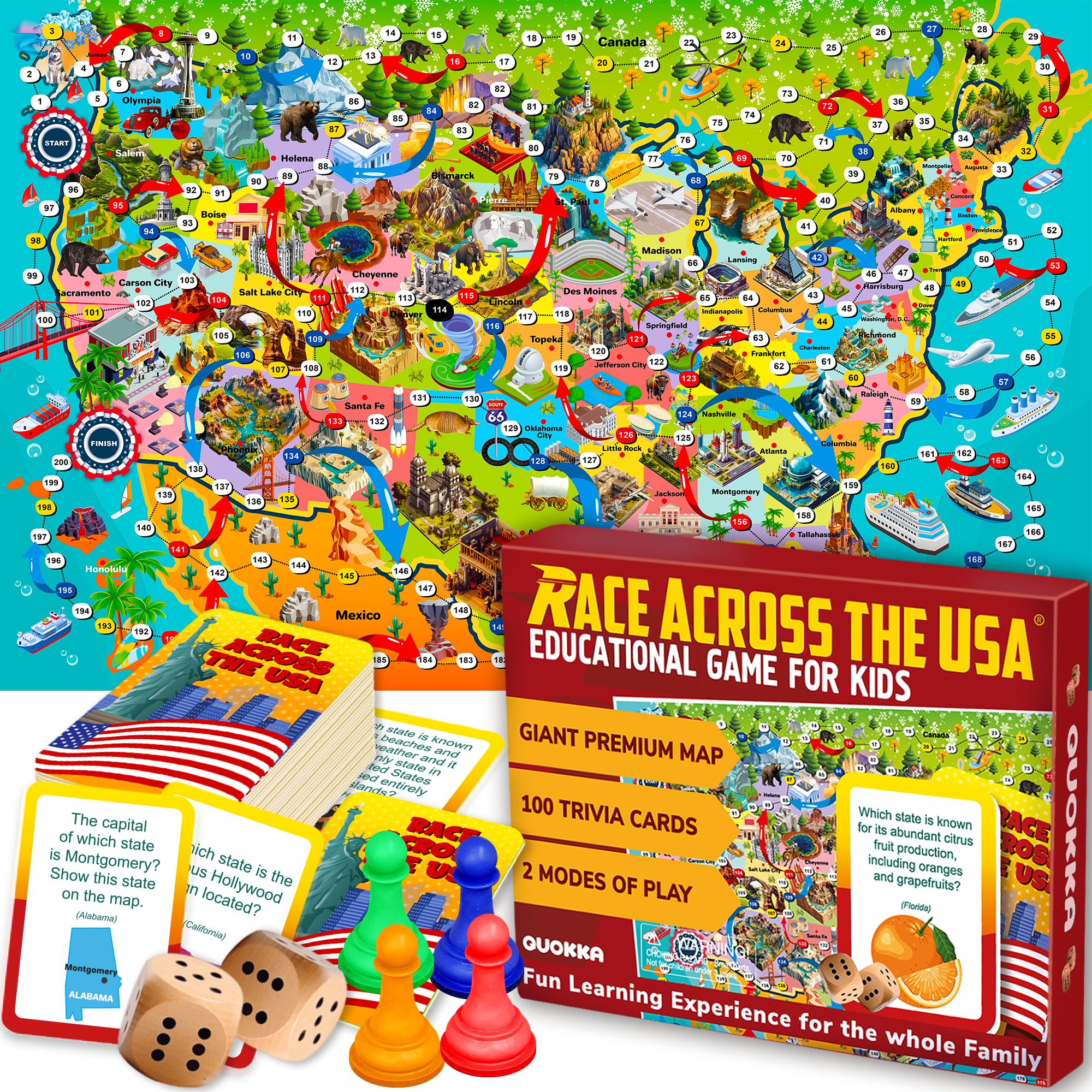
For families that want screen-free learning disguised as play, the QUOKKA USA Map Game delivers a giant 47-by-28-inch floor board with 120 educational question cards covering state capitals, landmarks, and cultural facts. Players move pawns across the map, answering trivia to advance while obstacles and shortcuts keep every playthrough slightly different. It supports up to eight players, making it excellent for classroom settings or large family gatherings.
Ages 8–12 is the sweet spot here, though the trivia difficulty varies: some questions challenge adults while others feel too simple for a tween who knows their state capitals. The giant floor format is a hit — kids naturally want to stand, move, and interact physically with the game. The card system offers three clue options per state, letting players choose their challenge level.
The main concerns are component quality and documentation. Some customers report chipped pieces or arriving with the wrong instruction manual. The game also leans heavily on memorization rather than gameplay mechanics — for tweens who prefer pure strategy over trivia, this might feel more like homework than play. Use it as a supplement for road-trip prep or geography review rather than a weekly game night staple.
Why it’s great
- Giant floor map encourages physical movement
- Three clue difficulty levels per state
- Great for up to 8 players
Good to know
- Component quality control is inconsistent
- Heavy focus on rote memorization
- Some questions are too obscure for tweens
7. Spin Master Games Tetris: The Board Game
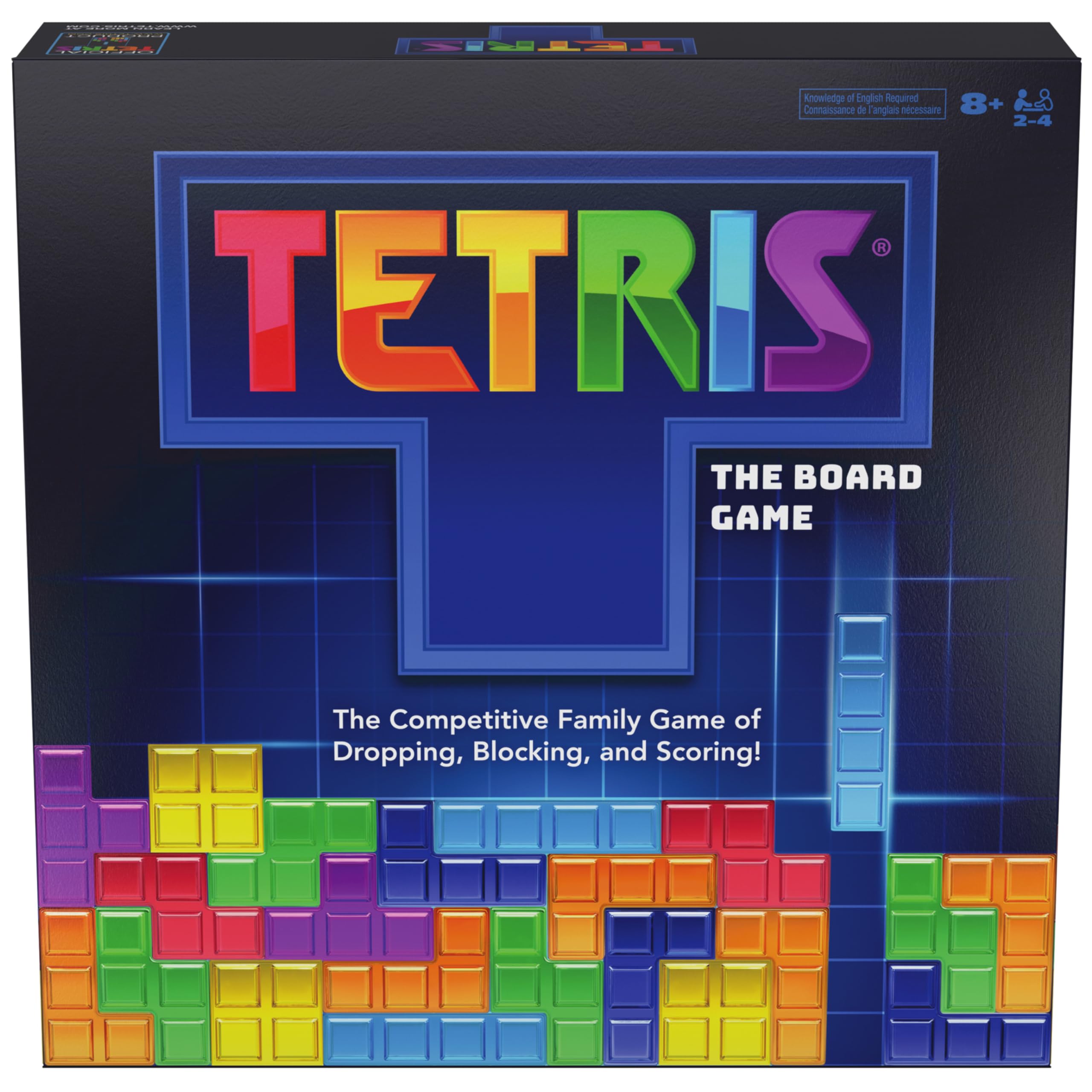
Spin Master’s Tetris board game translates the legendary digital puzzle into a physical head-to-head competition that captures the original’s frantic energy. Players rotate and drop semi-translucent Tetrimino pieces on their individual grids, racing to complete lines while using garbage pieces to sabotage opponents. It innovates on the classic formula by adding a competitive layer — land a Tetrimino on a black garbage icon and you add a blocking piece to an opponent’s board.
For tweens ages 8 and up who grew up on the video game, the tactile translation is surprisingly faithful. The 20-minute playtime matches the quick-hit pace of the digital version, and the competitive twist introduces light strategy without bogging down the action. The components include 128 Tetriminos and 4 grids, all in colorful, durable plastic that withstands regular play.
The real-world nature means games take longer than digital Tetris rounds, which will disappoint some speed demons. Additionally, the garbage-drop mechanic can feel random — sometimes the winning strategy is luck-based piece placement rather than skill. But as a family game night option for puzzle lovers, it delivers genuine fun and even teaches spatial reasoning under time pressure.
Why it’s great
- Faithful physical adaptation of a beloved classic
- Competitive sabotage adds strategic depth
- Quick setup and 20-minute sessions
Good to know
- Garbage drop element introduces luck
- Slower than digital Tetris
- Pieces can arrive slightly bent from packaging
FAQ
What is the best board game for tweens who hate losing?
Can tweens enjoy complex strategy games like CATAN or Ticket to Ride?
How do I convince a screen-focused tween to try a board game?
Final Thoughts: The Verdict
For most families, the board games for tweens winner is the CATAN (6th Edition) because it balances strategic depth with social negotiation in a way that challenges tweens without overwhelming them. If you want something that accommodates larger groups, grab the Codenames (2nd Edition). And for quiet afternoons or solo play, nothing beats the Harmonies board game for its tactile beauty and relaxing puzzle-solving.