
Our readers keep the lights on and the weekend projects moving. As an Amazon Associate, I earn from qualifying purchases.
The difference between a dry bilge and a soggy floor often comes down to a single cartridge of the right adhesive. Unlike a generic construction adhesive, a purpose-built bond and seal product must handle constant moisture exposure, thermal cycling, and physical stress without letting go. Choosing wrong means redoing the job within a season — choosing right means a permanent repair you can forget about.
I’m Rikta — the co-founder and writer behind FitlyFast. I’ve spent hundreds of hours parsing the chemical formulations, cure chemistry, and real-world durability data behind marine-grade and construction-grade sealants to separate the high-tensile performers from the weekend-only options.
Your choice depends on where the seal lives — above the waterline, below it, or inside a food-prep surface. This guide ranks the top contenders to help you find the right bond and seal for your specific repair scenario, whether that involves a boat hull, a leaking roof, or a kitchen counter repair.
How To Choose The Best Bond And Seal
Every sealant formulation trades off elasticity, adhesion strength, UV resistance, and cure speed. Understanding the substrate you’re bonding to — and whether the joint will sit above or below the waterline — is the single most important decision filter. Here are the three factors that matter most.
Chemistry: Polyurethane vs. Silicone vs. Bitumen
Polyurethane sealants like Sikaflex and the 5200 marine formulas offer the highest tensile bond strength and remain flexible after full cure. They bond aggressively to fiberglass, metal, and wood, making them the default choice for structural marine and automotive panel work. Silicone sealants, particularly NSF-certified food-grade silicones, excel where thermal resistance and direct food contact are concerns — they tolerate 350°F+ without degrading but have lower tear strength than urethanes. Bitumen-based formulations deliver cost-effective waterproofing for asphalt and roofing felt but lack the structural grip needed for load-bearing joints.
Cure Time and Application Conditions
Fast-cure formulations become tack-free in two hours and reach full structural strength within 24 hours, which matters for projects requiring same-day painting or water exposure. Slower-cure polyurethanes allow more time for repositioning but demand the joint remain dry and undisturbed for longer. Temperature also plays a role: most urethanes and silicones apply best between 40°F and 95°F, while bitumen products have a narrower window of 46°F to 95°F. Applying below the recommended floor causes poor adhesion and extended cure times.
Substrate Compatibility and Surface Prep
A sealant designed for porous surfaces like wood or concrete may not grip polished gelcoat or acrylic mirrors without mechanical abrasion. For mirror adhesives, the compound must be solvent-free and low-odor to avoid attacking the silver backing. For marine sealants used below the waterline, the polyurethane must remain elastic enough to absorb hull flex without cracking. Cleaning with acetone or isopropyl alcohol and scuffing glossy surfaces with 80-grit sandpaper before application dramatically improves bond reliability across every product category.
Quick Comparison
On smaller screens, swipe sideways to see the full table.
| Model | Category | Best For | Key Spec | Amazon |
|---|---|---|---|---|
| FORTIVO 5200 Marine Sealant | Polyurethane | Underwater hull fittings | 24-hr cure, UV resistant | Amazon |
| SIKA Sikaflex-291 LOT | Polyurethane | Marine deck & freshwater | Non-corrosive, 24-hr cure | Amazon |
| Seal Bond CS-4300 Mirror | Acrylic Adhesive | Mirror installation | Low odor, ultra-low VOC | Amazon |
| Sil-Bond NSF Silicone | Silicone | Food-contact repairs | NSF FDA rated, 350°F max | Amazon |
| Berkland Polyurethane Seam Sealer | Urethane | Auto body seam sealing | Paintable in 30 min | Amazon |
| YKF Transparent Sealant | Acrylic | Visible surface leak repair | Dries clear, 12 oz brush | Amazon |
| Somafix Roof Sealant | Bitumen | Asphalt shingle repairs | Butyl-based, all-weather | Amazon |
In‑Depth Reviews
1. FORTIVO 5200 Marine Sealant
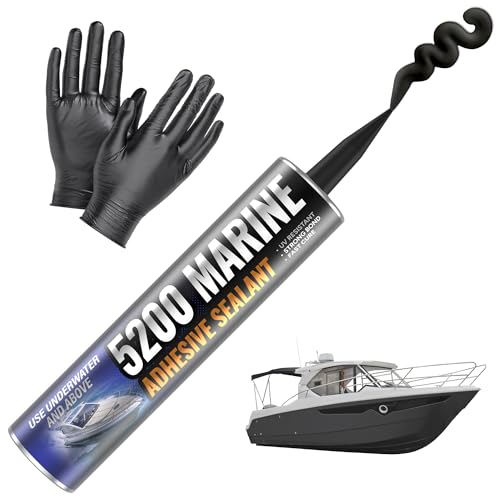
This 5200-class polyurethane delivers the high tensile bond strength required for below-waterline through-hull fittings and deck hardware. The UV-resistant formulation prevents yellowing and embrittlement when exposed to direct sunlight, a common failure mode for generic marine caulk. Users report reliable adhesion to fiberglass, gelcoat, and teak without primer, though scuffing the gelcoat with 80-grit improves results on glossy surfaces.
The fast-cure variant reaches tack-free in two hours and full structural strength within 24 hours, allowing you to launch the boat the next day. Each cartridge includes nitrile gloves and a pre-attached nozzle, reducing setup time. The paste consistency flows well through a standard caulking gun without sagging on vertical hull sides, even in summer heat.
Some users note that the polyurethane bonds aggressively to skin — keep acetone or citrus hand cleaner nearby for clean-up. The 10-ounce cartridge provides enough material for sealing several deck fittings or one large transducer mount. For anyone needing a single marine-grade sealant that handles both above and below the waterline, this is the cartridge to reach for first.
Why it’s great
- High load-bearing capacity for structural marine joints
- UV-stable; resists cracking in direct sun exposure
- Fast two-hour tack-free time speeds project turnaround
Good to know
- Extremely sticky — wear gloves and protect surrounding surfaces
- Full cure still requires 24 hours of undisturbed setting
2. SIKA Sikaflex-291 LOT

Sikaflex-291 LOT is the go-to one-component polyurethane for marine environments where corrosion resistance matters. The non-corrosive formulation is specifically designed for aluminum hulls, stainless steel fittings, and metal primers that react poorly with acidic silicones. Users have successfully sealed VW Beetle body-to-pan joints and heavy rub rails, reporting six months of vibration resistance without bond failure.
The paste cures by reacting with atmospheric moisture, forming an elastic seal that handles hull flex and thermal expansion. It bonds to wood, fiberglass, and painted surfaces above and below the waterline, though it also resists diluted acids and temporary fuel exposure. The black finish dries with a glossy sheen that can be overpainted or sanded once fully cured at 24 hours.
Application requires a standard caulking gun, and the paste flows smoothly like a heavy caulk. In summer heat, the cure accelerates significantly — work quickly and tool the bead within five minutes. The 10.1-ounce cartridge is sufficient for a dinghy repair or sealing several deck penetrations. Just clean the surface thoroughly and keep it dry before application for optimal adhesion.
Why it’s great
- Non-corrosive; safe for aluminum and stainless steel
- Resistant to fresh and saltwater after full cure
- Can be sanded and painted without stability loss
Good to know
- Cures faster in hot weather — limited working time
- Dries glossy; may require sanding for a matte finish
3. Seal Bond CS-4300 Mirror Adhesive
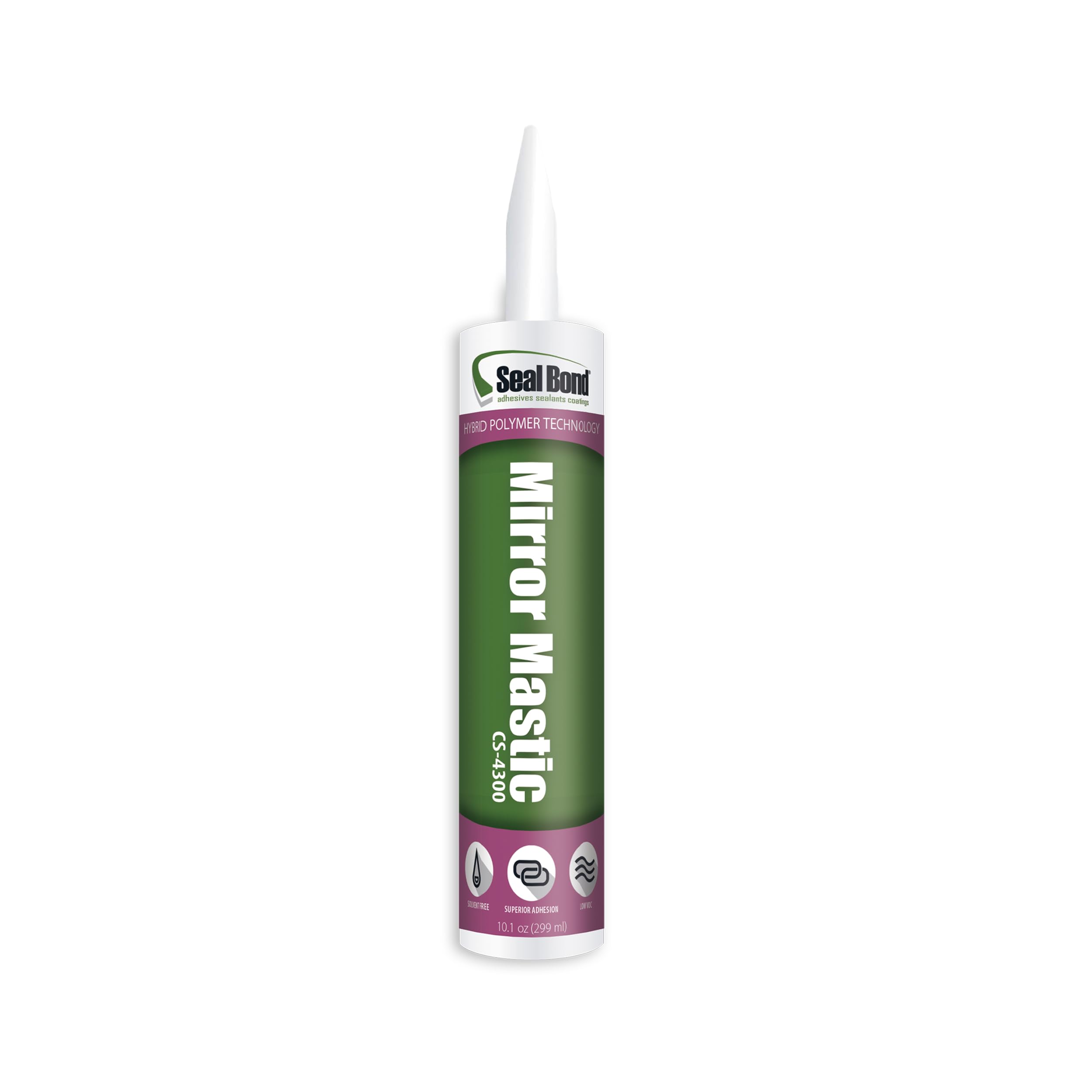
Seal Bond CS-4300 is the professional solution for bonding mirrors without mechanical fasteners. The solvent-free, isocyanate-free acrylic formula eliminates the risk of attacking mirror silver backing — a common issue with construction adhesives that contain aggressive solvents. Users have successfully installed four 16×58-inch mirrors on painted doors using just one tube, with zero mechanical support after a 48-hour cure.
The low-odor, ultra-low-VOC composition meets SCAQMD and CDPH indoor air quality standards, making it suitable for interior renovations without requiring heavy ventilation. The off-white adhesive builds out well to compensate for minor wall irregularities, and it grabs instantly with minimal repositioning allowed. Applying a zig-zag bead pattern with 3/4-inch spacing around the perimeter ensures full edge support.
Store the residue with the nozzle sealed if you plan a follow-up project. The adhesive works on painted drywall, primed wood, and concrete block, but glossy surfaces should be sanded first. For any mirror mounting job, this is the cleanest, safest option available.
Why it’s great
- Solvent-free; safe for acrylic and conventional mirrors
- Ultra-low odor and VOC — usable indoors with minimal ventilation
- Excellent gap-filling build-out for uneven walls
Good to know
- Instant grab — little time for repositioning
- Single cartridge is more than needed for small mirrors
4. Sil-Bond NSF FDA RTV Silicone Sealant

Sil-Bond’s clear RTV silicone carries NSF and FDA food-contact certification, making it the go-to for repairing kitchen counters, sink edges, and dishwasher seals. The formulation withstands continuous temperatures up to 350°F, surviving high-temp dishwasher cycles without degradation. Users report over 30 cycles of leak-free performance on dishwasher door gaskets after a multi-day full cure.
The self-curing liquid bonds to most surfaces including ceramic tile, stainless steel, glass, and sealed wood. It flows into tight cracks and cures to a flexible, waterproof gasket that won’t harden or crack with thermal cycling. One user successfully sealed a MasterBuilt electric smoker’s control panel against moisture ingress, citing the 500°F rating as a safety buffer for heat-adjacent applications.
Application requires a caulking tool for a clean bead — the thin liquid consistency can run on vertical surfaces if applied too thickly. Full cure at 24 hours is recommended before exposing the joint to water or steam. The clear finish remains invisible on most surfaces, preserving the original appearance of the repair area. Avoid using this for structural or load-bearing joints; it is a sealing silicone, not a structural adhesive.
Why it’s great
- NSF/FDA rated for direct food-contact surfaces
- Withstands 350°F continuous; survives dishwasher cycles
- Clear finish — invisible on tile, glass, and stainless steel
Good to know
- Not a structural adhesive; not for load-bearing joints
- Thin consistency runs on vertical surfaces if over-applied
5. Berkland Polyurethane Seam Sealer

Berkland’s polyurethane seam sealer solves the paintability problem — it accepts primer and topcoat just 30 minutes after application. This fast cure is a game-changer for auto body restorers who want to seal weld seams, door jambs, and floor pans and then shoot color the same day. Users restoring classic British sports cars report zero shrinkage or cracking after the compound cured over freshly welded inner fender seams.
The formula bonds to bare steel, primed panels, and already-painted surfaces without special prep beyond basic degreasing. It remains flexible through temperature extremes and road vibration, preventing the hairline cracks that allow moisture intrusion and rust. The white color, while obvious on dark substrates, becomes invisible once topcoated with automotive paint.
Each cartridge comes with nitrile gloves and an application tip, and it loads into any standard caulking gun. One user fixed a leaking Honda Civic roof by running a bead along the seam channel — the polyurethane grabbed immediately and held without primer. The 10.5-ounce cartridge is sized for targeted panel repairs rather than full undercarriage coverage. For matching bead smoothing, keep a popsicle stick or rubber profiling tool handy before the 30-minute window closes.
Why it’s great
- Paintable in 30 minutes — same-day priming possible
- Won’t shrink or crack under road vibration
- Bonds to bare, primed, and painted metal without primer
Good to know
- White color stands out on dark panels until painted
- 30-minute working window — tool the bead quickly
6. YKF Transparent Waterproof Sealant

YKF’s transparent water-based acrylic sealant is the pick for cosmetic repairs where you want the fix to disappear. The clear liquid cures into an invisible protective film that blocks water and air without altering the surface appearance. Users have permanently stopped concrete birdbath leaks and sealed wood birdhouses with two brush-on coats, noting the semi-gloss finish remains barely perceptible on masonry.
The 12-ounce container covers up to 15 square feet per coat, and application requires only a brush — included with the purchase. The water-based formula cleans up with soap and water before curing, a clear advantage over solvent-based sealants. It works on concrete, wood, brick, metal, and ceramic, making it a versatile option for multi-surface household repairs.
There are caveats: some users report the instructions are vague regarding proper surface prep, and one reviewer noted the liquid did not cure transparent on a mosaic tile project. Best results come from applying two to three thin coats above 50°F, allowing 24 hours between coats. The sealant is not recommended for underwater use or high-traffic walking surfaces. For above-ground cosmetic leak repairs where appearance matters, this is the easiest option to apply.
Why it’s great
- Dries completely clear — invisible on visible surfaces
- Water-based; easy clean-up with soap and water before cure
- Includes brush; ready to use straight from the container
Good to know
- Not for underwater or high-traffic applications
- Cure time varies significantly with temperature and humidity
7. Somafix Professional Roof Sealant
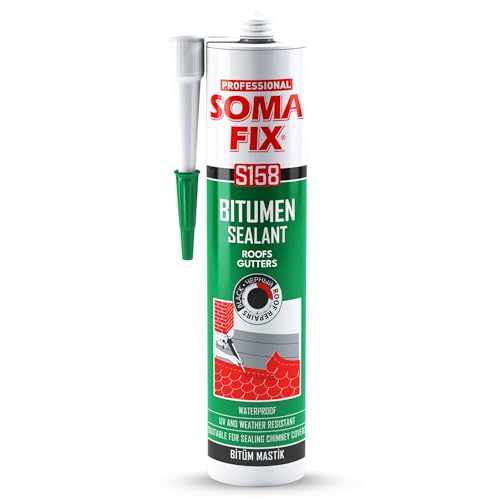
Somafix’s butyl-based bitumen sealant is purpose-built for asphalt shingle, flat roof felt, and gutter repairs. The thick, tarry paste bonds aggressively to asphalt, brick, concrete, lead, and zinc without needing primer, making it a direct replacement for traditional roof tar in a caulk gun format. Users report effective sealing of small leaks around flashing, chimneys, and vent pipe outlets with one smooth bead.
The all-weather formulation applies cleanly between 46°F and 95°F, and once cured, it remains flexible enough to accommodate roof thermal expansion without cracking. The black color blends naturally with asphalt shingles, though it stands out on lighter materials like EPDM rubber or white metal roofs. The sealant becomes waterproof within hours and reaches full strength after 24 hours of dry weather.
Clean-up requires mineral spirits or citrus solvent — soap and water will not touch uncured bitumen. The thick texture can be messy, so wearing disposable gloves and covering gutters below the work area is recommended. One user noted the cartridge fits standard caulk guns but requires firm pressure on the trigger. For spot repairs on shingle roofs and flashing edges, this is the most cost-effective and durable option available.
Why it’s great
- Bonds aggressively to asphalt, brick, concrete, and lead
- Remains flexible after cure — handles roof expansion
- 100% waterproof; dries fast in dry weather
Good to know
- Thick texture requires firm caulk gun pressure
- Clean-up needs mineral spirits, not soap and water
FAQ
Can I paint over polyurethane seam sealer the same day?
Will 5200 marine sealant work below the waterline on an aluminum boat?
How do I remove excess uncured silicone from a food-contact surface?
Final Thoughts: The Verdict
For most users, the bond and seal winner is the FORTIVO 5200 Marine Sealant because its fast-cure polyurethane formula handles both above and below waterline marine repairs with UV stability and structural bond strength. If you need a food-safe silicone for kitchen and appliance repairs, grab the Sil-Bond NSF FDA RTV Silicone. And for cosmetic leak repairs where the sealant must remain invisible, nothing beats the YKF Transparent Waterproof Sealant.