
Our readers keep the lights on and the weekend projects moving. As an Amazon Associate, I earn from qualifying purchases.
The line between a collectible action figure and a mass-produced toy starts with surface finish and articulation tolerance. A 3D printer for action figures needs XY resolution under 30 microns and a build volume that handles a 6-inch torso without splitting the model into glue-dependent parts. Most hobbyists discover this after wasting spools on FDM printers that leave visible layer lines on every joint.
I’m Rikta — the co-founder and writer behind FitlyFast. I’ve cross-referenced hundreds of hours of real-world user prints, resin compatibility tables, and XY resolution benchmarks to separate the printers that deliver action-figure-grade surface quality from those that require endless sanding.
Whether you sculpt 1:6 scale characters or print replacement limbs for vintage figures, finding the right tool means weighing build envelope against pixel density. This guide breaks down nine machines that earn their spot as the 3d printer for action figures builders, with attention to the specs that determine whether your next figure looks cast or layered.
How To Choose The Best 3D Printer For Action Figures
Action figure printing lives and dies on three specs: XY resolution, build volume, and light source uniformity. A printer with 22-micron pixels but poor light diffusion will still produce wavy surfaces on curved armor pieces. Understanding these trade-offs saves you from buying a machine that can only print keychains.
XY Resolution and Pixel Size
The number printed on the box 8212; 8K, 10K, 14K 8212; only tells you the screen pixel count. What matters for action figures is the pixel width in microns. A 17-micron pixel at the Z-axis layer height of 0.05 mm produces smooth knee joints without visible stepping. Machines with pixels above 25 microns leave ridges that require filler primer and sanding before painting.
Build Volume Versus Modular Printing
A 6-inch action figure torso typically needs at least 140 mm of vertical clearance when printed at a slight angle for support removal. Printers with build envelopes smaller than 150 x 80 x 150 mm force you to cut figures into multiple pieces, which introduces alignment problems during glue-up. Larger build volumes let you print the entire upper body in one pass, preserving articulation tolerances.
Light Source and Uniformity
COB light sources with Fresnel lenses maintain 90% uniformity across the print bed. Printers using matrix LED arrays often overexpose the center while underexposing edges, causing thin structural sections on a figure s arm to warp differently than the thicker chest piece. Uniform light distribution ensures consistent curing across every element of your figure simultaneously.
Quick Comparison
On smaller screens, swipe sideways to see the full table.
| Model | Category | Best For | Key Spec | Amazon |
|---|---|---|---|---|
| ANYCUBIC Photon Mono M7 PRO | Resin | Full-torso one-piece prints | 14K / 16.8×24.8 μm XY | Amazon |
| Creality Halot-X1 Combo | Resin | Large-scale detail at 16K | 16K / 14×19 μm XY | Amazon |
| Bambu Lab A1 Combo | FDM | Articulated parts with multi-color | 10,000 mm/s² acceleration | Amazon |
| ELEGOO Centauri Carbon 2 Combo | FDM | Multi-color engineering-grade figures | 500 mm/s speed, 256 mm³ | Amazon |
| FLASHFORGE AD5X | FDM | Carbon-fiber filament figures | 300°C nozzle, CoreXY | Amazon |
| ELEGOO Mars 5 Ultra | Resin | Beginner-friendly high detail | 9K / 18 μm XY resolution | Amazon |
| ANYCUBIC Photon Mono 4 Ultra | Resin | Budget entry with 10K detail | 10K / 17 μm XY resolution | Amazon |
| Phrozen Sonic Mini 8K S | Resin | Compact precision for small scale | 8K / 22 μm XY resolution | Amazon |
| Creality K2 Plus Combo | FDM | Large-scale 16-color figures | 600 mm/s, 350 mm³ build | Amazon |
In‑Depth Reviews
1. ANYCUBIC Photon Mono M7 PRO 14K

The M7 PRO delivers a 14K monochrome LCD with 16.8 by 24.8 micron pixels, which means the surface of a 1:12 scale forearm appears cast rather than layered. The build volume of 8.77 by 4.96 by 9.05 inches lets you print an entire 7-inch figure torso, arms, and head in a single run without splitting the model. The COB LighTurbo 3.0 light source maintains over 90% uniformity, preventing the center-overexposure issues that distort thin wrist pegs on cheaper resin machines.
Dynamic temperature control in the resin vat keeps the material at its optimal viscosity throughout winter workshops. The auto-fill and one-key recycling system cuts down on the messy resin handling that often discourages new figure sculptors. Users report that the 170 mm/h printing speed on high-speed resin means a full figure base plate finishes in under four hours, though standard resin runs closer to 130 mm/h.
The six intelligent detection systems 8212; including build plate installation and release film lifespan management 8212; reduce the learning curve significantly. A small fraction of users encountered vat-leveling errors that required increasing light-off delay to 6 seconds, so this machine rewards those who dial in their resin profile rather than expecting plug-and-play perfection.
Why it’s great
- 14K resolution captures fine facial details and texture on armor without post-processing
- Heated vat and auto-fill streamline the print workflow for batch figure production
Good to know
- Some units require a light-off delay adjustment to avoid first-layer failures
- Top cover is heavy and bulky, demanding dedicated shelf space
2. Creality Halot-X1 Combo 16K
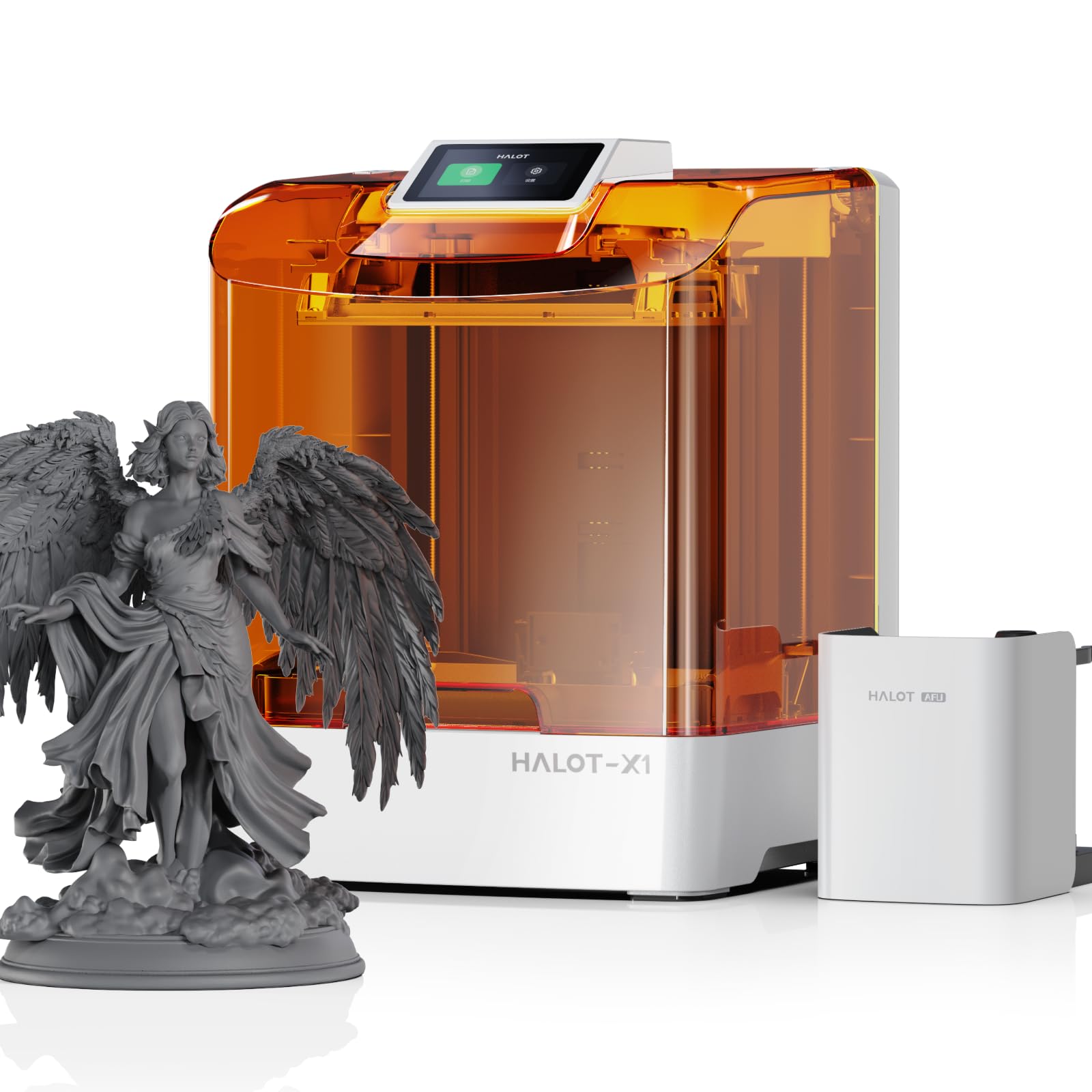
The Halot-X1 Combo pushes the pixel-density frontier to 14 by 19 microns on a 10.1-inch screen. For action figure work, that translates to 0.2 mm-thick visor lines on a 1:6 scale helmet printing with zero visible stepping. The Intelligent AFU Resin Management system heats the resin to 30 to 45°C in three minutes, which reduces the viscosity of standard photopolymer so it flows into the narrow recesses of an articulated elbow joint more consistently than cold resin.
The fixed build plate design eliminates the traditional leveling procedure 8212; twist-to-release means you can pop a cured figure off without scraping the plate surface. The 92 independent light zones activate UV LEDs only where the model sits, which extends screen life and prevents overexposure on the empty portions of the 8.33 by 4.66 by 7.87 inch build area. This selective exposure preserves the crispness of thin sword blades and small hand details that would be washed out by stray light.
The proprietary Halot Box slicing software drew criticism from some users for stability issues, with reports of crashes that rendered the printer temporarily unusable. While the hardware delivers professional-grade output, the software dependency is a weak link that buyers should verify has been updated to a stable build before committing.
Why it’s great
- 16K resolution means the highest pixel density available for capturing ultra-fine sculpted textures
- Heated resin vat and auto-fill system enable hands-free operation for long figure prints
Good to know
- Slicing software stability has been a pain point that may require third-party slicers
- Initial setup still requires patience despite the no-leveling feature
3. ELEGOO Centauri Carbon 2 Combo
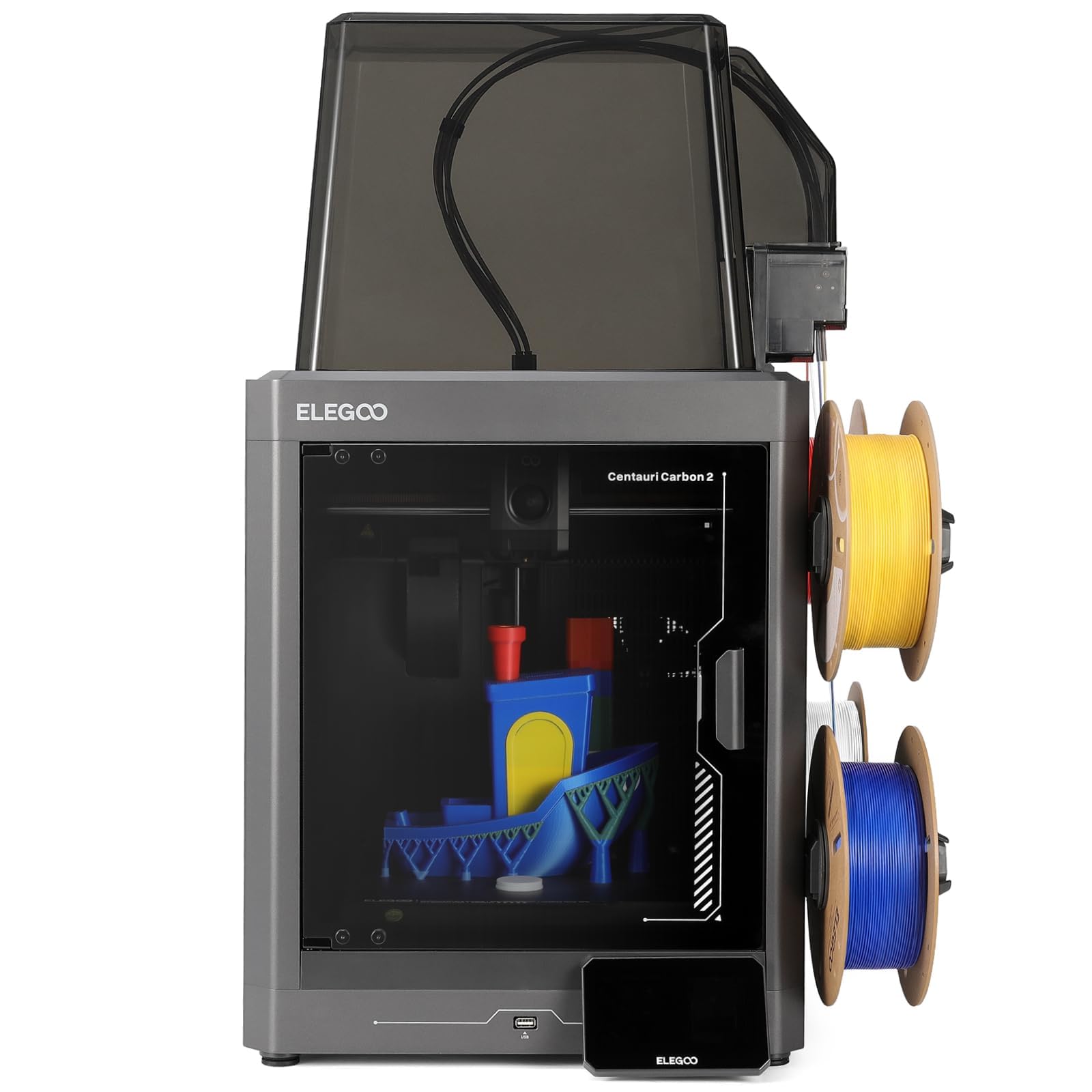
The Centauri Carbon 2 Combo brings 4-color printing to the CoreXY FDM world with a 500 mm/s travel speed and 20,000 mm/s² acceleration. For figure builders who want a single-part print that transitions from blue torso to red cape without post-painting, the CANVAS system handles color switching automatically. The 256 mm cubic build volume comfortably contains a full 8-inch figure in one print, eliminating the alignment issues of multi-piece glue assembly.
The 350°C high-temperature nozzle opens up engineering-grade filaments like PA-CF and PETG-CF, which produce action figures that survive drops from display shelves without shattering. Active vibration compensation smooths out the ringing that normally creates visible banding on curved shoulder armor at high speeds. The fully automated calibration and monitoring allow you to start a print and walk away, with the AI camera flagging spaghetti failures before a blob ruins the hotend.
The closed ecosystem limits users to the proprietary Canvas slicer, which lacks the flexibility of Orca or Klipper. A small but vocal percentage of units experienced premature camera failure or software lockups during long prints. This machine suits the figure builder who prioritizes turnkey multicolor output over open-source tinkering.
Why it’s great
- Built-in multicolor system eliminates painting for two- or three-tone figure designs
- Engineering-grade filament support produces drop-resistant action figures
Good to know
- Proprietary slicer lacks community profiles and advanced tuning options
- Camera reliability issues reported in some early units
4. Creality K2 Plus Combo

The K2 Plus Combo dominates the large-format FDM space with a 350 mm cubic build volume that can print a full 12-inch figure in one piece. Hooking up four CFS units unlocks 16-color printing, enabling a single print run that produces a figure with skin tones, metallic arm bands, and translucent energy effects without any painting. The step-servo motor system delivers 30,000 mm/s² acceleration and 600 mm/s travel speed while maintaining the quiet operation needed for overnight figure runs.
The actively heated chamber and 350°C hotend handle high-performance filaments like PA-CF and PPA-CF that produce structurally rigid figure frames resistant to warping. Dual AI cameras monitor both the print bed and the filament path, catching spaghetti failures and foreign object intrusions before they cascade into a failed 30-hour print. The anti-tilt auto leveling with dual independent Z-axes ensures the first layer on a 350 mm bed is uniformly squished across the entire surface.
Quality control issues surface in user reports: one unit arrived with a reversed E-axis motor that required Klipper firmware surgery, and another had a Y-axis communication failure caused by a loose cable. At this price point, the expectation of production-ready reliability clashes with the reported need for technical debugging. The large size also demands a sturdy dedicated table; the printer weighs 27.5 pounds empty and shakes vigorously during rapid moves.
Why it’s great
- Massive build volume supports life-size figure proportions in a single print
- Up to 16 colors without filament changes enables complete figure printing without painting
Good to know
- Some units arrived with motor or cable defects requiring factory support
- Vague assembly instructions slow down the unboxing process for first-time users
5. Bambu Lab A1 Combo
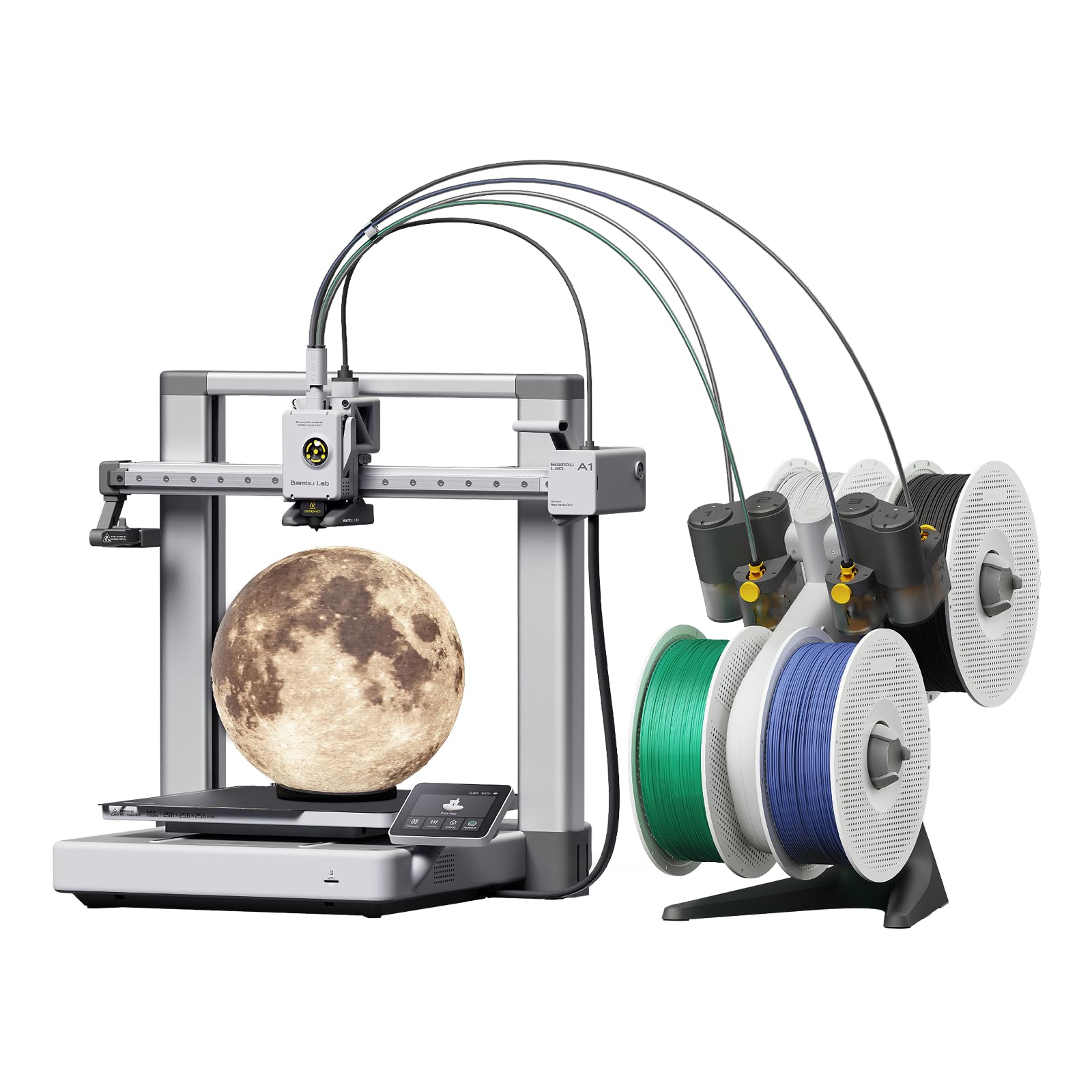
The Bambu Lab A1 Combo redefines what FDM can deliver for action figure creators who need articulated parts in multiple colors without the mess of resin. The AMS lite system feeds up to four filaments into a single print, enabling a figure with a red torso, blue arms, and yellow gauntlets to print in one pass. The 10,000 mm/s² acceleration and active flow rate compensation produce smooth surfaces on cylindrical limbs, though the 0.4 mm nozzle still shows layer lines at 0.16 mm height that require light sanding before painting.
Full-auto calibration means zero manual bed leveling or Z-offset adjustments. First-time figure printers report being able to unbox, load filament, and print a test model within 30 minutes. The phone app with camera monitoring and time-lapse recording adds remote oversight during long print sessions. The 1-clip quick-swap nozzle allows switching to a 0.2 mm nozzle for finer detail on face plates without tool disassembly.
The noise level hovers at 48 dB during standard operation, which is quiet enough to run in a living room overnight. Some users report that the included filament strands are minimal, so ordering extra spools alongside the printer is recommended. The AMS system works reliably with various PLA brands, though large spools require adapters to fit the enclosure.
Why it’s great
- No calibration needed out of the box, making it ideal for first-time figure builders
- AMS lite multi-color system eliminates painting for multi-tone figure designs
Good to know
- Layer lines on FDM still require post-processing for smooth figure surfaces
- Limited to PLA-based filaments; high-temp materials need the upgraded version
6. FLASHFORGE AD5X

The AD5X brings a 300°C direct extruder and CoreXY motion system to the mid-range FDM market, supporting carbon-fiber-infused PLA and PETG-CF filaments that produce action figures with the stiffness of injection-molded parts. The Intelligent Filament System handles up to four colors with auto-loading and unloading, reducing the manual intervention needed for multi-tone figure components. The 4.3-inch touchscreen interface provides a clear view of print progress without needing a laptop nearby.
One-click auto leveling combines with vibration compensation to minimize the ringing artifacts that plague fast FDM prints on tall figure torsos. The 220 mm cubic build volume fits standard 6-inch figure sets without splitting. Users report that the Orca-Flashforge slicer produces consistent results once tuned, with transparent settings that allow fine control over retraction and temperature profiles for each filament type.
The multicolor system wastes a noticeable amount of plastic during color changes, making it less efficient than a dedicated single-color machine for monochrome figure parts. The spool feeders are delicate 8212; one user reported a feeder breaking on first use. The machine also lacks a built-in enclosure, so printing ABS or nylon requires a third-party enclosure purchase.
Why it’s great
- 300°C hotend handles carbon-fiber filaments for rigid, durable figure frames
- Transparent slicer settings appeal to users who want full control over print parameters
Good to know
- Multicolor switching produces significant plastic waste per filament transition
- Spool feeder components reported as fragile by some early adopters
7. ELEGOO Mars 5 Ultra
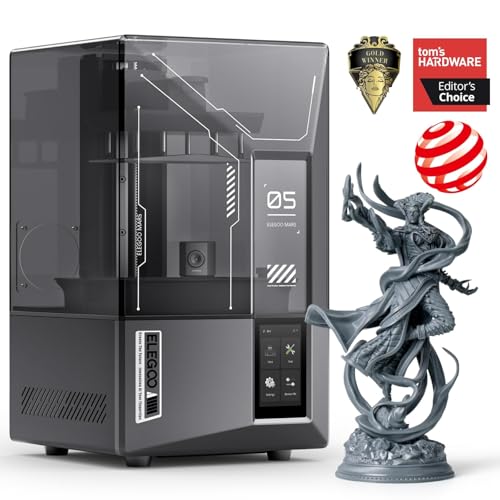
The Mars 5 Ultra is the entry-level resin machine that delivers action-figure-grade detail without the learning curve that scares off beginners. Its 9K LCD at 18-micron XY resolution captures the fine textures of sculpted muscles and embroidered cape details that define collectible-quality figures. The revolutionary tilt release technology hits 150 mm/h print speed, which means a full 6-inch figure base prints in under three hours.
Smart automatic leveling and self-check functionality eliminate the resin printer startup anxiety. Users report unpacking, powering on, and running a successful first print within 20 minutes. The AI camera monitors for print failures in real time, detecting empty build plates or warped layers before a failure cascade ruins the print. WiFi transfer and cluster printing support allow managing multiple machines from one device for batch production runs.
The build volume measures 6.04 by 3.06 by 6.49 inches, which fits smaller figures and individual parts well but forces splitting for full 8-inch scale torsos. The lid lacks hinges, requiring lifting it off entirely for access, and the resin spout design makes messy cleanup more likely than on premium competitors. A small percentage of users reported adhesion problems after extended use, suggesting the release film degrades faster than on higher-tier Mars models.
Why it’s great
- Easy setup and auto leveling make this the best resin entry point for new figure sculptors
- AI camera catches print failures early, saving resin and time for beginners
Good to know
- Build volume forces splitting of larger figures into multiple print jobs
- Lid design without hinges and messy resin spout increase cleanup frustration
8. ANYCUBIC Photon Mono 4 Ultra 10K

The Photon Mono 4 Ultra delivers a 10K screen with 17-micron pixels at a price point that undercuts most 8K machines. For action figure detail, that pixel density captures the subtle transitions of a face sculpt from forehead to jaw without visible stepping. The COB light source with Fresnel lenses maintains over 90% light uniformity across the 7-inch mono screen, ensuring that the thin edge of a figure s cape cures at the same rate as the thick chest piece.
The Intelligent Release Algorithm paired with ACF film enables 120 mm/h fast printing while minimizing the frosted texture that normally appears on tilted print surfaces. Users report that the printer works well with standard resins and produces clean edges on small parts like fingers and weapons. The 4.3-inch HD screen with a redesigned UI supports eight languages, reducing the intimidation factor for first-time resin users.
The build volume of 6.04 by 3.42 by 6.49 inches forces splitting of any figure larger than a 6-inch scale, making it better suited for parts printing than full-torso runs. The FEP film is fragile 8212; several users reported piercing it with the plastic spatula and needing pre-mounted replacements. Resin odor is strong, so this printer demands either an enclosure with filtration or a well-ventilated workshop space.
Why it’s great
- 10K resolution at a sub-premium price offers exceptional value for detail-focused figure printing
- ACF film and intelligent release enable fast, clean prints on small figure parts
Good to know
- Small build volume limits figure size to 6-inch scale or requires part splitting
- FEP film is puncture-prone during part removal; pre-mounted replacement stock recommended
9. Phrozen Sonic Mini 8K S

The Sonic Mini 8K S packs an 8K LCD with 22-micron XY resolution into a footprint that fits on a standard desk without dominating the workspace. For action figure enthusiasts who print small-scale accessories like weapons, heads, and hands, this machine delivers consistent results with minimal waste. The precise Z-axis calibration ensures that a 0.05 mm layer height on a gauntlet produces smooth surfaces down to the rivet detail.
Open-source software support for Lychee, Chitubox, and Tango means you are not locked into proprietary slicers that limit support generation for complex overhangs. The 16.5 by 7.2 by 17 cm build volume handles individual figure parts at 1:12 scale without issue, though printing a full torso at 1:6 scale requires splitting and gluing. Users consistently describe the printer as a reliable workhorse that produces clean first layers without tweaking.
File transfer relies entirely on USB drive, which adds a step that WiFi-enabled printers have eliminated. The compact packaging means the build plate is small, so batch printing multiple figure heads at once requires careful manual placement to avoid collisions. The bent scraper included with the unit risks damaging the build plate surface if used aggressively, and some users recommend purchasing a plastic razor set separately for safe part removal.
Why it’s great
- Compact desk footprint suits figure hobbyists with limited workshop space
- Open slicer compatibility offers flexibility for advanced support generation
Good to know
- USB-only file transfer is outdated compared to WiFi-enabled competitors
- Small build plate limits batch printing capacity for multi-part figure sets
FAQ
Can a resin printer make articulated action figure joints that actually move?
What layer height should I use for painting-ready action figure surfaces?
Do FDM printers work for action figures or should I go resin only?
Final Thoughts: The Verdict
For most users, the 3d printer for action figures winner is the ANYCUBIC Photon Mono M7 PRO because its 14K resolution and heated vat eliminate the two biggest pain points: insufficient surface detail and temperature-induced print failures. If you want multicolor FDM output that avoids resin cleanup entirely, grab the Bambu Lab A1 Combo. And for life-size figure dimensions that fit in one 16-color print, nothing beats the Creality K2 Plus Combo.