
Our readers keep the lights on and the weekend projects moving. As an Amazon Associate, I earn from qualifying purchases.
Every gardener knows the cycle: you lay down fresh mulch, it looks pristine for a week, then the weeds punch through and the color fades to a tired gray. The real game is what happens underneath that top layer — the barrier you choose determines whether you’ll be pulling invaders or actually enjoying your flower beds all season. Black mulch isn’t just about curb appeal; it’s a system of suppressing light, retaining moisture, and stabilizing soil temperature, and the right foundation makes that system work without constant maintenance.
I’m Rikta — the co-founder and writer behind FitlyFast. I’ve spent hundreds of hours analyzing landscape fabric specs, edging thickness, stone grades, and organic mulch composition to identify which ground-cover solutions actually deliver on their weed-blocking and moisture-retention promises for real garden conditions.
Whether you’re refreshing a vegetable garden path, edging a new flower bed, or covering a bare patch with stone, this guide breaks down the top performers so you can choose the best black mulch for your specific landscaping project and climate.
How To Choose The Best Black Mulch
Black mulch is an umbrella term that covers three distinct categories: geotextile weed barrier fabric, decorative landscape stone, and organic wood-based mulch. Each serves a different purpose, and your choice depends on whether your priority is permanent weed suppression, visual contrast, or soil health. Below are the three specs that separate a one-season solution from a system that holds for years.
Fabric Weight and Material
The most critical spec for weed barrier fabric is weight, measured in ounces per square yard (oz/yd²). Entry-level fabrics around 1.0 oz are flimsy, tear easily, and let sunlight through within a single season. A 3.2 oz fabric, like the ones used in the top picks below, is the sweet spot for residential use: heavy enough to block weeds and resist punctures from foot traffic and garden tools, yet permeable enough to let water and air reach the soil. PE (polyethylene) fabric generally offers better aging resistance than standard PP (polypropylene) and holds up longer under UV exposure.
Edging Height and Stake Density
If you’re pairing mulch with landscape edging, look for a height of at least 4 inches to keep bark or stone contained during wind and rain. The number of stakes matters more than you might think — a rule of thumb is one stake every 1 to 2 feet, especially around curves. Plastic stakes that are too thin will snap on installation; spiral stakes with at least a 5-inch length provide better grip in loose soil. Remember that plastic expands and contracts with temperature shifts, so overlapping edging ends by about an inch during installation prevents buckling on hot days.
Stone Size and Dust Content
For decorative stone mulch, size consistency is what determines whether it stays put or migrates into your lawn. River rocks between 1 and 2 inches are heavy enough to resist displacement during rain, while smaller lava rock (around ½ inch) works well for top dressing in pots but tends to be dusty straight out of the bag. Always budget time to rinse stone mulch before placing it — dust and fine particles can clog the drainage layer and suffocate plant roots if left unwashed.
Organic vs. Inorganic Mulch
Organic mulches like wood chips or bark break down over time, adding nutrients to the soil but requiring annual replenishment. Inorganic options like landscape fabric or stone provide a permanent solution with no decomposition, but they don’t feed the soil. If you’re growing edibles or annuals that need rich soil, a premium organic mulch with added yucca extract and gypsum (for moisture control and pH balance) is a smarter choice. For permanent paths, rock gardens, or xeriscaping, go with stone or a heavy-duty fabric topped with a thin layer of decorative gravel.
Quick Comparison
On smaller screens, swipe sideways to see the full table.
| Model | Category | Best For | Key Spec | Amazon |
|---|---|---|---|---|
| Anleolife 40ft Edging | Plastic Edging | Clean bed borders | 2.5mm thick, 5in height | Amazon |
| Back to the Roots Mulch | Organic Mulch | Edible garden beds | 100% organic, peat-free | Amazon |
| UWIOFF Weed Barrier | Landscape Fabric | Large coverage areas | 3.2 oz PE, 4ft x 100ft | Amazon |
| Winisok Weed Barrier | Landscape Fabric | Heavy traffic areas | 3.2 oz, 3ft x 100ft | Amazon |
| AggFencer Edging | Plastic Edging | Quick no-dig install | 4in height, 61 spikes | Amazon |
| GreatBuddy River Rocks | Decorative Stone | Indoor pots & pathways | 1-2in polished pebbles | Amazon |
| CJGQ Lava Rocks | Volcanic Stone | Succulent top dressing | ~½in porous volcanic rock | Amazon |
In‑Depth Reviews
1. Anleolife 40ft Flexible Plastic Landscape Edging Coil
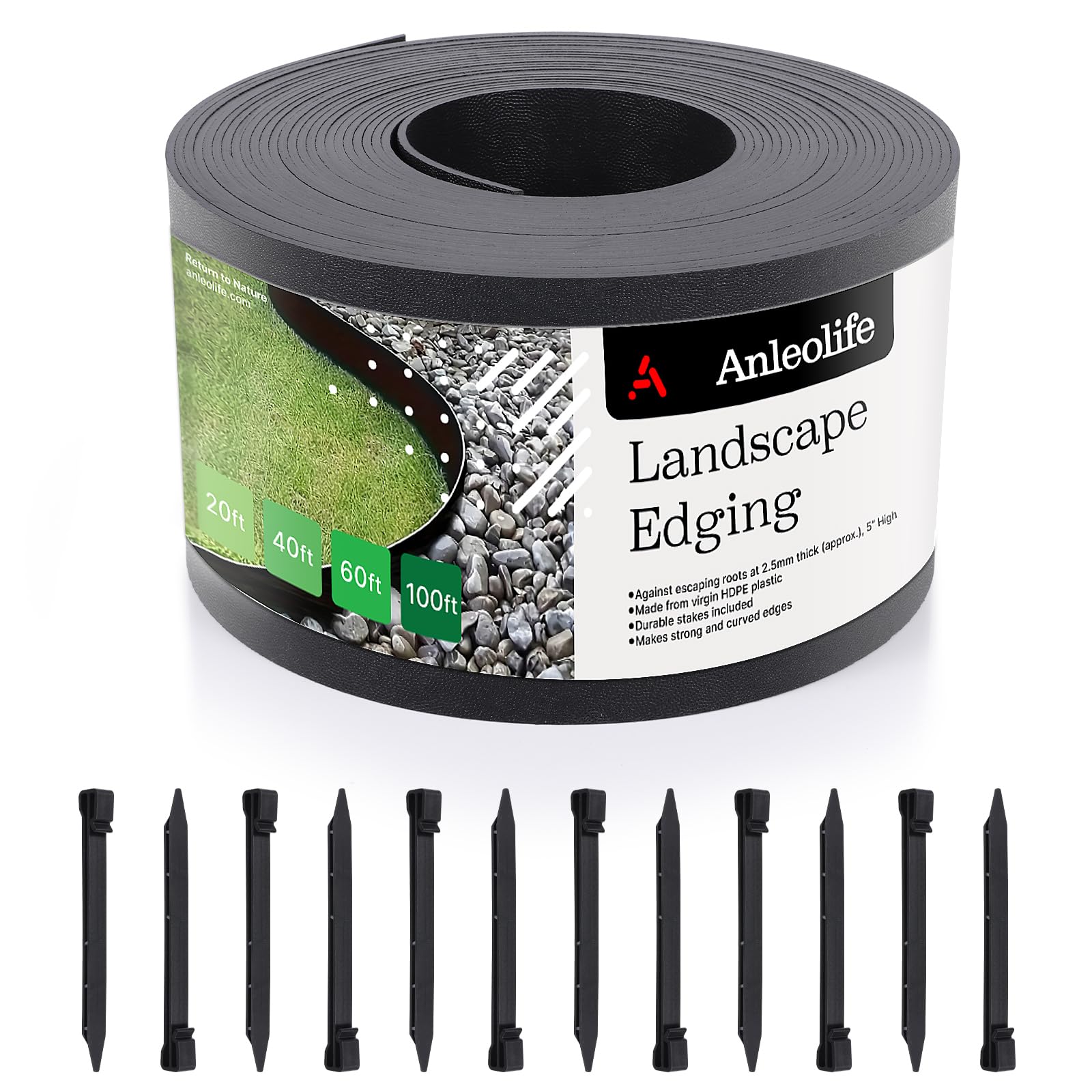
This 5-inch-tall coil edging strikes the perfect balance between durability and flexibility, with a 2.5mm wall thickness that stands up to lawnmower bumps and edging trimmers without cracking. The 40-foot length covers standard suburban bed perimeters in a single coil, and the subtle black finish blends into soil and mulch so the border defines the shape without shouting. Real-world users report it keeps pebbles and bark mulch contained through heavy rain, which is the core job of any edging system.
The installation tip about warming the plastic in the sun before placing it is not a gimmick — cold plastic tends to kink and resist curves, but after an hour of sunlight it bends smoothly around tree rings and kidney-shaped beds. The 12 included stakes are adequate for straight runs but you may need extras for tight radius curves. Several reviewers noted that the stakes hold well when hammered with a rubber mallet after pre-drilling a pilot hole in compacted soil.
For gardeners building a permanent boundary between lawn and mulched beds, this edging provides the structural backbone that keeps all the other components — fabric, stone, or bark — where they belong. The overlap allowance for thermal expansion is a detail that cheaper edging ignores, and it prevents the buckling that ruins the clean line of a finished bed.
Why it’s great
- 2.5mm thickness resists cracking and UV damage across seasons
- Flexible enough for tight curves after warming in sunlight
- Includes thermal expansion overlap guidance for lasting installation
Good to know
- Stakes can break if hammered directly without a pilot hole
- May need additional stakes for complex curved layouts
2. Back to the Roots 1 Cubic ft Organic Premium Mulch

This organic mulch is built around a simple but important principle: no peat. Peat harvesting damages carbon-rich bog ecosystems, so Back to the Roots uses upcycled wood fines and plant matter as the base instead. The formula includes yucca extract for moisture control and dolomitic limestone to balance soil pH — making it a living soil amendment rather than just a decorative covering. The dark color holds well and creates the high-contrast black bed look that many gardeners want.
At 1 cubic foot per bag, the volume is modest and best suited for raised beds, small flower borders, or winterizing individual plants rather than covering large acreage. Users consistently praise the texture and the fact that it stays in place better than big-box store bark mulches, which tend to float away in the first hard rain. The bag itself is designed to be portable and easy to pour, a small but appreciated detail when you’re hauling multiple bags from driveway to backyard.
This is not the cheapest way to cover soil — budget-conscious reviewers note that local garden centers offer larger volumes for less. But for organic gardeners who prioritize soil biology and want a peat-free, carbon-conscious option with added moisture-retention science, this mulch outperforms anything in the big-box aisle. It is strictly for use as a top layer, not as a weed barrier replacement.
Why it’s great
- 100% organic with no peat, using upcycled US wood fines
- Yucca extract and gypsum improve water absorption and pH balance
- Rich dark color holds well for high-contrast garden beds
Good to know
- Higher cost per cubic foot compared to bulk store options
- Limited volume — not ideal for covering large areas
3. UWIOFF 4ft x 100ft Garden Weed Barrier Landscape Fabric
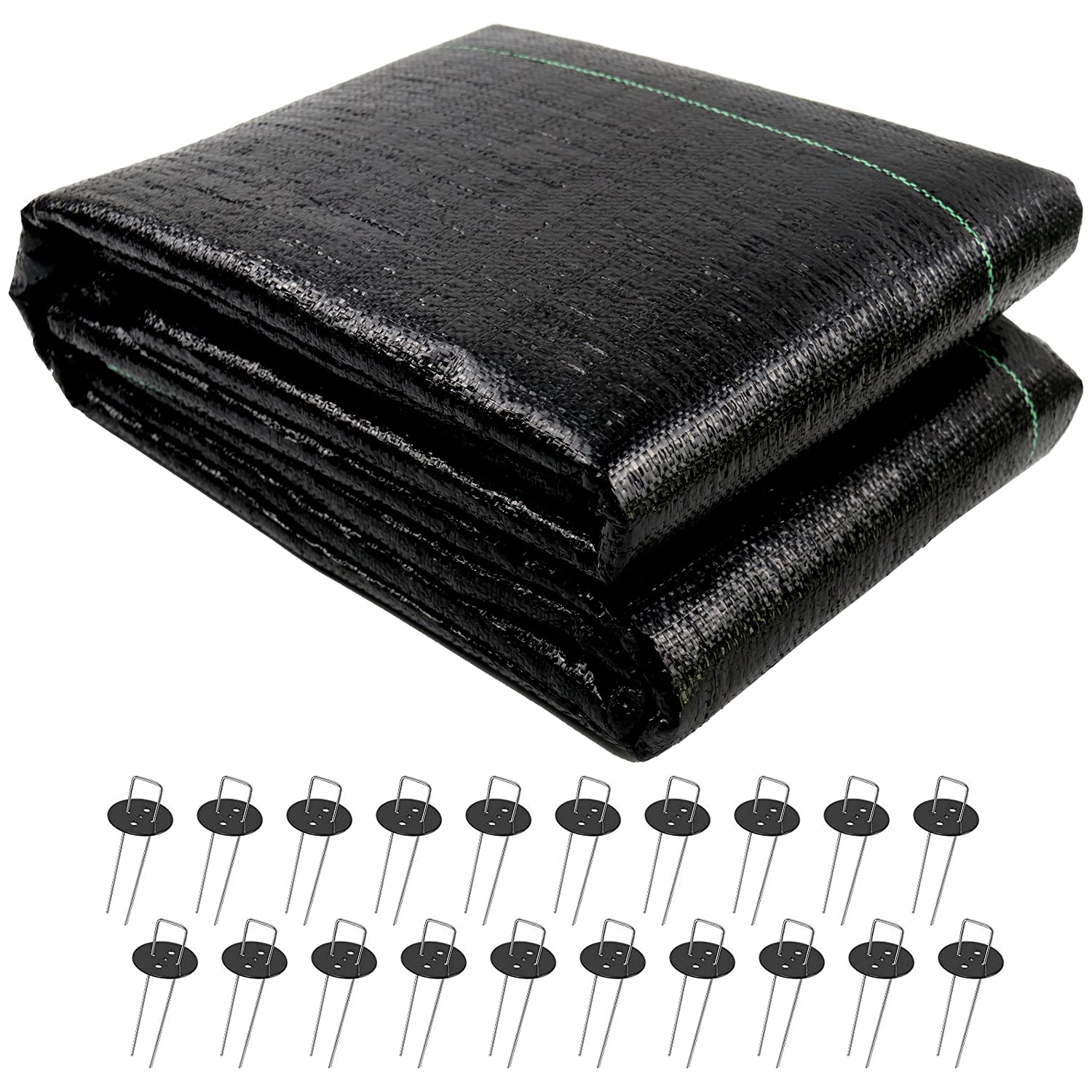
The UWIOFF fabric uses a 3.2 oz polyethylene weave that feels noticeably sturdier than the flimsy 1.0 oz fabrics sold in some garden centers. PE fabric offers better aging resistance than standard PP landscape fabric, and the UV treatment means it won’t turn brittle after a single season of direct sun exposure. At 4 feet wide and 100 feet long, a single roll covers a 400-square-foot bed — enough for a substantial vegetable garden or a series of flower beds.
The green stripe pattern along the edges is a genuinely useful feature for alignment when laying strips side by side, reducing the overlap guesswork. Water permeability is high enough that reviewers report no puddling on top, even after heavy rain, which prevents the mold and fungus issues that can develop under less breathable fabrics. The fabric does fray when cut with scissors, so the smart trick is to use a hot knife or a flame to seal the edges — a technique mentioned in multiple positive reviews.
For a mid-range fabric that hits every practical requirement — heavy enough to block weeds, breathable for soil health, and sized for large coverage — this is the most balanced option in the category. It works well under river rock, bark mulch, or rubber playground chips, and the 5-year lifespan projection is realistic for a fabric at this weight if you top it with a protective layer of stone or bark.
Why it’s great
- 3.2 oz PE fabric provides heavy-duty weed suppression with UV resistance
- 4-foot width and 100-foot length cover large areas efficiently
- High permeability prevents puddling and supports soil aeration
Good to know
- Fabric frays when cut — use a hot blade or seal edges with tape
- Requires staples or pins to stay flat in windy conditions
4. Winisok 3FT x 100FT Weed Barrier Landscape Fabric

Winisok delivers the same 3.2 oz weight class as the UWIOFF fabric but in a 2-pack of 3ft x 50ft rolls, giving you the same total 300 square feet of coverage with smaller, more manageable rolls. This format is genuinely better for solo installation — wrestling a 100-foot roll across a garden bed without creating wrinkles is a two-person job, while the 50-foot sections are light enough for one person to unroll and staple down cleanly. The green alignment stripe is present here too, making side-by-side installation tidy.
Users who laid this under rock gardens and apple tree rings report zero weed breakthrough after multiple months, and the fabric holds up well to foot traffic during weeding and harvesting. The key downside is the fraying issue — same as with most non-woven barriers — and reviewers recommend using landscape staples every 6 inches along seams to prevent the fabric from pulling loose at the edges. The material is thick enough that standard 4-inch staples grab it well without tearing through.
For gardeners who prefer to work in smaller roll sections and value the extra flexibility that two separate rolls provide, this is a strong alternative to the single-roll UWIOFF. The 3-foot width is also better suited for narrow raised beds and pathway strips where a 4-foot roll would waste fabric on trimming.
Why it’s great
- Two 50-foot rolls are easier to handle solo than one 100-foot roll
- 3-foot width minimizes waste on narrow beds and pathways
- 3.2 oz weight blocks weeds effectively under stone or bark
Good to know
- Cut edges fray significantly — seal with duct tape or heat
- Not reusable if garden layout changes; fabric edges pull apart
5. AggFencer 4 in x 33 Ft Garden Landscape Edging
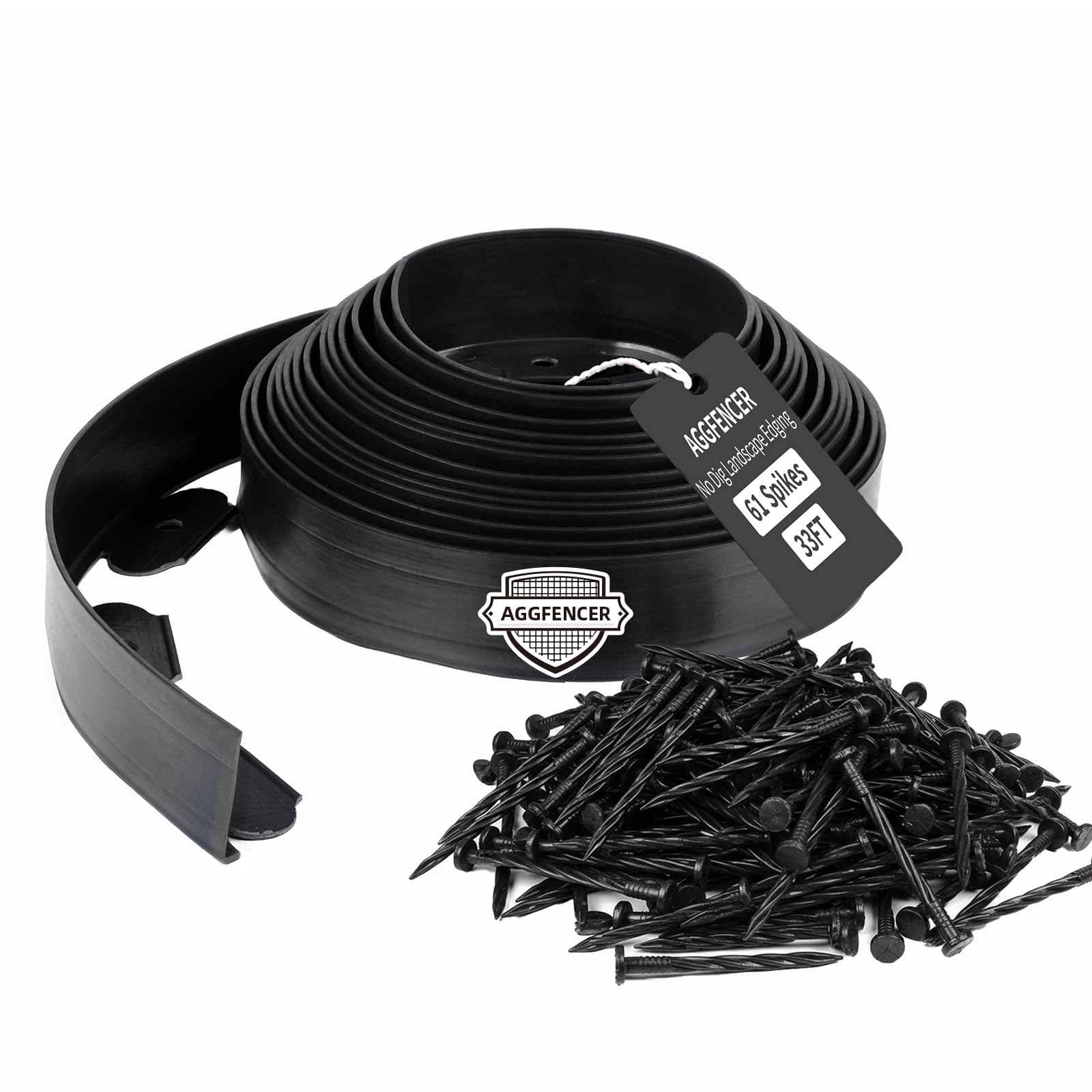
This no-dig edging kit is built for speed: lay the coil on the ground, bend it to shape, and hammer the spiral spikes through the pre-marked holes. The 33-foot length covers a typical front-yard bed perimeter without needing to join sections, and the 61 included spikes give you the density to secure every bend. The 4-inch height is sufficient for containing standard bark mulch and most decorative gravels, though taller edging is better for deep stone beds.
The plastic spikes are the weak point — several reviews note that they bend or snap if hammered without pre-drilling a hole, especially in clay or rocky soil. The recommended technique is to let the edging warm in the sun first to increase pliability, then use a large screwdriver or an awl to start the hole before driving the stake. The plus side is that the edging itself is made from durable PE that resists cracking in freezing temperatures and UV rays.
For a weekend project where time is the limiting factor, this kit removes the trench-digging step entirely and produces a clean, professional-looking border in under an hour. It’s best suited for straight and gentle curves — tight 90-degree corners may require cutting and splicing the plastic.
Why it’s great
- No-dig installation saves hours of trenching labor
- 61 spikes provide dense anchoring for long runs
- Durable PE plastic resists cracking in freeze-thaw cycles
Good to know
- Plastic stakes can snap — pre-drill holes in hard soil
- Warming the plastic in sunlight makes shaping much easier
6. GreatBuddy 15-lb Black River Rocks
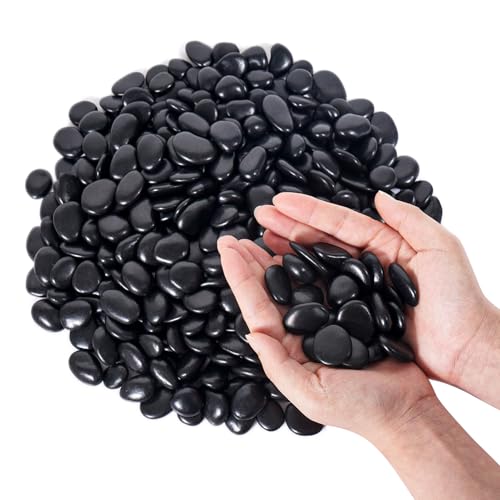
These polished black river pebbles are the decorative top layer for anyone who wants the deep, glossy black look that bark mulch can never achieve. The 1- to 2-inch size is ideal for indoor planter pots, succulent arrangements, and small pathway accents where you want weight without overwhelming the space. Each stone is wax-polished to a shine, and there are no fillers, dyes, or oils — just natural stone that won’t leach anything into the soil.
The 15-pound bag covers roughly 1 to 2 square feet at a 2-inch depth, which means this is an accent product rather than a ground-cover solution for large beds. Reviewers use it for terrarium drainage layers, Betta fish tanks, and vase filler, and they consistently note that the stones require a thorough rinse before use to remove polishing dust. The glossy finish does fade slightly over time in outdoor direct sun, so this product is better suited for shaded garden spots or indoor use.
For a planter or a small garden feature where you want a high-end, reflective black surface instead of the matte look of lava rock or bark, these pebbles deliver a clean, contemporary aesthetic. Pair them with a weed barrier fabric underneath to prevent them from sinking into the soil.
Why it’s great
- Glossy polished finish provides a high-end decorative look
- Natural stone with no dyes or chemical fillers
- Versatile for indoor planters, aquariums, and terrariums
Good to know
- Requires thorough rinsing to remove polishing dust
- Coverage is limited — 15 lbs covers about 1-2 sq ft
7. CJGQ 18LB Black Lava Rocks for Plants

These lava rocks are the functional workhorse of the black mulch category — porous volcanic stone that excels at drainage and aeration in potting mixes. The average ½-inch particle size makes them a natural fit for succulent and cactus blends, where heavy soil causes root rot. The porous surface absorbs water and slowly releases it back to the plant, creating a moisture buffer that prevents both overwatering and underwatering stress.
The 18-pound bag arrives extremely dusty straight from the bag — reviewers across the board recommend multiple rinses before using it in any visible top-dressing application or aquarium. The dust is a byproduct of the crushing process, not an impurity, but it can clog the pores of the rock and reduce drainage performance if not washed away. Once clean, the matte black texture provides a natural, non-reflective finish that many bonsai and orchid growers prefer over shiny pebbles.
These rocks are not a decorative mulch in the traditional sense — they don’t cover large ground areas efficiently. Their strength is as a soil additive: mix them 50/50 with pumice for a no-organic cactus mix, or use them as a bottom drainage layer in pots that don’t have holes. For gardeners who prioritize plant health over curb appeal, this is the smartest 18 pounds you can add to your potting shed.
Why it’s great
- Porous volcanic structure provides superior drainage and aeration
- Naturally retains and slowly releases moisture to plant roots
- Perfect size for succulent, orchid, and cactus potting mixes
Good to know
- Extremely dusty on arrival — requires multiple rinses before use
- Particle size is small (~½ inch) — not ideal for large ground coverage
FAQ
Can I lay landscape fabric directly over existing weeds?
How often should I replace organic black mulch compared to landscape fabric?
Will black mulch stain my concrete patio or walkway?
Do I need edging if I’m using heavy river rocks as mulch?
Can I mix lava rock with regular potting soil for container plants?
Final Thoughts: The Verdict
For most users, the black mulch winner is the Anleolife 40ft Landscape Edging because it provides the structural foundation that every mulched bed needs — 2.5mm thickness, 5-inch height, and thermal expansion design that keeps borders clean across seasons. If you want the heaviest weed barrier fabric for large coverage areas, grab the UWIOFF 4ft x 100ft Fabric with its 3.2 oz PE construction. And for organic, peat-free soil nourishment that feeds your garden while keeping weeds suppressed, nothing beats the Back to the Roots Organic Mulch.