
Our readers keep the lights on and the weekend projects moving. As an Amazon Associate, I earn from qualifying purchases.
Bare metal panels are a ticking clock for rust. The moment you clean off the old paint or weld a new patch, oxidation begins. A proper auto primer for bare metal is the only layer that stops corrosion in its tracks and gives your topcoat a surface that won’t peel, chip, or blister within weeks.
I’m Rikta — the co-founder and writer behind FitlyFast. I’ve spent countless hours analyzing aerosol chemistries, cure cycles, and adhesion performance across dozens of automotive primers to find the formulas that truly bond with raw steel, aluminum, and galvanized surfaces.
This guide breaks down the essential specs and real-world performance to help you select the right auto primer for bare metal that matches your project’s demands.
How To Choose The Best Auto Primer For Bare Metal
Choosing the wrong primer for bare metal means your paint job fails from the bottom up. The chemistry of the primer must match the metal type and the environment the part will face. Below are the critical factors that separate a lasting foundation from a peeling mess.
Self-Etching vs. Epoxy vs. High-Build Chemistry
Self-etching primers use phosphoric acid to bite into the metal surface, creating a mechanical and chemical bond. They excel on clean steel and aluminum but offer thin build. Epoxy primers, especially 2K formulas with an added hardener, form a tough, moisture-proof barrier that resists corrosion for years. High-build primers are sandable fillers that level out scratches and minor pitting but lack the anti-corrosion strength of etching or epoxy bases for bare metal.
Cure Time and Workflow Fit
Primer cure speed dictates how fast you can sand and apply topcoat. Aerosol self-etching primers often flash dry in minutes but need a few hours before sanding. 2K epoxy primers can be dust-dry in 15 minutes but require up to 12 hours for full chemical cure. For a same-day paint job, a single-stage self-etching primer is the pragmatic choice. For maximum durability, the extra wait for a 2K epoxy cure is worth the long-term payoff.
Coverage and Nozzle Quality
Bare metal projects like engine bays, fender undersides, and frame rails require even coverage without thin spots. A flat-fan high-atomization nozzle produces a wider, more consistent spray pattern than a standard conical tip. This reduces the risk of runs and ensures the primer reaches every crevice. Check the can’s stated coverage in square feet to estimate how many cans your project needs — one 12-ounce can typically covers 8 to 12 square feet with two coats.
Quick Comparison
On smaller screens, swipe sideways to see the full table.
| Model | Category | Best For | Key Spec | Amazon |
|---|---|---|---|---|
| SprayMax 2K Epoxy Primer Black | 2K Epoxy | Maximum corrosion barrier | 2K hardener, 15-min dust-dry | Amazon |
| SEM 39683 Grey Self Etching Primer | Self-Etching | Aluminum & steel adhesion | Self-etching, quick-dry | Amazon |
| Custom Shop 1K High Build (3 Pack) | High-Build | Filling imperfections | 3-pack, sandable filler | Amazon |
| Transtar 4603 Gray 2-in-1 | 2-in-1 Primer | Small touch-ups & sanding | Wet-sandable in 20 min | Amazon |
| Raptor Acid Etch Primer 1K | Acid Etch | Galvanized & aluminum | Phosphoric ester formula | Amazon |
| VHT FlameProof Flat Grey Primer | High-Heat | Exhaust & brake calipers | Rated to 1300°F-2000°F | Amazon |
| Rust-Oleum Marine Metal Primer | Marine | Wet & salty environments | Quart, corrosion-resistant | Amazon |
In‑Depth Reviews
1. SprayMax 2K Epoxy Primer Black
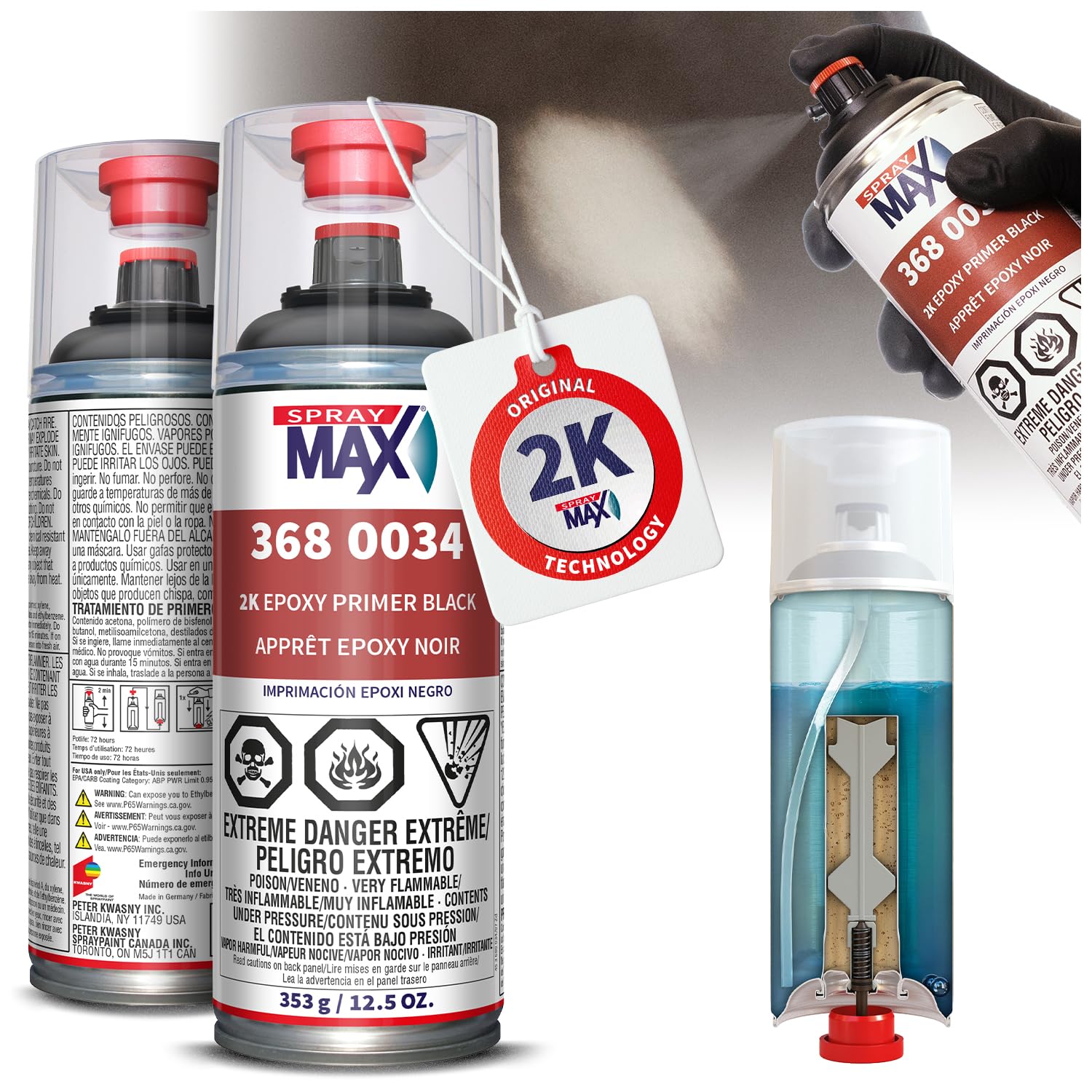
The SprayMax 2K epoxy system brings professional-grade chemical cross-linking to a rattle can. A built-in internal hardener activates when you depress the base, giving you a true two-component epoxy that cures into a solvent-resistant, moisture-proof barrier on bare steel, aluminum, and galvanized metal. Users report excellent adhesion on motorcycle tanks and fenders with no lifting after years of use.
The variable nozzle delivers a controlled fan pattern that lays down evenly without splattering. Dust-dry in 15 minutes and sandable within hours, this primer streamlines a pro workflow. The black color works well as a sealer before dark topcoats, though coverage is moderate — expect to use three cans for a full motorcycle tank and paired fenders.
Some experienced users note that the can’s active pot life is limited once mixed, so apply all contents promptly. The cured film is hard and resists chipping better than any 1K primer on this list. For bare metal panels that face road debris, salt, and moisture, the SprayMax 2K delivers the most durable foundation available in an aerosol.
Why it’s great
- True 2K epoxy with hardener for maximum corrosion resistance
- Dust-dry in 15 minutes; sandable within hours for fast workflow
Good to know
- Limited pot life once activated — use the full can promptly
- Coverage is moderate; multiple cans needed for larger panels
2. SEM 39683 Grey Self Etching Primer

SEM’s self-etching primer is a reference standard among metal fabricators and restoration shops. The formula contains phosphoric acid that chemically etches the surface as it dries, creating a bond that standard automotive primers cannot match on bare steel, aluminum, and even chromate surfaces. The 15.5-ounce can provides generous coverage for bumpers, frame sections, and engine compartments.
Users consistently praise its adhesion on bare metal — a single coat grabs aggressively and dries to a smooth, uniform matte grey that accepts topcoat without issue. The quick-dry formulation allows sanding within three hours, though many report being able to scuff it within 60 minutes in warm, low-humidity conditions. The can’s spray pattern is consistent with no sputtering when shaken properly.
A common use case is on aluminum outboard lower units after weld repair. One user applied it over JB Weld filler on a Mercury outboard and achieved a deep black gloss topcoat that remained chip-free. It does not fill deep scratches like a high-build primer, so prep sanding to 320-grit or finer is essential for a show-ready finish.
Why it’s great
- Chemical etch bond works aggressively on bare steel and aluminum
- Quick-dry allows sanding within 1-3 hours in good conditions
Good to know
- Thin build — not designed to fill sanding scratches or pitting
- Surface must be meticulously clean and dry before application
3. Custom Shop 1K High Build Primer (3 Pack)
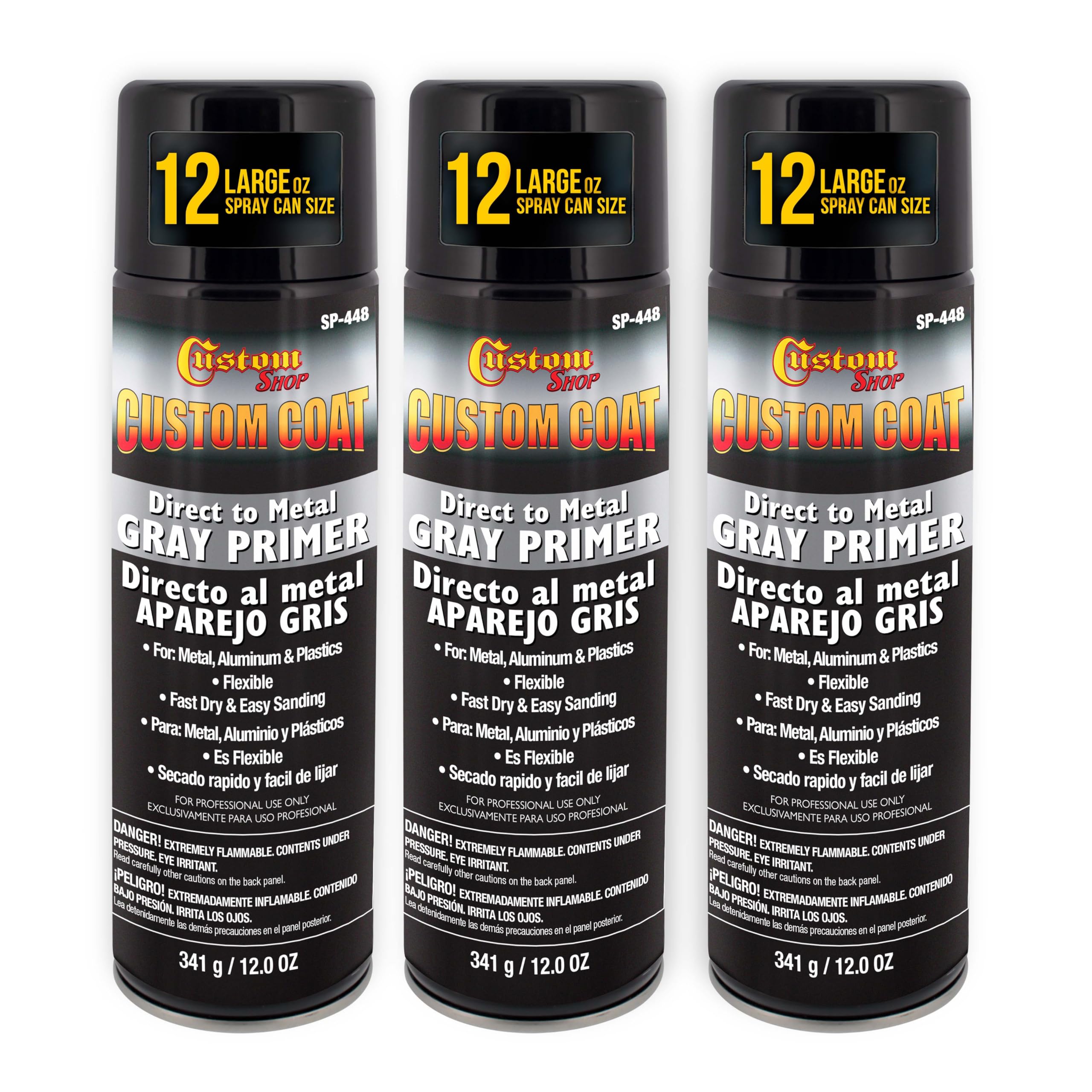
The Custom Shop 1K high-build primer surfacer is engineered to fill minor imperfections, sanding scratches, and pitting in a single application. The three-pack provides ample volume for a full panel or multiple smaller components. Designed for direct-to-metal use on steel and aluminum, the high-build formula builds a thick, sandable layer that levels out surface irregularities before the base coat.
The flat-fan high-atomization nozzle delivers a wide, even pattern that lays down smoothly without tiger-striping. Users report that it sprays on easily, dries to a sandable state, and blocks out well with 400-600 grit paper. It bonds effectively to plastic and fiberglass as well when paired with an adhesion promoter, making it a versatile choice for mixed-material projects.
Quality control is a point of caution — some cans in the three-pack have arrived with separation issues, sputtering black solids or globs that ruin the finish. The manufacturer has been responsive with refunds for defective cans, but the inconsistency means you may want to test each can on a scrap panel first. When the cans work correctly, the high-build capability delivers a smooth foundation ready for urethane topcoat.
Why it’s great
- Thick, sandable fill hides scratches and minor pitting well
- Three-pack covers full fenders, hoods, or multiple components
Good to know
- Some cans have QC issues with separation and black spatter
- Low-build for heavy rust pitting — use primer surfacer over etch primer
4. Transtar 4603 Gray 2-in-1 Primer
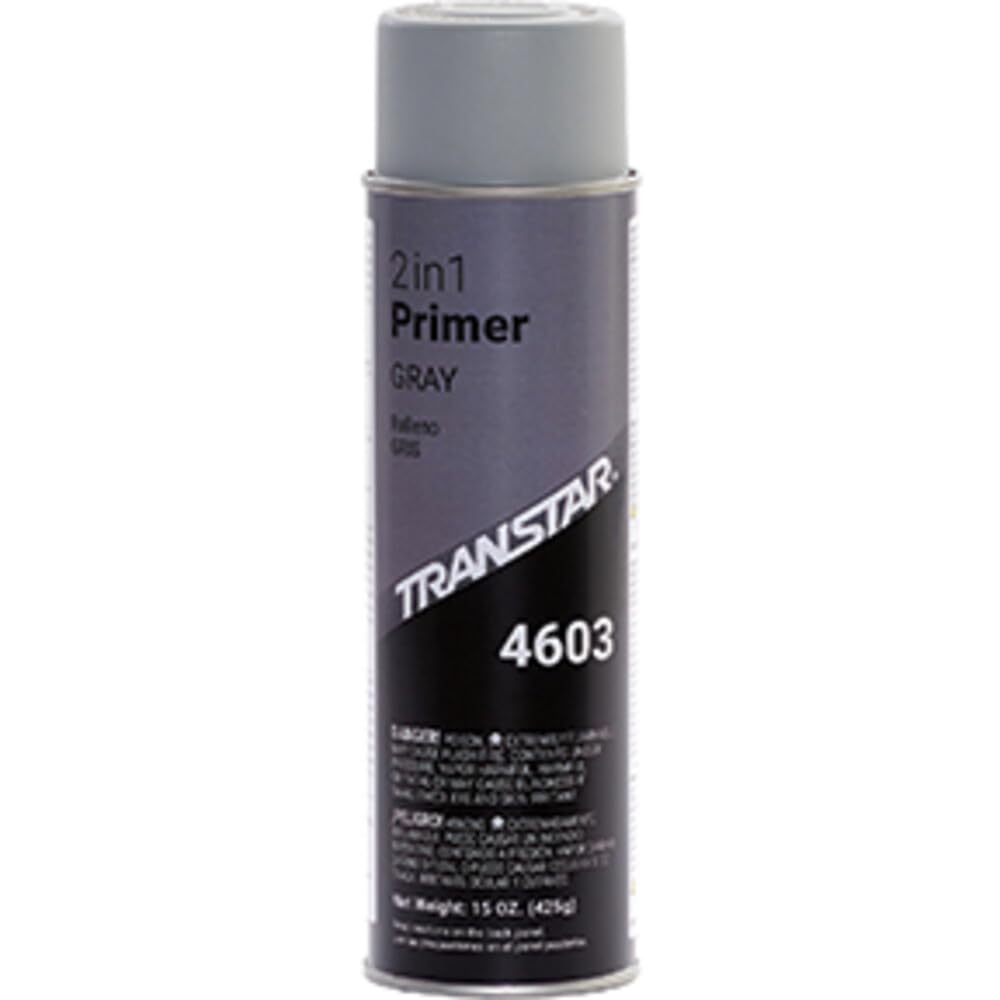
Transtar 4603 is a 2-in-1 primer that combines filling properties with a sandable finish, making it a solid choice for DIY bodywork on bare metal panels. The 15-ounce aerosol lays down smoothly and dries fast — users report it is ready for wet sanding in as little as 20 minutes in moderate temperatures. The grey color provides a neutral base for both light and dark topcoats.
When compared to Duplicolor, the Transtar formula does not clog sandpaper as quickly, saving time during the block-sanding phase. One user repainted the hood of a Jeep Cherokee using a single-stage acrylic urethane over this primer and reported excellent adhesion with no lifting. The can’s nozzle produces a steady spray pattern that avoids runs when applied in light, even coats.
It is not a dedicated self-etching primer, so bare steel should be scuffed with 320-grit or treated with a metal prep solution before application to maximize adhesion. For small touch-ups, patch panels, and motorcycle parts where maximum corrosion resistance is not the primary concern, this primer delivers professional-looking results at an accessible entry point.
Why it’s great
- Dries fast and sands easily without clogging paper
- Good filling ability for smoothing minor surface imperfections
Good to know
- Not a self-etching formula — requires mechanical scuff on bare metal
- Thinner film build than high-build primers
5. Raptor Acid Etch Primer 1K Aerosol

Raptor’s acid etch primer is built for notoriously difficult substrates like galvanized steel and aluminum. The phosphoric acid ester formula chemically bites into these slick surfaces, creating a mechanical key that standard primers simply cannot achieve. It can be applied directly to bare metal with no sanding required and accepts most topcoat systems — including Raptor’s own bed liner — without lifting.
The flat-fan high-atomization nozzle produces a large, even spray pattern that covers well in fewer passes. Users report excellent results on steel bumpers, rock rails, and roof racks before applying a 2K bed liner. One user noted the primer held up perfectly under the bed liner for nearly a year with no peeling or rust creeping from edges.
It is a one-step process that etches and primes in a single coat, saving time compared to separate etch-and-fill workflows. However, the film build is thin, so deep scratches or weld seams will still be visible. The gray matte finish provides a good base for dark topcoats but lighter colors may require a white sealer layer for full opacity.
Why it’s great
- Phosphoric acid formula grips galvanized and aluminum surfaces
- No sanding required before application
Good to know
- Thin film — will not fill scratches or surface defects
- Gray color may require extra topcoat coverage for light finishes
6. VHT FlameProof Flat Grey Primer

VHT FlameProof primer is formulated specifically for surfaces that experience extreme thermal cycling — headers, exhaust systems, brake calipers, and piston domes. It is rated to withstand continuous temperatures from 1300°F up to 2000°F depending on the specific application. This makes it the only primer on this list purpose-built for high-heat bare metal components.
The flat grey finish serves as an effective base for VHT’s FlameProof color line and other high-heat paints. Users applying it to brake calipers report that four light coats followed by color and clear create a durable finish that survives track-day heat. Curing requires a specific heat cycle — either running the engine or performing controlled braking to reach 200°F for full hardness.
It is not a general-purpose body primer. The spray pattern is functional rather than refined, and the 11-ounce can covers a smaller area than standard automotive primers. For exhaust manifolds, turbo housings, or any bare metal that will see extreme heat, this primer prevents flash rust and topcoat failure that would otherwise occur within weeks.
Why it’s great
- Extreme heat resistance up to 2000°F for exhaust and brake parts
- Creates a durable base for high-heat color coats
Good to know
- Requires heat cycling to fully cure and harden
- Limited coverage per can; plan for multiple coats
7. Rust-Oleum Marine Metal Primer, Quart

Rust-Oleum Marine Metal Primer is a brush- or spray-on oil-based formula engineered for metal surfaces above the waterline in marine environments. It sands easily, dries to the touch in 1-2 hours, and covers roughly 100 square feet per quart. The white color provides an excellent base for light topcoats and reveals surface imperfections clearly.
One user applied it to snow plows after rust removal and reported excellent adhesion and fast drying when thinned with acetone for spraying. Another used it as a primer for epoxy and fiberglass on RC aircraft, noting that it filled the weave of fiberglass cloth well and sanded down smoothly without clogging paper. The corrosion-resistant formula is designed for bare, painted, or lightly rusted metal.
It is not a self-etching formula, so bare steel should be mechanically abraded or treated with a metal conditioner first. The quart can provides far more volume per dollar than aerosol options, making it suitable for large flat surfaces like boat decks, trailer fenders, or snow plow blades. For submerged applications below the waterline, a dedicated marine anti-fouling system is required instead.
Why it’s great
- Excellent value per quart for large area coverage
- Durable corrosion barrier in wet, salty environments
Good to know
- Not for bare metal below the waterline
- Requires thinning for spray application; not a true aerosol
FAQ
Can I spray self-etching primer directly over rusted metal?
How long should I wait before sanding a 2K epoxy primer?
Final Thoughts: The Verdict
For most users, the best auto primer for bare metal winner is the SprayMax 2K Epoxy Primer because its true 2K chemistry creates a solvent-proof, moisture-blocking barrier that no 1K aerosol can match. If you want a self-etching formula for aluminum and steel panels that air dries fast and sands smooth, grab the SEM 39683 Grey Self Etching Primer. And for high-heat exhaust or brake components where standard primers burn off, nothing beats the VHT FlameProof Flat Grey Primer.