
Our readers keep the lights on and the weekend projects moving. As an Amazon Associate, I earn from qualifying purchases.
That stubborn patch of pigmentation on your cheek or the cluster of sunspots across your forehead can feel like permanent ink. The market is flooded with brightening agents, but only a handful are formulated to actually penetrate the dermis and disrupt melanin overproduction at the source—without compromising your skin barrier or triggering irritation.
I’m Rikta — the co-founder and writer behind FitlyFast. I’ve spent countless hours analyzing ingredient gradients, concentration percentages, and clinical trial data to separate the actives that truly target hyperpigmentation—like tranexamic acid, stabilized vitamin C derivatives, and high-potency niacinamide—from the fillers that just sit on the surface. This guide is built on that research.
Whether you are battling age spots, sun damage, or post-acne marks, finding the right formula can be the difference between weeks of wasted effort and real, visible change. Here is my breakdown of the best age spot corrector to help you make a confident, effective choice.
How To Choose The Best Age Spot Corrector
Not all dark spot correctors are created equal. The difference between a serum that works and a moisturizer that just feels nice lies in the type and concentration of active ingredients, their formulation stability, and how well they match your specific pigmentation issue. Here is what to look for.
Match the Active to the Pigment Type
Surface-level sunspots respond well to tyrosinase inhibitors like kojic acid, tranexamic acid, and stabilized vitamin C derivatives. Deeper melasma often requires a multi-target approach—combining niacinamide for transfer inhibition with a gentle exfoliant like BHA to speed cell turnover. Post-inflammatory marks from acne benefit from retinol or bakuchiol to accelerate shedding. One ingredient rarely covers all three.
Check the Concentration, Not Just the Ingredient List
A serum boasting “niacinamide” is only effective at 4% or higher. Tranexamic acid needs to be present at a clinically tested level—often around 2-3%—to show measurable fading in 4-8 weeks. If the ingredient is buried near the bottom of the INCI list, it is a marketing tag, not a treatment. Look for brands that disclose percentages or reference clinical data.
Stability and Formulation Delivery Matter
Vitamin C is notoriously unstable; pure L-ascorbic acid degrades quickly when exposed to light and air. Derivatives like ethyl ascorbic acid or ascorbyl glucoside offer better shelf stability but may be less potent. Similarly, formulations that combine incompatible actives—like pure vitamin C and niacinamide—can neutralize each other. A corrector that separates in the bottle or changes color quickly is losing efficacy.
Quick Comparison
On smaller screens, swipe sideways to see the full table.
| Model | Category | Best For | Key Spec | Amazon |
|---|---|---|---|---|
| La Roche-Posay Mela B3 | Serum | Stubborn age & sun spots | 10% Niacinamide + Melasyl | Amazon |
| DOMINAS TXA Cream | Cream | Clinical spot reduction | 49.74% dark spot reduction in 4 weeks | Amazon |
| Clinique Even Better Clinical | Serum | All skin tones | Vitamin C + clinical testing on 55 women | Amazon |
| Caudalie Vinoperfect | Serum | Pregnancy-safe brightening | Viniferine (62x more effective than Vitamin C) | Amazon |
| IT Cosmetics Bye Bye Dark Spots | Serum | Sensitive skin | 4% Niacinamide + 1% Ethyl Vitamin C | Amazon |
| VALITIC Kojic Acid Soap | Soap | Body & large-area fading | Kojic Acid + Retinol + Vitamin C bar | Amazon |
| Paula’s Choice 2% BHA | Exfoliant | Texture & pore refinement | 2% Salicylic Acid leave-on | Amazon |
In‑Depth Reviews
1. La Roche-Posay Mela B3 Serum
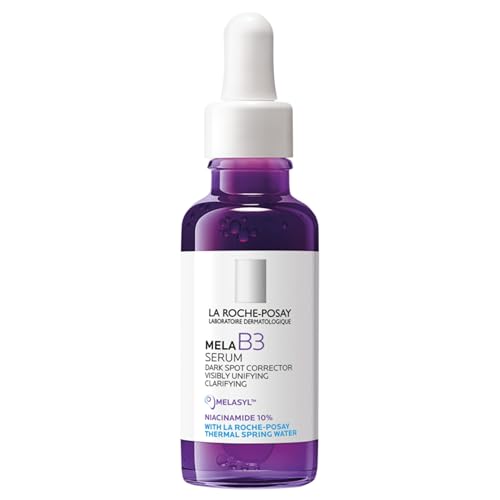
La Roche-Posay’s Mela B3 Serum takes top position because it delivers a potent 10% niacinamide concentration—far above the 4-5% found in most competitors—paired with their patented Melasyl complex. This formulation targets the multiple pathways of melanin production, making it effective against both surface-level sun spots and deeper post-inflammatory hyperpigmentation. Clinical data shows 85% of subjects saw significant reduction in persistent dark spots after 8 weeks, which is a strong benchmark for a non-prescription serum.
The texture is a lightweight, almost watery serum that absorbs fully within seconds, leaving zero tackiness. Users with sensitive skin consistently report no irritation, which is rare for a 10% niacinamide formula. The pump dispenser provides good control, and a single 1-ounce bottle typically lasts 6-8 weeks of twice-daily use. It is fragrance-free and dermatologist-tested across all skin phototypes.
The main downside is the cost per ounce relative to the fill volume—the bottle appears only about 70% full, which can feel deceptive. Some users also note that while dark spots lighten noticeably, complete removal is not guaranteed, especially for very stubborn or deep melasma. Still, for the combination of high-concentration niacinamide and a novel patented active, this is the most well-rounded formula available at this tier.
Why it’s great
- 10% niacinamide is one of the highest non-prescription concentrations on the market.
- Patented Melasyl complex targets pigmentation at multiple melanin pathways.
- Clinically proven 85% reduction rate in stubborn spots over 8 weeks.
Good to know
- Bottle fill level is less than full volume expected for the price.
- Results are gradual; deep melasma may require a prescription adjunct.
- Runs through quickly with twice-daily use.
2. DOMINAS Tranexamic Acid Dark Spot Corrector Cream

DOMINAS brings a rare clinical pedigree to the age spot category—their 1.76-ounce cream is backed by a 22-woman study showing a 49.74% reduction in dark spots after just 4 weeks. The star active is tranexamic acid (TXA), which works by blocking the plasminogen pathway that triggers melanocyte activity. This is the same ingredient used in prescription-strength spot treatments, but here it is delivered in a stable, over-the-counter cream format that pairs TXA with niacinamide and polydatin.
The texture is thick and luxurious, sinking into the skin without feeling greasy—closer to a traditional Korean moisturizer than a serum. Users consistently report visible brightening and fading of freckles, sun damage, and hyperpigmentation within a month of twice-daily use. The addition of bakuchiol and adenosine means you also get subtle anti-wrinkle benefits, making this a dual-function treatment for aging concerns.
The cream is not fully occlusion-proof for very dry skin types, and some users experienced breakouts on the forehead when used daily. It also carries a mild, pleasant fragrance that sensitive-skin users should patch-test first. For pure spot-correction power backed by real clinical numbers, this is the strongest cream-based entry in the list.
Why it’s great
- Clinically tested 49.74% dark spot reduction in 4 weeks.
- Tranexamic acid is a potent, clinically proven melanin blocker.
- Luxurious cream texture with added anti-aging benefits from bakuchiol.
Good to know
- Can cause breakouts for some users with frequent daily application.
- Mild fragrance may not suit the most sensitive skin.
- Results for deep melasma may be less dramatic than for sun spots.
3. Clinique Even Better Clinical Dark Spot Clearing Serum
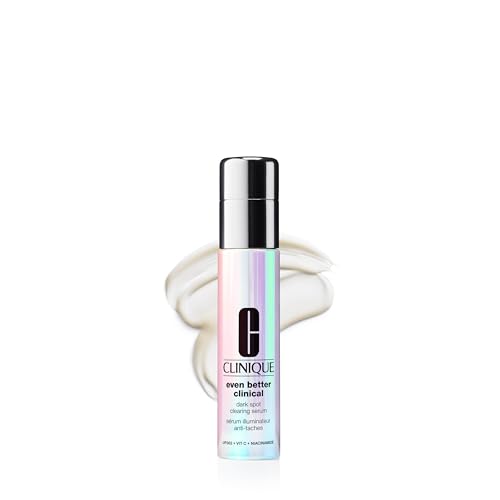
Clinique’s Even Better Clinical Serum is built on one of the most inclusive clinical studies in the category—testing on 55 women with lighter skin tones and 34 women with deeper skin tones separately. The result is a formula that delivers 96% visible reduction in sun and age spots on lighter skin and 100% reduction in post-blemish mark intensity on deeper skin tones after 8 weeks. That kind of cross-tone validation is rare and impressive.
The active is a stabilized vitamin C derivative that brightens without the instability of pure L-ascorbic acid. The serum is fragrance-free, allergy-tested, and safe for use as soon as one day after Intense Pulsed Light (IPL) treatment—a major advantage if you are combining topical treatment with in-office procedures. The texture is a lightweight, silky liquid that spreads easily and layers well under SPF.
The price point is the highest in the mid-range category, and the 1-ounce size means it will need replacing every 6-8 weeks with consistent use. Some users with very dry skin may need an additional hydrating layer. For those who want a research-backed formula tested explicitly on multiple Fitzpatrick skin types, this is the most robust option available.
Why it’s great
- Separate clinical testing on lighter and deeper skin tones for inclusive results.
- Safe for use immediately after IPL treatments, supporting combined therapies.
- Stabilized vitamin C derivative offers brightening without oxidation issues.
Good to know
- Premium cost per ounce among mid-range serums.
- Runs through quickly with twice-daily application.
- Hydration only moderate; dry skin needs a separate moisturizer.
4. Caudalie Vinoperfect Brightening Dark Spot Serum
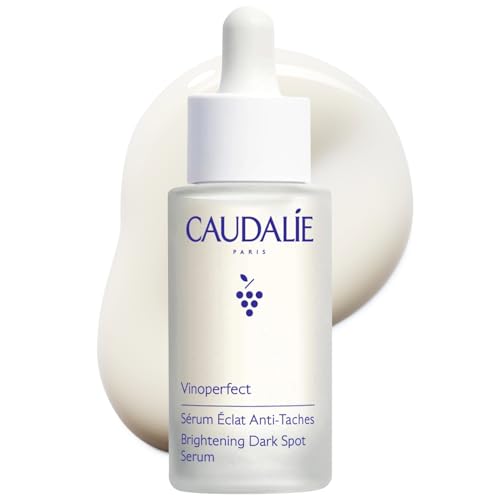
Caudalie’s Vinoperfect serum stands apart with its patented viniferine, a grapevine extract that in vitro testing shows is 62 times more effective at inhibiting tyrosinase than pure vitamin C. This makes it a uniquely potent option for users who cannot tolerate vitamin C or who are pregnant and seeking a safe brightening alternative. Clinical results cite a 63% reduction in dark spots after one bottle (56 days), with an even higher 81% reduction on deeper skin tones.
The texture is a milky, lightweight emulsion that absorbs into a natural, non-greasy finish. Users frequently report that the serum delivers a noticeable glow within the first two weeks of use, with spot fading becoming apparent by the one-month mark. The formula also includes olive squalane for hydration, which makes it suitable for normal to combination skin without needing an additional moisturizer underneath.
The main caveats are the price—this is the most expensive per-ounce option in the list—and the distinct smell, which some users describe as earthy or unpleasant. It is also less effective for melasma compared to sun spots or post-acne marks, based on user feedback. For pregnancy-safe brightening or a vitamin C alternative with strong clinical numbers, this is the premium pick.
Why it’s great
- Viniferine is 62x more effective than Vitamin C at inhibiting tyrosinase in vitro.
- Clinically validated 63% dark spot reduction after one bottle.
- Assessed safe for use during pregnancy.
Good to know
- Highest per-ounce cost in the comparison.
- Distinct smell that some users find unpleasant.
- Results for melasma may be less dramatic than for other spot types.
5. IT Cosmetics Bye Bye Dark Spots 4% Niacinamide Serum
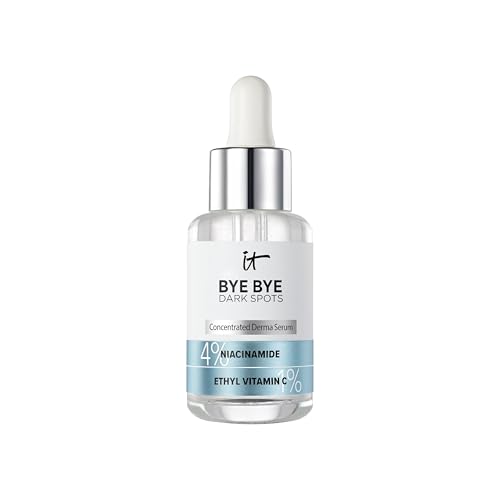
IT Cosmetics solves a formulation puzzle that many brands ignore: combining niacinamide and vitamin C in a single bottle without them neutralizing each other. They use a highly stable 1% ethyl vitamin C derivative alongside 4% niacinamide, creating a serum that targets pigment production and melanin transfer simultaneously. The 8-week usage data from customers shows consistent fading of sun spots and age spots with minimal risk of irritation.
The serum texture is lightweight and almost watery, absorbing into the skin without any sticky residue. It is dermatologist-tested and explicitly formulated for all skin types, including sensitive skin—a key differentiator because high-concentration vitamin C can cause stinging for reactive complexions. A pump bottle dispenses controlled doses, and the 1-ounce size lasts approximately 6-8 weeks with twice-daily use.
Some users noted that the serum arrived slightly discolored—a light brown tint—though feedback suggests it still performs normally. Results are moderate rather than dramatic; users aiming for aggressive spot fading after a few weeks may find the pace slow. For those with sensitive skin who want a gentle, non-irritating daily brightener, this is the most balanced option.
Why it’s great
- Stable formulation pairs niacinamide with vitamin C without deactivation.
- Dermatologist-tested and suitable for sensitive skin types.
- Lightweight, fast-absorbing texture ideal for layering.
Good to know
- Results are gradual; noticeable fading takes 4-8 weeks of consistent use.
- Some units arrive with slight discoloration, though efficacy remains.
- Moderate pigmentation fading intensity compared to high-concentration alternatives.
6. VALITIC Kojic Acid Dark Spot Remover Soap Bars
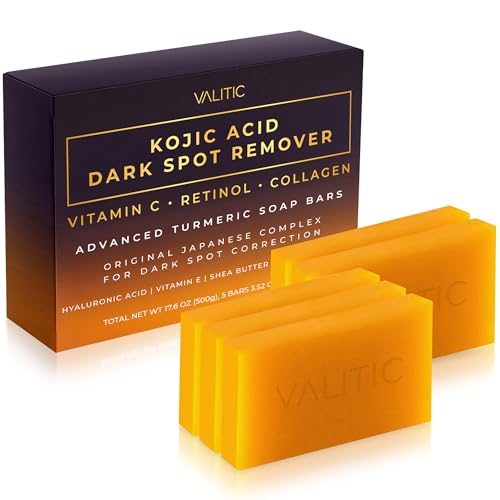
VALITIC’s soap bars take a wash-off approach to pigmentation, using kojic acid as the primary tyrosinase inhibitor alongside retinol, vitamin C, and turmeric. The real-world feedback is unusually strong for a soap: one user reported visible changes after just 3 uses compared to a Lancôme serum, with gradual removal of sunspots, wrinkles, and dryness. The 5-bar pack is the most economical entry point in this list, making it a low-risk starting option for body areas like elbows, knees, and underarms.
The recommended use method—lather, leave for 2-5 minutes, then manually exfoliate the dead skin—adds a mechanical exfoliation step that enhances penetration. Users report clean, smooth skin without the stripping feeling of traditional acne soaps. The formula is SLS and paraben-free, and the bars come with a small stand for shower storage, which is a thoughtful inclusion.
The critical warning is that kojic acid is an endocrine disruptor. One user with a history of hormone-receptor-positive breast cancer was advised by their oncologist to stop using it immediately. This is a first-tier consideration for anyone with a hormone-sensitive condition. For general body fading, this is effective and cheap, but it carries a biochemical risk that other options do not.
Why it’s great
- Lowest cost per use in the list; 5 bars for comprehensive body coverage.
- Visible fading reported within days with proper leave-on technique.
- SLS and paraben-free formula is gentle for daily body use.
Good to know
- Kojic acid is classified as an endocrine disruptor—not safe for everyone.
- Requires leaving on for 2-5 minutes for efficacy, not a simple rinse.
- Not suitable as a leave-on facial treatment; wash-off only.
7. Paula’s Choice Skin Perfecting 2% BHA Liquid Exfoliant
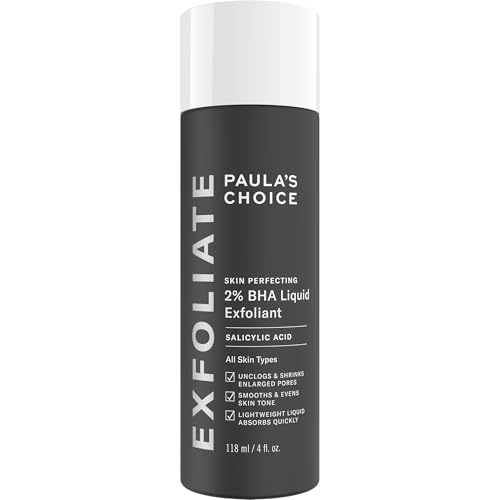
Paula’s Choice BHA Exfoliant uses 2% salicylic acid—a beta hydroxy acid that penetrates oil-filled pores to dissolve the dead skin cells and debris that make pigmentation look dull and uneven. While it is not a direct melanin inhibitor, its ability to accelerate cell turnover makes it an essential complement to any brightening routine. Users consistently report visible reduction in blackheads, closed comedones, and overall skin texture within 3-5 days of use.
The liquid is lightweight and works like a toner: apply with a cotton pad to clean skin, leave on, and follow with moisturizer and SPF. The fragrance-free formula is gentle enough for daily use on normal to combination skin, though the instructions to start with 1-2 times per week are important for those new to chemical exfoliants. A single 4-ounce bottle lasts 2-3 months, offering strong value for the price.
This product will not fade existing dark spots on its own—it needs to be paired with a dedicated spot corrector. Some users experience initial flaking during the first week as the skin adjusts. For anyone whose age spots are accompanied by rough texture, enlarged pores, or clogged skin, this is the foundational step that makes other actives work more efficiently.
Why it’s great
- Deeply penetrates pores to exfoliate dead skin and improve texture.
- Dramatic pore size and blackhead reduction within the first week.
- Fragrance-free and gentle enough for consistent use.
Good to know
- Does not directly inhibit melanin; must be paired with a separate corrector.
- Initial flaking and purging phase requires patience and moisturizer.
- Strict daily sunscreen use is non-negotiable with this active.
FAQ
How long does it take for an age spot corrector to work?
Can I use a dark spot corrector with retinol?
Will a high-concentration niacinamide serum irritate my skin?
Is it safe to use a kojic acid product during pregnancy?
Why do I need sunscreen with an age spot corrector?
Final Thoughts: The Verdict
For most users, the best age spot corrector winner is the La Roche-Posay Mela B3 Serum because it combines the highest non-prescription niacinamide concentration with a patented complex targeting pigment at multiple formation stages. If you want a clinically measured percentage reduction in dark spots from a cream, grab the DOMINAS Tranexamic Acid Cream. And for safe, effective brightening during pregnancy or as a vitamin C alternative, nothing beats the Caudalie Vinoperfect Serum.