
Our readers keep the lights on and the weekend projects moving. As an Amazon Associate, I earn from qualifying purchases.
Finding a suitable milk alternative when your one-year-old has outgrown breast milk or needs to move away from infant formula is a specific nutritional puzzle. Cow’s milk allergies, dairy sensitivities, or simply wanting a plant-based option means you need a drink that delivers complete nutrition — DHA for brain development, iron, calcium, and protein — without the ingredients that might upset a toddler’s system. The wrong choice can mean digestive trouble, missed nutrients, or a toddler who refuses to drink it.
I’m Rikta — the co-founder and writer behind FitlyFast. This buying guide comes from weeks of cross-referencing ingredient lists, protein sources, omega-3 concentrations, and organic certifications to find the most reliable options for this critical transition.
The right alternative to breast milk for 1 year old must be fortified with key developmental nutrients without relying on cheap fillers like corn syrup, artificial growth hormones, or excessive added sugars.
How To Choose The Best Alternative To Breast Milk For 1 Year Old
Not every toddler drink on the shelf is a true nutritional replacement for breast milk. Many are simply flavored milk with added sugar. For a one-year-old, you need a product that delivers protein, healthy fats for brain growth, and micronutrients often found in breast milk — without artificial additives. Here are the three most important factors.
Protein Source and Allergen Profile
The base ingredient defines the drink. Whole goat milk offers a protein and fat structure closer to human milk for some babies, often easier to digest than cow milk. Oat-based formulas provide a plant-based route but need careful fortification. Pea protein concentrates offer high biological value free of the top allergens. Cow-milk toddler formulas remain the most calorie-dense but are the most common cause of sensitivity. Your toddler’s tolerance dictates the base choice.
Key spec to check: The type of protein (goat milk powder, oat protein concentrate, pea protein isolate, or nonfat cow milk) and whether the formula excludes palm oil, soy oil, and corn syrup — common triggers for digestive upset.
Fortification: DHA, Iron, and Prebiotics
Breast milk naturally provides DHA for neural development, iron for blood health, and prebiotic oligosaccharides for gut flora. A good alternative must replicate this. Look for DHA from algae oil (not fish oil), iron in the form of ferrous sulphate, and prebiotics like galacto-oligosaccharides (GOS) or human milk oligosaccharide (HMO) blends. Without these, your toddler may miss critical nutrients during a peak development window.
Key spec to check: Presence of DHA (target 15-50mg per serving), iron (1-2mg per serving), and prebiotic fibers or live probiotics.
Purity: Organic Certification and Avoiding Fillers
Many toddler drinks add maltodextrin, corn syrup solids, or palm oil to cut costs and improve texture. These provide empty calories and can interfere with calcium absorption. Organic certification from a recognized body (USDA Organic, EU Organic) helps ensure no synthetic pesticides or GMOs. The Clean Label Project Purity Award goes further by verifying the absence of heavy metals like lead and arsenic — a real concern in powdered formulas.
Key spec to check: USDA Organic seal, Clean Label certification, and “no corn syrup” or “no palm oil” on the ingredient panel.
Quick Comparison
On smaller screens, swipe sideways to see the full table.
| Model | Category | Best For | Key Spec | Amazon |
|---|---|---|---|---|
| Holle Goat Milk Toddler Drink | European Goat Milk | Gentle digestion, creamier taste | Whole goat milk, DHA & iron | Amazon |
| Enfagrow Premium Toddler Vanilla | Cow Milk | Brain-support trio, familiar taste | 26mg DHA, 6g protein per serving | Amazon |
| Similac Go & Grow 360 Total Care | Cow Milk | 5-HMO prebiotic blend, immune support | 5 HMO prebiotics, DHA, lutein | Amazon |
| Earth’s Best Organic Toddler Milk | Organic Cow Milk | USDA organic grass-fed, no corn syrup | Organic milk from grass-fed cows | Amazon |
| Haven Oat Toddler Formula | Plant-Based Oat | Dairy-free, gentle on sensitive stomachs | Oat protein, algal DHA, prebiotics | Amazon |
| Ripple Kids Original Plant Based Milk | Plant-Based Pea | Allergen-free, high protein, shelf-stable | 8g pea protein, 50mg DHA | Amazon |
| Kate Farms Pediatric 1.2 Vanilla | Medical Grade Plant | Sole source nutrition, tube feeding | 12g pea protein, 27 vitamins/minerals | Amazon |
In‑Depth Reviews
1. Holle Goat Milk Toddler Drink, Stage 3
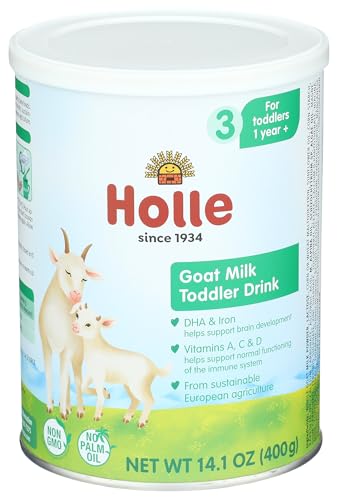
Holle’s Stage 3 goat milk drink stands apart for its ingredient philosophy. It uses whole goat milk as the primary ingredient — not skim milk powder or whey concentrate — which provides a creamy fat profile closer to breast milk than most cow-derived formulas. The protein structure in goat milk (more A2 casein, less alpha-s1 casein) is widely reported by parents to cause less digestive distress, and the absence of palm oil means no interference with calcium absorption. It includes DHA from algae oil, iron, and zinc without relying on maltodextrin or corn syrup solids.
The Clean Label Project Purity Award is a meaningful differentiator here. Independent heavy-metal testing confirmed this product meets strict thresholds for lead, arsenic, and cadmium — a concern that many mainstream toddler drinks fail to address transparently. Parents who switched from cow-based formulas report that their toddlers accepted the taste readily, though the European-style scooping instructions (1 scoop per 30ml water) differ slightly from US norms.
One limitation: the 14.1-ounce can is on the smaller side, which means more frequent repurchasing compared to the 24-ounce Enfagrow or Similac tubs. Still, for a toddler with a sensitive stomach or a family prioritizing European-mandated ingredient standards, this is the strongest all-around pick in the category.
Why it’s great
- Whole goat milk base is gentle and nutrient-dense
- Clean Label Project verified for heavy metals
- No palm oil, corn syrup, or artificial additives
- European organic standards exceed US baseline
Good to know
- Small 14-oz can requires frequent ordering
- Higher per-serving cost than cow-based options
2. Enfagrow Premium Toddler Nutritional Drink Vanilla
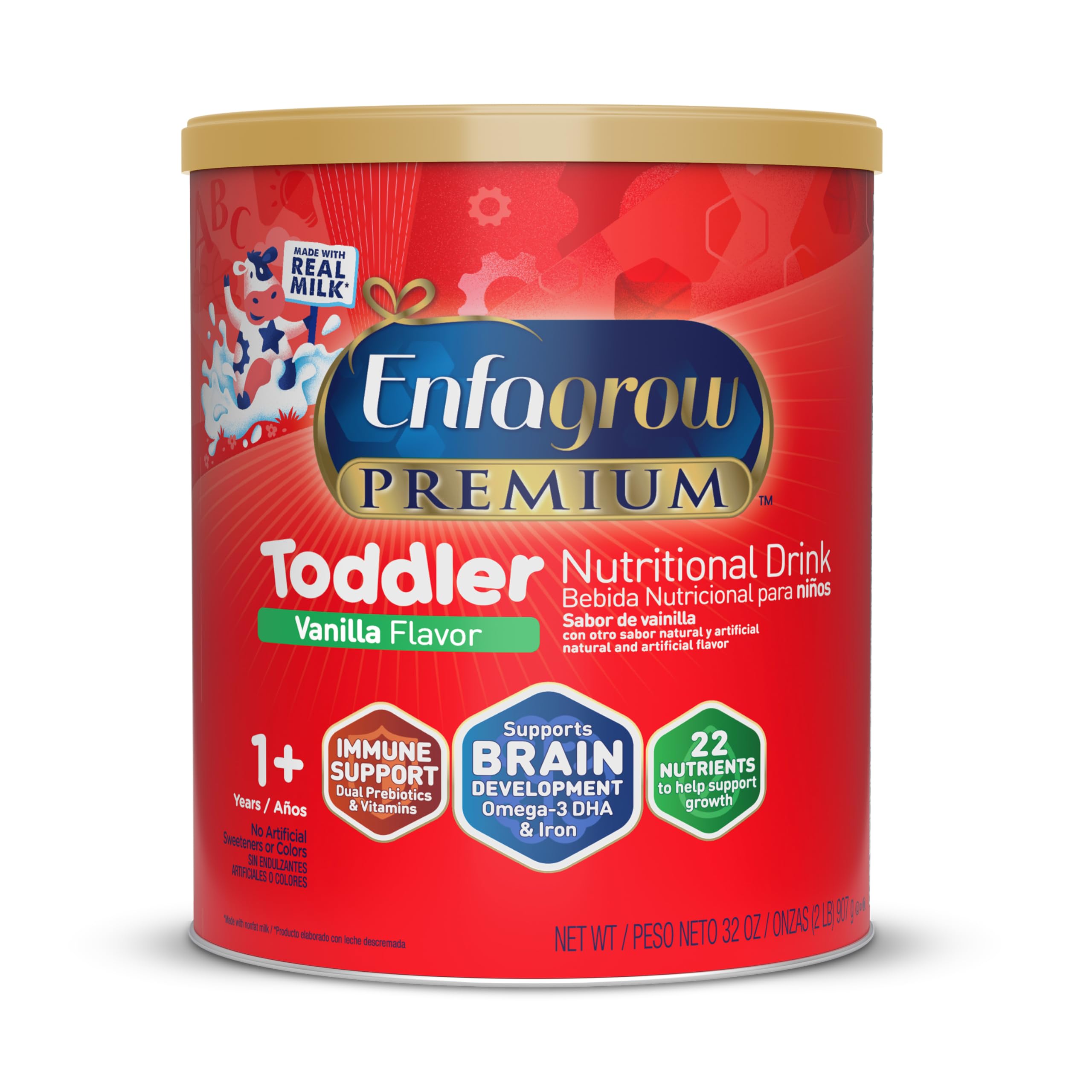
Enfagrow markets heavily on its “Brain Trio” — DHA, iron, and protein — and the 26mg of DHA per serving is among the highest of any standard toddler drink on this list. The base is real cow milk, not a concentrated protein isolate, which gives it a familiar taste that most toddlers accept without a fight. With 6g of protein per serving and 19 other key nutrients, it aims to fill the gaps left by picky eating during the 1-to-3-year window.
Prebiotics for digestive health are included, though Enfagrow uses a simpler GOS blend rather than the multi-strain HMO approach found in the Similac Go & Grow. Parent reviews consistently note that toddlers who were “picky” with plain milk or other formulas transitioned easily to this vanilla-flavored powder. The 32-ounce can provides good value per serving compared to goat-milk or plant-based competitors.
The main trade-off: Enfagrow uses cow-milk protein, which is the most common allergen in this age group. If your toddler shows signs of cow-milk protein intolerance — eczema, gas, or mucus in stool — this is not the right choice. Additionally, the ingredient list includes corn syrup solids, which some parents prefer to avoid despite the product’s strong nutritional profile.
Why it’s great
- High DHA (26mg) for brain and eye development
- Real milk base with 6g protein per serving
- Vanilla flavor is highly accepted by toddlers
- Large 32-oz can offers good value
Good to know
- Contains corn syrup solids
- Not suitable for cow-milk allergies or sensitivities
3. Similac Go & Grow 360 Total Care

Similac made headlines with Go & Grow 360 Total Care by being the first US toddler drink to include an exclusive blend of 5 human milk oligosaccharides (HMOs). These prebiotics are structurally identical to those found in breast milk and directly support the growth of beneficial gut bacteria — a level of digestive support that simple GOS blends cannot match. The formula also delivers DHA and lutein for eye and brain development, with no artificial growth hormones and no palm olein oil.
The powder mixes easily with minimal clumping, and the 24-ounce can is a standard size that fits most formula-dispensing routines. Customer reviews are overwhelmingly positive from families transitioning from Similac infant formulas, as the taste profile is familiar to babies already accustomed to the brand. The lack of palm olein oil is a meaningful plus, as palm oil derivatives can reduce calcium absorption and cause harder stools.
On the downside, the protein source is still nonfat cow milk, which eliminates this option for toddlers with confirmed dairy allergies. Some parents also note that the can does not include a scoop leveler, making it slightly less convenient than competitors that include a built-in scraping mechanism. For toddlers without dairy issues, though, the 5-HMO prebiotic technology makes this a standout choice for digestive and immune health.
Why it’s great
- First US toddler drink with 5 HMO prebiotics
- No artificial growth hormones or palm olein oil
- DHA, lutein, and vitamin E for brain and eyes
- Familiar taste for Similac graduates
Good to know
- Not suitable for dairy-allergic toddlers
- Can lacks scoop leveler
4. Earth’s Best Organic Toddler Milk Powder

Earth’s Best differentiates itself by using organic milk from grass-fed cows as its foundation. This means the milk comes from cows that graze on pasture rather than being confined to grain-fed lots, which typically yields a better fatty acid profile — more omega-3s and conjugated linoleic acid (CLA) — and a cleaner taste. The formula is fortified with DHA, prebiotics, and calcium, and notably contains no corn syrup solids, unlike some mainstream cow-based competitors.
The mixing ratio is straightforward: 8 scoops per 24 ounces of water, which yields approximately 28 ounces of prepared drink per batch. Parents who switched from other brands report that their toddlers tolerated it well even when they had mild lactose sensitivity from other cow-milk products. The organic certification also rules out synthetic pesticides and GMOs, which is a major consideration for families committed to clean eating.
The most common complaint involves packaging — several reviews mention that the vacuum-sealed lid arrived swollen or compromised, raising concerns about product safety. While this appears to be a shipping/storage issue rather than a formulation problem, it is worth inspecting the seal upon arrival. Additionally, the price fluctuates significantly on Amazon, so it pays to watch for price drops before stocking up.
Why it’s great
- Organic milk from grass-fed cows
- No corn syrup, artificial growth hormones, or GMOs
- Fortified with DHA, prebiotics, and calcium
- Well-tolerated by many toddlers with mild sensitivities
Good to know
- Packaging has occasional vacuum-seal issues
- Price volatility on Amazon
5. Haven Oat Toddler Formula
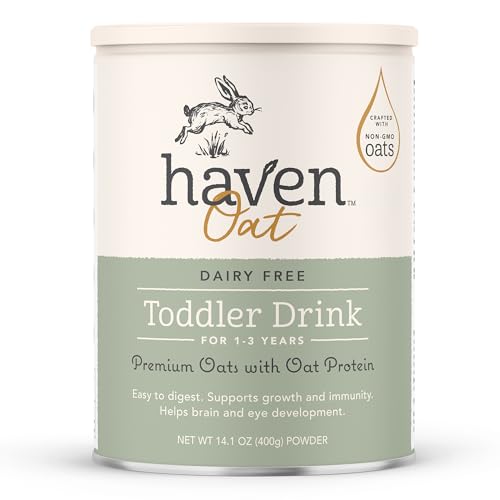
Haven occupies a rare space: a 100% plant-based toddler formula built on USA-grown oat powder and Scandinavian oat protein, completely free of dairy, soy, corn syrup, and maltodextrin. It is one of the few options that includes both prebiotics and live probiotics in the same blend, which provides two-pronged digestive support. The DHA comes from marine algae rather than fish oil, keeping it vegan-friendly and free of fish allergens.
Parent reviews highlight that toddlers with sensitive stomachs — especially those who reacted to cow or goat milk — transitioned to Haven without gas or discomfort. The taste is described as mild and acceptable, with one parent noting they tried it themselves and found it actually tasted good compared to other plant-based formulas. The 14.1-ounce can is compact, making it easy to pack for daycare or travel.
The biggest limitation is can size: at 14.1 ounces, it runs out faster than larger tubs from Similac or Enfagrow, and the cost per ounce is higher than cow-based formulas. Also, because oat-based formulas have a denser texture, you need to shake the bottle for a full 15 seconds to achieve a smooth consistency. For dairy-free families looking for a complete plant-based option, though, this is the most compelling choice on the market right now.
Why it’s great
- 100% plant-based, dairy-free, soy-free
- Contains both prebiotics and probiotics
- Algal DHA — vegan-friendly
- No corn syrup, maltodextrin, or artificial ingredients
Good to know
- Small can size (14.1 oz)
- Higher cost per ounce than cow-based formulas
- Requires vigorous shaking to mix
6. Ripple Kids Original Plant Based Milk
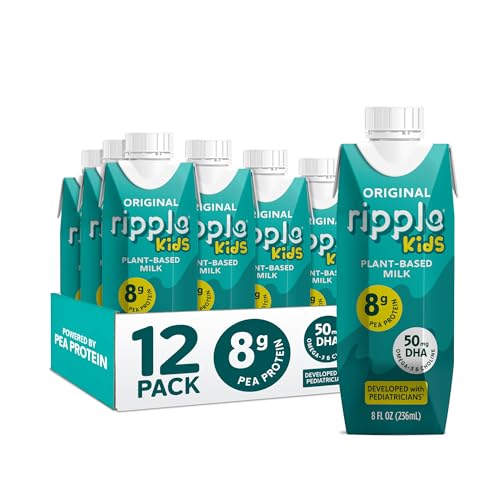
Ripple Kids is a shelf-stable, ready-to-drink pea protein milk developed with pediatricians. Each 8-ounce carton delivers 8g of protein — 8 times more than almond milk — along with 50mg of DHA for brain development and prebiotics for digestive health. It is free of dairy, soy, nut, gluten, and lactose, making it one of the safest options for toddlers with multiple food allergies. The shelf-stable packaging also means you can stock up in the pantry and bring cartons on trips without refrigeration until opened.
Parents of toddlers with dairy or soy allergies consistently report that Ripple Kids is the only alternative their child will drink. The texture and taste are cited as closer to real milk than oat or almond alternatives, and the nutritional density (added calcium, vitamin D, and choline) means you do not have to worry about nutrient gaps. The 12-pack format is ideal for daycare, camping, or emergency kits.
The price per ounce is higher than powdered formulas you mix yourself, and the individual cartons generate more packaging waste. Some parents also note that the pea protein taste, while mild, can be slightly earthier than cow milk. For allergy-stricken families who need a reliable, portable solution, the convenience and allergen safety outweigh the premium cost.
Why it’s great
- 8g pea protein per serving — highest plant protein
- 50mg DHA per carton for brain development
- Shelf-stable, no refrigeration until opened
- Free of top 9 allergens
Good to know
- Higher cost per serving than powdered options
- Slightly earthy taste compared to cow milk
- Individual cartons generate more waste
7. Kate Farms Pediatric 1.2 Vanilla Nutrition Shake

Kate Farms Pediatric 1.2 is not a standard toddler drink — it is a medical-grade, plant-based nutrition shake designed for oral consumption or tube feeding. Each 250ml carton provides 300 calories and 12g of organic pea protein, along with 27 essential vitamins and minerals. It is free of dairy, soy, corn, gluten, nuts, and artificial colors or sweeteners. Dietitians prescribe it for children with failure to thrive, severe food allergies, ARFID (avoidant restrictive food intake disorder), or those needing supplemental tube feeding.
The “1.2” designation refers to the caloric density (1.2 calories per ml), which is significantly higher than typical toddler drinks. This makes it effective for weight gain without requiring the child to drink large volumes. The organic pea protein base is highly digestible and hypoallergenic, and the vanilla flavor has a sweetness that children generally accept. Many parents of children with special dietary needs consider Kate Farms a lifesaver product.
The main drawbacks are the price and the taste variation between flavors. Several parents rated the chocolate formula higher for taste, while the vanilla was described as having a pungent odor and foggy appearance. This is a premium medical item — not a casual alternative to cow milk. Unless your toddler has a diagnosed medical need for this level of caloric density and allergen exclusion, you will likely be better served by one of the other options on this list.
Why it’s great
- Medical-grade, suitable for sole-source nutrition
- 300 calories and 12g protein per carton
- Free of top allergens and artificial ingredients
- Dietitian-recommended for weight gain
Good to know
- Significantly higher price than standard formulas
- Vanilla flavor reported as having off-odor by some
- Overkill for toddlers without medical needs
FAQ
Can I use plant-based toddler milk as a complete replacement for breast milk?
Why do European toddler formulas like Holle seem different from US versions?
How do I transition my one-year-old from breast milk to a toddler formula?
Final Thoughts: The Verdict
For most users, the alternative to breast milk for 1 year old winner is the Holle Goat Milk Toddler Drink because it combines a gentle, whole-goat-milk base with European purity standards, DHA, iron, and no palm oil — a complete package for the transition. If you want the most advanced gut-health technology, grab the Similac Go & Grow 360 Total Care with its exclusive 5-HMO prebiotic blend. And for a dairy-free, plant-based solution that still delivers complete nutrition, nothing beats the Haven Oat Toddler Formula.