
Our readers keep the lights on and the weekend projects moving. As an Amazon Associate, I earn from qualifying purchases.
The line between a phone snapshot and a professional-grade video often comes down to one thing: a dedicated sensor and lens system that gives you control over depth, light, and motion. Chasing the perfect b-roll or a clean talking-head shot without a bloated budget means you need a body that balances resolution, autofocus speed, and low-light capability without forcing you into a compromise you’ll regret six months later.
I’m Rikta — the co-founder and writer behind FitlyFast. I’ve spent countless hours digging through sensor specs, stabilization tests, and real-world user reports to separate the cameras that deliver genuine creative value from those that just look good on paper.
This guide is built around one goal: finding the affordable camera for content creators that actually performs where it counts — from face-tracking reliability to 4K recording stamina and lens ecosystem flexibility.
How to choose the best affordable camera for content creators
Selecting a budget-friendly content creation camera isn’t just about the sticker price — it’s about understanding which specs translate directly to better footage. Here are the three factors that separate a smart investment from a costly mistake.
Sensor size and low-light capability
The sensor is the heart of every digital camera. A larger sensor (APS-C or full-frame) captures more light, which means cleaner video in dim environments and more natural background separation. APS-C sensors dominate the affordable tier because they offer a strong balance between image quality and cost. Full-frame sensors appear in the premium segment of this list and deliver a noticeable jump in dynamic range and high-ISO performance, but they require a higher budget for both the body and the lenses.
Autofocus reliability for video
Content creators rarely have a dedicated focus puller. That makes autofocus performance — especially face and eye tracking — a critical spec. Phase-detection autofocus with a high point count (400-plus) will lock onto a subject and stay with them as they move. Contrast-detection-only systems hunt more, producing that distracting in-and-out focus wobble. Look for cameras that offer real-time eye tracking for both humans and animals if your content involves movement.
Stabilization and recording limits
Handheld footage is the default for most creators. In-body image stabilization (IBIS) compensates for camera shake without requiring a gimbal, while lens-based optical stabilization (OIS) helps in specific zoom ranges. Some cameras pair both for smooth walking shots. Also check the 4K recording limit — a few budget bodies stop recording after 5 or 10 minutes, which kills longer interviews or monologues. Unlimited recording or a generous time limit is a must for serious content work.
Quick Comparison
On smaller screens, swipe sideways to see the full table.
| Model | Category | Best For | Key Spec | Amazon |
|---|---|---|---|---|
| Canon EOS R100 | Mirrorless | Entry-level mirrorless | 24.1MP APS-C sensor | Amazon |
| Insta360 GO Ultra | Wearable | Hands-free POV | 1/1.28″ sensor, 4K60fps | Amazon |
| Canon EOS Rebel T7 | DSLR | Beginner photography | 9-point AF system | Amazon |
| DJI Osmo Pocket 3 | Gimbal | Vlogging on the move | 1″ CMOS, 3-axis stab. | Amazon |
| Panasonic LUMIX G85 | Mirrorless | Weather-sealed hybrid | 5-axis IBIS | Amazon |
| Panasonic LUMIX G100 | Mirrorless | Compact vlogging | Built-in tracking mic | Amazon |
| Nikon Z 30 | Mirrorless | Vlog and stream | 209-point hybrid AF | Amazon |
| Sony ZV-E10 | Mirrorless | Vlogging with APS-C | 425 phase-detection AF | Amazon |
| Sony a6400 | Mirrorless | Fast action tracking | 0.02 sec AF, 11fps | Amazon |
| Canon EOS RP | Full-Frame | Full-frame entry | 26.2MP full-frame sensor | Amazon |
| Sony a7 III | Full-Frame | Pro hybrid work | 693 phase-det AF points | Amazon |
In-Depth Reviews
1. Nikon Z 30

Nikon designed the Z 30 specifically for creators who need a compact body that doesn’t sacrifice video quality. The 20.9MP APS-C sensor delivers sharp 4K footage with wide dynamic range, and the 209-point hybrid autofocus with eye tracking — covering both people and pets — locks onto subjects quickly and stays reliable in moderate movement. The flip-out selfie screen and a red REC light make it easy to confirm you’re rolling without guessing.
Unlimited 4K recording is a huge advantage for interview-style content or long monologues, since several competitors cap their clips at 5 or 10 minutes. USB-C power delivery allows continuous shooting from a power bank, effectively removing battery anxiety during extended sessions. The built-in stereo microphone features adjustable sensitivity, and the Z 30 doubles as a plug-and-play webcam over USB-C at Full HD 60p.
The kit includes the NIKKOR Z DX 16-50mm f/3.5-6.3 VR lens, which offers optical stabilization and a versatile wide-angle range suitable for vlogging at arm’s length. The body is lightweight — noticeably smaller than a typical DSLR — and the Z lens mount provides a clear upgrade path to fast primes or macro glass as your content demands grow.
Why it’s great
- Unlimited 4K video recording with no time limit
- Reliable face and eye tracking autofocus for people and animals
- USB-C power delivery for all-day shooting from a battery pack
- Compact body with a flip-out selfie screen and clear REC indicator
Good to know
- No in-body image stabilization — relies on lens VR
- No electronic viewfinder, which may bother stills-focused users
2. Sony ZV-E10
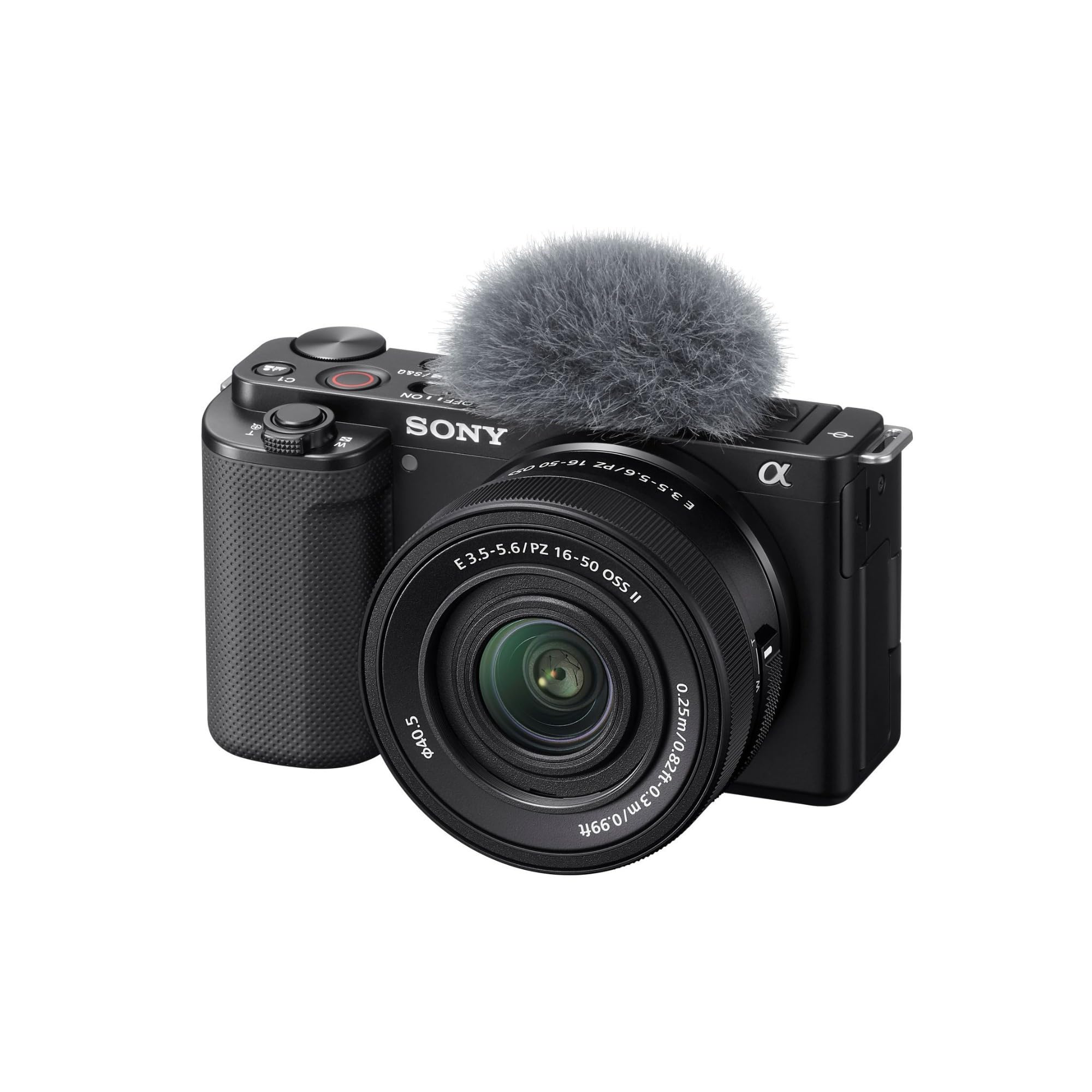
The ZV-E10 is Sony’s dedicated vlogging body built around a 24.2MP APS-C Exmor CMOS sensor and the BIONZ X processor. Its headline feature is 4K video oversampled from a 6K readout, which produces noticeably sharper detail than many cameras at this level. The 425 phase-detection autofocus points cover a wide area, and the real-time eye tracking keeps a subject sharp even when the frame includes busy background elements.
Two dedicated features make this camera especially practical for content work. The Product Showcase Setting transitions focus smoothly from a face to an object held up to the lens — ideal for review or unboxing videos. The Background Defocus button instantly toggles between a shallow depth-of-field look and a deep-focus shot with a single press, saving time in post-production.
The kit bundles the Sony E PZ 16-50mm f/3.5-5.6 OSS II power zoom lens. The power zoom enables smooth focal-length changes during recording, and the optical SteadyShot helps reduce handheld shake. The body is compact and the E-mount system offers a wide selection of affordable third-party lenses, making the ZV-E10 a flexible foundation for a growing creator kit.
Why it’s great
- 4K oversampled from 6K readout for extra sharpness
- Dedicated Product Showcase and Background Defocus buttons
- 425 phase-detection points with real-time eye tracking
- Wide E-mount ecosystem with budget-friendly lenses
Good to know
- No in-body stabilization — relies on lens OSS
- Battery life is average; a spare is recommended for long shoots
3. Sony a7 III

The Sony a7 III remains a benchmark in the full-frame mirrorless category because its 24.2MP back-illuminated Exmor R sensor delivers 15 stops of dynamic range and clean high-ISO performance that challenges many dedicated cinema cameras. The 693 phase-detection AF points cover 93% of the frame, providing reliable subject tracking for both stills and 4K video — a major leap over the contrast-detect systems found in cheaper bodies.
Battery life is exceptional for a mirrorless camera. The NP-FZ100 pack allows roughly 710 shots per charge in stills mode and generous video run times, making this a reliable partner for day-long shoots without constant battery swaps. The 4K video output from the full-frame sensor is stunning — rich color depth and natural detail — though you’ll want a UHS-II card for high-bit-rate recording.
The kit includes the FE 28-70mm f/3.5-5.6 OSS lens. While this lens is a capable all-rounder for daytime content, upgrading to a faster prime (like a 35mm f/1.8) unlocks the full potential of the full-frame sensor in low light. The complex menu system has a learning curve, but the a7 III’s combination of image quality, AF performance, and battery stamina makes it the best value in the full-frame tier.
Why it’s great
- Full-frame sensor delivers 15 stops of dynamic range and outstanding low-light performance
- 693 phase-detection AF points with excellent tracking reliability
- Incredible battery life for mirrorless — 710+ shots per charge
- Compact body relative to full-frame DSLRs
Good to know
- Complex menu system with a noticeable learning curve
- Kit lens is decent but underperforms in low light — budget for an upgrade
4. Canon EOS RP

The Canon EOS RP is the lightest full-frame mirrorless body in Canon’s lineup, and it serves as the most accessible gateway to the RF mount system. The 26.2MP full-frame sensor produces excellent image quality with natural color science and pleasing skin tones — a hallmark of Canon’s imaging pipeline. The Dual Pixel CMOS AF delivers fast, accurate autofocus in 1080p video, and the touchscreen interface makes menu navigation intuitive for both stills and video.
There are important video trade-offs to consider. 4K recording comes with a significant crop factor and uses contrast-detect AF instead of Dual Pixel, limiting its usability for vlogging. The 30-minute recording limit on 4K clips also restricts long-format content. For 1080p work — which is still the dominant delivery format for social media creators — the RP performs beautifully, with smooth face detection and reliable tracking.
The kit includes the RF 24-105mm f/4-7.1 IS STM lens, which offers up to 5 stops of optical stabilization and a versatile zoom range suitable for travel and general-purpose content. The 24-105mm coverage is ideal for establishing shots, interviews, and walk-and-talk sequences. If your content is primarily 1080p and you want full-frame color depth without the bulk, the RP is a strong contender.
Why it’s great
- Lightest full-frame mirrorless body — great for travel
- Excellent color science and skin tone reproduction
- Dual Pixel AF in 1080p for smooth face tracking
- RF 24-105mm kit lens provides versatile zoom with 5-stop OIS
Good to know
- 4K mode has a heavy crop and no Dual Pixel AF
- 30-minute limit on 4K clips limits long recordings
5. Sony a6400

The a6400 leverages Sony’s Real-Time Eye AF and Real-Time Tracking to deliver 0.02-second autofocus acquisition — one of the fastest AF systems available at this tier. The 425 phase-detection points cover 84% of the sensor, so whether you’re filming an active lifestyle vlog or shooting a fast-moving pet, the a6400 keeps the subject sharp without hunting. The 24.2MP APS-C sensor produces excellent 4K video with oversampled detail.
The 180-degree flip-up touchscreen is specifically designed for vlogging, allowing you to see the frame while facing the lens. The camera also includes built-in time-lapse and slow/quick motion video modes, which reduce the need for external editing tools. The 11fps continuous shooting at full resolution makes it a capable hybrid body for creators who also shoot action stills.
One significant limitation is the 4K rolling shutter, which can produce noticeable skew during fast pans or handheld movement. A gimbal is strongly recommended for run-and-gun video. There is no headphone jack, though audio levels are adjustable, and the touchscreen is limited to focus-point selection — menu navigation still uses physical controls. The Sony E-mount ecosystem remains one of the largest, with abundant affordable glass.
Why it’s great
- Blazing-fast 0.02s Real-Time Eye AF with 425 phase-detection points
- 180-degree flip-up screen for self-recording vlogs
- 11fps continuous shooting for action stills
- Built-in time-lapse and slow-motion video modes
Good to know
- Noticeable rolling shutter in 4K — gimbal recommended
- No headphone jack for monitoring audio
6. DJI Osmo Pocket 3

The DJI Osmo Pocket 3 condenses a 1-inch CMOS sensor and a 3-axis mechanical gimbal into a body that slips into a jacket pocket. The 4K/120fps recording capability delivers smooth slow-motion footage, while the rotating 2-inch touchscreen allows seamless switching between horizontal and vertical framing — a time-saver for multi-platform content creators. ActiveTrack 6.0 keeps the subject centered even during dynamic movement.
The Creator Combo adds the DJI Mic 2 transmitter, a wide-angle lens, a battery handle for extended run times, and a mini tripod. The DJI Mic 2 provides broadcast-quality wireless audio that pairs directly with the Pocket 3, eliminating the need for a separate recorder. The built-in stereo recording also captures immersive ambient sound, and D-Log M 10-bit color allows detailed color grading in post-production.
The 3-axis stabilization is the key differentiator — it produces gimbal-smooth footage without the bulk of a separate stabilizer. The 1-inch sensor outperforms typical action cameras and smartphone sensors in low light, delivering clean footage in evening or indoor conditions. Battery life reaches roughly 166 minutes with the battery handle, making it viable for day-long outings.
Why it’s great
- Built-in 3-axis mechanical gimbal eliminates the need for external stabilization
- 1-inch sensor provides excellent low-light performance
- Includes DJI Mic 2 transmitter for high-quality wireless audio
- Rotating screen for instant vertical/horizontal switching
Good to know
- Gimbal mechanism is fragile — handle with care and store in the case
- Fixed wide-angle lens limits optical zoom capability
7. Panasonic LUMIX G85

The LUMIX G85 offers class-leading dual image stabilization — in-body 5-axis IBIS combined with lens-based Power O.I.S. — resulting in remarkably smooth handheld video without a gimbal. The 16MP Micro Four Thirds sensor omits the low-pass filter, boosting fine-detail resolving power by about 10% over earlier MFT sensors. The weather-sealed magnesium alloy body allows confident shooting in light rain or dusty conditions.
4K video recording at 24p and 30p is complemented by Panasonic’s exclusive 4K Photo mode and Post Focus feature, which lets you extract high-res stills from video and shift the focus point after the shot. The 3-inch articulating touchscreen and 2360K-dot OLED viewfinder provide flexible framing, and the 49-point contrast-detection AF performs well in good light but hunts more in low-light scenes.
The kit includes the 12-60mm f/3.5-5.6 Power O.I.S. lens, which covers an equivalent 24-120mm range — highly versatile for walkaround content. A notable drawback is the subpar battery life, so picking up a spare pack is advisable for full-day shoots. The G85 also lacks a headphone jack, though the built-in mic and external mic jack cover most content needs.
Why it’s great
- Excellent 5-axis in-body stabilization for smooth handheld video
- Weather-sealed magnesium alloy build rated for dust and moisture
- 4K Photo mode and Post Focus for creative flexibility
- 12-60mm kit lens offers useful wide-to-telephoto range
Good to know
- Battery life is below average — buy an extra pack
- Contrast-detect AF can struggle in dim lighting
8. Canon EOS R100

The Canon EOS R100 is the smallest and lightest body in the EOS R series, designed as a straightforward entry point into the RF mount system. The 24.1MP APS-C CMOS sensor paired with the DIGIC 8 processor produces clean, detailed images with natural color rendering. Dual Pixel CMOS AF with face and eye detection covers 143 zones and provides responsive autofocus for both stills and video.
Video capabilities include 4K at up to 24fps and Full HD at 60fps, with the ability to capture slow-motion HD at 120fps. Continuous shooting reaches 6.5fps in One-Shot AF mode — adequate for capturing moderate action. The RF-S 18-45mm f/4.5-6.3 IS STM kit lens offers optical stabilization and a compact profile that balances well on the small body. Built-in Wi-Fi and Bluetooth enable easy image transfers to a smartphone via the Canon Camera Connect app.
The R100 lacks a touchscreen and relies on button-based controls, which may feel dated to users accustomed to smartphone cameras. The single SD card slot and the absence of a microphone port limit its appeal for serious audio-based content work. However, for a budget-conscious creator transitioning from a smartphone to a mirrorless system, the R100 delivers excellent image quality in a very portable package.
Why it’s great
- Smallest, lightest EOS R body — extremely portable
- 24.1MP APS-C sensor with Dual Pixel CMOS AF for reliable focus
- Built-in Wi-Fi and Bluetooth for quick phone transfers
- Affordable entry to the Canon RF lens ecosystem
Good to know
- No touchscreen — controls are entirely button-based
- No microphone port limits audio upgrade options
9. Panasonic LUMIX G100

The LUMIX G100 distinguishes itself with a built-in high-performance microphone that uses tracking audio technology. The microphone automatically adjusts its pickup pattern — switching between omni, stereo, and shotgun modes — to focus on the primary sound source, whether that’s a speaker’s voice, ambient nature sounds, or a crowded environment. This integrated approach reduces the need for a separate external mic for many content scenarios.
The 20.3MP Micro Four Thirds sensor pairs with the Venus Engine to deliver crisp 4K video at 24p and 30p. The 5-axis hybrid image stabilization compensates for handheld shake during static shots, though it isn’t as aggressive as the stabilization in the G85. The 3-inch touchscreen flips out 180 degrees for self-recording, and the 12-32mm retracting kit lens keeps the overall package very compact. The camera can also double as a high-quality webcam over USB.
The most notable limitation is the 4K recording time cap. Clips will stop at around 5 minutes, which severely limits its viability for interviews, lectures, or long-form monologues. The contrast-detect autofocus is decent in good light but hunts noticeably in dim environments. For short-form social media clips where audio quality and compact size are priorities, the G100 is a capable companion.
Why it’s great
- Built-in tracking mic with auto-switching audio modes
- Compact body with 12-32mm retracting lens for easy portability
- Flip-out touchscreen for effortless self-recording
- Works as a plug-and-play webcam for streaming
Good to know
- 4K recording time is severely limited — about 5 minutes per clip
- Contrast-detect autofocus hunts in low-light conditions
10. Insta360 GO Ultra
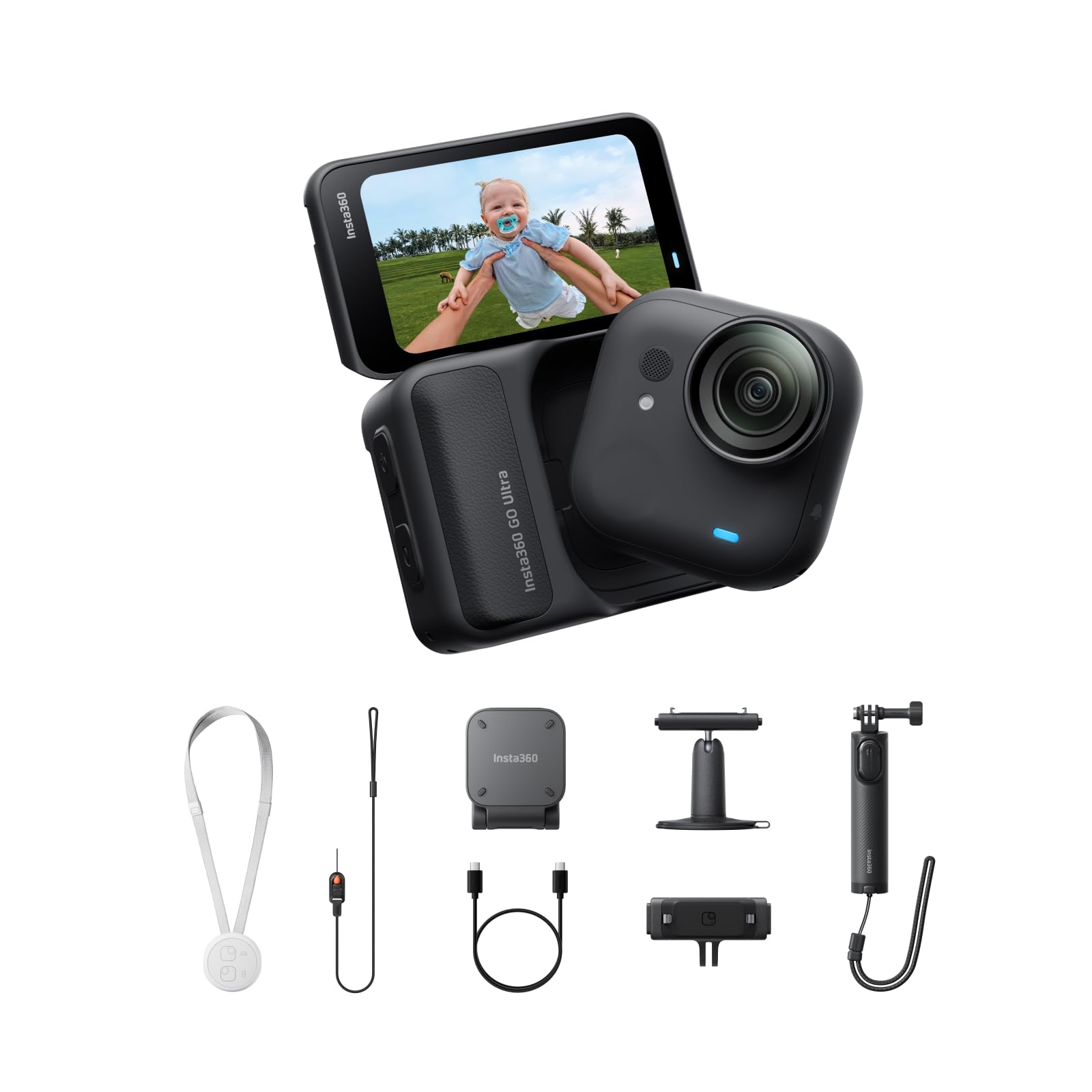
The Insta360 GO Ultra is a featherweight 53-gram camera that uses magnetic mounting to attach to caps, pendants, or bike frames for true hands-free first-person recording. The 1/1.28-inch sensor captures 4K video at 60fps with Active HDR, and the 156-degree field of view delivers wide, immersive perspectives that are difficult to achieve with conventional cameras. FlowState Stabilization with 360 Horizon Lock keeps the horizon level even during rapid movement.
The Action Pod extends battery life to 200 minutes total and provides a screen for framing shots and adjusting settings. The standalone camera is IPX8 waterproof to 33 feet without a housing, and with the Dive Case the Action Pod can shoot to 197 feet. The 5nm AI chip enables PureVideo Mode for improved low-light performance, and the FreeFrame Mode allows reframing in post-production for any aspect ratio — making it ideal for multi-platform publishing.
The magnetic ecosystem includes a Magnet Pendant, Magnetic Easy Clip, Mini Tripod, and Quick Release Mount. The AI-powered auto-editing tool automatically selects highlights from your footage and assembles them with transitions and music. The image quality in bright outdoor conditions is impressive for the size, but the small sensor struggles in dim lighting compared to larger APS-C or full-frame cameras. This is a specialist tool for POV content, not a general-purpose video camera.
Why it’s great
- Ultra-light 53g body with magnetic mounting for hands-free use
- IPX8 waterproof to 33ft and 200-minute total battery with Action Pod
- FlowState Stabilization with Horizon Lock keeps footage level
- AI auto-editing simplifies social media posting
Good to know
- Small sensor performance drops significantly in low-light conditions
- Requires MicroSD card — not included
11. Canon EOS Rebel T7
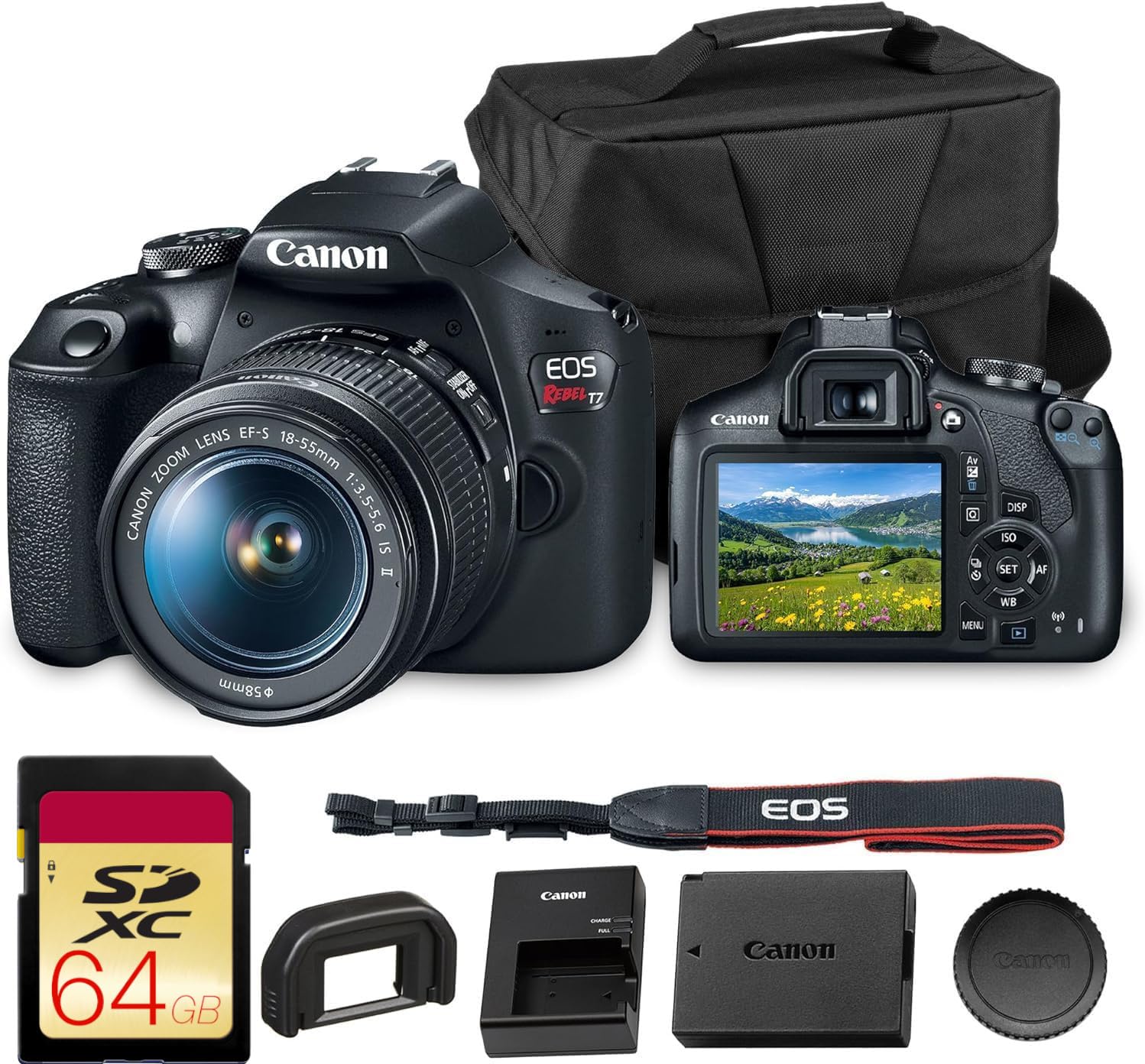
The Canon EOS Rebel T7 is a traditional DSLR built around a 24.1MP APS-C CMOS sensor and the DIGIC 4+ processor. It delivers the classic Canon color science that produces pleasing skin tones straight out of camera, which makes it a comfortable choice for portrait and product photography. The included 18-55mm f/3.5-5.6 IS II lens provides optical stabilization and a flexible standard zoom range.
Built-in Wi-Fi and NFC connectivity allow quick image transfers to a smartphone or tablet via the Canon Camera Connect app — a practical feature for social media creators who need to post on the go. The 9-point autofocus system is basic by modern standards but reliable in good light for static subjects. The optical viewfinder offers a clear, lag-free view that many photographers still prefer over electronic finders.
Video recording is limited to Full HD at 30fps, which is acceptable for basic social media clips but falls short of the 4K standard expected for serious content work. The 3-inch LCD has a fixed design, making it less practical for self-recording vlogs. The optical viewfinder and DSLR mirror mechanism make the body larger and heavier than mirrorless alternatives. The T7 is best suited for a creator focused on still photography who occasionally needs basic video.
Why it’s great
- Proven Canon color science with pleasing skin tones
- Built-in Wi-Fi and NFC for easy phone transfers
- Optical viewfinder provides a lag-free, bright viewing experience
- Simple user interface ideal for complete beginners
Good to know
- No 4K video — limited to Full HD at 30fps
- 9-point AF system is outdated for tracking movement
- DSLR body is bulkier than mirrorless competitors
FAQ
Is APS-C sensor quality good enough for professional YouTube videos?
Why do some cameras limit 4K recording to 5 or 10 minutes?
Do I need a separate microphone if my camera has a built-in mic?
How important is weather sealing for an indoor content creator?
Final Thoughts: The Verdict
For most users, the affordable camera for content creators winner is the Nikon Z 30 because it combines unlimited 4K recording, reliable eye-tracking autofocus, and a compact vlogging-friendly body at a price that leaves room for a good lens or microphone. If you want full-frame depth and dynamic range for higher-end production, grab the Sony a7 III. And for all-day handheld vlogging without a gimbal, nothing beats the built-in stabilization of the DJI Osmo Pocket 3.