
Our readers keep the lights on and the weekend projects moving. As an Amazon Associate, I earn from qualifying purchases.
The sharp crack of a carabiner gate closing is the last sound of security before you commit to every move. A belay device is the friction interface that turns a falling body into a controlled stop — there is no room for gear that feels “close enough.” The choice between a tube-style, assisted-braking, or multi-mode device determines how well your partner catches falls, how much hand fatigue you endure on a long rappel, and whether a panicked grip turns a lowering into a disaster.
I’m Rikta — the co-founder and writer behind FitlyFast. I’ve analyzed hundreds of hours of belay-device testing data, wear patterns, and user feedback across gym, crag, multi-pitch, and alpine use to break down what each design actually delivers.
This guide highlights the specific brake mechanisms, rope-compatibility ranges, and material durability that separate smart safety investments from risky shortcuts. Read on for the best belay device recommendations built on real-world climbing demands.
How To Choose The Best Belay Device
A belay device is your primary friction interface — it turns a falling climber into a controlled stop. Choosing between passive tube designs, cam-assisted active blocking, and multi-mode guide devices depends on your climbing style, rope diameters, and the level of hand fatigue you can tolerate on long days.
Assisted Braking vs. Tube-Style
Cam-assisted devices like the PETZL GRIGRI+ or Mad Rock Lifeguard use a spring-loaded cam that pinches the rope during a fall, providing active blocking with less physical effort from the belayer. Tube-style devices like the Black Diamond ATC rely entirely on the belayer’s grip and rope angle to create friction — lighter and simpler, but require constant attention. Gym climbers and beginner belayers benefit from assisted braking; trad and alpine climbers who value weight savings and simplicity often prefer tubes.
Rope Diameter Compatibility
Wider ropes (10–11 mm) generate more friction and are easier to catch but harder to feed slack quickly. Thinner ropes (8.5–9.5 mm) run smoother through the device but can slip through a tube-style device during a hard catch. Assisted-braking devices generally require minimum diameters of 8.5–9.0 mm for the cam to engage properly. Always match the device’s stated range against your primary rope’s diameter.
Material Durability: Steel vs. Aluminum vs. Hybrid
Aluminum devices are lightweight and affordable but wear faster when used with dirty or sandy ropes. Stainless steel inserts (or full steel construction like the Edelrid Jul 2) resist abrasion far longer and are preferred for gym use or guiding where the device sees repeated falls. Hybrid designs like the EDELRID GigaJul use aluminum for the body and stainless steel for wear-prone friction surfaces — balancing weight with longevity.
Guide Mode and Multi-Pitch Capability
If you plan to climb multi-pitch routes where you belay one or two seconds from an anchor, a device with guide mode (like the PETZL REVERSO) allows you to lock the rope off and belay independently. Some assisted-braking devices also offer guide mode with braking boost, which helps catch falls when belaying from above without a direct tie-in.
Anti-Panic and User-Friendly Features
The PETZL GRIGRI+ introduces an anti-panic handle mechanism that engages a hard stop if the belayer pulls the handle too aggressively during lowering. This feature protects against a common instinctive reaction during a stressful descent. Other devices like the EDELRID GigaJul include a thumb-operated lever for smoother slack payout in assisted mode. Consider how much learning curve you’re willing to accept — some assisted devices require practice to avoid an unintentional lock-up when feeding slack.
Quick Comparison
On smaller screens, swipe sideways to see the full table.
| Model | Category | Best For | Key Spec | Amazon |
|---|---|---|---|---|
| PETZL GRIGRI+ | Assisted Braking | Intensive gym & guide use | Anti-panic handle; 8.5-11 mm rope | Amazon |
| Mad Rock Lifeguard | Assisted Braking | Lead climbing & rescue | Stainless steel cam; 154 g weight | Amazon |
| EDELRID GigaJul | Hybrid Assisted | All-around sport & trad | Hybrid Alu/Steel; guide mode brake boost | Amazon |
| BLACK DIAMOND ATC XP Pkg | Tube-Style | Sport & gym climbing | High-friction dual-mode; 50 g weight | Amazon |
| Edelrid Jul 2 | Assisted Braking | Gym lead climbing (lefty-friendly) | Steel core; 105 g weight | Amazon |
| PETZL REVERSO | Multi-Purpose Tube | Multi-pitch & mountaineering | Dual friction grooves; 57 g weight | Amazon |
| Mammut Smart 2.0 | Assisted Braking | Top rope gym climbing | No moving parts; 80 g weight | Amazon |
In‑Depth Reviews
1. PETZL GRIGRI+ Belay Device

The PETZL GRIGRI+ is the heavy-duty workhorse of assisted-braking devices. Its cam-assisted blocking pinches the rope automatically during a fall, requiring significantly less grip strength from the belayer than a tube-style device. The stainless steel wear plate at the rope friction point extends lifespan dramatically in high-use gym or guiding environments where ropes are dirty and falls are frequent.
The anti-panic handle mechanism is the standout safety feature — if the belayer pulls the handle too aggressively during a descent, the device engages a hard stop that prevents an uncontrolled rapid lower. This protects against the instinctive grab that even experienced climbers can make under stress. The lockable selector knob toggles between top-rope mode (easier slack take-up) and lead mode (smoother slack feeding), adapting the cam sensitivity to the belay style.
On the weight side, the GRIGRI+ is the heaviest device in this review at 200 grams, and the anti-panic feature can be slightly annoying when the rope is unloaded and you want to feed slack quickly. But for anyone who belays regularly in a gym, guides clients, or wants maximum forgiving safety margins, this is the most confidence-inspiring device available. Rope compatibility spans 8.5 to 11 mm.
Why it’s great
- Anti-panic handle prevents uncontrolled lowering under stress
- Stainless wear plate resists groove formation on heavy-use ropes
- Dual modes optimize cam sensitivity for top rope vs. lead
Good to know
- Heaviest in this lineup at 200 g; not ideal for alpine weight savings
- Anti-panic function can interfere when rope is completely unloaded
- Slack feeding requires a specific cam-release technique
2. Mad Rock Lifeguard Belay Device

The Mad Rock Lifeguard is a full stainless steel cam-assisted device that weighs just 154 grams — significantly lighter than the GRIGRI+ while delivering nearly identical active-blocking performance. The cam locks positively on fall impact, and users consistently report that lead belaying with the Lifeguard feels smoother than with a GriGri, especially when paying out rope quickly through the cam. The small footprint fits neatly on a harness without bulk.
The stainless steel construction is a major durability advantage over aluminum-bodied assisted devices. It resists groove wear even after hundreds of falls on abrasive ropes. The device performs best with a 9.8–10.5 mm rope; thicker ropes can create too much friction, causing the cam to lock inadvertently when feeding slack. The lowering control is precise but requires careful handle modulation — too much handle pull can release the cam abruptly.
Users in search-and-rescue and saddle-hunting roles praise the Lifeguard for its reliability as a progress-capture device. For climbers who want an assisted-braking device that saves weight without sacrificing durability, and who are willing to fine-tune their rope choice to the ideal diameter range, the Lifeguard is a compelling alternative to heavier options.
Why it’s great
- Full stainless steel body resists long-term wear better than aluminum
- Lighter and more compact than other cam-assisted devices
- Pays out rope faster than a GriGri for lead belay
Good to know
- Too much friction with ropes over 10.5 mm; cam can lock inadvertently
- Lowering requires careful handle control to avoid abrupt release
- No anti-panic mechanism — relies on the belayer’s technique
3. EDELRID GigaJul Belay Device
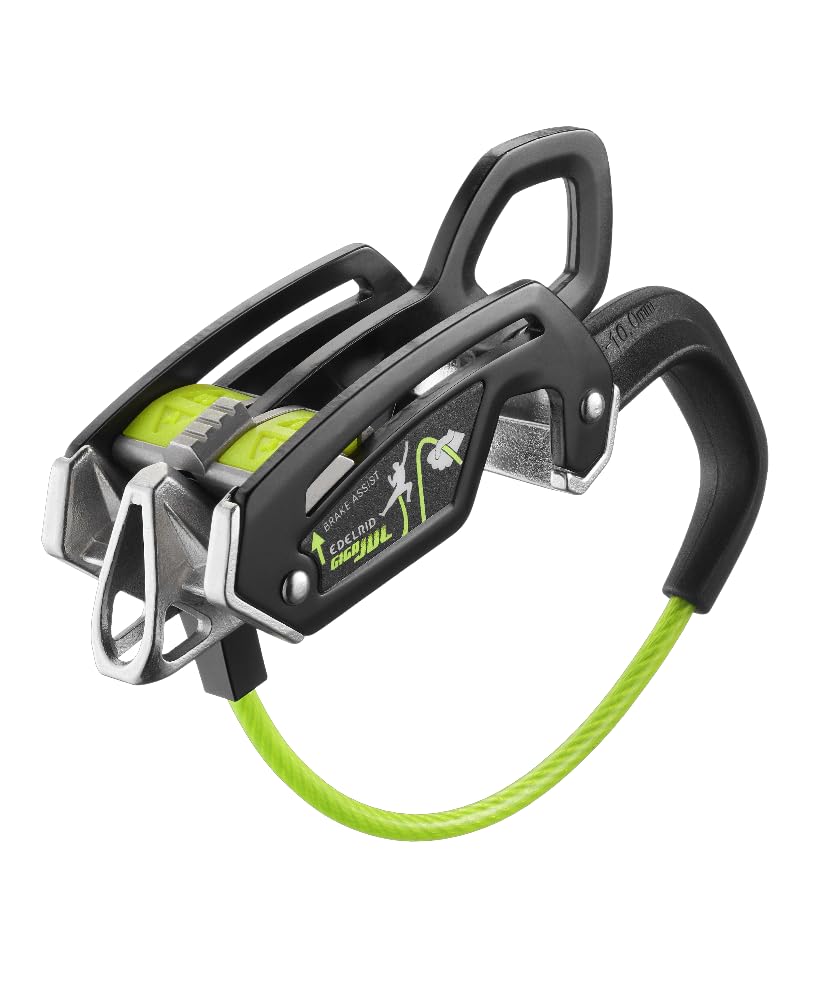
The EDELRID GigaJul uses an intelligent hybrid approach: an ultra-light aluminum body with stainless steel inserts at the friction surfaces. This gives it the weight advantage of aluminum (121 grams) where mass savings matter, plus the abrasion resistance of steel in the exact spots where grooves form. The assisted-braking guide mode provides brake boost when catching a leader fall while belaying from an anchor, and the thumb-operated lever lets the belayer hold the device open for faster slack payout.
The GigaJul excels as an all-rounder. It feeds slack smoothly for lead climbing, locks solidly on falls, and performs double-rope rappels with the same ease as a tube-style device. The guide mode works well for bringing up seconds, and the brake boost adds security when belaying from above without a direct anchor tie-in. The device does slip slightly more during fall arrest than the older Megajul, and top-rope belaying creates noticeable friction that can tire the belayer’s brake hand over a long session.
For climbers who split time between sport cragging, trad multi-pitch, and gym training, the GigaJul eliminates the need to own two different devices. It is not the absolute best at any single task, but its versatility and durable hybrid construction make it the most practical one-device solution for a broad range of climbing scenarios.
Why it’s great
- Hybrid construction balances light weight with steel friction-surface durability
- Guide mode with brake boost strengthens fall catches from above
- Thumb lever enables faster slack payout in assisted mode
Good to know
- Top-rope belaying creates more friction than tube devices; can tire the brake hand
- Brake boost slips slightly more than older Megajul during high-force falls
- Requires practice to avoid unintentional lock-up when feeding slack quickly
4. BLACK DIAMOND ATC Belay Rappel Device (XP Package)

The Black Diamond ATC XP in the Big Air package pairs the classic tube-style device with a RockLock screwgate carabiner. The ATC XP itself features two friction modes — standard and high-friction — that change the rope bending angle to increase holding force by up to three times. This makes it adaptable to different rope diameters and climber weights. At just 50 grams for the device alone, it disappears on the harness and is a favorite for alpine and trad where weight matters.
The high-friction mode provides noticeably more stopping power when belaying a heavier partner or rappelling on a thinner rope. It reduces hand fatigue during long lowers compared to the standard ATC. The RockLock carabiner included in the package is an HMS-style locker with a keylock nose that prevents snagging, though some users report the screwgate requires only about 1.5 turns to open — less secure than traditional 3-turn gates. The device itself is hot-forged aluminum and holds up well to regular gym use.
The ATC XP is a pure passive device — it offers no cam-assisted blocking, no anti-panic mechanism, and no guide mode. It demands constant brake-hand attention from the belayer, especially during a lead fall. For experienced climbers who prefer the simplicity and reliability of a tube device, and who want the option of increased friction without buying a separate device, the ATC XP package delivers a solid, lightweight system.
Why it’s great
- Two friction modes adapt holding force to rope diameter and climber weight
- Extremely lightweight (50 g) for alpine and trad weight reduction
- Includes an HMS locking carabiner ready to use out of the box
Good to know
- No assisted braking — requires constant brake-hand attention
- Included carabiner’s screwgate opens in 1.5 turns; consider upgrading
- Tube design can twist the rope during rappel if not carefully managed
5. Edelrid Jul 2 Belay Device
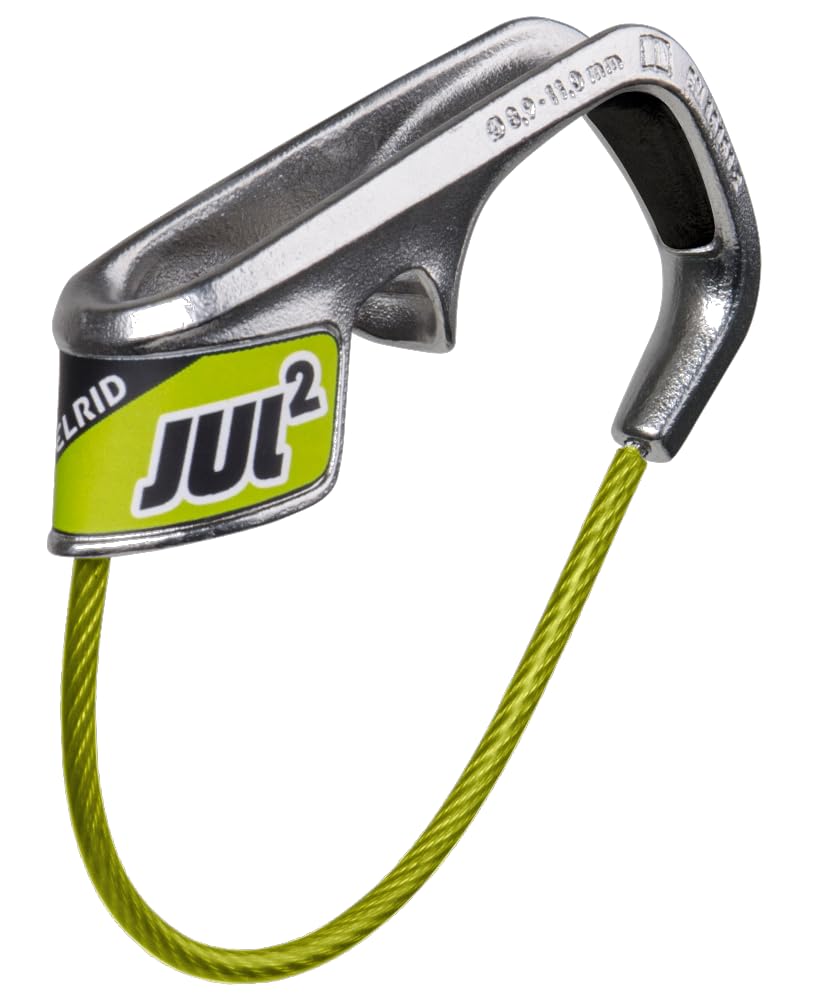
The Edelrid Jul 2 is an assisted-braking device built with a heavy-duty stainless steel core and a polyamide coating that provides a more comfortable grip. The steel construction is exceptionally wear-resistant — users report no visible grooving after a year of weekly gym use. The assisted-braking mechanism engages automatically on slack rope, creating a positive lock that feels very secure. Left-handed climbers report that the Jul 2 feeds slack more intuitively for lead belay than many right-handed biased devices.
The device is not recommended for rappelling — it lacks the smooth controlled descent feel of a dedicated tube. Lowering a heavy climber requires practice and an alternative grip technique to avoid jerky descents. The steel carabiner is strongly recommended because the device’s steel friction surfaces will quickly groove an aluminum carabiner gate. At 105 grams, it is heavier than aluminum tube devices but lighter than the GRIGRI+.
For gym-focused lead climbers who want the reassurance of assisted braking without the bulk and cost of a full-featured cam device, the Jul 2 delivers reliable performance. Its steel durability makes it a long-lasting choice for climbers who intend to put hundreds of sessions on a single piece of gear.
Why it’s great
- Stainless steel core resists wear far longer than aluminum devices
- Left-handed lead belay feels more natural than many comparable devices
- Auto-lock on slack rope provides secure assisted braking without moving parts
Good to know
- Not suitable for rappelling — control is jerky compared to tube devices
- Steel surfaces will groove aluminum carabiners quickly; pair with steel locker
- Lowering heavy climbers requires practice to avoid uncontrolled descent
6. PETZL REVERSO Multi-Purpose Belay/Rappel Device

The PETZL REVERSO is a classic multi-purpose tube device that excels in guide mode. When belaying one or two seconds from the anchor, the REVERSO can be clipped in to provide assisted braking — the rope locks automatically when the second falls, freeing the belayer’s hands. The device is compatible with single ropes (8.5–10.5 mm), half ropes (7.1–9.2 mm), and twin ropes (6.9–9.2 mm), making it the most versatile device in this selection for climbers who switch between rope types.
The V-shaped friction grooves with asymmetrical lateral channels adapt friction to the specific rope type, reducing rope wear and providing smoother control during lowering or rappelling. At only 57 grams, it is one of the lightest full-featured tube devices available. The rounded rope slots reduce wear on both the device and the rope sheath over time. However, the REVERSO offers zero assisted braking during lead belay — it is a pure tube device that demands active brake-hand management at all times.
For trad climbers, multi-pitch crushers, and mountaineers who need a lightweight, bombproof device that can handle various rope configurations and lock off quickly at anchors, the REVERSO is a time-tested choice. It is less forgiving than cam-assisted devices for single-pitch sport climbing, but its versatility and weight savings make it indispensable for long alpine days.
Why it’s great
- Guide mode provides assisted braking for one or two seconds from the anchor
- Extremely versatile — works with single, half, and twin ropes
- Lightweight at 57 g; disappears on the harness for multi-pitch and alpine
Good to know
- No assisted braking during lead belay — pure tube-style requires constant attention
- Lowering a climber is harder than with a cam-assisted device
- Not auto-locking; many gyms require cam-assisted devices
7. Mammut Smart 2.0 Belay Device

The Mammut Smart 2.0 operates on a tube principle with a high-performance brake insert that interacts with the belay carabiner to create assisted braking — no levers, cams, or moving parts. When a fall occurs, the device blocks the climbing rope automatically, providing the belayer with significantly reduced hand force requirements. The lightweight design (80 grams) and simple operation make it a good entry point for new climbers transitioning from instructor-led sessions to self-sufficient gym belaying.
The Smart 2.0 is primarily praised as an excellent top-rope device. On top rope, it feeds slack easily and locks securely without any complex technique. However, for lead climbing, the device has a well-documented limitation: giving slack during a lead climb can cause the rope to stick, especially when the rope runs directly behind the device. This makes it a poor choice for lead belay. Descending a climber also requires a slightly different grip technique that takes practice to master smoothly.
Mammut recommends pairing the Smart 2.0 with the Smart HMS carabiner for optimal performance, and it works with rope diameters from 8.7 to 10.5 mm. For climbers who primarily top-rope in a gym setting and want an affordable, no-moving-parts device that still offers assisted-braking benefits, the Smart 2.0 is a solid choice. Avoid it if you plan to lead belay.
Why it’s great
- Assisted braking with zero moving parts — simple, reliable, and easy to inspect
- Excellent top-rope slack feeding and secure locking
- Lightweight (80 g) and affordable entry point into assisted braking
Good to know
- Lead belay performance is poor; rope sticks when giving slack
- Descending requires a specific grip technique that takes practice
- Not recommended for outdoor multi-pitch or rappelling
FAQ
Can I use any belay device with a 9.8 mm rope?
Why do some assisted-braking devices struggle with lead belay?
How often should I replace a belay device?
Can I use an assisted-braking device for rappelling?
Final Thoughts: The Verdict
For most users, the best belay device winner is the EDELRID GigaJul because it combines an assisted-braking cam with a versatile tube-style form factor and guide mode, all in a durable hybrid aluminum-steel build that handles gym sessions, sport cragging, trad multi-pitch, and rappelling. If you want the ultimate safety net for gym or guiding environments, grab the PETZL GRIGRI+ with its anti-panic handle and stainless wear plate. And for ultralight alpine or trad where every gram matters, nothing beats the PETZL REVERSO in guide mode.