
Our readers keep the lights on and the weekend projects moving. As an Amazon Associate, I earn from qualifying purchases.
Fresh ink is an open wound, and the wrong aftercare ointment can suffocate it, dull the color, or spark an angry breakout. The window between a vibrant heirloom and a faded mess is narrow, and the balm you choose is the single variable that decides which side your tattoo lands on. This guide isolates the formulations that actually support healing without clogging your pores or compromising the artist’s work.
I’m Rikta — the co-founder and writer behind FitlyFast. I’ve spent hundreds of hours cross-referencing ingredient panels, analyzing customer healing reports, and studying the difference between breathable moisture barriers and skin-suffocating petrolatum to build this definitive comparison of tattoo aftercare formulations.
Whether you’re nursing a fresh piece or reviving an old one, finding the best after tattoo ointment means choosing a formula that balances hydration with breathability, antimicrobial protection with gentle ingredients, and longevity with fast absorption.
How To Choose The Best After Tattoo Ointment
Not every thick cream is safe for healing skin. The key is understanding how the formula interacts with an open wound during each phase of recovery. A product that works beautifully as a general moisturizer can trap moisture against a fresh tattoo and encourage bacterial growth. Here are the specific factors that separate safe tattoo aftercare from risky skin suffocation.
Breathability vs. Occlusion
The first three days after a tattoo are the most sensitive. Your skin needs a thin, breathable protective layer that allows oxygen exchange while keeping out dirt and bacteria. Petrolatum-based ointments (like standard petroleum jelly) create a fully occlusive seal that can trap heat and fluid, increasing the risk of infection and prolonging the weeping phase. Premium aftercare balms use shea butter, mango seed butter, and coconut oil — ingredients that moisturize deeply without sealing the skin shut.
Active Ingredients for Healing
Look for specific compounds that actively soothe and repair. Panthenol (pro-vitamin B5) accelerates cell regeneration and reduces inflammation. Bisabolol, derived from chamomile, calms redness and itch. Manuka oil and myrrh provide gentle antimicrobial protection without the irritation of harsh chemicals like alcohol or fragrance. Avoid products with lanolin, mineral oil, or synthetic fragrances, which are common irritants on broken skin.
Texture and Absorption Rate
A good aftercare ointment should rub in cleanly within 30–60 seconds, leaving a slight protective sheen but no greasy residue. Products that sit on top of the skin for minutes attract lint, dust, and fabric fibers, which can embed in the healing tattoo and cause irritation or color loss. Balms that are solid at room temperature (like a butter) usually absorb faster than thick creams, because their lipid profile mimics the skin’s natural sebum.
Stage-Specific Needs
Your aftercare routine should evolve. For days 1–3, a lightweight, antibacterial ointment applied in a micro-thin layer is ideal. For days 4–14 (the peeling and itching phase), a richer balm with anti-itch properties like bisabolol or oat extract prevents scratching damage. After month one, a brightening balm with vitamin E and essential oils maintains color depth and skin elasticity. Some top-tier products are formulated to work across all three stages, which simplifies the routine.
Quick Comparison
On smaller screens, swipe sideways to see the full table.
| Model | Category | Best For | Key Spec | Amazon |
|---|---|---|---|---|
| Stories & Ink Tattoo Care | Breathable Cream | Fresh ink, sensitive skin | Panthenol + Bisabolol formula | Amazon |
| Sorry Mom Tattoo Butter | Multi-Stage Balm | During & after tattoo care | 6.76 oz, non-greasy glide | Amazon |
| Hustle Butter Deluxe | Vegan Butter | Artist-recommended healing | Shea, Mango, Coconut blend | Amazon |
| Ebanel Tattoo Balm | Herbal Brightener | Color enhancement & revival | 6 oz, Manuka + Arnica oil | Amazon |
| Green Goo Tattoo Care | Plant-Based Salve | Natural, plant-based healing | Aloe, Myrrh, Calendula blend | Amazon |
| Aquaphor Healing Ointment | Multipurpose Occlusive | Budget-friendly dry skin | Petrolatum base, 7 oz tube | Amazon |
| Ca-Rezz NoRisc Cream | Antibacterial Cream | General minor wound care | 9.7 oz, non-greasy feel | Amazon |
In‑Depth Reviews
1. Stories & Ink Tattoo Care
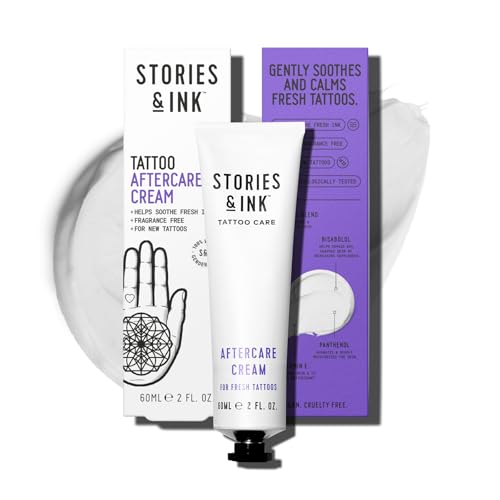
Stories & Ink was developed and tested at a UK tattoo studio, giving it credibility that clinical skincare brands lack. The formulation leans on panthenol (pro-vitamin B5) for cellular repair and bisabolol for immediate redness and itch reduction. Users consistently report that the intense itching phase that typically hits around day four is dramatically reduced, in some cases eliminated entirely. The cream is dermatologically tested, fragrance-free, and paraben-free, making it one of the safest options for sensitive skin and delicate areas like wrist or ankle tattoos.
What sets this apart from standard drugstore ointments is the absence of petrolatum. Instead of sealing the wound in a suffocating layer, the formula allows oxygen flow, which speeds the natural healing cascade. Multiple reviews note that healing time felt cut in half compared to using petroleum-based alternatives, and the color retention on fresh ink was noticeably better after the peeling stage.
The only minor drawback is a slightly tacky feel on the skin for the first few minutes after application. This is a function of the breathable polymers in the formula — they need a moment to settle into the skin. Once absorbed, the residue disappears, and the moisture lock lasts for several hours between applications.
Why it’s great
- Clinically proven anti-itch formula with panthenol and bisabolol
- Zero petrolatum — breathable barrier supports natural healing
- Dermatologist approved and suitable for sensitive areas
Good to know
- Smaller 60 mL tube — heavy users may replace sooner
- Lightly tacky for 2–3 minutes post-application
2. Sorry Mom Tattoo Butter
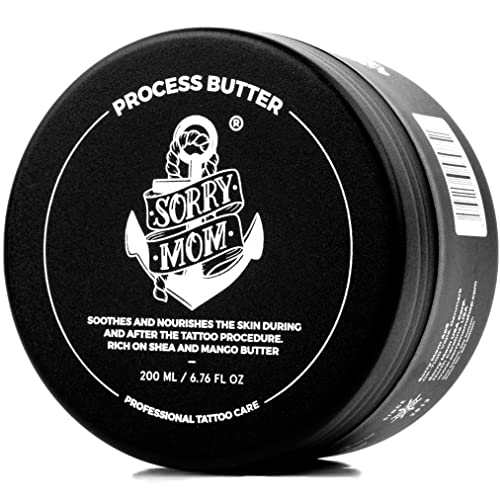
Sorry Mom positions itself as a “one butter to rule them all” product, and the formulation largely delivers on that promise. The balm works as a tattoo glide during the session (reducing needle friction on the skin), an immediate aftercare protectant, and a long-term brightener for older ink. The texture is notably smooth — it spreads evenly without pulling at the skin, which is critical when applying over a fresh wound that hasn’t fully closed.
Developed in collaboration with American tattoo artist Myke Chambers, the formula avoids the greasy residue that plagues many all-purpose balms. Users with multiple tattoos report that it resolved breakouts caused by other aftercare products, likely because its ingredient profile is less occlusive. The balm contains no overpowering fragrance, just a mild natural scent from its butter base, which is a relief for users who react to synthetic perfumes.
The 6.76-ounce container is generous for the price tier, and a little goes a long way. However, those expecting dramatic color brightening on decade-old ink may be slightly disappointed — the brightening effect is subtle, more about maintaining the current clarity than reversing fading. It excels at its primary job: keeping fresh tattoos calm, hydrated, and irritation-free during the critical healing window.
Why it’s great
- Versatile three-stage use: during, after, and maintenance care
- Non-greasy absorption with no fragrance irritation
- Developed with a professional tattoo artist
Good to know
- Color brightening on old tattoos is modest
- Tub format requires clean fingers for each application
3. Hustle Butter Deluxe

Hustle Butter is the category pioneer that set the standard for petrolatum-free tattoo aftercare. With over a decade on the market, this is the product most commonly found on the counters of professional tattoo shops. The formula combines shea butter, mango seed butter, coconut oil, and green tea extract into a thick, spreadable balm that melts at body temperature and absorbs faster than most competitors. Users report it stops itching almost immediately, and the subtle tropical scent is a pleasant upgrade from clinical ointments.
What makes Hustle Butter a staple is its reliability across skin types. Heavily tattooed users who switched from Aquaphor noted that the itching and pain subsided faster, and the healing resulted in brighter colors with less scabbing. The balm also doubles as a general moisturizer for dry hands and cuticles, which justifies the cost for those who want a multi-use product beyond tattoo care.
The one vulnerability is temperature sensitivity. Multiple reviews document that the balm melts into a liquid puddle if left in a hot car or direct sunlight, and once it re-solidifies, it develops a gritty, sandy texture that is unpleasant to apply. This is a real consideration for summer months or anyone who doesn’t store it in a cool, dark place. Purchase in cooler weather or from a local shop to avoid shipping-related melting.
Why it’s great
- #1 artist-recommended brand with proven track record
- Fast absorption with no greasy residue
- Effective itch relief within minutes of application
Good to know
- Melts and degrades in high temperatures
- Tub packaging is less hygienic than tube formats
4. Ebanel Tattoo Balm
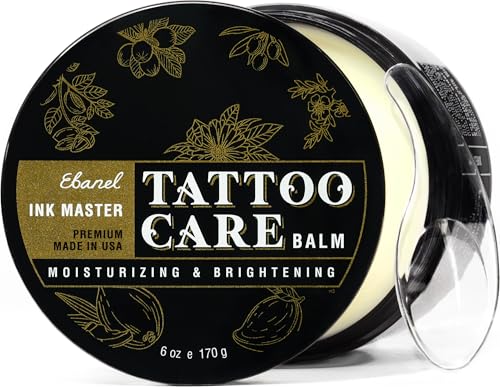
Ebanel takes a botanical-heavy approach, infusing its balm with manuka oil, frankincense, arnica, clove oil, and thyme oil. This ingredient stack is designed to do dual duty: antimicrobial protection during the open-wound phase and color enhancement as the tattoo matures. Users with eczema or reactive skin report that the formula doesn’t aggravate their condition, which is a strong indicator of its gentle profile. The balm is produced in an FDA-registered, cGMP-certified facility and is dermatologist-tested, adding a layer of trust for cautious buyers.
The texture hits a sweet spot — spreadable enough for fresh ink without tugging, but thick enough to provide lasting moisture. Users recovering from month-old tattoos find it revives the ink’s depth and contrast, making it a strong choice for those who want a single product that transitions from healing to maintenance. The 6-ounce tub is generous, and the subtle herbal scent from natural oils is far less intrusive than synthetic fragrances.
The main caution is ingredient density. With over a dozen active botanicals, there’s a small chance of sensitivity for extremely reactive skin types. The manufacturer recommends patch testing on intact skin before full application on fresh tattoos. Additionally, the balm is not ideal for day-one use on very large pieces that are still weeping — a lighter, more minimal formula is safer for the first 24 to 48 hours.
Why it’s great
- Rich botanical blend with proven antimicrobial oils
- Suitable for eczema-prone skin without irritation
- Effective color brightening on healed tattoos
Good to know
- Many active ingredients may overwhelm ultra-sensitive skin
- Best reserved for day 2+ rather than immediate post-session
5. Green Goo Tattoo Care
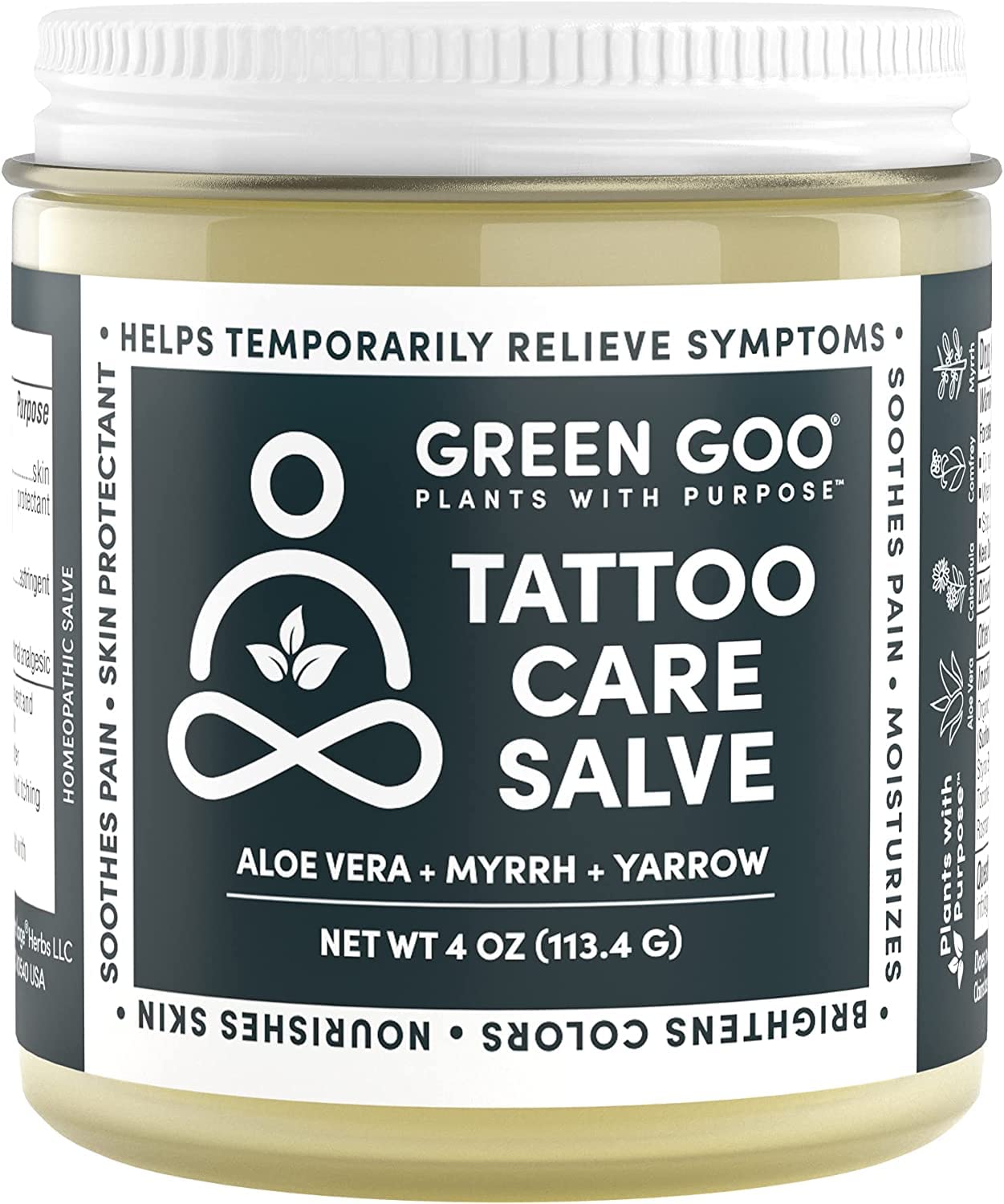
Green Goo differentiates itself with a 100% plant-based, whole-herb infusion process. Instead of using isolated extracts, the company slow-infuses calendula, comfrey, myrrh, and aloe vera into base oils for several weeks, capturing the full spectrum of each plant’s therapeutic compounds. The resulting salve has a distinct herbal scent that users describe as grounding and natural — a far cry from the chemical smell of drugstore ointments.
The application feel is where Green Goo shines. It applies as a thin, non-greasy layer that doesn’t pull at fresh ink, and users consistently report that it reduces visible redness within hours. The pain and swelling relief is noticeable even on larger pieces, and multiple reviews mention that the healing timeline feels compressed by several days compared to previous tattoo experiences. The 4-ounce tin is compact enough for a gym bag or purse, making reapplication convenient throughout the day.
The temperature stability issue that plagues butter-based balms is even more pronounced here. Users report that the larger 4-ounce jar can turn into a pourable slurry within a week if stored in a warm environment, while the smaller tin stays firm. This is likely due to the lower melting point of the oil blend. Buyers in warm climates should consider purchasing the smaller size or keeping the jar refrigerated during summer months.
Why it’s great
- Whole-herb infusion for maximum plant compound efficacy
- Noticeably reduces pain, swelling, and redness on fresh ink
- Non-greasy, lint-free application with pleasant natural scent
Good to know
- Larger container prone to liquefaction in heat
- Premium pricing relative to volume of product
6. Aquaphor Healing Ointment
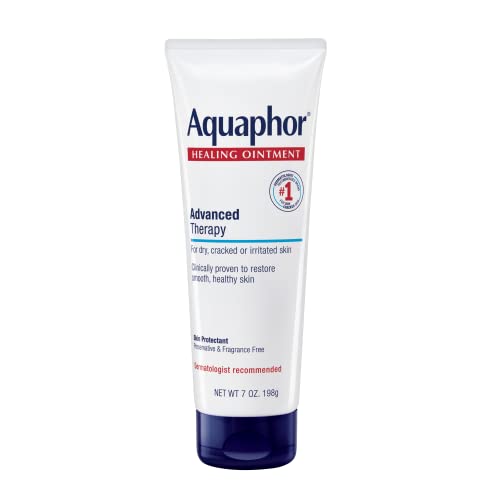
Aquaphor is the default recommendation from many tattoo artists, largely because of its ubiquity and low cost. The ointment is 41% petrolatum, which creates a water-free protective barrier that locks moisture against the skin. For very dry, cracked, or compromised skin, this occlusion is beneficial. On a fresh tattoo, however, that same barrier can trap heat and fluid, prolonging the weeping phase and potentially fostering bacterial growth if the skin is not kept meticulously clean.
Users who have used Aquaphor successfully emphasize the importance of applying an extremely thin layer — a dime-sized amount for a palm-sized tattoo. The ointment is unscented and colorless, and the squeeze tube format is more hygienic than dipping fingers into a jar. Many heavily tattooed individuals use it for the first few days only, then switch to a breathable lotion for the peeling phase. For the price, a 7-ounce tube lasts through multiple tattoo sessions or general winter skincare.
The main downside for dedicated tattoo care is the lack of any active healing ingredients. Aquaphor provides a physical barrier and basic moisture retention, but it does not deliver panthenol, bisabolol, manuka oil, or any compound that actively reduces inflammation, fights bacteria, or accelerates cell turnover. For serious color work or large pieces, a dedicated tattoo balm is a worthwhile upgrade.
Why it’s great
- Inexpensive and widely available at any pharmacy
- Effective for general dry skin, cracked heels, and chapped lips
- Hygienic squeeze tube format
Good to know
- Petrolatum base can trap bacteria if over-applied
- No active healing or antimicrobial ingredients
7. Ca-Rezz NoRisc Antibacterial Cream

Ca-Rezz NoRisc is positioned as an antibacterial cream for general skin irritation rather than a dedicated tattoo aftercare product. It contains active antimicrobial ingredients designed to prevent infection in minor cuts, abrasions, and rashes. For tattoo aftercare, this can be useful during the first 48 hours when the skin is most vulnerable to bacterial colonization, particularly for tattoos in high-friction areas like elbows or knees where contamination risk is higher.
The cream has a non-greasy finish that absorbs quickly, which is a practical advantage over heavy ointments that attract lint. Users with children find it effective for diaper rash and minor scrapes, indicating a mild formulation suitable for delicate skin. The 9.7-ounce tube is one of the largest in this comparison, offering significant volume for the budget-conscious buyer who wants basic protection without specialized tattoo ingredients.
The limitation is clear: this is not a tattoo aftercare formula. It lacks the moisturizing butters, vitamins, and botanical extracts that support skin repair and color retention. Long-term use on a healing tattoo may not provide the hydration depth needed to prevent scabbing and cracking. It works best as a short-term antibacterial layer before transitioning to a dedicated balm around day three or four.
Why it’s great
- Antibacterial protection for the first 48-hour window
- Non-greasy, fast-absorbing texture
- Very large tube provides many applications
Good to know
- Not formulated for tattoo-specific healing or color care
- Lacks moisturizing butters for long-term hydration
FAQ
Can I use regular body lotion on a fresh tattoo?
How many times a day should I apply tattoo ointment?
Is it normal for my tattoo to feel greasy after applying ointment?
Can I switch between different aftercare products during healing?
Why do some tattoo artists recommend against petroleum-based ointments?
Final Thoughts: The Verdict
For most users, the best after tattoo ointment winner is the Stories & Ink Tattoo Care because it combines breathable, petrolatum-free formulation with clinically proven anti-itch compounds and dermatologist approval, making it safe for sensitive skin and effective across the full healing timeline. If you want a multi-stage product that works during the tattoo session, aftercare, and long-term maintenance, grab the Sorry Mom Tattoo Butter. And for a budget-friendly option, the Aquaphor Healing Ointment can work for the first few days when applied in a very thin layer, but upgrading to a dedicated balm will reward your ink with better color retention and faster recovery.