
Our readers keep the lights on and the weekend projects moving. As an Amazon Associate, I earn from qualifying purchases.
The difference between a forge that lasts a season and one that stands up to years of heavy firing often comes down to the refractory mortar you choose for the joints and hot face. Standard masonry cement crumbles quickly under thermal cycling, releasing particles into your workspace and exposing insulation to flux and molten spills. A purpose-engineered bond formulated with high alumina or silicate chemistry resists spalling, maintains structural integrity through repeated heat-soak cycles, and keeps your firebrick or ceramic blanket locked in place where it belongs.
I’m Rikta — the co-founder and writer behind FitlyFast. After spending many hours studying material composition charts, high-heat ratings, and application methods across different refractory mortar lines, I’ve mapped out the specific specs and build characteristics that separate a reliable firebox seal from a mix that cracks after the first cure.
Whether you are lining a propane forge, rebuilding a fireplace firebox, or sealing joints in a pizza oven, understanding alumina content, working temperature limits, and the right mix consistency makes the difference between a repair that holds and one that fails mid-season. This guide breaks down the top contenders so you can confidently choose the brick mortar that fits your exact heat zone and project scale.
How To Choose The Best Brick Mortar
Brick mortar for high-heat applications is not a one-size-fits-all material. The optimum choice depends on the working temperature of your project, the joint thickness, whether you need a castable or brush-on consistency, and the specific substrate you are bonding. Matching these variables prevents premature cracking and ensures long-term structural integrity.
Temperature Rating and Heat Zone
The single most important spec is the maximum service temperature. Mortars rated to 2000°F work well for chimney flues and fireplace surrounds, but forges, foundries, and kiln interiors demand a rating of at least 2550°F. Products like the Meeco’s Red Devil that handle up to 3000°F provide headroom for burner hotspots and flux exposure, reducing the risk of vitrification or softening at peak cycles.
Consistency: Dry-Mix vs. Pre-Mixed vs. Castable
Dry-mix mortars (e.g., Rutland Dry Mix 211) require only water and allow you to control the slurry thickness — ideal for thin-layer applications and tuck-pointing tight joints. Pre-mixed pastes, like the Tenon Refractory Mortar, save prep time and deliver a consistent viscosity straight from the bucket, best for horizontal joints where gravity won’t pull the material away. Castable cements such as the FireCast 3110 offer a pourable or trowel-grade compound for molding entire liners or filling large voids.
Aggregate, Fiber, and Crack Resistance
A mortar that contains fine refractory aggregate and ceramic or fiber reinforcement resists cracking during the thermal expansion and contraction of repeated heat cycles. Coarse aggregate provides better structural strength for castable sections but can make thin-layer application difficult. For vertical surfaces or thin hot-face coatings, a smooth, fiber-free mix like the Refractory Satanite often yields a better finish with fewer drying cracks.
Quick Comparison
On smaller screens, swipe sideways to see the full table.
| Model | Category | Best For | Key Spec | Amazon |
|---|---|---|---|---|
| Meeco’s Red Devil 611 | Pre-Mixed Paste | Firebrick joints in stoves & forges | 3000°F max temp | Amazon |
| FireCast Castable 3110 | Dry Castable | Molding liners & large repairs | 3110°F max temp | Amazon |
| CleanBurn Castable | Dry Castable | DIY forge & firebrick casting | 2700°F max temp | Amazon |
| Refractory Satanite | Dry Brush-On | Hot-face coating on ceramic wool | 3200°F max temp | Amazon |
| Tenon Refractory Mortar | Pre-Mixed Paste | Fireplace & chimney parging | 2550°F max temp | Amazon |
| Rutland Dry Mix 211 | Dry Mix | Fireplace firebox repairs | 2550°F max temp | Amazon |
| Rutland Sodium Silicate 146 | Liquid Sealant | Ceramic blanket adhesive & concrete sealer | 2000°F max temp | Amazon |
In‑Depth Reviews
1. Meeco’s Red Devil 611 Refractory Cement
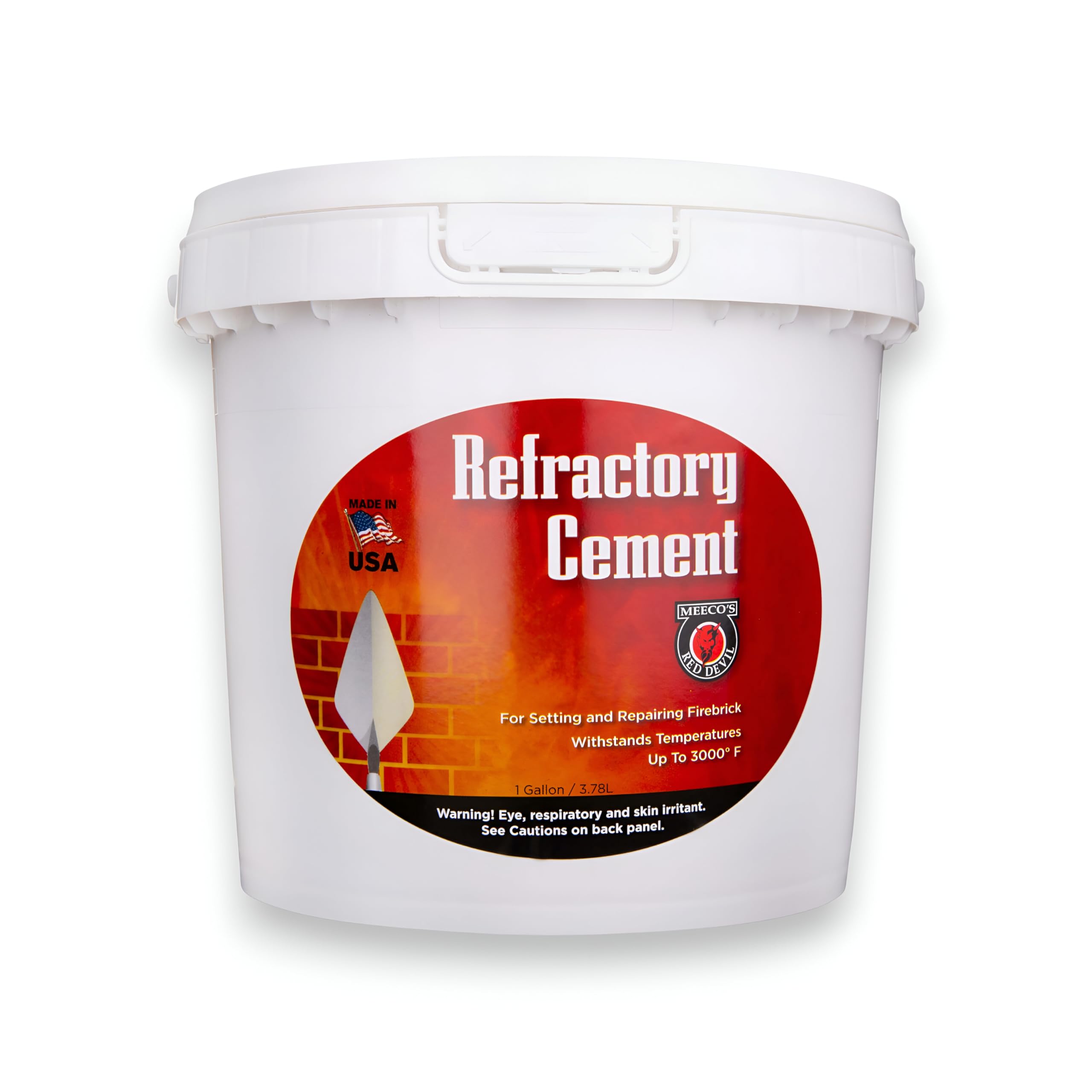
Meeco’s Red Devil 611 lands as the top all-around choice because its pre-mixed fiber-reinforced paste combines a 3000°F temperature ceiling with a smooth, butter-like consistency that applies cleanly to joints up to ¼-inch thick. The fiber matrix reduces cracking during the initial heat cure, a common failure point with non-reinforced mortars. Users report the compound remains stable through repeated 2400°F forge sessions without spalling or delaminating from the firebrick substrate.
This American-made pail works particularly well for setting firebrick in stove fireboxes, repairing damaged fireplace inserts, and coating ceramic blanket liners in propane forges. The buff-colored paste dries to a hard, dense layer that resists accidental molten metal spills and flux penetration, making it a reliable choice for both weekend DIY forge builders and professionals relining commercial equipment.
One note for heavy users: the paste can dry out slightly in the pail over long storage, but a few drops of water and thorough mixing restore the original workability. The fiber fill also means the mortar leaves a slightly textured surface if tooled rather than a glass-smooth finish, though this does not affect bond strength.
Why it’s great
- Fiber-reinforced recipe resists thermal cracking across multiple heat cycles
- Pre-mixed consistency eliminates guesswork and batch inconsistency
- American-made quality with a trusted brand track record since 1937
Good to know
- Not ideal for thin brush-on coatings over ceramic fiber blanket
- Pail may settle during shipping; stir thoroughly before first use
2. FireCast Castable Refractory Cement 3110°F
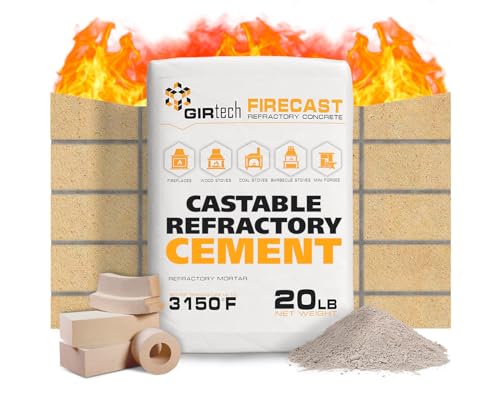
FireCast pushes the temperature envelope to 3110°F, making it the highest-rated castable mortar in this lineup — a critical advantage for foundry work, waste oil burners, and high-output forge interiors that push beyond standard 2500°F thresholds. The dry powder blend includes high-alumina cement, refractory clay, and chamotte, forming a dense monolithic structure when properly mixed and heat-cured.
Users consistently praise the smooth, void-free consistency after mixing, which yields more usable volume per weight compared to grittier competitors. The two-part bag system (cement plus an additive bag) helps ensure the chemical balance hits the right refractory properties during hydration. The recipe excels in vibrocasting applications for custom molds, fireplace element pours, and thick-layer repairs in stoves where structural load-bearing and thermal insulation are both needed.
The main caution involves the curing schedule: the manufacturer prescribes a specific drying and heating protocol that must be followed to prevent explosive spalling or micro-cracking. Some batches have been reported with occasional aggregate clumps, so sifting the dry powder before mixing is a smart precaution for finish-critical work.
Why it’s great
- Highest temperature ceiling in the group at 3110°F for extreme heat zones
- Smooth mixing and excellent volume yield reduce material waste
- Versatile for both pouring molds and trowel-grade repairs
Good to know
- Requires strict adherence to the heating schedule for proper vitrification
- Dry aggregate may need sifting if a glass-smooth finish is required
3. CleanBurn Castable Refractory Cement 25 lb

The CleanBurn 25-pound pail offers the largest dry volume per purchase, making it the most economical option for casting entire forge liners, building custom firebrick shapes, or filling large masonry voids. Rated to 2700°F after proper heat curing, the castable nature means you can pour the material into a mold or trowel it into horizontal joints up to ¼-inch thick with confidence.
Forge builders report that after 14 firings the cast structure remains dimensionally stable with only a single small hairline crack, confirming the aggregate blend handles thermal shock adequately. The material acts as a heat sink rather than an insulator, so users pair it with ceramic blanket insulation in a layered liner approach. The pail serves double duty as a mixing container and later a storage bucket for tools.
The mix contains a visible aggregate fraction, so achieving a perfectly smooth brush-on finish requires thorough floating and troweling. Vertical applications are more challenging because the castable consistency tends to slump on steep surfaces — this product shines brightest for horizontal pours and floor-level repairs inside fireboxes.
Why it’s great
- Generous 25-pound quantity covers large projects without needing multiple units
- Durable cast structure withstands forge welding temperatures and borax flux exposure
- Heat-cures to a dense body that resists spalling through repeated thermal cycles
Good to know
- Aggregate content makes thin brush applications and vertical troweling difficult
- Not self-leveling; requires careful floating for a uniform surface
4. Refractory Satanite 4.5 lb for Ceramic Blanket

Refractory Satanite fills a specific niche that few other mortars address: it is purpose-built as a brush-on hot-face coating for ceramic fiber blanket rather than a joint-filling cement. The 3200°F working rating exceeds even the best castable options, and the formula mixes with water to a sour-cream consistency that soaks into the fiber surface without adding significant weight. This creates a rigid, erosion-resistant hard shell that protects the blanket from flame impingement and flux damage.
Forge users consistently note that the material mixes smoother than most refractory powders, requiring minimal effort to achieve a lump-free slurry. A 4.5-pound bag provides enough material for two coats inside a typical 8-kilogram crucible furnace or a small knife-making forge. The coating cures to a hard gray finish that survives accidental molten metal spills without flaking or peeling.
The absence of included instructions means first-time users need to research the correct water ratio (general consensus is a thick yogurt consistency) and the incremental curing schedule. Applying layers thicker than ⅛ inch can lead to delamination during the first heat cycle, so thin, repeated coats are essential for a durable finish.
Why it’s great
- Specifically engineered for brush-on coating of ceramic fiber blankets
- 3200°F rating provides headroom for even the hottest propane forges
- Low weight addition preserves the insulating value of the underlying blanket
Good to know
- No mixing instructions included; requires prior knowledge or research
- Only suitable for thin-layer coating, not for filling joints or casting
5. Tenon Refractory Mortar 10 lb
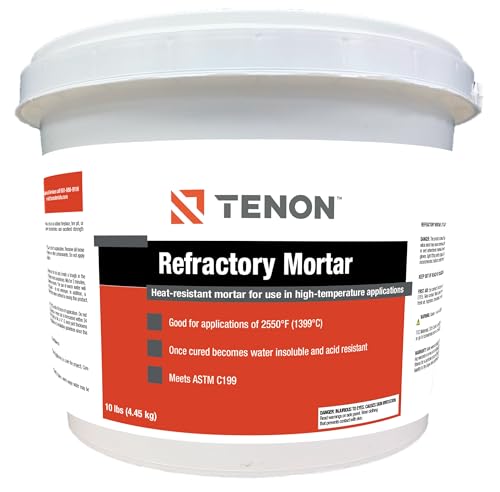
Tenon’s pre-mixed white paste targets the masonry repair side of the refractory market: fireplaces, chimney flue liners, pizza ovens, and outdoor fire pit rings. The 2550°F rating satisfies most building code requirements for firebrick and clay flue installations, and the silica-based composition becomes water-insoluble and acid-resistant after curing — a critical property for chimney environments exposed to acidic creosote condensate.
The ready-to-use consistency eliminates the dust and mess associated with dry-mix powders. Users report that in hot or humid conditions the working time shortens from the stated one hour to roughly 20 minutes, so mixing small batches is the recommended approach for large parging projects. The paste adheres well to damp masonry surfaces and fills gaps cleanly without excessive shrinkage.
This mortar sets very quickly once the chemical reaction starts, which is an asset for vertical joints where gravity would otherwise cause slumping. However, the fast set means you need to have all bricks positioned and aligned before the material firms up. The white color is a bonus for visible brickwork where a dark mortar line would look out of place.
Why it’s great
- Pre-mixed paste saves prep time and ensures consistent batch quality
- ASTM C199 certified for code-compliant chimney and flue installations
- Water and acid resistant after full cure for long-term durability
Good to know
- Working time can drop to 20 minutes in warm weather
- Not suitable for thin brush-on coatings on ceramic blanket liners
6. Rutland Dry Mix 211 Refractory Mortar 10 lb
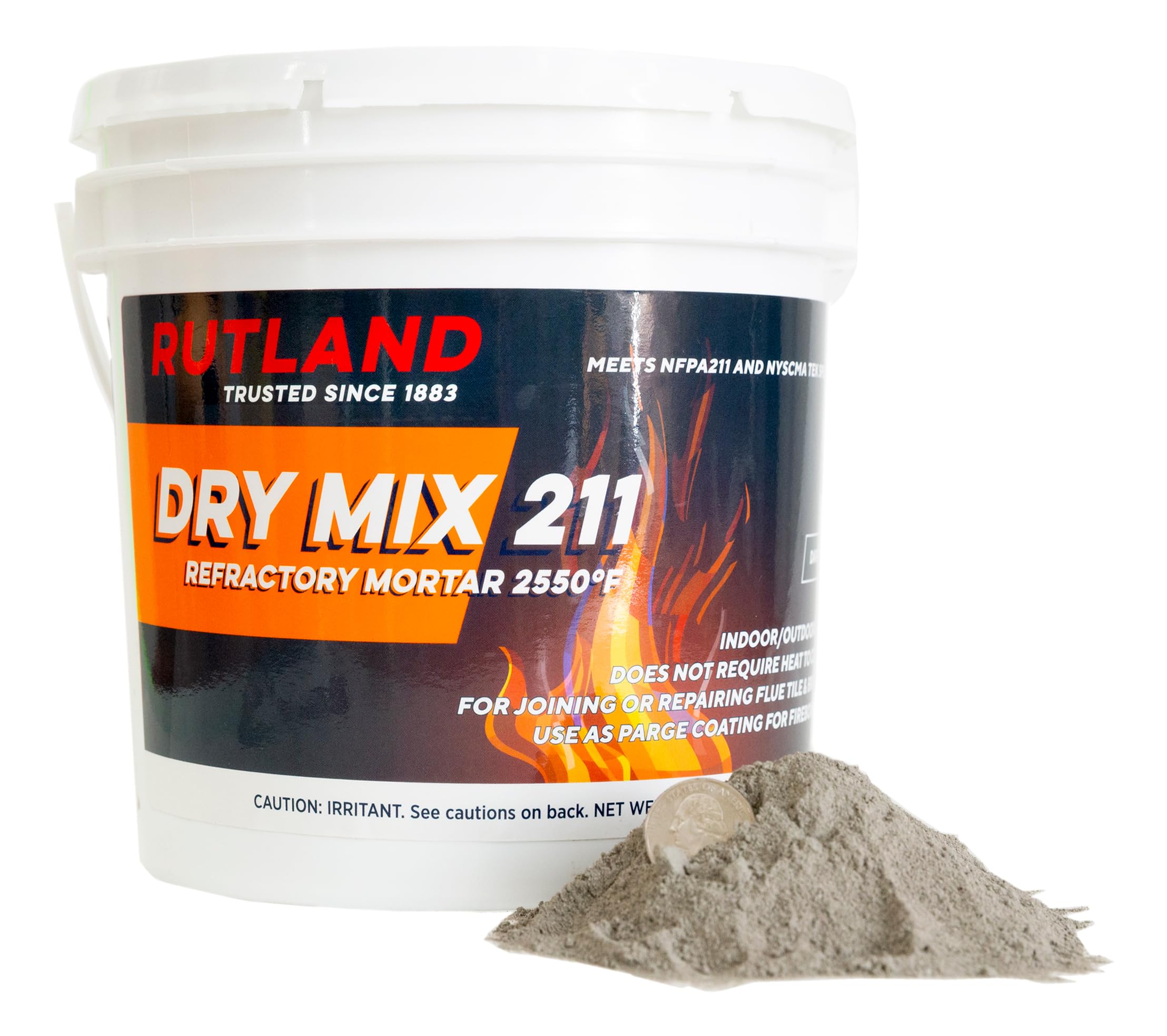
Rutland’s 211 dry mix is a classic entry-level refractory mortar that covers the most common homeowner repairs: filling eroded firebox mortar joints, sealing around fireplace inserts, and patching cracks in indoor masonry heaters. The 2550°F rating matches the Tenon paste, but the dry powder form lets you control the water ratio for either a thick butter consistency for vertical joints or a looser slurry for horizontal gap filling.
First-time fireplace repair users report that the material is forgiving — if the initial application leaves gaps, the mortar can be sponged smooth and reworked within the first hour. It does not require heat to cure, so repairs in non-operational fireplaces can set at room temperature. The dark gray color blends naturally with typical firebrick and smoke-stained joint lines.
The fine fluffy powder mixes into a smooth paste, but thick applications over ¼ inch are prone to superficial cracking during drying. Multiple thin layers produce a more monolithic finish. Shipping times vary depending on seller stock, and some users have reported longer than expected delivery windows, so plan ahead if this is the repair mortar for a time-sensitive project.
Why it’s great
- Very forgiving mix allowing custom water ratios for different joint sizes
- No heat cure required for initial set; cures in 24 hours with a fan
- Excellent adhesion to damp masonry with easy sponge-finishing
Good to know
- Thick layers tend to develop hairline cracks; thin coats are recommended
- Shipping times can be longer than expected for some sellers
7. Rutland High Temperature Adhesive 128 oz Sodium Silicate
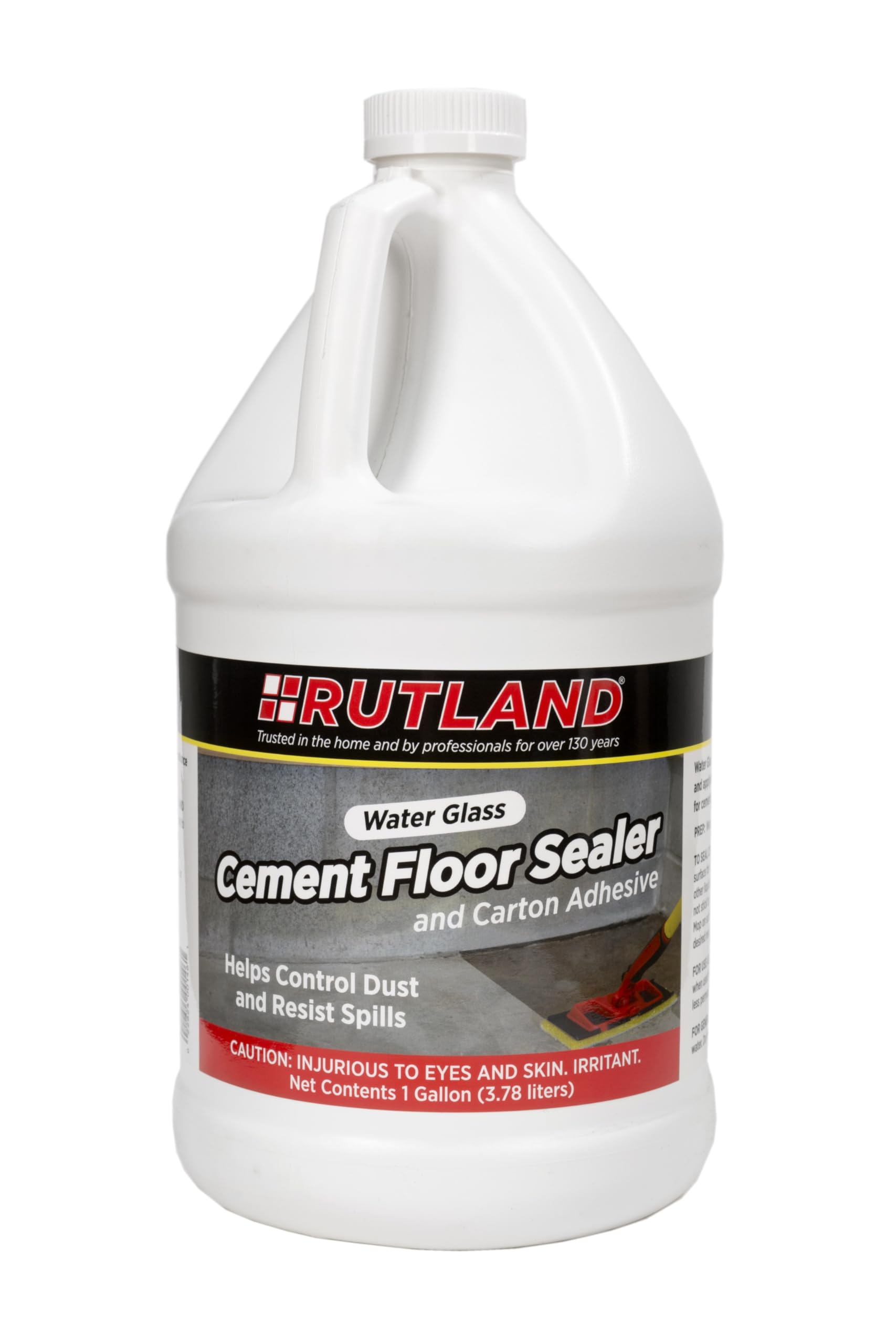
Rutland’s sodium silicate 40% solution occupies a different category from the other mortars on this list: it is a liquid adhesive and sealant rather than a structural joint filler. With a 2000°F heat rating, it functions perfectly as a binder for ceramic fiber blanket seams, a coating to harden concrete floors against dust and oil penetration, and a high-temperature glue for gaskets and refractory board in metal casting molds.
When used full-strength, the clear liquid penetrates porous surfaces and dries into a glassy, water-resistant layer. The CO2 hardening method (used in metal casting) produces rock-solid molds that withstand 2200°F molten metal pours. For forge builders, it serves as a wash coat to seal the outer surface of ceramic blanket before the main refractory coating is applied.
The primary limitation is the lower temperature ceiling compared to alumina-based mortars — 2000°F is fine for chimney sealants and metal casting, but insufficient for direct forge hot-face exposure. The liquid character also makes it unsuitable for filling gaps wider than the capillary action of the joint. Shipping packaging has been noted as a weak point, with leaking reported in under-cushioned boxes.
Why it’s great
- Multi-purpose as an adhesive, sealant, and concrete hardener in one bottle
- Dries clear and paintable for cosmetic applications after curing
- Effective CO2-curable binder for metal casting mold and core work
Good to know
- 2000°F rating limits use as a direct hot-face forge coating
- Liquid form cannot fill structural gaps or replace mortar in joints
FAQ
Can I use standard masonry cement instead of refractory mortar for a forge or fireplace?
How do I mix dry refractory mortar to the right consistency for vertical joints?
What causes refractory mortar to crack during the first heat cycle?
Final Thoughts: The Verdict
For most users, the brick mortar winner is the Meeco’s Red Devil 611 because its pre-mixed fiber-reinforced paste delivers an ideal balance of high heat tolerance, crack resistance, and ease of application for both firebrick joints and forge coatings. If you need the absolute highest temperature ceiling for a castable forge liner, grab the FireCast Castable 3110. And for brush-on protection over ceramic fiber blanket without adding weight, nothing beats the Refractory Satanite.