
Our readers keep the lights on and the weekend projects moving. As an Amazon Associate, I earn from qualifying purchases.
Forgetting calls and struggling with a touchscreen’s glare is a daily frustration many choose to avoid. A dedicated device for calls and texts eliminates app clutter and endless notifications, offering a straightforward communication tool that actually stays charged for days. Whether you need a durable work line, a phone for a senior relative, or a digital detox companion, the right model focuses on what matters most: clear audio, reliable signal, and a physical interface you can operate without looking.
I’m Rikta — the co-founder and writer behind FitlyFast. I’ve spent countless hours analyzing the hardware trade-offs in this niche, comparing battery chemistries, network band support, and keypad durability across dozens of feature phone models to help buyers find genuine simplicity, not just stripped-down complexity.
This guide breaks down the essential specs and real-world trade-offs so you can confidently choose the best basic cell phone that delivers exactly what you need—and nothing you don’t.
How To Choose The Best Basic Cell Phone
Choosing a basic cell phone isn’t about comparing processor speeds or screen resolutions. It’s about matching the device’s fundamental design to a specific human need—durability for outdoor work, extreme simplicity for an aging parent, or a total distraction-free experience for focus. The following factors will guide you to the right tool for the job.
Carrier Compatibility Is Everything
A basic phone that can’t make calls is a paperweight. Unlike mainstream smartphones that support all major networks, many basic phones are locked to specific carriers or only work on certain 4G bands. T-Mobile’s network has the widest compatibility with unlocked basic phones, while AT&T and Verizon often require devices sold directly by them or with specific VoLTE certification. Always verify the model’s exact cellular technology (2G, 4G) and check with your carrier before purchasing. The most common complaint across all models is activation failure due to network incompatibility.
Battery Life and Charging Convenience
The biggest advantage of a basic phone over a smartphone is battery endurance. Capacities range from 1050mAh to 5000mAh, with talk times varying from 3.8 to 37 hours. A larger battery isn’t always better if the phone is heavy. Look for models with charging docks that simplify the process for seniors—placing the phone on a stand is far easier than plugging in a tiny USB connector. Replaceable batteries are a bonus for users who keep a phone for years or need instant power swaps during long trips.
Physical Interface and Ease of Use
The quality of tactile buttons, font size, and speaker volume defines the user experience. For seniors or visually impaired users, look for raised backlit buttons, high-contrast text, and loud earpieces that are HAC (Hearing Aid Compatible). Some models include dedicated SOS buttons, speed dial keys, or even programmable picture buttons for users with memory conditions. For teens or digital detoxers, a standard T9 keypad with fast response is fine, but complex menu structures or tiny icons defeat the purpose of a “basic” phone.
Build Quality and Extras
A basic phone is often subjected to rougher daily treatment than a smartphone. Rugged models with IP68/IP69K ratings survive dust, immersion, and drops from head height. Others are lightweight plastic but may feel fragile. Consider whether you need extra features like a built-in flashlight, FM radio, expandable storage for music, or a camera at all. Each extra feature adds complexity and cost—choose only the ones that serve your specific scenario.
Quick Comparison
On smaller screens, swipe sideways to see the full table.
| Model | Category | Best For | Key Spec | Amazon |
|---|---|---|---|---|
| AGM M9 | Rugged | Outdoor durability | IP68/IP69K, 1.8m drop | Amazon |
| artfone C1+4G | Senior | Elderly ease of use | 1800mAh, charging dock | Amazon |
| Alcatel GO FLIP 3 | Flip | Simple daily flip | 1700mAh, 10h talk time | Amazon |
| Lively Jitterbug Smart4 | Senior Smart | Simplified smartphone | 5000mAh, large 6.7″ screen | Amazon |
| Tracfone Nokia 2760 Flip | Flip | Backup / detox phone | 4GB memory, KaiOS | Amazon |
| AT&T Cingular Flex 2 | Flip | Modern flip with apps | 720×1440 display, 4G | Amazon |
| Easyfone Prime-T6 | Senior Bar | Memory impaired users | 4 picture buttons, 1050mAh | Amazon |
In‑Depth Reviews
1. AGM M9
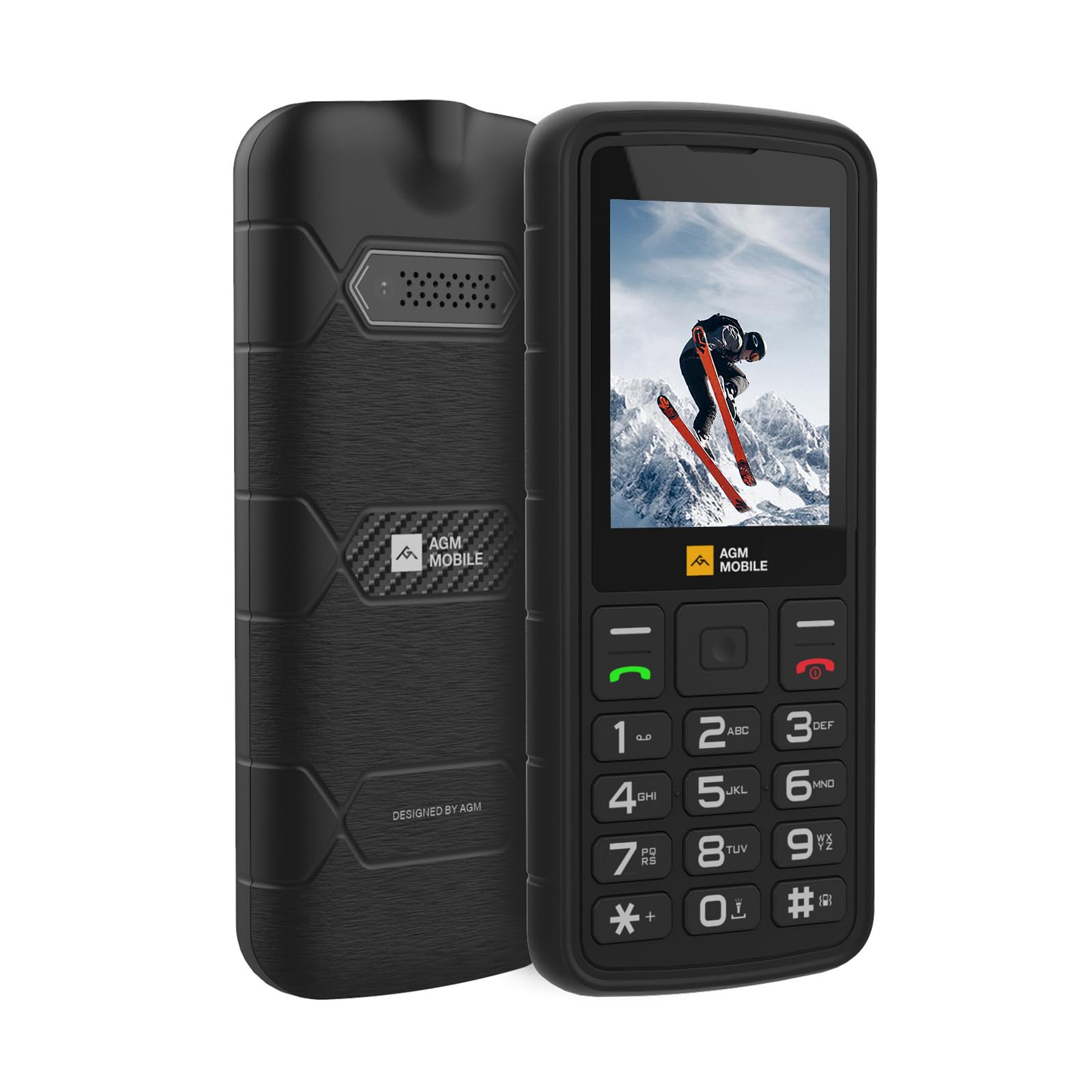
The AGM M9 is a rare breed: a feature phone built to survive serious abuse while keeping the interface dead simple. Its IP68 and IP69K ratings mean it can handle full dust ingress, submersion in water, and high-pressure jets—making it the go-to choice for construction workers, hikers, or anyone prone to dropping their phone on concrete. The loud earpiece and large raised buttons make calls clear even in noisy environments, and the replaceable 1200mAh battery eliminates downtime when you’re away from a charger.
This phone actively cuts out distractions. There is no Wi-Fi, no app store, and no internet browser—just calling, texting, an FM radio, and a music player for offline files. The triple card slots (two SIMs, one microSD up to 128GB) offer flexibility for separating work and personal lines or expanding music storage. The built-in high-intensity flashlight is a genuinely useful addition for nighttime tasks or emergencies.
The key trade-off is network lock: the M9 works exclusively with T-Mobile and its MVNOs. AT&T and Verizon users are out of luck. Some units have reported sudden shutdowns after a few weeks, though most buyer experiences report solid reliability for months of use. The T9 text input is functional but not fast for long messages, and the camera is basic, serving only as a document scanner at best.
Why it’s great
- Exceptional IP68/IP69K durability
- Replaceable battery and expandable storage
- True distraction-free design with no Wi-Fi or apps
Good to know
- Works with T-Mobile networks only
- Occasional reliability issues reported
- Basic camera and slow T9 typing
2. artfone C1+4G
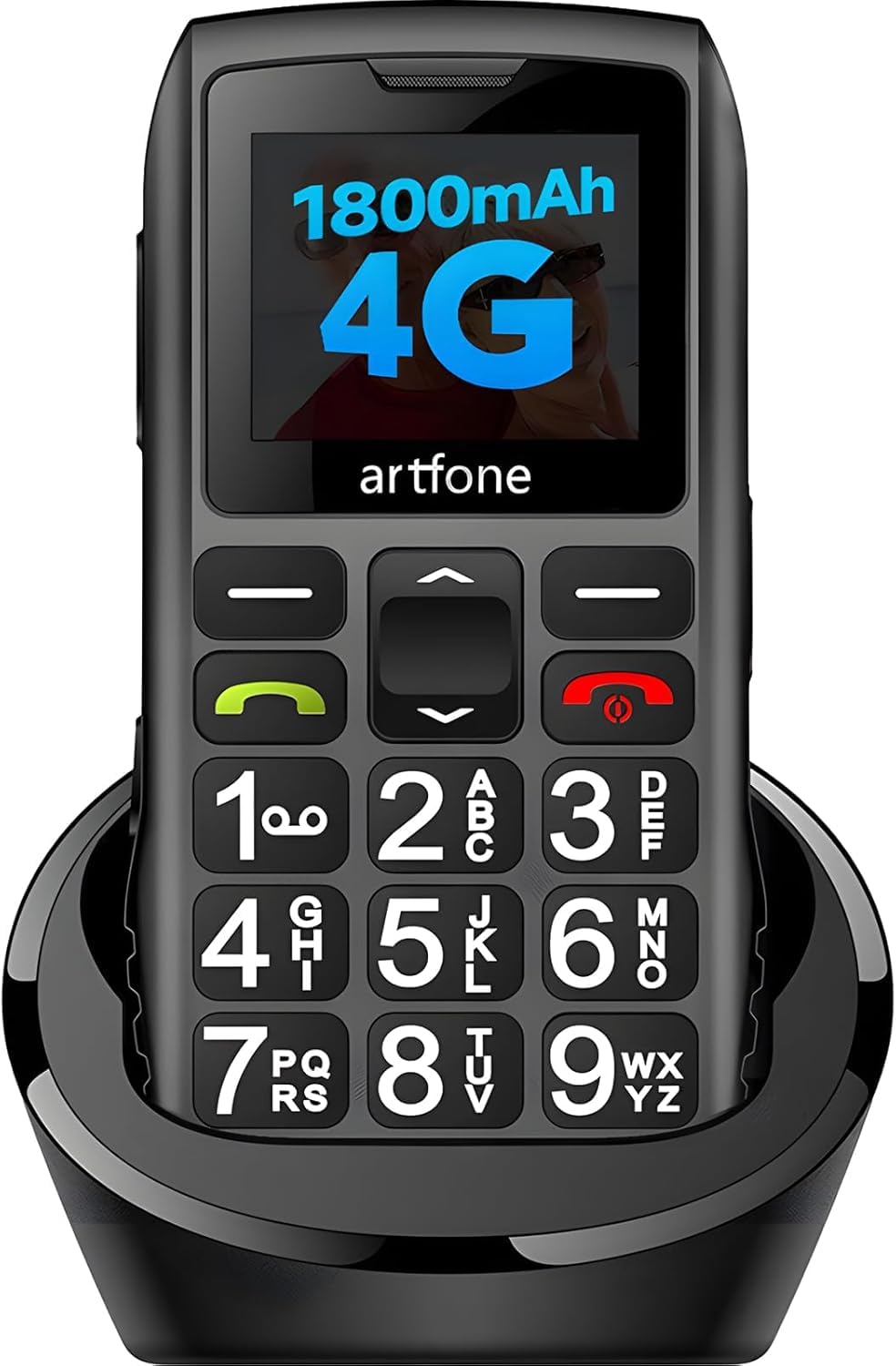
The artfone C1+4G takes a thoughtful approach to senior-friendly design. The 21 backlit raised buttons provide excellent tactile feedback to minimize dialing errors, while the 1.8-inch eye-care LCD screen reduces strain with clear icons and adjustable large fonts. A standout feature is the voice time announcement—press and hold the volume key to hear the current time spoken aloud, eliminating the need to squint at the time display. The high-resolution speaker delivers loud, clear call audio that suits users with mild to moderate hearing loss.
Battery life is a strong point with the included 1800mAh cell, supporting 7–8 hours of talk time. The bundled charging dock simplifies daily charging—just set the phone on the stand, which is far easier for users with arthritis or limited dexterity than fumbling with a USB-C cable. The SOS button on the back dials up to five emergency contacts and sends distress messages, offering real safety assurance. Photo contact display and speed dial keys (numbers 2–9) further reduce cognitive load.
The phone is locked to T-Mobile and its MVNOs; it will not work on AT&T, Verizon, or their CDMA-based networks. Some buyers report that one-button speed dial failed after a couple of weeks, and the user manual lacks detail for complex setup questions. The T9 predictive text input will feel slow for anyone used to a smartphone, and there is no Wi-Fi or internet browsing—the phone is intentionally limited to calls, texts, FM radio, and basic organizer tools.
Why it’s great
- Voice time announcement and SOS button
- Charging dock for easy daily power
- Loud speaker with large, backlit buttons
Good to know
- T-Mobile network only
- Speed dial durability issue reported
- Manual lacks full instructions
3. Alcatel GO FLIP 3

The Alcatel GO FLIP 3 offers a durable, familiar flip-phone experience at a budget-friendly entry point. The 2.8-inch LCD screen (240×320) is small but perfectly adequate for navigating the Android 4.4-based interface, which keeps things simple with large tiles for calling, texting, and settings. Users consistently praise its signal strength—many report it outperforms modern smartphones in buildings with weak reception, a critical advantage for a phone meant primarily for calling. The 1700mAh battery delivers up to 10 hours of talk time and days of standby.
This renewed unit has been tested to work reliably with minor cosmetic scuffs, but the real appeal is the headset jack for private listening and the durable plastic hinge that survives frequent opening and closing. The physical T9 keypad is tactile and responsive, and the fingerprint sensor on the front adds a layer of security uncommon in basic phones. Wi-Fi and Bluetooth 4.2 are onboard for occasional wireless headset use or hotspot tethering, but the phone’s sweet spot is its simplicity.
The biggest risk is carrier compatibility. This unit is specifically sold as a T-Mobile variant and uses an older nano-SIM form factor. Buyers have reported it failing to activate on other carriers entirely. The Android 4.4 OS is technically outdated, so don’t expect modern app support or security patches. As a renewed product, cosmetic condition varies, and some units may show scratches that bother picky users.
Why it’s great
- Excellent signal strength in weak areas
- Durable flip design with headset jack
- Solid battery life (10h talk time)
Good to know
- Works only on T-Mobile networks
- Outdated Android 4.4 OS
- Renewed condition may have scuffs
4. Lively Jitterbug Smart4

The Jitterbug Smart4 is a simplified smartphone built specifically for seniors who need a larger, more intuitive touchscreen. The 6.7-inch display is bigger than most flagship smartphones, combined with a simplified menu layout that strips away cluttered icons. Voice calling, real-time call captioning for the hard of hearing, and a prominent Urgent Response button are the core features. The 5000mAh battery delivers an exceptional 37 hours of talk time, which is class-leading for this list and means days of use between charges.
The device runs a modified Android interface with Google services available, so it supports modern apps like maps, weather, and messaging if the user chooses to explore beyond calls and texts. The 13MP rear camera is competent for casual snapshots, and the face recognition unlock is quick for accessing the phone. The 4G connectivity ensures solid coverage on the Lively network, which operates on major carrier infrastructure.
The major catch is that this phone is locked exclusively to Lively phone service. You cannot use it with any other carrier. The Lively plans are prepaid and include unlimited talk/text, but data throttles after 20GB, and some users report difficulty cancelling the plan. The no-speed-dial, no-lift-to-wake interface also confuses users with advanced dementia. Setup can be lengthy, and returns for plan refunds are difficult.
Why it’s great
- Huge 6.7-inch screen with simple UI
- 37-hour talk time battery
- Urgent Response button and call captioning
Good to know
- Locked to Lively service only
- No speed dial, complex setup
- Data throttled after 20GB
5. Tracfone Nokia 2760 Flip

The Nokia 2760 Flip revives the classic flip-phone form factor while adding just enough modern connectivity to remain useful. Running KaiOS, it offers essential apps like a web browser and email client without the infinite distraction of an app store. The 5MP rear camera with built-in flash captures serviceable photos for scanning documents or quick memories, and the 1.3GHz quad-core processor handles the streamlined OS with zero lag. Standby time of over 21 days and talk time of 3.8 hours fit the backup-phone use case perfectly.
Buyers frequently praise this phone as an ideal digital detox tool or a reliable backup when leaving the smartphone at home. The physical T9 keypad is responsive, and the external display shows caller ID without opening the flip. It’s lightweight and pocketable, with a build quality that feels solid in hand. Some users report that the phone works well for calls and texts, and the built-in weather and notes apps add minor utility without clutter.
The trade-offs are real: there is no WhatsApp or other modern messaging app, and the camera is bottom-tier compared to any recent smartphone. Some buyers experienced activation issues where Tracfone’s system didn’t register the phone properly, requiring a new number. The 4GB onboard memory is small, so don’t expect to store many photos or music files. As a Tracfone-bound device, switching carriers down the line is difficult.
Why it’s great
- True flip-phone experience with KaiOS
- Long standby time (21+ days)
- Ideal for digital detox or backup use
Good to know
- No WhatsApp or modern messaging
- Activation issues reported
- Limited 4GB storage
6. AT&T Cingular Flex 2

The Cingular Flex 2 updates the flip-phone formula with a vibrant 720×1440 LCD display that makes reading texts and browsing basic web pages genuinely pleasant. The Classic Navy color finish looks polished rather than utilitarian, and the lightweight build (1400mAh battery) keeps it pocket-friendly. The 4G LTE connectivity provides solid call quality on AT&T’s network, and users who swap their existing AT&T SIM report smooth activation without a store visit. The built-in camera captures acceptable daylight photos for casual use.
This phone provides enough functionality for someone who wants a more modern flip-phone experience without full smartphone complexity. The processor handles multitasking without freezing, and the USB-C charging is welcome for convenience. It’s a decent option for teens as a first phone or for anyone who simply wants a device that can access basic apps and camera functions without the addictive pull of social media.
Reliability is the primary concern here. Multiple buyers report the phone breaking within a few months—some with screen failures, others with button issues after minor drops. The volume rocker on the side is easily bumped by accident, which frustrates older users who find themselves unable to hear during calls. The predictive text input is mandatory and can’t be turned off, which annoys anyone accustomed to simple T9. The 4GB storage is non-expandable, so don’t plan on storing much media.
Why it’s great
- Sharp 720×1440 display
- Works on AT&T network with SIM swap
- USB-C charging and modern design
Good to know
- Questionable long-term durability
- Mandatory predictive text
- No expandable storage
7. Easyfone Prime-T6
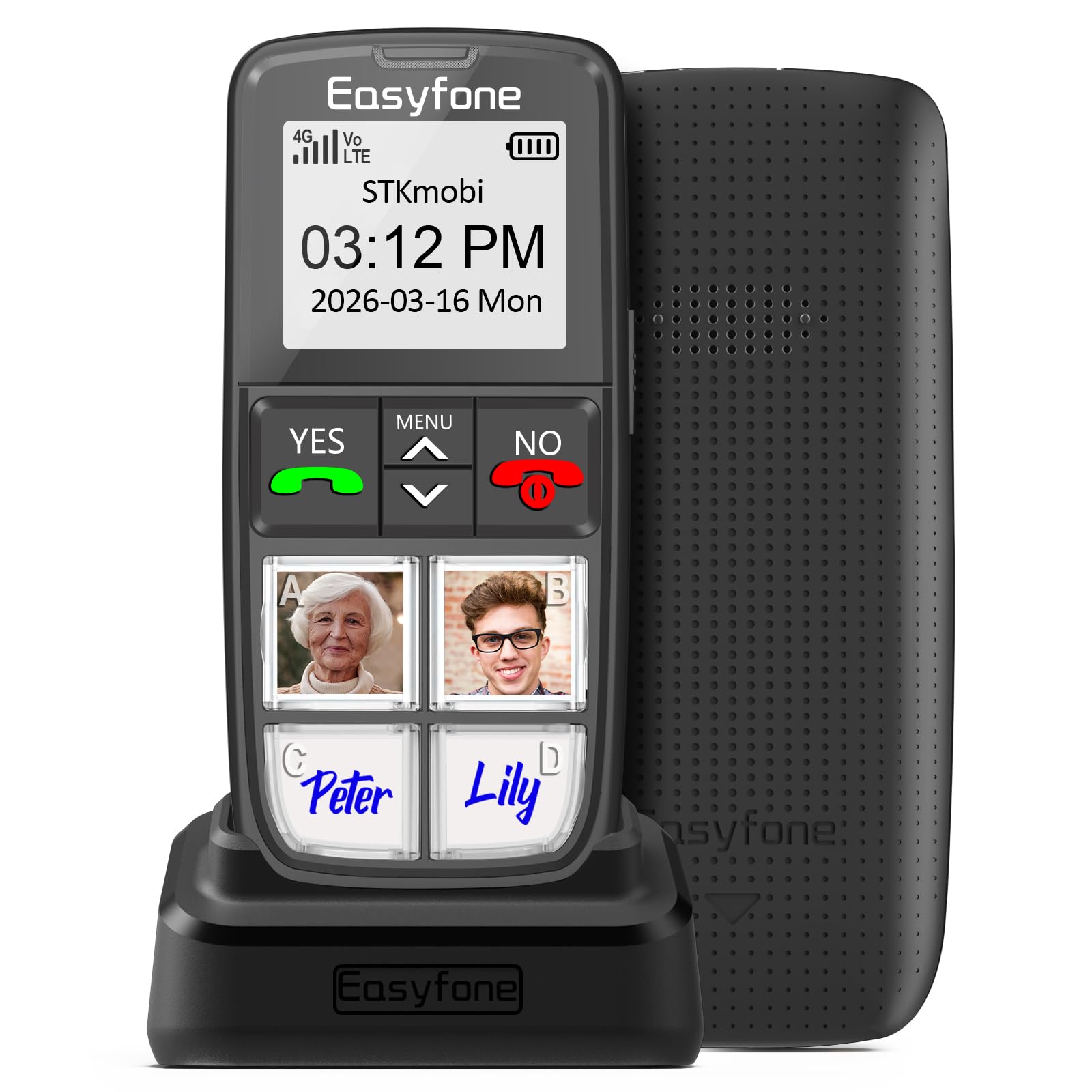
The Easyfone Prime-T6 is designed for a very specific user: someone with memory loss, dementia, or severe visual impairment who needs to call a handful of contacts without remembering names or numbers. The standout feature is the four large picture memory buttons on the front—insert a photo of the person behind a plastic window, program the number, and the user simply presses the photo to dial. This eliminates all navigation and menu memorization. The SOS button on the back triggers a loud alarm, sends sequential calls and SMS messages to programmed contacts, and provides reassurance for caregivers.
The phone includes a charging dock that makes it simple to keep charged—users who struggle with fine motor control can just drop it on the stand. The speaker is extremely loud and the 1050mAh battery lasts about a week on standby, which is adequate for its limited calling pattern. A bright flashlight and FM radio are easy to activate via dedicated buttons. The phone is extremely lightweight and comes with a neck lanyard for carrying without pockets.
The build quality is the biggest drawback. Several buyers report the plastic body feels cheap, and the picture buttons can pop off with rough handling. The dual-button lock combo (pressing two keys simultaneously) is confusing for seniors with cognitive issues. The phone works only with T-Mobile and its MVNOs like SpeedTalk (which includes a SIM in the box), so it’s useless for AT&T or Verizon users. Forget about texting—this phone is for calling only, and making any call beyond the four programmed contacts requires scrolling through a basic menu.
Why it’s great
- Four programmable picture buttons for instant calling
- Convenient charging dock and loud speaker
- Effective SOS alarm with sequential alerts
Good to know
- Plastic build feels cheap, buttons pop off
- Lock mechanism confusing for dementia users
- T-Mobile network only
FAQ
Will a basic phone work on any carrier?
How important is hearing aid compatibility (HAC) on a basic phone?
Can I use WhatsApp or other messaging apps on a basic phone?
What is standby time and why does it matter for a basic phone?
Final Thoughts: The Verdict
For most users, the best basic cell phone winner is the AGM M9 because it offers military-grade durability, a true distraction-free interface, and a replaceable battery—all at a price that undercuts competitors by a wide margin. If you want the best senior-focused experience with a charging dock and voice time announcement, grab the artfone C1+4G. And for the simplest possible calling tool for users with memory impairment, nothing beats the picture-button design of the Easyfone Prime-T6.