
Our readers keep the lights on and the weekend projects moving. As an Amazon Associate, I earn from qualifying purchases.
Watching a blockbuster on a 6-inch phone screen during a flight or lying in bed often kills the cinematic experience long before the credits roll. The real solution isn’t a bulky headset—it’s a lightweight pair of glasses that projects a massive virtual display directly into your line of sight, letting you enjoy immersive movies anywhere without disturbing anyone around you.
I’m Rikta — the co-founder and writer behind FitlyFast. My analysis for this guide involved sorting through hours of spec sheets and user reports on micro-OLED resolution, field of view measurements, and display brightness to pinpoint the models that actually deliver a theater-quality movie experience.
For movie lovers seeking a private cinema on the go, finding the right pair means balancing visual clarity, comfort, and audio quality. This guide breaks down the top contenders to help you choose the best ar glasses for movies available today.
How To Choose The Best AR Glasses For Movies
Selecting the right pair of AR glasses for movie watching requires focusing on a few critical hardware and software specs that directly impact your viewing experience. A high spec sheet doesn’t always translate to a great cinema feel, so knowing what to look for is essential.
Display Quality and Resolution
The core of any AR movie experience is the display. Look for micro-OLED panels, which provide superior contrast and color depth compared to standard LCDs. A resolution of 1920×1080 per eye is the baseline for a sharp image, but the clarity also depends on the pixel density (PPD). A higher PPD number means text and fine details will appear crisp, without a visible screen-door effect. For movies, a 120Hz refresh rate ensures smooth motion during action sequences.
Field of View and Virtual Screen Size
The field of view (FOV) determines how large the virtual screen appears relative to your surroundings. A wider FOV (46 degrees and above) creates a more immersive, theater-like effect. While brands advertise a “171-inch” or “215-inch” screen, this is measured at a specific virtual distance. A wider FOV is a more reliable indicator of immersion than the marketed screen size number, as it defines how much of your vision the movie fills.
Comfort and Fit for Long Sessions
Movies often last two hours or more, so comfort is non-negotiable. The total weight of the glasses should be under 80 grams to avoid pressure on your nose and ears. Adjustable nose pads and flexible temples are crucial for finding a secure fit that aligns the display correctly with your pupils. Some models offer built-in myopia adjustments, which is a huge advantage for prescription wearers who want to avoid using contact lenses or clip-on inserts.
Quick Comparison
On smaller screens, swipe sideways to see the full table.
| Model | Category | Best For | Key Spec | Amazon |
|---|---|---|---|---|
| XREAL 1S | Premium | Immersive 3D & Spatial Anchor | 52° FOV, 500″ Virtual Screen | Amazon |
| XREAL One Pro | Premium | Widest FOV & Clarity | 57° FOV, 171″ Spatial Screen | Amazon |
| VITURE Luma Ultra | Premium | High Brightness & 6DoF | 1500 nits, 52° FOV | Amazon |
| VITURE Luma Pro | Mid-Range | Sharpest Display & Value | 1200p Resolution, 52° FOV | Amazon |
| INAIR 2 Pro | Mid-Range | Multi-Screen Productivity | Dual-Eye 3840×1080 | Amazon |
| Rokid AR Spatial | Mid-Range | All-in-One Spatial Computer | 600 Nits, 120Hz, 3-Screen | Amazon |
| RayNeo Air 4 Pro | Mid-Range | HDR10 & Premium Audio | 46° FOV, 120Hz, 10-Bit Color | Amazon |
| Rokid Max 2 | Mid-Range | Myopia-Friendly Design | 50° FOV, 600 Nits Brightness | Amazon |
| Lenovo Legion Glasses Gen 2 | Budget | Entry-Level Portable Monitor | Micro-OLED, 120Hz Refresh | Amazon |
In‑Depth Reviews
1. XREAL 1S
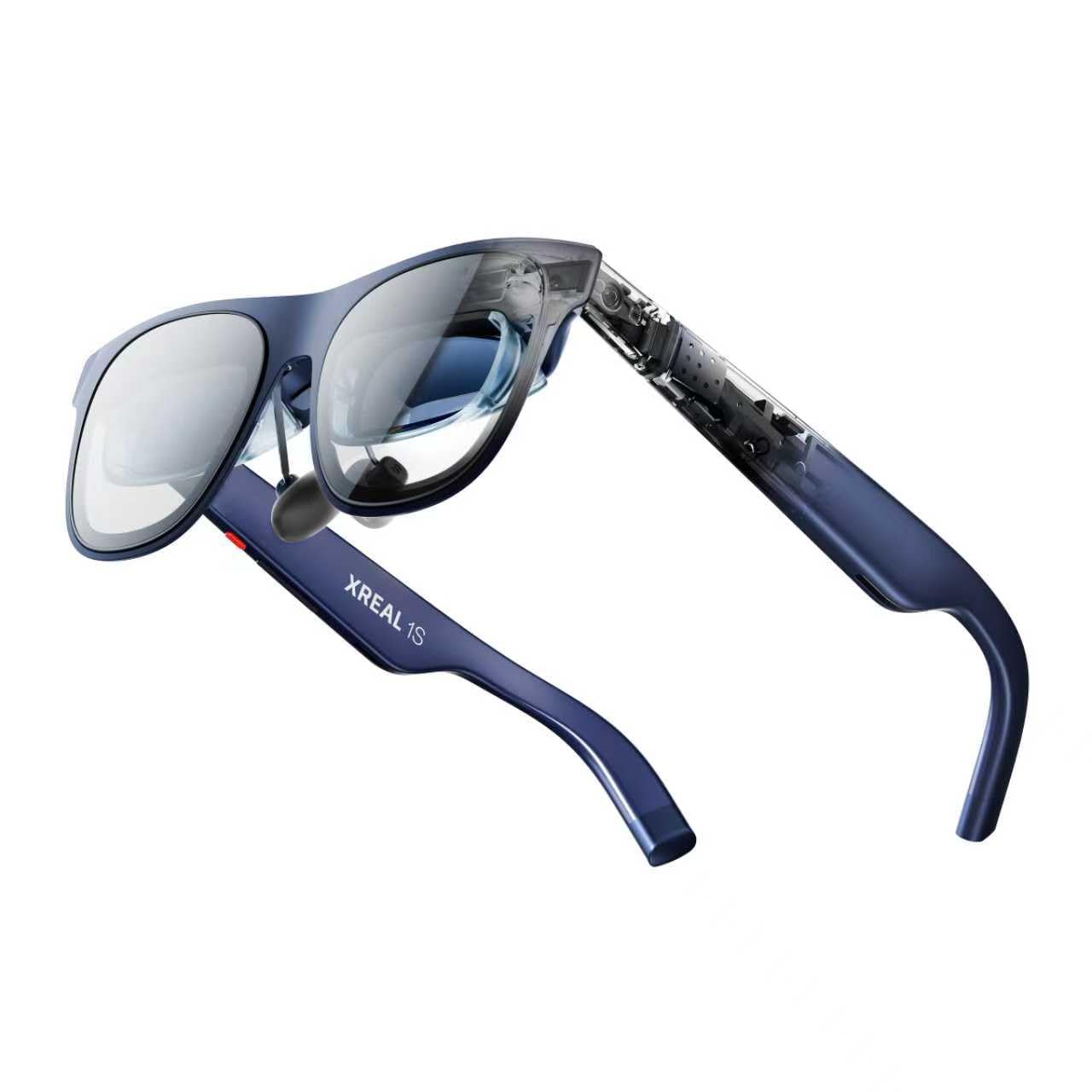
The XREAL 1S delivers a standout movie-watching experience thanks to its native 3DoF spatial screen powered by the proprietary X1 chip, which keeps the virtual 500-inch display anchored in place. This means you can turn your head to grab a drink without the screen following you—a critical comfort feature for long films. The REAL 3D mode instantly converts any 2D movie into a spatial depth experience, adding a new dimension to your library.
Audio is co-developed with Bose, providing a spacious soundstage with clear dialogue and deep lows, which enhances immersion without needing earbuds. The display is individually color-tuned for natural hues, and the 120Hz refresh rate ensures zero blur in action-heavy scenes. Users consistently praise the easy plug-and-play setup and the rock-solid screen stability that prevents motion sickness.
The TÜV Rheinland certification for eye comfort makes it a safe choice for marathon sessions. The only trade-offs are that the tinted lenses can be too dim in bright indoor settings and the nose pad design may require some adjustment to get the perfect visual sweet spot. For movie lovers who prioritize a stable, drift-free screen and premium sound, this is the top recommendation.
Why it’s great
- Native 3DoF tracking keeps the screen anchored, improving comfort
- Outstanding Bose audio creates a truly immersive sound field
- REAL 3D mode adds depth to any movie content
Good to know
- Tinted lenses can feel too dim in well-lit rooms
- Nose pad placement requires careful adjustment for some users
2. XREAL One Pro

The XREAL One Pro boasts a best-in-class 57° field of view, which translates to a massive 171-inch virtual screen that feels more like a true cinema than almost any other pair on the market. The X-Prism optics deliver sharp, distortion-free visuals with an effective anti-glare design that minimizes reflections, so you stay focused on the movie. Its advanced electrochromic dimming allows you to block out distractions instantly.
Sound is professionally tuned by Bose, providing high-quality audio that doesn’t require separate headphones. The dual IPD design ensures a precise fit for a wider range of users, and the spring hinge reduces pressure during extended wear. Users report that the screen pinning feature works flawlessly, making it excellent for watching movies on airplanes without the screen drifting.
One of the main drawbacks is the lack of built-in volume control on the glasses themselves, requiring you to adjust audio on the source device. Additionally, users with prescriptions above a certain level might need separate inserts. For those who want the absolute widest immersive field of view for movies, this is the clear winner.
Why it’s great
- Industry-leading 57° FOV for a true home theater feel
- Bose audio delivers rich, clear sound
- Precise screen anchoring with low 3ms M2P latency
Good to know
- No dedicated volume slider on the glasses frame
- May require prescription inserts for strong astigmatism
3. VITURE Luma Ultra
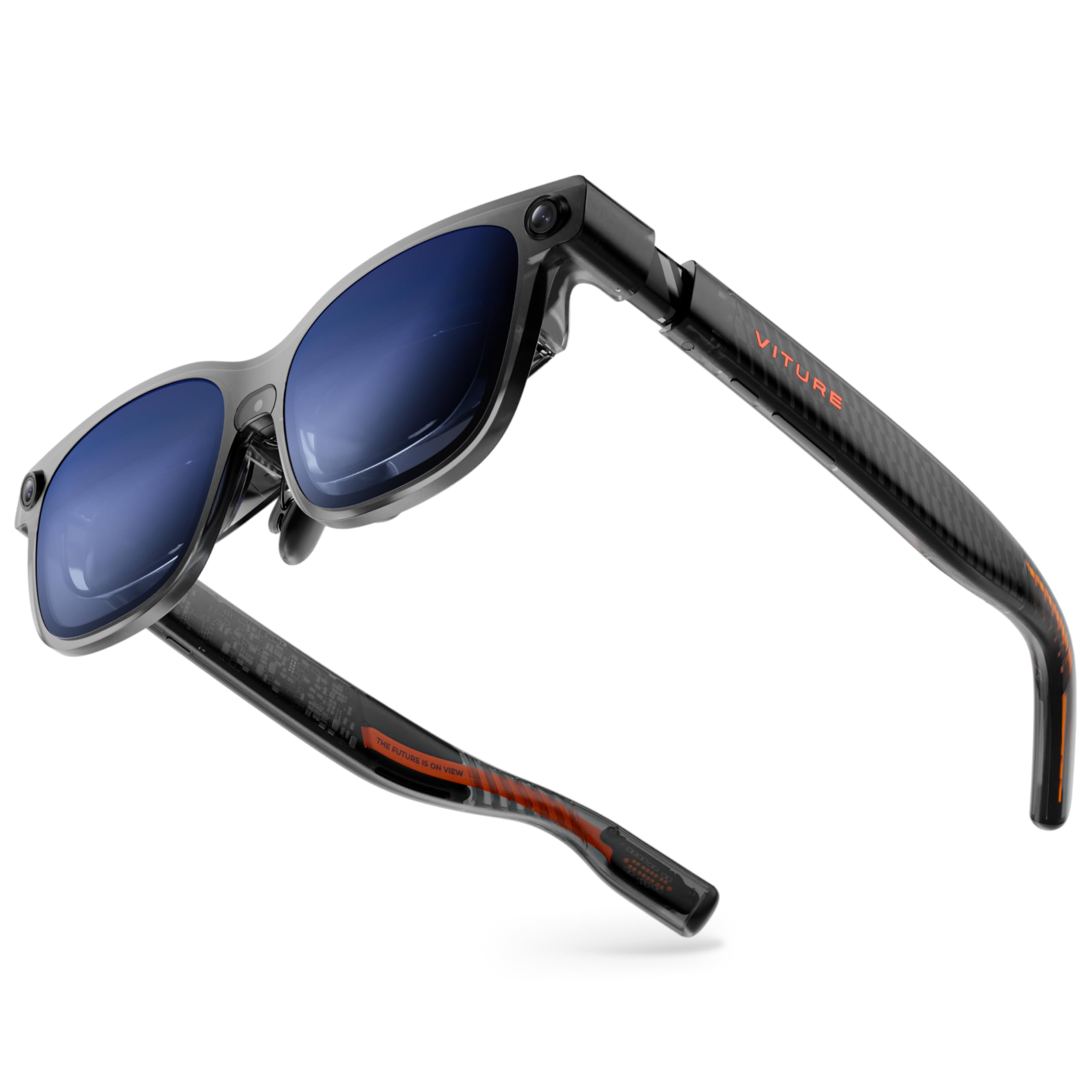
The VITURE Luma Ultra is designed for movie buffs who watch in varied lighting conditions, thanks to its industry-leading 1500 nits peak brightness. This makes it the best choice for watching films near a window or on a bright airplane, as the image remains vivid and clear. The 52° FOV provides an immersive 152-inch screen, and the Hollywood-grade color accuracy (DeltaE < 2) ensures you see movies exactly as the director intended.
Built-in myopia adjustments up to -4.0D mean many users can enjoy sharp visuals without additional inserts. The triple-camera system offers zero-drift 6DoF tracking when paired with the Pro Neckband, allowing for advanced spatial interactions. The Harman audio delivers a well-rounded soundscape with deeper bass, and the One-Touch 3D feature adds depth to regular movies.
Some users report that the glasses can feel slightly heavier on the nose than competing models, and proper IPD measurement is crucial for the best clarity. The battery drain on the connected device can be noticeable. For movie fans who demand maximum brightness and cutting-edge spatial computing features, the Luma Ultra is a fantastic choice.
Why it’s great
- Exceptionally high 1500 nits brightness for bright environments
- Built-in myopia adjustment up to -4.0D
- Crisp 1200p resolution with accurate colors
Good to know
- Can be slightly heavy on the nose during long sessions
- Proper IPD measurement is needed for best sharpness
4. VITURE Luma Pro
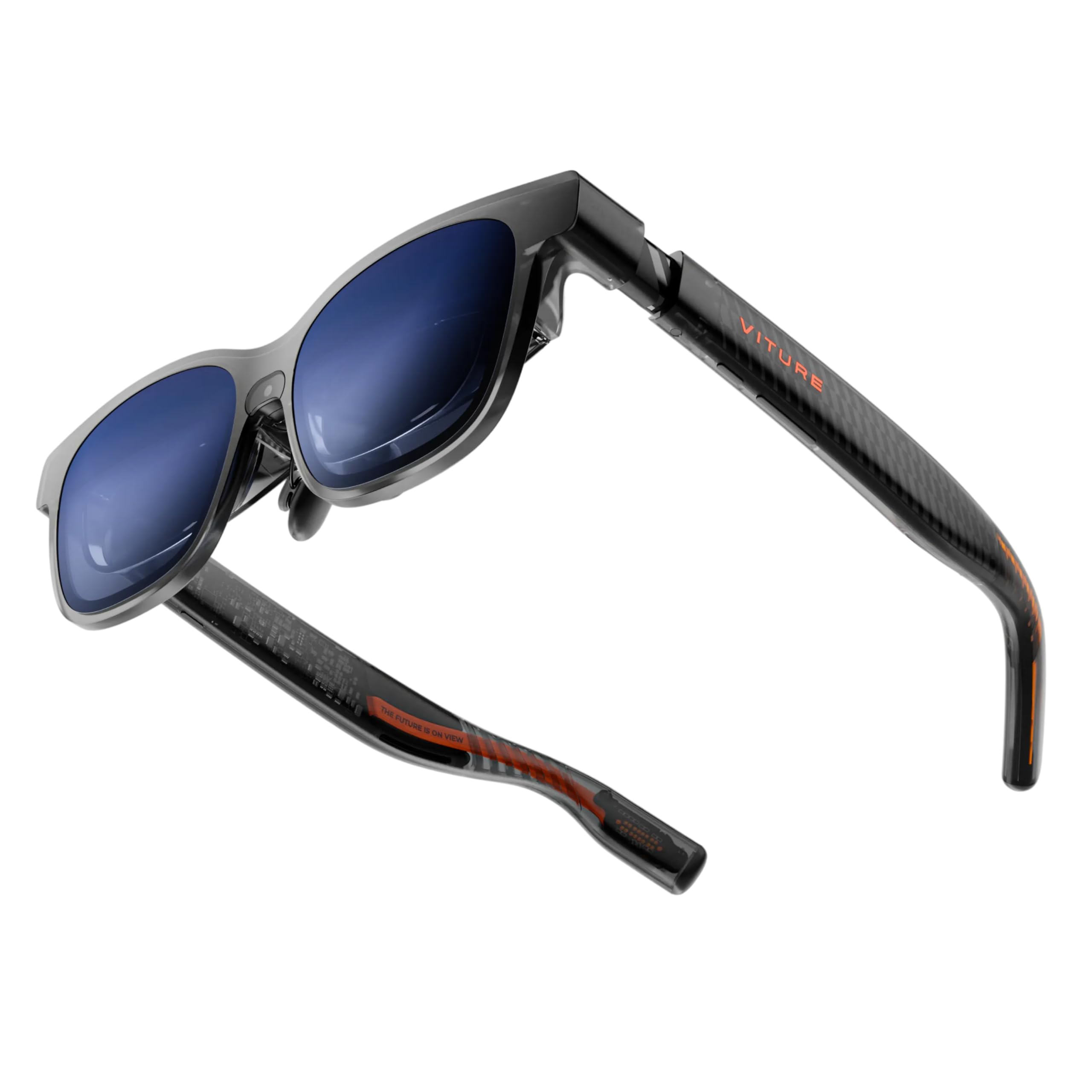
The VITURE Luma Pro offers the sharpest XR display in its class with a proprietary 1200p resolution that makes text and fine details in movies look incredibly crisp. The 52° FOV creates a convincing 152-inch virtual screen, and the 1000 nits of brightness handle most environments well. Its electrochromic film darkens the lenses at a single tap, helping you focus on the movie.
Harman audio engineers have tuned the speakers for a fuller, richer sound profile with deeper bass and clearer highs. The built-in myopia adjustment up to -4.0D is a major plus. Users love the plug-and-play compatibility with iPhones, Androids, and the Steam Deck, making it a versatile choice for a personal cinema on the go. The SpaceWalker app adds a real-time 2D-to-3D conversion feature.
A common complaint is that the bottom of the screen can be slightly cut off depending on your face shape. The software for multi-screen setup can take some getting used to. For buyers who want top-tier sharpness and great audio at a more accessible price point, the Luma Pro is a compelling option.
Why it’s great
- Ultra-sharp 1200p display provides excellent clarity
- Harman audio offers a rich, immersive sound stage
- Built-in myopia adjustment is convenient for many users
Good to know
- Screen edges may cut off depending on individual face shape
- SpaceWalker software has a slight learning curve
5. INAIR 2 Pro

The INAIR 2 Pro stands out with its dual-eye 3840×1080 resolution, which provides exceptional sharpness with no edge blur, making it ideal for both movie watching and multi-screen productivity. Its AI spatial rendering engine can convert 2D images to stereoscopic 3D, turning your photo library into a 3D gallery. The advanced electrochromic technology allows you to adjust transparency from near-total blackout to 16% light transmission.
Weighing only 80 grams, it’s designed for comfort with adjustable temple angles and two sizes of nose pads. The Swiss SGS A+ 2.0 certification ensures low visual fatigue during extended use. The Privacy Mode protects your screen from prying eyes in public spaces, a useful feature for travel. Users find the triple-screen capability via INAIR Space software useful for productivity.
Setup can be complex, with some users reporting a lengthy initial configuration. The field of view is narrower than some competitors, which may feel less immersive for purely cinematic use. The multi-monitor functionality has also been reported to have issues with certain Windows configurations. It’s a great device for a mix of work and entertainment.
Why it’s great
- High dual-eye resolution eliminates edge blur
- Versatile electrochromic adjustment for any lighting
- Low visual fatigue certification for long sessions
Good to know
- Setup process can be time-consuming
- Narrower FOV feels less immersive for films
6. Rokid AR Spatial
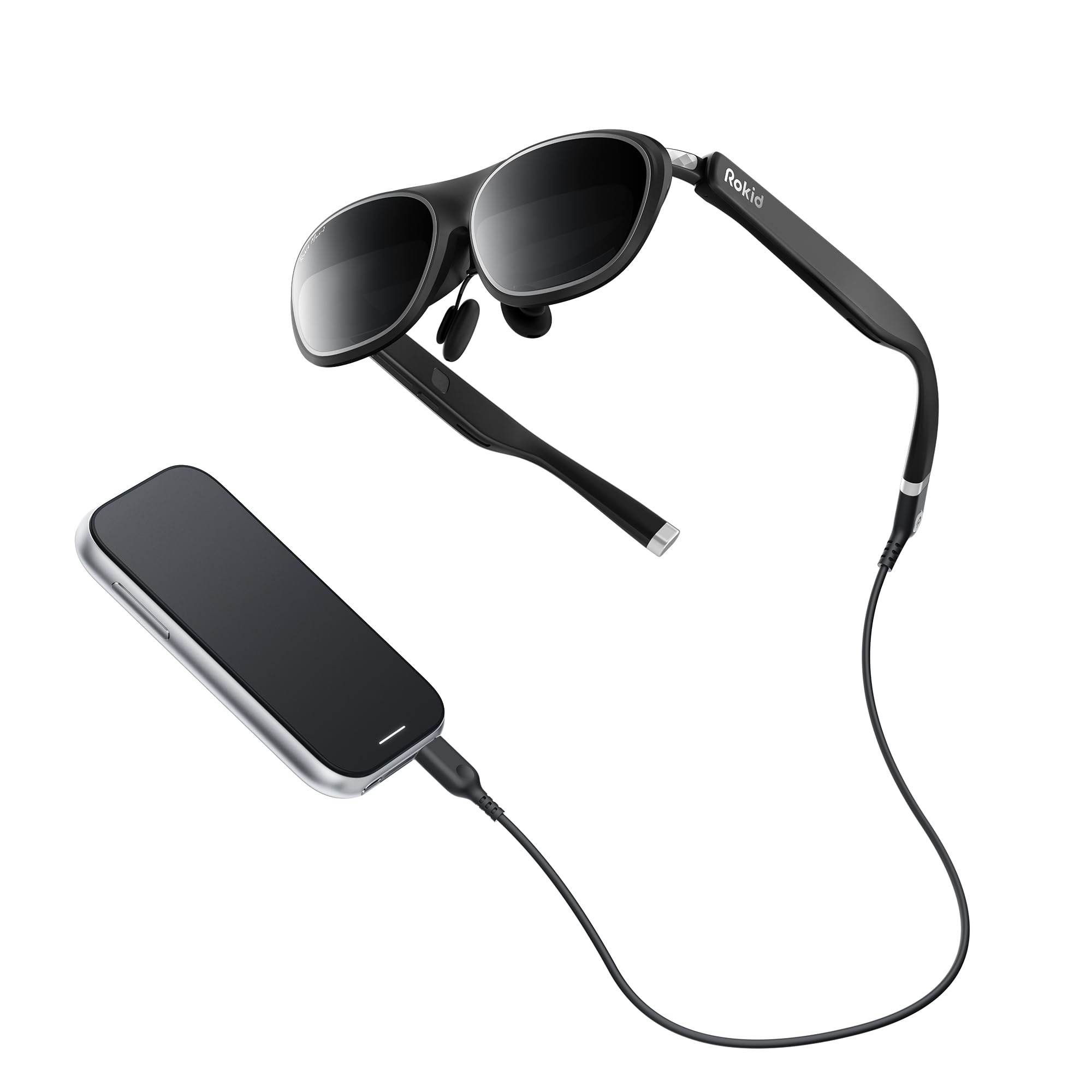
The Rokid AR Spatial bundle comes with the Max 2 glasses and the Station 2 spatial computer, creating an all-in-one system that doesn’t depend on your phone’s battery for operation. The 5000mAh battery in the Station 2 provides around 3.5 hours of runtime, perfect for watching a feature-length film. The Max 2 glasses offer a 50% larger micro-OLED display than the previous generation, with a 120Hz refresh rate.
It supports up to 600 degrees of myopia adjustment and auto IPD adjustment when paired with the Station 2. The 3-screen multitasking feature lets you stream a movie while checking social media. Users appreciate the exclusive Rokid ecosystem that provides access to Netflix, YouTube, and Prime Video directly from the Station 2.
However, the software on the Station 2 has been criticized for being unintuitive and buggy, with some apps like Netflix only supporting 0DoF mode. The glasses themselves are decent, but the “spatial computer” experience can feel unpolished. For those who want a complete, self-contained package that doesn’t drain their phone, this is a good option.
Why it’s great
- All-in-one system with its own battery and storage
- Up to 600 degrees myopia adjustment
- Direct access to streaming apps via Station 2
Good to know
- Station 2 software can be buggy and unintuitive
- Streaming apps may not support full spatial features
7. RayNeo Air 4 Pro
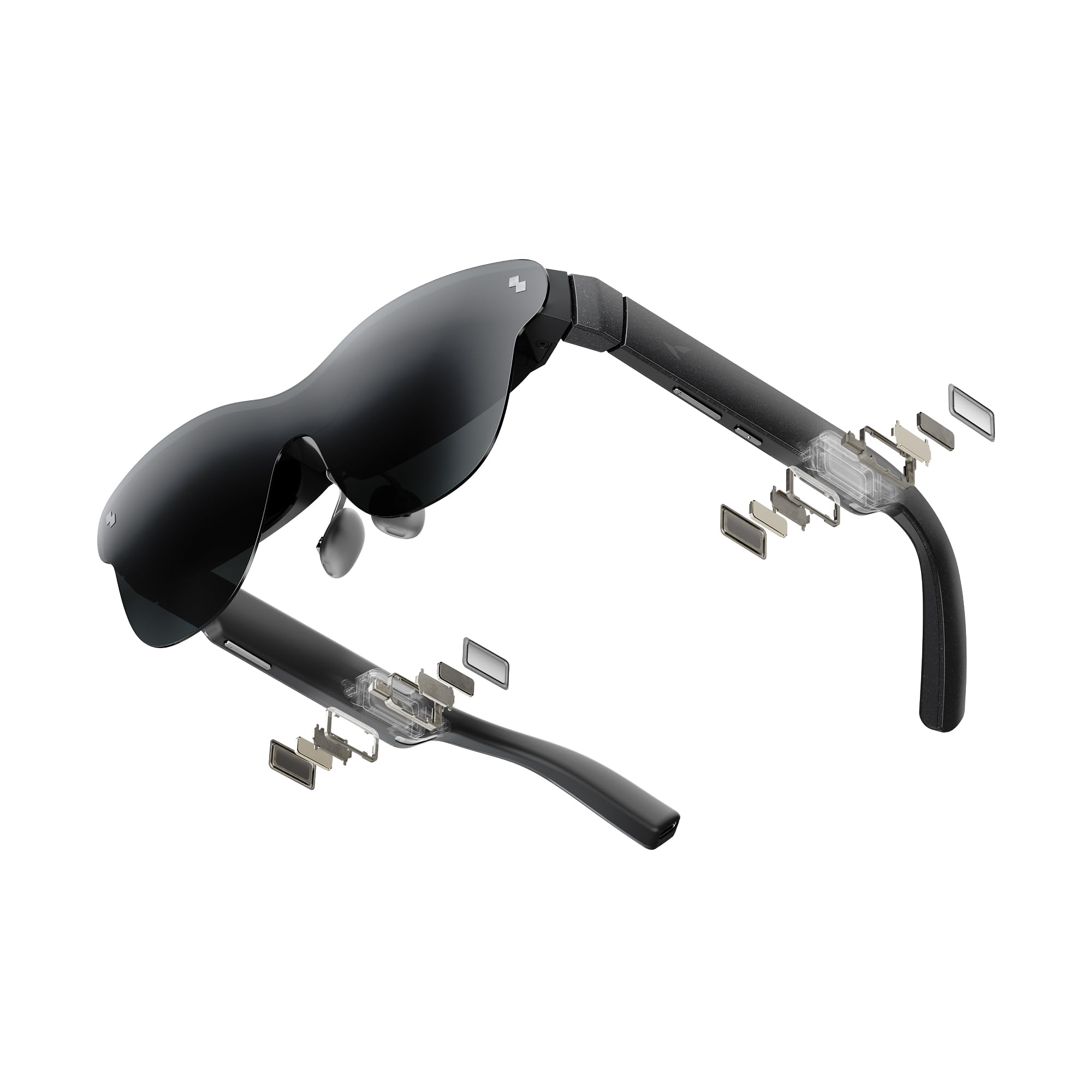
The RayNeo Air 4 Pro is the world’s first AR display with HDR10 certification, delivering over 10 billion colors with deeper contrast and brighter highlights. This makes it a phenomenal choice for enjoying high-dynamic-range movies exactly as the filmmakers intended. The Vision 4000 chip offers AI SDR-to-HDR upscaling, improving the quality of standard content.
Audio is supplied by Bang & Olufsen with four precision speakers for 360-degree spatial sound. The optional Sound Tube accessory further enhances volume and clarity for a more private experience. Weighing just 76 grams, it is one of the lighter models, and the 9-way fit adjustment helps ensure a clear image across different face shapes.
Some users report that even after adjustment, the full 201-inch screen isn’t always fully visible, with the upper or lower edges cut off. The fixed 0DoF screen means it lacks the spatial anchoring of more expensive competitors. For movie lovers who prioritize HDR picture quality above all else, this is a standout performer.
Why it’s great
- First AR glasses with true HDR10 support
- Excellent Bang & Olufsen spatial audio
- Lightweight design with extensive fit adjustments
Good to know
- Full screen may not be visible for some face shapes
- Lacks native spatial anchoring (0DoF only)
8. Rokid Max 2
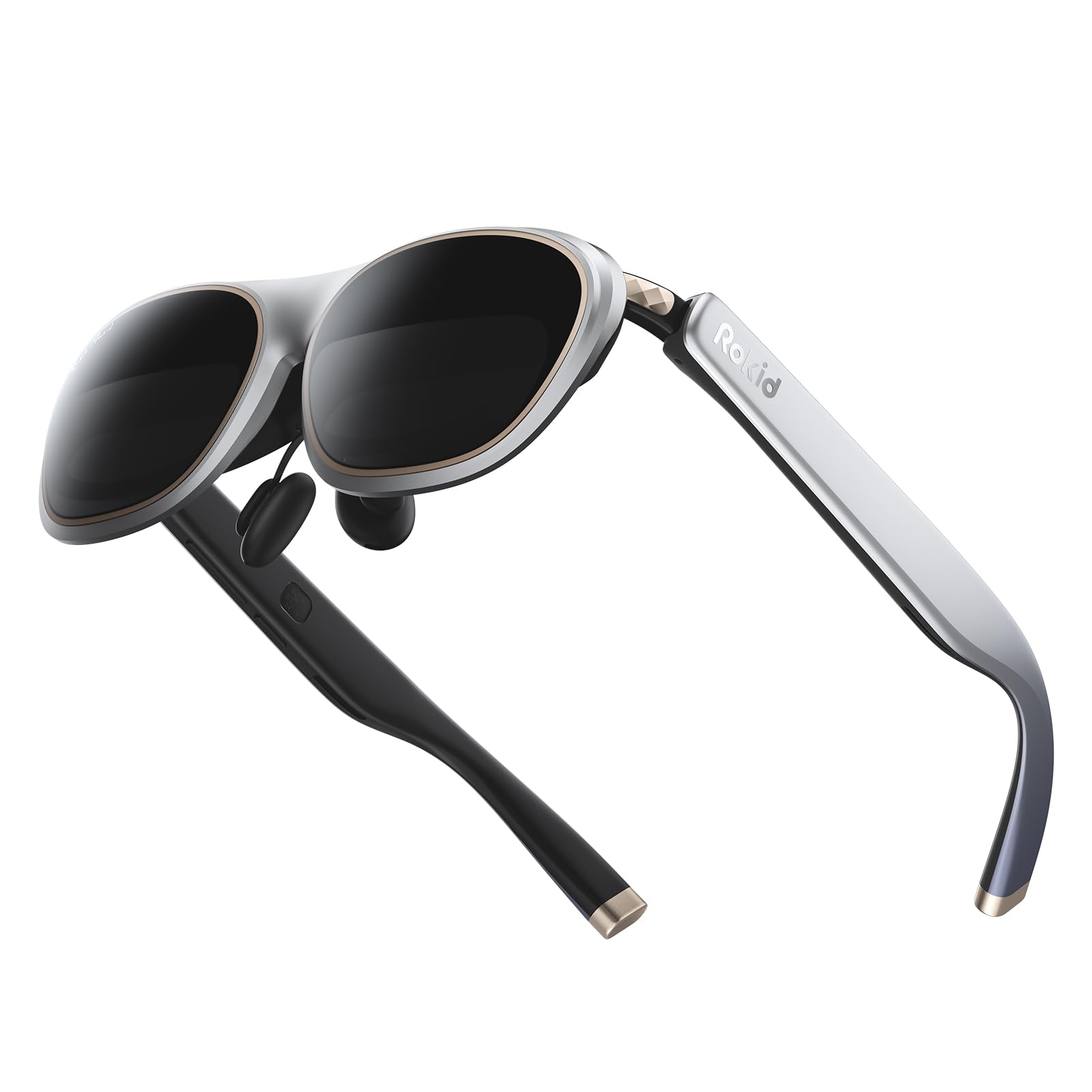
The Rokid Max 2 offers a generous 50° field of view and a 215-inch virtual screen, making it a solid option for cinema-style viewing. A standout feature is the built-in myopia adjustment dial that supports up to 600 degrees of correction, allowing a large number of prescription users to see the screen clearly without additional inserts. The 600 nits of brightness ensure a vivid picture indoors.
The included airy cushioning nose pads are designed to prevent slipping and reduce pressure fatigue, which is a thoughtful design touch for longer movie sessions. The glasses weigh only 75 grams, contributing to overall comfort. It features a 120Hz refresh rate for smooth, lag-free video playback.
However, the design of the blackout lenses can cause internal reflections in bright rooms, which can be distracting. The see-through lenses are an option but require changing. Some users have reported that the glue on the original light shield can fail over time. For its price point, it delivers a very good personal cinema experience with excellent prescription support.
Why it’s great
- Excellent built-in myopia adjustment up to 600 degrees
- Comfortable airy cushioning nose pads prevent slipping
- Wide 50° FOV for an immersive experience
Good to know
- Blackout lenses can cause internal reflections in bright light
- Light shield may be prone to damage over time
9. Lenovo Legion Glasses Gen 2

The Lenovo Legion Glasses Gen 2 is the most budget-friendly entry point into personal movie viewing. It packs a micro-OLED display with a 120Hz refresh rate, delivering vibrant colors and smooth motion at an entry-level price. It is incredibly lightweight at only 65 grams, making it one of the most comfortable models for long-term wear.
Setup is truly plug-and-play—just connect it to any full-function USB-C device with DP-Alt mode, and you have an instant personal monitor. It comes with a prescription lens frame, which is a nice inclusion for those who need it. The carry case makes it easy to pack for travel.
The main compromise is in the fit and overall viewing experience. Users have reported that the nose pads can be difficult to adjust, and the screen can appear small with the top and bottom cut off for some face shapes. It also cannot be comfortably worn over standard prescription glasses. For a casual, budget-friendly way to watch movies on a personal screen, it offers good value.
Why it’s great
- Very lightweight and comfortable for long sessions
- Affordable entry into micro-OLED personal viewing
- Includes a prescription lens frame
Good to know
- Screen can be partially cut off depending on face shape
- Nose pads are difficult to adjust properly
FAQ
Can I watch Netflix or Hulu on AR glasses?
How long can I wear these for a movie?
Will these work with my iPhone or Android phone?
Final Thoughts: The Verdict
For most users, the ar glasses for movies winner is the XREAL 1S because it combines a massive virtual screen, rock-solid native 3DoF tracking, and brilliant Bose audio into a polished, immersive package. If you want the absolute widest field of view and sharpest optics, grab the XREAL One Pro. And for maximum brightness in any light condition with advanced spatial features, nothing beats the VITURE Luma Ultra.