
Our readers keep the lights on and the weekend projects moving. As an Amazon Associate, I earn from qualifying purchases.
Jumping from singing in the shower to recording your first vocal track feels like a leap, but the wrong microphone makes that landing harder than it needs to be. A thin, muddy, or feedback-prone microphone kills confidence fast, turning what should be fun into a frustrating battle with bad sound. The best beginner microphones for singing share one thing: they simplify the path to a clear, present vocal tone so you can focus on performing, not fixing.
I’m Rikta — the co-founder and writer behind FitlyFast. This guide is built from hours of cross-referencing frequency response charts, polar pattern specs, and real user feedback to separate the mics that actually deliver broadcast-quality or stage-ready vocals from the ones that just look the part.
Whether you are setting up a home studio, rehearsing for open mic night, or recording covers for social media, picking the right beginner microphone for singing determines how much of your natural voice the audience actually hears.
How To Choose The Best Beginner Microphone For Singing
Three decisions define the right microphone for a new vocalist: capsule type, polar pattern, and connectivity. Nail these, and you skip the trial-and-error phase entirely.
Dynamic vs Condenser Capsules
Dynamic mics are rugged, handle high sound pressure levels (SPL) without distortion, and naturally reject background noise — ideal for live singing or untreated rooms. Condenser mics are more sensitive, capture subtle detail and airy highs, but require phantom power and a quiet recording space. If your room has echoes or you sing close to the mic, start with a dynamic.
Polar Pattern Matters More Than Brand
A cardioid polar pattern picks up sound from the front and rejects everything behind and to the sides. This single feature prevents feedback on stage and keeps room reverb out of your vocal track. Super cardioid patterns offer even tighter focus but require more precise mic placement. Avoid omnidirectional mics for singing — they capture the whole room, which sounds amateur.
XLR vs USB Connectivity
XLR mics connect to an audio interface or mixer, delivering cleaner signal paths and the option to upgrade preamps later. USB mics plug directly into a computer — simpler setup, no interface needed, but no upgrade path. For a beginner who may want to grow, an XLR mic with a budget interface like a Focusrite Scarlett is the more future-proof choice.
Quick Comparison
On smaller screens, swipe sideways to see the full table.
| Model | Category | Best For | Key Spec | Amazon |
|---|---|---|---|---|
| Sennheiser XS 1 | Dynamic XLR | Live stage & rehearsal | Cardioid dynamic, silent mute switch | Amazon |
| Mackie EM-89D | Dynamic XLR | Budget karaoke & vocals | Cardioid dynamic, includes XLR cable | Amazon |
| Zoom ZDM-1 | Dynamic XLR | Podcast-style vocal recording | Super cardioid, large diaphragm | Amazon |
| Shure PGA58 | Dynamic XLR | Reliable all-around vocal | Cardioid dynamic, tailored vocal frequency | Amazon |
| Sennheiser Profile USB | Condenser USB | Plug-and-play home recording | Cardioid condenser, 24-bit/96 kHz | Amazon |
| Audio-Technica AT2020USB-X | Condenser USB | High-detail vocal capture | Cardioid condenser, 24-bit/96 kHz USB-C | Amazon |
| Electro-Voice RE320 | Dynamic XLR | Professional studio vocal | Variable-D dynamic, dual-voicing switch | Amazon |
In‑Depth Reviews
1. Sennheiser Professional Profile USB Condenser

The Sennheiser Profile USB delivers a warm, natural vocal tone without requiring an audio interface. Its cardioid condenser capsule captures the body and presence of the human voice with surprising depth for a plug-and-play unit, and the built-in headphone jack with zero-latency monitoring keeps your performance in sync.
Setup is genuinely one-cable: connect the USB-C to your PC or Mac, and the onboard gain, mix, and volume dials give you hands-on control without software. The metal housing and weighted table stand feel premium, though the stand sits low — a boom arm is a smart add-on for better positioning.
Reviewers consistently note that the Profile USB avoids the tinny, thin sound common in budget USB mics, approaching XLR quality in a fraction of the setup time. The mute button and LED status ring add convenience for live streaming or quick recording sessions.
Why it’s great
- Plug-and-play simplicity with USB-C connectivity
- Warm, natural vocal presence with zero-latency monitoring
- Solid metal build with intuitive onboard controls
Good to know
- Included table stand is low; a boom arm is recommended
- Condenser capsule picks up room noise — best in quiet spaces
2. Audio-Technica AT2020USB-X Cardioid Condenser

The AT2020USB-X takes the legendary AT2020 studio sound and wraps it in a USB package with a 24-bit/96 kHz AD converter. The result is exceptionally clear, natural sound reproduction that rivals entry-level XLR setups. The cardioid polar pattern minimizes background noise, though it remains a sensitive condenser — it will capture your space, so treat your recording area.
A soft-touch capacitive mute button and a two-state LED indicator (blue for active, red for muted) add polished functionality. The custom desk stand and included USB-C cable with USB-A adapter make it ready to use straight out of the box on both PC and Mac.
Professional engineers in the reviews praise its vocal and instrument capture, noting it works even with Android tablets as an audio interface. The extreme sensitivity is a double-edged sword: excellent detail retrieval, but fans, AC vents, and PC hum will register without software filtering like Krisp or RTX Voice.
Why it’s great
- Professional-grade 24-bit/96 kHz audio resolution
- Touch mute with clear red/blue LED indicator
- Includes desk stand and USB-C adapter for broad compatibility
Good to know
- High sensitivity picks up ambient room noise easily
- LED light stays on when PC is off
3. Electro-Voice RE320 Large Diaphragm Dynamic

The Electro-Voice RE320 is a professional-grade dynamic microphone that delivers exceptionally low noise and a pleasing, natural tonal balance. Its Variable-D design minimizes positional and off-axis tonal shifts, so you move freely without your sound changing. The dual-voicing switch lets you toggle between two response curves — one optimized for vocals, another for instruments.
This mic requires an XLR audio interface with strong preamp gain (or a CloudLifter activator) because it is gain-hungry. Owners pair it with interfaces like the Audient id4 or SSL 2+ MkII. The integrated humbucking coil and pop filters deliver virtually noiseless performance, and the all-metal build feels built for decades of use.
Reviewers upgrading from USB mics report a dramatic drop in noise floor and a significant improvement in clarity. It is brighter and more balanced than the classic EV RE-20, making it a preferred choice for vocalists who want detail without the proximity effect build-up common in other dynamics.
Why it’s great
- Variable-D design eliminates tonal shifts with movement
- Dual-voicing switch for vocal or instrument tuning
- Exceptionally low noise floor and rugged build
Good to know
- Needs significant preamp gain — pair with a CloudLifter if using budget interfaces
- Sensitive to touch and desk vibrations despite internal shock mount
4. Sennheiser XS 1 Handheld Dynamic

The Sennheiser XS 1 brings German engineering to the entry-level dynamic mic market at a compelling price. Its cardioid polar pattern delivers focused vocal pickup and good rejection of stage bleed, and the silent mute switch is a rare find at this level — perfect for live performers who need quick control without a thump through the PA.
The all-metal body and heavy feel inspire confidence, and the included carry pouch and mic clip add immediate utility. Sound is clear and directional, with reviewers comparing it favorably to the Shure SM58 at a significantly lower investment. It is not as deep-sounding as Sennheiser’s e835, but it is very clear and durable.
This mic shines for karaoke nights, open mic events, and anyone who wants a reliable handheld dynamic that feels indestructible. The fitted pouch means it survives the trip to rehearsal without scratches or dings.
Why it’s great
- Rugged all-metal build with silent on/off switch
- Clear, directional cardioid sound with minimal hiss
- Great value compared to industry-standard dynamics
Good to know
- Sound is less deep than higher-end Sennheiser models
- Requires XLR interface or mixer — no USB option
5. Shure PGA58 Dynamic Vocal Microphone
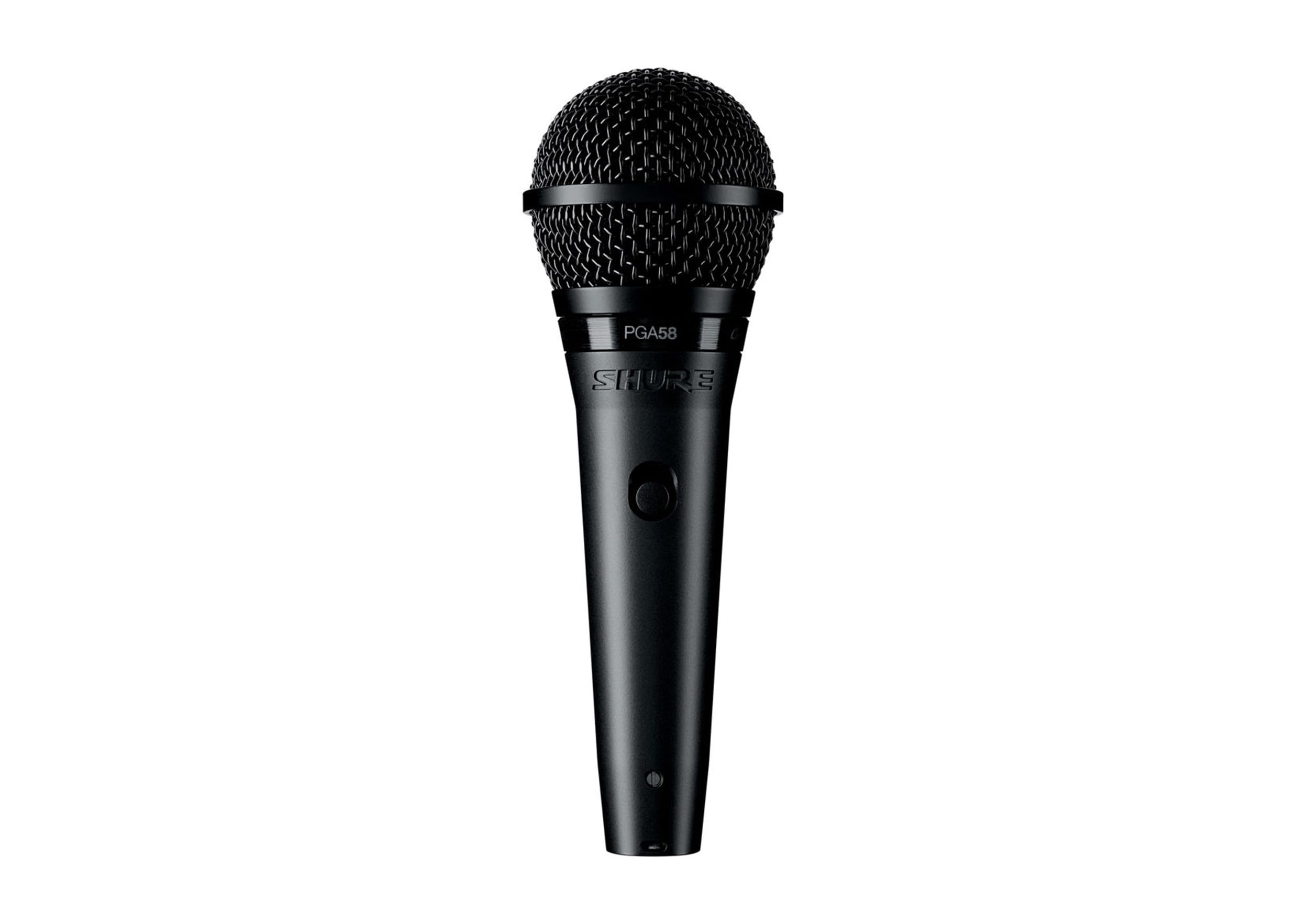
The Shure PGA58 is built on the same engineering DNA as the legendary SM58 but tailored for entry-level budgets. Its cardioid polar pattern rejects off-axis noise well, and the tailored cartridge design emphasizes clarity in the vocal frequency range — so your voice cuts through a live mix without excessive EQ.
Available with XLR-XLR or XLR-QTR cables, the PGA58 includes a stand adapter and zipper pouch. The on/off switch gives discrete control, useful for stage transitions or when paired with vocal processors. The black metallic finish and grille keep visual profile low on stage or in front of a camera.
Reviewers consistently call it a solid, reliable first mic with great projection and clarity for parties, small gigs, and home practice. Some note it runs slightly lower in gain than pricier dynamics, but the build and sound quality at this price point are hard to fault.
Why it’s great
- Tailored frequency response for vocal clarity
- Bundled cable, stand adapter, and pouch
- Trusted Shure build quality at an accessible price
Good to know
- Gain is slightly lower than premium dynamics
- Plastic components in the handle feel less premium than all-metal rivals
6. Mackie EM-89D Dynamic Vocal Microphone
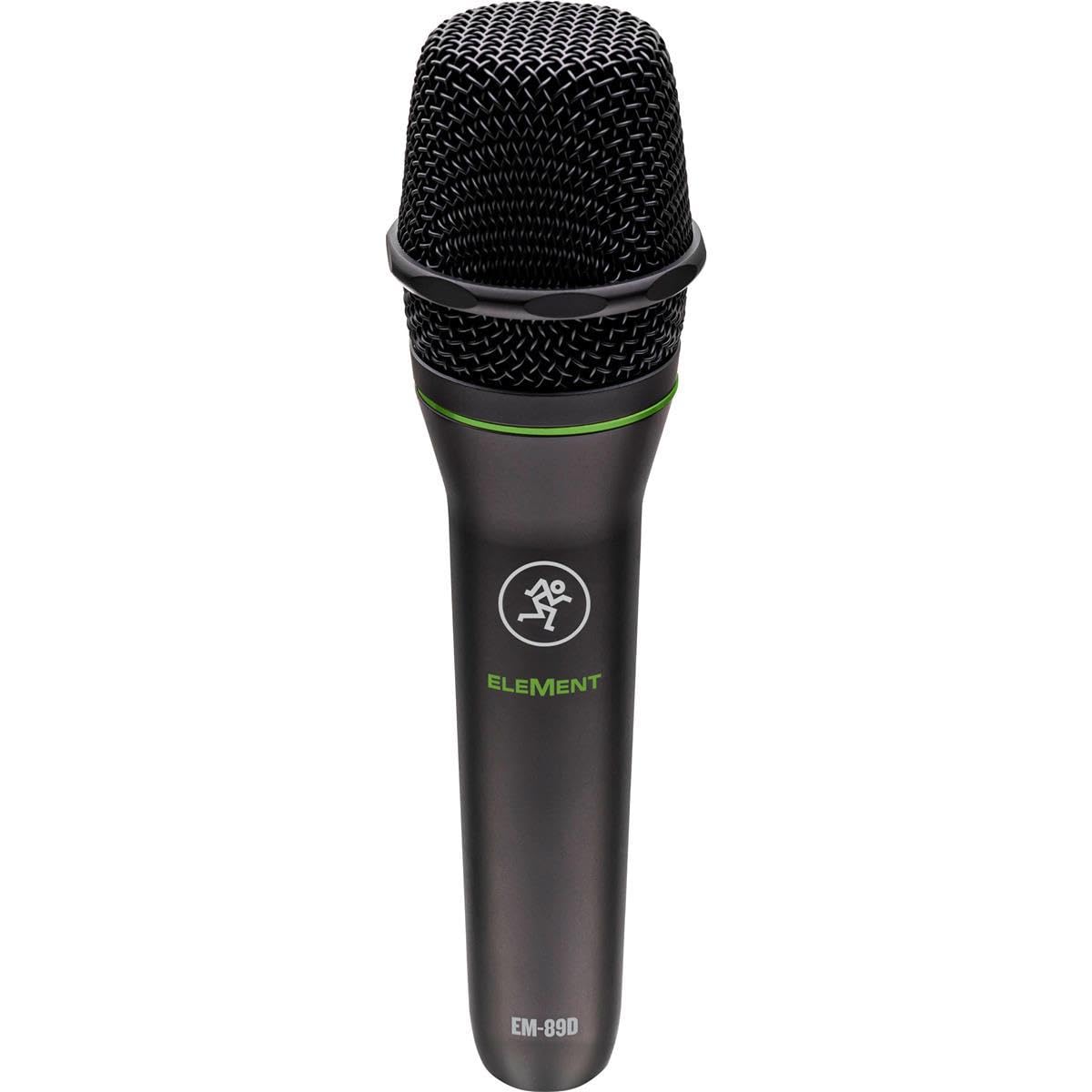
The Mackie EM-89D delivers professional-grade dynamic performance at an entry-level price, with a cardioid polar pattern that effectively rejects ambient noise. Its rugged construction and included XLR cable, mic clip, and zipper pouch make it a complete ready-to-sing package — no extra purchases needed to start.
Reviewers praise its excellent gain and clear vocal reproduction, with some preferring it over the Shure SM58 for karaoke applications. The build feels solid despite the low price, and the sound is clean across speech and singing ranges. The clear visual design is understated, fitting well on any stage or desk.
This mic pairs well with wireless XLR transmitters for more flexible live setups. While the plastic elements in the body keep cost down, the metal grille and internal capsule deliver sound quality that punches above its tier. A smart choice for the singer on a tight budget who still wants reliable XLR performance.
Why it’s great
- Complete kit with XLR cable, clip, and pouch
- Clear vocal reproduction with strong gain
- Works with wireless XLR transmitters for flexibility
Good to know
- Plastic body elements feel less durable than all-metal builds
- Visual design is basic and functional
7. Zoom ZDM-1 Dynamic Microphone

The Zoom ZDM-1 packs a large-diaphragm dynamic capsule into a compact, all-metal body designed for broadcast-quality vocal capture. Its super cardioid polar pattern provides focused pickup and excellent isolation, ideal for talk-singing styles like podcasting, voice-over, and streaming where you sit close to the mic.
The internal shock mount reduces handling noise, but reviewers note that bumping the desk or stand still transmits — a separate shock mount and boom arm are practical upgrades. The sound signature is detailed and darker, bordering on broadcast warmth, and it handles high SPL without distortion.
This mic requires an audio interface with decent preamp gain (no phantom power needed), and the included foam windscreen handles basic plosives with proper technique. For the singer who records spoken-word covers or intimate vocal performances at a desk, the ZDM-1 offers shockingly good value.
Why it’s great
- Large-diaphragm dynamic for broadcast-quality warmth
- Super cardioid pattern for excellent noise rejection
- All-metal body with internal shock mount
Good to know
- Handling noise transmits through desk without external shock mount
- Foam windscreen struggles with strong plosives — angle the mic 45 degrees
FAQ
Do I need an audio interface for a beginner singing microphone?
Is a dynamic or condenser mic better for a beginner singer?
What does cardioid polar pattern mean for a vocal microphone?
Can I use a singing microphone for podcasting as well?
Final Thoughts: The Verdict
For most users, the beginner microphone for singing winner is the Sennheiser Professional Profile USB because it combines broadcast-quality vocal warmth with genuine plug-and-play simplicity, removing the interface barrier while delivering near-XLR sound. If you want the expandability of an XLR system with a rugged stage-ready build, grab the Sennheiser XS 1. And for the aspiring studio vocalist who wants professional-grade detail and dynamic range without a USB compromise, nothing beats the Electro-Voice RE320.