
Our readers keep the lights on and the weekend projects moving. As an Amazon Associate, I earn from qualifying purchases.
The search for a 55-inch TV under the radar is where the real display engineering gets interesting. You are no longer stuck with washed-out blacks and dull colors—the latest budget-tier panels pack Mini-LED backlighting, QLED quantum dots, and high refresh rates that were exclusive to premium sets just two years ago. The trick is knowing which spec sacrifices are worth making and which ones ruin the experience.
I’m Rikta — the co-founder and writer behind FitlyFast. I’ve spent hundreds of hours dissecting panel types, refresh rate standards, local dimming zone counts, and HDR format support to separate the true value picks from the marketing traps in this specific TV category.
This guide covers eight real models that define the current landscape of the 55 inch budget tv market, with an emphasis on native refresh rates, contrast performance, and smart platform responsiveness.
How To Choose The Best 55 Inch Budget TV
The term “budget” in the TV world triggers a reflex: assume poor black levels, narrow viewing angles, and sluggish smart platforms. That assumption is outdated. The current generation of value-priced 55-inch sets has closed the gap significantly, but you still need to prioritize the right specs. Local dimming zone count, native refresh rate, and HDR format support—not marketing terms like “Motion Rate”—are the real indicators of performance. Avoid any set that does not disclose its actual panel refresh rate or local dimming implementation.
Native Refresh Rate vs. Motion Clarity
A 60Hz panel can look smooth for casual streaming, but live sports and fast-paced gaming demand a native 120Hz or higher. Many budget TVs advertise “240Hz Motion Rate” which is simply backlight scanning or frame insertion—not true refresh. Look for the words “native 120Hz” or “native 144Hz” in the technical specifications. The Hisense U7 and Amazon Mini-LED Series both deliver genuine high refresh rates at aggressive price points, making them the top choices for anyone who values fluid motion.
QLED vs. Standard LED: Color Volume
Standard LED panels in the budget tier typically cover about 75-85% of the DCI-P3 color space. QLED (Quantum Dot) technology pushes that past 90%, resulting in more vibrant reds, greens, and blues without the color washout that plagues typical entry-level displays. If you watch HDR content regularly—or simply want a picture that does not look flat—prioritize QLED over a higher peak brightness number. The Roku Plus Series and TCL T7 both use QLED panels for this exact reason.
Smart Platform Responsiveness
The operating system dictates your daily experience more than any other single spec. Roku OS remains the gold standard for simplicity and speed, while Google TV offers deeper customization and better integration with Android devices. Fire TV provides strong Alexa integration but can feel ad-heavy and occasionally laggy on budget hardware. WebOS on LG is polished but can feel dated. Test each platform’s responsiveness by watching app-launch speed reviews rather than trusting spec sheets.
Quick Comparison
On smaller screens, swipe sideways to see the full table.
| Model | Category | Best For | Key Spec | Amazon |
|---|---|---|---|---|
| Hisense U7 Mini-LED | Premium Budget | High-Refresh Gaming & HDR Movies | Native 165Hz, 3000 dimming zones | Amazon |
| LG QNED evo AI | Mid-Range Premium | AI-Enhanced Picture & Filmmaker Mode | Mini-LED, 120Hz native | Amazon |
| Samsung QLED Q8F | Mid-Range | Bright Room Viewing & Sports | 4K 144Hz, 100% Color Volume | Amazon |
| Sony BRAVIA 2 | Mid-Range | PS5 Integration & Color Accuracy | 4K X1 Processor, 60Hz | Amazon |
| Amazon Ember Mini-LED | Premium Value | Gaming & Alexa Smart Home | 144Hz, 512 dimming zones | Amazon |
| TCL T7 Series | Mid-Range | 120Hz Gaming & QLED Color | 120Hz native, QLED | Amazon |
| Roku Plus Series | Value Pick | Ease of Use & Simple Interface | Mini-LED, 60Hz | Amazon |
| Roku Select Series | Budget Entry | First-Time 4K Buyer | QLED, 60Hz | Amazon |
In‑Depth Reviews
1. Hisense 55″ U7 Mini-LED ULED
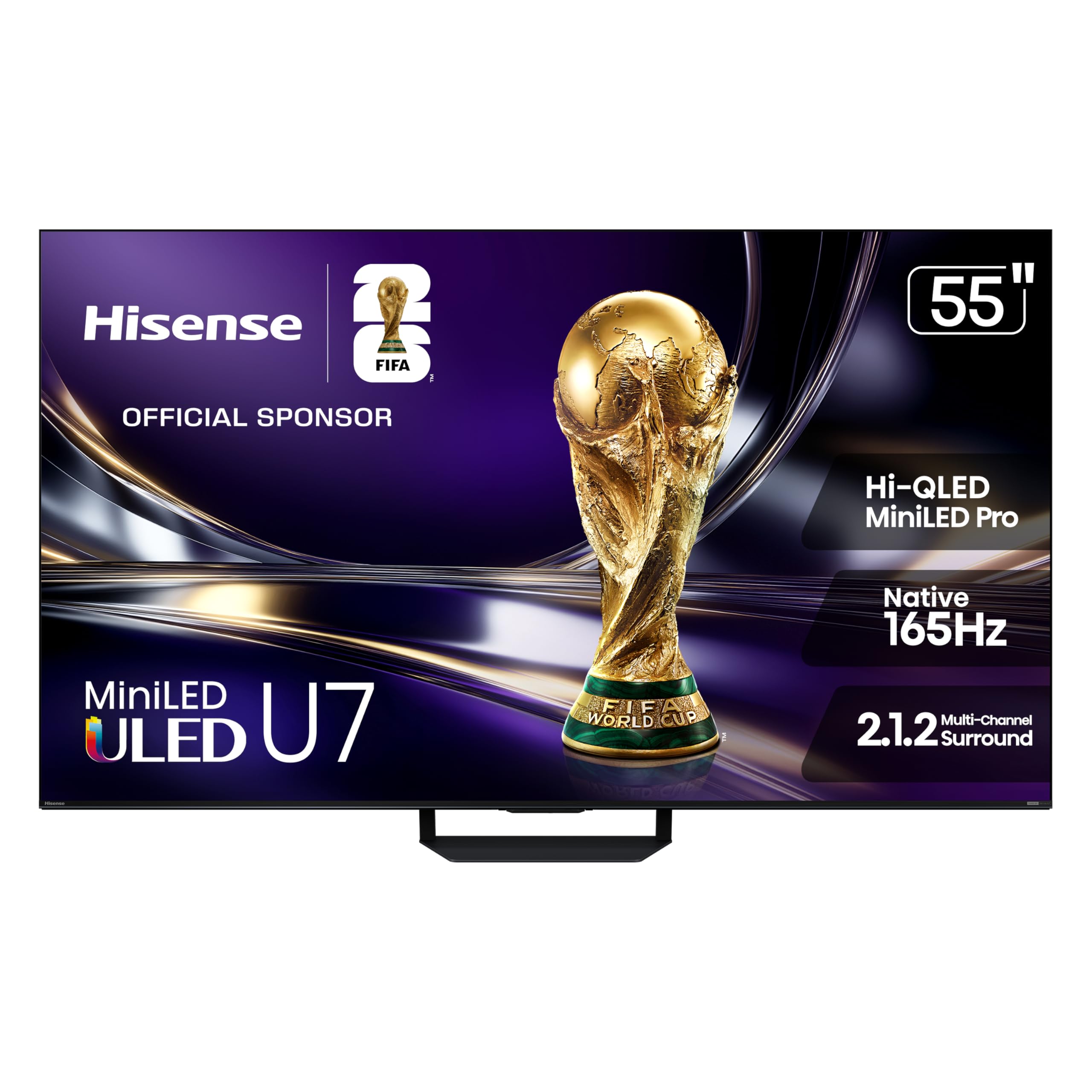
The Hisense U7 is the rare budget-tier TV that does not ask you to compromise on the core visual experience. Its Mini-LED backlight system with up to 3000 local dimming zones delivers black levels that approach OLED territory, while the native 165Hz refresh rate eliminates motion blur in fast-paced gaming and sports content. The Hi-QLED panel covers the full DCI-P3 color gamut, producing saturated reds and deep blues that standard LED panels simply cannot reproduce.
The anti-reflection coating is a standout feature—bright overhead lights and afternoon sun do not wash out the image, making this the best choice for living rooms with windows. The Hi-View AI Engine Pro processor handles upscaling competently, though 1080p content does not look quite as sharp as native 4K material. The 2.1.2 channel speaker system delivers surprising bass for built-in speakers, but Dolby Atmos content truly benefits from an external soundbar.
Google TV integration is seamless, with fast app loading and minimal bloatware. The remote is functional but not premium-feeling. For gamers, the combination of HDMI 2.1, VRR up to 330Hz at lower resolutions, and AMD FreeSync Premium Pro makes this the most gaming-capable set at this price point by a wide margin. The Filmmaker Mode preserves director intent for movie purists without sacrificing brightness.
Why it’s great
- 3000 dimming zones deliver elite black levels
- Native 165Hz refresh with FreeSync Premium Pro
- Excellent anti-glare coating for bright rooms
Good to know
- Built-in sound good but not soundbar-level
- Upscaling of low-resolution content is average
2. LG 55″ QNED evo AI QNED85A

LG’s QNED evo AI takes a different approach than the Hisense—rather than chasing the highest refresh rate, it focuses on AI-driven picture optimization and color accuracy. The Alpha 8 AI Processor Gen 2 analyzes content scene-by-scene and adjusts color, contrast, and sharpness in real time. The result is a natural, refined image that handles skin tones and subtle gradients better than most competitors in this class. The Mini-LED Precision Dimming system, while not as zone-dense as the Hisense, still produces excellent black levels with minimal blooming.
The WebOS smart platform is responsive and well-organized, with support for all major streaming apps and LG Channels offering free content. The remote features a point-and-click cursor that takes some getting used to. Filmmaker Mode is implemented correctly, disabling motion smoothing and maintaining the original frame rate for a true cinematic presentation. The 120Hz native refresh supports VRR up to 144Hz via HDMI 2.1, making it capable for PS5 and Xbox Series X gaming.
HDR performance is strong with Dolby Vision IQ and HDR10 support, though peak brightness caps out around 800 nits—fine for most rooms but not for very bright sunlit spaces. The adjustable stand width is a thoughtful design touch, allowing the TV to fit on narrower furniture. The lack of a dedicated mute button and number pad on the remote is a minor annoyance that some users solve with a universal remote or streaming stick.
Why it’s great
- AI processor delivers highly accurate color and contrast
- Filmmaker Mode preserves original cinematic intent
- Adjustable stand width for flexible placement
Good to know
- Peak brightness lower than Mini-LED competitors
- Remote lacks mute button and number pad
3. Samsung 55″ QLED Q8F

Samsung’s QLED Q8F stakes its claim on color volume—the ability to maintain over a billion shades even at high brightness levels. The Q4 AI Processor does a commendable job upscaling lower-resolution content to near-4K quality, and the AirSlim design makes the TV look almost flush against the wall. The 144Hz VRR support with AMD FreeSync Premium Pro ensures smooth, tear-free gaming, and the Tizen operating system is snappy with minimal app load times.
The free content lineup is a strong selling point—over 2,700 free channels via Samsung TV Plus covers news, sports, and movies without any subscription. The rechargeable solar-powered remote is an eco-friendly touch that eliminates battery waste. HDR performance is good but not class-leading; the set lacks Dolby Vision support, relying instead on HDR10+ which has less content availability. This is a meaningful omission for anyone who watches a lot of Dolby Vision content on Netflix or Disney+.
Black levels are decent but not as deep as Mini-LED competitors due to the edge-lit backlight design. Viewing angles are typical for a VA panel—color shift becomes noticeable beyond about 30 degrees off-center. The remote is overly sensitive, with accidental channel changes reported by several users. For sports and general TV in a bright room, the Q8F is a solid choice, but dim-light movie watching reveals its weaknesses.
Why it’s great
- Excellent color volume at high brightness
- Solar-powered remote and 2,700 free channels
- 144Hz VRR with FreeSync Premium Pro
Good to know
- No Dolby Vision support
- Edge-lit backlight limits black level depth
4. Sony BRAVIA 2 55″

Sony’s BRAVIA 2 is purpose-built for PlayStation 5 owners. Exclusive features like Auto HDR Tone Mapping and Auto Genre Picture Mode communicate directly with the PS5 to optimize picture settings automatically—no manual calibration required. The 4K Processor X1 delivers natural, lifelike color reproduction that Sony is known for, and Motionflow XR handles fast-moving content without introducing the soap-opera effect that plagues lesser motion smoothing systems.
The Google TV interface is clean and customizable, with support for Apple AirPlay 2 and Google Cast built in. The Sony Pictures CORE app includes free movies with purchase, adding immediate value. The panel is a standard LED-backlit 60Hz display, which is a limiting factor for competitive gaming—there is no support for 120Hz or VRR. This makes the BRAVIA 2 best suited for story-driven single-player games rather than twitch shooters or racing sims.
Upscaling is a Sony strong suit; 1080p and even 720p content looks noticeably sharper than on competing sets thanks to the X1’s advanced processing. Energy efficiency is excellent, consuming less than 50% of the power of older LCD TVs. The remote is one of the best in the category with tactile, well-spaced buttons. Some users report occasional WiFi dropouts and freezing that require a power cycle, though this is not universal.
Why it’s great
- Deep PS5 integration with Auto HDR features
- Excellent upscaling of lower-resolution content
- Superior color accuracy and natural image processing
Good to know
- 60Hz panel with no VRR support
- Occasional software stability reported by some users
5. Amazon Ember 55″ Mini-LED Series
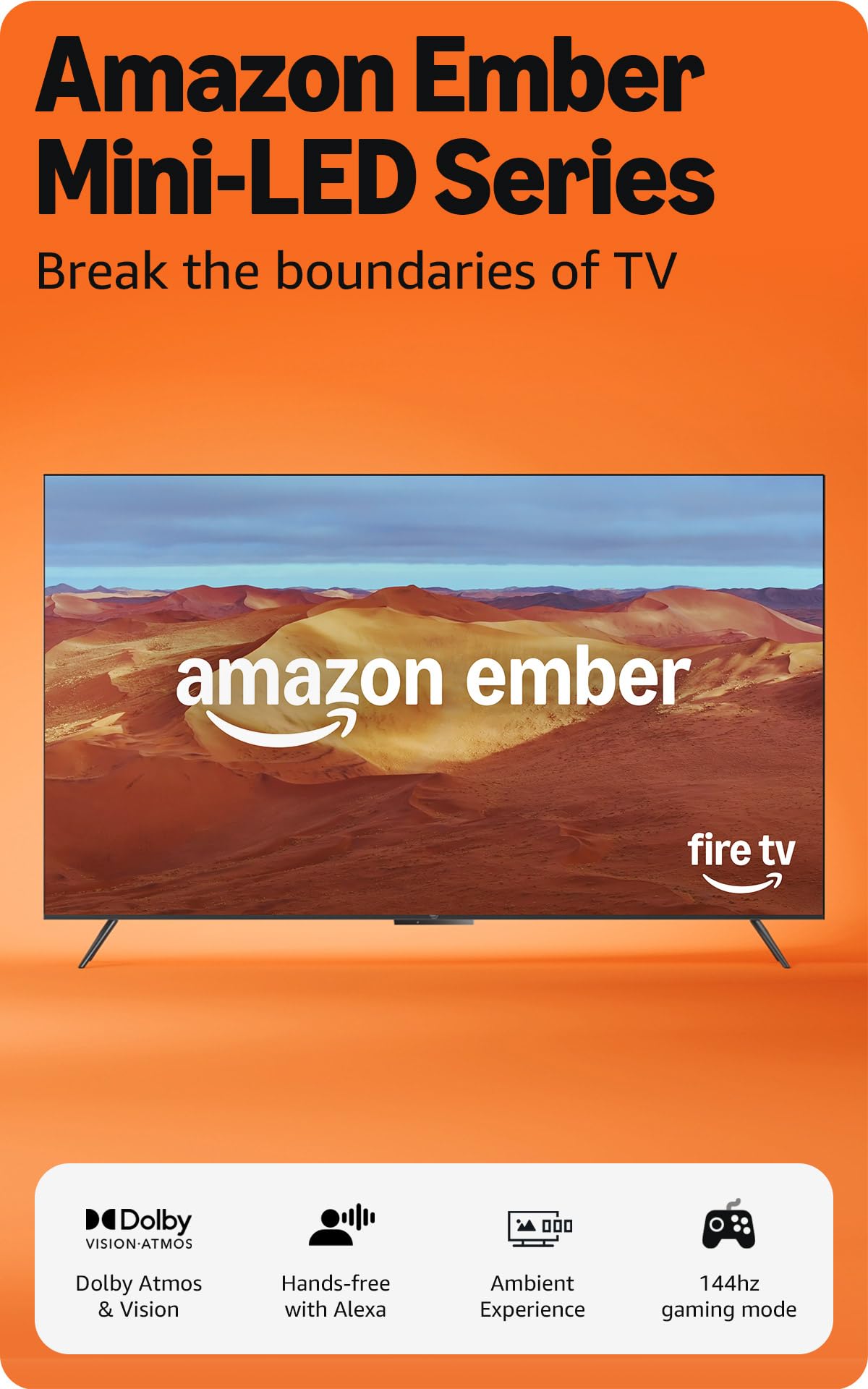
The Amazon Ember Mini-LED Series is the company’s strongest TV effort to date. It combines a QLED panel with 512 local dimming zones—far more than typical budget sets—delivering deep blacks and minimal blooming. The 144Hz native refresh rate with AMD FreeSync Premium Pro certification makes it one of the best gaming TVs in the budget tier, capable of smooth 4K gameplay on PS5, Xbox Series X, and high-end PCs. Dolby Vision IQ and HDR10+ Adaptive support ensures broad HDR compatibility across streaming services.
The Fire TV operating system has been redesigned for 2026, with a cleaner home screen and faster navigation. Alexa+ integration allows natural language voice commands for finding content and controlling smart home devices. The built-in Omnisense sensors wake the TV when you enter the room and adjust picture settings based on ambient lighting. The 2.1 audio system with Dolby Atmos includes a built-in subwoofer, producing the best built-in sound of any TV in this comparison.
Some users report that the Fire TV interface becomes sluggish after several months of use, though this varies by unit. The home screen is still more ad-heavy than Roku or Google TV, which may frustrate users who prefer a cleaner experience. Picture quality is genuinely impressive for the price, approaching OLED-like black levels in dark rooms. For viewers who prioritize gaming performance and smart home integration, this is a compelling package.
Why it’s great
- 144Hz native with FreeSync Premium Pro
- 512 dimming zones for excellent contrast
- Best built-in audio in the budget tier
Good to know
- Fire TV can get sluggish over extended use
- Home screen features prominent advertising
6. TCL T7 Series 55″
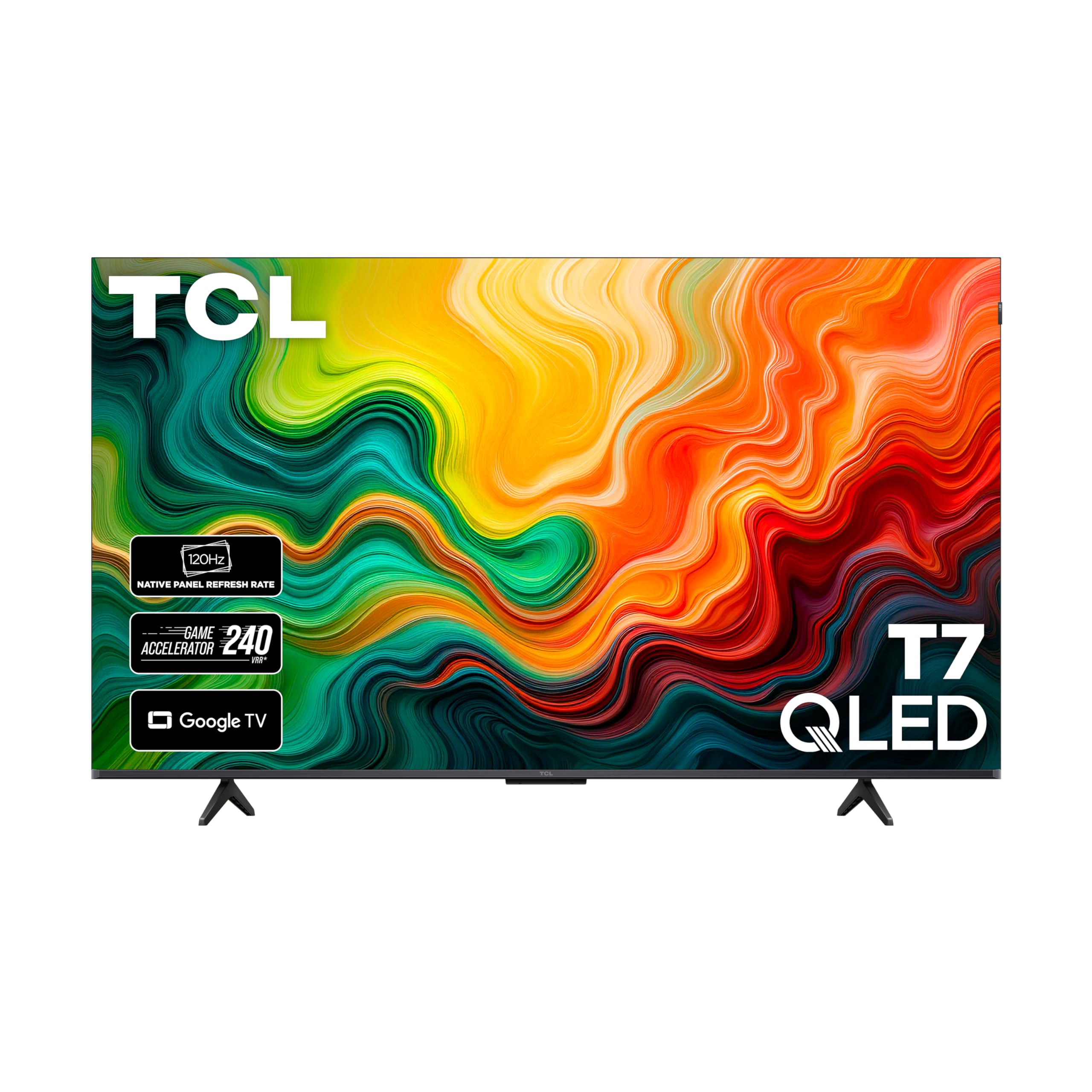
TCL’s T7 Series is an Amazon exclusive that brings 4K QLED color and a native 120Hz panel to a mid-range price. The AIPQ Pro Processor handles intelligent color, contrast, and clarity optimization, and the QLED quantum dot layer covers nearly the entire DCI-P3 color space. Motion Rate 480 with MEMC frame insertion further reduces blur in sports and action content, though this is a software enhancement on top of the hardware 120Hz refresh.
Google TV provides a familiar and efficient smart platform with Chromecast built-in and Apple AirPlay 2 support. The four HDMI inputs include one with eARC, offering good connectivity for multiple devices. Gaming performance is strong at 4K 120Hz with VRR support, and the 240Hz variable mode at 1080p is useful for competitive PC gaming. The bezel-less design gives the TV a clean, modern look that minimizes distraction.
HDR support includes Dolby Vision, HDR10+, HDR10, and HLG, covering all major formats. The Direct LED backlight system is not Mini-LED, so black levels are good but not exceptional—blooming is visible around bright objects in dark scenes. The built-in speakers are adequate for casual viewing but lack bass for immersive content. Some users report issues when using the TV as a PC monitor, particularly with HDMI wake behavior.
Why it’s great
- Native 120Hz panel with excellent motion handling
- Full DCI-P3 QLED color coverage
- Comprehensive HDR format support including Dolby Vision
Good to know
- Standard LED backlight, not Mini-LED
- Speakers lack bass for immersive audio
7. Roku Plus Series 55″
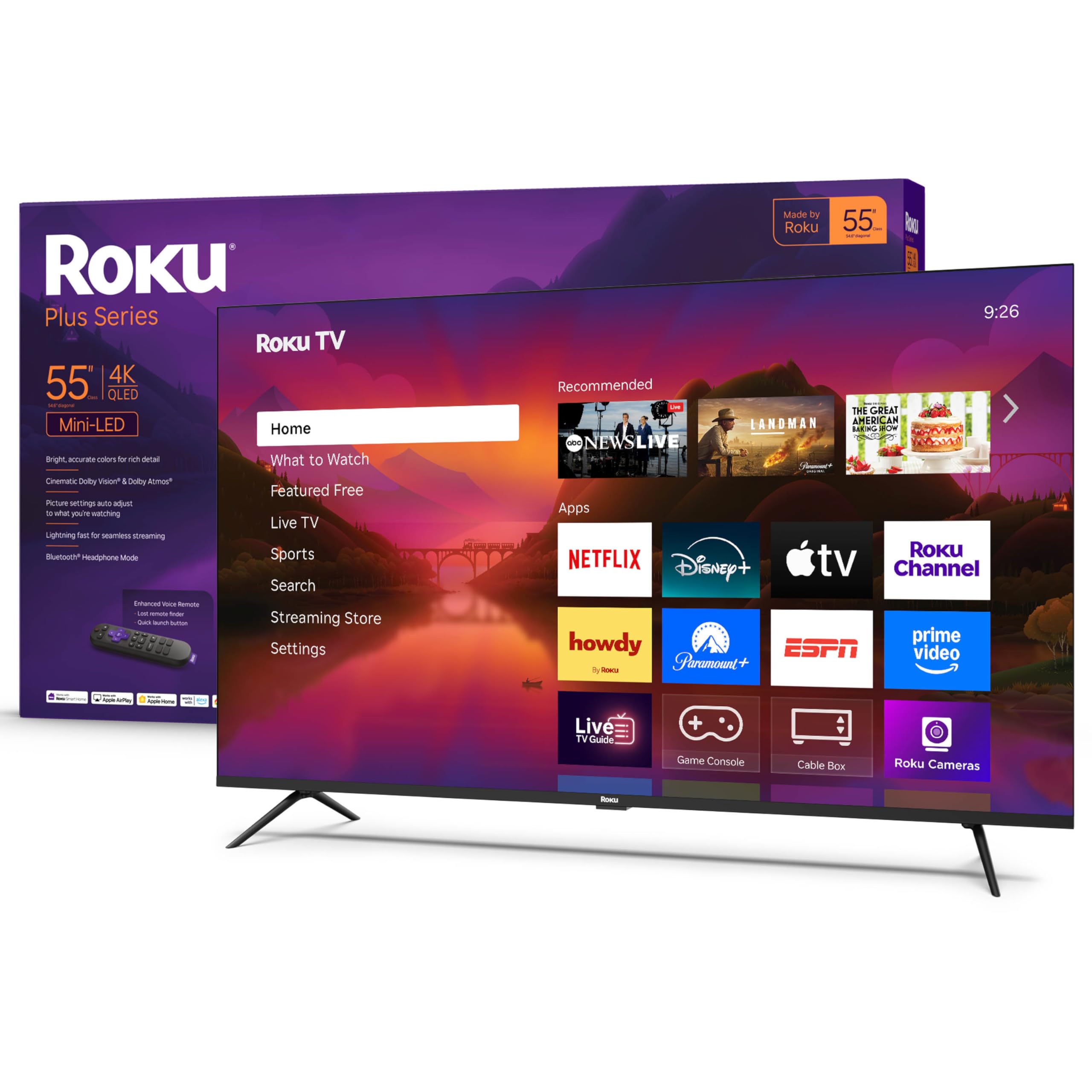
The Roku Plus Series brings Mini-LED backlighting and Dolby Vision support to the entry-level premium segment without complicating the user experience. The QLED panel produces vibrant, accurate colors, and the Mini-LED array improves black levels compared to standard LED sets. Dolby Atmos audio with a built-in subwoofer delivers richer sound than most competitors at this price, creating a cinematic experience from the built-in speakers alone.
Roku OS remains the most intuitive streaming platform on the market—fast, clean, and free of unnecessary clutter. The Enhanced Voice Remote includes a lost remote finder and programmable shortcut buttons, and the Bluetooth Headphone Mode is a genuine convenience for late-night viewing without disturbing others. Roku Smart Picture Max uses AI to clean up incoming signals and automatically select the appropriate picture mode, reducing the need for manual calibration.
The panel is limited to 60Hz, which is fine for the vast majority of streaming content but a dealbreaker for gamers who need higher refresh rates. The interface is responsive during initial use, but some users report increased lag over time as the system accumulates cache data. The metal feet provide a sturdy, premium feel that is unusual at this price point. For living room streaming with a focus on simplicity and audio quality, this is a standout option.
Why it’s great
- Mini-LED + Dolby Vision for strong contrast
- Best-in-class Roku OS simplicity
- Built-in subwoofer for superior sound
Good to know
- 60Hz panel, not suitable for high-refresh gaming
- USB-C only, no standard USB port
8. Roku Select Series 55″
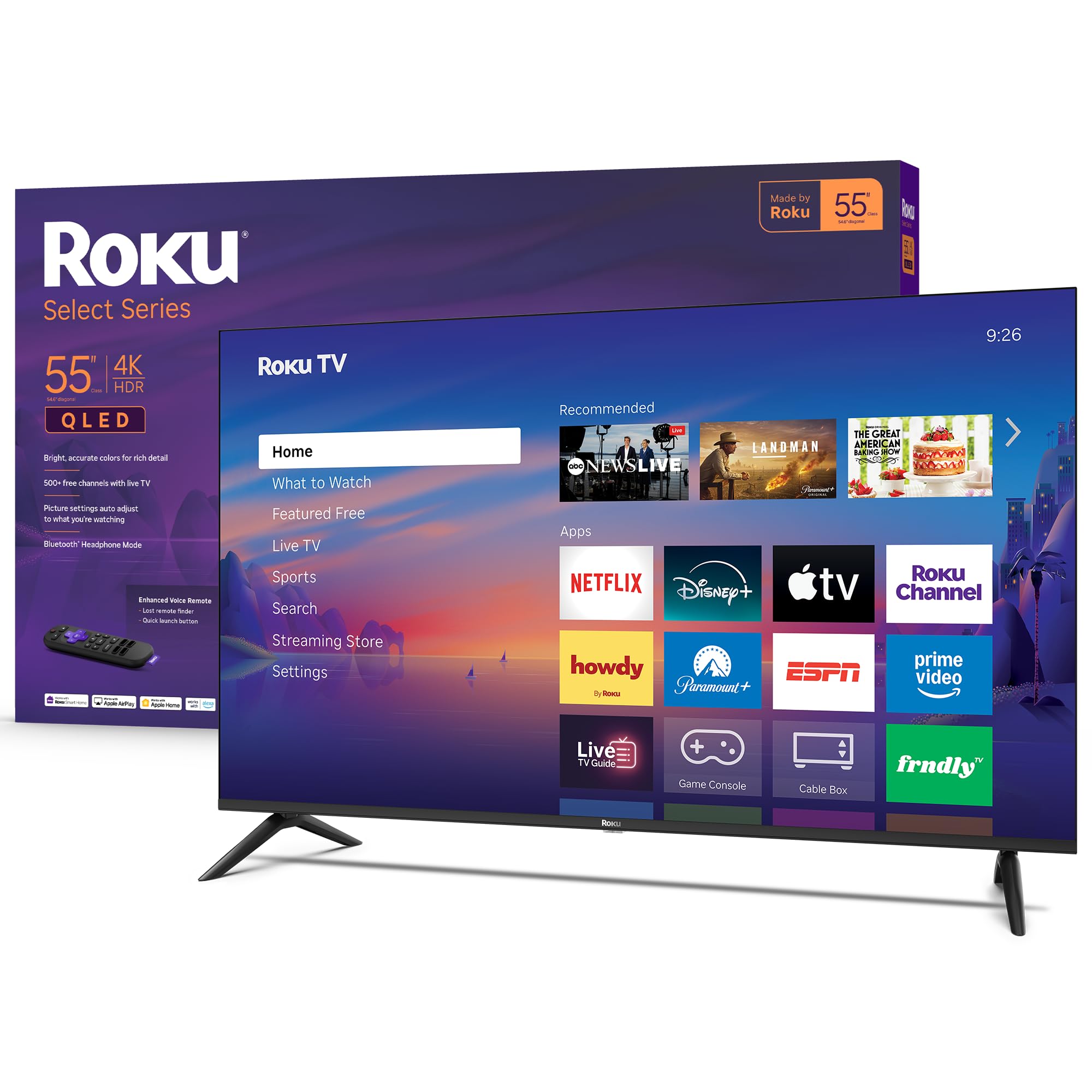
The Roku Select Series is the entry point for anyone wanting 4K QLED quality without stretching their budget. The panel produces bright, accurate colors with HDR10 support, and the Direct LED backlighting is sufficient for most living room environments. The 60Hz refresh rate handles standard TV, movies, and casual streaming without issue, but fast sports and gaming will reveal motion blur that higher-refresh panels eliminate. For the primary use case of watching Netflix, YouTube, and live TV, it performs admirably.
Roku OS is the star here—setup takes minutes, the home screen is clean, and automatic software updates keep the TV current. The base Roku Voice Remote supports voice search and lost remote finder, and Bluetooth Headphone Mode works flawlessly for private listening. The frameless design gives the TV a more expensive look than its price suggests, and the lightweight chassis makes wall mounting a one-person job. Game Mode with VRR support is included, though the 60Hz ceiling limits its utility for competitive gaming.
The built-in speakers are tuned for clear dialogue, which is welcome, but they lack bass and fullness for action movies. HDR performance is limited by the panel’s peak brightness, which struggles to make highlights pop in bright rooms. This is a no-nonsense TV that focuses on getting the basics right—easy setup, good picture for the money, and a platform that works without fuss. It is the ideal choice for a secondary bedroom, guest room, or first apartment.
Why it’s great
- QLED panel with good color at entry-level price
- Simple, fast Roku OS with automatic updates
- Bluetooth Headphone Mode for private listening
Good to know
- 60Hz panel limits motion clarity for sports/gaming
- Built-in speakers lack bass for action content
FAQ
Is a 60Hz TV acceptable for watching sports?
Do budget TVs support Dolby Vision HDR properly?
How important is HDMI 2.1 for a budget gaming TV?
Does a QLED panel make a big difference on a budget TV?
Final Thoughts: The Verdict
For most users, the 55 inch budget tv winner is the Hisense U7 Mini-LED because it delivers genuine high-refresh gaming, deep black levels via thousands of dimming zones, and vibrant QLED color without crossing into premium pricing. If you want the simplest, most intuitive smart platform and strong built-in audio, grab the Roku Plus Series. And for PS5 owners who prioritize color accuracy and seamless console integration, nothing beats the Sony BRAVIA 2.