
Our readers keep the lights on and the weekend projects moving. As an Amazon Associate, I earn from qualifying purchases.
Modern cord-cutting has evolved past grainy rabbit ears and basic digital channels. The next generation of over-the-air broadcast unlocks 4K HDR video, immersive Dolby AC-4 audio, and interactive features—but only if you have the right hardware to decode it.
I’m Rikta — the co-founder and writer behind FitlyFast. This guide is built on hours of cross-referencing customer reports, analyzing spec sheets for HEVC decoding, DRM compatibility, and tuner sensitivity, and understanding how each unit handles the fragmented ATSC 3.0 broadcast landscape across different markets.
Whether you need a simple USB dongle for your smart TV or a whole-home network tuner, finding the right atsc 3.0 tuner comes down to understanding DRM, host device codec support, and your local channel encryption status.
How To Choose The Best ATSC 3.0 Tuner
Not all NextGen TV tuners work the same way. Before buying, you need to check your local broadcast landscape—some channels are encrypted and require internet access, while others are free-to-air. You also need to verify your TV or streaming device supports HEVC video decoding and Dolby AC-4 audio, two mandatory codecs for ATSC 3.0 playback.
Check DRM and Encryption in Your Area
Many major broadcasters encrypt their ATSC 3.0 signals using DRM. If your local stations are encrypted, the tuner must support the specific DRM scheme and have an active internet connection to fetch the decryption keys. Tuners like the ADTH USB require the host device to support Widevine L1, while standalone boxes like the Zinwell handle DRM internally but may still need internet for certain channels.
Understand USB vs. Set-Top Box vs. Network Tuner
A USB tuner plugs directly into your smart TV or streaming stick—it is device-locked and only plays on that single screen. A set-top box connects via HDMI and works independently of your TV’s smart platform. A network tuner connects to your router and streams live TV to multiple devices around the house simultaneously. Your choice depends on how many TVs you want to serve and whether you want a DVR.
Verify Host Device Compatibility
If you choose a USB tuner, your host device must support HEVC hardware decoding and Dolby AC-4 audio pass-through. The Fire TV Cube (3rd Gen) and Onn 4K Pro are known to work well, while many built-in Android TV systems and older Fire Sticks fail. Always run the manufacturer’s compatibility test app before purchasing a USB tuner.
Quick Comparison
On smaller screens, swipe sideways to see the full table.
| Model | Category | Best For | Key Spec | Amazon |
|---|---|---|---|---|
| SiliconDust HDHomeRun Flex Quatro | Network Tuner | Whole-home streaming and DVR | 4 ATSC 1.0 tuners | Amazon |
| Zinwell NextGen TV Box | Set-Top Box | Best picture quality and upscaling | 4K upconversion + Dolby AC-4 | Amazon |
| ADTH NextGen TV Box Gen 2 | Set-Top Box | Standalone DVR with 64GB storage | 64GB built-in storage | Amazon |
| GTMEDIA 4K Next-Gen X1 | Set-Top Box | DRM channel recording | Dual Wi-Fi + Bluetooth 5.0 | Amazon |
| ADTH NextGen TV USB Tuner | USB Dongle | Budget upgrade for compatible devices | USB-A connector | Amazon |
| Zenith DTT901 | Converter Box | Classic ATSC 1.0 for tube TVs | Analog pass-through | Amazon |
| Dish Hopper 3 | Satellite DVR | Dish subscribers needing 16 tuners | 16 satellite tuners | Amazon |
In‑Depth Reviews
1. SiliconDust HDHomeRun Flex Quatro 4 x ATSC Tuners – HDFX-4US

The HDHomeRun Flex Quatro is the gold standard for whole-home OTA streaming. It connects directly to your router via Ethernet, turning your antenna signal into a network-accessible stream that any device on your home network can access—Fire TV, Apple TV, Roku, Xbox, or a laptop. With four ATSC 1.0 tuners, four household members can watch different channels simultaneously, and you can add a USB hard drive for whole-home DVR recording without any per-subscription fees if you use the free DVR software.
Setup takes under ten minutes: plug in the antenna, Ethernet, and power, then run the channel scan. Users report excellent signal sensitivity and fast channel changes, with seamless integration into Plex Pass for those who already run a media server. The companion app provides a clean channel guide with cable-like responsiveness, and the unit supports firmware updates directly through its web interface.
The biggest catch is that this model only handles ATSC 1.0 tuners—if you need ATSC 3.0 reception for 4K broadcasts, you will need the separate HDHomeRun Flex 4K model. Some early ATSC 3.0 DRM issues have been reported, but for pure ATSC 1.0 reliability and multi-room access, this unit remains unmatched in its class.
Why it’s great
- Four independent tuners for simultaneous viewing on multiple devices
- Rock-solid Ethernet connection eliminates Wi-Fi stream drops
- Seamless Plex and Channels DVR integration with no subscription needed
Good to know
- ATSC 1.0 only—requires separate model for NextGen 3.0
- USB port requires paid guide subscription for auto-recording features
- Roku users may experience sporadic audio issues
2. Zinwell NextGen TV Box (ZAT-600B)

The Zinwell ZAT-600B stands out for its intelligent upscaling engine, which takes standard 1080i ATSC 1.0 broadcasts and upconverts them to near-4K resolution with HDR tone-mapping. This means even if your local stations are still broadcasting in HD, you will see visibly sharper images, richer colors, and deeper contrast compared to a standard tuner. It also natively decodes Dolby AC-4 audio, supporting voice enhancement, consistent volume across channels, and even Dolby Atmos immersive sound on compatible systems.
Users report strong reception performance even in challenging signal environments—one reviewer 60 miles from the city behind a mountain successfully pulled in previously unwatchable CBS and ABC channels after switching to this box. The included universal learning remote can control both the TV and sound bar, reducing remote clutter. Setup is straightforward with any standard digital TV antenna, and the on-screen guide is responsive and intuitive.
Reliability appears to vary by unit—some users experienced random screeching noises and reboots, while others report flawless operation. The unit struggled with encrypted ATSC 3.0 channels in testing, failing to decode signals that the Zapperbox M1 handled easily. For viewers in areas with unencrypted NextGen signals who prioritize picture quality, this box delivers the best visual experience available.
Why it’s great
- Intelligent 4K upconversion visibly improves HD broadcasts
- Full Dolby AC-4 decoding with Atmos, voice enhancement, and consistent volume
- Universal learning remote controls TV and sound bar
Good to know
- Quality control inconsistency across units reported
- Failed to play some encrypted ATSC 3.0 channels without internet
- Limited software support and updates expected
3. ADTH NextGen TV Box Gen 2
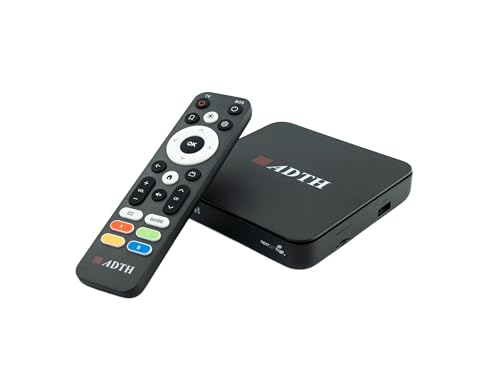
The ADTH NextGen TV Box Gen 2 is a standalone set-top box that combines both ATSC 3.0 and ATSC 1.0 reception with a generous 64GB of internal storage for DVR recording right out of the box. No need to attach a separate USB drive—you can pause live TV, rewind, and schedule recordings immediately. For those who need more space, it also supports external USB flash drives and microSD cards. The unit outputs up to 4K HDR video and supports both Dolby Digital Plus and Dolby AC-4 audio, ensuring compatibility with modern broadcast audio formats.
Customer reports highlight excellent customer support—one reviewer noted that the company personally contacted their broadcaster to investigate channel issues. The tuner performed well in DXing (long-distance reception) tests, pulling in stations that other units could not lock onto. It can decode encrypted channels without requiring an internet connection in some cases, a significant advantage over USB-based solutions that depend entirely on the host device’s DRM support.
However, some users report occasional signal lockups requiring a power cycle, and the channel list mixes ATSC 3.0 and 1.0 stations out of numeric order, creating duplicates. The schedule timing can occasionally be inaccurate. For a cord-cutter who wants a self-contained DVR experience without relying on a smart TV’s codec support, this box is a strong mid-range contender.
Why it’s great
- 64GB onboard storage for DVR with no separate drive needed
- Decodes some encrypted channels without internet connection
- Excellent signal sensitivity for long-distance DX reception
Good to know
- Occasional lockups requiring manual power reset
- Channel list mixes standards out of numeric order with duplicates
- Schedule guide can be slightly inaccurate
4. GTMEDIA 4K Next-Gen ATSC3.0 TV Converter X1
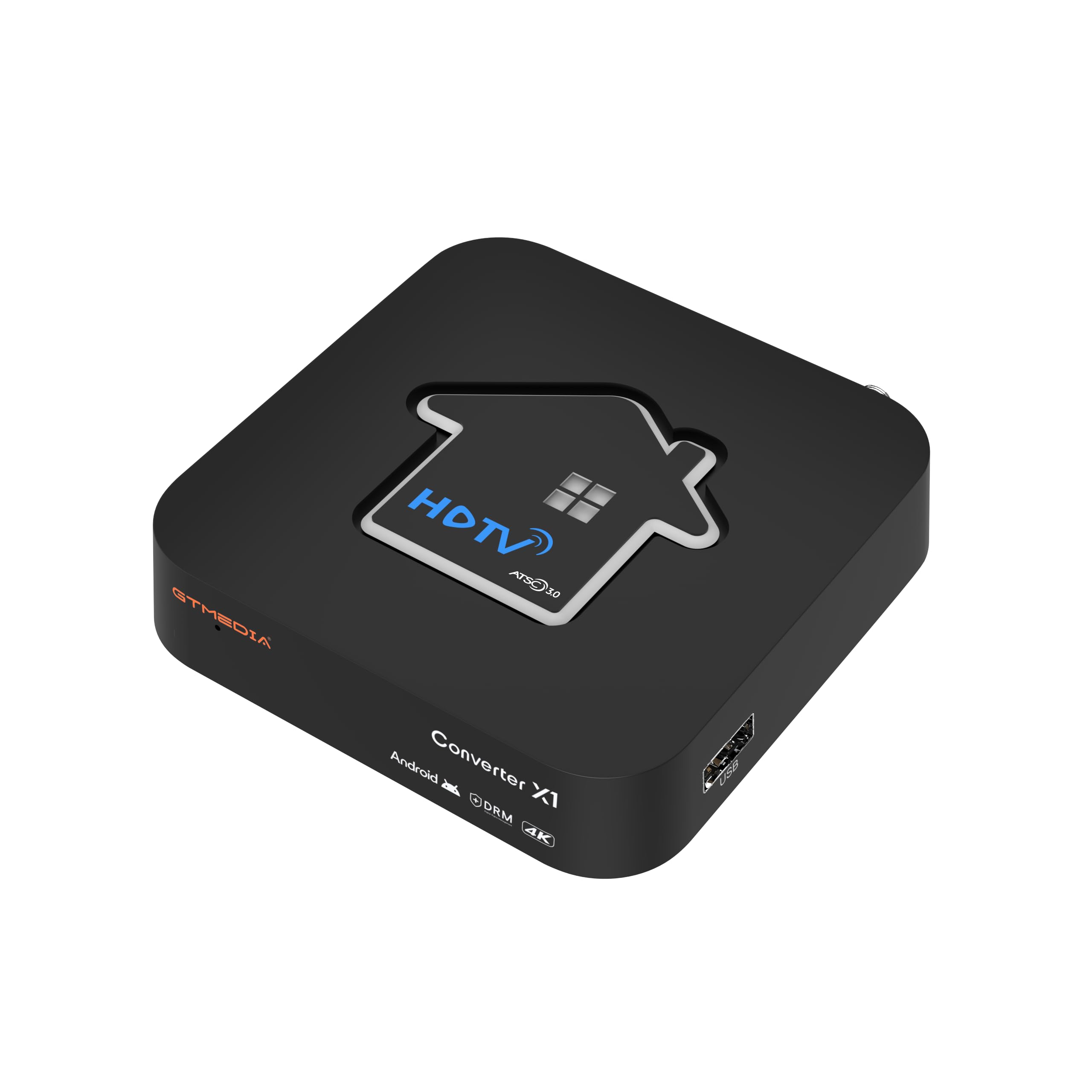
The GTMEDIA X1 packs an impressive spec sheet for its price tier: support for ATSC 3.0 and 1.0, clear QAM cable signals, DRM channel playback, DVR recording, Bluetooth 5.0, and dual-band Wi-Fi. It connects via both HDMI and RCA outputs, making it compatible with older TVs and monitors. The promise of a fully-featured box at a mid-range price point is appealing for budget-conscious cord-cutters looking to dip into NextGen TV without a big upfront investment.
In practice, the experience is mixed. Several users report a buggy user interface—the on-screen keyboard can become stuck, requiring an unplug to recover, and channel scans sometimes crash mid-process. The built-in streaming apps like Netflix and YouTube reportedly do not function properly, and the unit lacks the polish of more established competitors. Scheduled recordings fail for some users, and customer support via email has been described as unresponsive.
When it works, it works adequately for basic live TV viewing and DRM recording. The dual Wi-Fi and Bluetooth are genuinely useful for setup flexibility. However, the instability and software issues make this a risky choice for anyone expecting a reliable daily driver. Consider this only if you are comfortable troubleshooting bugs and have a lenient return policy.
Why it’s great
- Broad format support including clear QAM cable signals
- Bluetooth 5.0 and dual Wi-Fi for flexible setup
- Records DRM-protected ATSC 3.0 channels
Good to know
- Buggy user interface with stuck screens requiring power cycles
- Channel scanning can crash mid-process
- Built-in streaming apps are non-functional for most users
5. ADTH NextGen TV USB Tuner
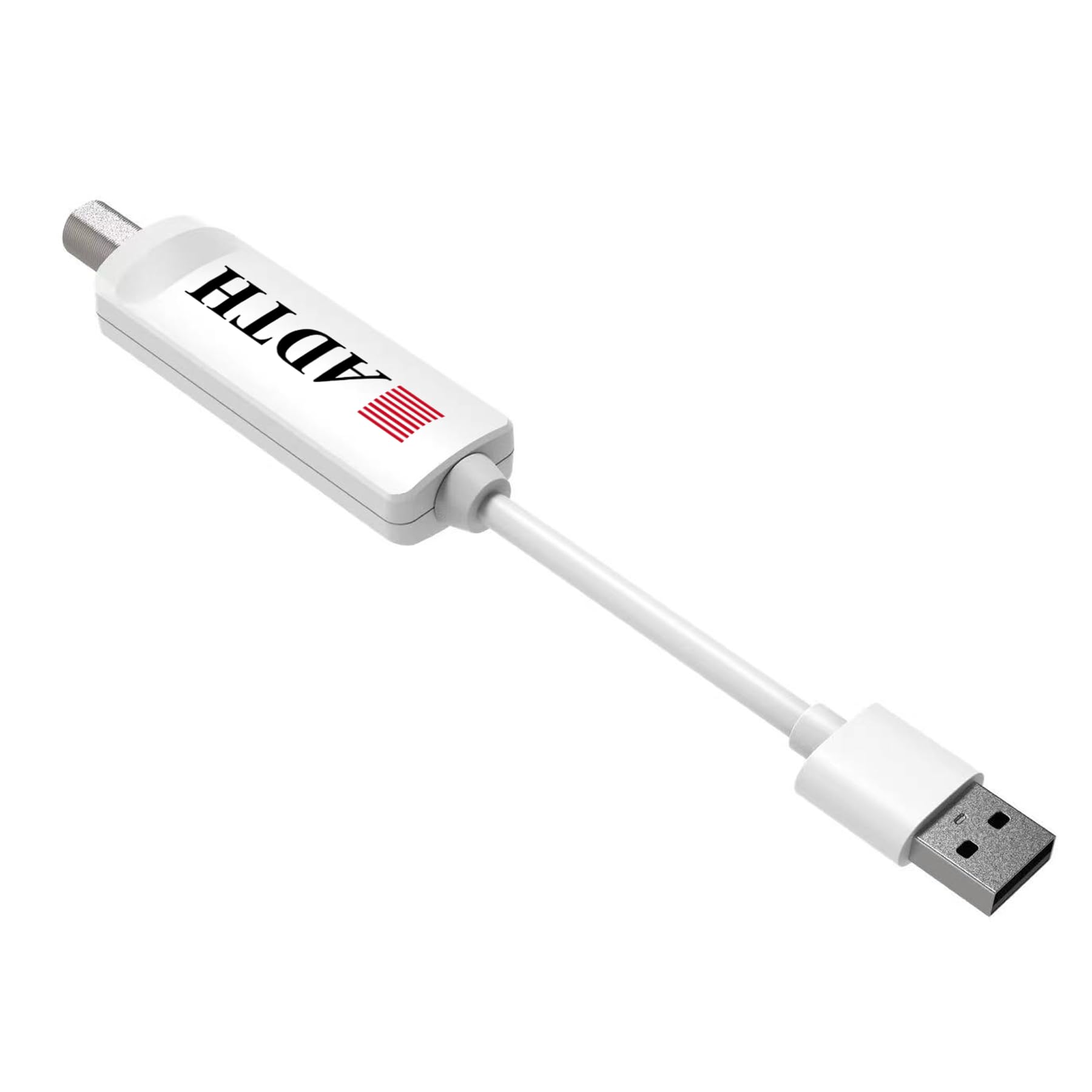
The ADTH USB tuner is the most affordable way to add ATSC 3.0 reception to a compatible smart TV or streaming device. It plugs directly into a USB-A port and requires no external power—your antenna connects to its coaxial input, and the ADTH app handles channel scanning and guide data. In tests across three cities, it demonstrated superior VHF reception even with a small whip antenna, and it successfully decoded DRM-encrypted channels when paired with a host device supporting Widevine L1.
The catch is strict host device dependency. The tuner requires the connected device to support HEVC hardware decoding, Dolby AC-4 audio pass-through, and Widevine L1 DRM. In practice, the Fire TV Cube (3rd Gen) and Onn 4K Pro work reliably, while many Android TV televisions and older Fire Sticks do not. The ADTH app does not integrate with the Fire TV Live Channels interface, and there is no support for Roku, Apple TV, Xbox, or PC. One reviewer tested four devices and only the Onn 4K Pro worked fully.
For users with a verified compatible streaming stick, this is a cost-effective way to unlock NextGen TV on one screen. However, the narrow compatibility window and inability to serve multiple TVs make it a specialized tool rather than a universal solution. Always run the ADTH compatibility test app before purchasing.
Why it’s great
- Lowest-cost entry to ATSC 3.0 for compatible devices
- Superior VHF reception in tests across multiple cities
- Decodes DRM channels with Widevine L1 support
Good to know
- Extremely limited host device compatibility
- No Roku, Apple TV, Xbox, or PC support
- One tuner per device—cannot share across the home
6. Zenith DTT901 Digital TV Tuner Converter Box

The Zenith DTT901 is a relic from the 2009 digital transition era—and that is exactly its appeal for a specific use case. This is an ATSC 1.0-only converter box designed to keep old analog tube televisions receiving digital broadcasts. Its analog pass-through feature allows low-power analog TV stations to display normally, a capability modern tuners have largely abandoned. Users consistently report that this unit outperforms newer converter boxes in signal sensitivity, pulling in weak stations that more expensive modern equipment misses entirely.
The build quality is evidently excellent—many buyers are purchasing replacements for units that lasted over a decade. The on-screen program information and parental control features are basic but functional, and the included remote makes channel surfing easy. Setup is as simple as connecting the antenna to the coaxial input and running the automatic channel scan. The display shows clear, stable pictures on older CRT televisions, handling signal degradation more gracefully than modern digital-only tuners.
Do not buy this for modern ATSC 3.0 or 4K—there is no HDMI output, no USB port, no Wi-Fi, and no program guide with titles. The remote control text is too small to read in dim lighting, and the unit lacks any smart TV integration. If you have an old CRT or a secondary TV in the garage or workshop and just need free broadcast TV, this is the most reliable option available.
Why it’s great
- Exceptional signal sensitivity outperforming modern tuners
- Analog pass-through for low-power analog stations
- Proven long-term reliability lasting over a decade
Good to know
- ATSC 1.0 only—no NextGen TV or 4K support
- No HDMI output, only composite/RF connection
- Remote printing is too small to read in dim light
7. Dish Network Hopper 3 with Sling

The Dish Hopper 3 is an entirely different category—a satellite DVR that requires an active Dish Network subscription. It is included here because cord-cutters sometimes encounter it when searching for tuners, and it is important to understand the distinction. This unit records up to 16 satellite channels simultaneously and stores up to 500 hours of HD content on its 2TB internal hard drive. It supports 4K video output and includes built-in apps for Prime Video, Netflix, and YouTube.
For existing Dish subscribers, the Hopper 3 is a powerful upgrade. The SportsBar mode lets you view four different channels on the same TV simultaneously, and the 16 tuners mean no household conflicts over recording schedules. Setup is straightforward if you already have the required Hybrid 1000.2 LNB and Hybrid Solo Hub—older satellite hardware is not compatible. Many users report that purchasing the box here is cheaper than going through Dish directly.
The major risk with third-party purchases is activation. Several buyers discovered that the unit they received was still registered to the previous owner, and Dish Network refused to activate it due to unpaid PPV bills or unresolved account issues. If the box cannot be activated, it is an expensive paperweight. Only purchase this if you are an existing Dish customer willing to activate through official channels—and verify the unit’s account status before buying.
Why it’s great
- 16 tuners allow massive simultaneous recording capacity
- 2TB internal storage with 500-hour HD capacity
- 4K output and integrated streaming apps
Good to know
- Requires active Dish Network subscription and compatible LNB
- High risk of activation failure with third-party units
- Not an OTA ATSC tuner—only works with Dish satellite service
FAQ
Will any ATSC 3.0 tuner work with my existing TV antenna?
Do I need internet for ATSC 3.0 to work?
Why are some ATSC 3.0 channels black or silent on my USB tuner?
Can I record ATSC 3.0 channels?
Final Thoughts: The Verdict
For most users, the best atsc 3.0 tuner winner is the SiliconDust HDHomeRun Flex Quatro because it provides reliable whole-home ATSC 1.0 streaming with seamless Plex integration and four independent tuners. If you want the best 4K picture quality with intelligent upscaling, grab the Zinwell NextGen TV Box. And for a self-contained DVR experience without depending on a smart TV’s codec support, nothing beats the ADTH NextGen TV Box Gen 2 with its 64GB onboard storage.