
Our readers keep the lights on and the weekend projects moving. As an Amazon Associate, I earn from qualifying purchases.
A backpack that slumps forward after an hour of walking isn’t just uncomfortable — it actively compresses your lumbar discs and pulls your shoulders into a rounded, strained position. The right frame, hip belt, and panel geometry work together to transfer up to 80% of the load off your shoulders and onto your pelvis, keeping your spine in a neutral, supported curve all day.
I’m Rikta — the co-founder and writer behind FitlyFast. I’ve spent hundreds of hours analyzing ergonomic pack designs, studying load-transfer mechanics, and cross-referencing real user feedback on spinal alignment and pressure distribution across dozens of models.
This guide breaks down the seven backpacks that genuinely reduce strain, improve posture, and protect your back during commutes, travel, or daily carry, helping you find the best backpack for back support.
How To Choose The Best Backpack For Back Support
Not every padded panel counts as spinal support. The key is how the pack transfers weight away from your shoulders and upper back. Focus on three factors: a load-bearing hip belt that locks onto your iliac crest, a frame or stays that keep the pack from sagging backward, and a torso length that matches your spine. Beginners often buy by volume or pocket count, but those specs matter less than the chassis that holds the weight.
Panel vs Frame vs Frameless
Foam-panel packs compress against your back and feel soft at first, but they don’t transfer load. Hiking-style internal frames (metal or composite stays) create a rigid bridge between the hip belt and shoulder straps, preventing the pack from pulling your shoulders back. Frameless ultralight packs offer zero support under heavy loads — avoid them if your carry exceeds 10 pounds.
Hip Belt Fit and Torso Length
A functional hip belt wraps around your hip bones, not your waist. If the belt sits above your iliac crest, it won’t transfer weight and the pack will hang from your shoulders. Adjustable torso lengths (found on premium packs) let you match the distance from your C7 vertebra to your iliac crest, keeping the load centered over your hips rather than pulling you off balance.
Shoulder Strap and Sternum Design
Shoulder straps should curve around your trapezius without digging into your armpits or neck. A sternum strap stabilizes the pack laterally, preventing sway that strains your lower back. Load-lifter straps (small webbing at the top of the shoulder straps) fine-tune the angle, pulling the pack closer to your upper back and reducing leverage on your lumbar spine.
Quick Comparison
On smaller screens, swipe sideways to see the full table.
| Model | Category | Best For | Key Spec | Amazon |
|---|---|---|---|---|
| Osprey Tempest 20L | Hiking/Daypack | Best Overall Back Support | BioStretch hipbelt with continuous lumbar wrap | Amazon |
| Thule EnRoute 30L | Commuter/Laptop | Work & Travel Balance | Padded back panel with airflow channel | Amazon |
| The North Face Surge | Commuter/Laptop | Everyday Carry & Laptop Protection | Fleece-lined 16″ laptop sleeve | Amazon |
| Cotopaxi Allpa 35L | Travel Pack | Premium Travel & Weight Transfer | Tuckable hipbelt with ergonomic shoulder straps | Amazon |
| Osprey Transporter 26+6 | Travel Pack | Expandable Personal Item | AirScape backpanel with 2″ expandable main compartment | Amazon |
| The North Face Borealis Convertible | Hybrid Daypack | Versatile Compact Carry | Removable lumbar pack / fanny pack | Amazon |
| ZHUNPOCT Posture Corrector Brace | Posture Brace | Budget Posture & Spinal Alignment | Aluminum alloy bracket with breathable velvet fabric | Amazon |
In‑Depth Reviews
1. Osprey Tempest 20L Women’s Hiking Backpack
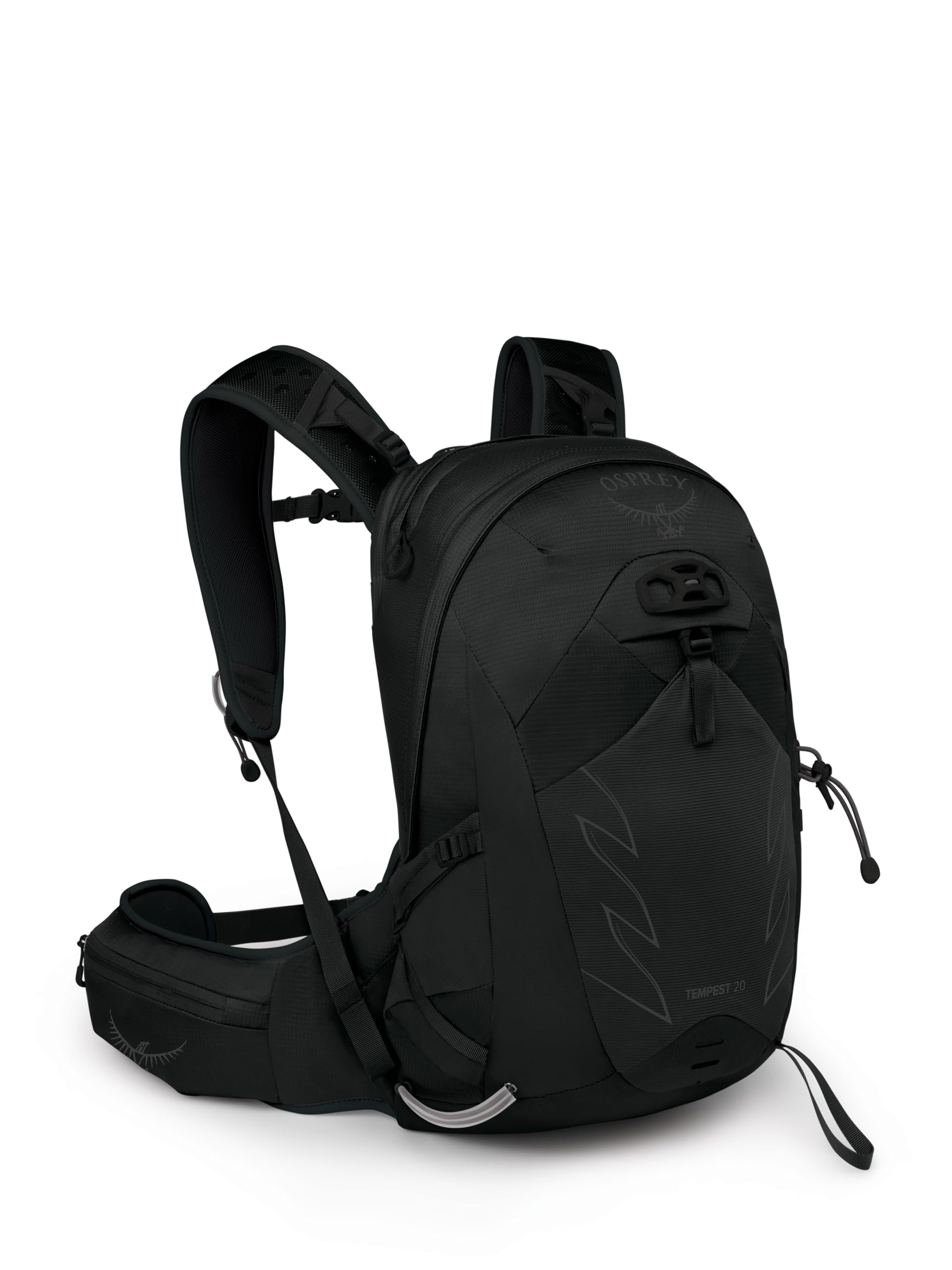
The Osprey Tempest 20L sets the benchmark for back support in a daypack thanks to its injection-molded AirScape backpanel and BioStretch harness that wraps continuously from lumbar to hipbelt. This design pulls the load tight against your spine and transfers it directly to your hips, not your shoulders. The extended fit version adds longer straps and a repositioned sternum strap, accommodating hips up to 70 inches, so even curvier frames get proper iliac crest engagement.
Dual-zippered panel access makes packing and unpacking easy, while the 2.1-pound frame keeps it lightweight. The flexible foam stays move with your body without losing structure, and the mesh-covered backpanel reduces sweat buildup during active use. Testers consistently report that the pack feels “weightless” at full capacity during hikes, which speaks to how effectively it offloads strain from the lumbar region.
The main downside is that the waist belt pockets are small — a Samsung S21 barely fits — and inserting a hydration bladder takes some effort. The adjustability is generous but requires a few minutes to get right. For anyone dealing with chronic lower back pain or looking to prevent it during outdoor activity, this pack is the gold standard in this selection for active spinal support.
Why it’s great
- BioStretch hipbelt wraps lumbar for direct load transfer
- Lightweight 2.1 lbs with excellent breathability
- Gender-specific fit with extended torso option
Good to know
- Waist belt pockets too small for large phones
- Bladder insertion requires patience
- Not designed for heavy laptop carry
2. Thule EnRoute Backpack 30L
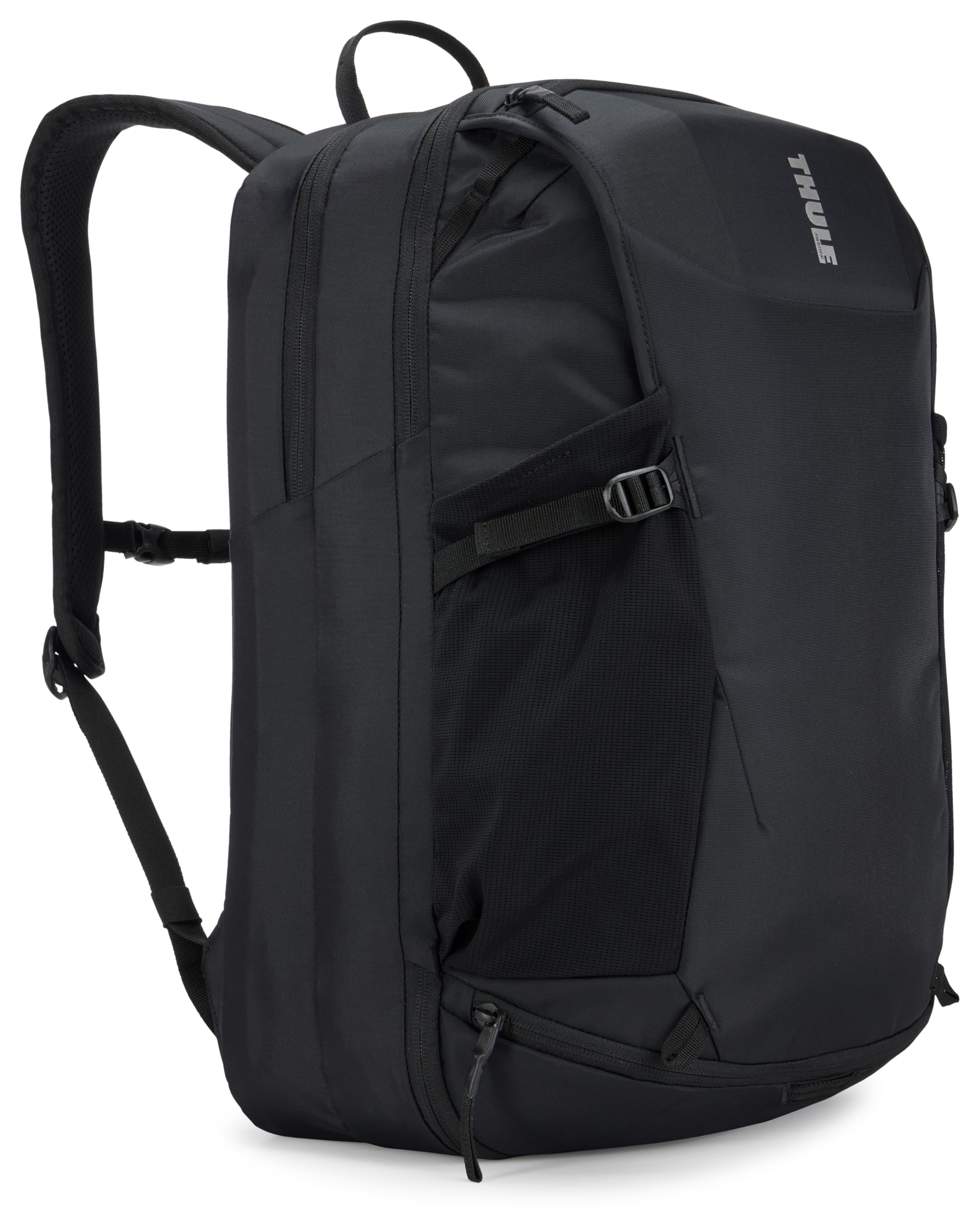
The Thule EnRoute 30L blends commuter-friendly organization with genuine back-support features. The padded back panel uses an airflow channel to keep your spine cool, while the sternum strap and side compression straps let you fine-tune the load balance, reducing sway that strains the lumbar region. The elevated laptop pocket with a false bottom protects up to a 17-inch device without letting it dig into your lower back.
Its split-compartment design separates electronics and work gear from personal items, which helps keep heavier items closer to your center of gravity — a subtle but effective ergonomic advantage. The rigid SafeZone pocket safeguards sunglasses or a phone, and the TPU zippered pocket handles wet or dirty items like gym clothes or wet shoes without contaminating the main load. The nylon 400D material and YKK zippers signal construction quality that lasts through daily abuse.
The back padding can feel stiff out of the box, requiring a brief break-in period. Some testers noted the “pond gray” color is more gray than blue, which may not match online photos. Still, the EnRoute delivers the best balance of office-ready organization and structural back support among laptop-focused packs in this list. It’s ideal for professionals who carry a heavy laptop and want to protect their spine during the commute.
Why it’s great
- Airflow channel reduces back sweat during long carries
- False bottom laptop pocket protects both device and spine
- Water-resistant TPU pocket for wet items
Good to know
- Back padding feels stiff initially
- Color may differ slightly from product images
- Not designed for heavy hiking loads
3. The North Face Surge Commuter Laptop Backpack
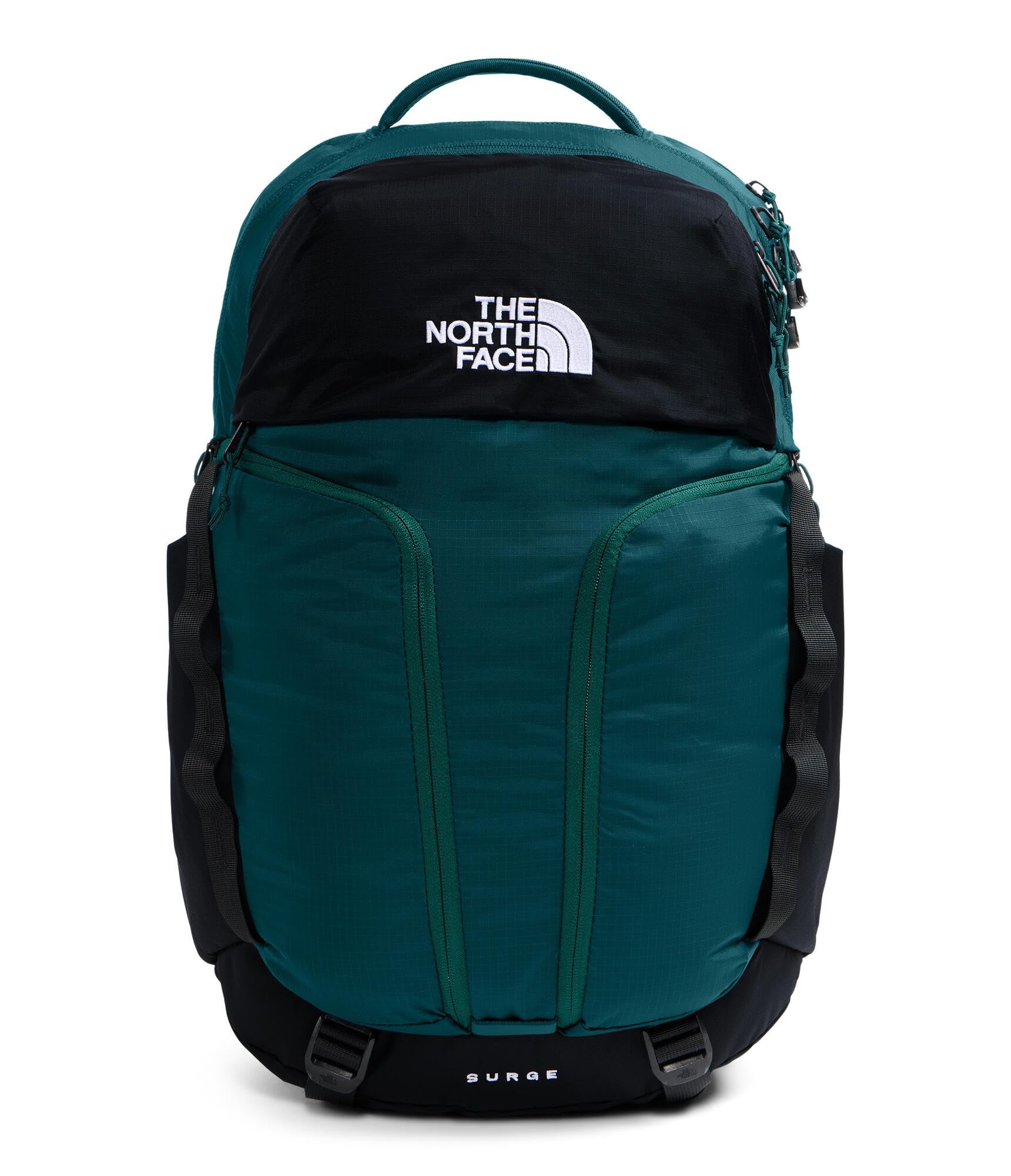
The Surge is widely considered by users as “the best EDC pack for electronic gear” — not just for its pocket layout but for a harness system that breaks in to become exceptionally comfortable. The curved, padded shoulder straps and structured backpanel keep the load close to your body, minimizing the backward pull that torques the lower back. Angled cinch straps let you tighten the load evenly, which helps maintain balance during a full day of wear.
The fleece-lined, padded laptop sleeve fits up to a 16-inch device along with a tablet, and the main compartment can swallow four days of gear for travel. The deep side pockets secure a Nalgene or Hydro Flask, and the front admin panel provides quick access to pens, chargers, and documents without unzipping the main cavity. One user reported daily use as a traveling nurse since 2020, overstuffed and washed monthly, with no zipper or seam failures — a testament to the build durability.
It lacks a load-bearing hip belt, so weight still lands on your shoulders more than on your hips. That makes it less suitable for heavy loads (over 15 pounds) but excellent for the typical urban carry of laptop, lunch, and a few books. The Surge is the most refined non-hiking backpack here for someone who needs robust organization and comfort for moderate daily loads.
Why it’s great
- Harness breaks in for custom contour fit
- Deep side pockets fit large water bottles securely
- Exceptional build quality survives years of daily use
Good to know
- No load-bearing hip belt for heavy loads
- Front pocket interior could be darker for visibility
- Missing luggage pass-through for travel
4. Cotopaxi Allpa 35L Travel Pack

The Cotopaxi Allpa 35L is designed to transfer weight onto the hip belt when loaded, then tuck the belt away for a clean profile when you don’t need it. This dual-mode system makes it one of the rare travel packs that genuinely supports your back during airport sprints or city walks, then converts to a professional-looking bag for meetings. The ergonomically contoured shoulder straps and backpanel keep the pack close to your spine, reducing leverage that strains the lumbar area.
Its suitcase-style, full-wrap zipper opening reveals three internal compartments (large, medium, small) with a stretch mesh water bottle pocket up to 1 liter. The 15-inch padded and fleece-lined laptop sleeve sits against your back, protecting both device and spine. The roller-bag pass-through strap lets you stack it on luggage, and the lockable zippers add security. Multiple users report fitting four to five days of summer clothes plus a laptop without exceeding carry-on limits.
The 35-liter capacity feels smaller than expected because the two-sided configuration splits the volume. If you tend to overpack, consider sizing up to the 42-liter version. Some users also note a slight plastic smell initially, though it dissipates. For travelers who want a single bag that supports their back through long days of walking without looking like hiking gear, the Allpa is the refined choice.
Why it’s great
- Tuckable hipbelt transfers weight on demand
- Suitcase-style opening for easy packing
- Roller-bag pass-through for travel convenience
Good to know
- 35L feels compact for its volume rating
- Initial plastic smell reported by some
- Two-sided design limits single-compartment packing
5. Osprey Transporter 26+6 Travel Pack
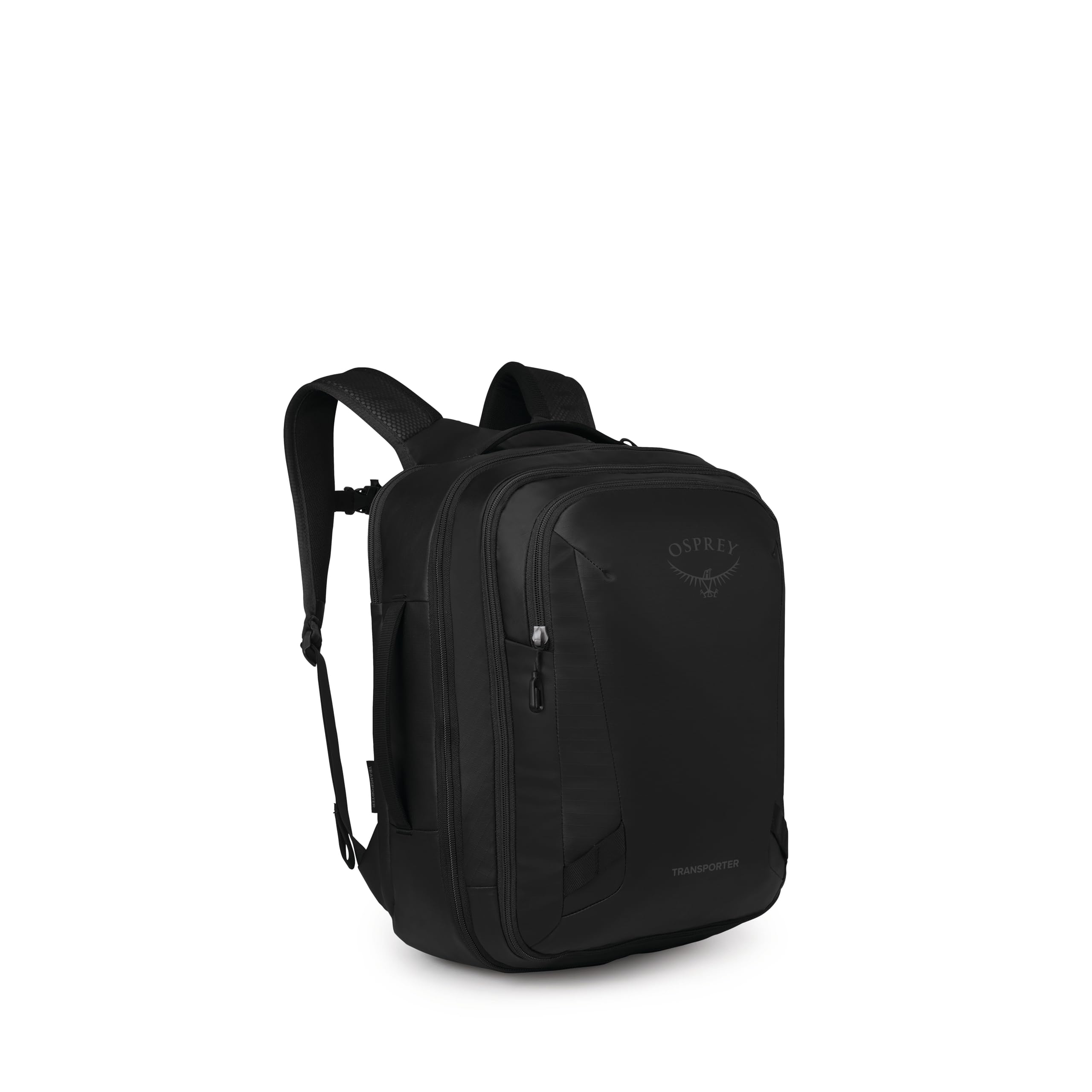
The Osprey Transporter 26+6 solves a specific back-support problem: how to carry a fully packed personal item through an airport without hunching. Its cushioned, mesh-covered AirScape backpanel provides close-to-body stability and ventilation, while a stowaway harness and trolley pass-through let you switch between wearing and rolling. The expandable main compartment adds 6 liters (extends 2 inches) when you need more room, but the squared silhouette stays under seat dimensions when compressed.
The direct-zip laptop sleeve accesses your device without opening the main cavity, and the suitcase-style full-zip opening with a mesh divider and internal compression strap keeps contents organized. The Nanotough exterior panels use 100% recycled high-tenacity nylon with a carbonate coating, making them extremely water-resistant and abrasion-resistant. Users rave about the unique color options and the overall craftsmanship.
A few users found it uncomfortable when fully packed, especially with a 13-inch laptop, noting that the harness feels less padded than Osprey’s hiking packs. The admin space is limited for pens and work items. This pack excels as a lightweight personal item that protects your back during transit but isn’t designed for heavy daily carry. It’s best for travelers who want a single expandable bag that saves their spine during walking commutes between gates.
Why it’s great
- Expandable 6L for flexible packing
- AirScape backpanel reduces back sweat and improves stability
- High water resistance with durable Nanotough fabric
Good to know
- Can feel uncomfortable when fully packed with laptop
- Limited pen/work organization space
- Harness less padded than dedicated hiking packs
6. The North Face Borealis Convertible Pack
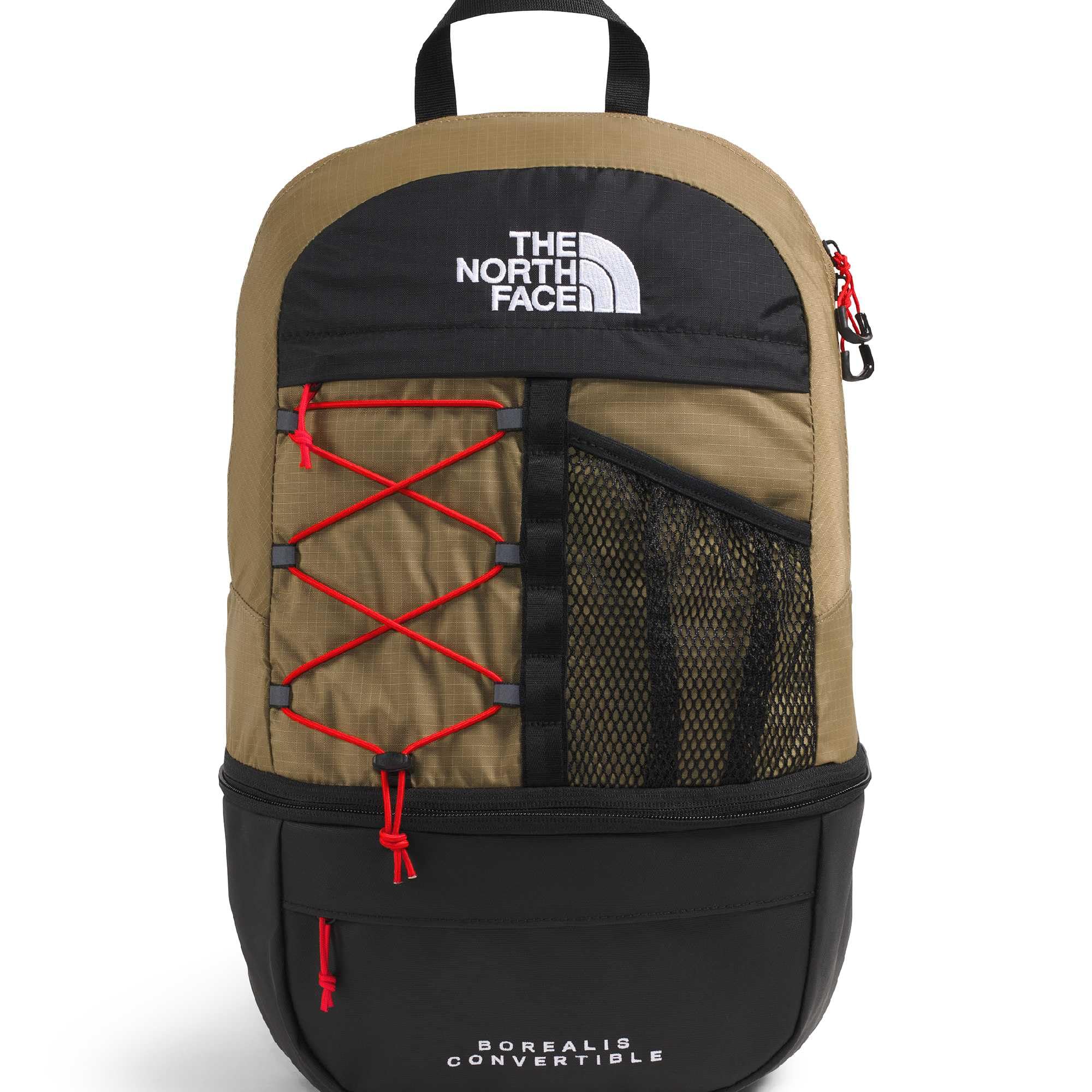
The Borealis Convertible Pack takes a unique approach to back support: the lower section detaches to become a lumbar pack (fanny pack), letting you carry essentials without the full backpack weight while still providing a padded area against your lower back. When attached, the lumbar section adds a layer of cushioning directly behind your sacrum, which can help reduce pressure points during long walks. The abrasion-resistant fabric and reflective details add durability and safety for evening commutes.
At 17.5 liters, this is a compact daypack suited for light loads — a lunch bag, tablet, water bottle, and a jacket. The main compartment and two external stash pockets have secure zip closures, and the mesh bottle pocket fits most 1-liter bottles. The articulated shoulder straps enable fluid movement, and the stowable hip belt helps stabilize the load for active use.
The biggest caveat is the size: at 17.5 liters, it’s notably small, and the convertible fanny pack feature feels bulky when attached. Users note it works better as a hiking daypack than an everyday carry bag. For back support, this pack provides decent lumbar padding but lacks a true frame or load-transfer hip belt, so heavy loads still strain your shoulders. It’s best for minimalists who want a lightweight, convertible bag for short trips or light hiking.
Why it’s great
- Removable lumbar pack adds lower back cushioning
- Articulated shoulder straps for natural movement
- Water repellent finish with reflective details
Good to know
- Very compact at 17.5 liters
- Fanny pack component is bulky when attached
- No load-bearing frame for heavy items
7. ZHUNPOCT Posture Corrector Back Support Brace

This entry-level posture corrector is not a backpack but a wearable brace designed to pull your shoulders back and reduce kyphotic rounding. It uses an aluminum alloy bracket embedded in breathable velvet fabric to provide rigid support across the upper back, and removable chest pads improve comfort while making the brace easier to clean. The backpack-style design — with straps that go over both shoulders and around the torso — mimics the harness mechanics of a supportive backpack, though it has no carrying capacity.
The size chart covers a wide range (S through XL for heights 55 to 73+ inches), and the adjustable straps let you fine-tune the tension. Many users report instant improvement in sitting and walking posture, with one reviewer noting felt taller after five hours of wear. The brace training effect helps activate back muscles to straighten the spine, which can be useful for teens with hunched posture or adults dealing with kyphosis due to osteoporosis.
The brace’s stiffness limits bending and sitting — it’s best suited for standing or walking with near-immobilized spine. Some users found the fit ineffective for curvy body types or neck/upper back injuries, and returns involve Amazon holding back a small fee. It’s a budget-friendly tool for passive posture correction but should not replace active core strengthening. For back support during load carry, it’s not a substitute for a proper backpack frame.
Why it’s great
- Aluminum bracket provides rigid upper back support
- Breathable fabric reduces sweating during wear
- Adjustable sizing covers a wide height/waist range
Good to know
- Too stiff for sitting or bending less than 6-8 inches
- Fit may not work for curvy body types
- Not a backpack — no carrying capacity
FAQ
What is the ideal torso length for a backpack?
Does a padded back panel automatically mean good support?
Can a posture corrector brace improve backpack comfort?
Why is a sternum strap important for back health?
Final Thoughts: The Verdict
For most users, the backpack for back support winner is the Osprey Tempest 20L because its continuous lumbar-to-hipbelt wrap and gender-specific fit provide unmatched load transfer for active use. If you need a daily commuter pack that protects your spine while carrying tech gear, grab the Thule EnRoute 30L. And for premium travel with tuckable hipbelt support, nothing beats the Cotopaxi Allpa 35L.