
Our readers keep the lights on and the weekend projects moving. As an Amazon Associate, I earn from qualifying purchases.
Thin drywall, hardwood floors, and open-concept layouts turn your home into an echo chamber where conversations blur and music loses its clarity. The right material stops that reflection cold, turning a noisy room into a controlled acoustic space without a full renovation.
I’m Rikta — the co-founder and writer behind FitlyFast. To build this guide, I spent hours cross-referencing density ratings, STC performance notes, and real-world installation feedback to isolate the panels that actually deliver measurable echo reduction.
Whether you’re taming reverb in a home studio or muting the noise between rooms, the acoustic insulation for walls you choose must balance absorption coefficient, material density, and ease of mounting — because a panel that doesn’t stay up can’t fix your sound.
How To Choose The Best Acoustic Insulation For Walls
Acoustic panels are not a one-size-fits-all purchase. The material type, density, thickness, and installation method each shift how much echo you kill and how the room sounds. Here are the four factors that matter most.
Material Density & Type
Density is measured in pounds per cubic yard (lbs/yd³) or kilograms per cubic meter (kg/m³). Higher density foam absorbs more mid-to-high frequency sound waves. Polyester fiber panels offer better eco-credentials and consistent density, while polyurethane foam is lighter and often less expensive. For serious echo control, look for panels with 25 kg/m³ or above.
Thickness & Coverage Area
Thicker panels trap lower frequencies. Two inches is the standard for effective broadband absorption. One-inch panels help with high-frequency flutter but won’t touch bass. Coverage percentage matters more than panel count — covering at least 20-30% of the wall surface in primary reflection points produces the most noticeable change.
Adhesive vs. Mechanical Mounting
Self-adhesive panels save time, but the bond strength varies wildly. Painted concrete and textured walls often require reinforcement with construction adhesive or mechanical fasteners (nails, screws, or staples). Peel-and-stick panels work reliably on smooth, clean drywall. For wood slat panels, screws through the felt backing provide the most secure long-term hold.
Certified Safety & Odor Profile
Many foam panels arrive vacuum-sealed with a temporary chemical smell. Look for SGS certification or low-TVOC claims. Polyester fiber panels typically emit zero odor. Flame-retardant ratings add safety in studio or home theater environments, especially when panels cover large wall areas near electronics or heat sources.
Quick Comparison
On smaller screens, swipe sideways to see the full table.
| Model | Category | Best For | Key Spec | Amazon |
|---|---|---|---|---|
| Self-Adhesive Acoustic Panels | Polyester Fiber | High-density echo control | 390 lbs/yd³ density | Amazon |
| TONOR Dual-Layer | Polyester Fiber | Large surface coverage | 0.72-inch dual-layer | Amazon |
| TONOR Wood Slat | Wood Veneer | Decorative accent + absorption | 31 sq ft coverage | Amazon |
| Soon Global Arcadian | Decorative Polyester | Art-focused sound treatment | Groove pattern panels | Amazon |
| NeatiEase Wood Slat | MDF Wood Slat | Full wall acoustic makeover | 96-inch tall panels | Amazon |
| AUSLET Pyramid 36-Pack | Polyurethane Foam | Budget echo reduction | 2-inch thick pyramid | Amazon |
| Knightsacoustic 96-Pack | Polyurethane Foam | High-volume budget coverage | 96 sq ft total | Amazon |
In‑Depth Reviews
1. Self-Adhesive Acoustic Panels [390 lbs/yd³ Ultra-High Density]

This is the densest polyester fiber panel in the lineup at 390 lbs/yd³, roughly 30% higher than typical acoustic foam. That density directly translates to better absorption of mid-to-high frequencies, which is exactly what kills slap echo in rooms with hard surfaces. The second-generation vacuum needle punching process gives the panels a smooth, consistent texture that doesn’t crumble or shed over time.
Painted concrete is the one surface where the adhesive struggles — a few users reinforced with Gorilla Glue or heavy-duty double-sided tape and got solid results. The large hexagon shape (14 x 12 x 0.4 inches) covers reflection points efficiently and looks more intentional than standard squares.
SGS certification and zero-formaldehyde construction make this a safe pick for bedrooms, nurseries, or gaming spaces where air quality matters. The orange and moon grey color option is polarizing but genuinely attractive for modern interiors. For a panel that delivers pro-grade absorption density without requiring a construction permit to install, this is the clear winner.
Why it’s great
- Exceptional 390 lbs/yd³ density outperforms standard foam
- Strong self-adhesive holds on smooth drywall for 12+ months
- SGS certified, odor-free, and safe for sensitive spaces
Good to know
- Adhesive needs reinforcement on painted concrete or textured walls
- 0.4-inch thickness limits low-frequency absorption
2. TONOR Dual-Layer Thickened Acoustic Wall Panels

The dual-layer reinforced structure gives TONOR an edge over single-layer panels. Each 47.2 x 23.6-inch slab uses a thickened absorption material that disperses echo more effectively than the flimsy foam sheets found at big-box stores. The 0.72-inch total thickness is enough to tame vocal reverb and appliance hum without eating up floor space.
Installation is genuinely peel-and-stick — no tape, no glue, no waiting for adhesive to cure. Reviewers in thin-walled apartments reported the panels muffled loud music and voices enough to restore nighttime quiet. The stripe pattern looks more like intentional wall decor than studio foam, which makes it a good option for living rooms where you don’t want the room to scream “recording booth.”
One catch: the 4-pack covers about 31 square feet, so larger rooms will need multiple packs for meaningful coverage. The material is 100% high-density polyester fiber, so there’s zero chemical odor out of the box. TONOR backs this with a two-year warranty, which is rare at this price point and signals confidence in the adhesive’s longevity.
Why it’s great
- Dual-layer structure absorbs more energy than single-layer panels
- Strong self-adhesive with no extra tools required
- Two-year warranty from a known audio brand
Good to know
- 4-pack covers only 31 sq ft — budget for multiple packs
- Not rated for heavy bass frequencies below 200 Hz
3. TONOR Wood Wall Panels (Wood Slat Acoustic)
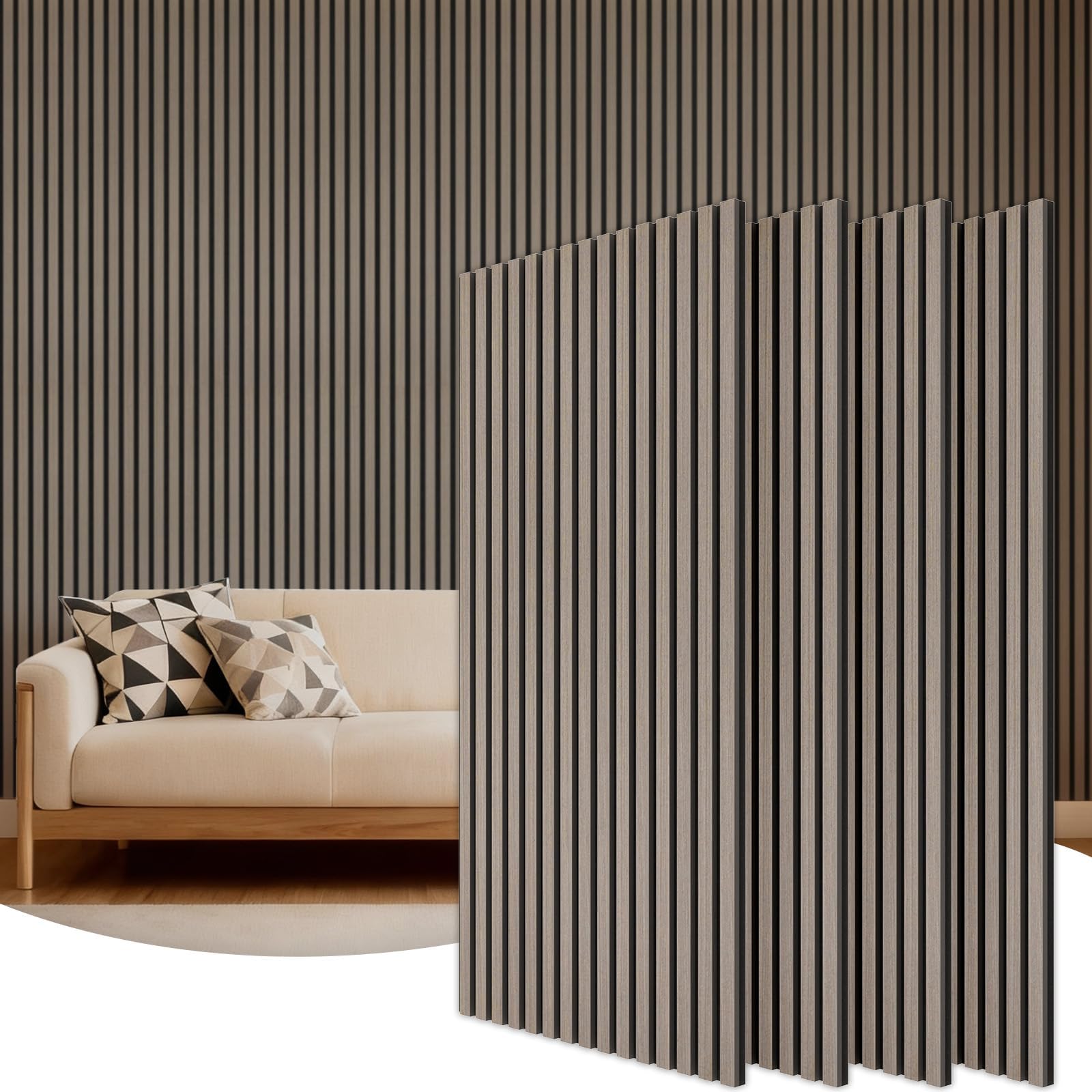
Wood slat panels solve the problem of acoustic treatment that looks like industrial foam. TONOR combines a high-density polyester fiber core with MDF slats and a solid wood veneer, delivering acoustic absorption with a furniture-grade finish. The 47.2 x 23.6-inch panels cover 31 square feet per 4-pack, making them suitable for a feature wall or a partial accent installation.
These are not peel-and-stick — they mount with included screws through the felt backing. That’s actually an advantage on textured walls or concrete where adhesive fails. Reviewers report the panels reduce echo noticeably in hollow offices and open living areas, though they won’t eliminate it entirely without near-complete wall coverage. The walnut color matches real wood tones convincingly, and the assembly is straightforward with a jigsaw for cuts around outlets.
The wood slats are adhered only at the ends, so cutting across a slat can leave loose strips. A staple gun fixes that in seconds. For a room that needs to look polished — think home offices visible on Zoom calls or renovated living rooms — this is the best compromise between acoustic function and interior design.
Why it’s great
- Elegant wood veneer finish blends with furniture and decor
- Screw-mount design works on walls where adhesive fails
- Lightweight and easy to cut with basic tools
Good to know
- Slats adhered only at ends — cuts may loosen strips
- Absorption is moderate; not a replacement for thick foam
4. Soon Global Acoustical Wall Panels (Arcadian Vortex)
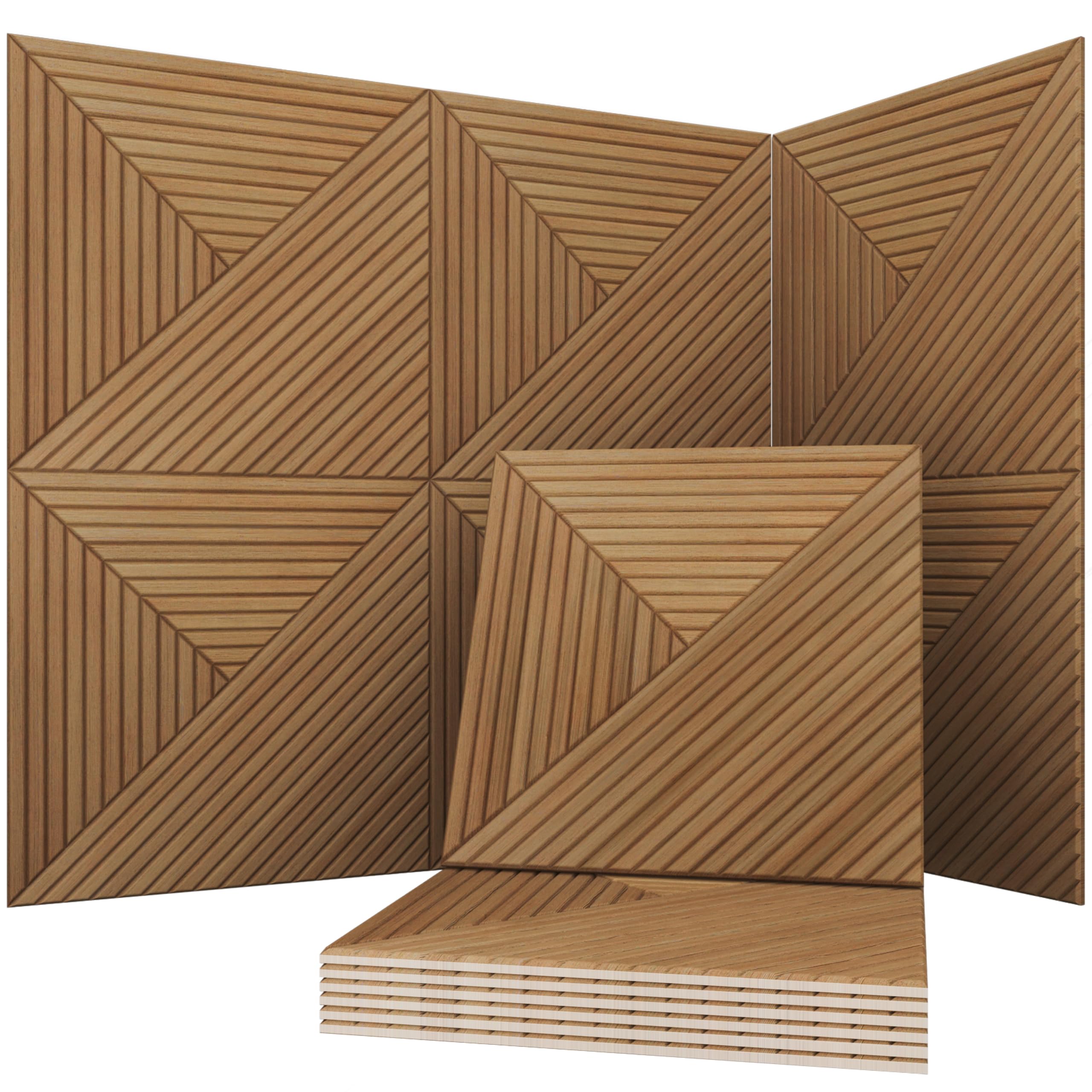
Soon Global treats acoustic panels like wall art. Each 23.62-inch square features a continuous groove pattern with a realistic wood-texture print, designed to trap and diffuse sound across larger surfaces. The 6-pack covers roughly 18 square feet, and the repeating pattern allows you to arrange the tiles without obvious seams or repeating motifs that look cheap.
Installation is tool-free — the pack includes 30 transparent double-sided adhesive squares. Reviewers loved the look on feature walls and ceiling installations, and one therapist reported noticeably better audio clarity during remote sessions after mounting these. The polyester fiber material is lightweight, odor-free, and easy to trim with a sharp utility knife, though cutting through the dense felt requires patience and a fresh blade.
The trade-off is that the material is thinner than dedicated studio foam, so sound absorption is moderate rather than aggressive. This is a solution for rooms where the primary goal is reducing ambient echo while making a visual statement — not for isolating a drum kit or silencing a noisy HVAC unit. For living rooms and home offices that double as aesthetic spaces, the Arcadian Vortex delivers a design-first approach to acoustic treatment.
Why it’s great
- Unique groove pattern functions as both decor and diffuser
- Tool-free adhesive installation with included squares
- Zero odor and lightweight for ceiling mounting
Good to know
- Thin material limits deep sound absorption
- Cutting through dense felt is difficult without a strong blade
5. NeatiEase Wood Panels (96-Inch Slat)

Eight-foot-tall panels change the game for whole-wall acoustic treatment. NeatiEase’s 96 x 12.6-inch slat panels cover 33 square feet per 4-pack, and their height means you can run them floor-to-ceiling without stacking or vertical seams. The MDF slats are backed by high-density polyester fiber, and the teak veneer is convincing enough that reviewers consistently describe it as “looking expensive.”
Installation is DIY-friendly — screw through the felt backing directly into drywall. An oscillating tool or box cutter handles cuts cleanly, though the laminate chips if you use a circular saw without painter’s tape. Reviewers report the panels reduce room echo significantly in gyms, offices, and living rooms, and the weight is manageable enough for one person to mount without assistance.
The slat design means the polyester fiber is exposed in the gaps behind the wood strips, which is where the sound absorption actually happens. Low-TVOC certification and sustainably sourced materials make this a responsible choice for occupied spaces. This is the right pick if you want the acoustic performance of dedicated panels with the finished look of a renovation, not a bolt-on accessory.
Why it’s great
- Full-height 96-inch panels eliminate visible seams
- Secure screw-mount install works on any wall surface
- Convincing teak veneer and low-TVOC materials
Good to know
- Laminate chips easily with circular saw cuts
- Slat gaps expose absorbent backing — keep clean
6. AUSLET 36-Pack Pyramid Acoustic Panels

Pyramid profiles are a proven geometry for breaking up sound waves, and AUSLET delivers them at a price that makes coverage affordable. Each 12 x 12 x 2-inch tile covers one square foot, and the 36-pack gives you enough material to treat a small room’s reflection points. The 2-inch thickness is the sweet spot for broadband absorption — thick enough to catch some lower mids, not just high-frequency flutter.
The panels arrive vacuum-compressed and expand to full shape within an hour with a fan. Reviewers consistently praise the density compared to cheaper foam, and one user measured a 42% reduction in transmitted noise from an upstairs kitchen using a decibel meter. Installation requires separate adhesive — no tape or glue included — but blued nails or spray adhesive on smooth drywall works well.
Quality control is the variable here. A few reviewers received panels that were flattened or damaged in shipment and didn’t recover fully. The initial odor from the compressed polyurethane fades quickly with ventilation. For the price per square foot, this is the most cost-effective way to get 2-inch absorption coverage, provided you’re willing to buy adhesive separately and inspect each tile on arrival.
Why it’s great
- 2-inch pyramid profile absorbs a wider frequency range
- Incredible value for 36 square feet of coverage
- Measurable echo reduction in real-world installations
Good to know
- No adhesive included — factor that into your order
- Some panels arrive flattened and may not fully recover
7. Knightsacoustic 96-Pack Sound Proof Foam Panels
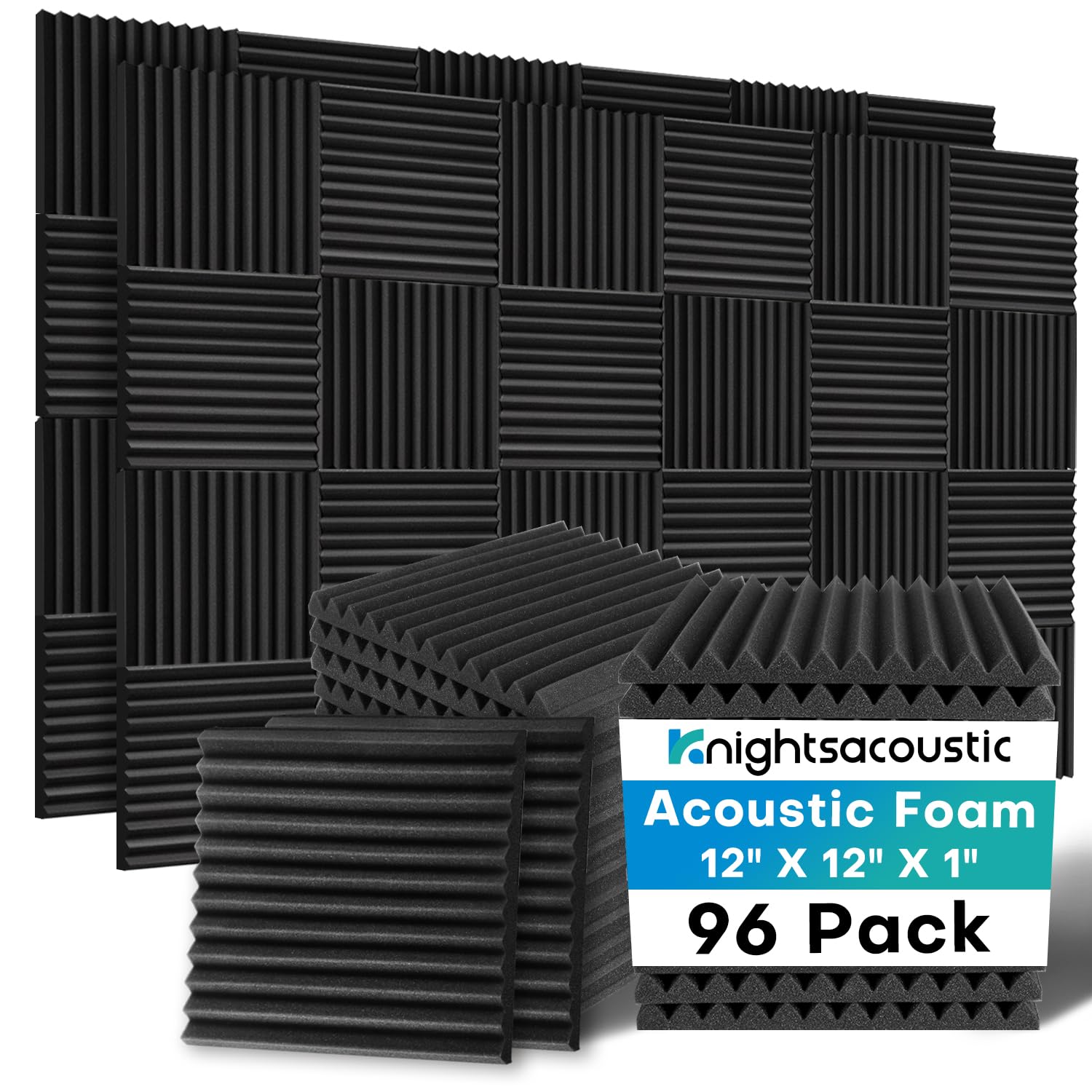
When coverage area is the priority and budget is the constraint, the Knightsacoustic 96-pack puts 96 square feet of acoustic foam in your hands for a low entry cost. Each 12 x 12 x 1-inch wedge is made from professional-grade polyurethane foam designed to manage reverberation in studios, game rooms, and home theaters. The one-inch thickness is best suited for reducing high-frequency flutter and slap echo rather than deep bass absorption.
The panels arrive flat-packed, and some may need a soak in water followed by low-heat drying to restore their full shape — a technique multiple reviewers confirmed works well. After treatment, the foam is odor-free and looks clean on walls. No adhesive is included, so budget for spray adhesive or a separate adhesive square pack. The 96-count allows you to cover a full wall or treat multiple rooms in one go.
The trade-off for the price is thickness. At one inch, these panels won’t tackle low-end rumble or heavy bass, and they won’t match the absorption coefficient of two-inch foam. But for echo control in a recording booth, vocal booth, or a teenager’s gaming den, this pack delivers the square footage needed to make a difference without blowing the budget. Just plan for the extra step of shape restoration and adhesive purchase.
Why it’s great
- Massive 96-square-foot coverage for one low price
- Odor-free after initial shape restoration
- Professional-grade foam suitable for studios and gaming rooms
Good to know
- 1-inch thickness limits absorption to high frequencies
- No adhesive included; panels may need soaking to restore shape
FAQ
Is acoustic foam the same as soundproofing?
How many acoustic panels do I need for a 12×12 room?
Will 1-inch thick foam panels help with bass frequencies?
Final Thoughts: The Verdict
For most users, the acoustic insulation for walls winner is the Self-Adhesive Acoustic Panels because its ultra-high density and proven adhesive deliver the best balance of echo reduction and easy installation. If you want a design-forward look that doubles as sound treatment, grab the TONOR Wood Slat Panels. And for budget-friendly coverage that covers a whole room without breaking the bank, nothing beats the AUSLET Pyramid 36-Pack.