
Our readers keep the lights on and the weekend projects moving. As an Amazon Associate, I earn from qualifying purchases.
The tennis court punishes bad footwear. Cheap soles wear flat in weeks, weak sidewalls fail on lateral cuts, and poor arch support turns a fun match into a knee replacement audition. Real affordable tennis shoes must balance reinforced toe drag protection, dense midsole cushioning for hardcourt impact, and a sole pattern that grips without locking you into a toe-stub. Skimp on the tread depth or the heel counter stiffness, and you are not saving money—you are paying for the next pair sooner.
I’m Rikta — the co-founder and writer behind FitlyFast. I have spent countless hours analyzing over sixty court shoe specs, cross-referencing customer wear-test data from competitive players, and breaking down which sub-90-dollar models actually deliver the lateral stability and sole durability that recreational and intermediate players need.
The goal was simple: find the affordable tennis shoes that hold up to weekly hardcourt sessions without forcing you into a narrow fit or a dead-cushion sidewalk after two months.
How To Choose The Best Affordable Tennis Shoes
Picking a budget-friendly court shoe means knowing which corners you can trim and which specs are non-negotiable for injury prevention. The three factors below separate a genuine value shoe from a disposable sneaker that just happens to have a tennis logo.
Outsole Durability and Toe Drag Protection
Hardcourt tennis chews through rubber fast. Look for a full-length herringbone or modified herringbone tread pattern with a reinforced toe cap area. Shoes with a visible toe-drag guard or a thicker rubber wrap at the front outsole survive months longer than models with a flat, uniform tread. The K-Swiss Court Express line and the Wilson Rush Pro Ace both use dense rubber compounds that resist premature smoothing on the forefoot.
Lateral Support and Heel Counter Rigidity
Running shoes let your foot roll inward; tennis shoes must stop it. A stiff heel counter and a molded external chassis or midfoot shank are the two features that prevent ankle rolls during sudden direction changes. The adidas Courtjam Control 3 uses a reinforced heel clip and a wide base that keeps the foot planted during cross-court sprints. If you feel your foot sliding over the edge of the midsole when you cut, the shoe lacks proper lateral containment.
Cushioning Density and Court Feel
Too soft a midsole feels plush in the store but bottoms out after three sessions, leaving your joints to absorb the impact. Affordable models often use compressed EVA or a basic foam that prioritizes responsiveness over cloud-like comfort. The Skechers Viper Court Pro uses a denser memory foam layer that retains its shape longer than standard budget EVA. Try to find a midsole that gives a stable platform under the heel while still allowing you to feel the court surface through the forefoot for precise footwork.
Quick Comparison
On smaller screens, swipe sideways to see the full table.
| Model | Category | Best For | Key Spec | Amazon |
|---|---|---|---|---|
| Wilson Rush Pro Ace | Premium | High school match play | 4D Support Chassis | Amazon |
| adidas Courtjam Control 3 (Men’s) | Mid-Range | Hardcore weekly grind | Wide square toe box | Amazon |
| adidas Courtjam Control 3 (Women’s) | Mid-Range | Beginner to intermediate | Lightweight 2.43 lb build | Amazon |
| K-Swiss Court Express 2 (Men’s) | Mid-Range | Knee pain relief | Stay-tied laces | Amazon |
| K-Swiss Court Express (Women’s) | Mid-Range | Wide foot comfort | Leather upper | Amazon |
| Skechers Viper Court Pro (Women’s) | Premium | Plantar fasciitis support | Memory foam insole | Amazon |
| adidas Kaptir 4.0 (Men’s) | Budget | Casual court use | Breathable mesh upper | Amazon |
In‑Depth Reviews
1. WILSON Men’s Rush Pro Ace Tennis Shoes
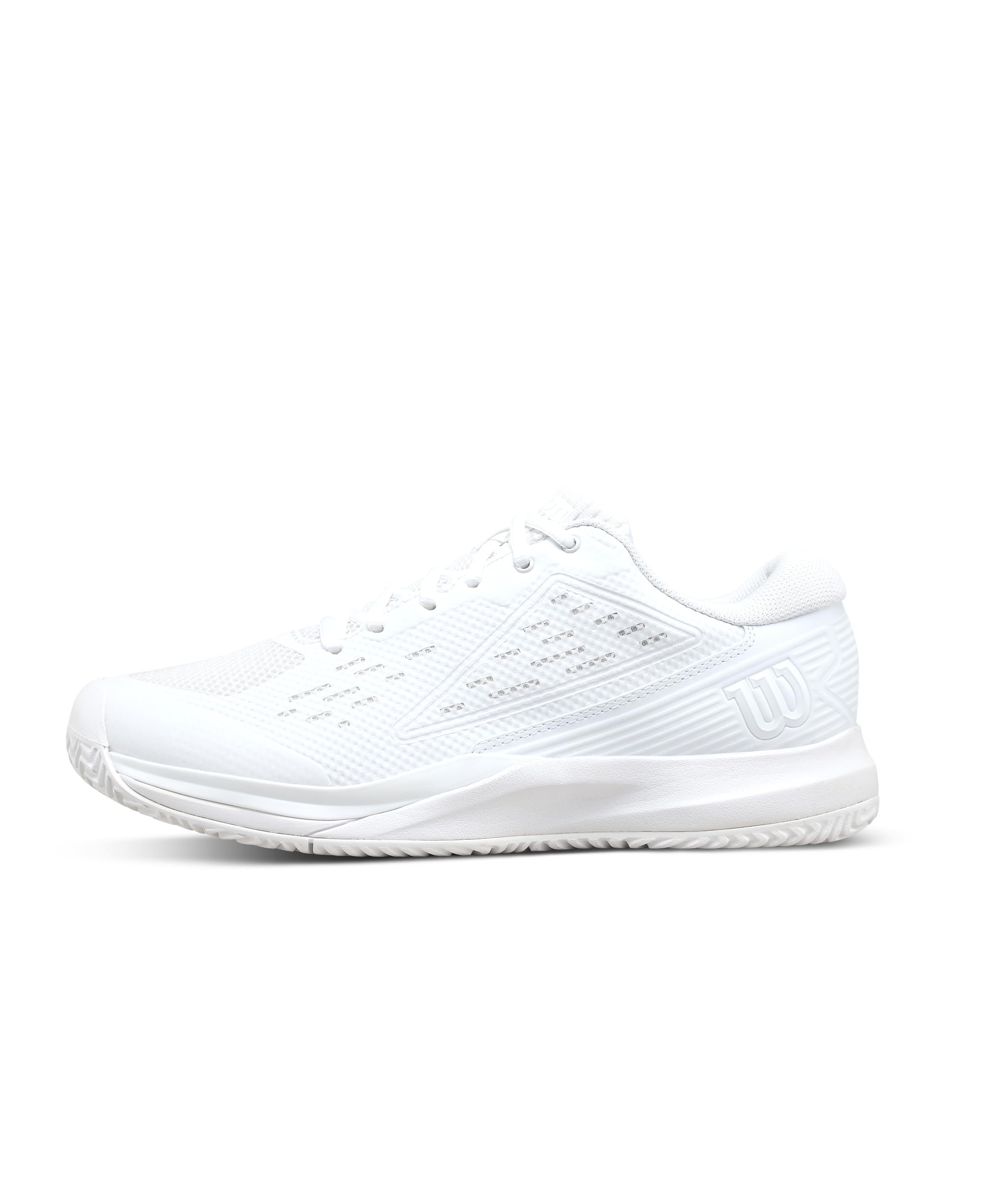
The Wilson Rush Pro Ace is the gold standard for affordable court shoes that do not compromise on lateral lockdown. Its 4D Support Chassis wraps the midfoot and heel in a rigid frame that prevents the foot from sliding over the edge during aggressive cuts. Multiple buyers wearing these for high school match play and competitive pickleball report that the shoe retains its structural integrity long after budget sneakers have gone soft.
The outsole uses a dense rubber compound that balances grip with controlled slide, so you can pivot without catching your toe. Testers note a slightly wider heel than the Asics Gel Resolution line, which helps players with wider feet avoid the pinched feeling common in narrow performance shoes. The padded interior absorbs impact well, though one hard-playing teenager wore through the tread before the end of the season, indicating the rubber is optimized for feel over extreme longevity.
Fit runs true to size with a spacious toe box that accommodates bunion relief and thicker socks. The overall build quality feels premium — stitched overlays, reinforced eyelets, and a heel counter that does not collapse. If you need one shoe that bridges tennis and pickleball with genuine support, this is the most complete package in the affordable tier.
Why it’s great
- 4D Support Chassis provides exceptional lateral stability
- True-to-size fit with a wide toe box
- Balanced grip-to-slide ratio for hardcourt pivots
Good to know
- Tread may wear before the upper for intense weekly players
- Heel fits slightly wider than some Asics models
2. adidas Mens Courtjam Control 3 Tennis Sneakers Shoes – Blue
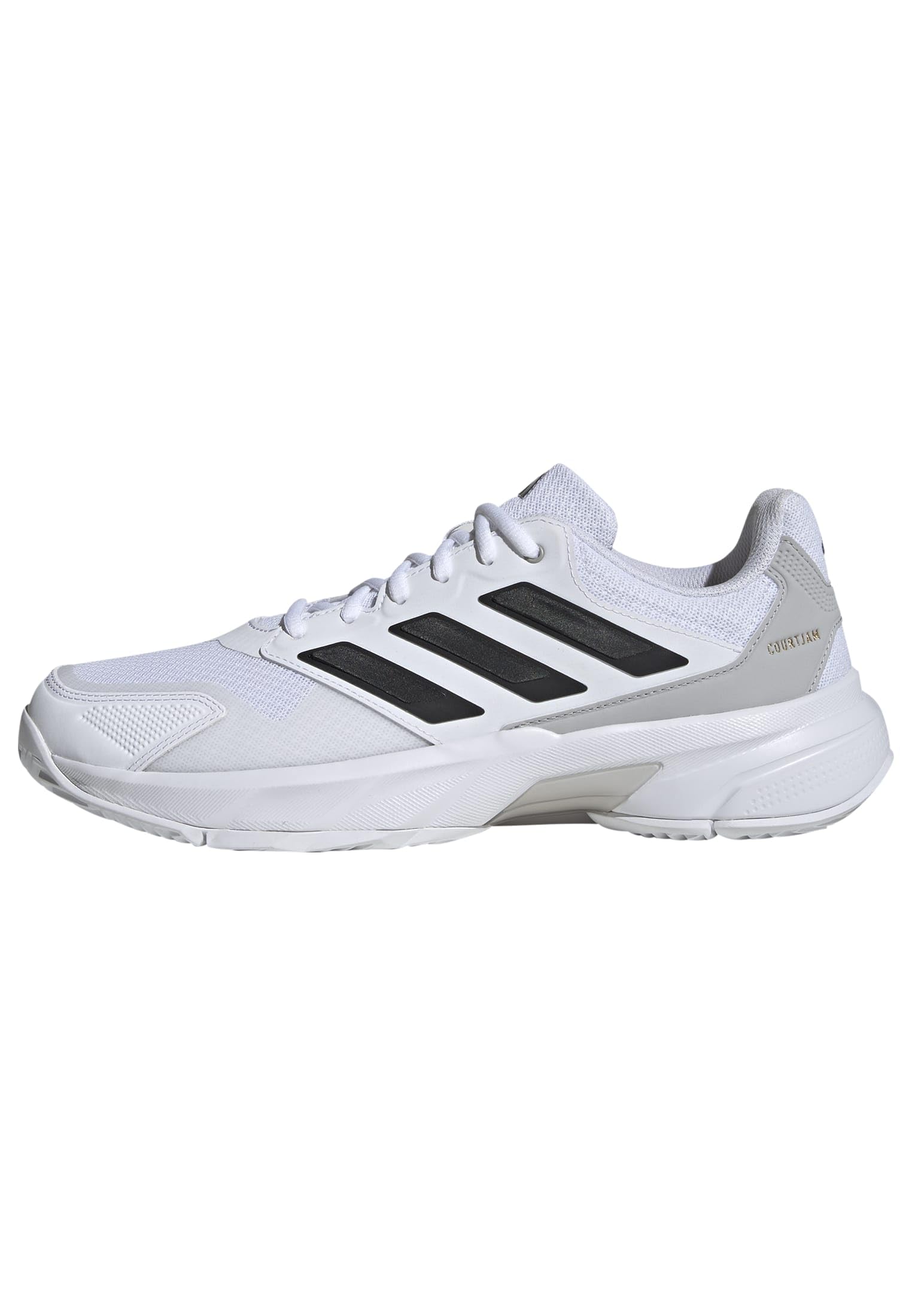
The adidas Courtjam Control 3 in the men’s version is essentially a budget-friendly Barricade that does not skimp on the court-specific construction. The midsole uses a springy foam that provides responsive energy return without being mushy, and the wide square toe box is a blessing for players with bunions or splayed toes. One reviewer who plays six days a week for six to seven hours per session reports the shoes last over sixty days on hardcourt, which is exceptional for any shoe under the triple-digit mark.
The snug fit around the heel prevents blisters during lateral sprints, and the flexible forefoot allows natural toe-off without restriction. Multiple pickleball players confirm the sole holds up for ten to eleven months at three sessions per week, which puts it ahead of many dedicated pickleball shoes in durability. The basic lacing system stays put, and the overall silhouette looks clean enough for casual wear off the court.
The only trade-off is a firmer initial feel — the cushioning takes a few hours to break in before it conforms to your foot strike. If you prioritize a plush step-in feel, this shoe may seem stiff at first. But for players who value longevity and a locked-in heel over instant cloudiness, it is the most durable option in the mid-range tier.
Why it’s great
- Wide square toe box ideal for bunions and toe splay
- Exceptional outsole durability for hardcourt grind
- Snug heel fit prevents blistering on lateral cuts
Good to know
- Midsole feels firm until broken in
- Slightly heavier than mesh-based court shoes
3. adidas Womens Courtjam Control 3 Tennis Sneakers Shoes – White
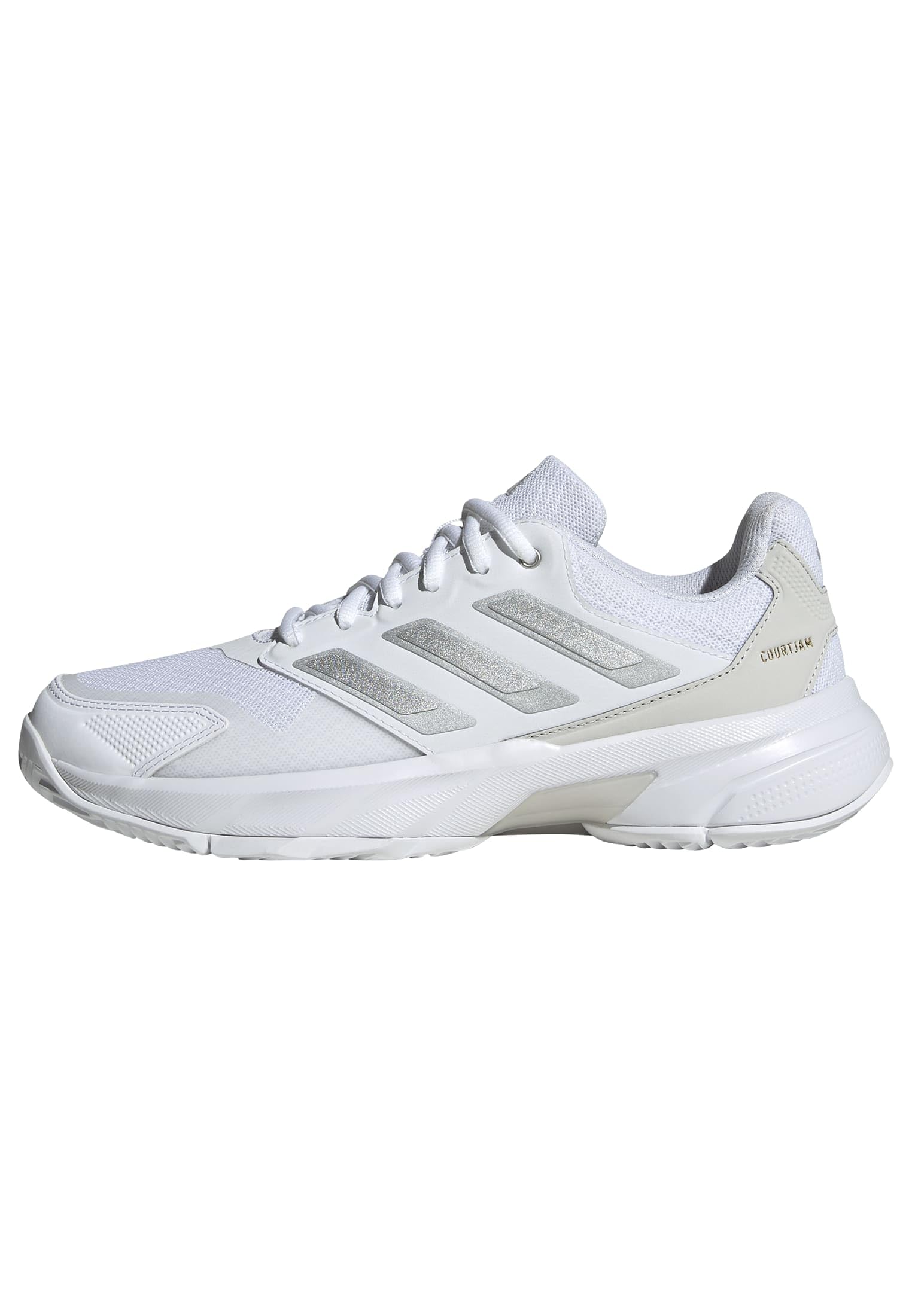
The women’s Courtjam Control 3 is the lighter sibling in the adidas court lineup, designed for players who want a non-intrusive shoe that does not feel like a tank on the foot. The breathable mesh upper keeps the interior temperature down during long summer matches, and the herringbone tread pattern delivers reliable traction on both indoor and outdoor hardcourts. Multiple verified buyers praise the out-of-box comfort, reporting zero break-in pain — unusual for a dedicated performance shoe at this price point.
Lateral stability is excellent for a shoe this weight; the reinforced heel clip and low-to-ground platform keep the foot planted during aggressive cross-court movements. However, the cushioning leans firm, which some pickleball players found flattened after extended use. The fit runs slightly narrow, so players with wider feet should consider ordering half a size up or looking at the K-Swiss alternatives.
The white colorway is easy to clean — a practical choice for court wear — and the overall build feels sturdier than the price tag suggests. If you are a beginner or intermediate player looking for a lightweight, stable shoe that requires no break-in, this is the most accessible entry point on the list.
Why it’s great
- Zero break-in period with immediate comfort
- Lightweight build reduces leg fatigue over long sessions
- Good traction on indoor and outdoor hardcourts
Good to know
- Runs slightly narrow; size up for wide feet
- Cushioning may feel firm for players wanting plush impact absorption
4. K-Swiss Men’s Court Express 2 Tennis Shoe
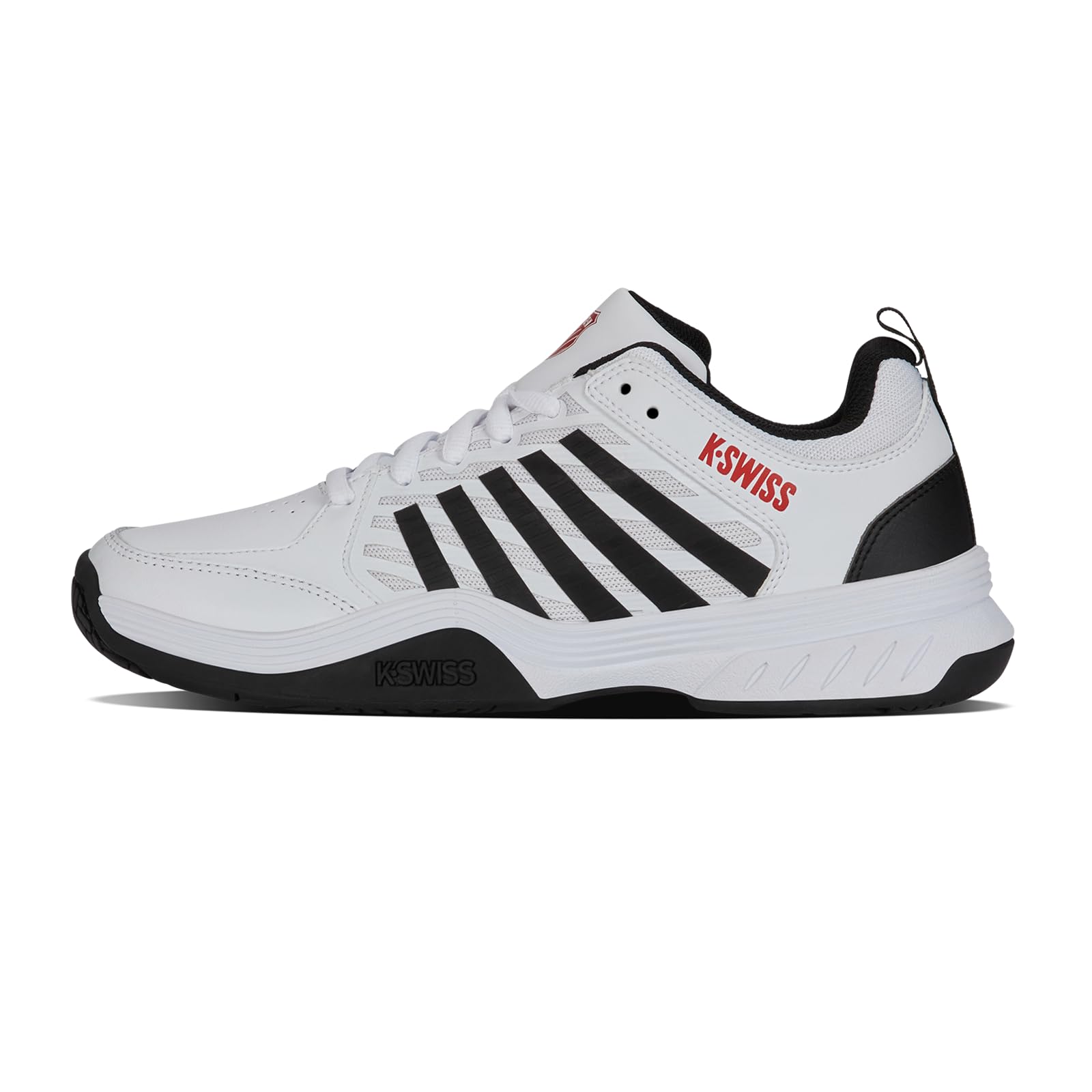
The K-Swiss Court Express 2 is a cult favorite among players who connect shoe fit with knee health. One reviewer at five-foot-seven and 142 pounds explicitly credits this shoe with eliminating knee pain during and after pickleball, pointing to the fit and midsole width as the key factors that reduce joint impact. The shoe features a classic K-Swiss silhouette with a wider toe box than most performance tennis shoes, though it remains less spacious in the forefoot than the Wilson Pickle Pro.
The upper combines synthetic leather with mesh for a durable yet breathable build that resists tearing. The outsole uses a dense rubber compound that holds up well on dry and wet hardcourts, with multiple users reporting the soles last through daily two-to-three-hour sessions. Stay-tied laces eliminate the mid-match re-tying annoyance, and the medium-to-high arch support fits players who need a structured footbed.
On the downside, the shoe is heavier than modern mesh sneakers, though testers note the weight is distributed well and does not feel clunky during play. The forefoot area can feel slightly tight for players with naturally wide feet, so a half-size up may be necessary for a comfortable fit. Overall, it is a classic, durable construction that prioritizes support and joint health over flashy aesthetics.
Why it’s great
- Effective at reducing knee pain during lateral movement
- Durable outsole rubber for daily hardcourt use
- Stay-tied laces prevent mid-game adjustments
Good to know
- Heavier than mesh court shoes
- Forefoot may feel tight for wide-footed players
5. K-Swiss Women’s Court Express Tennis Shoe
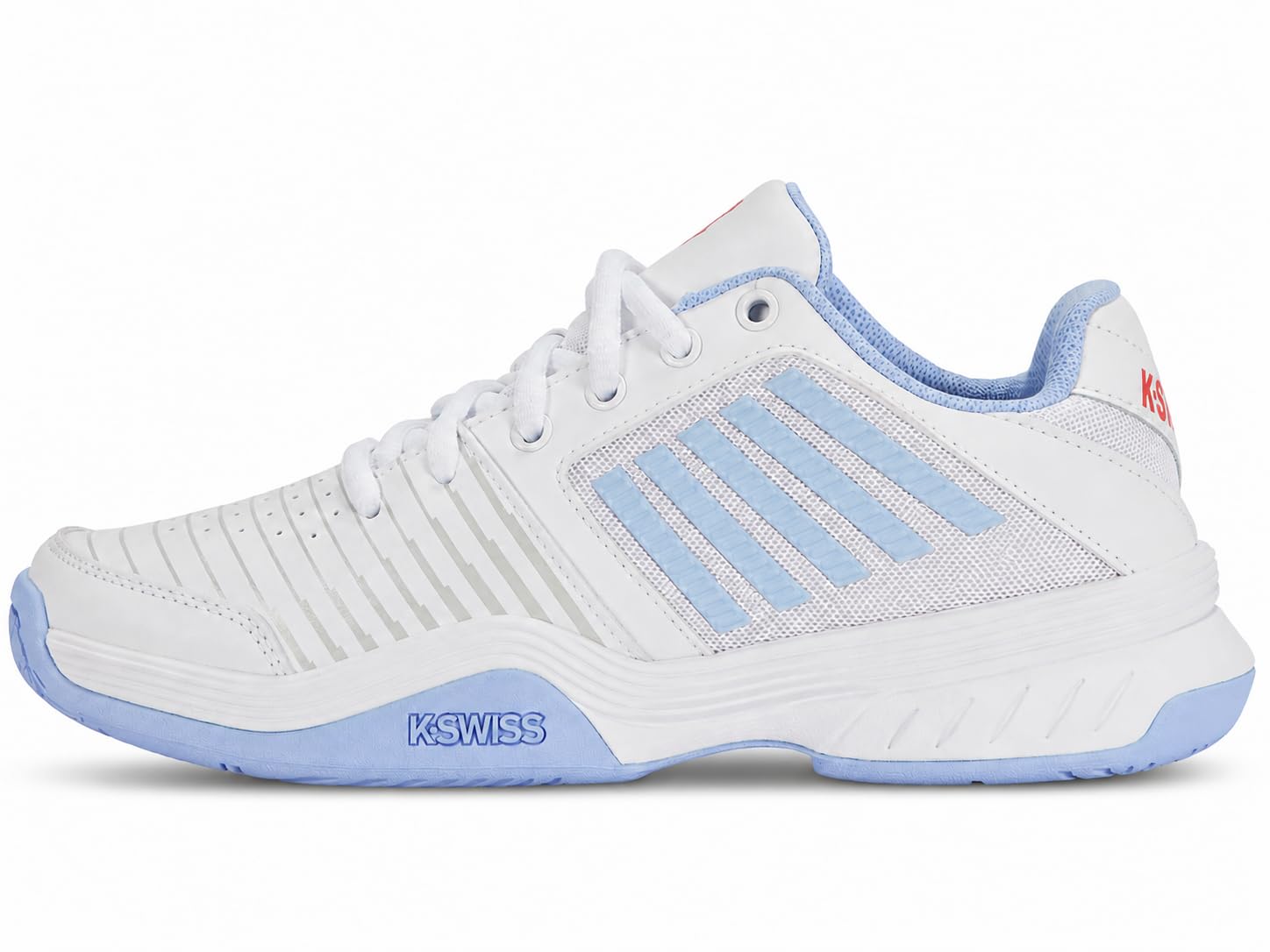
The women’s K-Swiss Court Express delivers a roomy fit that stands out in the affordable category. Multiple reviews from women with wider feet confirm the ample toe room eliminates the pinching and numbness that narrow court shoes cause. The leather upper adds a layer of durability and protection that mesh sneakers cannot match, making this shoe suitable for both court play and all-day standing work — one buyer uses them professionally as a handywoman and painter.
The shaped sole provides solid traction on hard surfaces, and the overall construction feels sturdy without being overly heavy. The cushioning is moderate — it absorbs shock well enough for recreational play but is not designed for the high-impact pounding of advanced tournament matches. The shoe does come with a caveat: the leather upper is stiff out of the box and requires a break-in period before it softens to match your foot shape.
Fit is true to size for a size 9 (EU 41), with no heel slippage reported. The classic K-Swiss styling is understated but clean, fitting in just fine at the club or a casual outing. If you need a wide court shoe that protects your feet with genuine leather and does not squeeze your toes, this is the most accommodating option on the list.
Why it’s great
- Excellent width for wide-footed players
- Durable leather upper resists tearing
- True-to-size fit with ample toe room
Good to know
- Leather upper needs break-in time to soften
- Slightly heavier than all-mesh court shoes
6. Skechers Women’s Viper Court Pro Pickleball Sneaker
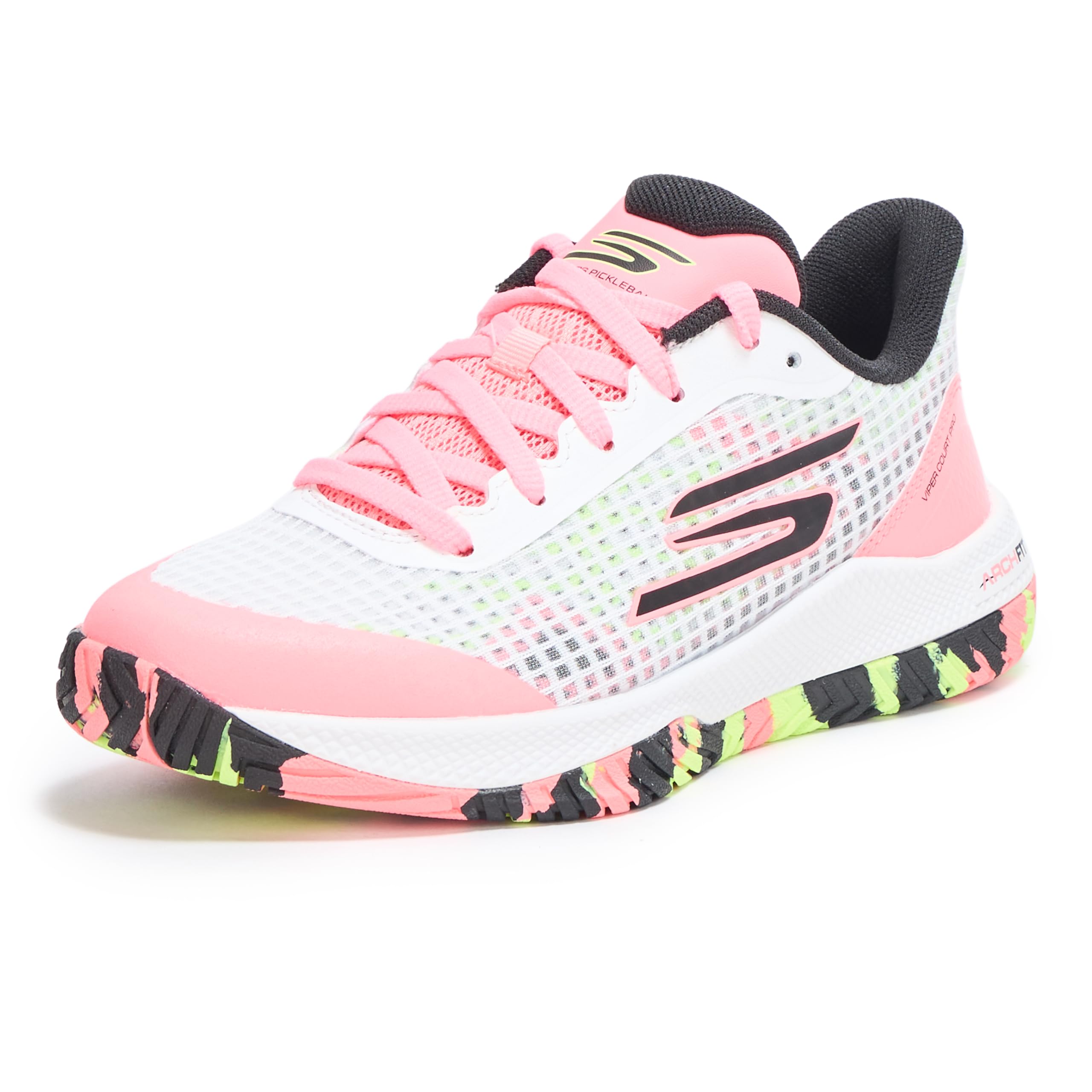
The Skechers Viper Court Pro bridges the gap between a lifestyle sneaker and a court-specific shoe with its proprietary memory foam insole. The plush footbed is a standout for players dealing with plantar fasciitis or general foot fatigue, as the foam molds to your arch after a few wears. The breathable mesh upper keeps the foot cool, and the outsole delivers reliable grip on indoor courts without being overly sticky.
However, the fit is polarizing. Several reviewers with average-width feet report the toe box is narrow, leading to calluses on the little toes after extended play. Sizing down half a size is a common recommendation to avoid the excess length and toe wrinkling. The memory foam also softens the ground feel, so players who prefer a direct connection to the court may find the platform too cushioned for precise footwork.
One notable issue is an audible squeak that develops after a few months of use — a reported annoyance for at least one buyer. On the positive side, frequent players who use heel cushions report excellent compatibility, and the sole wear is reasonable with three sessions per week. If your priority is maximum step-in comfort and you have a narrow-to-average foot, the Viper Court Pro delivers a premium sensation at a price that undercuts dedicated tennis models.
Why it’s great
- Plush memory foam insole reduces foot fatigue
- Breathable mesh upper for hot court conditions
- Compatible with orthotic heel cushions
Good to know
- Toe box runs narrow; average feet may develop calluses
- Some users report squeaking after extended use
- Memory foam softens court feel for precise footwork
7. adidas Men’s Kaptir 4.0 Sneakers
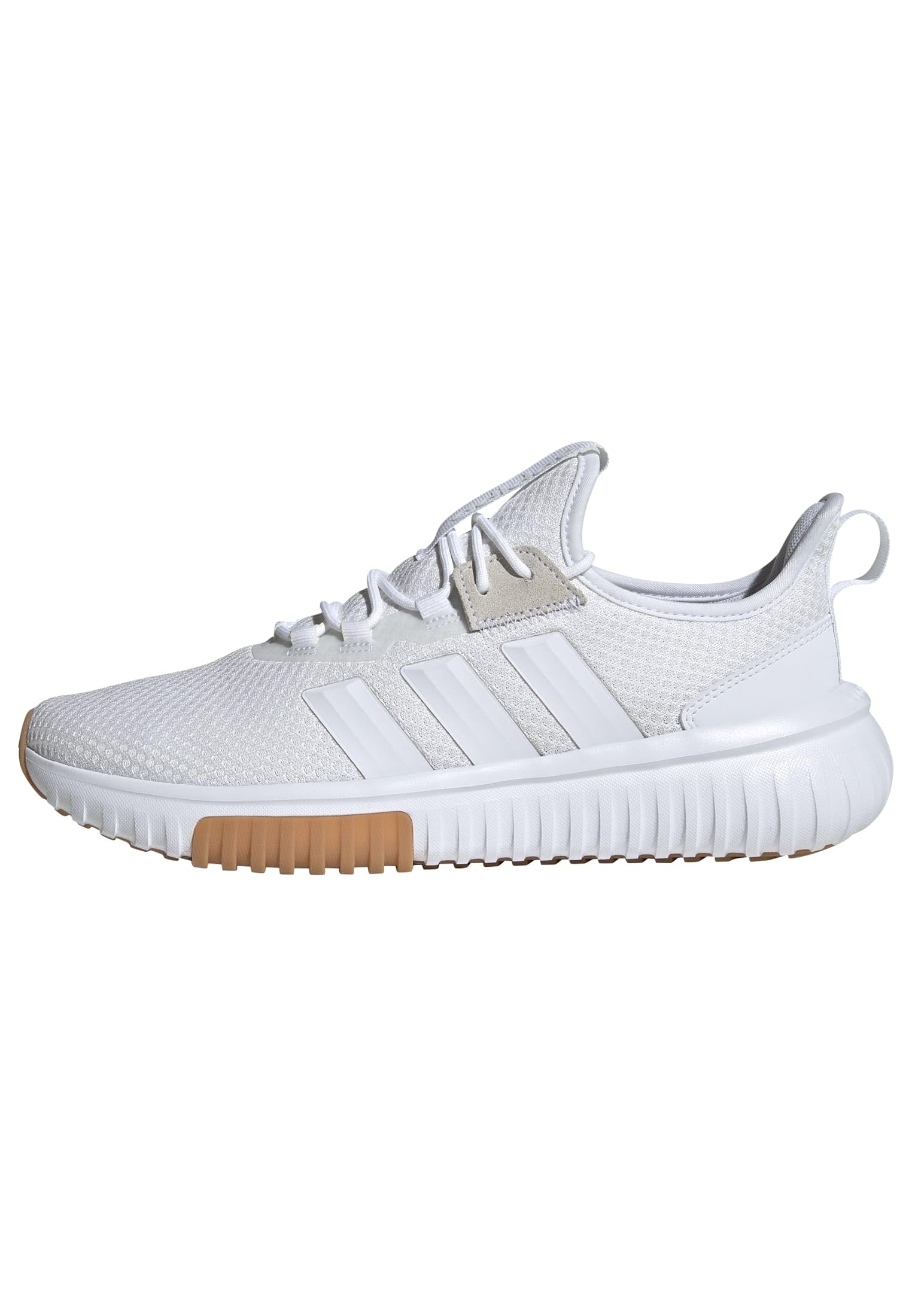
The adidas Kaptir 4.0 is the entry-level choice on this list — a lightweight, breathable sneaker that works for casual court play but is not a dedicated tennis performance shoe. The mesh upper and EVA midsole provide a comfortable, sock-like fit straight out of the box, and the toe box offers enough room for players with bunions or slightly wider feet. Several buyers use them on treadmills and for walking, which speaks to the all-day comfort of the platform.
Where the Kaptir 4.0 falls short for dedicated tennis is in lateral support. The soft midsole and flexible upper do not provide the rigid containment that aggressive cutting requires. The laces are also notably long, which can be a tripping hazard if not double-knotted. The outsole is a standard running-style tread, not a court-specific herringbone pattern, so grip on dusty hardcourts is acceptable but not confidence-inspiring.
Fit runs true to size with a roomy toe box, though buyers note the arch support is minimal for all-day standing. If you play recreationally once a week or need a budget-friendly cross-trainer that doubles as a casual shoe, the Kaptir 4.0 is a solid deal. But for players who hit the court more than twice a week, the dedicated tennis models above will serve you far longer.
Why it’s great
- Comfortable out of the box with no break-in
- Roomy toe box accommodates bunions
- Lightweight and breathable for casual wear
Good to know
- Lateral support insufficient for aggressive court play
- Laces are excessively long
- Not designed for dedicated tennis traction
FAQ
Can I use running shoes for tennis?
How do I know if a tennis shoe fits my foot width?
Does a heavier tennis shoe always mean better durability?
What does a 4D Support Chassis do in the Wilson Rush Pro Ace?
Final Thoughts: The Verdict
For most users, the affordable tennis shoes winner is the Wilson Rush Pro Ace because it combines a genuine lateral support chassis, a wide fit, and durable outsole rubber at a price that undercuts premium alternatives. If you want a shoe that prioritizes a roomy toe box and extreme hardcourt longevity, grab the adidas Mens Courtjam Control 3. And for players battling knee pain who need a stable platform, nothing beats the K-Swiss Men’s Court Express 2.