
Our readers keep the lights on and the weekend projects moving. As an Amazon Associate, I earn from qualifying purchases.
The jump from a headset mic or your laptop’s built-in to a dedicated condenser microphone is one of the most satisfying upgrades you can make for gaming, streaming, or podcasting. But the marketplace is flooded with spec sheets that confuse more than they clarify, especially for someone just starting out.
I’m Rikta — the co-founder and writer behind FitlyFast. I’ve spent countless hours analyzing audio frequency response curves, polar pattern behavior, and ADC bit-depth performance to separate the mics that genuinely smooth your learning curve from those that just look good on a desk.
The key to a great first microphone is picking a model that tames background noise without demanding a treated room and connects via USB for immediate plug-and-play. After extensive spec research and comparison across dozens of units, I’ve built a focused list of the best beginner microphone options that actually deliver clean, vocal-focused sound right out of the box.
How To Choose The Best Beginner Microphone
The most common mistake new buyers make is chasing a “studio-quality” label without understanding that a microphone’s environment matters more than its price tag. A sensitive condenser mic in a noisy room will sound worse than a properly-positioned budget unit. Focus your decision on these two pillars.
Polar Pattern: Your First Line of Defense Against Room Noise
A cardioid or supercardioid pattern is non-negotiable for a first mic. These shapes reject sound from the sides and rear, so the hum of your PC fans or the click of your mechanical keyboard doesn’t compete with your voice. An omnidirectional pattern, which picks up everything equally, will frustrate you unless you have a fully sound-treated room.
Bit Depth and Sampling Rate: The Numbers That Actually Matter
For voice-only content like podcasts, Discord calls, or game commentary, 16-bit/44.1kHz is perfectly adequate. The jump to 24-bit/96kHz gives you more dynamic range and headroom for editing, but it also makes the mic more sensitive to subtle room reflections. For a first mic, 24-bit capability is a nice bonus, but don’t sacrifice a good polar pattern or a built-in mute button to get it.
Quick Comparison
On smaller screens, swipe sideways to see the full table.
| Model | Category | Best For | Key Spec | Amazon |
|---|---|---|---|---|
| SENNHEISER Professional Profile | Premium USB | Plug-and-play vocal clarity | Cardioid capsule, metal housing | Amazon |
| Audio-Technica AT2020USB-X | Premium USB | High-res home studio recording | 24-bit/96kHz ADC converter | Amazon |
| Logitech Blue Yeti | Multi-Pattern USB | Flexible recording scenarios | Three-capsule array | Amazon |
| Blue Yeti (Renewed) | Multi-Pattern USB | Budget access to multi-pattern recording | Four selectable pickup patterns | Amazon |
| Razer Seiren V3 Mini | Compact USB | Small desk setups | Supercardioid pattern | Amazon |
| HyperX SoloCast 2 | Value USB | 24-bit audio on a budget | 24-bit/96kHz sampling rate | Amazon |
| Razer Seiren V2 X | Entry USB | Physical controls on a budget | Supercardioid pattern | Amazon |
In‑Depth Reviews
1. SENNHEISER Professional Profile

The Sennheiser Profile delivers a natural, warm vocal presence that makes it the standout choice for a first microphone. Its German-engineered cardioid condenser capsule is housed in a metal body that feels substantial, and the plug-and-play USB-C connection works across Windows, macOS, and Linux without any driver installation. This is the mic you buy when you want reliable, broadcast-grade sound without ever opening a software panel.
The front-facing controls are a masterclass in user-centric design. A large mute button with an intuitive LED indicator, combined with twistable knobs for gain, volume, and the mix between your microphone and computer audio, puts everything at your fingertips. The included table stand is compact and stable, though you may eventually want a boom arm to position the capsule closer to your mouth for maximum clarity.
Where this mic truly shines is in its resistance to obsolescence. By relying on the universal USB audio standard instead of proprietary software, the Profile will work seamlessly on any future computer you own. The built-in pop filter is effective enough that you can skip buying a separate foam windscreen for most vocal work, keeping your setup clean and minimal.
Why it’s great
- Warm, natural cardioid sound that flatters the human voice
- Metal construction and intuitive front-panel controls
- No software dependency ensures long-term compatibility
Good to know
- Desk stand is low; a boom arm is recommended for ideal placement
- No XLR output for future mixer upgrades
2. Audio-Technica AT2020USB-X

The AT2020USB-X brings Audio-Technica’s legendary studio microphone lineage directly into a USB format. With a 24-bit/96kHz high-resolution AD converter, this mic captures vocal and acoustic instrument detail that budget units simply cannot reproduce. The smooth, extended frequency response is ideal for podcasting, voiceover work, and home studio recording where clarity above 10kHz matters.
Its stainless steel body and custom desk stand feel premium, and the soft-touch capacitive mute button is silent and responsive. The built-in headphone jack offers zero-latency monitoring, letting you hear exactly what the microphone is capturing. The two-state LED ring provides a clear visual confirmation of your mute status, which is a small but invaluable detail during live streams.
Be aware that this mic is extremely sensitive. It will pick up the hum of a nearby PC fan or the rustle of papers on your desk with remarkable fidelity. For best results, use a boom arm to position the capsule close to your mouth and consider a quiet recording environment. The included USB-C to USB-A cable comes with an adapter for older ports, making it versatile across different setups.
Why it’s great
- Professional-grade 24-bit/96kHz sound quality
- Stainless steel construction and capacitive mute button
- Zero-latency headphone monitoring
Good to know
- Extremely sensitive to background noise; needs a quiet room
- LED ring stays on after PC shutdown for some users
3. Logitech Blue Yeti
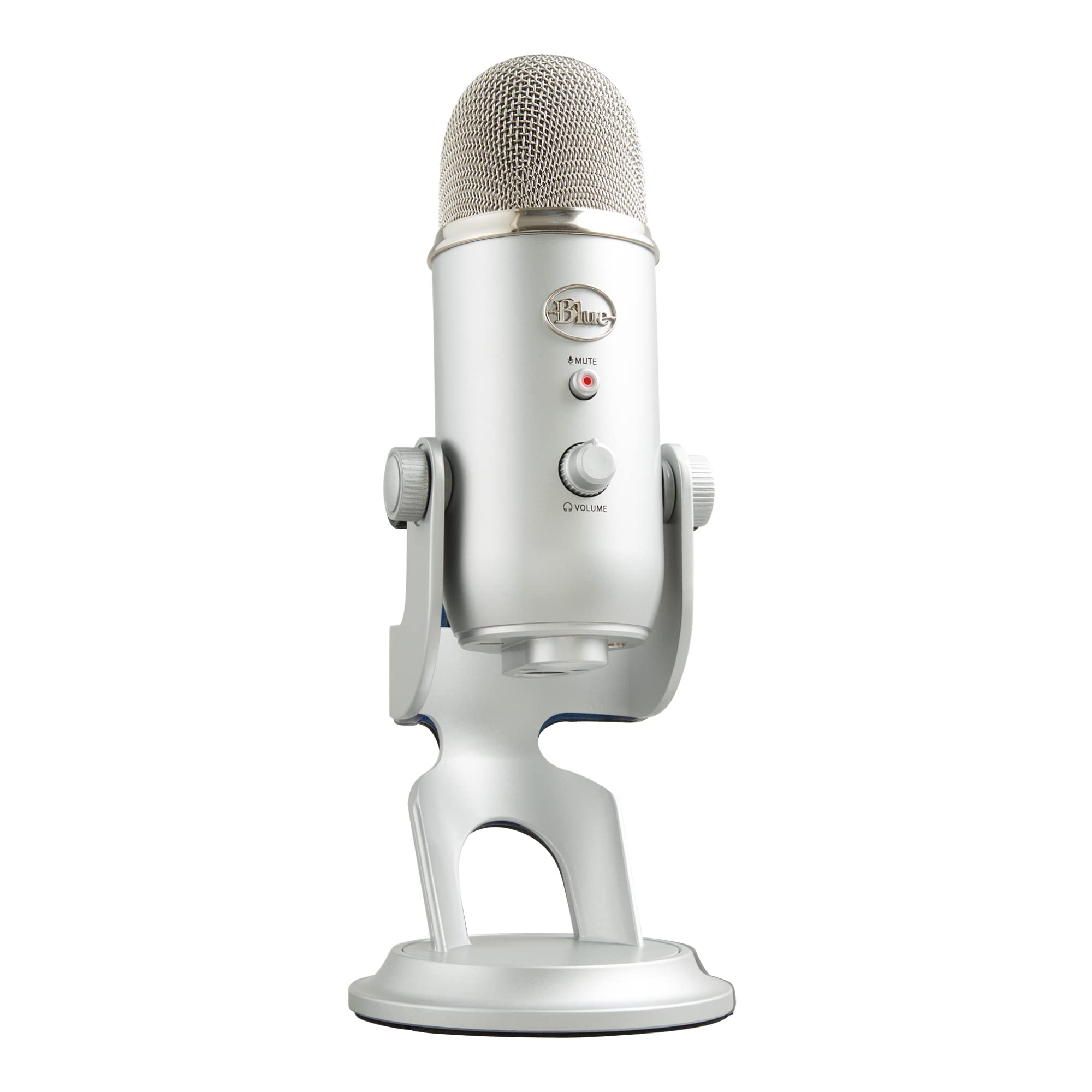
The Blue Yeti is the most recognizable USB microphone on the market for good reason. Its three-capsule array allows you to switch between cardioid, omnidirectional, bidirectional, and stereo pickup patterns, giving you the flexibility to record solo vocals, two-person interviews, or even an entire room with a single mic. This versatility is unmatched at its price tier and makes it a forgiving choice for beginners still learning optimal mic placement.
The onboard audio controls are comprehensive: headphone volume, pattern selection, instant mute, and mic gain are all directly accessible on the body. The Blue VO!CE software adds broadcast-quality effects and filters, though you can use the mic perfectly well without ever installing it. The adjustable desktop stand lets you pivot the mic towards the sound source for better vocal focus.
Its major downside is its sheer sensitivity. The Yeti will capture keyboard clicks, mouse taps, and room echo with alarming clarity. Many users ultimately pair it with a shock mount and a boom arm to control this. The Micro-USB connection also feels outdated compared to modern USB-C alternatives, though it remains functional and reliable.
Why it’s great
- Four pickup patterns offer unmatched recording flexibility
- Complete onboard audio controls with Blue VO!CE software
- Strong, broadcast-quality sound right out of the box
Good to know
- Extreme sensitivity requires a quiet room or add-on accessories
- Micro-USB connector is less durable than modern USB-C
4. Blue Yeti (Renewed)

For the budget-conscious beginner, the renewed version of the Blue Yeti delivers the exact same three-capsule array and four-pattern flexibility as the brand-new unit at a notably lower entry point. This is the same mic that has powered thousands of podcasts and YouTube channels, proving that a renewed device can still deliver professional vocal quality. The cardioid pattern is excellent for isolating a single voice in a less-than-perfect room.
The positionable design allows you to tilt the mic to find the sweet spot for your voice, and the onboard mute button, gain control, and headphone jack give you direct command over your audio chain. The built-in stand is stable on a desk, though its footprint is sizable. Many users find they get the best results by removing the base and mounting the mic on a boom arm to get the capsule closer to their mouth.
The primary trade-off here is the Micro-USB port, which has been a known weak point on older Yeti units. As a renewed product, you are relying on the condition of the specific unit you receive. The plastic enclosure is durable but does not carry the same premium feel as the all-metal Sennheiser or Audio-Technica alternatives. Still, for raw feature set per dollar, this remains a compelling entry point.
Why it’s great
- Same four-pattern versatility as the new Yeti at a lower cost
- Proven broadcast-quality sound for vocals and podcasts
- Direct onboard gain and mute controls
Good to know
- Micro-USB connection is fragile and outdated
- Renewed condition varies; inspect thoroughly upon delivery
5. Razer Seiren V3 Mini

The Razer Seiren V3 Mini is a masterclass in small-footprint design. Its ultra-compact profile takes up virtually no desk space while delivering a supercardioid pickup pattern that does an excellent job of rejecting peripheral noise like typing and mouse clicks. The custom condenser capsule captures voice with impressive detail, especially in the higher frequencies where vocal intelligibility lives.
The tap-to-mute sensor is one of the best implementations on the market. A single tap instantly silences the mic, and the integrated LED indicator gives you a clear visual confirmation of your status. This is a lifesaver during chaotic Discord calls or live streams. The built-in shock absorber dampens accidental desk bumps, and the tiltable stand allows you to angle the mic towards your mouth without needing a boom arm.
One notable omission is the lack of a physical gain or volume knob. All adjustments are handled through the Razer Synapse software, which is powerful but adds an extra step to your setup. The background noise suppression is effective but not class-leading; a quiet room still produces the best results. For the price, this is a remarkably capable and stylish mic for gamers and streamers with limited desk space.
Why it’s great
- Ultra-compact and lightweight, perfect for small desks
- Supercardioid pattern focuses on voice, rejects side noise
- Excellent tap-to-mute sensor with clear LED indicator
Good to know
- No physical gain or volume controls on the mic body
- Background noise dampening is good but not total
6. HyperX SoloCast 2
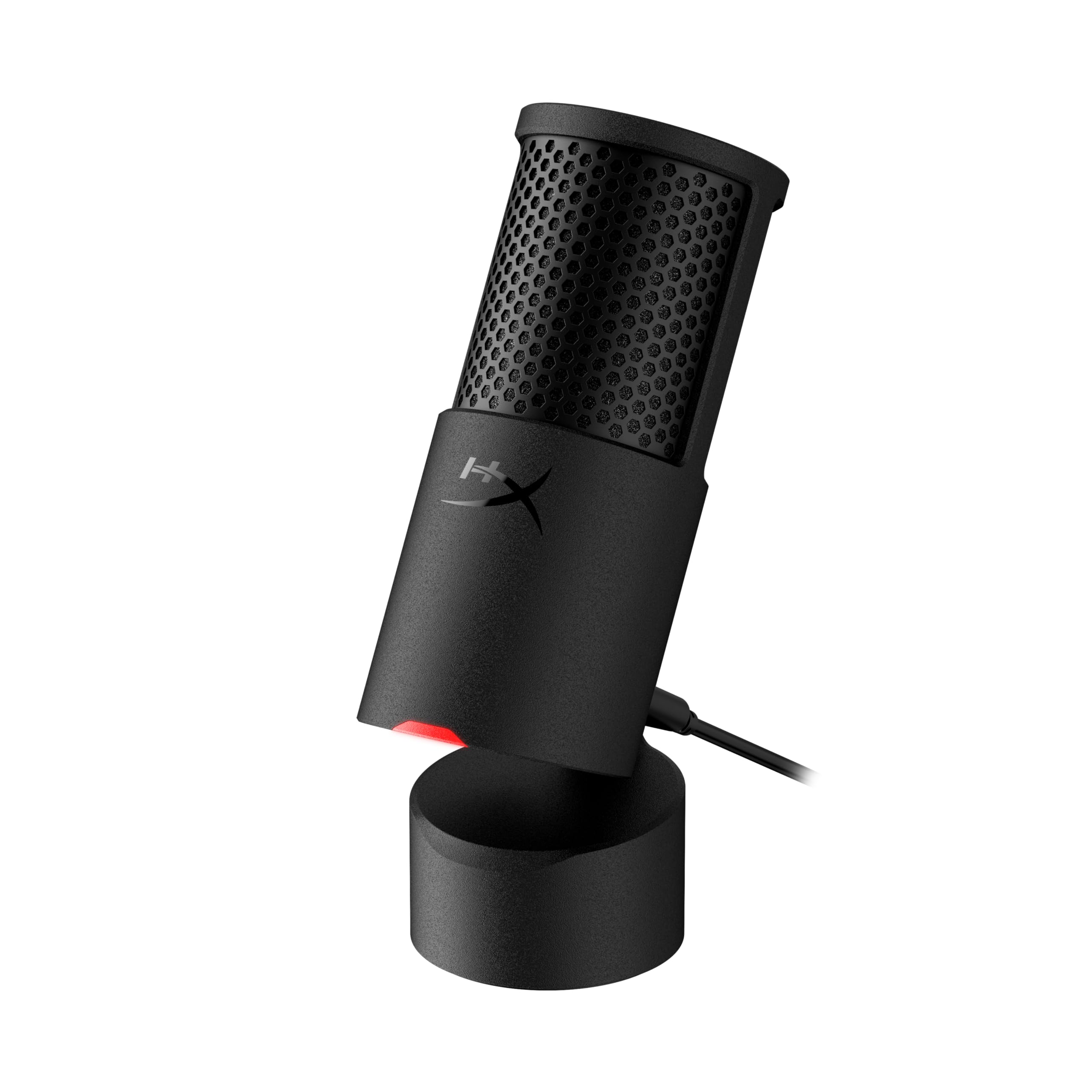
The HyperX SoloCast 2 manages to pack 24-bit/96kHz recording resolution into a compact, budget-friendly package without sacrificing build quality. Its cardioid polar pattern is well-tuned for focused vocal recording, and the built-in foam pop filter does an admirable job of taming plosive sounds from hard ‘P’ and ‘B’ consonants. The internal shock mount reduces the thud of desk vibrations, a feature typically reserved for more expensive mics.
The tap-to-mute sensor is responsive, but the LED indicator operates in reverse — red when live and off when muted — which takes some getting used to. The USB-C connection on the lower back is convenient for cable management but can be dislodged by accidental movement, so securing the cable is recommended. The tiltable stand has a weighted base that provides good stability on a desk.
Customization via the HyperX NGENUITY software lets you apply high-pass, low-pass, and voice enhancement filters, which are genuinely useful for reducing room rumble or sharpening vocal presence without third-party plugins. Without the software, the mic remains plug-and-play and delivers clean, natural sound. For its price, the SoloCast 2 offers exceptional value, especially if you are building your first streaming or recording setup.
Why it’s great
- High-resolution 24-bit/96kHz audio at a budget price
- Built-in pop filter and internal shock mount
- Customizable audio filters via NGENUITY software
Good to know
- USB-C connection on the back can be accidentally unplugged
- Desk stand is low; a boom arm improves sound quality
7. Razer Seiren V2 X

The Razer Seiren V2 X is a straightforward entry-level mic that prioritizes essential physical controls over compactness. Unlike the V3 Mini, this model includes a dedicated gain knob and a physical mute button on the body, giving you immediate, software-free control over your audio. Its 25mm supercardioid condenser capsule is tuned for voice accuracy, and the integrated digital limiter prevents clipping during loud moments without distorting the signal.
The built-in shock absorber is effective at dampening vibrations from desk bumps, and the mic monitoring feature lets you plug a headset directly into the mic to hear your own voice in real-time. This is a critical tool for maintaining consistent audio levels during live streams or chaotic voice channels. The USB-C connectivity and lightweight plastic construction make it easy to mount on a boom arm without straining the arm’s springs.
The main trade-off for the physical controls is a slightly higher pickup of ambient room noise compared to the V3 Mini’s more refined supercardioid implementation. Users with noisy PC fans or loud keyboards will need to be mindful of positioning. The plastic build feels less premium than aluminum-bodied competitors, but it keeps the weight down and the price accessible. For those who prefer knobs and buttons over software panels, this is a solid, reliable choice.
Why it’s great
- Physical gain knob and mute button for direct control
- Integrated digital limiter prevents audio clipping
- Built-in shock absorber and mic monitoring
Good to know
- More sensitive to room noise than pricier alternatives
- Plastic construction feels less durable than metal mics
FAQ
Do I need XLR or USB for my first microphone?
Will a supercardioid mic completely eliminate keyboard noise?
Can I use a beginner USB mic with my phone or tablet?
Final Thoughts: The Verdict
For most users, the beginner microphone winner is the SENNHEISER Professional Profile because it delivers natural, warm vocal sound with intuitive front-panel controls and a metal build that will outlast your entire first setup. If you want high-resolution 24-bit/96kHz recording for a home studio, grab the Audio-Technica AT2020USB-X. And for the best value-to-feature ratio on a tight desk, nothing beats the Razer Seiren V3 Mini.