
Our readers keep the lights on and the weekend projects moving. As an Amazon Associate, I earn from qualifying purchases.
A flooded basement is one of the most stressful events a homeowner faces, and the only thing standing between your finished space and a costly cleanup is a reliable pump. A 1/2 HP sump pump strikes the critical balance between raw pumping power and manageable energy consumption, making it the most popular choice for residential sump pits across the country. Whether you are replacing an aging unit that failed during a storm or installing a primary pump in a new home, the decision comes down to build materials, float switch design, and flow rate consistency under load.
I’m Rikta — the co-founder and writer behind FitlyFast. I’ve spent countless hours analyzing the specifications, build quality, and real-world performance data across dozens of sump pump models to identify the units that deliver durable, efficient water removal without unexpected failures.
This guide focuses exclusively on the features that define a long-lasting automatic submersible pump, from cast iron housings to PSC motors, to help you confidently select the best 1/2 hp sump pump for your home.
How To Choose The Best 1/2 HP Sump Pump
A 1/2 HP sump pump is a serious investment in home protection, and the wrong choice can mean premature failure during a heavy rain event. Focus on three key areas: housing material, motor type, and float switch reliability. Thermoplastic pumps are lightweight and affordable, but they dissipate heat poorly and can warp over time in continuous use. Cast iron models are heavier, run cooler, and absorb vibration, translating to longer service life and quieter operation. The motor technology — standard split-phase versus PSC — directly impacts starting torque, energy draw, and how much noise the pump makes when it kicks on. Finally, the float switch design determines whether the pump fits your pit and how reliably it activates. Electronic sensors handle narrow spaces well but are more sensitive to debris, while vertical and tethered mechanical floats offer proven mechanical reliability.
Housing Material — Thermoplastic vs. Cast Iron
The housing is the pump’s first line of defense against corrosion, impact, and thermal stress. Thermoplastic pumps like those from Acquaer are lightweight, rust-proof, and significantly more affordable, making them an excellent option for secondary or backup applications. Cast iron pumps from brands like Basement Watchdog, Red Lion, and Zoeller are significantly heavier — often 20 to 35 pounds — and their thermal mass helps keep the motor cool during extended runtime. Cast iron also dampens vibration, so the pump runs noticeably quieter. If this is your primary sump pump in a finished basement, cast iron is the safer long-term choice.
Float Switch Design — Vertical vs. Tethered vs. Electronic
The float switch controls when the pump turns on and off. Tethered floats use a corded ball that rises with the water level; they require a wider pit (typically 14 inches or more) to avoid tangling against the pit wall. Vertical float switches are housed in a protective cage and operate in a narrower column of water, making them ideal for tight 10- to 12-inch basins. Electronic sensors have no moving parts and can activate in as little as 1.5 inches of water, but they are more prone to failure from power surges or debris coating the sensor. For reliability, a mechanical float — vertical or tethered — remains the gold standard in sump pump applications.
Motor Type — PSC vs. Split-Phase
Permanent Split Capacitor (PSC) motors, found in the Basement Watchdog and Red Lion models, use a capacitor to provide a smoother start and higher efficiency during operation. They draw less current on startup, produce less heat, and run significantly quieter than standard split-phase motors. Split-phase motors are simpler and cheaper, but they generate a distinct startup hum and can run hotter over time. For a pump that may cycle dozens of times during a single storm, a PSC motor delivers meaningful gains in energy savings and service life.
Quick Comparison
On smaller screens, swipe sideways to see the full table.
| Model | Category | Best For | Key Spec | Amazon |
|---|---|---|---|---|
| Basement Watchdog SIT-50D | Submersible | Primary basement protection | 4400 GPH at 0 ft lift | Amazon |
| Red Lion RL-SC50V | Submersible | Long-term reliability | 4300 GPH, cast iron housing | Amazon |
| Zoeller Waste-Mate 267 | Sewage/Effluent | Heavy-duty & waste handling | 125 GPM, 2″ solids pass | Amazon |
| Westinghouse 1/2 HP | Submersible | High flow with top suction | 4100 GPH, 28 ft vertical lift | Amazon |
| Acquaer 2450 GPH Auto | Submersible | Automatic convenience | 2450 GPH, smart sensor | Amazon |
| Acquaer 2906 GPH | Utility/Transfer | Portable & multi-purpose | 2906 GPH, 1/5″ solids | Amazon |
In‑Depth Reviews
1. Basement Watchdog SIT-50D

The Basement Watchdog SIT-50D is built around a heavy-duty cast iron housing and a copper-wound PSC motor, delivering 4,400 GPH at zero lift and a very respectable 3,540 GPH at 10 feet of vertical head. The dual carbon-ceramic shaft seals and a Buna-N seal provide robust protection against water intrusion, addressing the primary failure mode of submersible pumps. At 20 pounds, the cast iron construction absorbs vibration effectively, making this one of the quieter pumps in its class during extended storm cycles.
The caged dual float switch offers redundancy and prevents debris or electrical wires from interfering with operation, which is a common issue with tethered float designs. The top-discharge configuration and compact footprint — 6.25 inches wide — allow it to fit comfortably in narrow sump pits that measure under 12 inches in diameter. The floats are adjustable on the discharge pipe, giving you flexibility to dial in the on/off water levels for shallow or deep pits.
Users consistently report easy DIY installation, responsive customer support for parts or troubleshooting, and reliable performance over multiple years of use. The dual float redundancy provides peace of mind during storms, and the PSC motor draws less current than split-phase alternatives, making it an excellent foundation for a battery backup system. This pump represents the best balance of build quality, flow performance, and long-term value for a primary residential sump pump.
Why it’s great
- Cast iron housing with dual shaft seals for long motor life
- Dual float switches in a protective cage for redundancy
- Quiet PSC motor ideal for finished basements
Good to know
- Top discharge design may require tight clearance in shallow pits
2. Red Lion RL-SC50V

The Red Lion RL-SC50V is a veteran in the sump pump space, with years of proven performance backed by a rugged cast iron housing and a clog-resistant impeller that handles semi-solids up to 3/8 inches. Pumping 4,300 GPH at zero feet with a 28-foot shutoff height, this unit punches above the typical 1/2 HP spec, and the PSC motor draws only 5.3 amps — meaning it can run on smaller inverters for backup scenarios. The piggy-back vertical float switch is user-serviceable and can be unplugged from the pump for easy testing or replacement without disassembling the discharge plumbing.
The float activation range — turning on at 7.25 inches of water and off at 2.75 inches — is well-suited for standard 15-inch or larger sump basins. The 10-foot power cord is sufficient for most installations, though you may need an extension for deeper pits. The cast iron volute and housing sink heat away from the motor effectively, and thermal overload protection automatically shuts the motor down before damage occurs in a dry-run scenario.
The pump is extremely quiet in operation, often described as inaudible from a few feet away with the cover on. The cast iron build is non-negotiable for buyers who expect their sump pump to outlast the warranty period by several years, and the Red Lion delivers that durability without demanding a premium price.
Why it’s great
- Proven long-term reliability with many units exceeding 10 years
- Low amp draw ideal for battery backup systems
- User-serviceable vertical float switch
Good to know
- Requires a basin of at least 15 inches for proper float operation
3. Zoeller Waste-Mate 267

The Zoeller Waste-Mate 267 is a different class of pump altogether — a sewage-rated unit with a 125 GPM flow rate and the ability to pass 2-inch spherical solids through its non-clogging vortex impeller. While most sump pumps are designed for clear water or small debris, this Zoeller handles effluent, gray water, and even waste from basement bathrooms. The ASTM Class 25 cast iron housing and switch case are built to industrial standards, and the pump weighs 35.79 pounds — a clear indicator of the material density inside.
The float-operated automatic switch is a 2-pole mechanical design that provides reliable start/stop cycling without the sensitivity issues of electronic sensors. The 21.5-foot maximum shutoff height is lower than some dedicated sump pumps, but the trade-off is the ability to handle solids that would instantly clog a standard pump. The 1-1/2 inch NPT discharge is standard, and the pump is completely submersible with a watertight, dust-tight seal rated for continuous submersion.
The cast iron construction dampens noise effectively, and the pump’s weight ensures it stays planted in the basin. For anyone who needs a single pump to handle both standard sump duty and backup sewage or effluent pumping, the Zoeller Waste-Mate 267 is the most capable option on this list, though it comes at a premium price that reflects its industrial-grade build.
Why it’s great
- Industrial cast iron build with proven multi-decade lifespan
- Passes 2-inch solids for sewage and effluent applications
- 125 GPM flow rate handles extreme water intrusion
Good to know
- Premium pricing reflects commercial-grade specifications
4. Westinghouse 1/2 HP Sump Pump
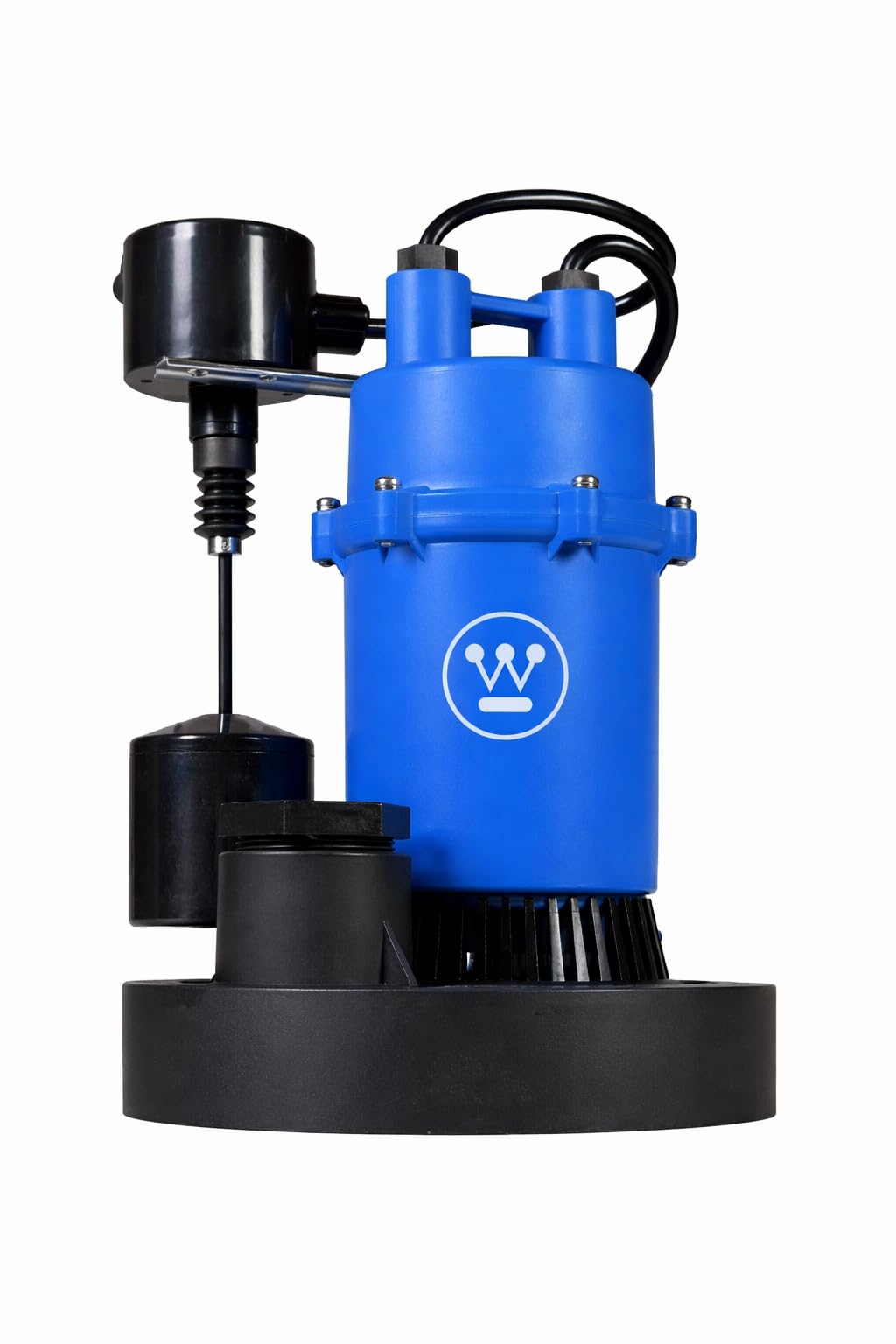
The Westinghouse 1/2 HP Sump Pump delivers an impressive 4,100 GPH at zero lift with a 28-foot vertical shutoff, placing it near the top of the flow rate chart for this horsepower class. The distinguishing feature here is the top-suction anti-airlock system, which prevents the pump from losing prime if air becomes trapped in the volute. This is a practical advantage in pits where the water level fluctuates quickly and the pump cycles on and off frequently, as it eliminates the need for a dedicated weep hole.
The epoxy-coated aluminum housing is lighter than cast iron at roughly 10 pounds, making it easier to handle during installation, while the oil-filled PSC motor with thermal overload protection provides efficient cooling and extended runtime. The integrated vertical float switch is compact enough for narrow pits and activates reliably as water rises. The discharge connections accept both 1-1/4 inch and 1-1/2 inch plumbing, giving flexibility for retrofitting into existing discharge lines.
Users note that the pump operates quietly and moves water very quickly during storm events. The aluminum housing is corrosion-resistant, though it does not have the same vibration-damping mass as cast iron. The top-suction design filters debris from above the pump rather than from the bottom, reducing the likelihood of clogging in pits with sediment. For homeowners who prioritize flow rate and anti-airlock reliability in a mid-weight package, the Westinghouse is a strong performer.
Why it’s great
- Top-suction design prevents air lock issues
- High flow rate with 28-foot vertical lift capacity
- Lightweight aluminum housing for easy installation
Good to know
- Aluminum housing lacks the vibration damping of cast iron
5. Acquaer 1/2 HP Automatic Sump Pump

The Acquaer 1/2 HP Automatic Sump Pump uses a built-in electronic sensor to detect water at just 2 inches of depth, automatically activating and then running for an additional 10 seconds after the water drops to 2/5 inch to ensure the basin is fully evacuated. This sensor-based activation is ideal for very narrow sump pits where a mechanical float switch cannot fit. The pump moves 2,450 GPH (40.8 GPM) with a 25-foot maximum lift, which is a moderate flow rate suitable for average residential basements rather than extreme water intrusion scenarios.
The thermoplastic construction is corrosion-resistant and lightweight, and the bottom-suction design pulls water down to 3/4 inch, leaving the pit nearly dry. The kit includes adapters for 1-1/2 inch NPT elbow, multi-hose connections, and a 3/4 inch garden hose check valve adapter, making it one of the most versatile options for temporary setup or irrigation use. The 19-foot power cord provides generous reach for distant outlets.
Owners have used this pump for continuous fountain operation and seasonal stormwater drainage, with several reporting smooth customer service experiences when issues arose. The electronic sensor is less mechanically complex than floats, but it can be more sensitive to power surges or debris coating. The 1-year warranty is shorter than some competitors, but the price point is considerably lower. This pump is a strong choice for homeowners who need automatic operation in a tight pit without paying for heavy cast iron construction.
Why it’s great
- Electronic sensor activates in only 2 inches of water
- Includes multiple hose adapters and a garden hose check valve
- Long 19-foot power cord for flexible placement
Good to know
- Thermoplastic housing runs hotter than cast iron under continuous load
6. Acquaer 1/2HP Utility Pump 2906 GPH

The Acquaer 1/2HP Utility Pump prioritizes portability and multi-surface drainage over permanent sump installation, delivering 2,906 GPH with a 26-foot maximum head. The reinforced thermoplastic casing is corrosion-resistant and lightweight with an integrated carrying handle, making it easy to move between a flooded basement, a hot tub, a pool cover, or a garden pond. The pump can handle solids up to 1/5 inch, which is sufficient for silt and small debris but not for gravel or sand-heavy water.
The low-suction base drains water down to 1/5 inch from the surface, which is excellent for nearly complete water removal on flat surfaces. The multi-outlet adapter system includes 1-1/4 inch NPT discharge with a 1-1/2 inch elbow and snap-coupling adapters for 3/4 inch, 1 inch, and 1-1/4 inch hoses. The 19.7-foot UL power cord adds convenience for reaching outlets across a yard or garage.
Users have successfully used this pump to drain swimming pools in under 30 minutes and to clear flooded yards after heavy rain. The mustard color is distinct and easy to spot, and the pump includes a built-in thermal overload protector that prevents the motor from burning out during dry-run conditions. However, this pump is not designed for permanent automatic sump duty — it lacks a float switch or electronic sensor and requires manual plug-in operation. For homeowners needing a versatile, portable pump for emergency and utility use, this is an excellent budget-friendly companion to a primary automatic sump pump.
Why it’s great
- Lightweight and portable with easy-carry handle
- Multiple hose adapter sizes included for versatile discharge
- Drains water down to 1/5 inch for nearly dry surfaces
Good to know
- Manual operation — no automatic float switch
FAQ
How do I prevent air lock in my sump pump discharge line?
Can I use a 1/2 HP sump pump with a battery backup system?
Final Thoughts: The Verdict
For most users, the 1/2 hp sump pump winner is the Basement Watchdog SIT-50D because its cast iron housing, redundant dual float switches, and efficient PSC motor deliver the best combination of durability and operational quietness for primary basement protection. If you want ultra-long proven reliability with low amp draw for backup compatibility, grab the Red Lion RL-SC50V. And for heavy-duty applications that may involve solids or gray water, nothing beats the Zoeller Waste-Mate 267.