
Our readers keep the lights on and the weekend projects moving. As an Amazon Associate, I earn from qualifying purchases.
Spotting a fleeting bird or a distant deer through a blurry lens is a heartbreak every wildlife enthusiast knows. Whether you’re scanning a treeline at dawn or following a hawk across a valley, the difference between a ghostly outline and a crisp, vibrant image comes down to the precision of the glass in your hands. Choosing the wrong pair means missed moments and eye strain, not a closer look at nature.
I’m Rikta — the co-founder and writer behind FitlyFast. I’ve spent countless hours dissecting optical specs, prism types, and lens coatings to separate marketing hype from actual field performance for this guide.
With dozens of hours spent analyzing specifications from low-light transmittance to field-of-view figures, I’ve assembled the definitive guide to the very best binoculars for viewing wildlife available today.
How To Choose The Best Binoculars For Viewing Wildlife
Finding the right binoculars for wildlife isn’t just about picking the highest magnification. A balanced combination of lens quality, weight, and real-world usability determines whether your purchase ends up in the field or in a closet. Here is what separates an excellent wildlife binocular from a frustrating one.
Magnification and Objective Lens: The Power Pair
For nature viewing, 8x to 10x magnification offers the best balance of detail and stability. An 8x42mm or 10x42mm configuration is the gold standard. The second number (the objective lens diameter in millimeters) determines how much light enters the system. A larger objective lens, like 50mm, significantly boosts low-light performance but adds weight. For handheld use with lower shake, an 8x or 10x magnification works best; higher power like 15x almost always requires a tripod.
Lens Coatings and Prism Quality: The Image Engine
The glass inside the binoculars dictates clarity. BAK-4 prisms deliver sharper, rounder images than the cheaper BK-7 variety. Fully multi-coated (FMC) lenses have multiple anti-reflective layers on every glass surface, maximizing light transmission for bright, high-contrast views even in twilight. Some premium models use proprietary coatings like Zeiss T* or Swarovski Swaroclean to further boost color fidelity and repel water.
Field of View and Eye Relief: The Usability Factors
Field of view (FOV), measured in feet at 1000 yards, tells you how wide a scene you can see. A wider FOV (330+ feet) is crucial for tracking fast-moving birds or animals in dense brush. Eye relief is the distance your eye can be from the eyepiece while still seeing the full picture. An eye relief of 15mm or more is essential for eyeglass wearers to avoid a cramped, tunnel-like view.
Quick Comparison
On smaller screens, swipe sideways to see the full table.
| Model | Category | Best For | Key Spec | Amazon |
|---|---|---|---|---|
| Vortex Copperhead HD 10×42 | Mid-range | All-around field performance | HD optics system, 334ft FOV | Amazon |
| ZEISS SFL 10×50 | Premium | Low-light & edge sharpness | 90% light transmission, LotuTec coating | Amazon |
| Sogries 10-30×50 Zoom | Budget-friendly | Versatile zoom for varied distances | 10-30x zoom range, 50mm objective | Amazon |
| Canon 18×50 IS | Premium | High-mag handheld stability | Optical image stabilization, 18x mag | Amazon |
| Steiner MM1050 Military-Marine | Mid-range | Durability in rugged conditions | NBR rubber armoring, rainproof | Amazon |
| Nocs Provisions Standard Issue 10×25 | Mid-range | Ultra-portable day hikes | 11.85oz weight, IPX7 waterproof | Amazon |
| Swarovski Optik SLC 15×56 | Premium | Long-range extreme detail | 93% light transmission, 15x mag | Amazon |
In-Depth Reviews
1. Vortex Copperhead HD 10×42

The Vortex Copperhead HD strikes the ideal balance for the serious wildlife observer. Its HD optical system delivers exceptional edge-to-edge sharpness and accurate color reproduction, putting it a clear step above standard entry-level glass. With a 10×42 configuration, you get the reach needed for spotting shy forest dwellers without sacrificing the wide field of view essential for tracking birds in flight.
Build quality is robust, featuring a rubber armor that provides a secure grip in wet conditions and durable external protection. The binoculars are fully waterproof, fogproof, and shockproof, meaning they handle a full season of rain, snow, and rough terrain without a hiccup. The included Glasspak harness is a thoughtful touch, distributing weight across your shoulders during long hikes.
Where the Copperhead truly shines is its value. It competes closely with models at twice the price, offering near-premium optical clarity for a mid-range investment. While some users note the image softens slightly at the edges compared to flagship Vortex Diamondbacks, in practice this is negligible for most wildlife scenarios. The lifetime VIP warranty is non-transferable but provides exceptional peace of mind against defects.
Why it’s great
- Outstanding HD glass with excellent color fidelity
- Weatherproof build includes quality harness
- Lifetime transferable VIP warranty
Good to know
- Slightly heavier than premium competition
- Low-light performance trails ultra-premium models
2. ZEISS SFL 10×50
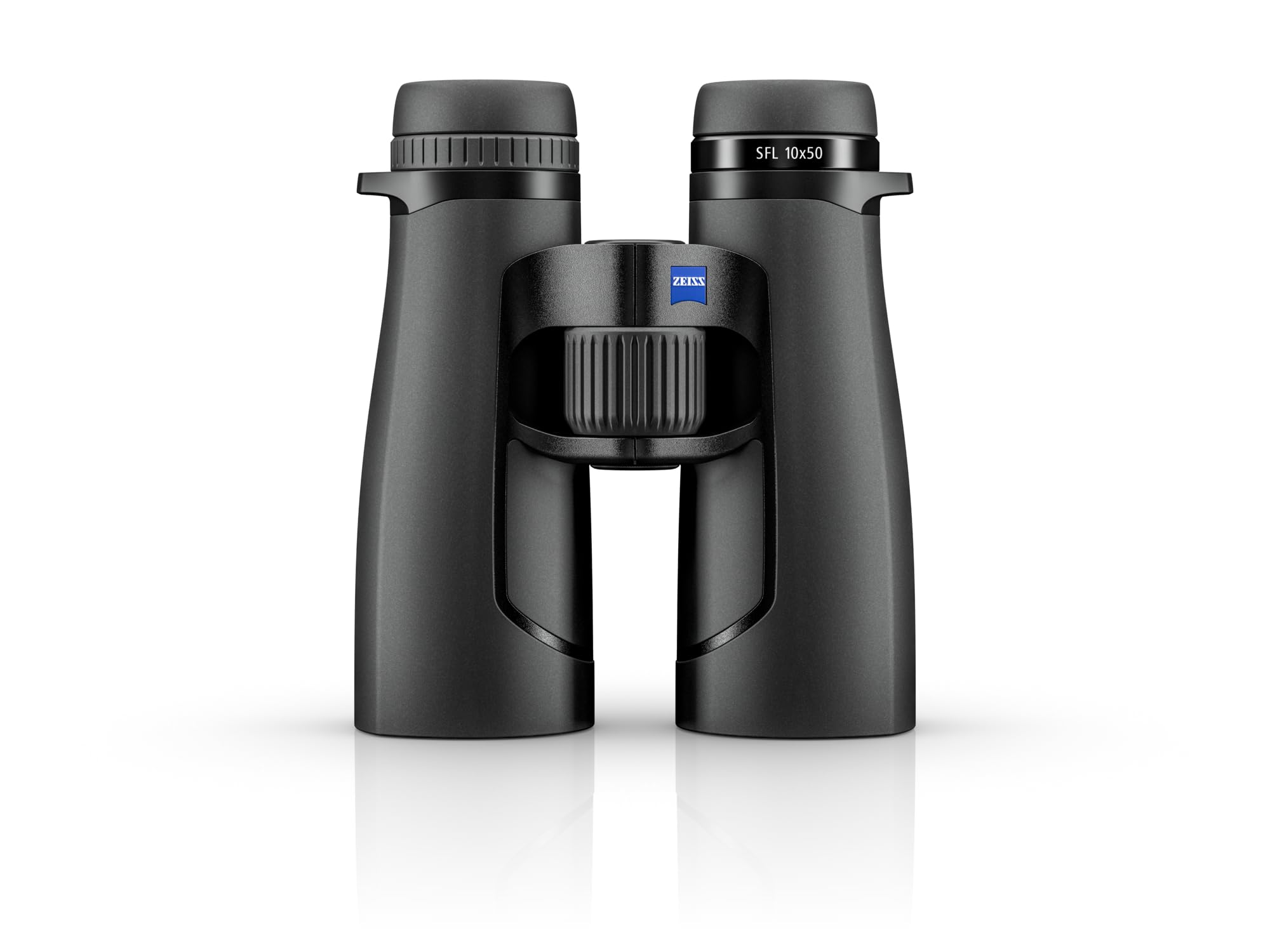
When light fades and the wildlife becomes most active, the ZEISS SFL 10×50 is the tool that extends your viewing window by precious minutes. Its 90% light transmission rating, achieved through the proprietary T* coating and high-definition glass, renders incredible detail in dawn and dusk conditions. The 50mm objective lens gathers significantly more light than the standard 42mm, making it a superior choice for twilight observation.
The SFL frame is remarkably lightweight for a 50mm binocular, thanks to its magnesium alloy body and reduced lens spacing. At 19% lighter than the previous Victory SF line, it’s genuinely comfortable for extended scanning sessions. The SmartFocus mechanism is fast and precise, allowing quick re-acquisition of moving subjects. FieldFlattener technology ensures the entire image remains sharp to the edge, eliminating the distracting blur common in wide-field optics.
On the downside, the objective lens covers can be prone to slippage, a minor frustration that aftermarket covers resolve. Some users also note a slight learning curve with eye placement to avoid blackouts, particularly those transitioning from 42mm models. However, once dialed in, the view is breathtakingly crisp and vibrant, making it a top-tier option for the dedicated naturalist who values every photon of available light.
Why it’s great
- Peerless low-light clarity with 90% transmittance
- Remarkably lightweight for a 50mm chassis
- Edge-to-edge sharp field of view
Good to know
- Objective lens covers are finicky
- Price is a significant investment
3. Swarovski Optik SLC 15×56

For viewing wildlife across vast open landscapes or scanning far ridges, the Swarovski SLC 15×56 is in a class of its own. The 15x magnification combined with the massive 56mm objective lens allows you to identify species at distances where other binoculars produce only a heat shimmer. The HD optical system, incorporating fluorite-containing glass, delivers a 93% light transmission rate, resulting in an image that is almost three-dimensional in its depth and clarity.
Build quality is exceptional, with a rubber armored housing that feels indestructible. The Swaroclean coating on the external lenses repels water and dirt effectively, keeping the view clear even in misty or rainy conditions. The included accessories, including a padded field bag and objective lens covers, protect the investment well. This is a tool built for a lifetime of heavy use, backed by Swarovski’s limited lifetime warranty.
The primary consideration with the SLC is its weight.
At over 3 pounds, the 15×56 demands a tripod or steady support for prolonged glassing sessions; hand shake at 15x makes it impractical for extended handheld use. The eye cups are somewhat stiff when adjusting. This binocular is not a grab-and-go companion for a casual hike. It’s a dedicated observation tool for the serious birder or hunter who prioritizes maximum detail and low-light performance above all else.
Why it’s great
- Unmatched long-range detail and resolution
- Excellent low-light performance with 93% transmittance
- Premium, durable build with best-in-class coatings
Good to know
- Very heavy; requires tripod for steadiness
- Stiff eye cups, premium price point
4. Canon 18×50 Image Stabilization

The Canon 18×50 IS solves the fundamental challenge of high-magnification viewing: hand shake. Its built-in optical image stabilization system, powered by two standard AA batteries, turns a normally unusable 18x magnification into a rock-steady handheld experience. This allows you to identify minute field marks on distant birds or count the points on a buck’s antlers from across a field, all without a tripod.
Optically, the multi-coated lenses produce bright, contrasty images with excellent color accuracy. The Porro prism design contributes to a pleasing depth-of-field effect. The stabilization itself is remarkably effective, with no noticeable lag or image degradation when active. For dedicated birders who need to glass from a fixed position for hours, the ability to hold 18x steady cuts down on fatigue and increases the number of positive identifications.
The binoculars are not without compromises. They are heavy and the eyecups are notoriously uncomfortable for some users, often requiring DIY modifications for extended use. The included case is more of a padded sleeve than a proper hard case, and the lack of threaded objective lenses for filters is an oversight. The battery life is reasonable thanks to an auto-shutoff feature, but it’s one more thing to manage in the field.
Why it’s great
- Image stabilization makes 18x handheld viable
- Excellent optical quality with vibrant colors
- Versatile for both birding and basic astronomy
Good to know
- Uncomfortable eyecups, heavy weight
- Lacks front lens caps, case is basic sleeve
5. Steiner MM1050 Military-Marine 10×50

The Steiner MM1050 is built for the harshest conditions a wildlife viewer can encounter. With an NBR rubber armored polycarbonate housing, it is engineered to withstand drops, bumps, and prolonged exposure to rain and spray. The “Military-Marine” designation isn’t just marketing; this binocular feels like it could survive a trip over a waterfall. The 10×50 configuration provides a bright image, though the manual focus system requires a bit of initial centering for your eyesight.
Optically, the fully coated high-contrast lenses deliver razor-sharp images with excellent depth of field, particularly in the dawn and dusk hours. The focus is set to stay clear from 20 yards to infinity once you’ve dialed in your eye setting, eliminating the need for constant re-focusing during scanning sessions. The 17mm eye relief is generous for eyeglass wearers, and the wide field of view aids in tracking moving wildlife.
The manual focus approach is a double-edged sword. While it provides a rugged, simple mechanism with fewer moving parts to fail, it requires you to set the diopter once and then rely on your eye’s accommodation for the rest. This works well for scanning at a consistent distance but is less ideal for rapidly shifting focus between a bird at 30 feet and a deer at 400 yards. It is also one of the heavier options in its class, a trade-off for its extreme durability.
Why it’s great
- Extremely durable, almost indestructible build
- Excellent image clarity in low light
- Set-and-forget focus for hands-free scanning
Good to know
- Manual focus less flexible for varying distances
- Heavy, may require a tripod for long use
6. Nocs Provisions Standard Issue 10×25

The Nocs Provisions Standard Issue binoculars are the ultimate answer for the wildlife enthusiast who values a lightweight pack over raw optical power. Weighing in at under 12 ounces, they slip into a jacket pocket or daypack without a second thought, meaning you are far more likely to have them when an unexpected sighting occurs. Their fully multi-coated optics and BAK-4 prisms provide a surprisingly bright and crisp image for their compact size.
Design and usability are where Nocs excels. The patented Rugged Wave Grip rubber casing provides a confident hold even in wet conditions. The multi-stop twist-up eyecups accommodate eyeglass wearers easily. The IPX7 waterproof rating means they can survive a full submersion, offering real peace of mind for kayak trips or rainforest hikes. The included soft case and the brand’s “No-Matter-What” lifetime warranty add to the value.
The trade-off for this portability is optical performance in challenging light. The 25mm objective lens gathers far less light than a 42mm or 50mm model, making them struggle in twilight or under a dense forest canopy. The image is also tighter, with a narrower field of view, making tracking fast-moving songbirds more difficult. These are perfect for bright-day hikes and general nature observation, but not for dedicated low-light or long-range wildlife study.
Why it’s great
- Extremely lightweight and pocketable
- Good clarity for their size, IPX7 rated
- Stylish, ergonomic design with lifetime warranty
Good to know
- Limited low-light performance
- Narrower field of view compared to full-size models
7. Sogries 10-30×50 Zoom Binoculars
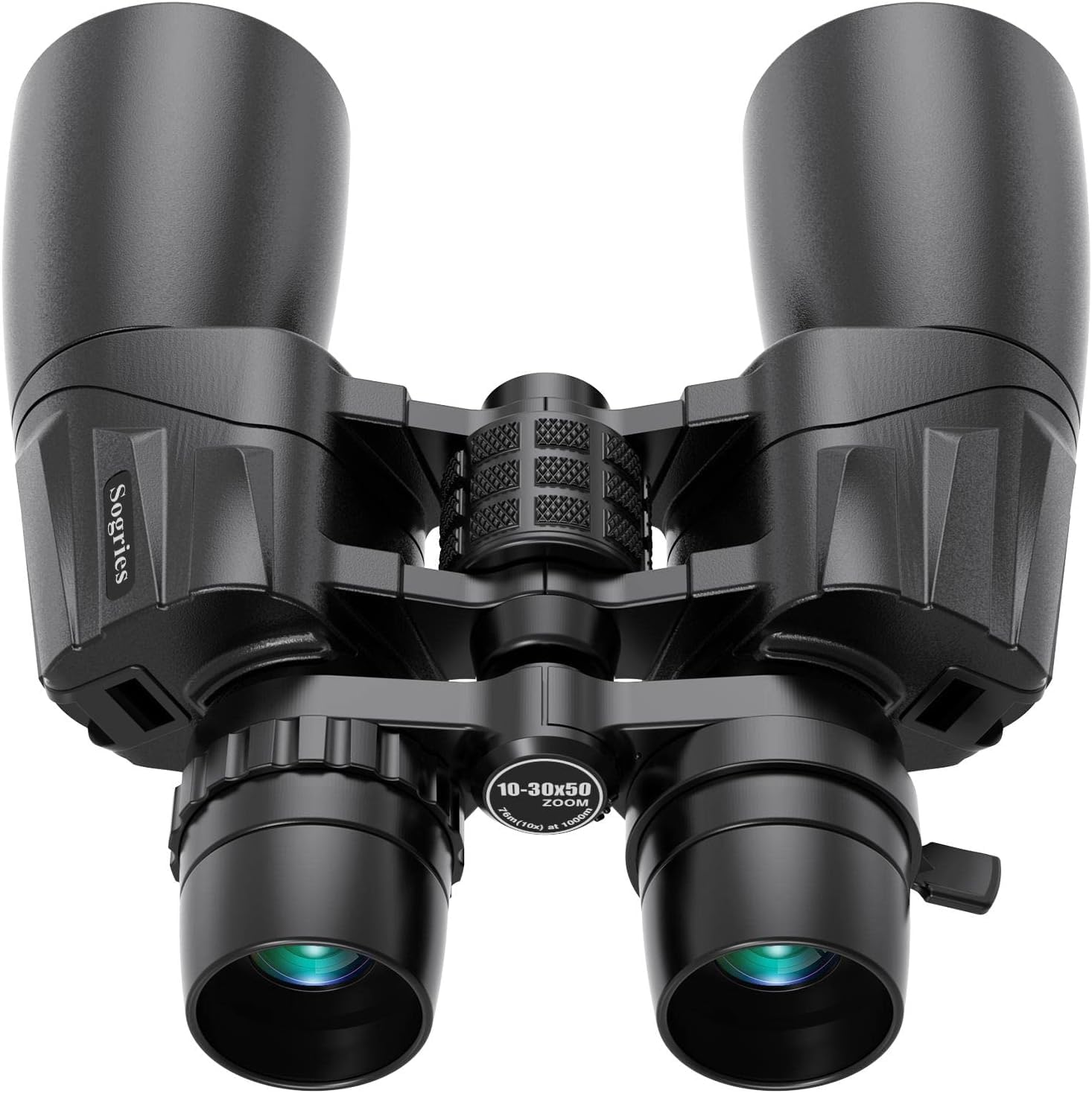
The Sogries 10-30×50 Zoom binoculars offer a versatile entry-point for wildlife viewing on a tight budget. Their main draw is the variable zoom capability, allowing you to switch from a wide 10x overview to a detailed 30x close-up with a simple control. The BAK-4 prisms and fully multi-coated broadband green film work to produce a bright image with good color reproduction, and the optics perform admirably in twilight conditions that would baffle a basic model.
Build quality punches above its weight class. The unscented rubber armor provides a secure, non-slip grip, and the O-ring sealed lenses make the unit waterproof and fog-resistant. The generous 22mm eye relief is a significant benefit for eyeglass wearers, as it allows a full field of view. The included carrying case, strap, and lens cloth make it a complete package ready for the field. The 10-year warranty provides confidence in the purchase.
There are necessary compromises at this price point. At high zoom levels (30x), any hand shake is greatly amplified, making a tripod essential for stable viewing. The metal barrel that ensures stability also adds considerable weight, making long handheld sessions tiring. The zoom mechanism, while functional, does not offer the same tactile precision as a premium fixed-power binocular. It is an excellent, affordable introduction to wildlife optics but lacks the finesse for serious observation.
Why it’s great
- Flexible 10-30x zoom range for varying distances
- Good low-light performance for the price
- Waterproof, fog-proof, with long eye relief
Good to know
- Requires a tripod for stable viewing at high zoom
- Heavy build can cause arm fatigue
FAQ
Is a 10×42 or 8×42 better for bird watching?
What does fully multi-coated mean for binoculars?
How important is eye relief for wildlife binoculars?
Final Thoughts: The Verdict
For most users, the best binoculars for viewing wildlife winner is the Vortex Copperhead HD 10×42 because it delivers premium-level HD optics and robust build quality at a price that represents real value. If you want to extend your viewing time into twilight with incredible sharpness, grab the ZEISS SFL 10×50. And for ultra-portable day hikes where weight is the priority, nothing beats the Nocs Provisions Standard Issue 10×25.