
Our readers keep the lights on and the weekend projects moving. As an Amazon Associate, I earn from qualifying purchases.
A damp basement isn’t just uncomfortable—it’s a slow threat to your home’s structure and your family’s respiratory health. Musty odors, peeling paint, and the constant worry about mold growth are real problems that demand a serious solution. A dedicated dehumidifier is the only way to reclaim that space, but choosing the wrong one means wasted money and persistent moisture.
I’m Rikta — the co-founder and writer behind FitlyFast. I’ve spent hundreds of hours analyzing compressor technology, Energy Star efficiency tiers, and real-world drainage setups to bring you a guide that cuts through the marketing noise.
After poring over thousands of verified reviews and cross-referencing technical specs, I’ve built this commercial-intent guide to the absolute best basement humidifier that will actually keep your lowest level dry, healthy, and odor-free.
How To Choose The Best Basement Humidifier
Basements differ from standard living spaces in a few key ways: they run cooler, they are often larger, and they rarely have a convenient floor drain. These conditions demand a dehumidifier built for the job, not just any off-the-shelf model. Focus on the following factors to ensure you get the right tool for the dampest room in your house.
Matching Pint Capacity to Square Footage
The number of pints a unit can remove per day directly correlates to the size of your basement. A 70-pint model covers roughly 3,000 square feet, while a 110-pint machine handles 4,500 square feet or more. Under-sizing the unit forces it to run constantly, raising your electric bill and shortening the compressor’s lifespan.
Gravity vs. Pump Drainage
If your basement has a floor drain or a sump pit, a standard drain hose works fine. But if you need to push water upward into a sink or a window well, you need a model with a built-in condensate pump. A pump lifts water vertically up to 16 feet, allowing continuous, unattended operation even when the drain is above the unit.
Energy Efficiency and Long-Term Cost
A dehumidifier in a basement runs daily, often for months at a time. An Energy Star certified model, especially one meeting the “Most Efficient” standards, uses significantly less power than a non-certified unit. Look for a high pints-per-kilowatt-hour (pints/kWh) ratio to keep your electric bill under control over the long haul.
Cold Weather Operation and Auto Defrost
Basements often stay below 65°F, which is the threshold where standard compressors start to frost up. An auto defrost feature detects frost on the coils and cycles the compressor off briefly to melt it. Without this, the unit shuts down entirely or becomes useless in cooler weather, leaving your basement damp through fall and winter.
Quick Comparison
On smaller screens, swipe sideways to see the full table.
| Model | Category | Best For | Key Spec | Amazon |
|---|---|---|---|---|
| AEOCKY LEO-Lite-2 | Smart | Efficiency & Smart Control | 105 Pints/Day; Energy Star 6.0 | Amazon |
| DREO 711S | Smart | App & Voice Control | 110 Pints/Day; 2-Gallon Tank | Amazon |
| Vellgoo DryTank Pro | Large | Massive Coverage | 140 Pints/Day; 6,000 Sq. Ft. | Amazon |
| KeepGlad FDD20-5270ZV1R5-E | Energy Star | 4 Pre-Set Modes | 80 Pints/Day; 5,000 Sq. Ft. | Amazon |
| KNKA PD30MA-20 | Quiet | Low Noise Operation | 80 Pints/Day; 45 dB Max | Amazon |
| DECIUU (100 Pint) | Pump | Vertical Pump Drainage | 100 Pints/Day; 16.4 Ft Lift | Amazon |
| DGVAM V1 | Value | Budget-Friendly Option | 80 Pints/Day; 4,500 Sq. Ft. | Amazon |
| Waykar CTH-A | Commercial | Heavy-Duty Control | 150 Pints/Day; 7,000 Sq. Ft. | Amazon |
| Waykar YDZ | Industrial | Max Capacity & Pump | 150 Pints/Day; 7,000 Sq. Ft. | Amazon |
In‑Depth Reviews
1. AEOCKY LEO-Lite-2
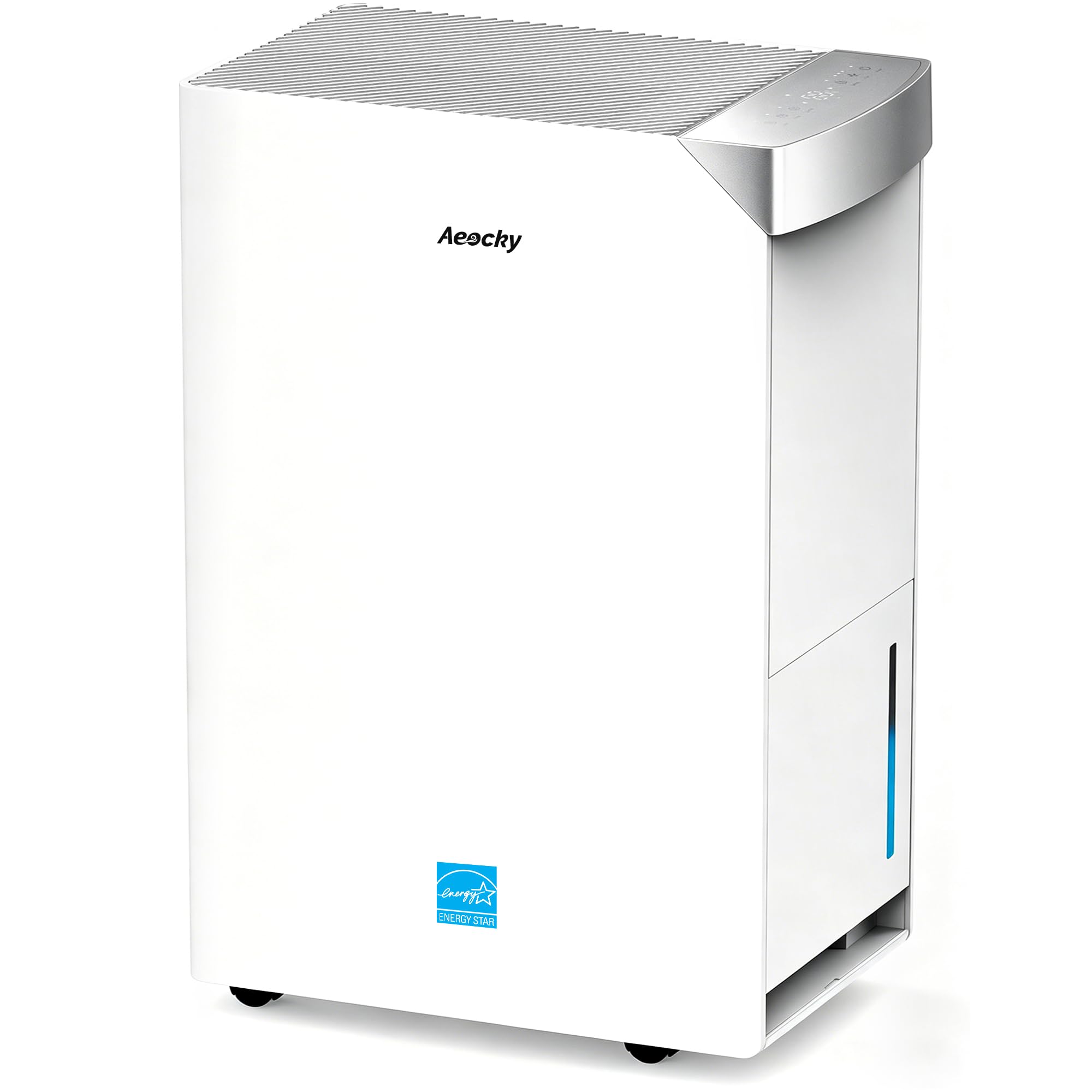
The AEOCKY LEO-Lite-2 is the definition of a modern, high-efficiency basement dehumidifier. It’s one of the first units to meet the stringent Energy Star Version 6.0 standard, which means it pulls 105 pints per day while consuming significantly less power than older models. The core components—7mm pure copper tubing and a high-efficiency rotor compressor—are built for longevity, not just peak performance.
Its smart humidity control uses a proprietary compensation algorithm to keep the room within a tight 5% tolerance of your target. The auto-defrost system kicks in well before standard units would ice up, making it a reliable choice for cooler basements that hover around 65°F. The noise level at its lowest fan speed is a whisper-quiet 44 dB, which is competitive even for smaller, less powerful machines.
The main trade-off is the tank size. At 1.45 gallons, it will fill up quickly in a truly damp space, so you will want to use the included drain hose for continuous operation. The compact footprint (8.6 inches wide) also means it fits neatly into tight corners. For energy savings and long-term reliability, this is the gold standard.
Why it’s great
- Industry-leading Energy Star 6.0 efficiency
- Very quiet operation at 44 dB
- Premium copper coil construction resists corrosion
Good to know
- Small 1.45-gallon tank requires frequent emptying if not using a hose
- No built-in pump for upward drainage
2. DREO 711S

DREO brings smart home integration to the basement with the 711S, a 110-pint unit that connects to the DREO app, Alexa, and Google Home. The 2-gallon water tank is the largest in this roundup, allowing for over eight hours of continuous operation before needing a manual empty. Its moisture removal rate of 4.0 pints per kWh actually exceeds the Energy Star 2024 standard, making it one of the most energy-efficient models here.
The unit features three distinct modes—Auto, Comfort, and Continuous. In Auto mode, the built-in sensor maintains your set humidity within a 5% tolerance, intelligently adjusting fan speed. The auto-defrost system activates at 41°F, which is lower than the typical 65°F threshold, ensuring it continues pulling water even in chilly basements. The ETL certification and 90° tilt waterproof design add a layer of safety often missing from budget units.
However, some users report the internal humidity sensor reads about 10% high, which may cause the unit to run harder than necessary. The 2.4GHz-only Wi-Fi is a minor inconvenience for those with mesh networks. Despite these quirks, the combination of smart control, large capacity, and efficient performance makes it a strong contender for the tech-savvy homeowner.
Why it’s great
- Large 2-gallon tank reduces emptying frequency
- Exceptional energy efficiency (4.0 pints/kWh)
- Full smart home integration with app and voice control
Good to know
- Humidity sensor may read slightly high
- No built-in pump for upward drainage
- Wi-Fi requires 2.4 GHz band only
3. Vellgoo DryTank Pro
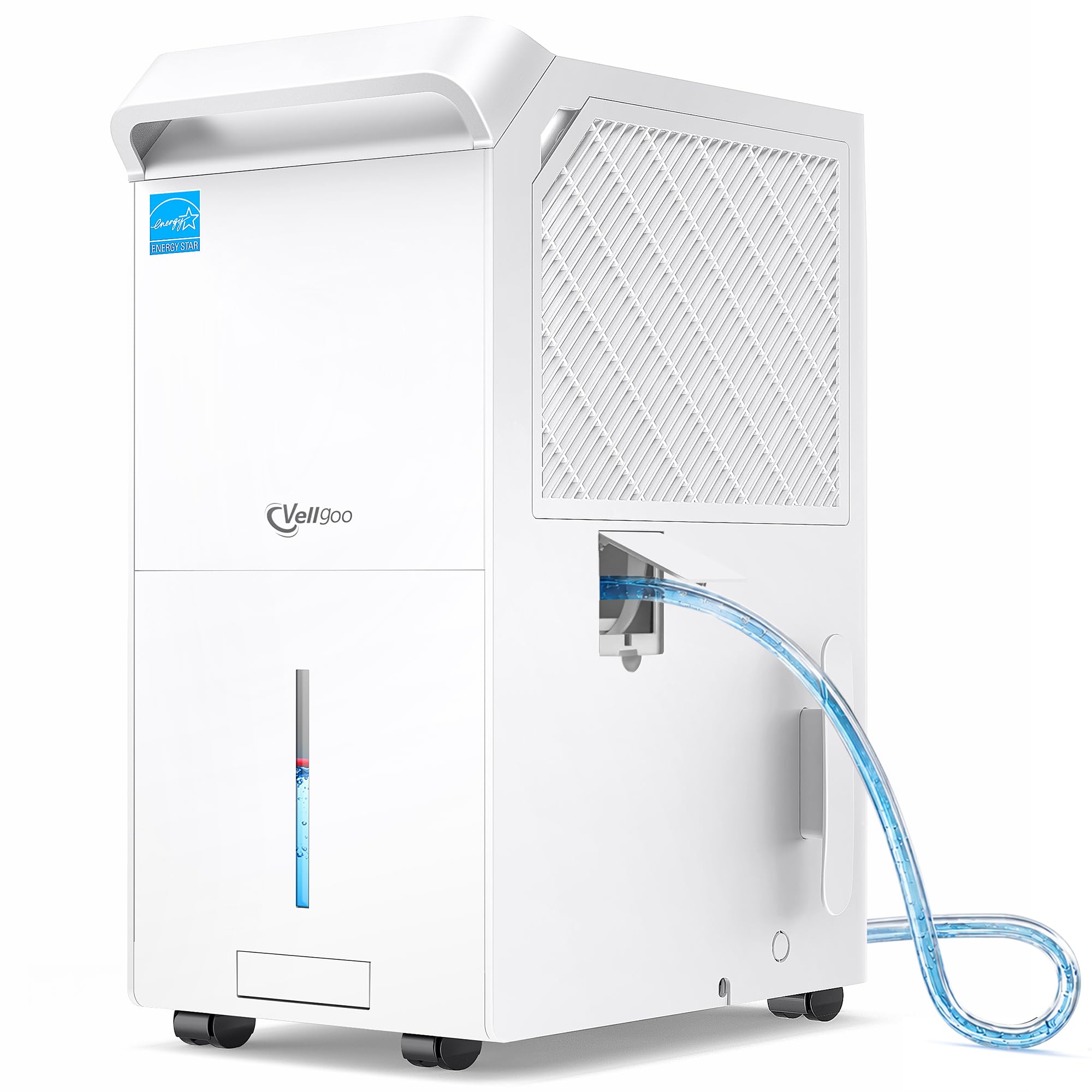
The Vellgoo DryTank Pro is built for homeowners with large, open basements or multi-room lower levels. Its max rating of 140 pints per day and coverage area of 6,000 square feet makes it one of the most powerful units in this guide. It is also an Energy Star Most Efficient 2025 certified model, which is the highest energy efficiency classification available.
The drainage flexibility is a highlight here. You can use the 1.65-gallon bucket for spot removal, the included 6.56-foot drain hose for gravity drainage, or even connect a standard 3/4-inch garden hose for extended reach. The auto-restart feature restores operation after a power outage, which is essential for unattended basements. The auto-defrost helps prevent coil icing in cooler environments.
The 600-watt max draw is higher than smaller units, but the Energy Star certification mitigates the impact on your bill. The control icons can be confusing at first, and the hose connection is a simple press-fit that some users find loose. For sheer water-pulling power and coverage, however, the DryTank Pro is a workhorse that gets the job done.
Why it’s great
- Extremely high capacity for very large spaces
- Energy Star Most Efficient 2025 certified
- Versatile drainage with garden hose compatibility
Good to know
- Control icons are not intuitive
- Hose connection can feel loose
- Higher power draw at max capacity
4. KeepGlad FDD20-5270ZV1R5-E
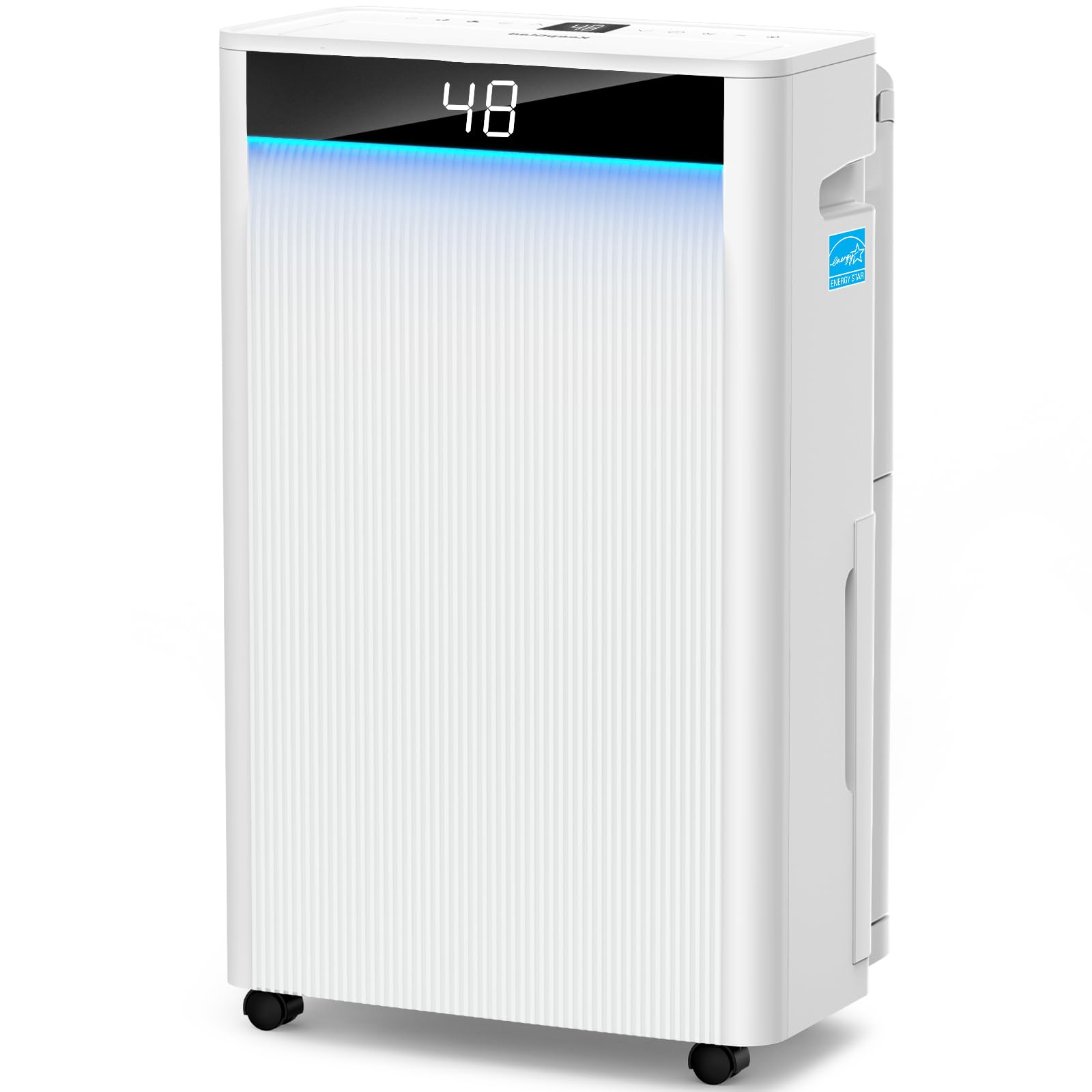
The KeepGlad hits a sweet spot for homeowners with mid-sized basements up to 5,000 square feet. Its 80-pint capacity and 2025 Energy Star certification make it a solid all-around performer. What sets it apart is the 4 pre-set modes: DEHU for standard moisture control, DRY for faster clothes drying, CONT for continuous operation in very damp conditions, and SLEEP for whisper-quiet nighttime use at just 40 dB.
The AI-smart protection system is a clever addition. It uses sensors to detect frost buildup and automatically activates the defrost cycle to maintain stable performance. The touch panel shows real-time humidity and changes color based on levels. The 1.84-gallon tank has a clear full indicator and auto-stop to prevent overflow.
The included 3.4-foot drain hose is shorter than some competitors, which may require an extension for certain setups. The unit is made from RCS-grade recycled materials, which is good for the planet but the plastic feels a bit lighter than premium competitors. For those who want a quiet, mode-rich unit at a reasonable price point, the KeepGlad is a strong pick.
Why it’s great
- Four specialized operating modes for different needs
- Very quiet sleep mode at 40 dB
- AI-powered auto defrost and overload protection
Good to know
- Short 3.4-foot drain hose
- Plastic build feels less substantial
5. KNKA PD30MA-20
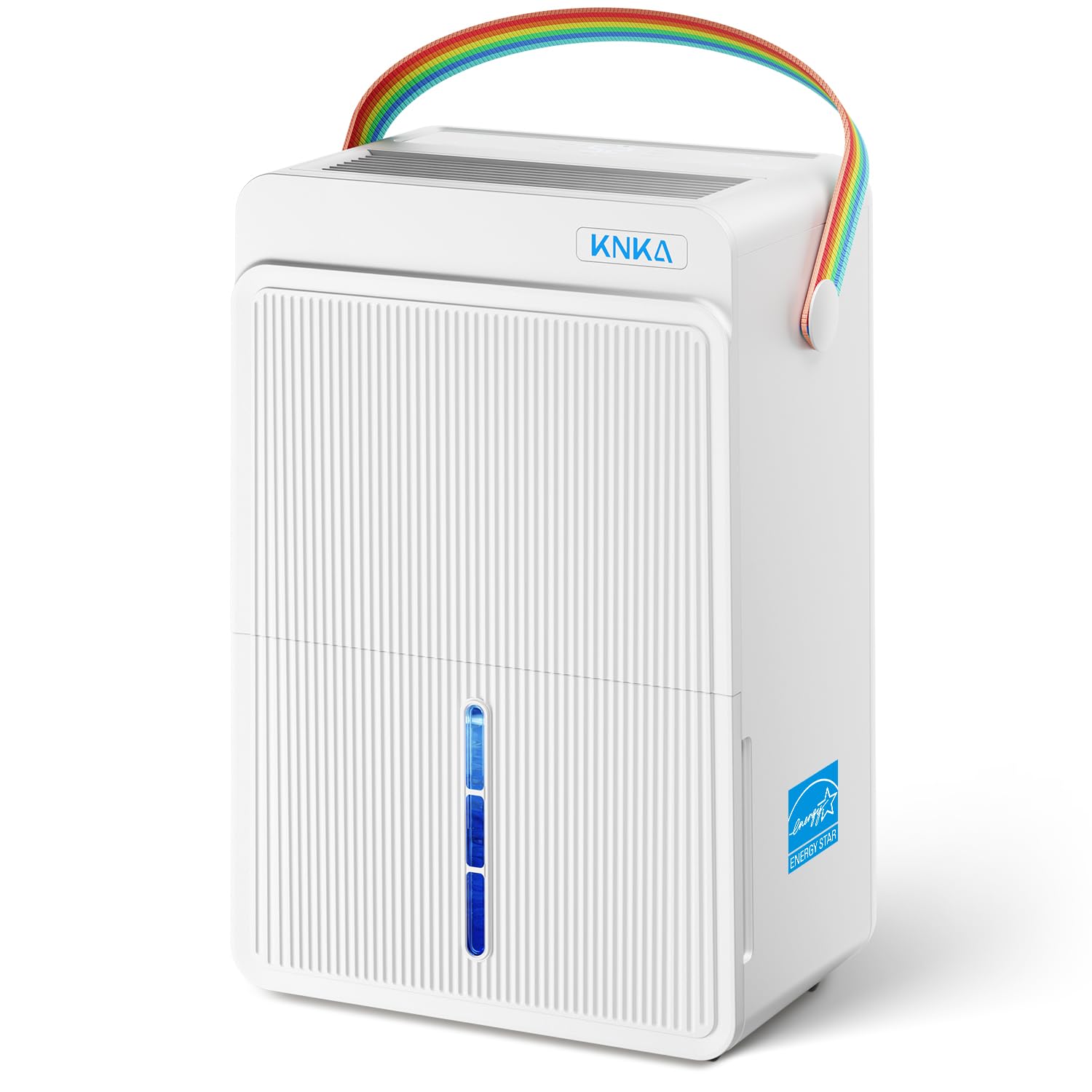
The KNKA PD30MA-20 is an ideal solution for finished basements used as living spaces, where noise matters. It operates at just 40 to 45 dB, which is quieter than most conversations and comparable to a library. The 80-pint output (56 pints at standard basement conditions) is sufficient for spaces up to 4,500 square feet, making it a well-balanced unit.
The design emphasizes user comfort. The humidity display and indicator lights can be turned off completely for a dark, undisturbed room. The rainbow-woven handle and 360° casters make it easy to move, and the 1.06-gallon tank can be supplemented by a 2.64-gallon external tank for longer run times without hose connection. The smart humidity control with three modes (Auto, Dry, Setting) covers most scenarios.
The built-in 6.56-foot drain hose is a generous length that helps with placement flexibility. The Energy Star certification keeps electricity costs manageable. It does not have a built-in pump, so it relies on gravity drainage or manual tank emptying. For those prioritizing peace and quiet, this is the unit to beat.
Why it’s great
- Exceptionally quiet operation at 40-45 dB
- Display lights can be fully turned off
- Long 6.56-foot drain hose included
Good to know
- No built-in pump for upward drainage
- Small 1.06-gallon tank requires frequent manual emptying
6. DECIUU 100 Pint Dehumidifier with Pump
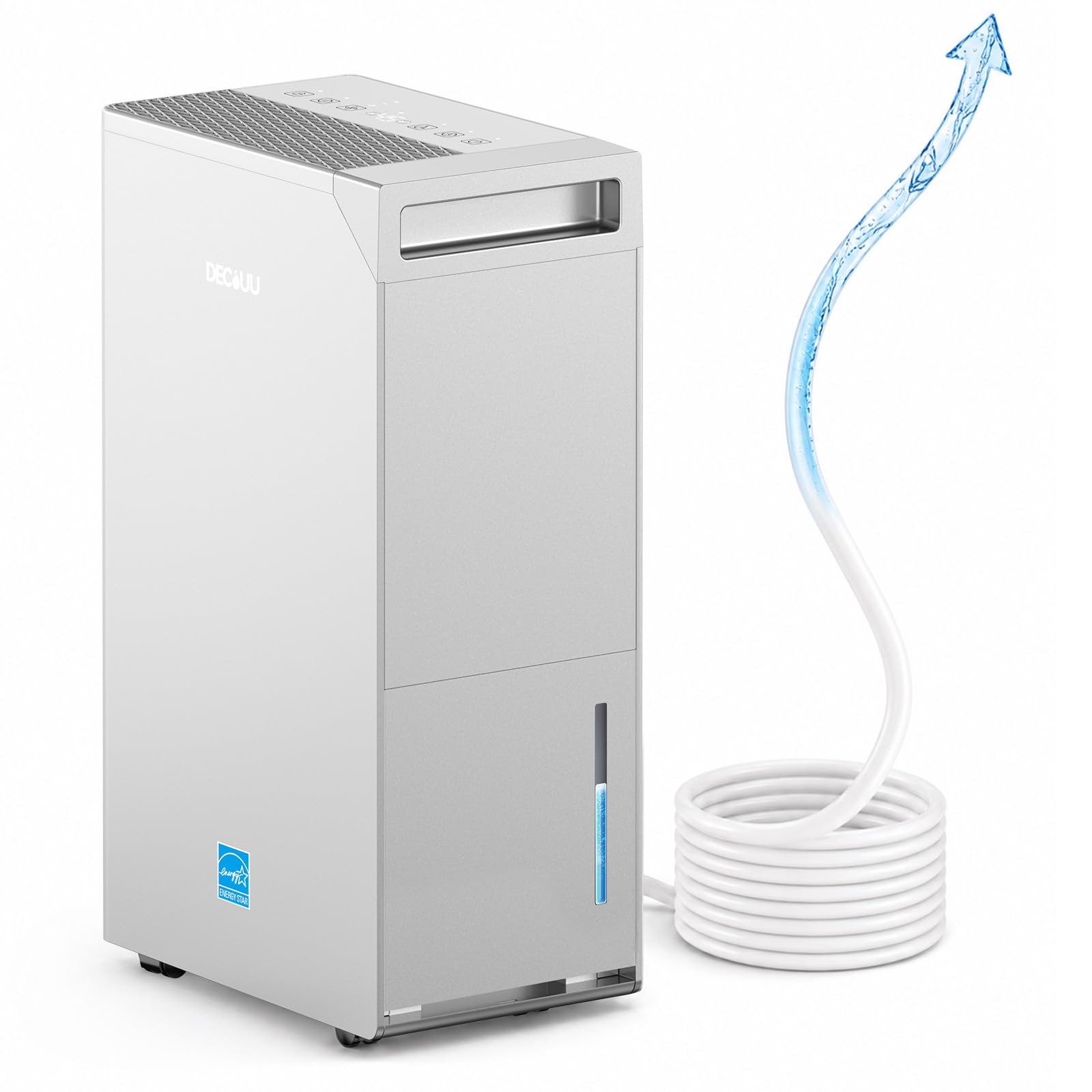
The DECIUU is a mid-range model that solves one of the biggest basement drainage challenges: the lack of a floor drain. Its built-in condensate pump can lift water vertically up to 16.4 feet, meaning you can run a hose to a sink, utility tub, or even out a window. This feature alone transforms the unit from a standard appliance into a true set-and-forget solution for deep basements.
It removes up to 100 pints per day, covering 5,000 square feet. The Energy Star Most Efficient 2024 certification ensures it runs economically. The tank volume is 1.45 gallons, which is fine for break-glass scenarios, but the real value is in the continuous drainage via the pump. The 35% to 80% adjustable humidity range gives you fine control.
The unit is compact relative to its power, with dimensions of 8.65 by 14.38 by 24.09 inches. The hidden handle and 360° casters make it easy to position. Some users have reported the defrost cycling on and off, which can be a nuisance in borderline conditions. Overall, the combination of pump and solid performance makes it a smart choice for basements with high drain points.
Why it’s great
- Built-in pump lifts water up to 16.4 feet vertically
- Energy Star Most Efficient 2024 certified
- Garden hose adapter included for extended drainage
Good to know
- Some units experience frequent defrost cycles in cooler temps
- Pump adds noise and complexity
7. DGVAM V1
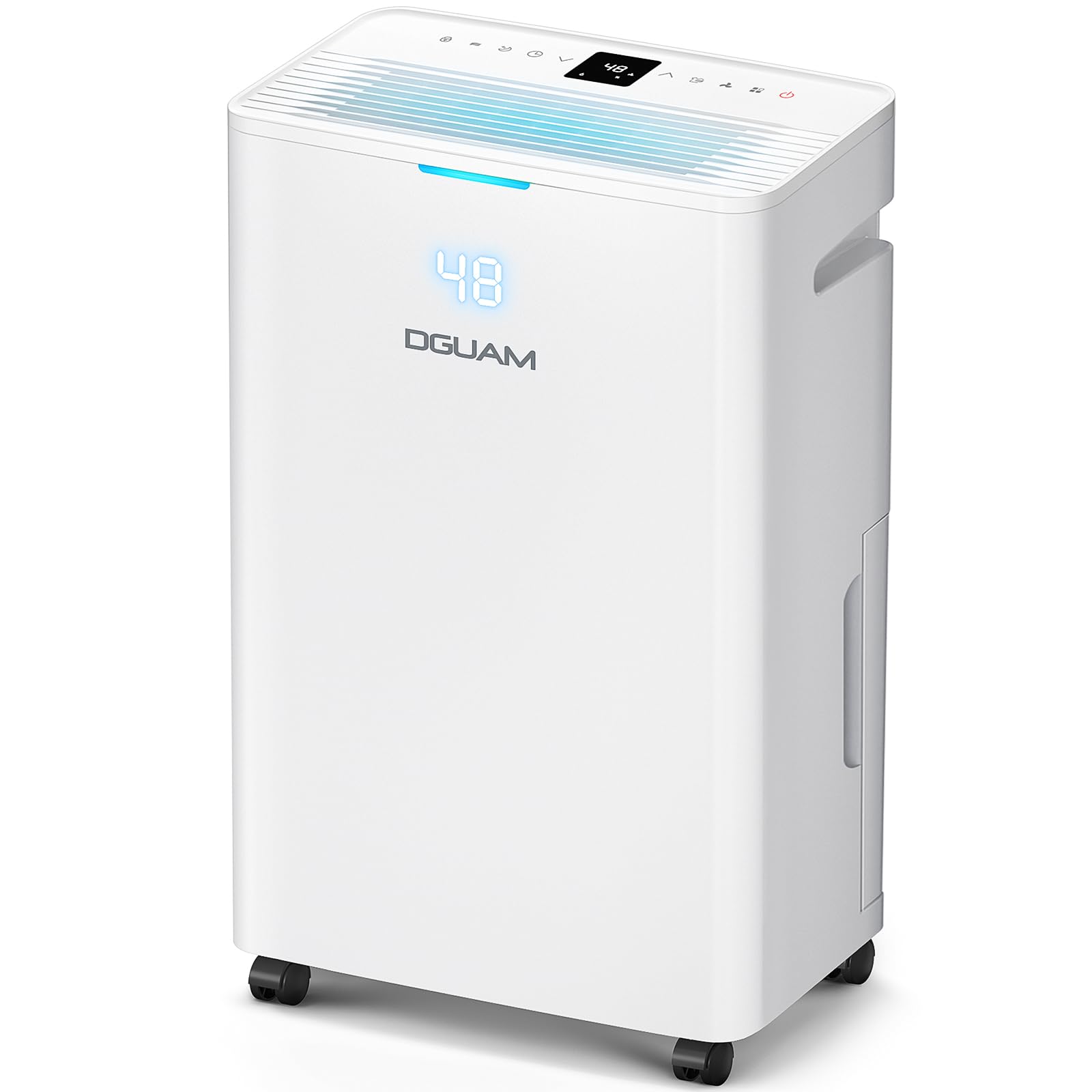
The DGVAM V1 is the most entry-level option in this guide for good reason: it is affordable and covers the basics without extra frills. It removes up to 80 pints per day and covers 4,500 square feet, which is the standard for a moderate basement. The automatic humidity control with a 30% to 80% range and the auto defrost feature make it functional for year-round use.
At 40 dB noise level, it is as quiet as premium models, which is impressive for the price tier. The unit has four operating modes: High-Power Dehumidify, Continuous Dehumidify, Dry, and Ventilation. The 24-hour timer and child lock add safety and energy-saving control. The built-in wheels and handle allow easy repositioning.
The biggest caveat is that the included drain hose is basic, and many users will want to set it up for continuous drainage right away. The plastic construction feels lighter than mid-range units, which may impact longevity in high-moisture environments. For a starter unit or a temporary fix, it works. Just don’t expect the same build quality as the premium competitors.
Why it’s great
- Very low noise level for the price
- Four operating modes for flexibility
- Budget-friendly entry point into basement dehumidification
Good to know
- Lighter plastic build may not last as long
- Basic hose kit requires careful setup
- No built-in pump or smart features
8. Waykar CTH-A
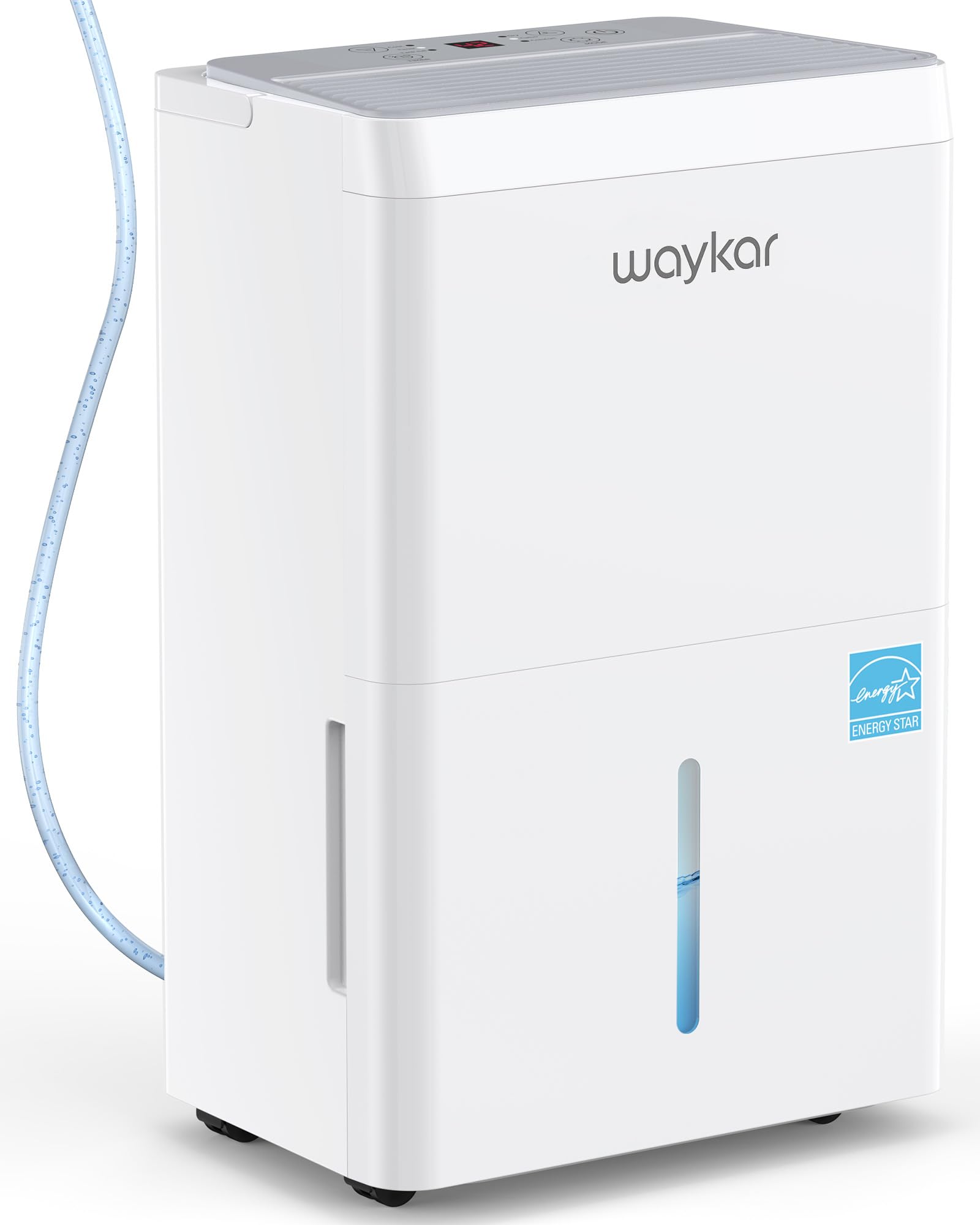
The Waykar CTH-A is a heavy-duty unit designed for the largest basements, commercial spaces, or workshops. With a 150-pint per day capacity and coverage for up to 7,000 square feet, it sits at the top of the power spectrum. It also includes a built-in pump that can lift water up to 16.4 feet, making it ideal for basements without floor drains.
The 2025 Energy Star certification means it uses 40% less electricity than comparable non-certified units, despite its raw power. The AI algorithm adjusts humidity targets based on ambient temperature: below 65°F it targets 55% RH, between 65-77°F it targets 50% RH, and above 77°F it drops to 45% RH. This auto-calibration is a premium feature not seen on most competitors.
The 4-Shield Reliability System includes auto defrost down to 42°F, a compressor safeguard with 3-minute restart delay, and real-time diagnostic codes. The 1-year comprehensive warranty with a 2nd year extension offers peace of mind. It is loud at max speed compared to smaller units, and the pump system adds mechanical complexity. For an all-in-one, pump-equipped powerhouse, the CTH-A is hard to beat.
Why it’s great
- Highest capacity with built-in pump for drainage flexibility
- Temperature-adaptive AI humidity control
- Excellent Energy Star efficiency for its size
Good to know
- Loud at highest fan speed
- Large and heavy unit at 41 pounds
- Pump can be a failure point over long-term use
9. Waykar YDZ
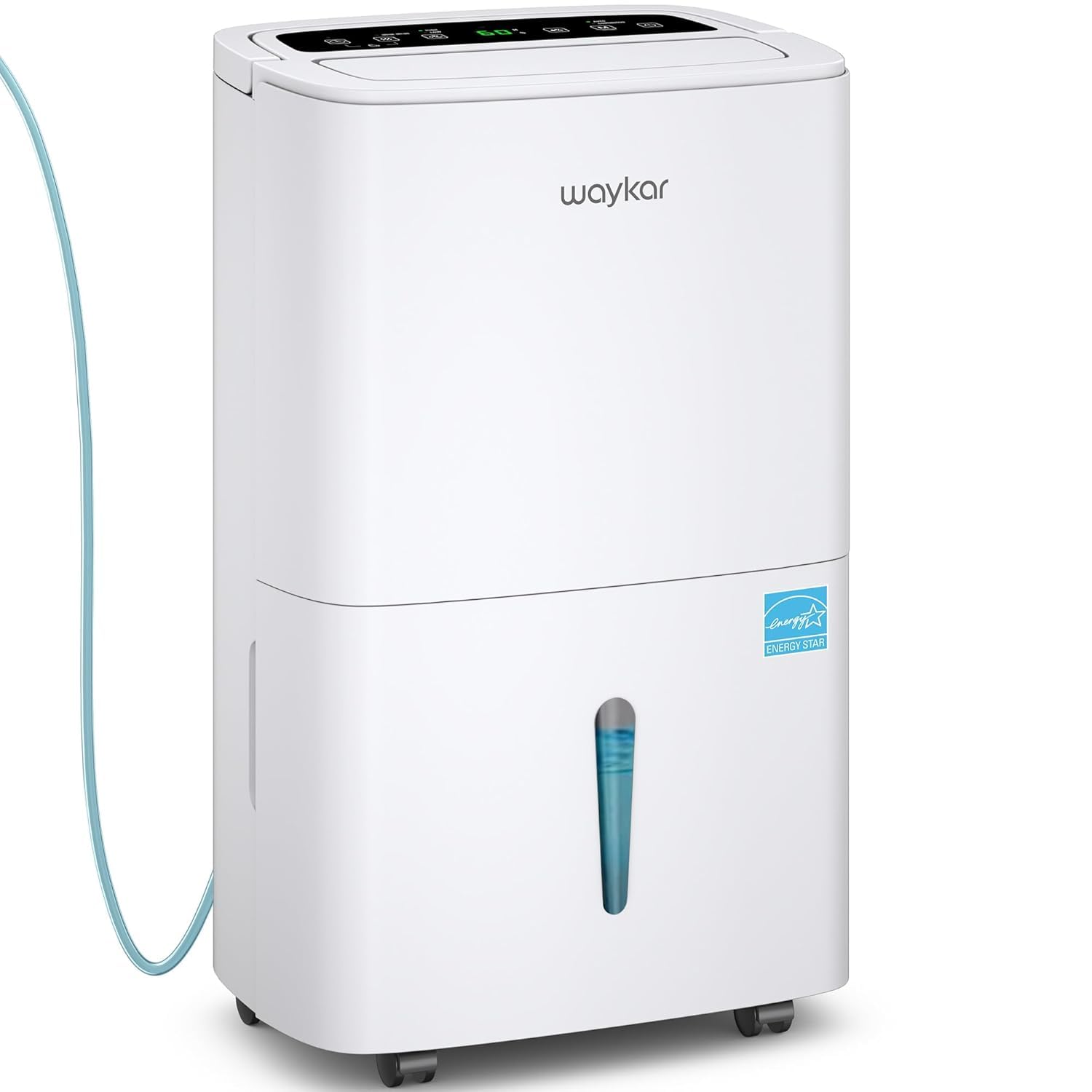
The Waykar YDZ shares the same 150-pint peak capacity and 7,000 square foot coverage as the CTH-A but adds a few refinements. The 2025 Energy Star certification and self-drying function—which uses the compressor to dry the internal coils after shutdown—reduce the risk of mold and bacteria growth inside the machine itself. This is a meaningful upgrade for long-term air quality.
The 1.85-gallon tank has a convenient built-in handle for easier emptying. The intelligent touch control panel with a 24-hour timer and memory restart makes it easy to integrate into a daily schedule. The auto-defrost protects the unit during colder months.
The 212 CFM airflow and auto-swing function help distribute dry air evenly across large commercial spaces. The 30-day money-back guarantee and 1-year warranty with lifetime tech support are reassuring. This model is best for those who run a dehumidifier constantly and want the self-drying feature to maintain hygiene. It is a premium tool for a serious moisture problem.
Why it’s great
- Self-drying function prevents internal mold growth
- Energy Star 2025 certified and efficient
- Large 1.85-gallon tank with handle for easy emptying
Good to know
- Pump lift height is lower than some competitors
- Premium price point for the feature set
- No app connectivity or smart home integration
FAQ
What pint capacity do I need for a typical basement?
Do I need a dehumidifier with a pump for my basement?
Will a dehumidifier work in an unheated basement during winter?
Final Thoughts: The Verdict
For most users, the best basement humidifier winner is the AEOCKY LEO-Lite-2 because it balances energy efficiency, quiet operation, and premium copper coil construction at a reasonable price. If you need a built-in pump to drain upward out of a window or sink, grab the DECIUU 100 Pint with Pump. And for massive, commercial-grade coverage with a self-drying feature, nothing beats the Waykar YDZ.