
Our readers keep the lights on and the weekend projects moving. As an Amazon Associate, I earn from qualifying purchases.
A berry bush in your yard is a multi-year promise, but the wrong one takes two seasons just to start producing. The difference between a harvest in the first summer and a barren twig for two years comes down to starter size, root system maturity, and the specific variety’s first-year bearing habit — not luck. This guide cuts through the nursery noise to find the bushes that deliver fruit fast.
I’m Rikta — the co-founder and writer behind FitlyFast. I’ve spent hundreds of hours analyzing nursery stock quality, root development benchmarks, and first-year fruiting performance across dozens of berry bush listings so you know which ones skip the waiting game.
Whether you need a thornless blackberry that survives Southern summers or a compact blueberry for a patio pot, the best berry bushes share one trait: they arrive ready to produce, not just survive.
How To Choose The Best Berry Bushes
Choosing a berry bush isn’t about picking the prettiest picture. The wrong selection means a season of watching a twig while your neighbor harvests. Focus on three factors: the container size’s impact on root development, the variety’s proven first-year fruiting habit, and your USDA zone’s winter tolerance.
Container Size: 1-Gallon vs. 2-Gallon vs. Plugs
A 1-gallon bush has a 6-12 month head start over bare-root or plug plants. A 2-gallon container (often labeled #2) adds another layer of root mass and branching, which directly translates to sturdier canes and more fruiting buds in the first year. Plugs and tiny thimble-sized pots require a full season of just leaf and root growth before they can support fruit — they are a year-two investment, not a first-season producer.
Self-Pollinating vs. Cross-Pollinating Varieties
Many blueberry and mulberry bushes are self-pollinating, meaning a single bush can fruit alone. Blackberries and most raspberries are also self-fruitful. This matters if you only have space for one bush. Cross-pollinating varieties (some highbush blueberries) need a second compatible variety nearby to set a full crop — check the product listing for “self-pollinating” or “self-fertile” labels before buying a single plant.
First-Year Fruiting Potential
Not all bushes are equal here. “Everbearing” varieties, well-rooted 1-gallon stock, and vigorous cultivars like Apache blackberry or Pink Icing blueberry are known to push fruit in their first season if planted at the right time. Bare-root or cheap plug plants rarely fruit in year one. The customer reviews mention first-year berries — that’s the real signal you want to see.
USDA Hardiness Zone Matching
Berry bushes are zone-sensitive. A bush rated for zones 6-9 will struggle or die in a zone 4 winter. Check the listing’s stated zone range against your location’s zone. The most common mismatch is buying a warm-climate blackberry (zone 6-9) for a zone 5 garden, which can kill the canes during dormancy.
Quick Comparison
On smaller screens, swipe sideways to see the full table.
| Model | Category | Best For | Key Spec | Amazon |
|---|---|---|---|---|
| Blueberry Glaze (Blueberry) | Premium Blueberry | First-year container harvest, patio pots | 2-Gallon #2 container, 2-3 ft mature spread | Amazon |
| Pink Icing (Blueberry) | Ornamental Blueberry | Small spaces, year-round foliage color | 2-Gallon #2 container, 3-4 ft mature height | Amazon |
| Mulberry Dwarf Everbearing (4 Pack) | Dwarf Mulberry | Compact gardens, high-density planting | 4-pack, 6-10 ft mature height, self-pollinating | Amazon |
| Apache BlackBerry Bush (1 Gallon) | Thornless Blackberry | Warm climates, drought tolerance | 1-Gallon container, zones 6-9, thornless | Amazon |
| Tifblue (1 Gallon) | Hardy Blueberry | Cold climates, wildlife gardens | 1-Gallon container, zones 3-9, 15 ft height | Amazon |
In‑Depth Reviews
1. Bushel and Berry Blueberry Glaze (#2 Container)
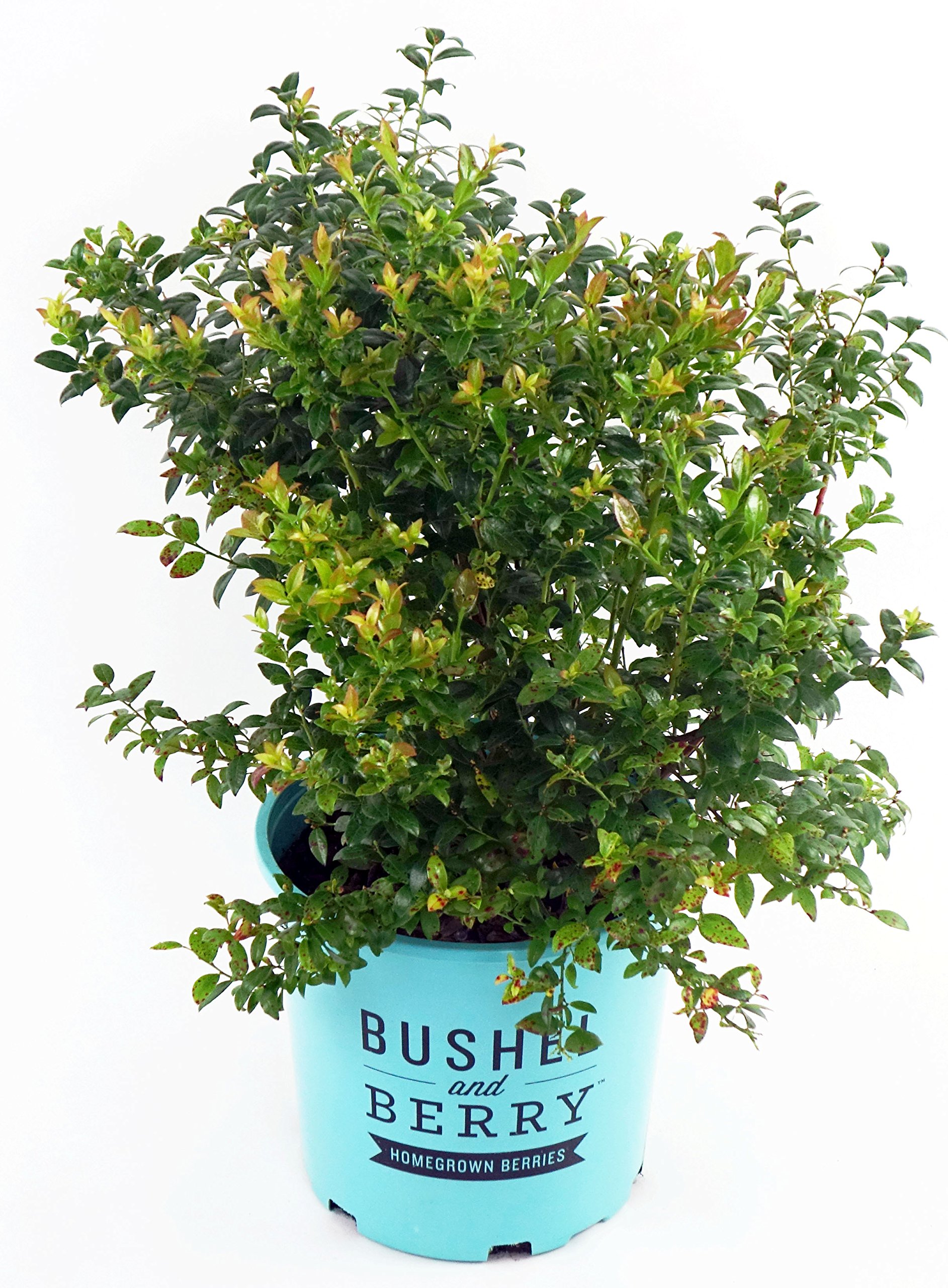
The Blueberry Glaze arrives in a #2 container — a full 2-gallon pot that gives it a massive head start over 1-gallon stock. The root system is well-established, and the bush is ready to set fruit in its first season if planted in full sun. Customer reviews confirm it ships with intact soil, moist roots, and no broken canes, which is rare for online nursery stock.
This variety is self-pollinating and bred to be compact, topping out at 2-3 feet tall with a matching spread. That makes it a top choice for container patios, small raised beds, or anyone who wants a high-density blueberry that doesn’t require a second bush for pollination. The berries are described by reviewers as “sweet, better than store-bought,” and the plant produces steadily from July through September.
The only common buyer note is that you should double-check your soil pH — blueberry bushes prefer acidic soil (pH 4.5-5.5). If your native soil leans alkaline, a small acid amendment at planting time resolves it. Otherwise, this is the most reliable first-year producer in this lineup.
Why it’s great
- #2 container size provides immediate root mass and first-year fruiting potential
- Compact 2-3 ft size works beautifully in containers and small garden beds
- Self-pollinating, so a single bush will produce a full crop
Good to know
- May arrive without visible fruit depending on shipping timing
- Requires acidic soil — test pH before planting
2. Bushel and Berry Pink Icing (Blueberry, #2 Container)

Pink Icing is a blueberry bush that pulls double duty. Its spring foliage emerges a striking pink, shifting to blue-green in winter, giving it year-round ornamental value that few edible shrubs can match. Like the Blueberry Glaze, it ships in a #2 container with a fully rooted system that allows immediate planting and first-season fruiting.
The mature height is slightly taller at 3-4 feet, with a spread of 4-5 feet, making it a solid backdrop plant if you layer shorter varieties like Peach Sorbet in front. Reviewers regularly mention that the berries are sweet and that the bush thrives even in a 16-inch pot on an urban porch. It’s beginner-friendly and low-maintenance, as long as you provide full sun to partial shade.
The main trade-off is that the ripening process is gradual — you’ll get 1-4 berries every few days rather than one big wave. This works fine for home snacking but won’t fill a freezer all at once. Also, the ornamental foliage is less dramatic once the bush is mature, so don’t buy it purely for the pink leaves if you plan to let it grow large.
Why it’s great
- Pink spring foliage provides garden aesthetics beyond fruit production
- 2-gallon container gives strong root foundation for first-year harvest
- Thrives in containers and small spaces per verified buyer experiences
Good to know
- Ripens gradually — not a single heavy flush of berries
- Requires acidic soil conditions; may need pH amendment
3. Mulberry Dwarf Everbearing (4 Pack)

This pack gives you four dwarf mulberry bushes that mature to 6-10 feet, ideal for hedgerows, small gardens, or container groupings. The “Everbearing” designation means they fruit repeatedly from late spring through summer, and since they are self-pollinating, a single pack will produce a steady supply of sweet, blackberry-like mulberries without needing a separate pollinator.
The bushes ship as small starter plugs — buyers report that they arrive in tiny pots, and some initially look like “inch-long yard waste.” This is the reality of plug shipping. However, multiple reviews note that even plants that looked nearly dead (crisped leaves, no growth) regrew vigorously after a few weeks in a greenhouse or under a grow light. They are resilient once established.
The biggest risk is the initial shock stage. About 50% of reviews describe a rough start — leaves crisping, stems appearing dead — followed by strong recovery. If you have patience and can provide indirect light before hardening them off to full sun, this pack is exceptional value for the long-term mulberry harvest. If you want immediate visual presence, choose a 1-gallon or 2-gallon bush instead.
Why it’s great
- Four bushes per order is excellent value for building a productive hedgerow
- Dwarf size stays manageable and works in containers
- Self-pollinating and everbearing for continuous fruit
Good to know
- Plugs arrive very small — expect a recovery period before active growth
- Initial leaf drop is common and not a sign of permanent damage
4. Perfect Plants Apache BlackBerry Bush (1 Gallon)

The Apache blackberry is a thornless, organic-grown bush that ships in a 1-gallon pot with a proven reputation for first-year fruiting. Reviewers consistently report that plants arrive “extremely healthy,” with new growth already forming and berries set within weeks of planting. The thornless canes make harvesting a scratch-free experience.
This variety is best suited for warmer climates, rated for USDA zones 6-9, and it’s drought-tolerant once established. The berries are described as dark purple, sweet, and abundant, and the bush will continue producing bushels year after year. It also attracts pollinators, which is a bonus if you have a vegetable garden nearby.
The main caution is that it cannot ship to California, Hawaii, or Arizona due to agricultural restrictions — buyers in those states will receive complimentary fertilizer and refund instructions instead. Also, one review mentions a negative experience with a plant that arrived unhealthy, though the majority of feedback highlights healthy, vigorous stock and responsive customer service when issues arise.
Why it’s great
- Thornless canes make harvesting painless and family-friendly
- First-year fruiting is common based on buyer reports
- Organic-growing practices mean no harmful sprays or chemicals
Good to know
- Restricted from shipping to CA, HI, and AZ
- Best performance is in zones 6-9; not ideal for cold climates
5. Perfect Plants Tifblue (Blueberry, 1 Gallon)

The Tifblue is a rabbiteye blueberry variety that stands out for its extreme cold hardiness — it’s rated down to USDA zone 3, which is rare for blueberry bushes. This makes it the only option in this list that can reliably survive harsh northern winters, and it still reaches an impressive 15-foot mature height, producing a heavy crop of medium-sized, firm berries.
Buyers consistently describe the plants as “big, beautiful, and healthy” upon arrival. Several reviews note that the 1-gallon stock arrived with ripe and ripening berries already set, meaning you can harvest fruit within days of unboxing. The company also stands behind its products — one reviewer reported a plant with moldy leaves, and the seller replaced it immediately along with missing fertilizer.
The trade-off is the size: 15 feet is large for a home garden, so you’ll need space. It’s also not a compact container candidate — this bush wants to grow tall and wide. If you have room and live in a cold zone, this is the most reliable blueberry for your climate. For smaller spaces, the Blueberry Glaze or Pink Icing are better fits.
Why it’s great
- Extreme cold hardiness down to zone 3 — best for northern gardens
- First-year fruiting is common based on buyer experiences
- Responsive seller with strong customer service track record
Good to know
- Mature height of 15 feet requires significant garden space
- Not suitable for container growing due to large ultimate size
FAQ
Will my berry bush produce fruit in the first year?
Can I grow berry bushes in a container on a patio?
Do I need to buy two bushes for pollination?
Final Thoughts: The Verdict
For most users, the best berry bushes winner is the Bushel and Berry Blueberry Glaze because its #2 container size, compact habit, and self-pollinating nature make it the most reliable first-year producer for both gardens and patios. If you want a bush that doubles as an ornamental with pink spring foliage, grab the Pink Icing. And for cold northern climates where zone hardiness matters most, nothing beats the Tifblue — it will survive winters that kill other blueberry bushes.