
Our readers keep the lights on and the weekend projects moving. As an Amazon Associate, I earn from qualifying purchases.
A drafty garage door isn’t just a nuisance; it’s an open invitation for rodents, debris, and skyrocketing energy bills. The thin, brittle strip at the bottom of your door is often the single point of failure, letting in cold air and moisture that turns your garage into an unusable space. Replacing that worn-out seal is one of the highest-impact DIY fixes for your home’s comfort and efficiency.
I’m Rikta — the co-founder and writer behind FitlyFast. I spend my time analyzing the material science and real-world performance data of home maintenance products, ensuring this guide cuts through the marketing to deliver only what works for your specific garage door track.
Whether you’re fighting winter drafts, summer dust, or unwanted pests, choosing the right bottom garage door seal depends on matching your track profile, material needs, and local climate conditions.
How To Choose The Best Bottom Garage Door Seal
Selecting the right seal is a matter of matching three critical variables: your door’s track profile, the seal material, and your local climate. A mismatch here means either a frustrating installation or a seal that fails within a single season.
Determine Your T-End Size and Profile
The most common mistake is buying a seal with the wrong T-end width. Most residential garage doors use either a 1/4-inch or a 5/16-inch T-end that slides into the track on the bottom of the door. Measure the width of the bulb or fin on your old seal’s edge, or check the channel in your door’s bottom retainer. Buying the wrong size will cause the seal to either not fit or fall out.
Choose the Right Material for Your Climate
Material is the primary determinant of longevity. EPDM rubber remains flexible down to -40°F and resists cracking from ozone and sunlight, making it ideal for extreme climates. Standard vinyl is budget-friendly but can become brittle in freezing temperatures. PVC-based thresholds are rigid and better for flood-prone areas, not for a flexible bottom seal. Rubber or EPDM is almost always the superior choice for a direct replacement weatherstrip.
Width, Length, and the U-Shaped Design
The seal width (typically 3 to 3.75 inches) determines how far it extends under the door. A wider seal provides a larger contact patch with the floor, which is crucial for uneven concrete. The length should exceed your door width by about an inch for trimming. The U-shaped design with internal hollow chambers improves compressibility and insulation, allowing the seal to conform to an uneven floor.
Quick Comparison
On smaller screens, swipe sideways to see the full table.
| Model | Category | Best For | Key Spec | Amazon |
|---|---|---|---|---|
| Holikme EPDM Rubber Seal | EPDM Rubber | All-Weather Performance | 22 ft | 5/16″ T-End | Amazon |
| HOOIMA T-Ends Seal | Rubber | Universal Fit | 20 ft | 1/4″ to 5/16″ | Amazon |
| VEVOR U + O Ring Kit | Rubber + Track | Complete Track Replacement | 16 ft | Aluminum Track | Amazon |
| DGSL Silicone Seal | Silicone Rubber | Budget Value | 20 ft | 5/16″ T-End | Amazon |
| Earthtec 3″ Seal | Vinyl | Narrow T-Track | 16 ft | 1/4″ T-Style | Amazon |
| HOMWMPA Top & Side Seal | TPE | Perimeter Sealing | 34 ft | Adhesive-Backed | Amazon |
| Weather Defender Threshold | PVC Threshold | Flood & Water Diversion | 20’8″ | 1.25″ Rise | Amazon |
In‑Depth Reviews
1. Holikme Garage Door Bottom Seal, EPDM Rubber
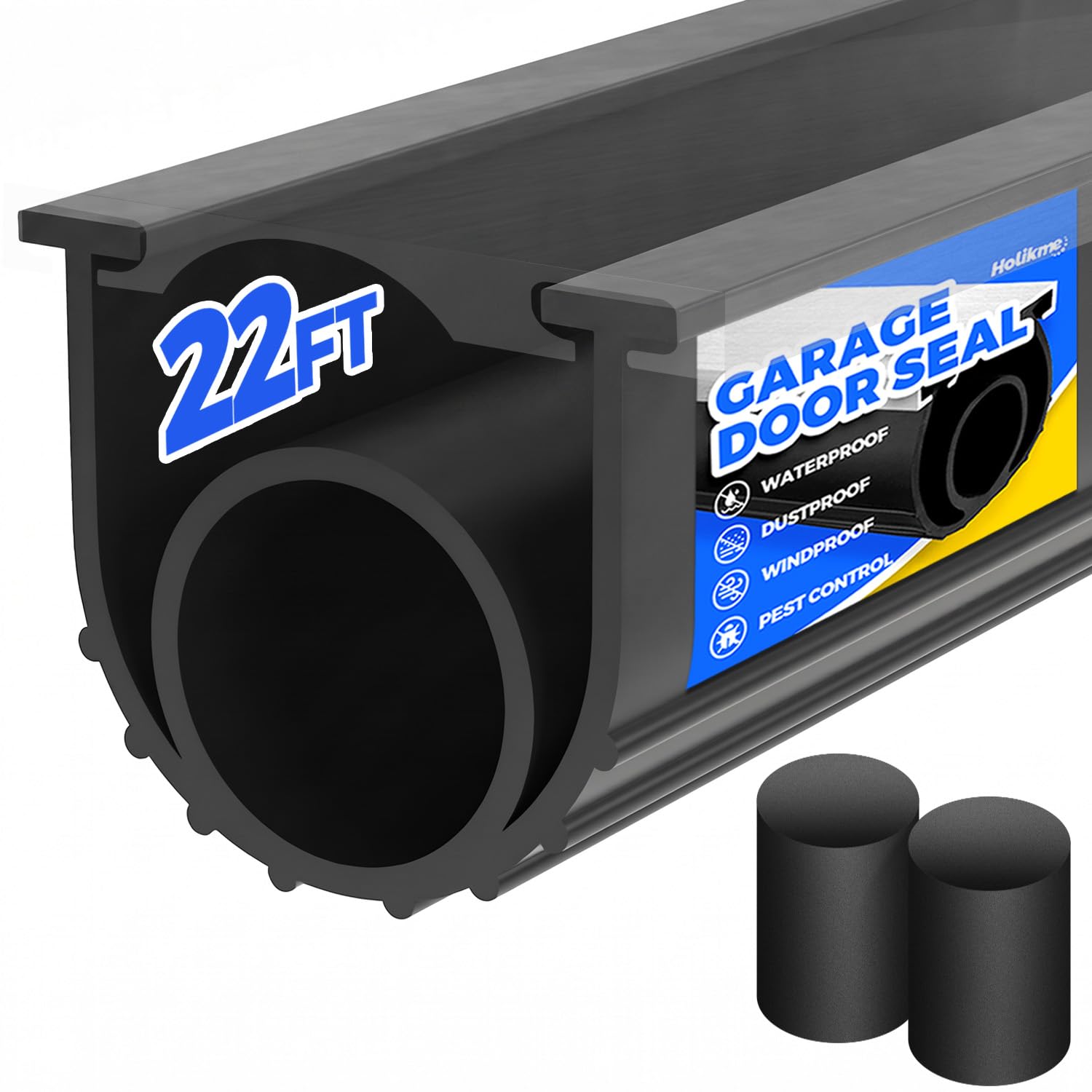
This is the seal you want if you live where winters bite and summers scorch. Crafted from high-density EPDM rubber, the Holikme remains flexible and crack-free across a massive temperature range of -40°F to 240°F. Its 5/16-inch T-end fits the vast majority of standard residential tracks, and the 22-foot length provides a few extra inches for trimming on a typical 16-foot door.
The U-shaped profile with internal hollow chambers creates a seven-layer insulation design that muffles sound and blocks drafts. Holikme includes two rubber end plugs, a detail often missing from cheaper competitors, which seal the open ends of the strip to prevent rodents from crawling inside the hollow channel. Customers consistently note that the material feels premium and pliable, conforming well to uneven concrete floors.
Installation is straightforward with a helper. The high-friction rubber requires lubrication in the track channels—soapy water or silicone spray works perfectly. Be prepared to adjust your garage door opener’s down-limit setting, as this thicker seal may cause auto-reversal if the door cannot compress it fully. This is a long-term investment in home energy efficiency.
Why it’s great
- Superior EPDM rubber resists ozone and cracking
- Includes rubber end plugs for complete sealing
- Excellent flexibility even at -40°F
Good to know
- May require opener travel adjustment due to thickness
- Two-person installation strongly recommended for best results
2. HOOIMA Garage Door Bottom Weather Seal T-Ends

The HOOIMA seal is designed with a T-end that fits both 1/4-inch and 5/16-inch retainer channels, making it a true universal replacement for doors like Amarr and Clopay. This flexibility is a lifesaver if you are unsure of your exact track size. The 20-foot length accommodates most single and double garage doors with some material to spare for trimming.
Made from heavy-duty rubber, this seal stays flexible from 40°F to 140°F. Its flat profile, measuring 2.75 to 3 inches wide, provides a solid contact surface with the floor. User feedback highlights a simple 15-minute install using silicone spray for lubrication. The material is dense enough to block dust, leaves, and small pests without being overly stiff.
The primary trade-off is that it lacks the extreme cold-weather flexibility of EPDM rubber. In areas where temperatures consistently drop below freezing, you might find it stiffens slightly. However, for the vast majority of moderate climates, this seal offers a reliable and affordable solution that matches the fit of premium brands at a lower cost.
Why it’s great
- Universal T-end fits most standard tracks
- Easy solo install with proper lubrication
- Good durability for moderate climates
Good to know
- Rubber stiffens in extreme cold temperatures
- Does not include end plugs for the hollow channel
3. VEVOR Garage Door Seals Bottom Rubber, U Shape + O Ring Combo

This is not just a seal; it is a complete bottom retainer replacement system. The VEVOR kit includes a U-shaped rubber seal with a 5/16-inch T-end, a pre-drilled aluminum track, and all the necessary mounting hardware. This is the ideal solution if your existing retainer is rusted, bent, or missing sections, as you are replacing the entire assembly rather than trying to slide a new seal into a damaged track.
The rubber combines a U-shape with an internal O-ring for enhanced compression and sealing. The aluminum track is oxidation-treated to prevent corrosion. The kit comes with 10 aluminum plates totaling 16 feet, along with self-tapping screws and nuts. Users report that installing the track requires careful alignment, with many recommending the use of shims to ensure the T-slots align perfectly for the seal to slide in.
Installation is more involved than a simple slide-in replacement, requiring drilling and alignment with two people. However, the result is a robust, permanent solution that is far more durable than any adhesive or slide-in fix. The included hardware covers everything, and the seal itself is thick and flexible, stopping drafts, rain, and dust effectively.
Why it’s great
- Includes complete aluminum track replacement
- Durable U-shape + O-ring rubber design
- All mounting hardware is included in the kit
Good to know
- Installation is more complex than a simple seal swap
- Requires two people for proper track alignment
4. DGSL 20FT Garage Door Bottom Seal, Heavy-Duty Silicone

The DGSL seal offers a solid entry-level price without sacrificing the essential design features that make a seal effective. Its silicone rubber material stays pliable across a broad temperature range of -40°F to 140°F. The 5/16-inch T-end and 3.75-inch width provide a wide sealing surface for uneven floors, and the seven internal insulation layers are designed to reduce noise transmission by up to five times.
Customer feedback praises its value, with many noting it solved pest problems immediately after installation. The 20-foot length is generous for most standard doors. While the silicone material is slightly less durable than premium EPDM under constant UV exposure and ozone, it performs admirably for its cost tier. Some users reported that the seal arrived rolled flat and needed to be warmed in the sun to remove kinks before installation for best results.
Be prepared for a simple, no-nonsense installation that requires the T-end to be slid into the track. Like all rubber seals, using a lubricant like WD-40 will ease the process. The primary limitation is that the silicone material may not hold its shape as well as rubber over many years of constant compression.
Why it’s great
- Very cost-effective entry-level option
- Wide 3.75-inch seal for uneven floors
- Excellent flexibility in subzero temperatures
Good to know
- Silicone less durable than EPDM over long term
- May require warming to remove packaging kinks
5. Earthtec 3″ Garage Door Bottom Seal Weatherstrip

The Earthtec seal is a specific solution for doors that use a 1/4-inch T-style retainer, a common profile on many older residential doors. Its 3-inch width is narrower than most modern seals, making it an exact match for those specific retainer channels. The double T-style design provides a secure grip within the track, preventing the seal from pulling out during typical door operation.
Made from vinyl, this seal is budget-friendly and easy to install. Users report a quick 15-to-20-minute job, especially with a second person to help feed the seal without twisting. It seals effectively against rain and dust. However, vinyl is the most susceptible material to cold-weather hardening. In temperatures below freezing, it can become stiff and lose its ability to conform to minor floor irregularities, potentially creating gaps.
This product is best suited for garages in milder climates or for those who need a direct replacement for a door that uses a 1/4-inch T-track. Its pliability, noted by some users, is ideal for conforming to uneven concrete without springing back, but it also means it provides less structural resistance compared to thicker rubber seals.
Why it’s great
- Perfect fit for 1/4-inch T-style tracks
- Quick and easy two-person installation
- Conforms well to uneven floor surfaces
Good to know
- Vinyl hardens and loses flexibility in freezing temps
- Narrower 3-inch width offers less coverage
6. HOMWMPA Garage Door Seal Top and Sides, 34FT TPE
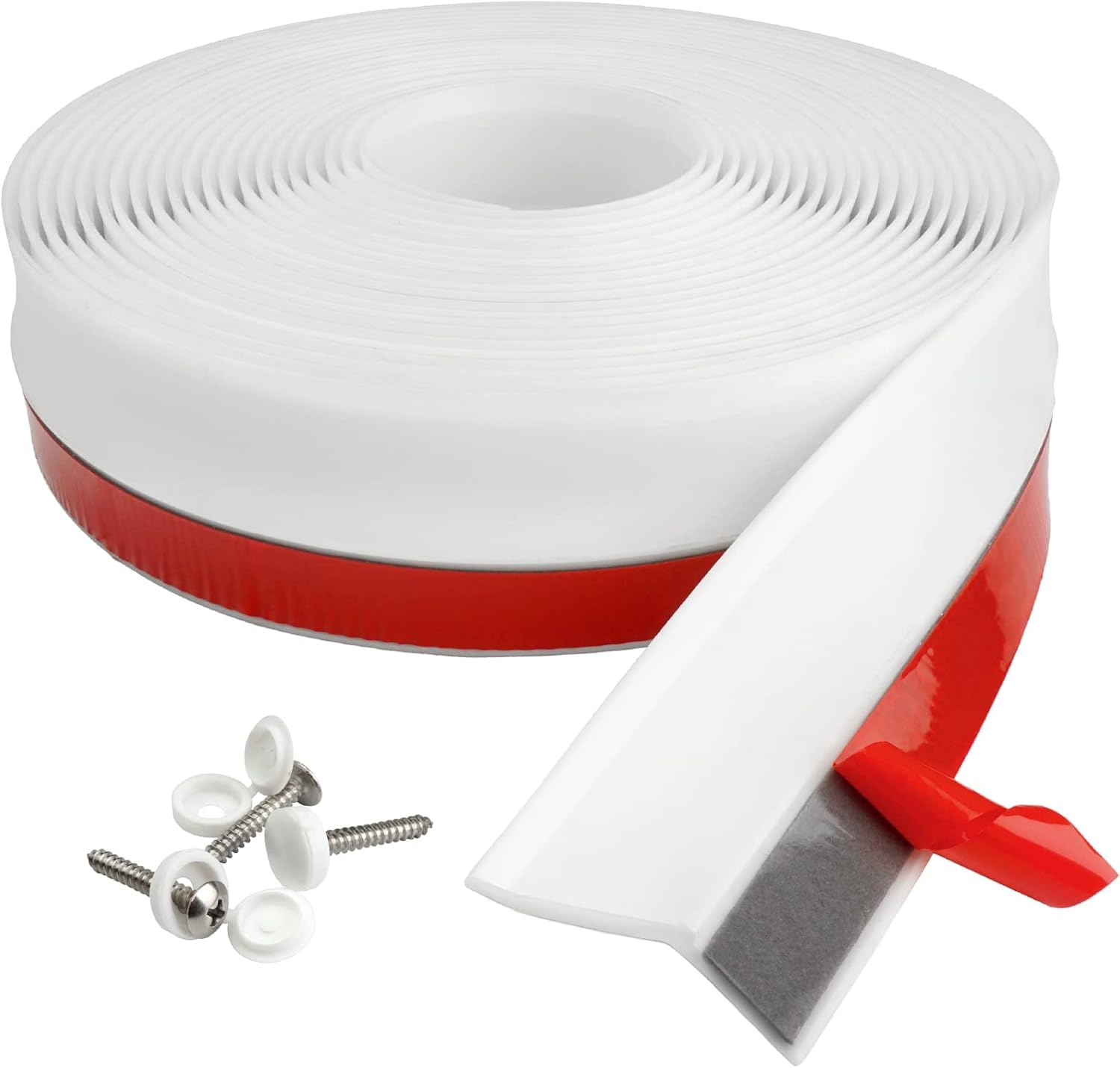
This product takes a different approach, addressing the gaps along the top and sides of the garage door rather than the bottom. The HOMWMPA kit provides 34 feet of TPE (thermoplastic elastomer) seal with an adhesive backing, designed to stop drafts, dust, and light infiltration around the door’s perimeter. It comes with a set of decorative caps and screws for reinforcement.
TPE is a strong choice for this application as it remains elastic in cold temperatures without becoming brittle. The adhesive backing makes initial placement easy, but the included screws are crucial for long-term hold. Some users noted that the provided screws can deform the plastic caps, recommending substitution with slightly smaller 3/4-inch truss head screws for a cleaner finish.
This is not a replacement for a bottom seal but a critical complement to it. If your garage door has visible light gaps on the sides, this kit is a must-have. The white color blends well with standard garage doors. For maximum energy efficiency, pair this with a high-quality rubber bottom seal from this guide to create a fully sealed envelope.
Why it’s great
- Stops drafts from top and side gaps
- Includes both adhesive and screws for secure install
- TPE material stays flexible in cold weather
Good to know
- Not a replacement for a bottom seal
- Stock screws may deform included plastic caps
7. Weather Defender Original Ultimate Garage Door Threshold Floor Seal

The Weather Defender is a different category of product—a threshold ramp that installs on the garage floor, not on the door itself. This PVC strip creates a physical barrier that rises 1.25 inches off the ground, designed to divert water, leaves, and debris away from your garage. It is the ultimate solution for garages on sloped driveways or in areas prone to heavy rain and flooding.
Made from eco-friendly PVC, it includes an integrated bright yellow safety strip and anti-slip ridges for traction. The kit comes with adhesive for securing it to the concrete. Users with serious flooding issues report that this product, combined with a good bottom seal on the door, completely stops water ingress. The adhesive is thick and requires a heavy-duty caulk gun to apply, but it forms an incredibly durable bond when set.
This is not for everyone. It is a premium solution for a specific problem. Installation requires careful measurement and a clean, dry surface for the adhesive to work. It also creates a raised lip that you must drive or walk over, which may be a consideration for some. For those plagued by water, however, the Weather Defender is the most effective solution available.
Why it’s great
- Highly effective barrier against water and flooding
- Tall 1.25-inch rise diverts significant runoff
- Integrated safety strip and anti-slip ridges
Good to know
- Requires strong adhesive and careful floor prep
- Creates a raised threshold to drive/walk over
FAQ
What is the difference between a bottom seal and a threshold seal?
How do I know if I need a 1/4 inch or 5/16 inch T-end?
Can I install a new seal without removing the old one?
Why does my garage door reverse when I try to close it with a new seal?
Final Thoughts: The Verdict
For most users, the bottom garage door seal winner is the Holikme EPDM Rubber Seal because its combination of high-density EPDM rubber, long 22-foot length, and included end plugs delivers unmatched durability and a complete seal against the elements. If you need a simple, universal fit for a standard track, grab the HOOIMA T-Ends Seal. And for those battling serious water intrusion, nothing beats the Weather Defender floor threshold for creating a physical barrier against flooding.