
Our readers keep the lights on and the weekend projects moving. As an Amazon Associate, I earn from qualifying purchases.
Choosing an audio interface for Cubase is about locking in low-latency ASIO performance with pristine preamps that let your mixes breathe. A mismatch in driver stability or converter quality can turn a productive session into a frustrating buffer-size guessing game.
I’m Rikta — the co-founder and writer behind FitlyFast. I’ve spent hundreds of hours cross-referencing driver architectures, dynamic range figures, and preamp noise floors to build a guide that saves you the research grind.
This guide focuses on models tested for seamless Cubase integration, covering everything from entry-level bus-powered units to studio-grade multi-channel rigs. If you are searching for a reliable audio interface for cubase, you have landed in the right place.
How To Choose The Best Audio Interface For Cubase
Cubase relies heavily on efficient ASIO driver communication to keep round-trip latency low. An interface with generic or poorly maintained drivers will cause buffer underruns, pop-and-click artifacts, and sluggish MIDI response. Prioritize brands that write their own optimized ASIO driver layer — Focusrite, Steinberg, MOTU, Universal Audio, and Audient all excel here. Pair that with preamps that offer at least -128 dBu EIN to keep your vocal and acoustic takes noise-free.
Driver Stability and ASIO Performance
Steinberg’s own UR44C uses Yamaha/Steinberg ASIO drivers, giving it a near-telepathic handshake with Cubase’s audio engine. MOTU’s USB driver delivers 2.5 ms round-trip latency at 96 kHz with a 32-sample buffer — fast enough for real-time virtual instrument tracking without perceived delay. Focusrite’s 4th Gen Scarlett series also provides stable ASIO on both Windows and macOS, and the included Cubase LE license reduces setup friction.
Preamp Quality and Converter Resolution
Dynamic range on the line outputs tells you how much headroom you have before distortion creeps in. The Focusrite Scarlett 2i2 4th Gen hits 120 dB, matching flagship converters. Audient’s iD24 goes further with 126 dB and 32-bit DAC technology, revealing subtle compression artifacts and reverb tails that cheaper interfaces smear. Entry-level models around 109-112 dB are workable for podcasting or lo-fi demos, but for serious Cubase mixing you want at least 115 dB.
I/O Count and Future Expansion
If you record live drums or multiple synth lines simultaneously, look for four mic preamps or ADAT expansion. The Audient iD24 includes one ADAT input, letting you add eight more channels later via an external preamp. The MOTU M6 has four preamps with A/B monitor switching, handy for checking your Cubase mix on two speaker pairs. For simple singer-songwriter setups, two preamps — like on the Universal Audio Volt 1 — are plenty as long as MIDI I/O is present for your controller keyboard.
Quick Comparison
On smaller screens, swipe sideways to see the full table.
| Model | Category | Best For | Key Spec | Amazon |
|---|---|---|---|---|
| Focusrite Scarlett 2i2 4th Gen | Compact Studio | Songwriters / Home Studio | 120 dB dynamic range | Amazon |
| Steinberg UR44C | DAW Native | Multi-Mic / Band Recording | 32-bit / 192 kHz | Amazon |
| MOTU M4 | High-Headroom | Low-Latency Instrument Tracking | 2.5 ms RTL (96 kHz) | Amazon |
| Audient iD24 | Console Grade | Pro Mixing / Outboard Integration | 126 dB dynamic range | Amazon |
| Focusrite Scarlett 4i4 4th Gen | Expanded I/O | Synth / Drum Machine Users | 4 line inputs + MIDI | Amazon |
| MOTU M6 | Studio Pro | Multi-Monitor / Large Rig | ESS Sabre32 DAC | Amazon |
| Solid State Logic SSL 2 MKII | Classic Sound | Vocal / Podcast Clarity | Legacy 4K enhancement | Amazon |
| Universal Audio Volt 2 | Vintage Tone | Guitar / Vocal Warmth | 610 tube emulation | Amazon |
| Universal Audio Volt 1 | Entry-Level | First Interface / Voice-Over | 24-bit / 192 kHz | Amazon |
In‑Depth Reviews
1. Focusrite Scarlett 2i2 4th Gen
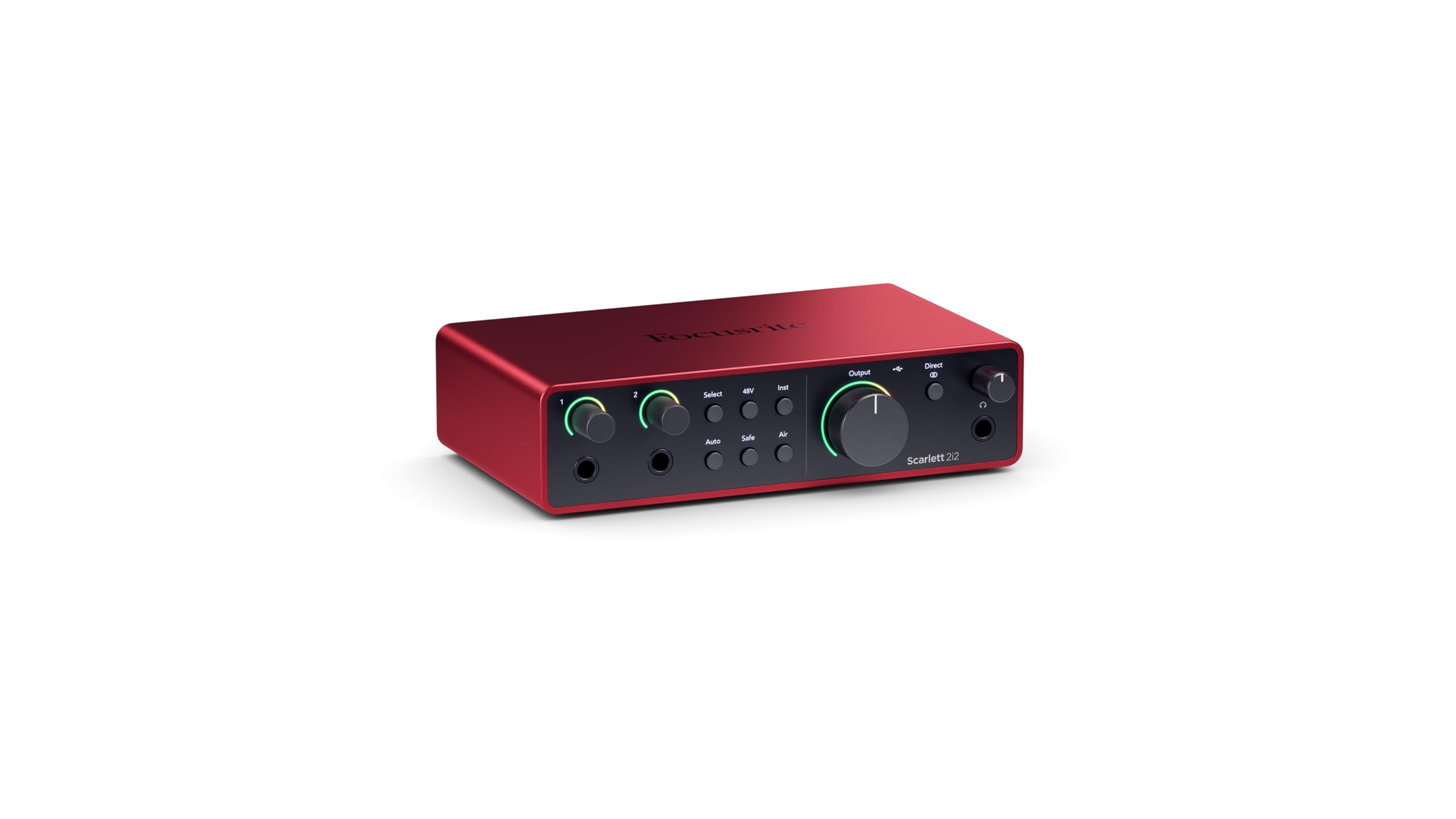
The 4th Gen Scarlett 2i2 is a serious upgrade from previous generations: 120 dB dynamic range on the converters matches Focusrite’s RedNet line, and the redesigned mic preamps measure at 0.001% THD. Clip Safe mode automatically catches digital overshoots without mangling your transient response, a lifesaver when tracking vocals in Cubase at high gain.
The included Cubase LE license eliminates the trial-and-error of third-party driver configuration. Auto Gain sets your input level in seconds, then Air mode adds a 4 dB shelf boost around 5 kHz that lifts acoustic guitars and voice intelligibility without harshness. The metal casing is heavier than the 3rd Gen, reducing resonance from desk vibrations.
Loopback is built in for streaming or re-amping, though you only get two instrument inputs — enough for a stereo synth but not for simultaneous guitar and bass tracking. At this price point, the 2i2 delivers the cleanest signal-to-noise ratio of any compact two-channel interface, making it the safest all-rounder for Cubase users.
Why it’s great
- Industry-leading 120 dB dynamic range converters
- Auto Gain and Clip Safe for flawless takes
- Includes Cubase LE out of the box
Good to know
- Only 2 input channels limit multi-mic sessions
- No MIDI I/O onboard
2. Steinberg UR44C

The UR44C is built specifically for Cubase. The Yamaha/Steinberg ASIO driver communicates directly with Cubase’s audio engine, dropping round-trip latency to levels that make real-time monitoring feel analog. This unit pushes 32-bit / 192 kHz conversion across all six inputs, capturing subtle dynamic shifts in overhead mics and room ambience without quantization noise.
Four Class-A D-PRE mic preamps provide enough clean gain for ribbon mics, and the onboard DSP mixer — dspMixFx — lets you add reverb and compression with zero latency before the signal hits Cubase. This matters for vocalists who need wet monitoring during tracking. Two independent headphone outputs each can receive a separate cue mix, useful for directing different blend mixes to the talent and the producer.
The USB 3.0 connection ensures enough bus power for the preamps, but there is no physical power switch — you will need to unplug the USB cable or use a switched outlet to fully power down. The included Steinberg Plus bundle adds HALion Sonic SE 3 and Groove Agent SE 5, expanding your Cubase instrument library without extra cost.
Why it’s great
- First-party ASIO driver tuned for Cubase
- 32-bit / 192 kHz on all 6 inputs
- Zero-latency DSP monitoring with effects
Good to know
- No power button; always on when connected
- e-Licenser required for some bundled software
3. MOTU M4

MOTU’s M4 is a performance beast for Cubase users who demand minimal buffer latency. The custom MOTU ASIO driver achieves 2.5 ms round-trip latency at 96 kHz with a 32-sample buffer — virtually imperceptible even when monitoring software instruments with complex VST chains. The ESS Sabre32 converters deliver a measured -129 dBu EIN on the mic inputs, well beyond typical interfaces in this range.
The full-color LCD screen shows simultaneous metering for all four inputs and four outputs, making it easy to dial in levels without looking at Cubase’s mixer. Front-panel 48V switches are per-channel, so you can run a condenser mic on input 1 and a dynamic on input 2 without touching the back panel. Dedicated loopback channels route computer audio back into Cubase for live streaming or sample capture.
The headphone amp is bus-powered and slightly weaker than the M6’s, so high-impedance cans like the Beyerdynamic DT 880 will need an external headphone amp for loud monitoring. MOTU also fixed a pitch-shift bug via driver update, but you should disable Windows fast startup to avoid it entirely.
Why it’s great
- Best-in-class 2.5 ms round-trip latency
- Per-channel 48V switches on the front
- Professional LCD metering for all channels
Good to know
- Weak headphone amp under bus power
- Pitch-shift bug potential if Windows fast startup is on
4. Audient iD24

The iD24 borrows its preamp circuit directly from Audient’s ASP8024-HE console, delivering the same Class-A topology that engineers rely on for vocal tracking. A 126 dB dynamic range on the line outputs reveals subtle reverb tails and compression pump artifacts that cheaper converters smear — useful when you are scrutinizing a mix in Cubase at high resolution.
Two fully balanced insert points let you patch outboard compressors before the signal hits the A/D stage, bypassing the internal preamp for a cleaner signal path. The three programmable F-buttons can be mapped to speaker select, talkback, polarity invert, or mono sum, speeding up your Cubase workflow without reaching for the mouse.
ADAT input on the rear allows future expansion up to eight additional channels, making the iD24 suitable for growing home studios. The unit runs warm even when idle, and the USB-C power draw is high enough that you should avoid USB 2.0 ports — a USB 3.0 or higher port ensures stable operation.
Why it’s great
- Console-grade Class-A mic preamps
- 126 dB dynamic range for critical mixing
- Insert points and ADAT expansion
Good to know
- Gets warm during extended use
- Needs USB 3.0+ port for stable power
5. Focusrite Scarlett 4i4 4th Gen
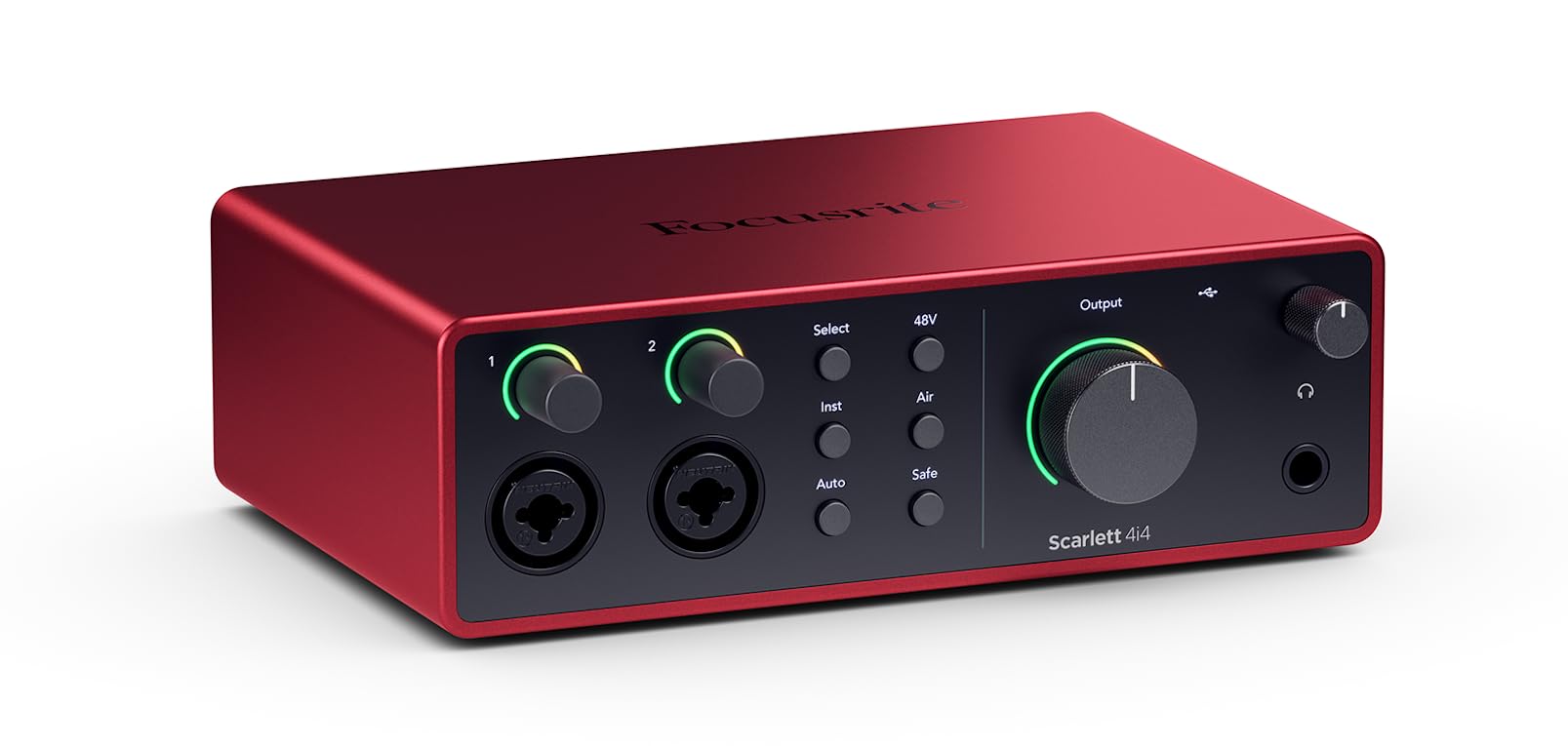
The 4i4 builds on the 2i2’s foundation by adding two extra line inputs on the rear, letting you keep a keyboard and a drum machine permanently connected alongside your mic and guitar. MIDI I/O via 5-pin DIN means you can sync hardware sequencers with Cubase’s tempo map without needing a separate MIDI interface.
All four line inputs share the same 120 dB dynamic range converters as the 2i2, and the fourth-generation preamps maintain the same 0.001% THD spec. The included Hitmaker Expansion bundle contains Antares Auto-Tune Access and Softube Marshall Plexi, expanding your Cubase plugin arsenal for vocal tuning and guitar tone shaping. The dedicated power supply eliminates bus-power dropouts when running multiple condenser mics with phantom power.
Driver stability is excellent across Windows and macOS, but some users report occasional crashes when buffer sizes are set below 64 samples during heavy VST instance counts. The headphone output is clean but lacks independent mix routing for the second headphone jack — both outputs mirror the same stereo bus.
Why it’s great
- MIDI I/O included for synth integration
- Dedicated power supply prevents dropouts
- Auto Gain and Clip Safe across all inputs
Good to know
- Headphone outputs share same mix bus
- Occasional driver crash at ultra-low buffers
6. MOTU M6

The M6 steps up with four mic preamps and the same ESS Sabre32 Ultra DAC found in high-end RME units, delivering 120 dB dynamic range on the line outputs. A/B monitor switching lets you toggle between two sets of studio monitors instantly — critical for A-B testing your Cubase mix on nearfields versus farfields without unplugging cables.
The color LCD provides per-channel level metering with peak hold, and the second headphone output has an independent 3-4 switch allowing a completely separate cue mix from the main stereo bus. Stand-alone operation via the included DC adapter means you can mix through monitors even with the computer off, useful for quick headphone-level checks before a session.
MOTU’s Performer Lite and Ableton Live Lite 11 are included, but Cubase users will likely skip those. The price is higher than the M4, so you are paying for the extra two preamps, A/B switching, and dedicated power supply — worth it if you run multiple mics and monitor pairs simultaneously.
Why it’s great
- A/B monitor switching for mix comparison
- ESS Sabre32 DAC matches pro-grade converters
- Independent second headphone mix
Good to know
- Premium pricing for extra I/O features
- No ADAT expansion on this model
7. Solid State Logic SSL 2 MKII

The SSL 2 MKII brings the legendary SSL console sound to your Cubase rig via the Legacy 4K analog enhancement button. Engaging 4K adds a subtle high-frequency lift and harmonic drive that makes vocals cut through a dense mix — reminiscent of the E-Series console EQ curve. The built-in high-pass filter at 75 Hz rolls off low-end rumble before it hits the preamp, reducing the need for Cubase’s EQ on the way in.
32-bit / 192 kHz AD/DA converters provide clean headroom, though this is not true 32-bit float — clipping is still possible if your input level exceeds 0 dBFS. The stereo loopback function is straightforward: route your Cubase session output back into any streaming software without complicated virtual cable setups. MIDI I/O on 5-pin DIN jacks keeps your hardware controller in sync.
The metal chassis is slightly larger than a Scarlett 2i2, and the knobs have the same weighted feel as SSL’s larger consoles. The headphone amp is powerful enough for 250 ohm headphones without noticeable distortion. Driver installation is simple, with no dongle or license file required.
Why it’s great
- Legacy 4K analog enhancement for vocal presence
- High-pass filter eliminates rumble pre-conversion
- Solid metal build with premium knob feel
Good to know
- Not true 32-bit float; can still clip
- Larger footprint than comparable units
8. Universal Audio Volt 2

The Volt 2 integrates UA’s vintage 610 preamp emulation, giving Cubase recorded tracks a warm saturation that mimics classic analog consoles. Engaging Vintage mode introduces a subtle 3 dB shelf boost around 5 kHz and slight harmonic distortion, making DI guitar and vocals sound recorded through a console rather than a sterile interface. The 24-bit / 192 kHz converters are clean, though dynamic range sits around 113 dB — noticeable if you are used to Scarlett’s 120 dB.
MIDI I/O is present on 5-pin DIN, a feature often omitted at this price tier. The LUNA DAW is bundled, but Cubase users can ignore it — the Volt works plug-and-play with Cubase’s ASIO driver without additional software. The metal chassis is compact and bus-powered, meaning no wall wart cluttering your desk.
Some users report needing extra gain for quieter dynamic microphones when recording into Cubase at moderate buffer sizes. The vintage mode is not adjustable — it is a single on/off switch — so you cannot dial in the amount of saturation. For songwriters wanting a more characterful sound without plugin processing, this is a strong pick.
Why it’s great
- Vintage 610 tube emulation adds analog warmth
- MIDI I/O included at a competitive price
- Bus-powered compact design
Good to know
- Dynamic range below Scarlett 2i2 at 113 dB
- Vintage mode is fixed on/off only
9. Universal Audio Volt 1

The Volt 1 is UA’s entry point, offering the same 610 preamp emulation and 24-bit / 192 kHz conversion as the Volt 2 but with a single input channel and no MIDI I/O. For Cubase users tracking solo vocals or DI guitar, this is a budget-friendly path to the UA sound signature — the vintage mode injects analog character that reduces the need for saturation plugins.
The compact form factor fits easily on a cramped desk, and the bus-powered USB-C connection means zero power cable clutter. Phantom power is available for condenser mics via a single switch, and zero-latency monitoring is selectable through a hardware knob. The bundled software package includes LUNA, Ableton Live Lite, and Melodyne essential edition, though Cubase users will likely focus on the free Melodyne license for pitch correction.
The single input limits you to one mic or one instrument at a time — no simultaneous guitar-and-vocal tracking. The headphone output is adequate for low-impedance headphones, but high-impedance monitors like the DT 770 will require more volume than comfortable. For beginners building their first Cubase rig, the Volt 1 is a solid starting point with room to trade up later.
Why it’s great
- Vintage 610 saturation at entry-level price
- Bus-powered and ultra-compact
- Includes Melodyne and Ableton Live Lite
Good to know
- Only one input — no simultaneous tracking
- No MIDI I/O; limited to stereo monitoring
FAQ
Does the Steinberg UR44C offer better ASIO performance in Cubase than third-party interfaces?
What is the minimum sample rate I should use for Cubase mixing?
Can I use a USB 2.0 hub with an audio interface for Cubase?
How many preamps do I need for recording vocals and guitar simultaneously in Cubase?
Is 32-bit float conversion necessary for Cubase production?
Final Thoughts: The Verdict
For most users, the audio interface for cubase winner is the Focusrite Scarlett 2i2 4th Gen because it combines 120 dB dynamic range, Auto Gain, and bundled Cubase LE into one reliable package. If you need ultra-low latency for virtual instrument tracking, grab the MOTU M4. And for deep Cubase integration with six inputs and DSP effects, nothing beats the Steinberg UR44C.