
Our readers keep the lights on and the weekend projects moving. As an Amazon Associate, I earn from qualifying purchases.
Standing or walking on concrete for eight-plus hours sends shockwaves through your spine, hips, and knees—a brutal daily reality for warehouse workers, factory floor operators, and construction tradespeople. The wrong boot turns that concrete slab into a punishing anvil, accelerating joint pain and fatigue long before the shift ends. You need midsoles that absorb impact, outsoles that grip slick industrial surfaces, and uppers that survive grinding abrasion without crumbling.
I’m Rikta — the co-founder and writer behind FitlyFast. After spending hundreds of hours analyzing sole compounds, compression-set rates, safety certifications, and real-world wear patterns across dozens of concrete-floor models, I assembled this guide to separate the boots that actually protect your body from the ones that just look tough.
If you work, walk, or stand on hard floors all day, investing in a properly cushioned, slip-resistant, and durable pair of boots for concrete can mean the difference between finishing your shift pain-free and limping home with sore feet and aching knees.
How To Choose The Best Boots For Concrete
A boot that survives a construction site can fail miserably on a concrete warehouse floor. The difference lies in how the boot manages impact, distributes pressure, and grips a surface that offers almost no natural give. Three factors determine whether a boot protects your body through a 12-hour shift or leaves you counting the minutes until you can sit down.
Midsole Cushioning: Your Shock Absorber
Concrete has zero forgiveness—every step sends a jolt through your foot. The midsole material is the first line of defense. Polyurethane midsoles offer long-lasting support and resist compression over months of wear, though they tend to be heavier. EVA foam provides a lighter, softer feel right out of the box but compresses faster under sustained weight. Some premium boots now use hybrid PU-EVA blends or proprietary foams (like New Balance’s Fresh Foam) to combine softness with durability. For daily use on concrete, prioritize a boot with a thick, resilient midsole that doesn’t pack down after a few weeks.
Outsole Traction and Rubber Compound
Smooth wet concrete, oil spots on a factory floor, and fine dust on a warehouse surface each demand different tread patterns. A deep, self-cleaning lug pattern works well for muddy outdoor sites but can be less stable on slick indoor concrete. Look for boots with a continuous contact patch and a rubber compound that stays tacky on wet surfaces—typically marked with a slip-resistant (SR) rating. Oil-resistant outsoles also prevent rubber breakdown when you’re walking through shop-floor fluids. The outsole’s edge geometry matters too: a flatter heel strike zone provides more stability when carrying loads across long stretches of hard floor.
Toe Protection and Weight Distribution
Steel toes are standard in many safety-rated workplaces, but they add significant weight that your legs must lift with every step. Alloy toes are lighter and still pass impact tests, while composite toes are non-metallic, lighter, and thermally non-conductive—ideal for cold concrete floors. The critical detail is the toe-box shape: a narrow, pinching steel toe can cause metatarsal pain after hours of standing. Look for a wider toe box or a square-toe design that allows natural splaying of the toes, which improves blood flow and reduces fatigue over a long shift.
Quick Comparison
On smaller screens, swipe sideways to see the full table.
| Model | Category | Best For | Key Spec | Amazon |
|---|---|---|---|---|
| Timberland PRO Endurance | Premium | All-day heavy industrial comfort | Steel toe + puncture-resistant plate | Amazon |
| Merrell Moab 3 Tactical | Premium | Tradesmen who need agile traction | Vibram outsole, 1.5 lb each | Amazon |
| New Balance Fresh Foam | Mid-Range | Maximum cushioning on hard floors | Fresh Foam midsole, composite toe | Amazon |
| ROCKROOSTER Gammon | Mid-Range | Heavy-duty slip-on with arch support | Oiled leather, ASTM EH rated | Amazon |
| Wolverine Floorhand Romeo | Mid-Range | Easy-on waterproof durability | Waterproof leather, slip-on | Amazon |
| Timberland PRO Intercept | Mid-Range | Lightweight athletic safety shoe | Steel toe, athletic traction | Amazon |
| CAT Threshold Waterproof | Budget | Value-priced leather steel-toe boot | Steel toe, waterproof membrane | Amazon |
| TIDEWE Work Boots | Budget | Wet workplace waterproof protection | 100% rubber/neoprene, puncture-proof | Amazon |
| NINGO Steel Toe Boots | Budget | Entry-level all-around protection | Steel toe, slip resistant | Amazon |
In‑Depth Reviews
1. Timberland PRO Endurance 6-Inch Steel Toe

Timberland PRO’s Endurance boot is built for the harshest concrete environments where sharp metal debris, standing water, and 12-hour shifts converge. The steel toe and puncture-resistant plate provide a dual layer of protection that has held up two years in oily, abrasive industrial settings without failure. The outsole grip is aggressive enough for slick surfaces, while the waterproof membrane keeps feet dry in wet conditions. Several long-term users report zero foot fatigue even after hour 10, thanks to the plush yet supportive insole and the boot’s ability to absorb shock on hard floors.
Where the Endurance stands out is in its break-in period—most find it comfortable within two days, a rarity for a heavy-duty steel-toe. The orange accent stitching adds a subtle style point without looking unprofessional. However, the steel construction does make this a noticeably heavy boot; your legs will feel the extra poundage if you’re climbing stairs or ladders frequently. The sizing runs true to length, though users with very wide feet note the toe box can feel snug without the wide-width option. The robust outsole rubber shows minimal wear even after months of concrete abrasion, and the upper leather resists punctures from sharp metal shavings.
For the concrete worker who prioritizes maximum safety certification, waterproof integrity, and long-term structural integrity, the Endurance is the most reliable investment in this lineup. The only compromise is weight—if you need a lighter boot for agile work, you may prefer the New Balance Fresh Foam. But for brute-force durability and all-day protection, the Endurance earns the top spot. The consensus among tradespeople is clear: this boot outlasts cheaper alternatives by years while keeping feet comfortable shift after shift.
Why it’s great
- Exceptional shock absorption for long concrete shifts
- Dual protection—steel toe and puncture-resistant plate
- Waterproof membrane keeps feet dry on wet floors
Good to know
- Noticeably heavy due to steel construction
- Break-in discomfort for the first two days
2. Merrell Moab 3 Low Tactical Work Shoes

The Merrell Moab 3 Low Tactical Work Shoes bring hiking-boot traction and comfort to the concrete floor. The Vibram outsole features aggressive lugs that deliver reliable grip on wet, dusty, or slightly uneven indoor surfaces, while the low-cut design keeps the boot lightweight at roughly 1.5 pounds per shoe. Tradesmen who log 11,000 to 13,000 steps per day on concrete and sand report that this shoe holds up for nine months of daily wear with minimal degradation—an impressive lifespan for a low-profile tactical shoe. The upper leather and mesh construction breathe better than a full leather boot, reducing sweat buildup during warm shifts.
One consistent note among long-term users is that the OEM laces wear out faster than the rest of the boot—a minor issue since standard replacement laces are cheap. The fit runs slightly large, which can be an advantage if you plan to add a thicker insole or wear heavy wool socks. Users who swapped the stock insole for a custom orthotic found the Moab 3 comfortable for 14 hours on concrete. The shoe does not have a safety toe, so it is best suited for environments that don’t require ASTM-rated impact protection. The outsole edges show scuffing after a few weeks on rough concrete, but the rubber compound still grips well.
If your workplace allows non-safety-toe footwear and you value agility and breathability on hard surfaces, the Moab 3 Tactical is a strong contender. The traction pattern is especially effective on sloped concrete ramps and wet warehouse aisles. The lack of steel or composite toe limits its use in heavy industrial settings, but for general trades and maintenance work where you need to move fast and stay comfortable, this Merrell delivers consistently.
Why it’s great
- Vibram outsole with aggressive grip for wet concrete
- Lightweight and breathable for all-day movement
- Durable build lasting 9+ months of heavy daily wear
Good to know
- No safety toe—not suitable for impact-risk zones
- Stock laces wear out faster than the boot itself
3. New Balance Composite Toe Fresh Foam Work Shoes

New Balance took the running shoe philosophy and applied it directly to concrete-floor work. The Fresh Foam midsole delivers a level of step-in cushioning that rivals premium athletic footwear, making it the best choice for workers who suffer from daily foot soreness after long warehouse or delivery shifts. The composite toe passes safety impact standards while keeping the shoe significantly lighter than any steel-toe boot, which reduces leg fatigue over a 10- to 12-hour standing shift. Users transitioning from traditional boots report an immediate elimination of lower back and heel pain on concrete floors.
The sizing runs notably large and wide—most buyers need to order a half to full size down, especially if they have narrow feet. Once properly fitted, the shoe is breathable and conforms to the foot with minimal break-in. HVAC technicians and delivery drivers who spend their entire shift on concrete call it the best work shoe they have ever owned. The outsole grip is adequate for clean factory floors but less aggressive than the Merrell’s Vibram, so it is not ideal for muddy or heavily oil-slicked surfaces. The composite toe does not conduct cold, making the shoe warmer in winter compared to steel-toe alternatives.
For anyone whose primary complaint is foot pain at the end of a concrete shift, the Fresh Foam work shoe is the solution. The cushioning is unmatched in this category—think memory foam that does not bottom out after a month. The composite toe provides peace of mind without the weight penalty. The only trade-off is that the foam midsole may compress slightly faster than a polyurethane alternative over a full year, but the initial comfort gain outweighs that concern for most buyers. This is the go-to for maximum impact absorption on hard floors.
Why it’s great
- Best-in-class Fresh Foam cushioning for concrete floors
- Lightweight composite toe reduces daily fatigue
- Zero break-in required—comfortable straight out of the box
Good to know
- Runs very large—order a half to full size down
- Outsole is less aggressive on slippery or uneven terrain
4. ROCKROOSTER Gammon Steel Toe Chelsea Boots

ROCKROOSTER’s Gammon boots combine the convenience of a pull-on Chelsea design with the protection specs of a heavy-duty work boot. The oiled leather upper resists scuffs, oils, and rough terrain, and it handles standing water up to two inches without leaking. The steel toe is ASTM-rated for impact and compression, while the EH (Electrical Hazard) rating adds protection for workers near live circuits. Users wearing these for 10- to 12-hour shifts on concrete and rope-access environments praise the arch support and the thick, slip-resistant sole that maintains traction on shop-floor fluids.
The boots are initially heavy and stiff, requiring a few days of break-in before the leather relaxes around the ankle. A repeating observation is that the interior heel fabric can abrade and eventually snag socks, which some users mitigate by cutting away the worn lining. The wide-width version provides generous toe room that reduces pinching on long shifts—a critical detail for concrete work where foot swelling is common. Sizing is slightly generous, with most buyers recommending ordering a half size smaller than their normal boot size.
For workers who need the protection of a steel-toe safety boot but prefer a slip-on profile for quick on-and-off access, the Gammon is a durable mid-range choice. The oiled leather ages well and develops character without looking destroyed. The main durability note is the interior lining wear, which is cosmetic rather than structural but can be annoying. The arch support and shock absorption are solid for concrete, outperforming many budget-priced steel toes. If you value convenience without sacrificing ASTM protection, this boot delivers real value.
Why it’s great
- Slip-on Chelsea design with ASTM steel toe protection
- Excellent arch support for 10-12 hour concrete shifts
- Oiled leather resists scuffs, oils, and water exposure
Good to know
- Interior heel lining wears out and can snag socks
- Heavy and stiff before break-in
5. Wolverine Floorhand Romeo Waterproof
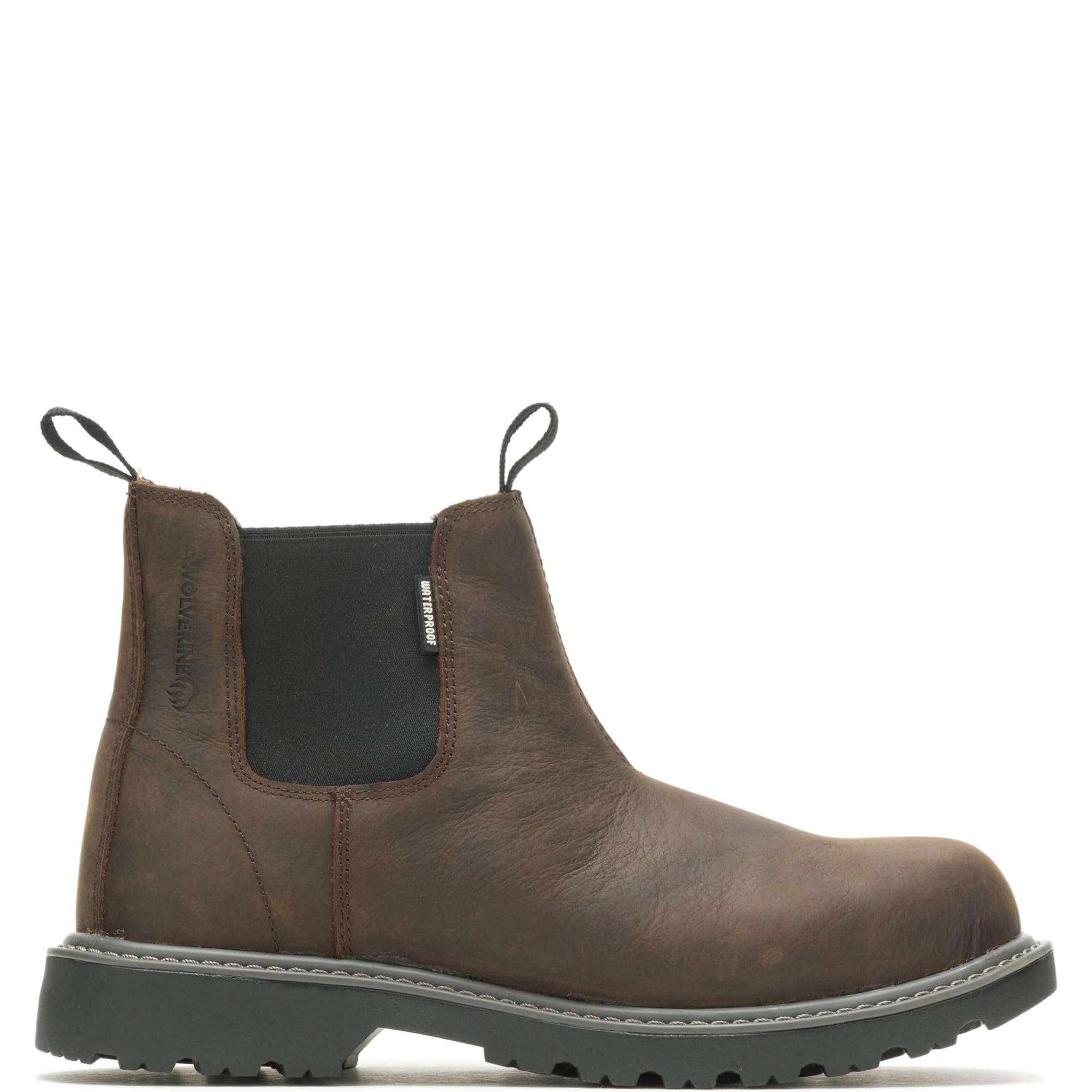
Wolverine’s Floorhand Romeo brings its legendary boot-building heritage to a simple, slip-on waterproof package. The full-grain leather upper is treated for waterproofing, and the outsole is designed to manage light slip risks on concrete—making it a solid choice for workers who need quick donning and doffing in wet environments. Long-term repeat buyers have gone through three pairs of the Floorhand Romeo for heavy use, reporting no holes or scratches until regular leather wear finally catches up. The boot is consistently described as comfortable straight out of the box, with a fit that matches your standard shoe size.
The main sizing caveat is inconsistency: some buyers find the boot too wide in the heel, causing a loose fit that requires thicker socks to remedy. Others report that the boot runs large overall. This lack of consistent sizing across batches is the most common complaint. The waterproof membrane works reliably for splashes and light rain, but users pushing it through deep puddles or sustained hose exposure report eventual moisture seepage through the seam where the sole meets the upper. The outsole grip is adequate for clean, dry concrete but less confidence-inspiring on wet, oily surfaces compared to more aggressively treaded boots.
If you need a comfortable, entry-level waterproof slip-on for dry concrete environments where you do not require a safety toe or extreme slip resistance, the Wolverine Floorhand Romeo is a dependable budget-friendly option. The brand’s reputation for durability is visible in the thick leather and solid stitching. The boot lacks the cushioning sophistication of the New Balance Fresh Foam or the safety certifications of the Timberland PRO Endurance, so it is best suited for light industrial or maintenance roles on hard surfaces. The comfort is genuine, but check the sizing carefully.
Why it’s great
- Comfortable out of the box with reliable waterproofing
- Durable leather construction from a trusted brand
- Easy slip-on design for fast access
Good to know
- Inconsistent sizing—some batches run wide in the heel
- Not suitable for heavy slip-risk or deep water immersion
6. Timberland PRO Intercept Steel Safety Toe Shoe
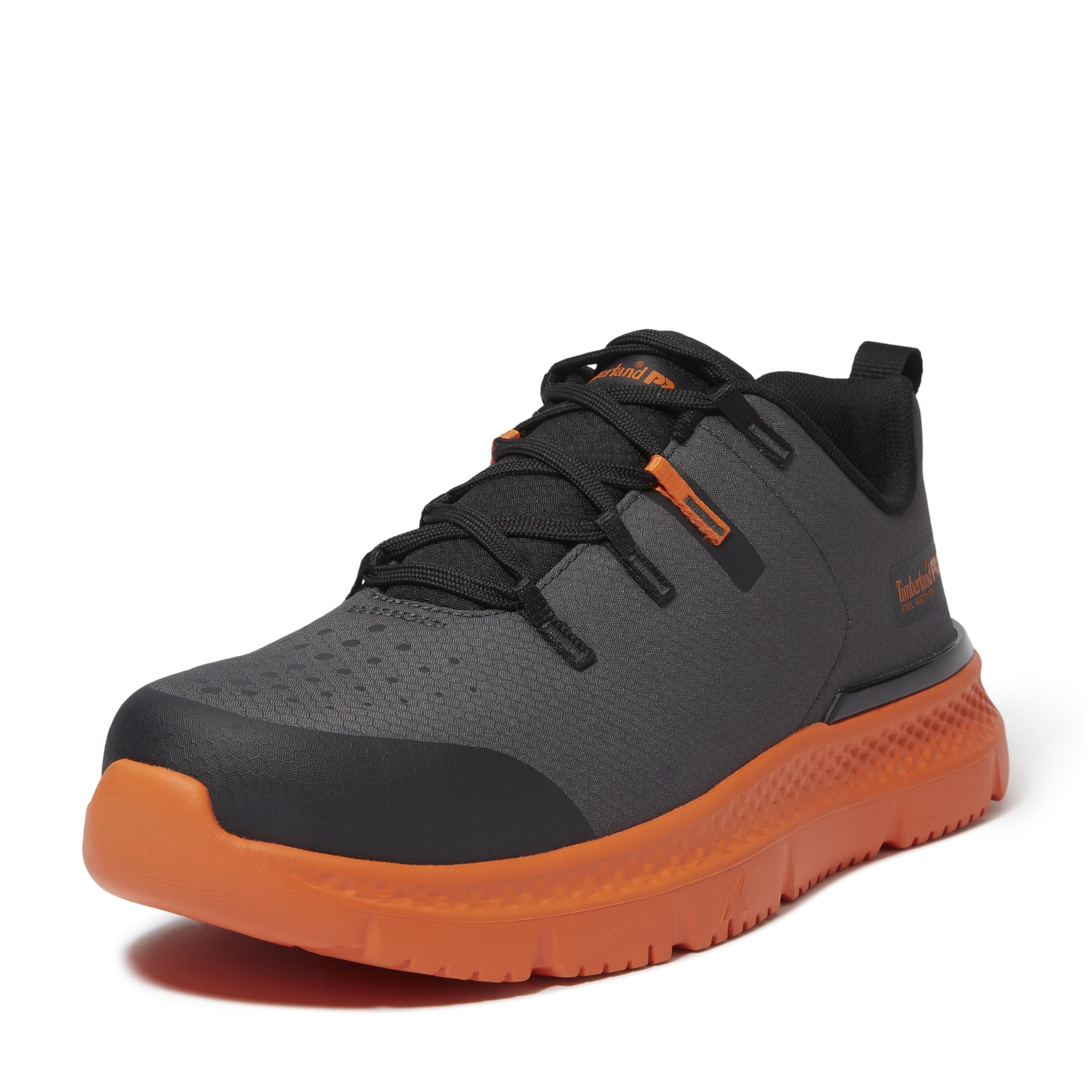
The Timberland PRO Intercept reimagines the steel-toe safety shoe as an athletic hybrid designed specifically for concrete. The sole geometry and cushioning system mimic a running shoe’s midsole, which dramatically reduces foot fatigue on long shifts. Users describe it as feeling like a gym shoe while still providing full steel-toe protection—a rare combination that makes it ideal for warehouse roles, delivery drivers, and assembly line workers who spend their entire day standing or walking. The shoe is notably lightweight, and the breathable upper prevents the sweaty foot syndrome common in all-leather boots.
Sizing is the critical detail: almost every reviewer advises buying a half size smaller than your normal shoe size. The shoe runs large, and the wide option is even more generous. The stock insole is thin and does not provide enough arch support for many users—a simple swap to an aftermarket orthotic like Dr. Scholl’s transforms the comfort for concrete floors. The toe area uses a slim steel cap that can dent if struck with heavy tools, so this shoe is best for environments with moderate impact risks rather than falling steel beams. The outsole grip is reliable on clean concrete but less aggressive on wet or muddy surfaces.
For workers who hate the heavy, clunky feel of traditional steel-toe boots but cannot compromise on safety, the Intercept is a revelation. The athletic design allows faster movement and less leg fatigue, and the breathable construction keeps feet cooler. The thin insoles and oversized fit are easy fixes. This shoe is not suited for extreme environments with heavy debris or deep water, but for standard industrial and warehouse concrete floors, it offers an excellent balance of protection and mobility. The value proposition is strong for a Timberland PRO product.
Why it’s great
- Running-shoe feel with full steel toe protection
- Lightweight and breathable for long concrete shifts
- Excellent for reducing foot fatigue on hard floors
Good to know
- Runs large—buy a half size smaller than normal
- Stock insoles are thin; replace for better arch support
7. CAT Threshold Waterproof Steel Toe Work Boot

CAT’s Threshold boot delivers impressive all-leather construction at a price point that undercuts most competitors by a wide margin. The steel toe is ASTM-rated, the waterproof membrane handles splashes and light rain, and the rubber toe guard adds a layer of abrasion protection for kneeling or toe-dragging on concrete. Users consistently rate the build quality as excellent for the cost, with many reporting that the boot holds up for a full year of daily wear before showing significant interior breakdown. The classic tactical-lite style works for both work and casual wear.
The boot is not truly waterproof for extended submersion—users report wet feet after one to two hours of standing in rain, indicating that the membrane works best for incidental exposure rather than heavy water work. The outsole has good grip on dry concrete and gravel but is notably poor on oil or soapy water, where several users report slipping. The interior uses a cloth lining that can develop holes behind the heel after ten to twelve months, though this does not affect comfort. The foam insole offers basic cushioning that is adequate for eight-hour shifts but may need upgrading for 12-hour days.
For the buyer who needs a genuine leather steel-toe boot on a strict budget, the CAT Threshold is the strongest value in this list. The all-leather upper and rubber guard provide durability that cheap synthetic boots cannot match. The compromises are real but predictable: limited slip resistance on wet industrial surfaces, only light waterproofing, and insoles that ask for an aftermarket upgrade. If your concrete floor stays dry and you do not need max cushioning, this boot saves significant money without sacrificing basic protection. It works well for yard work, light construction, and general maintenance.
Why it’s great
- Genuine all-leather upper with rubber toe guard
- Excellent durability for the price—lasts one year plus
- ASTM-rated steel toe at a budget-friendly price tier
Good to know
- Poor slip resistance on oil, soap, or wet surfaces
- Not fully waterproof for extended rain exposure
8. TIDEWE Work Boots for Men
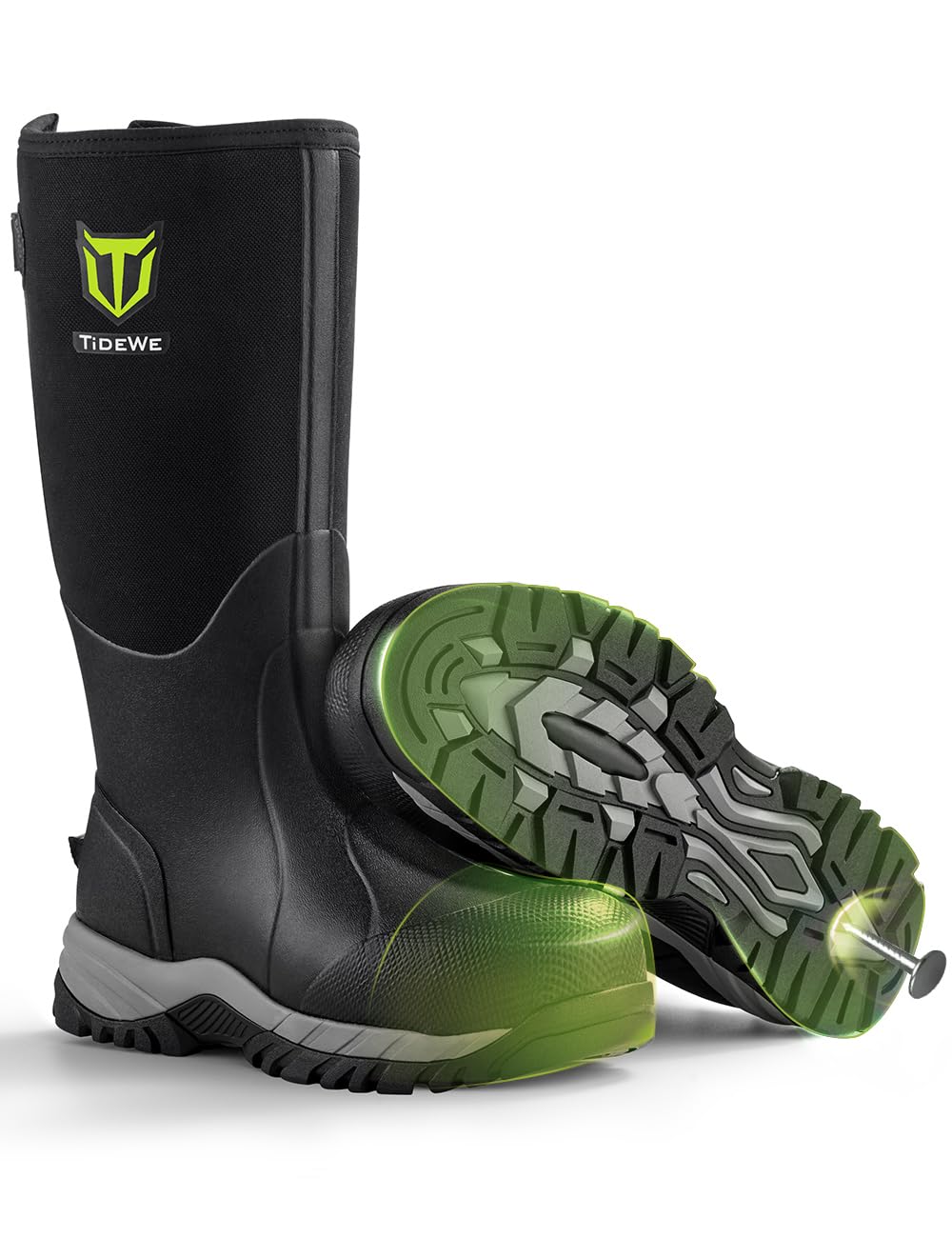
TIDEWE boots are engineered for wet, messy concrete environments where standing water and puncture hazards are daily realities. The 100% rubber and neoprene construction provides complete waterproofing beyond what leather boots can offer, and the deep tread outsole maintains traction on wet concrete surfaces. A steel shank between the insole and outsole adds puncture protection while creating a stable platform for carrying heavy loads across long expanses of hard floor. The pull-on design with kick tabs makes entry and exit fast, which matters during busy shifts.
The sizing is the primary friction point—the boots run significantly large, with most users needing to order one to two sizes down from their normal shoe size. The generous volume makes them a good match for workers with wide feet who struggle to find comfortable safety boots. The insulation and waterproof membrane keep feet warm and dry, but the trade-off is poor breathability; users report intense sweating during warm shifts or in non-air-conditioned warehouses. The outsole grip, while good in water, has received some feedback about slipping on smooth wet concrete surfaces, suggesting the rubber compound could be tackier.
TIDEWE’s boots are a solid budget-friendly pick for workers who stand in water or mud on concrete slabs—think farm operations, fisheries, and wet industrial plants. The waterproof integrity is superior to the leather boots in this price tier. Sweating is the main downside, so plan for moisture-wicking socks. The oversized fit is manageable if you use the insole length chart carefully. For the price, you get genuine waterproofing and puncture protection that entry-level leather boots cannot match, making this a specialized tool for wet concrete work.
Why it’s great
- 100% waterproof rubber/neoprene for wet concrete environments
- Puncture-proof steel shank for underfoot protection
- Easy pull-on design with kick tabs for fast use
Good to know
- Runs very large—size down one to two sizes
- Poor breathability causes heavy foot sweating in warm conditions
9. NINGO Steel Toe Work Boots
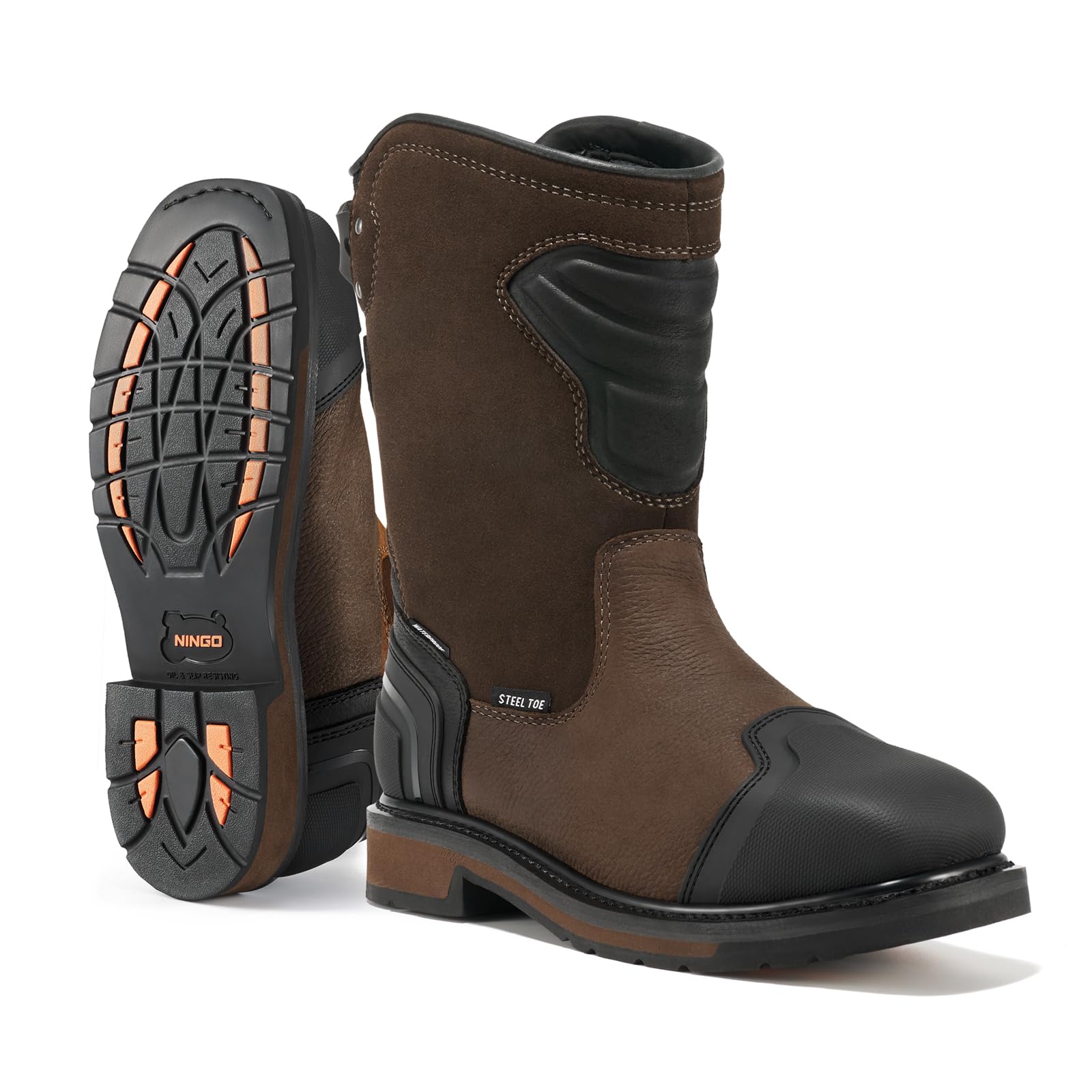
NINGO’s steel toe boots enter the concrete-floor market as a no-frills entry-level option that covers the fundamentals: steel toe protection, slip-resistant outsole, and EH (Electrical Hazard) rating. Users describe the boots as very comfortable with solid construction, noting that the quality leather and thick durable soles compare favorably to more expensive brands like Carolina. The square toe design provides a wider toe box than traditional round-toe steel boots, which helps reduce pinching during long shifts on hard floors. The slip-on style with pull tabs makes them convenient for quick changes.
The most common sizing note is that the boots run slightly large, so ordering a full size down is a safe bet for most feet. The steel toe cap can feel narrow for users with wide feet, who recommend sizing up for adequate room. The interior heel fabric shares a similar vulnerability to the ROCKROOSTER boots—it can wear through in high-friction areas, causing the foot to get stuck during removal. One user simply cut away the worn fabric to solve the issue. The boots handle mud, water, and impacts without structural failure, and the outsole maintains grip in moderate wet conditions.
For first-time buyers of steel toe boots who need a budget-friendly introduction to concrete-floor protection, the NINGO boots offer a surprising amount of value. The leather quality and stitch density are better than expected at this tier. The arch support is adequate for moderate use, though serious concrete veterans will want to add a cushioned insole. The interior lining durability is the weakest link, but the boot’s core structure—leather upper, steel toe, and thick rubber sole—holds up well. This is the right choice for light construction, warehouse picking, or as a backup pair for heavy-use days.
Why it’s great
- Genuine leather build with steel toe and EH rating
- Square toe design offers wider toe box than traditional boots
- Impressive leather quality and construction for the price
Good to know
- Steel toe cap may be narrow for wide-footed users
- Interior heel lining can wear through over time
FAQ
How much arch support do I need for concrete-floor work?
Should I choose steel toe or composite toe for walking on concrete all day?
Why do some boots cause more foot fatigue even if they are cushioned?
How often should I replace boots used daily on concrete?
Can I add aftermarket insoles to any concrete-floor boot?
Final Thoughts: The Verdict
For most users, the boots for concrete winner is the Timberland PRO Endurance because it combines maximum safety certification, waterproof durability, and shock absorption that holds up through the longest shifts—the weight is the only real trade-off. If you want maximum cushioning without the bulk, grab the New Balance Fresh Foam with its composite toe and athletic-level impact protection for concrete. And for a lighter, more agile option that still grips wet surfaces reliably, nothing beats the Merrell Moab 3 Tactical for tradesmen who need traction and breathability all day on hard floors.