
Our readers keep the lights on and the weekend projects moving. As an Amazon Associate, I earn from qualifying purchases.
That blurry, shaking image through a cheap department-store telescope is the single fastest way to kill a new stargazer’s enthusiasm. An affordable telescope for beginners doesn’t have to mean frustration — the right one delivers crisp moon craters, identifiable planets, and a tripod stable enough to actually focus without a five-minute wobble.
I’m Rikta — the co-founder and writer behind FitlyFast. I’ve spent countless hours analyzing aperture sizes, mount stability, and accessory bundles across dozens of entry-level refractors to separate the few genuinely useful starter scopes from the ones that will sit unused after one night.
Whether you are shopping for a curious child or yourself, this guide cuts through the marketing to find a sturdy affordable telescope for beginners that prioritises real-world usability over inflated magnification numbers.
How To Choose The Best Affordable Telescope For Beginners
Selecting your first scope comes down to three non-negotiable pillars: the aperture that collects light, the mount that holds it steady, and the accessories that actually get used. Ignore the flashy “max magnification” number on the box — that’s the biggest trap in this category.
Aperture: The True Power Metric
Aperture is the diameter of the main lens, measured in millimeters. A 70mm scope gathers enough light to show moon craters and the four Galilean moons of Jupiter. A 90mm scope reveals Saturn’s rings as a distinct shape and resolves brighter nebulas as hazy patches. For a first scope, 80mm to 90mm is the sweet spot — enough light grasp for rewarding views without the bulk and cost of a 100mm+ tube.
Mount and Tripod: The Hidden Failure Point
A wobbly tripod makes high-magnification viewing an exercise in frustration. Look for an Altazimuth mount with slow-motion control cables — these allow fine adjustments without jarring the scope. Stainless steel legs are a significant upgrade over aluminum; they add weight for stability and absorb vibration. Avoid any tripod that feels hollow or has plastic leg locks.
Eyepieces and Barlow Lenses
Most budget scopes ship with 25mm and 10mm Kellner eyepieces plus a 3X Barlow. The Barlow doubles or triples magnification but often introduces blur if the optics or the scope’s build quality are poor. Start with the 25mm eyepiece for a wide, steady view. Only use the 10mm or the Barlow after you have locked onto your target and the scope is stable.
Quick Comparison
On smaller screens, swipe sideways to see the full table.
| Model | Category | Best For | Key Spec | Amazon |
|---|---|---|---|---|
| Koolpte 90mm | Refractor | Slow-motion tracking | 90mm aperture, 700mm FL | Amazon |
| MEEZAA 90mm | Refractor | Stainless steel stability | 90mm aperture, 800mm FL | Amazon |
| Dianfan 90mm | Refractor | Upright terrestrial views | 90mm aperture, 800mm FL | Amazon |
| HUGERSTAR 80mm | Refractor | Easy family setup | 80mm aperture, 600mm FL | Amazon |
| Hawkko 80mm | Refractor | Portable grab-and-go | 80mm aperture, 500mm FL | Amazon |
| Gskyer 70mm | Refractor | Budget entry-level | 70mm aperture, 400mm FL | Amazon |
| Celestron Travel Scope 70 | Refractor | Travel and daytime use | 70mm aperture, 400mm FL | Amazon |
| DWARFLAB Dwarf Mini | Smart Scope | App-based astrophotography | Sony IMX662 sensor | Amazon |
| DWARFLAB Dwarf 3 | Smart Scope | Day/Night dual imaging | 4K dual-lens system | Amazon |
In‑Depth Reviews
1. Koolpte 90mm Telescope
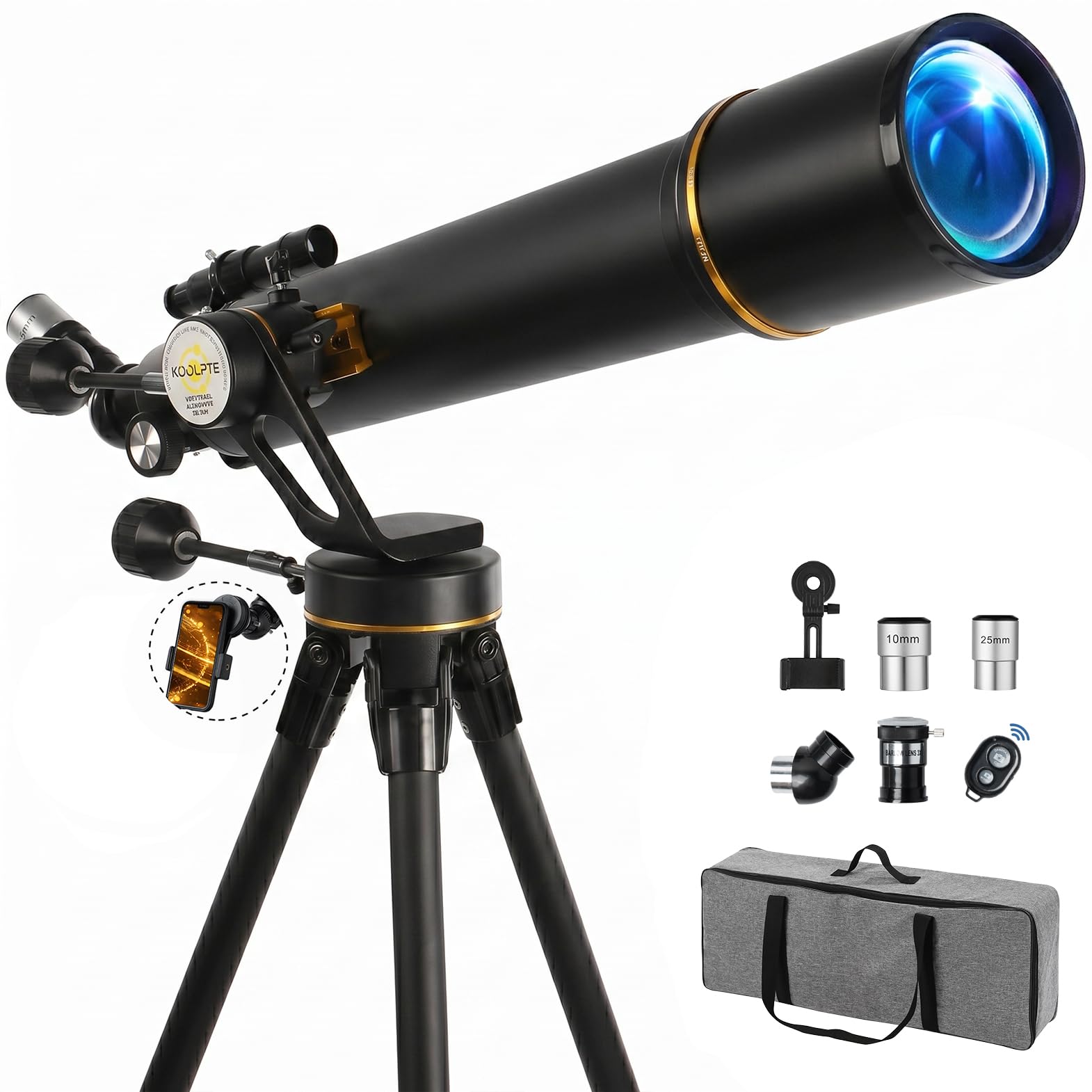
The Koolpte 90mm sets the standard for what a first telescope should deliver. Its 700mm focal length and fully multi-coated optics achieve 99% light transmission, producing bright, high-contrast lunar and planetary views. What truly separates it from cheaper competition is the Vertisteel AZ mount with slow-motion control — you make a micro-adjustment and the image stays put rather than overshooting or shaking.
Setup is genuinely tool-free and takes under ten minutes. The stainless steel tripod feels solid under the tube, and the included accessory tray adds lateral stiffness. The 28X to 210X magnification range is realistic: the 25mm eyepiece provides wide, steady views for scanning the sky, while the 10mm plus 3X Barlow pushes detail on Jupiter’s bands and Saturn’s rings—though only when the mount is fully settled.
The phone adapter and wireless remote work well for casual astrophotography, letting you capture moon shots on the first try. For a beginner looking for the smoothest tracking experience without stepping into smart-scope territory, this is the most capable traditional refractor in its tier.
Why it’s great
- Slow-motion control mount eliminates tracking frustration
- 90mm aperture resolves Saturn’s rings and Jupiter’s bands
- Stainless steel tripod reduces vibration dramatically
Good to know
- At 6′ tall, looking past 45° requires crouching
- One reviewer reported internal part loosening after single use
2. MEEZAA 90mm Telescope

The MEEZAA 90mm matches the Koolpte in aperture and edges ahead in focal length at 800mm, which means slightly higher native magnification per eyepiece and reduced chromatic aberration. The fully multi-coated glass delivers clean, crisp views of the Moon and holds steady at 32X with the 25mm eyepiece. Several users noted the solid metal build handled windy conditions better than expected for a scope in this price range.
Assembly takes about 15 to 20 minutes thanks to a detailed paper manual. The carry bag fits the full setup, and the stainless steel tripod extends from 28 to 46 inches — adequate for seated or standing adult use. The phone adapter clips onto the eyepiece securely, making image capture straightforward.
One trade-off: the Altazimuth mount lacks slow-motion controls, so centering a planet at high power requires delicate manual nudging. At 240X with the Barlow, image softness increases noticeably. Stick to 32X to 80X for the sharpest experience, and this scope delivers terrific value for the aperture.
Why it’s great
- 800mm focal length minimizes color fringing
- Stainless steel tripod handles wind well
- Complete accessory kit with carry bag
Good to know
- No slow-motion controls on the alt-az mount
- High magnification with Barlow reduces sharpness
3. Dianfan 90mm Telescope

The Dianfan 90mm shares the same 800mm focal length and 90mm aperture as the MEEZAA but adds a 45° zenith mirror that corrects the image orientation for terrestrial viewing. This makes it uniquely versatile among the 90mm options — you can scan for birds or distant scenery during the day and switch to lunar/planetary observation at night without swapping diagonals.
User feedback consistently praises the quick 10 to 15 minute assembly and the clarity of the moon at low magnification. The finderscope, while basic, is adequate for initial target acquisition. The phone adapter fits most smartphone cameras, and the included carry bag makes transport to a dark-sky site simple.
Build quality is solid but not premium: the tripod leg locks are functional but feel less robust than the Koolpte’s stainless steel hardware. At 240X with the Barlow, chromatic aberration becomes visible around bright objects. Keep magnification at 80X or below for the most rewarding experience, and the Dianfan delivers an excellent entry point with the bonus of daytime usability.
Why it’s great
- 45° diagonal provides upright images for terrestrial use
- 90mm aperture at 800mm FL reduces color fringing
- Portable carry bag for dark-sky trips
Good to know
- Tripod leg locks feel less durable than some competitors
- High magnification reveals chromatic aberration
4. HUGERSTAR 80mm Telescope
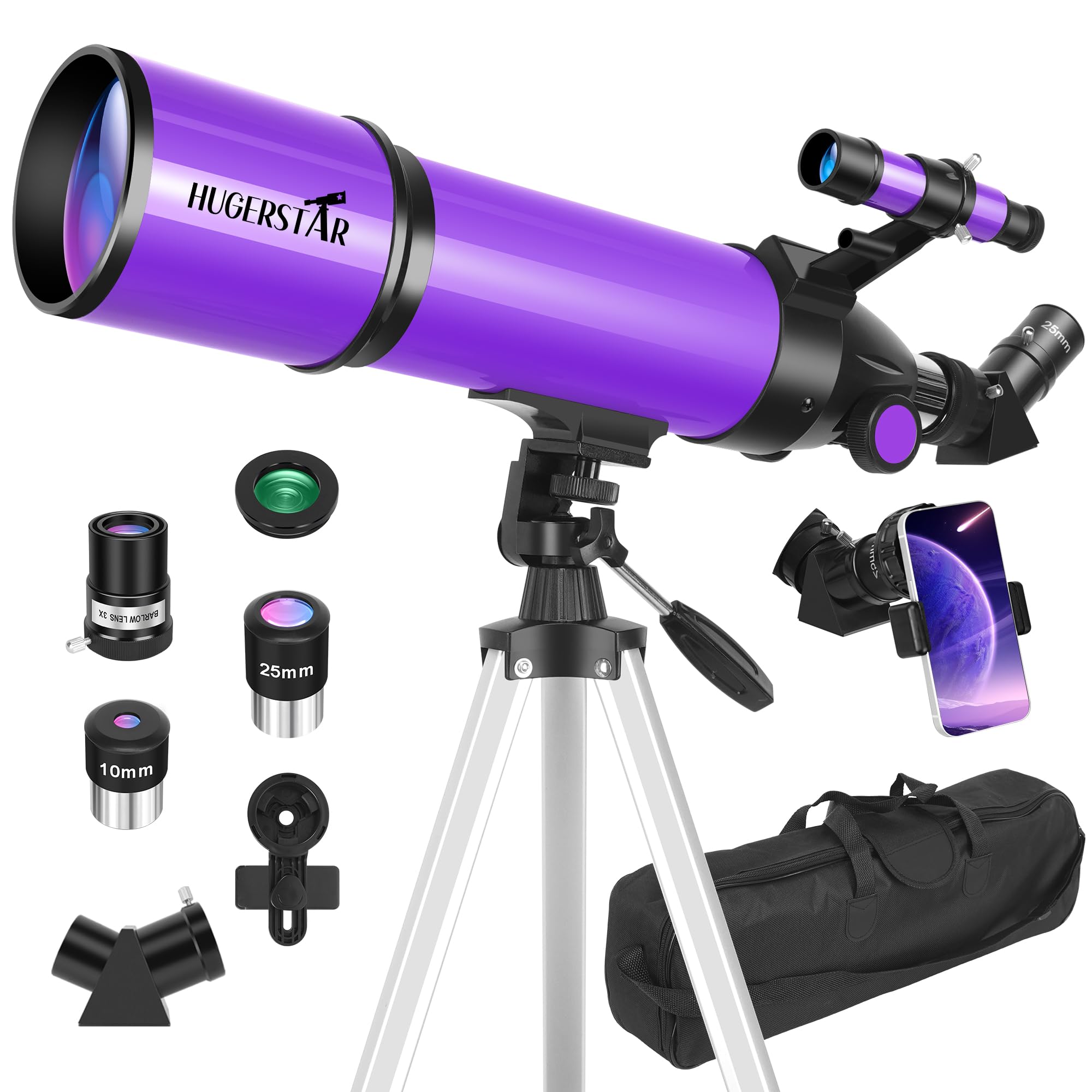
The HUGERSTAR 80mm strikes a strong balance between aperture and ease of use. The 80mm objective lens gathers noticeably more light than 70mm scopes, making moon craters sharp at 48X and revealing Jupiter’s bands at 120X. The 600mm focal length is shorter than the 90mm models, which provides a wider field of view — helpful for a beginner learning to track objects.
Setup is exceptionally simple. The instruction manual is clear, and 90% of users report being ready in under ten minutes. The included moon filter threads directly into the eyepiece, cutting glare on bright lunar nights and improving surface contrast. The adjustable aluminum tripod reaches 44 inches, comfortable for both seated adults and standing children.
The main limitation is the mount: it lacks slow-motion controls, and the standard Altazimuth design requires careful manual tracking. A few reviewers noted the tripod can be wobbly when fully extended. For family use where the scope will be aimed at the moon and bright planets, the HUGERSTAR is a reliable, frustration-free choice.
Why it’s great
- Moon filter included for enhanced lunar contrast
- Very fast tool-free setup in under 10 minutes
- Wide field of view from 600mm focal length
Good to know
- Mount lacks slow-motion tracking controls
- Tripod can feel shaky when legs are fully extended
5. Hawkko 80mm Telescope
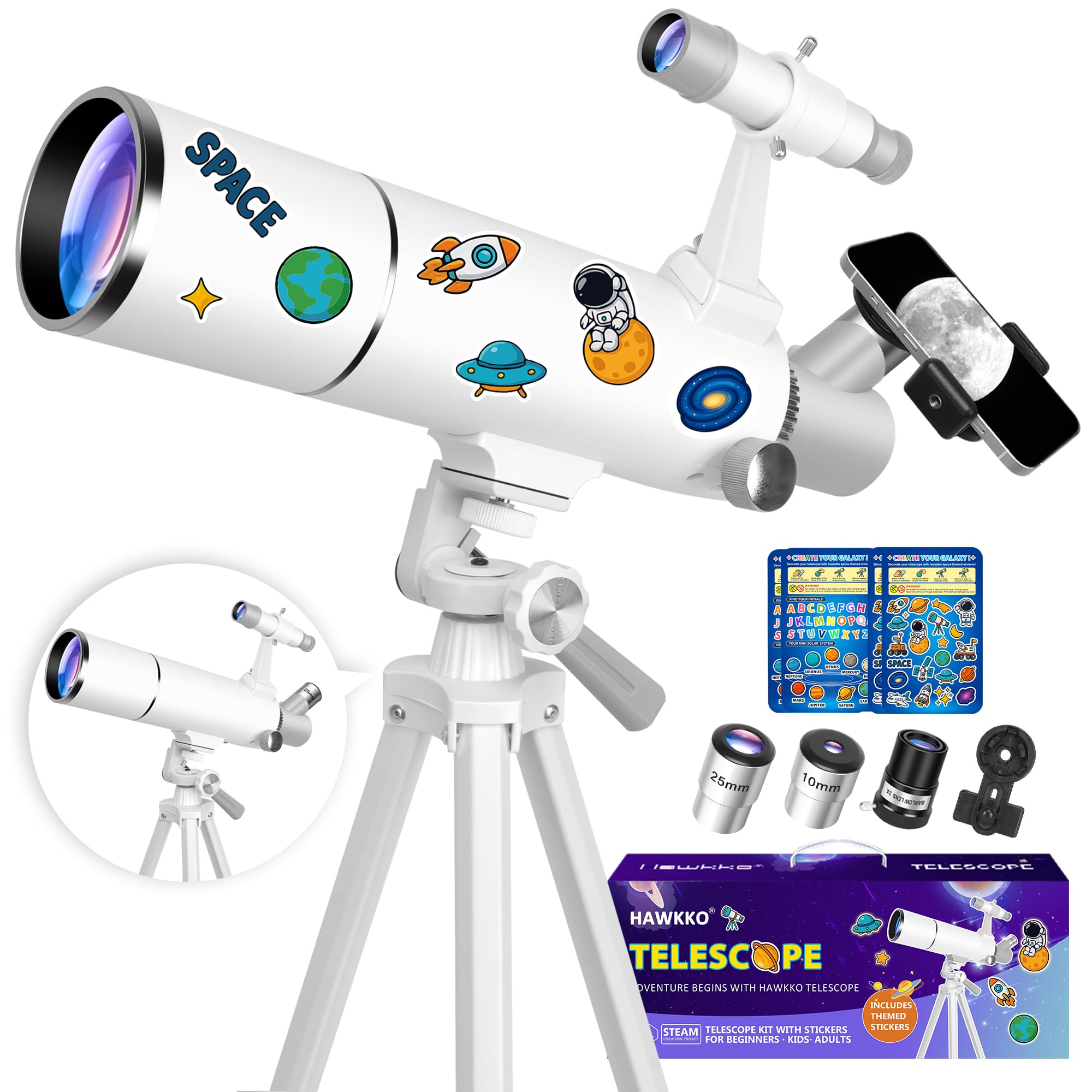
The Hawkko 80mm is built for portability without sacrificing aperture. The 500mm focal length produces a wide field that makes celestial targets easier to locate for a total beginner. The fully multi-coated 80mm lens gathers 60% more light than a 70mm model, translating to visibly brighter lunar and planetary images. Several users specifically praised how quickly they could spot moon craters within minutes of unboxing.
The tripod is adjustable for both kids and adults, and the kit includes a smartphone adapter for quick photos. A unique touch: space-themed decorate stickers let a child personalize the tube, making it feel like their own instrument.
The straight-through finderscope is the weakest link — it requires awkward neck bending to use. A red-dot finder would be a better upgrade. Also, at 150X with the Barlow, the image softens and the tripod’s lightweight build transmits vibration. As a first scope for a young astronomer who values portability and ease, the Hawkko hits a good note.
Why it’s great
- Lightweight design great for travel and camping
- 80mm aperture provides clear moon and planet views
- Fun sticker kit engages young astronomers
Good to know
- Straight-through finder scope is awkward to use
- High magnification suffers from tripod vibration
6. Gskyer 70mm Telescope

The Gskyer 70mm is the most popular entry-level telescope online, and for good reason: it works reliably right out of the box. The 70mm aperture and 400mm focal length provide enough light grasp to show moon craters, Jupiter’s Galilean moons, and — on a very steady night — a faint hint of Saturn’s rings. The 3X Barlow with two eyepieces offers a 20X to 120X range that covers most beginner needs.
The wireless remote is a thoughtful add-on. It pairs with the smartphone adapter so you can trigger the shutter without touching the scope, reducing vibration on group shots. The aluminum tripod is adjustable and the carry bag makes storage tidy. Assembly is simple enough that an eight-year-old can help.
Expect limitations. The 70mm aperture is truly entry-level — deep-sky objects like the Andromeda Galaxy appear as dim smudges. One experienced reviewer noted spending more time object-hunting than viewing. The tripod, while serviceable, induces shake at high magnification. For a sub- starter that won’t frustrate a child, this is a solid introduction, but you will likely want to upgrade within a year.
Why it’s great
- Wireless remote reduces camera shake on photos
- Consistent quality and easy assembly for young users
- Includes carry bag for storage and travel
Good to know
- 70mm aperture limits deep-sky visibility to faint smudges
- Tripod shake makes high-magnification viewing tricky
7. Celestron Travel Scope 70
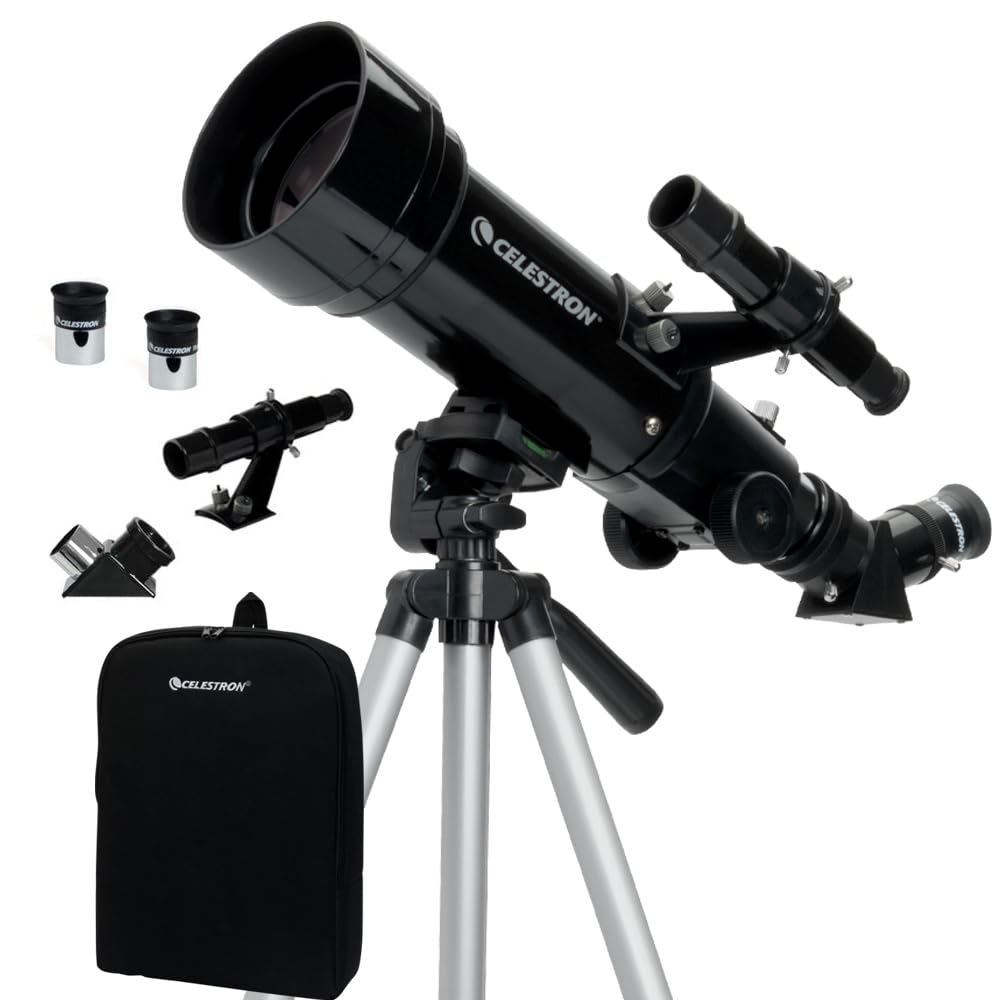
Celestron brings its California engineering reputation to the entry level with the Travel Scope 70. The fully coated 70mm glass delivers crisp daytime views and respectable lunar detail, though users report the stock 20mm and 10mm eyepieces are the weak link — upgrading to a Plossl eyepiece noticeably sharpens the image. The standout feature is the padded backpack: the scope, tripod, and accessories all fit inside a single compact bag that weighs under four pounds.
Setup is remarkably quick. The aluminum tripod and tube snap together without tools in under two minutes. The included Starry Night software download provides a digital sky atlas that helps a beginner identify what they are seeing. For travel to a campsite or a dark-sky park, the form factor is unbeatable.
The compromises are significant. The stock 45° diagonal is optimized for terrestrial viewing — swapping to a 90° diagonal improves comfort for astronomy. The tripod has a known tendency to wobble when extended, and some users replaced it entirely. The finderscope is basic. This scope is best viewed as a lightweight travel complement to a more capable home scope, not a primary instrument.
Why it’s great
- Padded backpack holds everything for easy transport
- Brand reputation and 2-year US warranty
- Familiarized setup in under two minutes
Good to know
- Stock eyepieces limit sharpness; upgrade recommended
- Tripod wobbles and the 45° diagonal is suboptimal for astronomy
8. DWARFLAB Dwarf Mini
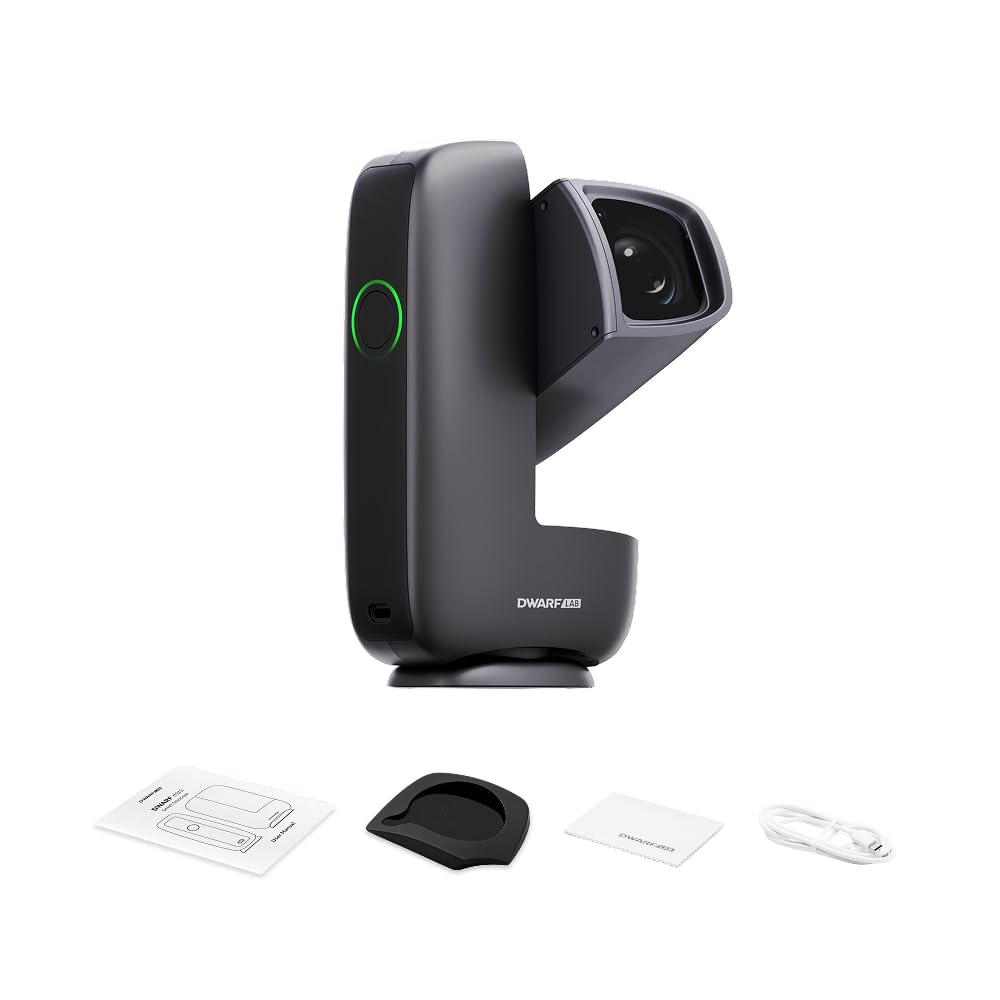
The DWARFLAB Dwarf Mini redefines what a beginner telescope can be. It weighs just 1.85 pounds, fits in a jacket pocket, and eliminates the most intimidating parts of astronomy: finding objects. The App-Controlled interface with an interactive star map lets you select any target and the mount automatically slews to it. Setup from unboxing to first image takes roughly three minutes.
The Sony IMX662 sensor captures low-noise images of the Moon, brighter nebulas like the Orion Nebula, and even galaxies such as the Pinwheel Galaxy. The EQ mode supports 90-second single-frame exposures for deep-sky imaging. Built-in cloud processing in the app stacks and enhances raw data without a laptop. For a beginner who wants astrophotography results on night one, this is the path of least resistance.
The trade-off is that it is not a visual telescope — there is no eyepiece. Everything is viewed on a phone or tablet screen. The wide field of view (2.45 degrees) means planets appear as tiny dots. If your goal is to look through glass and see Saturn’s rings with your own eye, a 90mm refractor is the better tool. If your goal is to capture and share images of deep-sky objects, the Dwarf Mini excels.
Why it’s great
- Auto GOTO eliminates the learning curve of finding objects
- Ultra-light 1.85 lb design for true portability
- Built-in cloud processing generates astrophotographs instantly
Good to know
- No eyepiece — imaging only via app on phone
- Planets appear as small dots; not for visual planetary observing
9. DWARFLAB Dwarf 3
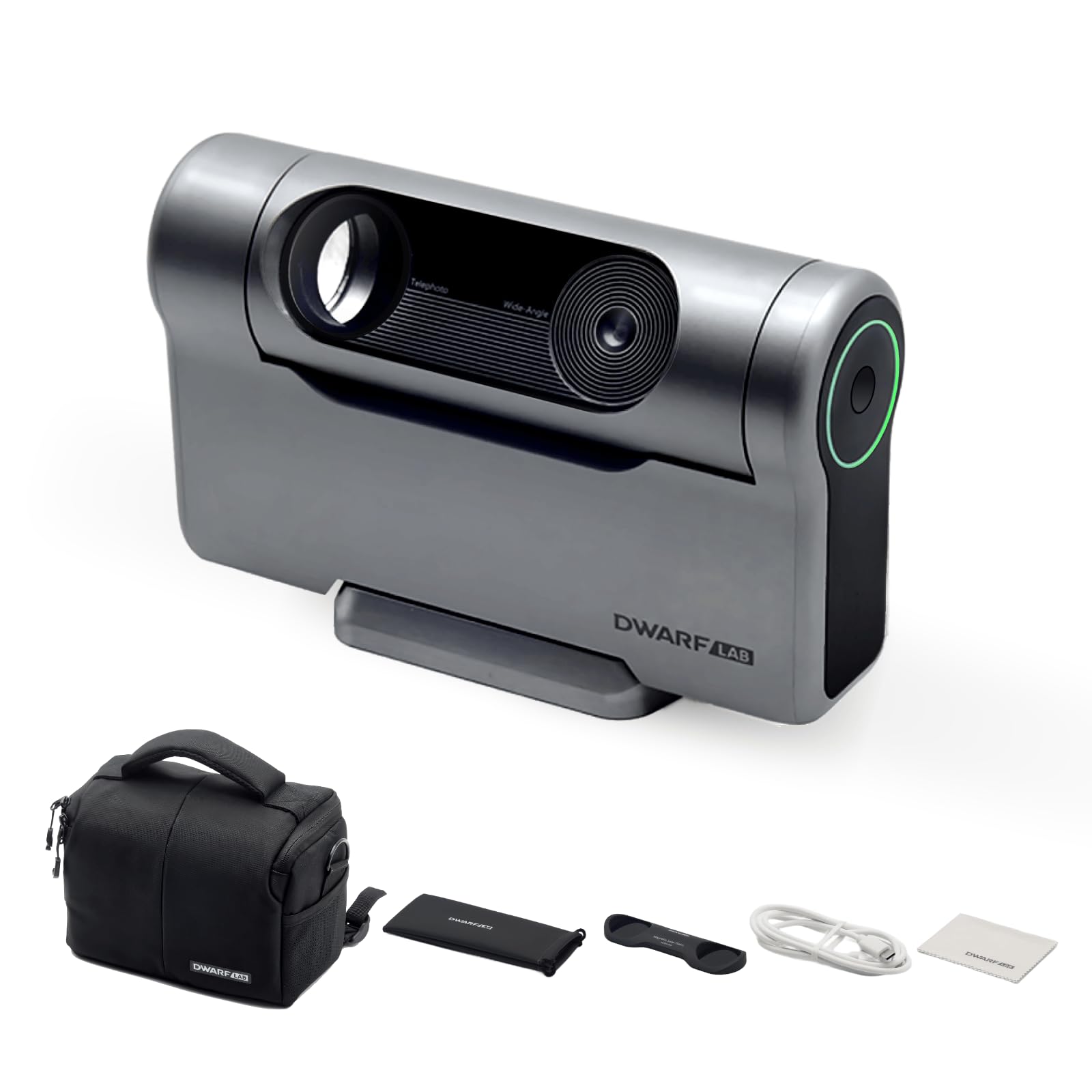
The DWARFLAB Dwarf 3 builds on the Mini concept with a dual imaging system: a telephoto lens for deep-sky objects, planets, and terrestrial subjects, plus a wide-angle lens for Milky Way panoramas and star trails. The 4K auto-tracking system follows moving objects — celestial or wildlife — and the app-based processing stacks images in minutes. At 3 pounds, it remains extremely portable for the capability it packs.
Users consistently highlight the ease of EQ mode alignment and the quality of results even under light pollution. The AI star removal feature in the app cleans up field stars in images of nebulas, giving results that look processed. A built-in solar filter and magnetic filters expand the versatility. It also works well for daytime wildlife and landscape photography, making it a dual-purpose camera and scope.
As with the Mini, this is a digital instrument — there is no eyepiece for direct visual observation. The app can occasionally have WiFi connection hiccups, and a power loss during capture disrupts on-device processing. For the beginner who wants one device that can photograph galaxies, the Moon, and a deer in the backyard, the Dwarf 3 is the most versatile tool in this guide.
Why it’s great
- Dual-lens system covers astrophotography and terrestrial subjects
- 4K auto-tracking captures sharp images of moving objects
- Performs well under light pollution with AI enhancement
Good to know
- No visual eyepiece — relies entirely on app-based viewing
- App occasionally has WiFi connection stability issues
FAQ
What magnification should I actually use on my first telescope?
Why does my affordable telescope show everything upside down?
Can I see galaxies and nebulas with an entry-level telescope?
Final Thoughts: The Verdict
For most users, the affordable telescope for beginners winner is the Koolpte 90mm because its slow-motion mount and 90mm aperture deliver the smoothest tracking and sharpest planetary views in the traditional-refractor category. If you want the convenience of app-controlled astrophotography, grab the DWARFLAB Dwarf Mini. And for a budget-friendly family scope that balances portability and aperture, nothing beats the HUGERSTAR 80mm.