
Our readers keep the lights on and the weekend projects moving. As an Amazon Associate, I earn from qualifying purchases.
The moment you decide to shed pack weight for a long hike, a bivy tent becomes the most logical shelter choice. It trades headroom and elbow space for ounces and speed, letting you sleep where a standard tent simply cannot fit. But not all bivies manage the trade-off between breathability and waterproofing with equal skill — some trap condensation like a plastic bag while others leave you damp in a drizzle.
I’m Rikta — the co-founder and writer behind FitlyFast. I’ve spent hundreds of hours analyzing bivy tent specifications, comparing waterproof ratings, ventilation designs, and packed weights to identify which models actually perform in the field and which rely on marketing hype.
Whether you are a thru-hiker, a bikepacker, or a military mission planner, this guide cuts through the noise to evaluate the top options available for your next trip. The goal is simple: help you find the truly best bivy tent for your specific shelter needs and budget.
How To Choose The Best Bivy Tent
Bivy tents exist on a spectrum from ultralight waterproof socks for your sleeping bag to mini-tents with pole arches that create real headroom. Choosing the right one means understanding your trip length, expected weather, and how much space you can tolerate for the sake of weight savings.
Waterproofing and Breathability Balance
The single biggest design challenge in a bivy tent is pulling moisture out while keeping liquid water out. Fabrics with a hydrostatic head (HH) of 5,000 mm to 10,000 mm are standard for the top shell. Breathability is measured in MVTR (Moisture Vapor Transmission Rate) — look for at least 5,000 gr/m²/day to avoid waking up in a damp bag. Designs that combine a water-resistant top with a mesh panel for venting outperform sealed sacks in all but the hardest downpours.
Volume and Headroom
True bivy sacks hug your body and give you zero room to sit up. Pole-supported bivy tents like the Snugpak Stratosphere or Ionosphere add an aluminum hoop structure that lifts the fabric off your face, creating actual space to change clothes or read. If you are claustrophobic or sleep on your side, a hooped design with at least 20 inches of interior height is worth the extra few ounces.
Weight and Packed Size
A standard bivy sack weighs between 12 ounces and 2.5 pounds. Hooped bivy tents add poles and often push past 2.5 pounds. The key spec here is not just the raw weight but how it integrates with your sleeping system — a bivy that rolls around a sleeping pad and bag saves setup time and packs tighter than a loose sack. Look for a stuff diameter under 6 inches if you rely on a frameless pack.
Quick Comparison
On smaller screens, swipe sideways to see the full table.
| Model | Category | Best For | Key Spec | Amazon |
|---|---|---|---|---|
| Snugpak Ionosphere | Pole-Supported Bivy | Versatile ultralight camping | 28 in peak height, 5000mm HH | Amazon |
| Outdoor Research Helium Bivy | Clamshell Bivy | Fast-pitching alpine missions | Seam-taped, single pole arch | Amazon |
| Snugpak Stratosphere | Bivvi-Tent Hybrid | Severe weather 1-person use | 91 x 32 x 20 in, 5000mm HH | Amazon |
| AquaQuest Pharaoh | Waterproof Sack | Packrafting and stealth camping | 10,000mm HH, 1.1 lb | Amazon |
| Snugpak Special Forces Bivvi | Emergency/Survival Bivy | Ultralight emergency shell | 12 oz weight, Paratex Dry | Amazon |
| Military Modular Sleep System Bivy | Heavy-Duty System | Extreme cold / tactical use | Gore-Tex, rated to -50°F | Amazon |
| GEERTOP Ultralight Bivy | Budget Pole Bivy | Beginner thru-hiking | 2.9 lb, PU8000mm floor | Amazon |
| Sierra Designs Backcountry Bivy | Ultralight Sack | Bikepacking with pad | 1 lb, 20D Nylon Ripstop | Amazon |
| Night Cat Lanshan Bivy | Budget Hooped Bivy | Weekend backpacking | 2 lb, trekking pole supported | Amazon |
In‑Depth Reviews
1. Snugpak Ionosphere 1 Person Tent

The Ionosphere sits at the top of the bivy tent category because it offers the best balance of livable volume and packability. Its two aluminum hoops lift the 28-inch peak, so a 6-foot-1 sleeper can stretch out with side room for a pad and a small gear stash. The 5000mm PU coating on the 210t Polyester ripstop floor and fly has kept users bone-dry at 11,000 feet in rain and wind.
Setup takes under two minutes with the Y-stakes and press-fit pole connectors. The double-zippered front door and mesh inner allow stargazing when you leave the fly off, while the full fly seals completely for storms. Multiple reviewers report zero condensation issues, thanks to dual mesh vent panels and the pole-created air gap — a rare achievement for a fully enclosed solo shelter.
The trade-off is a 3-season rating; it is not designed for heavy snow loading, but the fly pitches taut enough to shed moderate snowfall. The included repair kit and alloy stakes add confidence for long trails, and the packed size is smaller than a sleeping bag, making it easy to fit inside a 34-liter pack alongside your quilt and pad.
Why it’s great
- 28-inch interior height removes the coffin feel of flat bivy sacks
- Fast setup with press-fit poles and no external guying required
- Consistently rated as condensation-free even in cool damp conditions
Good to know
- Feet-first entry requires some contortion for tall users
- Drafts can creep under the fly in exposed windy sites
2. Outdoor Research Helium Bivy 2024
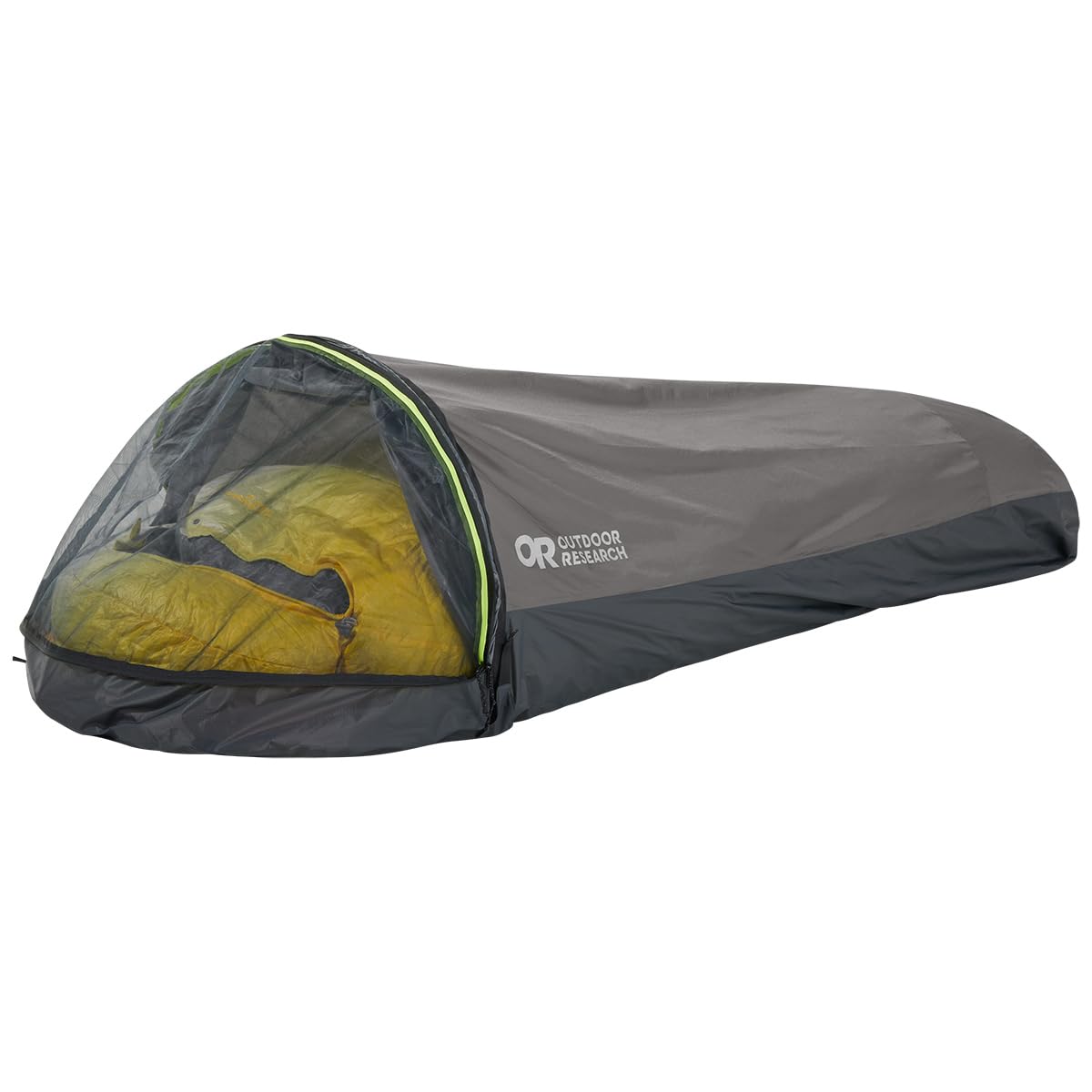
Outdoor Research took the Helium fabric technology — known for being lightweight and seam-taped — and built a clamshell-opening bivy that performs on alpine ridges and desert floors alike. The single pole arches over the face area, creating breathing space without adding a full hoop structure. The 2024 version refines the internal fly fasteners to keep the door from flapping in gusty wind.
Users who have tested it in thunderstorm and hail report staying completely dry with less claustrophobia than a classic bag-style bivy. The bottom fabric is wear-resistant nylon, and the whole shelter stakes out quickly with four loops. It is slightly heavier than a minimalist sack but worth the weight for the improvement in breathability and entry ease.
The main critique is that the zipper and door can still flutter in strong wind if not fully staked and guyed. A few users added their own seam sealing to the top panel for extra peace of mind in sustained downpours. For fast-and-light missions where you might wake up above treeline, this is the most reliable non-hooped bivy on the market.
Why it’s great
- Proven Helium fabric keeps the weight low while maintaining waterproofness
- Clamshell opening makes entry and exit far easier than mummy-style sacks
- Interior fly fasteners help control door position in wind
Good to know
- Not fully free-standing — requires careful staking for optimal headroom
- A few users added extra seam sealing for confidence in heavy rain
3. Snugpak Stratosphere Shelter

The Stratosphere is Snugpak’s hybrid bivvi-tent that provides 20 inches of headroom over the head and shoulders via a short aluminum pole arch. The 50-denier nylon ripstop top carries a 5000mm PU coating, and the 210t nylon bottom ups that to 8000mm — meaning this shelter handles standing water and driven rain with confidence. The roll-away no-see-um mesh canopy in the head area lets you stargaze on clear nights and seal up tight when the weather turns.
At 2.5 pounds it is heavier than a simple bivy sack, but that weight buys you the ability to sit up partially, store gear inside the double-ended stuff sack, and avoid condensation thanks to the rear mesh vent and the front rain-overhang vent. Military users have tested it in 28°F to 45°F conditions and reported good heat retention, though some noted that water pooled at the foot end in heavy rain. The full-length side zip means you can get in and out without crawling, a major plus for side sleepers.
The aluminum poles use screw-lock tips, and the included basic repair kit covers field fixes. For a 1-person shelter that is tougher than a mid while being faster to pitch than a tent, the Stratosphere is a solid choice for bike-packing, kayak camping, and any adventure where you need storm-worthiness without the weight of a double-wall tent.
Why it’s great
- Dual vent system (front rain-overhang + rear mesh) minimizes interior condensation
- Full-length side zip eases entry and exit in tight campsites
- 8000mm floor coating handles wet ground with no leakage
Good to know
- Foot area can pool water in sustained heavy rain if not staked low
- Zipper can be hard to close from inside when the shelter is tensioned
4. AquaQuest Pharaoh Bivy Sack
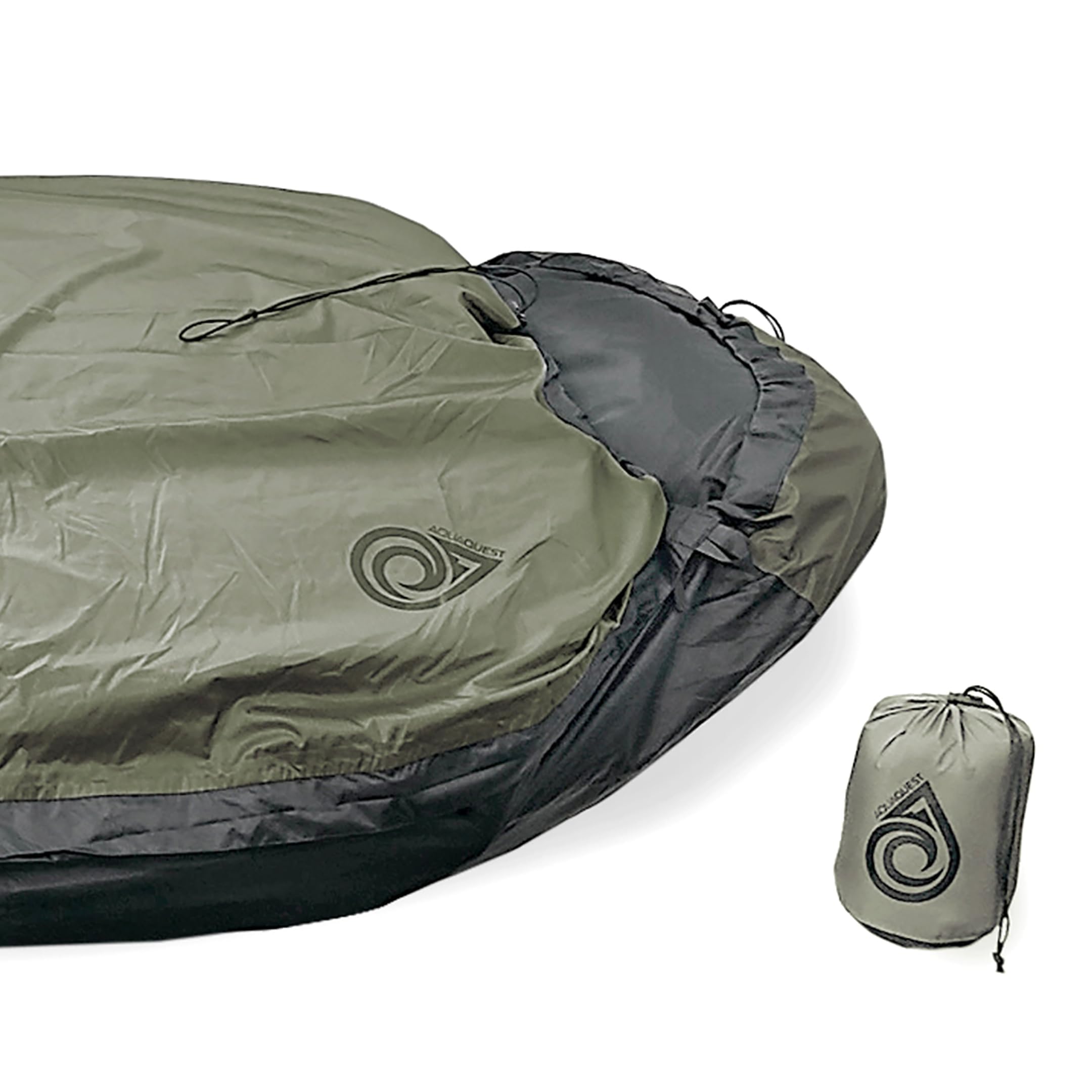
The Pharaoh delivers the highest hydrostatic head of any bivy on this list — 10,000 mm on the shell with a matching MVTR of 10,000 gr/m²/day. That is enough to sit through a sustained downpour while still allowing moisture vapor to escape, and real-world users confirm they stayed dry while friends in tents got wet. The 70-denier nylon construction adds durability without going past 1.1 pounds, making this a strong pick for packrafters and minimalist campers who cannot tolerate gear failure.
The universal fit accommodates users up to 6-foot-6, and dual side zippers let you access gear from either side. The elasticated drawstring hood cinches down in foul weather, though a few users noted the hood opening is slightly large and does not close fully flush with a winter sleeping bag hood. The integrated stuff sack packs to a 9 by 5-inch cylinder, which slides easily into the bottom of any pack.
One vocal criticism is that the 70-denier nylon shell is loud — rustling noticeably when you shift positions in the night. If you sleep next to a partner in a separate shelter or camp in bear country, the crinkle factor is worth considering. The lifetime warranty from AquaQuest covers defects, and customer service based in the Pacific Northwest is responsive.
Why it’s great
- Industry-leading 10,000mm waterproof rating with matched breathability
- Fits very tall users up to 6’6″ with room for a sleeping pad inside
- Dual zipper access on both sides for convenience in tight quarters
Good to know
- 70-denier shell is noticeably crinkly and noisy when moving
- Hood drawstring does not seal fully at the face opening
5. Snugpak Special Forces Bivvi Bag

The Special Forces Bivvi Bag is the lightest option in this lineup at just 12 ounces, using Snugpak’s own Paratex Dry fabric — a waterproof, windproof, water-wicking shell that punches above its weight in storm protection. Multiple users report surviving heavy storms with a dry sleeping bag and pad inside, and the half-length center zip keeps weight down while still allowing reasonable entry. The 90-inch length and 33-inch width accommodate a 5-foot-10 user plus a sleeping pad without compressing the bag.
This bivy is designed for emergency and tactical use, which explains why the drawstring closure on the hood has drawn criticism — it does not cinch fully, leaving the face opening exposed. Several users modified the drawcord holes to improve closure. The center zip runs only halfway, so you are effectively stepping into the bivy rather than laying it open like a clamshell. That works fine for fast deployment but feels restrictive compared to full-side-zip designs.
Despite those quirks, the breathability of the Paratex Dry fabric is exceptional for a 12-ounce shell. Condensation is minimal compared to budget PU-coated bivies, and the stuff sack compresses to roughly the size of a Nalgene bottle. For gram-counting hikers who plan to sleep under a tarp or in a natural shelter, this bivy adds almost no bulk while providing complete wind and water protection.
Why it’s great
- Remarkable 12-ounce weight makes it one of the lightest fully waterproof bivies available
- Paratex Dry fabric wicks moisture and breathes better than basic PU-coated shells
- Packs down to a Nalgene-bottle size for easy integration into frameless packs
Good to know
- Half-length center zip requires stepping in rather than laying open
- Drawstring hood does not close completely at the face opening
6. Military Modular Sleep System with Gore-Tex Bivy

The Military Modular Sleep System (MMSS) is not a standalone bivy tent but a complete sleeping system built around a genuine Gore-Tex bivy cover. The system includes a lightweight green patrol bag rated for 30°F to 50°F, a black intermediate cold-weather bag for -10°F to 30°F, and the Gore-Tex bivy that adds wind and waterproof protection. Combined, the system is rated from 50°F down to -50°F, making it the most temperature-versatile option in this guide.
The bivy cover itself is military-issue Gore-Tex: tough, seam-taped, and properly breathable when matched with the patrol bag. Users report the bivy working well in hammock setups and on the ground, keeping the bag dry even in wet snow. The full system weighs approximately 9 to 11 pounds depending on the generation, which is heavy for backpacking but sensible for vehicle camping, base camping, or winter missions where weight is less of a concern.
Surplus condition varies dramatically by seller. Some units arrive with minor wear (frayed cords, loose threads), but the core textiles — especially the Gore-Tex bivy — hold up well if the seller is reputable. The system is not ultralight and should not be used as a standalone bivy; the bivy is designed specifically to fit over the patrol and intermediate bags. For budget-conscious buyers who need reliable cold-weather performance, this bivy cover is a proven workhorse.
Why it’s great
- Genuine Gore-Tex bivy cover with proven military-spec durability and breathability
- Full system provides a massive temperature range from 50°F to -50°F
- Durable construction handles rough field use without delamination
Good to know
- Heavy system at ~10 lbs is impractical for long-distance backpacking
- Used/ surplus condition varies — inspect carefully before purchase
7. GEERTOP Ultralight Single Person Bivy Tent
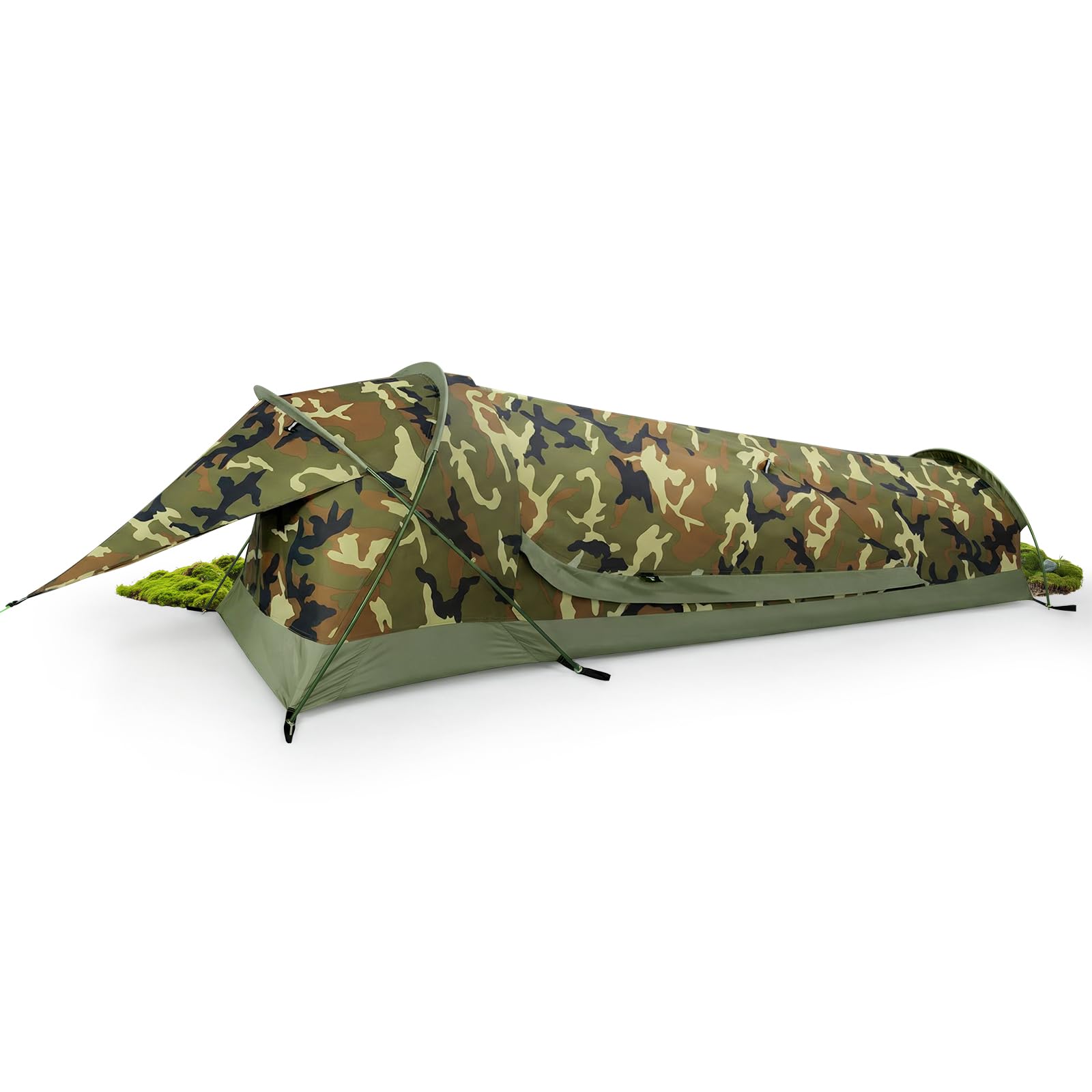
The GEERTOP bivy tent uses a three-pole aluminum frame to create a small, low-profile shelter that is heavier than true bivy sacks (2.9 pounds) but offers real crawl-in space. The fly is rated to PU5000mm, the floor to PU8000mm, and seam-taped double stitching helps it hold up against heavy rain. It packs down to 17 by 5 by 5 inches — bigger than a sack but still manageable for a weekend pack.
The 7-foot length and 2.5-foot width work for users up to about 5-foot-11, with enough room to roll over and store a small bag at your feet. Mesh panels in the top and two side windows provide airflow, but multiple users report condensation buildup in humid or cold weather, especially if the fly is fully sealed. One reviewer noted that a pole bent easily during the first setup, suggesting the aluminum is not the most robust.
For its price point, the GEERTOP delivers passable waterproofing and a simple setup that takes about two minutes. The camouflage color is popular for military and hunting applications, and the tent sits low enough to be discreet. If you are trying bivy camping for the first time and do not want to invest heavily, this is a functional entry point — just be prepared to manage interior moisture and handle the aluminum poles gently.
Why it’s great
- Low price makes it the most accessible entry point for new bivy tent users
- Three-pole aluminum structure provides real crawl-in space
- Heavy-duty 8000mm floor coating keeps ground moisture out
Good to know
- 2.9-pound weight is heavy compared to true bivy sacks
- Interior condensation is a common complaint in humid conditions
8. Sierra Designs Backcountry Bivy Bag

The Sierra Designs Backcountry Bivy is a featherweight sack at just 1 pound, built from 20-denier nylon ripstop that packs down to roughly the size of a one-liter bottle. It is designed to accommodate Sierra Designs’ Backcountry Bed sleeping system and a sleeping pad, but it works with most standard pads and bags up to an 88-inch length. The large U-shaped opening makes entry noticeably easier than a mummy zip, and the mesh window panel provides ventilation on clear nights.
The waterproof/breathable top fabric performs well in mild weather — users report it working well on July nights in Arizona and for bikepacking in light rain. However, the same lightweight fabric that makes it packable also means it is not fully waterproof in a sustained downpour. Multiple reviewers mention condensation, especially in the foot area, and the rain flap over the face opening turns the bivy into a sauna when closed.
The side-zip closure is functional but the zipper pull quality feels thinner than the body fabric, and some users have had issues with the zipper catching on the internal tie. The bottom fabric is also less robust than earlier Sierra Designs bivies — a few users noted it has less puncture resistance than previous models. For dry-weather trips where every gram counts, this bivy is a solid lightweight companion, but it is not a storm shelter.
Why it’s great
- Very packable — compresses to the size of a one-liter water bottle
- Large U-shaped opening and mesh panel provide good airflow in dry weather
- Fits tall users (up to 6’3″) with room for a thick sleeping pad
Good to know
- Not fully waterproof — condensation forms when rain flap is fully closed
- Zipper quality feels thin compared to the body fabric
9. Night Cat Ultralight Tent 1 Person (Lanshan Style)

The Night Cat is a trekking-pole-supported bivy tent that uses your hiking poles instead of dedicated tent poles to create a hooped shelter. At 2 pounds, it is light enough for long-distance hiking but relies on two trekking poles for its structure, so you either need poles or plan to find sticks on site. The 4-season-rated design uses a nylon body, a waterproof rainfly, and stakes and ropes for fast pitching.
The interior is tight — 125 centimeters floor length and 100 centimeters floor width — which fits a single sleeper up to about 5-foot-10 but leaves little room for gear inside. Users report that sleeping with a 60-liter pack inside is possible but snug. The rainfly covers the vent but does not extend far enough to protect the main body in heavy wind-driven rain, so some users recommend a larger tarp for storm conditions. On the plus side, it has survived temperatures dropping to 20°F overnight without condensation issues.
Setup is straightforward once you understand the clipping system, and the stakes included are functional but not the lightest. A few users noted that the poles disconnect easily when taking down, which speeds up pack-up but can be frustrating if the clips release during a windy setup. For hikers who already carry trekking poles and want an ultralight hooped bivy without spending premium dollars, the Night Cat is a reasonable starting point.
Why it’s great
- Ultralight at 2 lbs when using existing trekking poles for support
- Withstood 20°F temperatures without interior condensation reported
- Easy setup and breakdown for fast camp transitions
Good to know
- Rainfly coverage is minimal for heavy wind-driven rain
- Interior is too small for tall users over 5’10” to sleep comfortably
FAQ
What is the difference between a bivy tent and a bivy sack?
How do I prevent condensation inside a bivy tent?
Can I use a bivy tent for winter camping?
Final Thoughts: The Verdict
For most users, the bivy tent winner is the Snugpak Ionosphere because it delivers the best balance of livable headroom, reliable waterproofing, and packable weight for everything from weekend backpacking to long-distance thru-hikes. If you prioritize the absolute lightest weight and plan to sleep under a tarp, grab the Snugpak Special Forces Bivvi Bag. And for extreme weather where temperatures drop far below freezing and durability matters more than pack weight, nothing beats the proven Military Modular Sleep System with its genuine Gore-Tex bivy cover.