
Our readers keep the lights on and the weekend projects moving. As an Amazon Associate, I earn from qualifying purchases.
Eliminating grid dependency requires a single, reliable unit that converts DC solar power to clean AC while managing battery charging seamlessly. An all-in-one solar charge controller inverter delivers pure sine wave output, MPPT tracking, and transfer switching in one chassis, replacing three separate components and simplifying installation.
I’m Rikta — the co-founder and writer behind FitlyFast. I spent hundreds of hours analyzing MPPT efficiency ratings, surge capacities, PV input voltage ranges, and real-world user performance data across dozens of models to identify the units that genuinely deliver stable power for off-grid and backup applications.
This guide breaks down the critical specs — MPPT tracking efficiency, pure sine wave output, PV voltage range, and battery compatibility — to help you select a reliable all in one solar charge controller inverter for your home, RV, or cabin setup.
How To Choose The Best All In One Solar Charge Controller Inverter
Selecting an all-in-one unit requires matching your system voltage and daily energy consumption to the inverter’s rated output, PV input range, and battery charging current. A mismatch in any of these parameters will throttle performance and may damage components.
MPPT Efficiency and PV Input Range
MPPT tracking efficiency determines how much energy your solar panels actually deliver to your batteries and loads. Units achieving 98-99.9% efficiency extract more power during dawn, dusk, and overcast conditions. The PV input voltage range — measured in DC open-circuit volts — must be wide enough to accommodate your panel array’s series voltage. A range of 60-500VDC offers compatibility with most residential panel configurations.
Pure Sine Wave Output and Surge Capacity
Pure sine wave output is non-negotiable for running modern electronics, motors, pumps, and compressors without humming, overheating, or malfunctioning. Surge capacity — measured in VA or watts for a few seconds — matters for starting inductive loads. A unit rated at 3000W continuous with a 6000W surge can handle a refrigerator or well pump startup spike.
Battery Type Support and Charging Current
Different batteries require different charging profiles. Look for units that support Lead-Acid (AGM, Gel, Flooded) and Lithium (LiFePO4) chemistries with programmable bulk, absorption, and float voltages. Charging current, measured in amps, dictates how fast your battery bank refills — 100A to 200A is common for 24V and 48V systems. Some models also offer batteryless mode, allowing direct solar-to-load operation.
Quick Comparison
On smaller screens, swipe sideways to see the full table.
| Model | Category | Best For | Key Spec | Amazon |
|---|---|---|---|---|
| SUMRY 4000W | Mid-Range | Pool Pumps & Appliances | 140A MPPT, 98% Efficiency | Amazon |
| PowMr 5200W | Premium | Whole-Home Split-Phase | 99.9% MPPT, 6-Unit Parallel | Amazon |
| Xijia 3600W | Mid-Range | Best Value Hybrid | 120A MPPT, 98% Efficiency | Amazon |
| Y&H 4000W | Mid-Range | Touch LCD & Battery-Free | 140A MPPT, 5600W PV Max | Amazon |
| VEVOR 3000W | Mid-Range | Reliable All-Rounder | 100A MPPT, 4000W PV Max | Amazon |
| Ampinvt 5000W | Premium | Parallel 3-Phase Setup | 100A MPPT, 5500W PV Max | Amazon |
| POWLAND 12000W | Premium | Large Home with AC Loads | Dual 200A MPPT, 99.9% Eff. | Amazon |
| Aninerel 12000W | Premium | High-Wattage Split-Phase | Dual MPPT, 260A Charging | Amazon |
| SUNGOLDPOWER 10000W | Premium | Heavy Commercial Backup | Dual MPPT, 200A Charging | Amazon |
In‑Depth Reviews
4. SUMRY 4000W Hybrid Solar Inverter
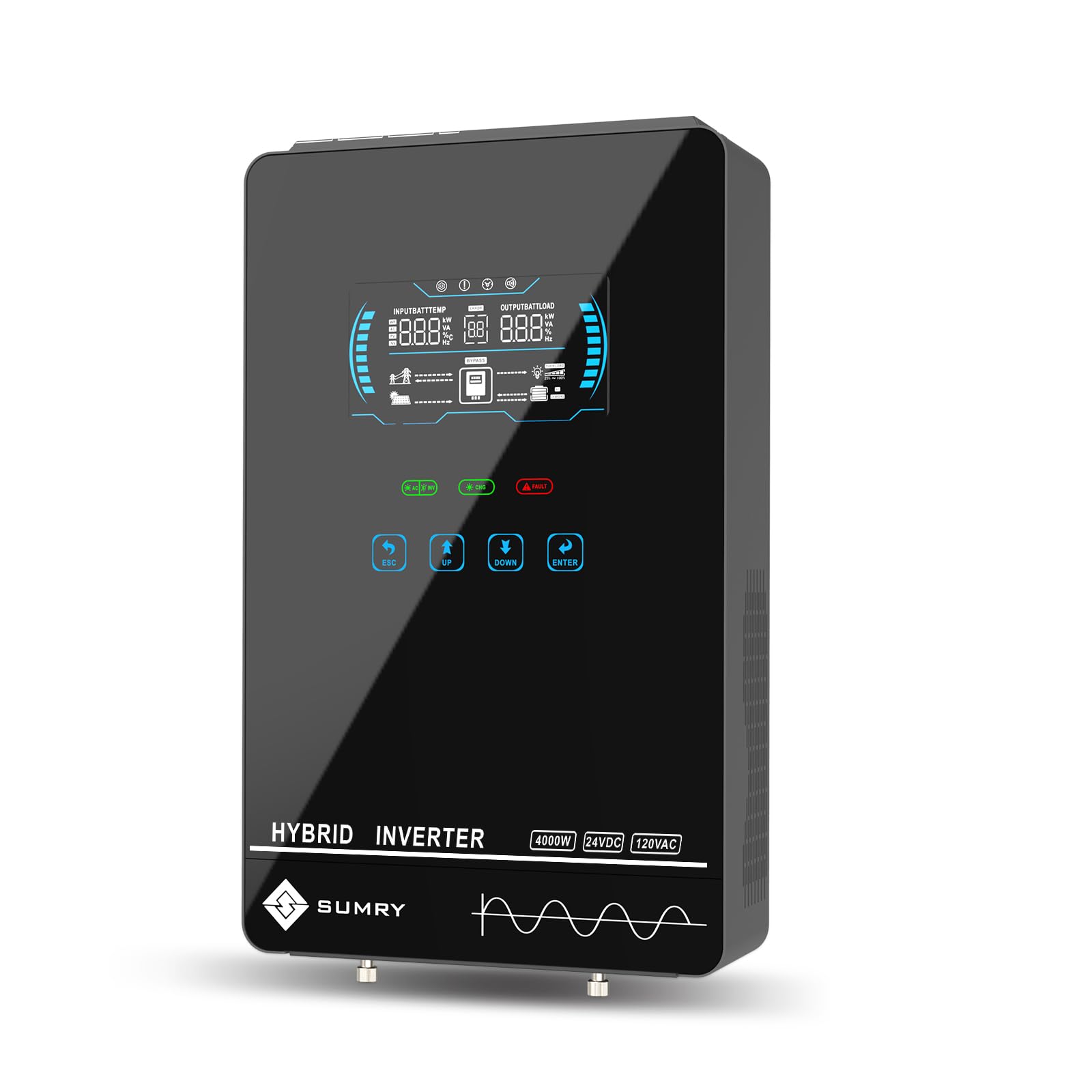
The SUMRY 4000W earns the top spot by combining a robust 140A MPPT charge controller with a clean pure sine wave output and a unique tempered glass top cover that protects a 6.25-inch LCD display. It accepts up to 5600W of PV input at 350VDC, with MPPT conversion efficiency reaching 98%, ensuring minimal energy loss even during variable sunlight conditions. The unit runs without a battery during daytime when PV input exceeds 120V, which is a practical feature for reducing upfront system costs.
Real-world users confirm it runs a 1.5HP pool filter motor on six 335W panels in series with no battery, switching seamlessly to grid power when solar drops. The three built-in cooling fans keep internal temperatures under control during sustained high-output operation, and the interface buttons allow quick adjustments to charging current and output priority without needing a separate monitoring tool.
The only compromise is the 24V input system, which requires larger-gauge wiring than a 48V setup for the same wattage. For off-grid cabins, RV shore power replacement, or garage backup where daily loads stay under 4000W continuous, the SUMRY delivers consistent performance with a premium-feel build that stands out in the mid-range category.
Why it’s great
- 140A MPPT with 98% conversion efficiency for strong solar harvest
- Batteryless daytime operation reduces system entry cost
- Cooling triple-fan design prevents thermal throttling
Good to know
- 24V battery bank requires thicker cables for same power as 48V
- Tempered glass top adds weight and fragility if dropped
5. PowMr 5200W Split-Phase Solar Inverter
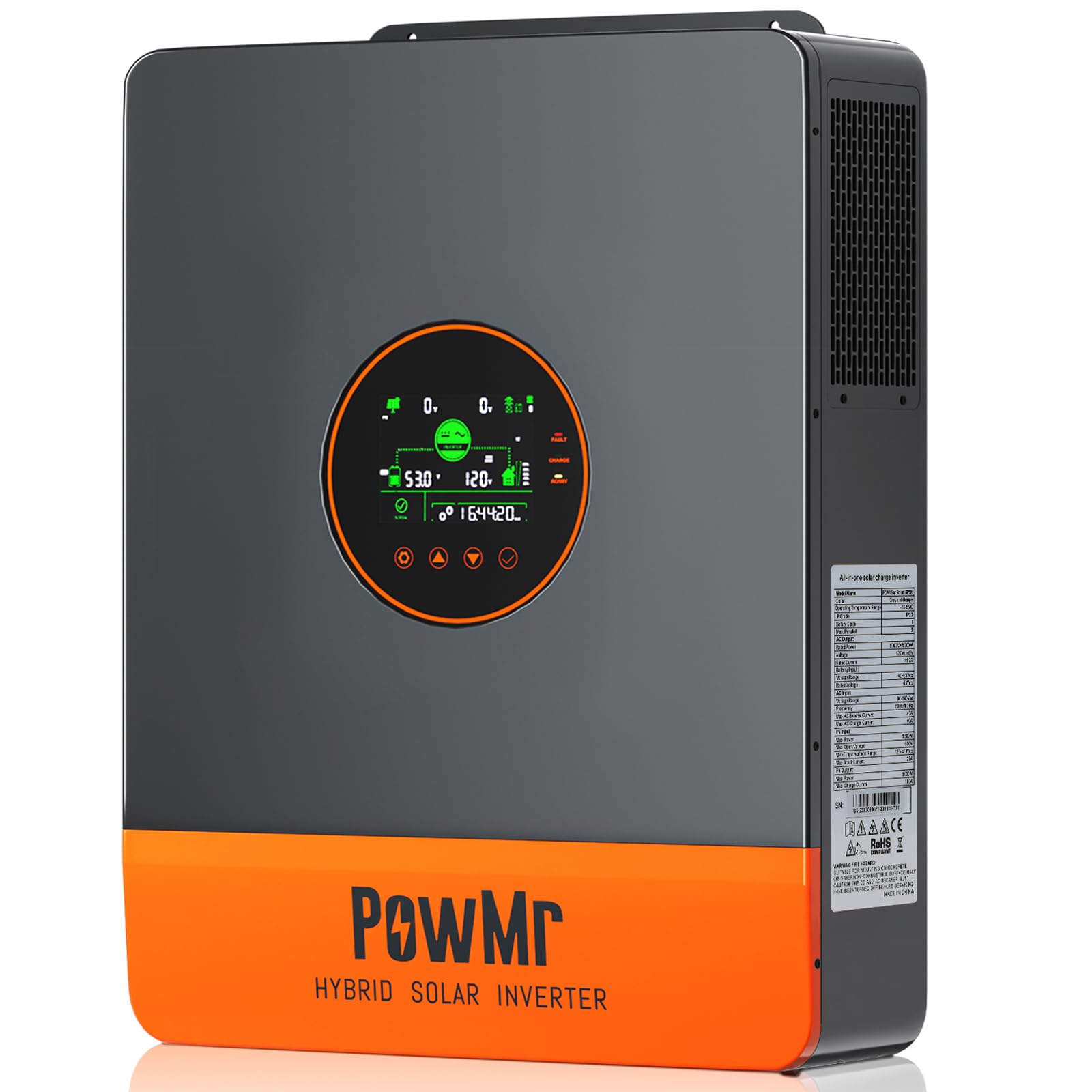
PowMr engineers designed this 5200W unit specifically for whole-home split-phase setups, offering 120V/240V output from a single inverter with the ability to stack six units for up to 31.2kW total capacity. The integrated 100A MPPT controller achieves 99.9% tracking efficiency, and the wide 120-450VDC PV voltage range matches most residential solar arrays without string reconfiguration. Sub-20ms grid-to-inverter switching keeps computers and security systems online during outages.
Owners report powering entire homes — including cooking appliances, washing machines, TVs, and fans — with a battery-and-panel combination, noting zero downtime for critical loads. The peak-shaving feature with 4+2 operating modes allows time-of-use programming to charge during off-peak grid hours and discharge at peak rates, which directly reduces electricity bills for grid-tied systems.
The AC input does not play well with GFCI outlets — some users report nuisance tripping that requires a non-GFCI circuit. Additionally, the physical unit weighs over 30 pounds and demands solid wall mounting. For homeowners seeking a scalable split-phase backbone that can grow with their energy needs, the PowMr delivers premium-grade efficiency and parallel expandability.
Why it’s great
- 99.9% MPPT efficiency maximizes low-light energy capture
- Sub-20ms transfer switching for sensitive electronics
- Up to 6 units in parallel for 31.2kW total capacity
Good to know
- GFCI outlet incompatibility may complicate certain installations
- Relatively heavy at 30.8 pounds requires secure mounting
1. Xijia 3600W Hybrid Solar Inverter
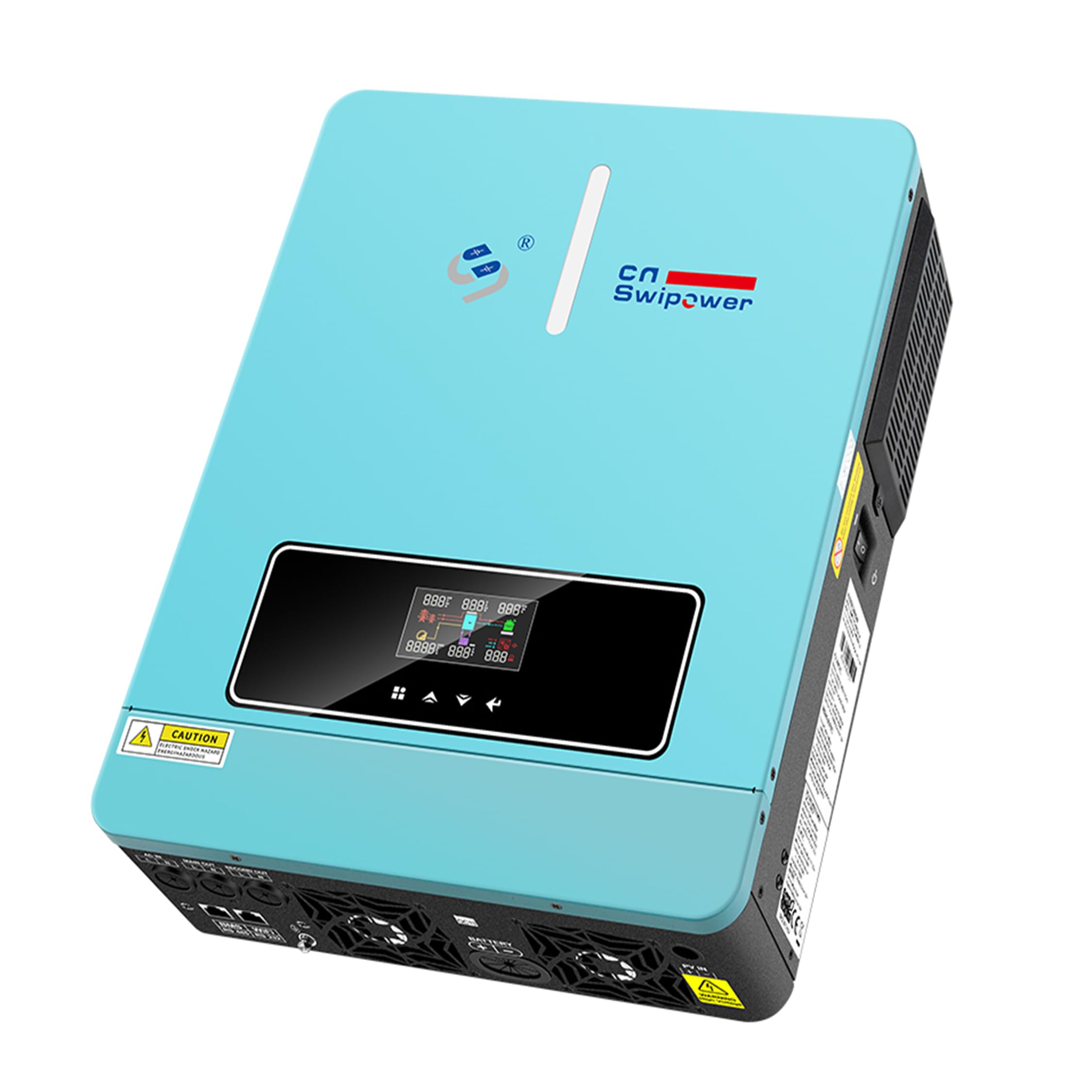
Xijia packs a 120A MPPT charge controller, a 3600W pure sine wave inverter, and an AC auto-transfer switch into a single 8.8-kilogram chassis. The MPPT controller uses optimized tracking technology with up to 98% efficiency, supporting a wide 60-500VDC PV input range that accepts high-voltage panel strings up to 4200W. Four charging modes — Solar Only, Mains First, Solar First, and Hybrid — let users tailor energy sourcing to their daily solar availability and grid rates.
Users running the unit for months report stable 91% efficiency at 20% load with projected 93% at higher loads, which is competitive for the price bracket. The idle draw sits around 37 watts — slightly higher than premium models but acceptable given the all-in-one convenience. Multiple customers confirm the unit handles 3000W continuous loads without overheating, and the LCD display provides real-time voltage, current, and status data.
The wiring compartment is tight — some users modified the enclosure with additional fans and larger gauge connectors to reduce resistance. The WiFi remote monitoring module is sold separately and several buyers found the app connectivity unreliable. For budget-conscious off-grid builders who need a functional hybrid inverter without spending premium-tier money, the Xijia offers strong real-world performance.
Why it’s great
- Wide 60-500VDC PV input range for flexible panel string configurations
- Four charging modes allow optimization for solar or grid priority
- Lightweight 8.8kg design for wall mounting
Good to know
- Tight internal wiring space may require modifications for heavy gauge cables
- WiFi module not included and app connectivity is inconsistent
3. Y&H 4000W Touch LCD Inverter

The Y&H 4000W distinguishes itself with a modern tempered glass front panel and a responsive 6.25-inch touch LCD that displays system data and allows one-touch restoration to default settings. Under the glass, the unit packs a 140A MPPT charge controller that accepts up to 5600W of PV at 350VDC maximum open-circuit voltage. The inverter outputs 4000W continuous pure sine wave at 120VAC with an 8000W surge capacity, enough for starting refrigerator compressors and well pumps.
The battery-less startup feature is a genuine differentiator — the inverter can run loads directly from solar panels without a battery bank during daylight hours, provided the grid input is not connected. The three-fan cooling system — one more than typical dual-fan designs — improves heat dissipation and prolongs internal component life. Users report the unit arrived well-packaged and functioned immediately with default settings.
Several customers experienced delivery issues where packages were not left at the door, leading to lost units. The touch interface, while modern, can be less intuitive than physical buttons for some users during initial setup. For off-grid and RV applications where a clean visual interface and batteryless daytime operation matter, the Y&H delivers a premium feel at a mid-range investment.
Why it’s great
- 6.25-inch touch LCD with real-time system data display
- Triple-fan cooling for better thermal management
- Battery-less startup for direct solar-to-load daytime use
Good to know
- Delivery and package security issues reported by multiple buyers
- Touch interface has a learning curve compared to button controls
2. VEVOR 3000W Hybrid Solar Inverter

VEVOR’s 3000W hybrid inverter integrates a 100A MPPT solar charge controller with a pure sine wave output stage rated for continuous 3000W and a 4000W PV input capacity. The MPPT controller achieves up to 90% conversion efficiency and supports both Lead-Acid and Lithium chemistries with a dedicated activation function for dormant lithium battery banks. The built-in WiFi module lets users monitor system status remotely, though data refreshes every five minutes rather than in real-time.
Users running the unit 24/7 for multiple weeks report reliable performance at 3000W continuous, with the inverter shutting down cleanly if loads exceed that threshold. The UPS-like switching function transitions between grid and battery power fast enough to maintain operation of sensitive electronics. The programmable dry contact relay allows integration with automatic generator start controls based on battery voltage.
Some units arrived with manufacturing defects — one user reported a capacitor sparking on first solar connection, though VEVOR replaced the unit under warranty. The arrow keys on the control panel are reversed in orientation, causing initial confusion during menu navigation. For small home offices, RV installations, or backup power where 3000W is sufficient, the VEVOR provides a well-rounded feature set with responsive customer support.
Why it’s great
- Built-in WiFi module for remote system monitoring
- Lithium battery activation function for dormant battery banks
- Programmable dry contact relay for automatic generator start
Good to know
- No ground terminal on the AC outlet side for bonding
- Arrow keys reversed in factory firmware orientation
6. Ampinvt 5000W 48V Solar Inverter
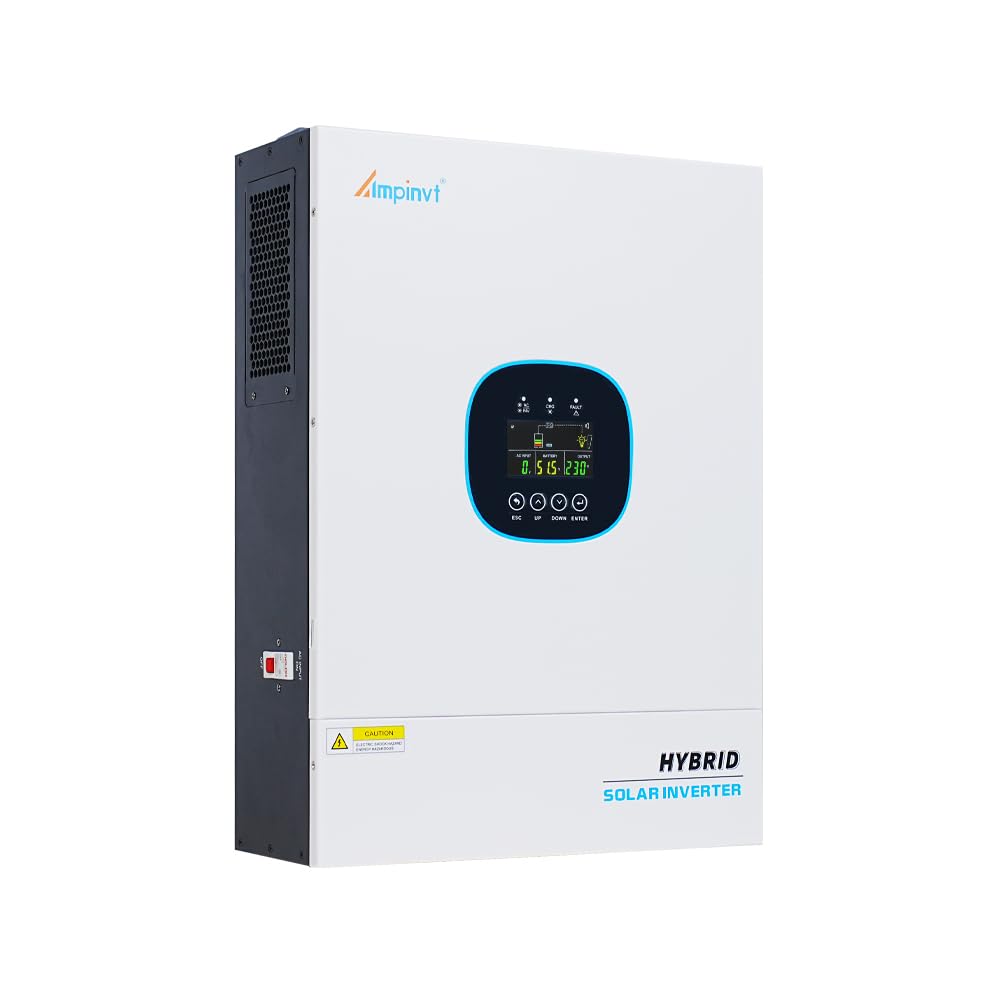
The Ampinvt 5000W operates on a 48V battery input, which is inherently more efficient for higher wattages than 24V systems due to lower current draw and reduced resistive losses. The built-in 100A MPPT controller delivers up to 98% tracking efficiency and accepts up to 5500W of PV input within a 60-500VDC range, making it compatible with high-voltage solar arrays. Single-phase, split-phase (120/240V), and three-phase (120/208V) output configurations are all supported, with transfer efficiency exceeding 92%.
Users running the unit for two months in 120V off-grid mode report good value for the price, with stable power delivery to standard household outlets. The RS485 and USB communication ports allow connection to monitoring software on a PC for detailed parameter adjustments. The dry contact relay provides generator start/stop control based on battery voltage thresholds, which is essential for remote cabin setups where grid power is unavailable.
Lights flicker intermittently under certain load combinations, a common behavior with budget all-in-one inverters. The menu and user interface feel dated compared to competitors with touchscreens, and one unit arrived with a damaged mounting bracket due to insufficient packing. For off-grid homes that need 5000W of reliable 48V power with parallel expansion capability, the Ampinvt is a solid mid-range choice.
Why it’s great
- 48V input reduces current draw and wiring losses at 5000W
- Supports single-phase, split-phase, and three-phase output
- RS485 and USB ports for PC-based monitoring and configuration
Good to know
- Intermittent flickering reported on 120V loads
- Basic menu interface compared to touchscreen alternatives
7. POWLAND 12000W Hybrid Solar Inverter
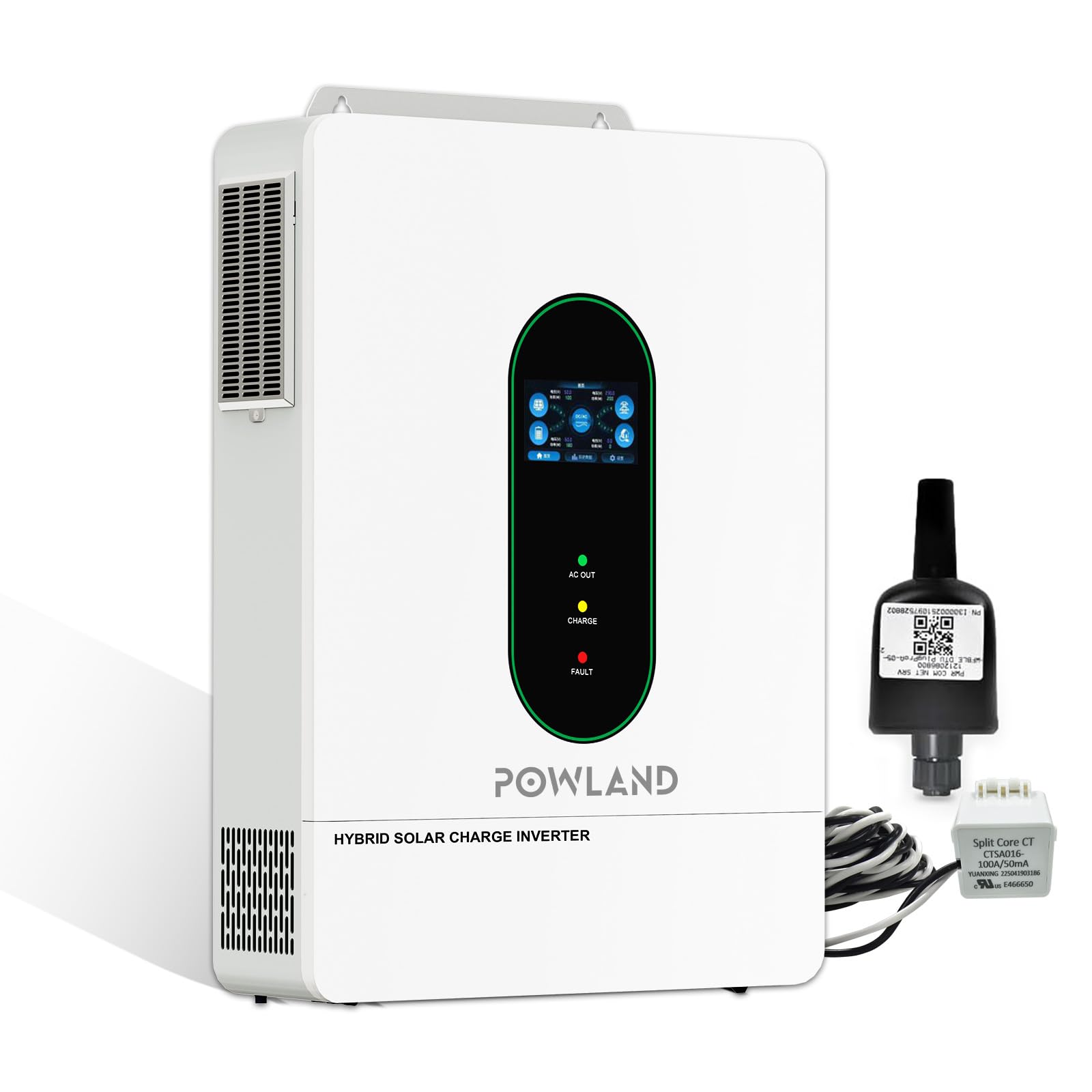
POWLAND’s 12000W inverter is a heavyweight designed for whole-home off-grid and grid-tied systems, featuring dual 200A MPPT controllers that capture 99.9% of available solar energy and handle up to 200A battery charging. It outputs pure sine wave at 120V/240V split phase and accepts AC input from grid or generator with automatic anti-backflow control. The revolutionary battery-free design feeds excess solar directly to household loads with optional export to the grid via CT sensors, slashing battery bank costs.
Owners successfully run entire homes including central air conditioning, refrigerators, and power tools simultaneously without tripping. The dual cooling fans operate at only 45dB — noticeably quieter than competitors. Users who completed the challenging installation process report stable performance with seamless grid-to-solar switching after resolving grounding protocol errors. The ECO mode claims to extend battery life by 30% through optimized charging cycles.
Installation is not for beginners — one user received a used unit with missing WiFi module and dirty fans, though others confirm the performance after replacement is excellent. Error codes such as Error 53 and Error 49 require grounding fixes and correct battery protocol settings to clear. For experienced off-grid system builders who need 12kW of reliable split-phase power in a single chassis, the POWLAND delivers massive capacity with smart energy management.
Why it’s great
- Dual 200A MPPT controllers for massive solar harvest capacity
- Battery-free design with CT sensor for direct feed-in
- Ultra-quiet 45dB cooling fans
Good to know
- Complex installation and configuration required for proper operation
- Quality control issues with used units and missing accessories reported
8. Aninerel 12000W 48V Inverter
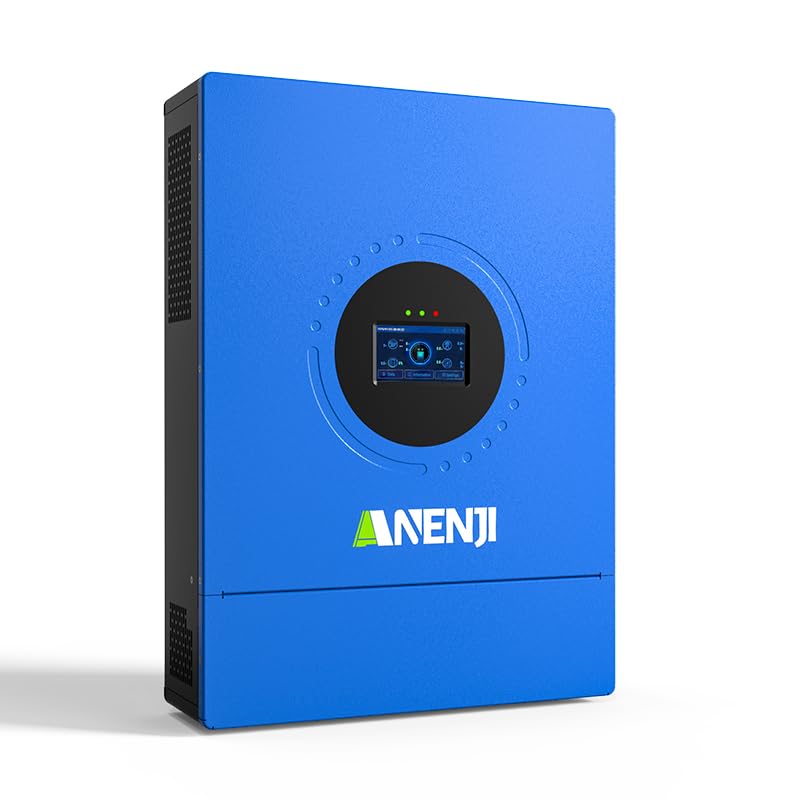
The Aninerel 12000W inverter combines dual MPPT controllers with a massive 260A battery charging capability, accepting up to 500VDC open-circuit voltage from solar panels. It outputs split-phase 120V/240V or single-phase 120V with a peak capacity of 18,000VA, enough to handle large motor loads like central AC compressors and well pumps. The aluminum casing improves WiFi signal penetration and provides dust resistance for garages or semi-outdoor installations.
Users report the inverter switches between grid, battery, and solar power perfectly with no flicker on lights or computers, effectively eliminating the need for a separate UPS. One owner measured over 10kW of PV input in full sun, confirming the dual MPPT controllers actively harvest from two independent solar arrays. The time-slot charging and discharging function enables peak/off-peak utility optimization, allowing automated charging during low-rate hours.
The MPPT efficiency on some units measured around 70%, which is well below the advertised specifications and a significant concern for solar harvest. The manual instructs users to download the wrong monitoring app — SMART ESS when SMART VALUE is required — causing initial configuration headaches. For large residential or semi-commercial installations where 12kW of pure sine wave power is required and dust resistance matters, the Aninerel delivers capacity but requires diligence in setup.
Why it’s great
- 260A battery charging for rapid recharging of large battery banks
- Dustproof aluminum casing designed for semi-outdoor use
- Time-slot charging/discharging for peak tariff reduction
Good to know
- Real-world MPPT efficiency measured as low as 70% by some users
- Incorrect manual guidance for the monitoring app download
9. SUNGOLDPOWER 10000W Split-Phase Inverter

SUNGOLDPOWER’s 10kW inverter carries UL1741 certification, a critical safety standard for grid-interactive systems that ensures compliance with North American electrical codes. Dual built-in MPPT controllers provide up to 200A total battery charging capacity, accepting up to 500VDC open-circuit voltage per MPPT. The unit outputs split-phase 120V/240V or single-phase 120V, with a peak surge capacity of 20,000W — enough to start a 6HP motor load like a large air conditioner or industrial pump.
Owners running commercial food truck operations report powering multiple high-wattage appliances simultaneously for eight months without a single shutdown. The time-slot charging function automatically shifts charging to off-peak utility hours, saving up to 25% on electricity bills. Users who integrated the inverter with Home Assistant achieved full automation of battery charging cycles and load shedding based on real-time solar production.
Idle consumption is higher than competing models from brands like EG4 — one user measured 48V 100Ah battery depletion in just a few days under no load. The MPPT only charges at 60A combined across two MPPT inputs, which is slow for large panel arrays over 7.5kW. The AC input terminals are too small for 6-gauge wire, requiring external junction boxes for high-current installations. For customers prioritizing UL certification and robust split-phase performance over idle efficiency, the SUNGOLDPOWER delivers code-compliant reliability.
Why it’s great
- UL1741 certified for code-compliant grid-interactive installations
- 20,000W peak surge capacity for heavy motor starting
- Time-slot charging enables peak tariff avoidance programming
Good to know
- High idle draw can drain battery bank within days without load
- AC input terminals too small for 6-gauge copper wire
FAQ
What voltage battery bank should I use with an all-in-one inverter?
Can an all-in-one inverter run without batteries?
How much solar panel wattage do I need for a 3000W inverter?
Final Thoughts: The Verdict
For most users, the all in one solar charge controller inverter winner is the SUMRY 4000W because it combines a powerful 140A MPPT controller, a modern glass display, and batteryless daytime operation at a price that undercuts competitors with similar specs. If you need split-phase output with room to expand to whole-home capacity, the PowMr 5200W offers 99.9% MPPT efficiency and six-unit parallel stacking. And for budget-friendly entry into hybrid solar, the Xijia 3600W delivers reliable 98% MPPT tracking with a wide 500VDC PV input range and consistent 3000W continuous output.